White Desert Egypt Map & Route Guide: Cairo, Bahariya, Black Desert, Crystal Mountain & Agabat

The classic White Desert Egypt route starts in Cairo, travels southwest to Bahariya Oasis, then continues by 4×4 through the Black Desert, Crystal Mountain, Agabat Valley and finally the White Desert protected area. For most first-time travelers, the best route takes 2 days and 1 night because it includes sunset, camping, stargazing and sunrise without requiring a long expedition.

The typical route looks like this:

Cairo → Bahariya Oasis → Black Desert → Gabal El Marsos → El Hez → Crystal Mountain → Agabat Valley → sand dunes → White Desert → overnight camp → Bahariya → Cairo.

This is one of the most important things to understand before planning a White Desert Egypt trip.

The White Desert is not one isolated attraction that you simply drive to, take photographs of and leave.

The journey is part of the experience.

Within the same safari, the scenery can change from the traffic and urban landscape of Cairo to green oasis vegetation, dark desert hills, golden dunes, pale cliffs and finally the famous white chalk formations.

Bahariya Oasis is approximately 370 km southwest of Cairo and is the closest major Western Desert oasis to the Egyptian capital. It is therefore the main gateway used by many travelers heading toward the Black and White Deserts.

The White Desert itself lies farther south, close to Farafra Oasis. Egypt’s official tourism portal places it around 40 km from Farafra, while Egypt’s Environmental Affairs Agency lists the protected area at approximately 570 km from Cairo.

Understanding that geography makes the entire route much easier to plan.

White Desert Egypt Route at a Glance

The classic journey can be divided into two stages.

The first section is the road journey from Cairo or Giza to Bahariya Oasis.

The second section begins when you change to a suitable 4×4 and continue into the Western Desert.

A typical route then follows:

Bahariya Oasis → Black Desert → Crystal Mountain → Agabat → White Desert.

Longer safaris can add more remote dunes, valleys, springs and camping areas.

For travelers who want the complete destination overview rather than just the route, start with our White Desert Egypt complete travel guide.

Where Is White Desert Egypt on the Map?

The White Desert lies within Egypt’s Western Desert in the New Valley Governorate, close to Farafra Oasis.

Egypt’s Environmental Affairs Agency officially lists the White Desert Protected Area as a landscape protectorate declared in 2002 and currently gives its area as approximately 3,133.5 square kilometers.

That size is important.

The White Desert should not be imagined as one field of mushroom rocks around a single GPS point.

It is part of a much wider protected landscape.

The safari corridor from Bahariya also crosses several different geological environments before you reach the most famous white formations.

That is why a map of the White Desert journey normally includes at least:

Cairo → Bahariya → Black Desert → Crystal Mountain → Agabat → White Desert → Farafra.

You do not necessarily visit Farafra itself on every short tour, but geographically it helps you understand where the White Desert sits within Egypt’s Western Desert.

For the protected area itself, its geology, conservation and visitor experience, read our White Desert National Park Egypt guide.

Why Do Most White Desert Tours Start From Bahariya Oasis?

This often confuses travelers.

Farafra is closer to the White Desert, so why do tours from Cairo normally use Bahariya?

The answer is simple:

Bahariya is far more convenient from Cairo.

Bahariya is the closest major Western Desert oasis to the Egyptian capital, at roughly 370 km southwest of Cairo.

It therefore acts as the natural gateway between Cairo and the deeper Western Desert.

A typical trip operates like this:

Cairo → paved road → Bahariya Oasis → change to 4×4 → desert safari.

Bahariya also provides important logistical support.

It has accommodation, local communities, food, fuel, guides, vehicles and access to natural springs and other oasis attractions.

Travelers taking a longer itinerary can spend additional time exploring the oasis itself.

If that is your priority, the White Desert & Bahariya Oasis Tour from Cairo is more appropriate than a fast overnight route.

You can also explore our Bahariya Oasis Egypt guide and things to see around the Black Desert and Bahariya Oasis.

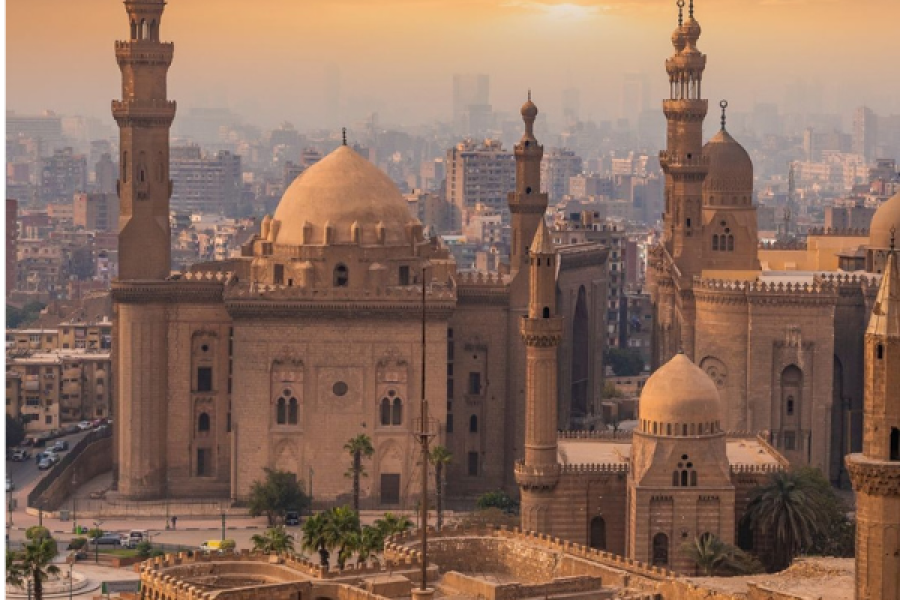
Stop 1: Cairo – Where Most White Desert Journeys Begin

Most international visitors begin their White Desert journey in Cairo or Giza.

This means the first part of the trip is transportation rather than safari.

Travelers sometimes underestimate this.

They imagine that booking a White Desert tour means immediately getting into a 4×4 and driving through dunes.

In reality, you normally travel several hours southwest toward Bahariya first.

That is one reason we generally recommend staying overnight instead of attempting the White Desert as an extremely long day trip.

You can read our full White Desert from Cairo guide if transportation from the capital is your main concern.
Stop 2: Bahariya Oasis – The Main Gateway

2 Nights 3 Days White Desert & Dejara Cave Tour from Cairo

2 Nights 3 Days Tour in White Desert and Bahariya Oasis

Full Day Tour in West Bank of Luxor

Siwa Program by Comfortable Bus from Cairo

One Day Tour to the White Desert from Cairo

One Day Fayoum Tour from Cairo

National Museum of Egyptian Civilization Tour

4 Days 3 Nights Package to Luxor from Cairo by Sleeper Train

Giza Pyramids & Grand Egyptian Museum Tour

2 Nights 3 Days Fayoum and White Desert Tour from Cairo

5 Nights 6 Days Egypt Oasis Tour from Cairo

Full Day Tour in East Bank of Luxor

6 Nights 7 Days Cairo, Siwa, Marsa Matrouh & White Desert Tour

Full Day Tour in Aswan

Full Day Tour to Alexandria from Cairo

4 Days Siwa Oasis Tour from Cairo

3 Nights 4 Days Cairo White Desert Tour

3 Days 2 Nights Tour from Cairo to Dakhla and Luxor

2 Nights 3 Days Camping Tour in White Desert

2 Nights 3 Days Cairo – Siwa Tour

2 Nights 3 Days Cairo – Siwa Tour

2 Days Tour in Cairo and Giza

1 Night Camping in Fayoum Desert from Cairo

1 Night 2 Days White Desert Tour from Cairo

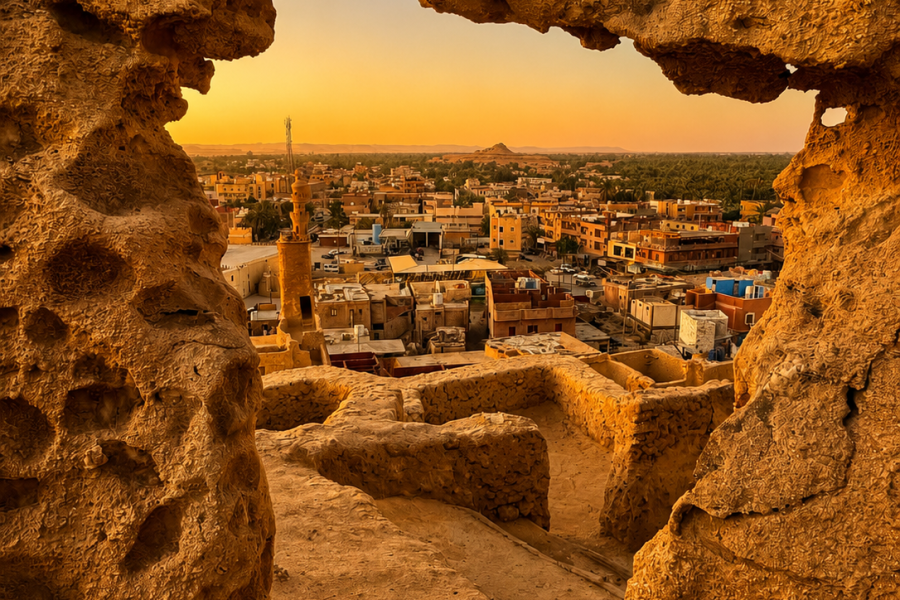
Arriving in Bahariya feels like entering a different Egypt.
The oasis contains palm groves, agricultural areas, springs and small communities surrounded by desert.

Bahariya is known for its date palms, olive trees, natural springs and archaeological sites in addition to its role as a base for exploring the White and Black Deserts.

Depending on your tour, Bahariya may be where you:

  • Eat lunch
  • Rest after the road journey
  • Meet the local desert team
  • Prepare camping supplies
  • Change from the normal road vehicle to a 4×4

On a short White Desert trip, the oasis is primarily a gateway.

On a longer program, it becomes a destination in its own right.

For that deeper experience, visit our Bahariya Oasis Egypt guide.

Stop 3: Black Desert Egypt

After leaving Bahariya, the landscape begins changing dramatically.

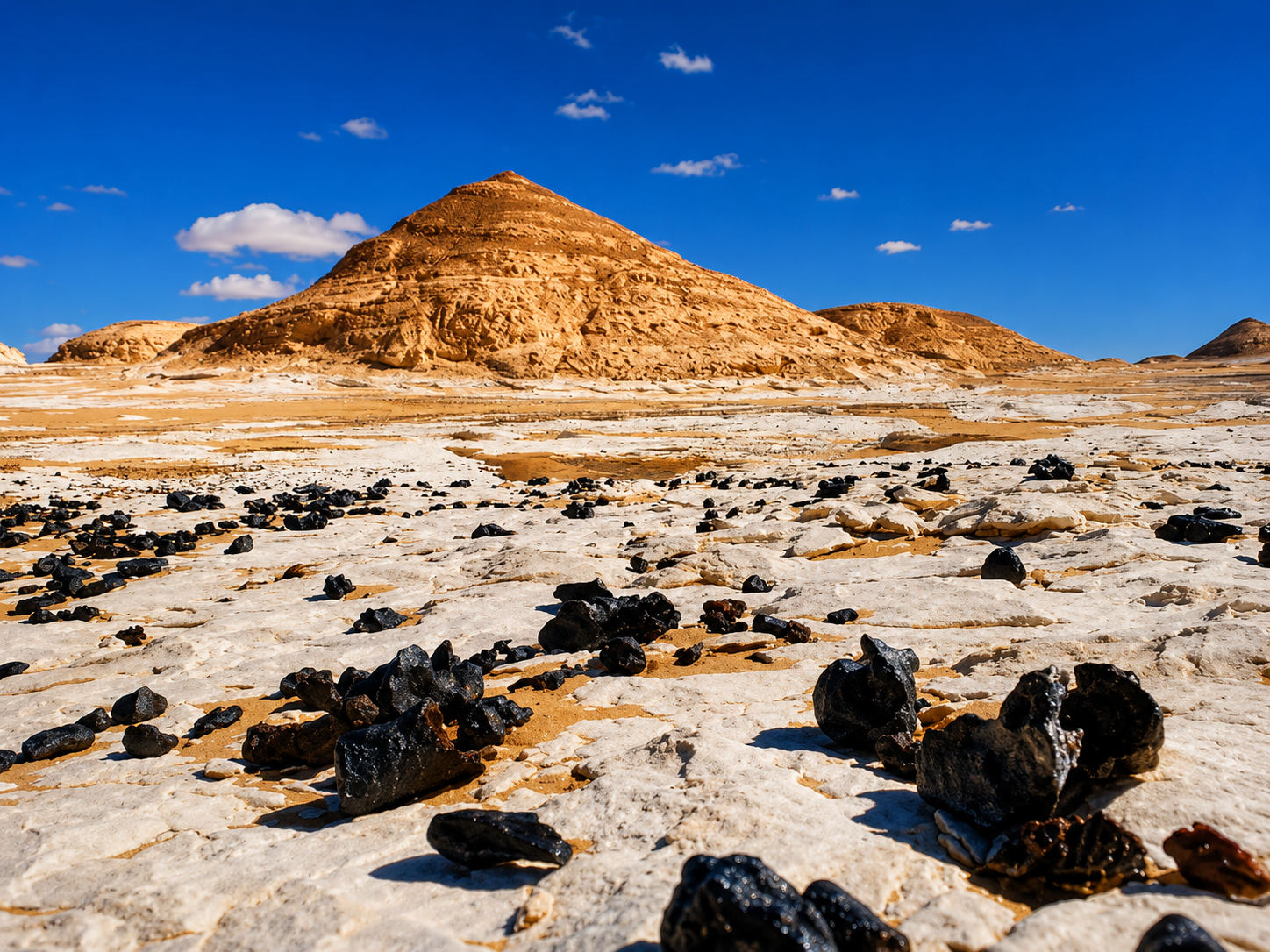
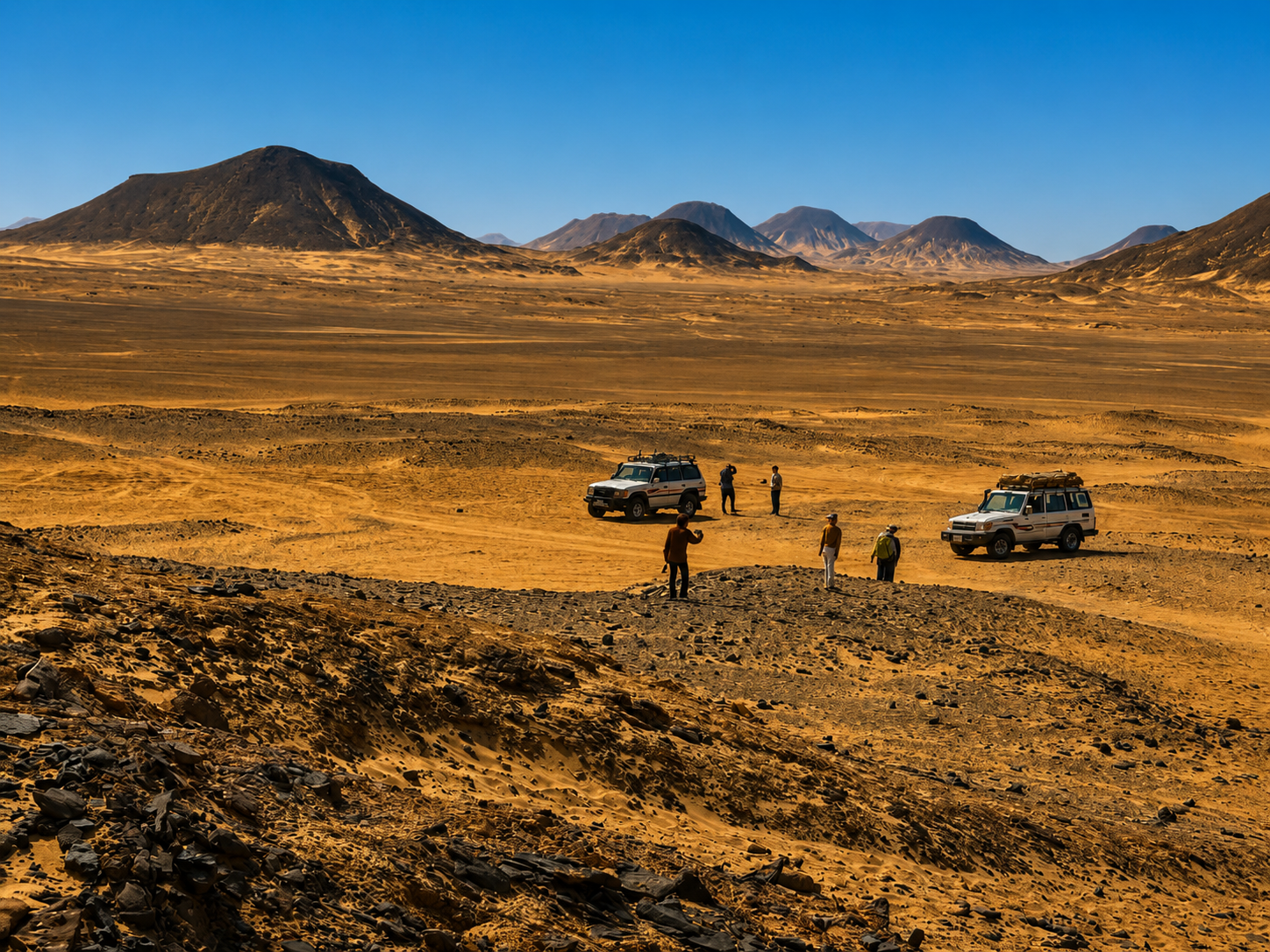
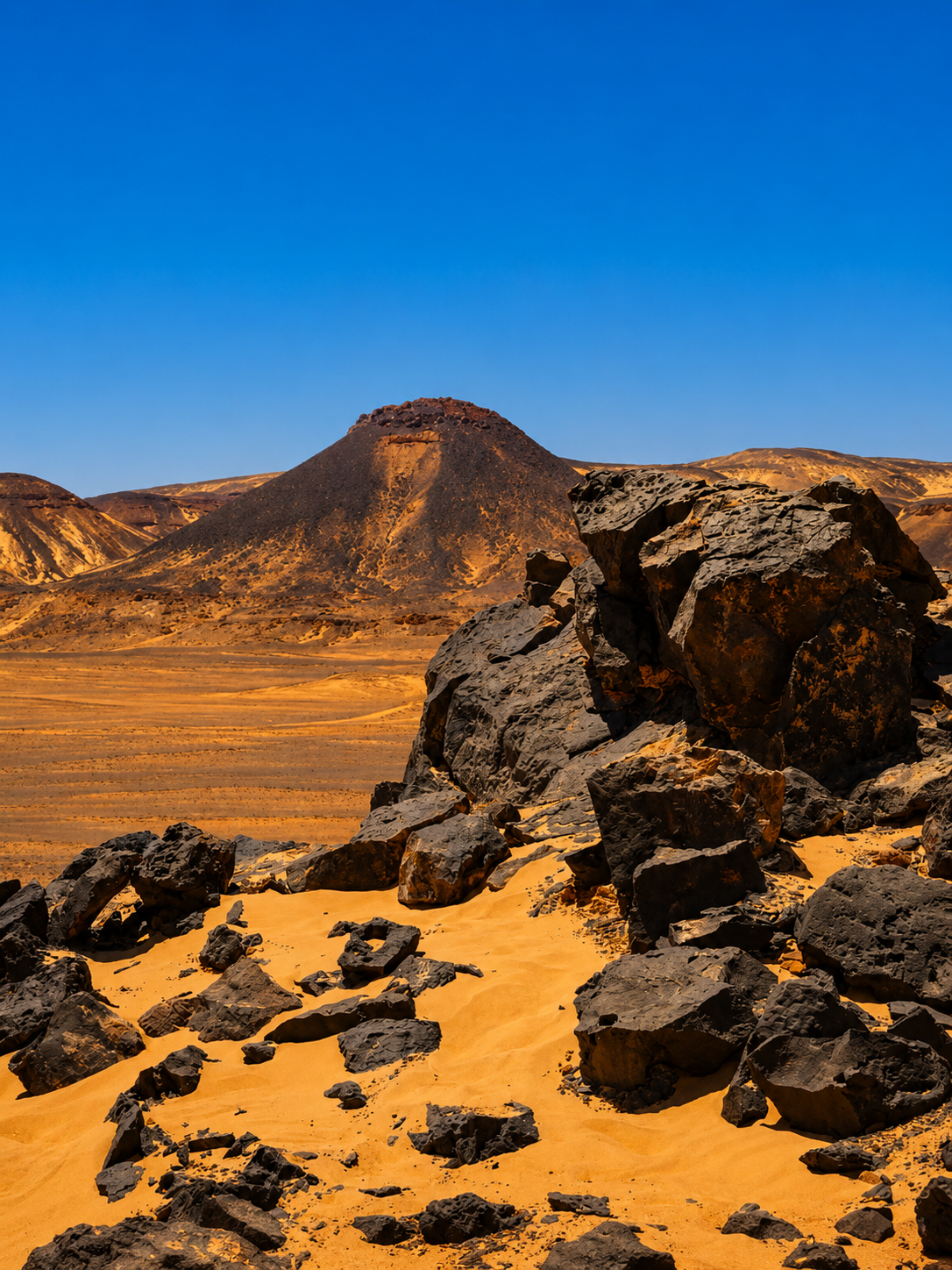
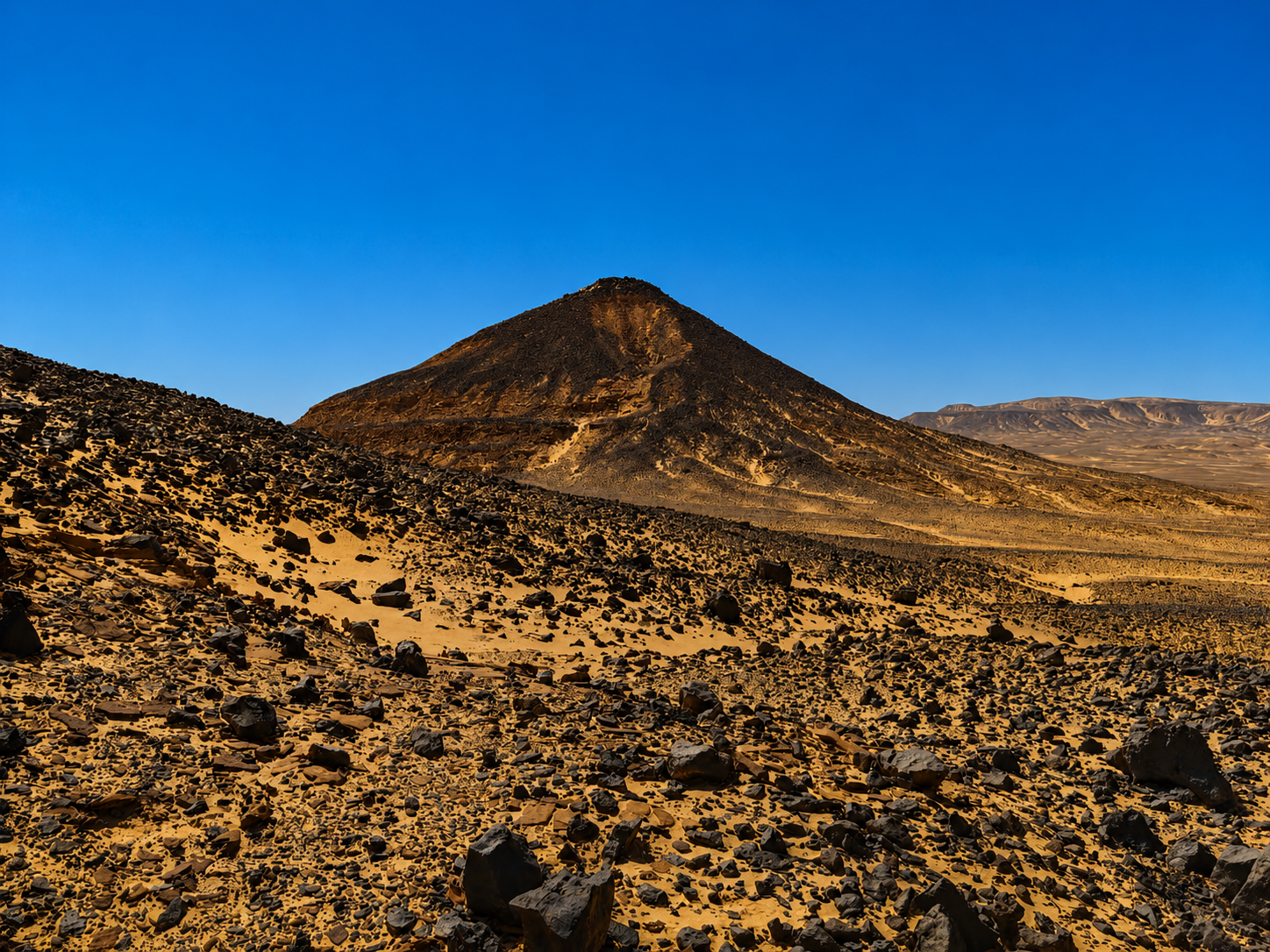
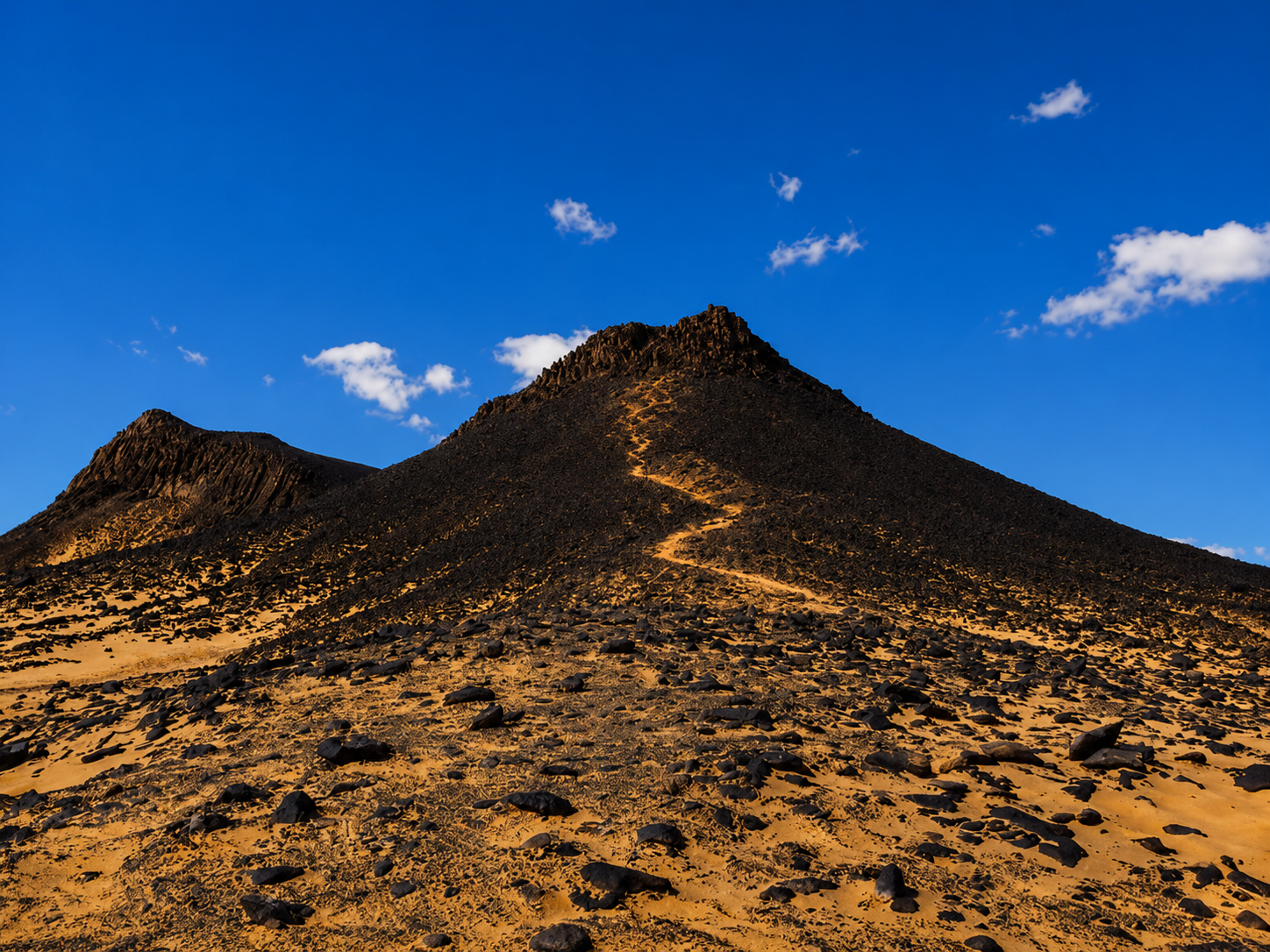
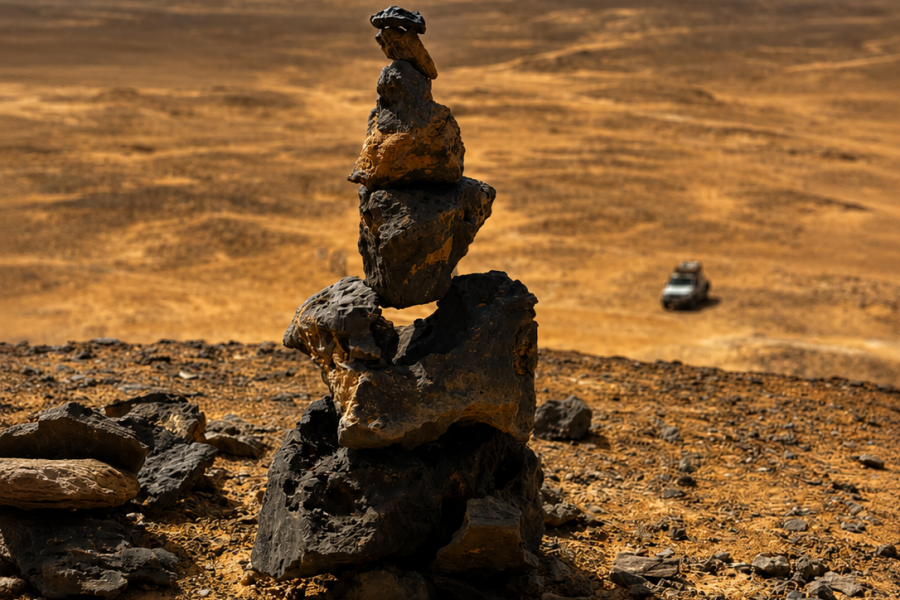
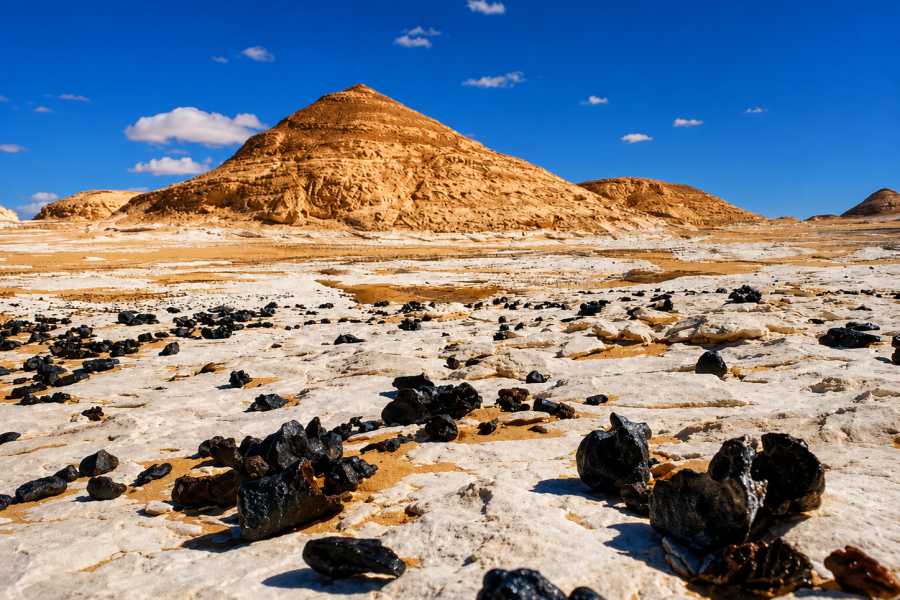
One of the first major areas on many routes is the Black Desert Egypt.

Its dark hills and black-stone-covered surfaces create an immediate visual contrast with the white landscapes you will reach later.

This is why it is worth including on a first visit.

The classic route works because of the progression:

green oasis → Black Desert → golden sand → pale cliffs → White Desert.

The Black Desert prepares you visually for what comes later.

If you are wondering which destination is better, you usually do not need to choose.

Read White Desert vs Black Desert Egypt to understand why they work best together.

Is the Black Desert Part of the White Desert?

No.

They are distinct landscapes.

However, travelers often think of them as one experience because the standard safari route connects them.

You normally visit the Black Desert during the first part of the journey and continue farther south toward Crystal Mountain, Agabat and eventually the White Desert.

That is why many tours marketed as White Desert tours include both.

The 1 Night 2 Days White Desert Tour from Cairo follows this broader regional route rather than simply transporting travelers directly to the white formations.

Stop 4: Gabal El Marsos

Gabal El Marsos, sometimes described as Divided Mountain, is often included as a shorter geological stop.

It is not normally the centerpiece of the trip.

Instead, it adds another change of terrain between the Black Desert and the southern safari route.

Different White Desert itineraries do not always follow exactly the same sequence.

One tour may spend longer at Gabal El Marsos.

Another may spend more time around the dunes, springs or Agabat.

Weather, route conditions, permits, duration and the selected program can all influence the exact itinerary.

Stop 5: El Hez and Desert Springs

The route around El Hez introduces another feature of Western Desert travel:

water.

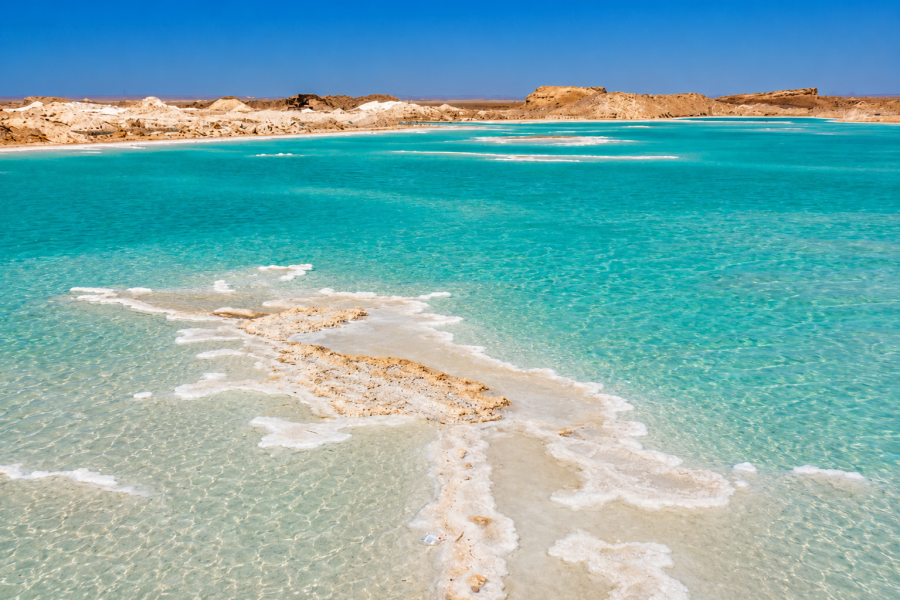
Travelers often imagine Egypt’s desert as completely dry, yet the oasis regions contain numerous natural springs.

Some itineraries stop around El Hez or nearby spring areas for lunch, rest or swimming depending on the route and current conditions.

On a fast itinerary, these stops may be brief.

With three or four days, you have much more freedom to slow down.

Stop 6: Crystal Mountain Egypt

Crystal Mountain is one of the most famous geological stops on the White Desert safari route.

The name sounds as if you are visiting an enormous solid crystal mountain.

That is misleading.

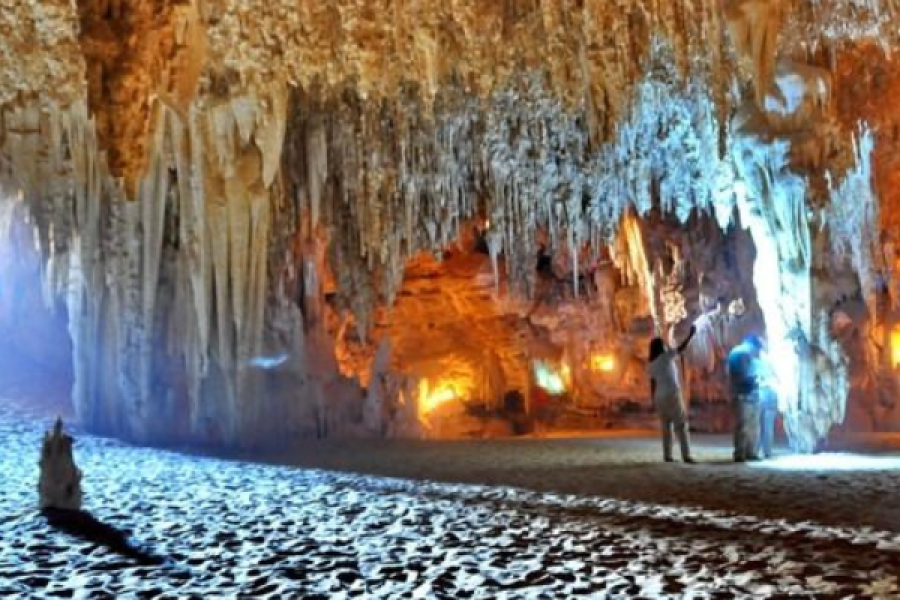
Crystal Mountain is associated with older cave and karst processes, with sparkling mineral and calcite formations visible in parts of the exposed structure.

For most itineraries, Crystal Mountain is a relatively short stop.

You can walk around, observe the geology, take photographs and then continue deeper toward Agabat.

The important thing is its position in the journey.

It acts as another transition between the darker landscapes nearer Bahariya and the increasingly pale landscapes farther south.

Is Crystal Mountain Inside the White Desert?

Travel content often bundles the entire journey together under the term “White Desert tour,” which can create confusion.

Crystal Mountain is better understood as a major geological stop on the broader Western Desert safari route toward the White Desert.

For travelers, however, the distinction is mostly geographical.

A standard organized itinerary normally includes Crystal Mountain as part of the same journey.

Stop 7: Agabat Valley Egypt

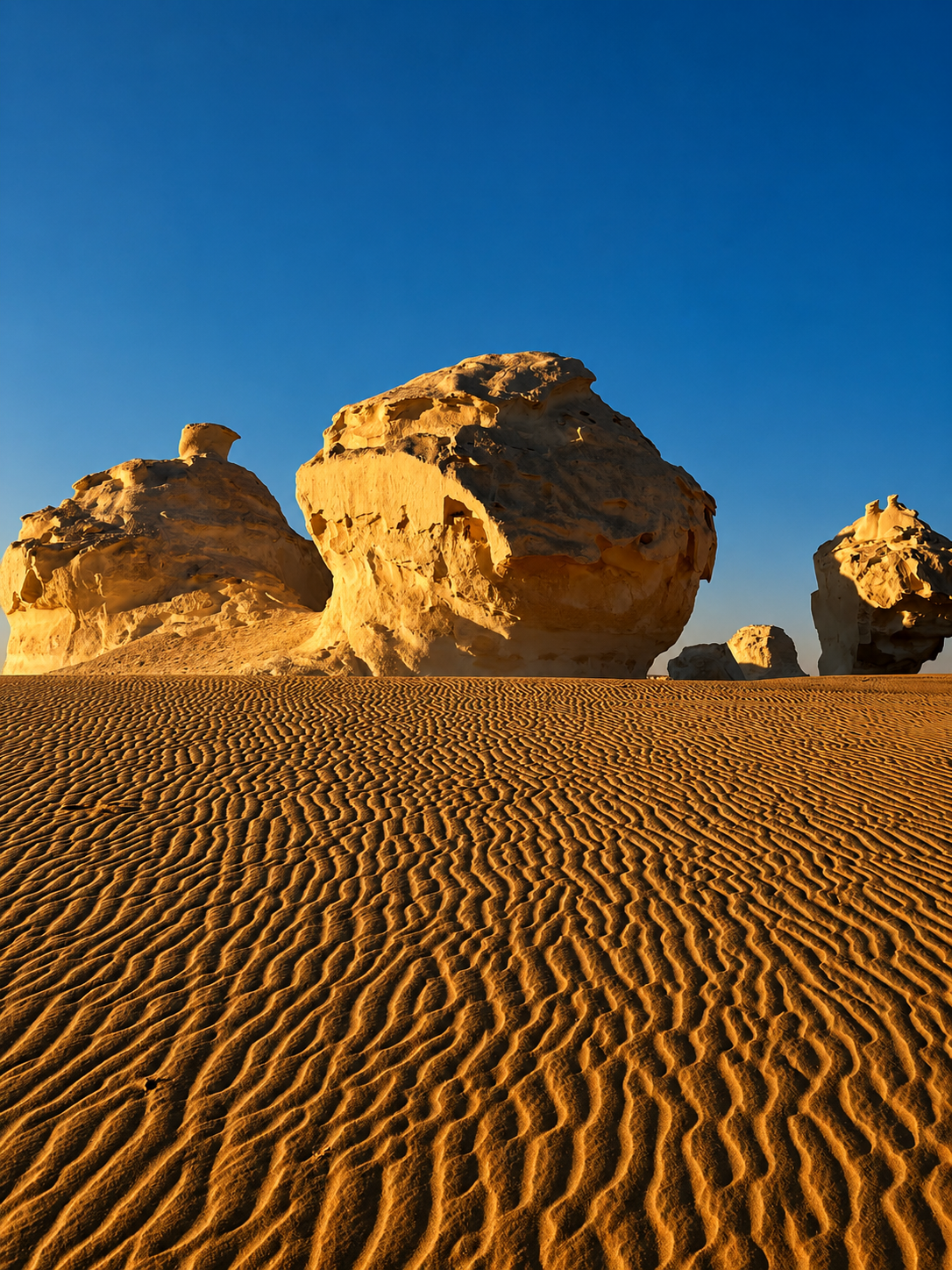
Agabat, also written Aqabat, is one of the most dramatic areas of the journey.

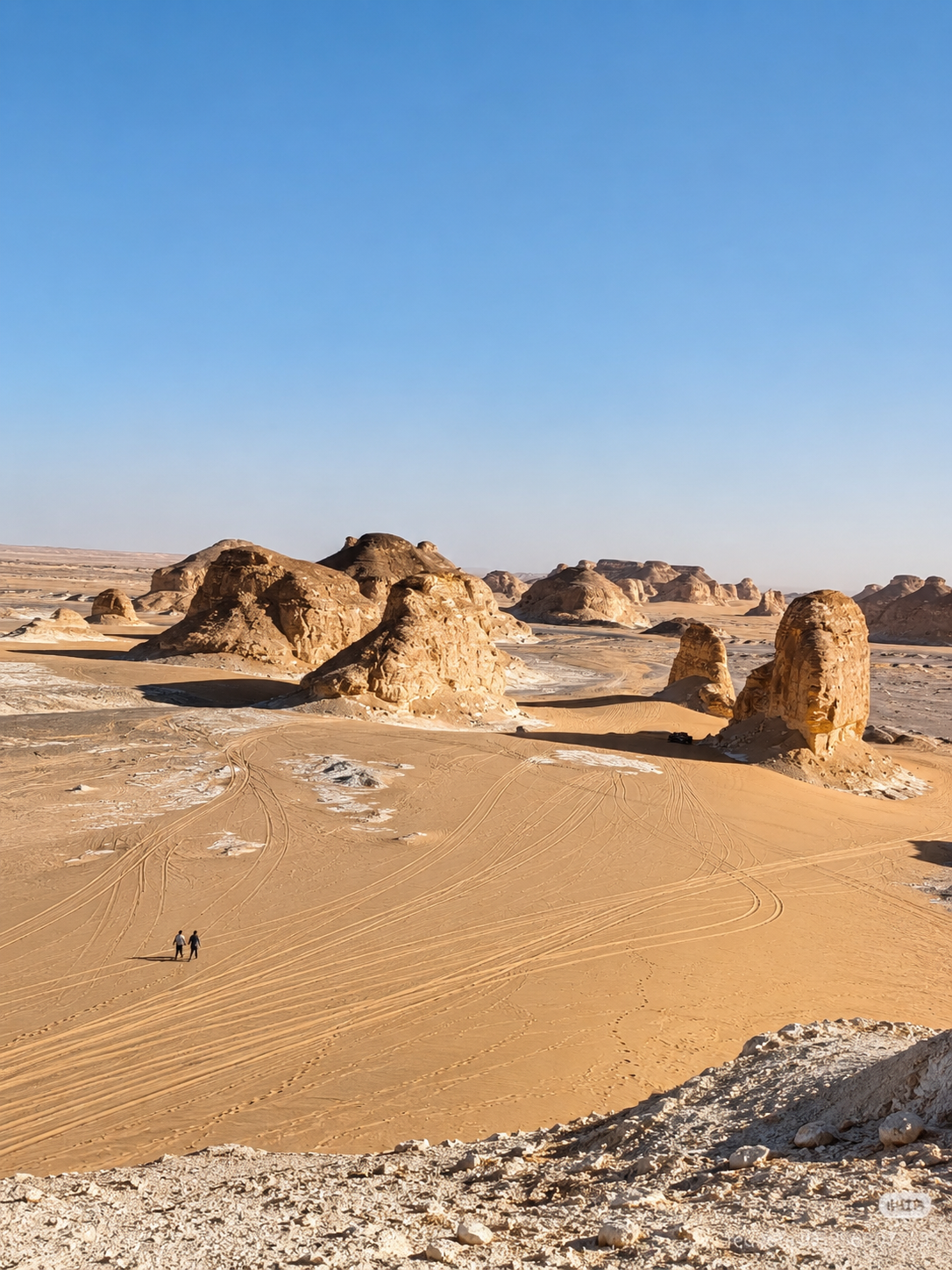
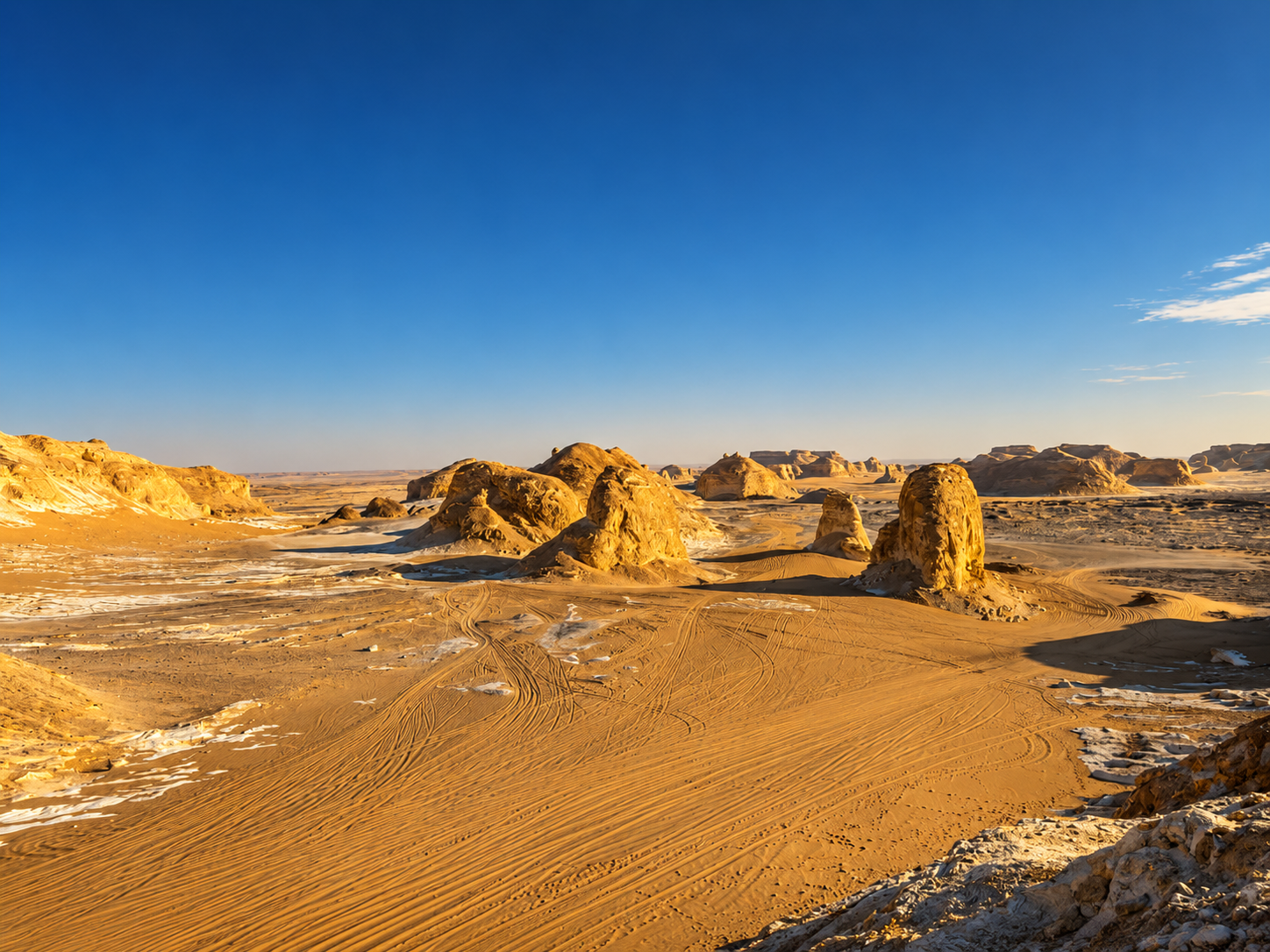
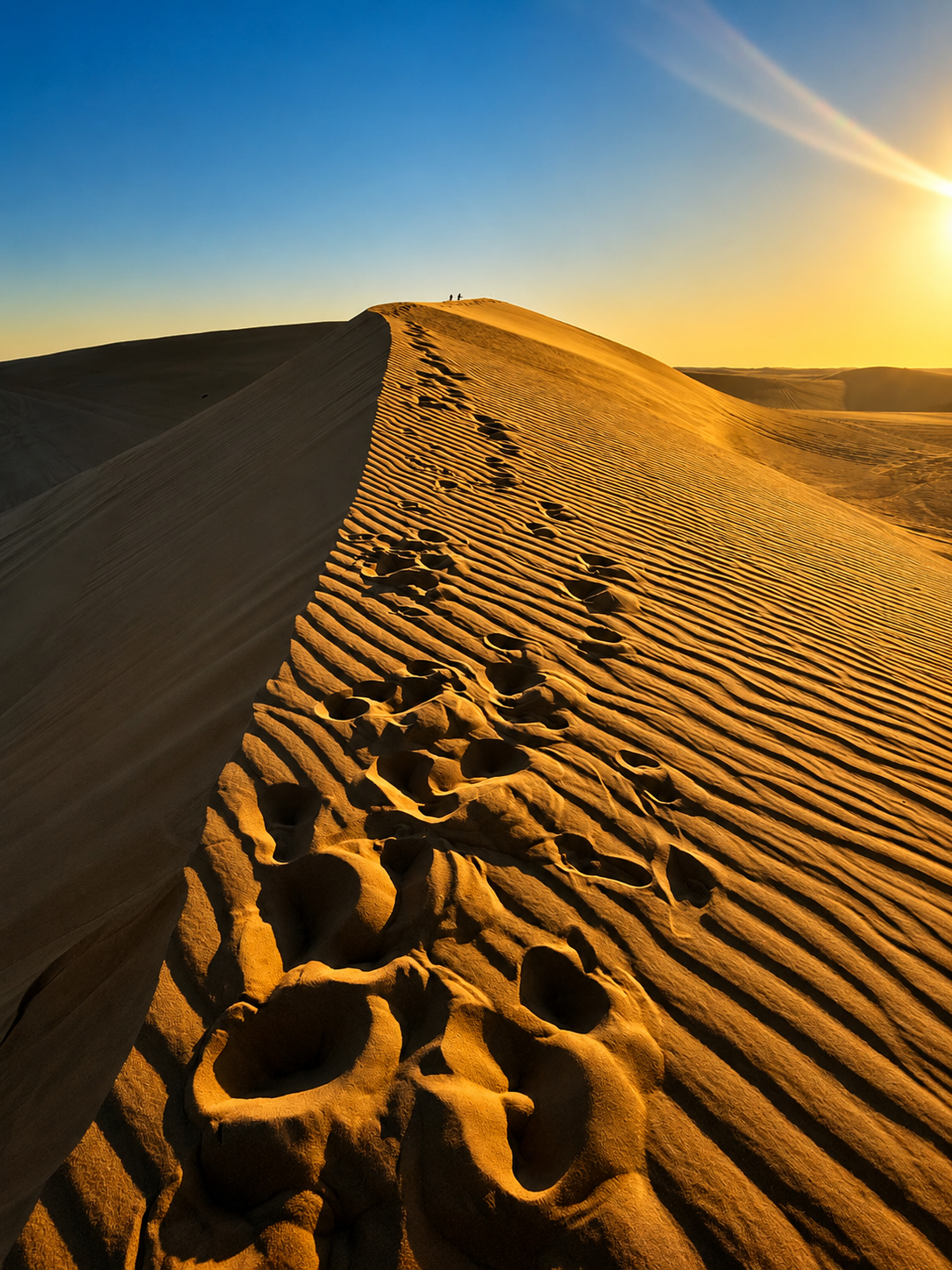
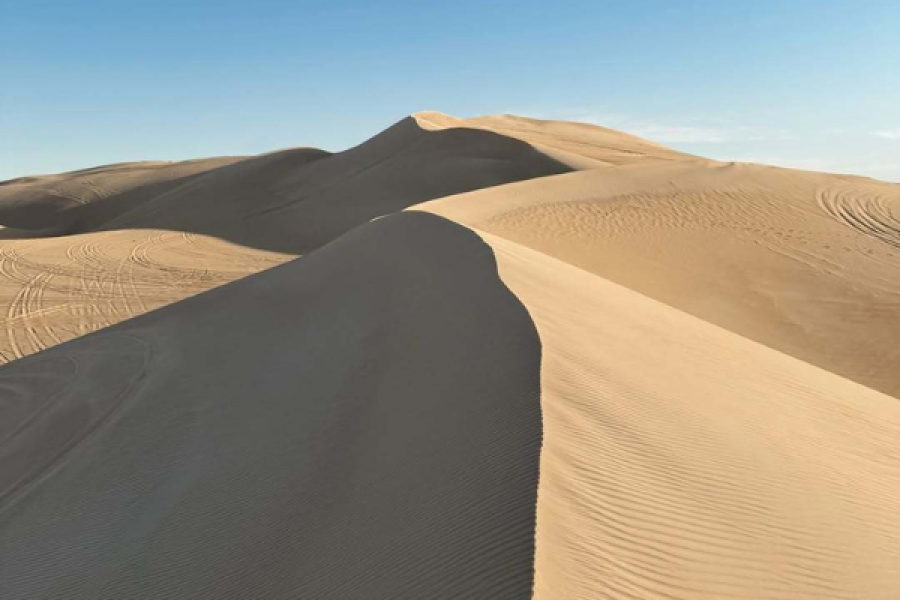
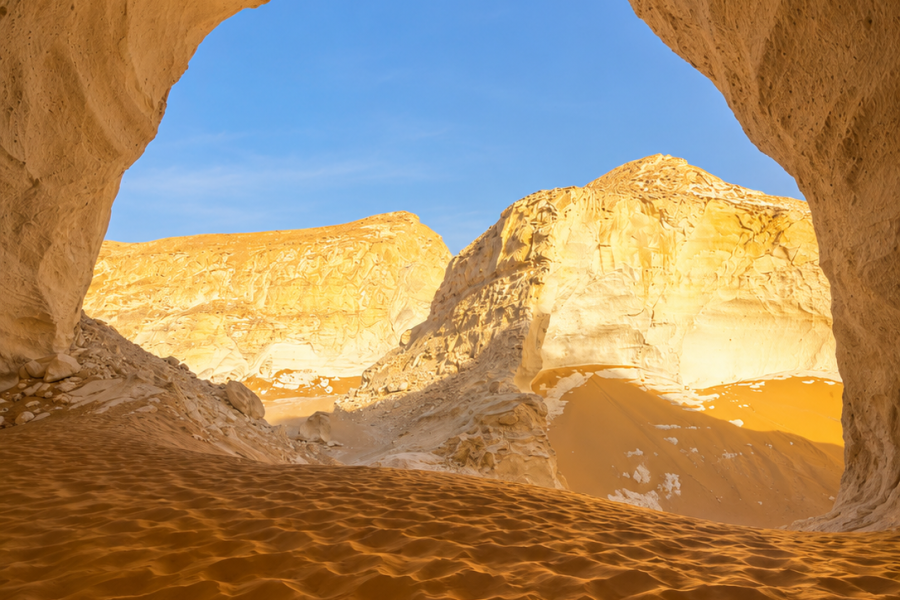
The landscape combines soft golden sand, dunes and spectacular pale cliffs.

This combination makes it one of the strongest photography locations on the route.

By this stage of the journey, the visual identity of the landscape begins changing again.

The darker terrain of the earlier safari is behind you.

Pale cliffs appear.

Golden sand remains dominant.

And you begin approaching the white geological environment that makes the destination famous.

Agabat is therefore not simply another stop.

It is one of the major highlights of the safari.

For serious photographers, it can be every bit as interesting as the White Desert itself.

A private tour can be particularly valuable because it gives you more freedom to stop when the light is good rather than treating Agabat as a five-minute photo opportunity.

For photography-focused planning, read our White Desert Egypt Photography Guide.

Stop 8: Sand Dunes and Sandboarding

The route is not entirely rocky.

Dune areas appear throughout the Western Desert journey.

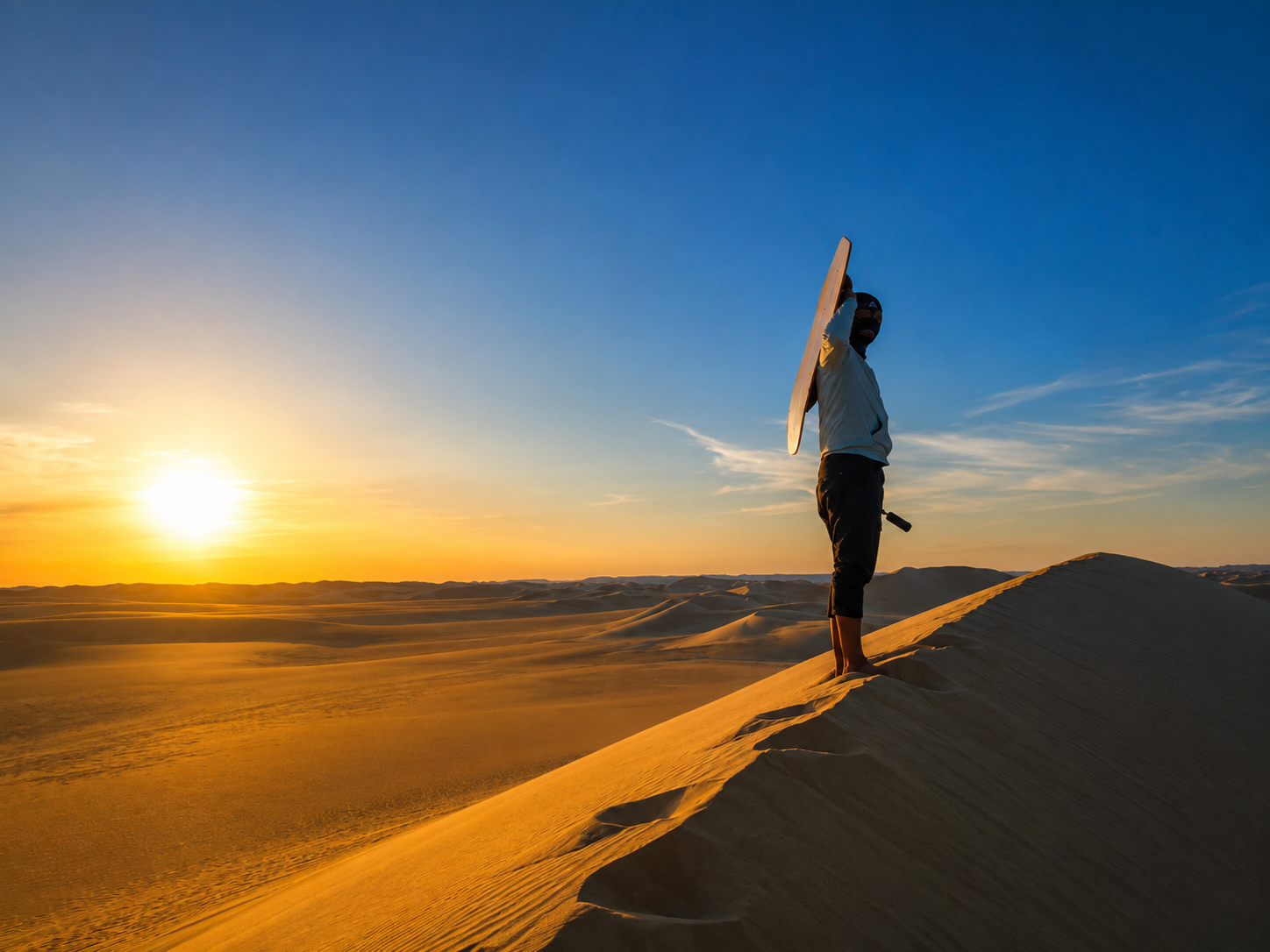
Depending on the itinerary and conditions, some tours include opportunities for sandboarding.

On a one-day itinerary, these activities normally need to remain fairly short.

On a three-day safari, they become part of a much deeper off-road experience.

This is one of the important differences between simply seeing the White Desert and truly exploring the Western Desert.

Stop 9: White Desert Protected Area

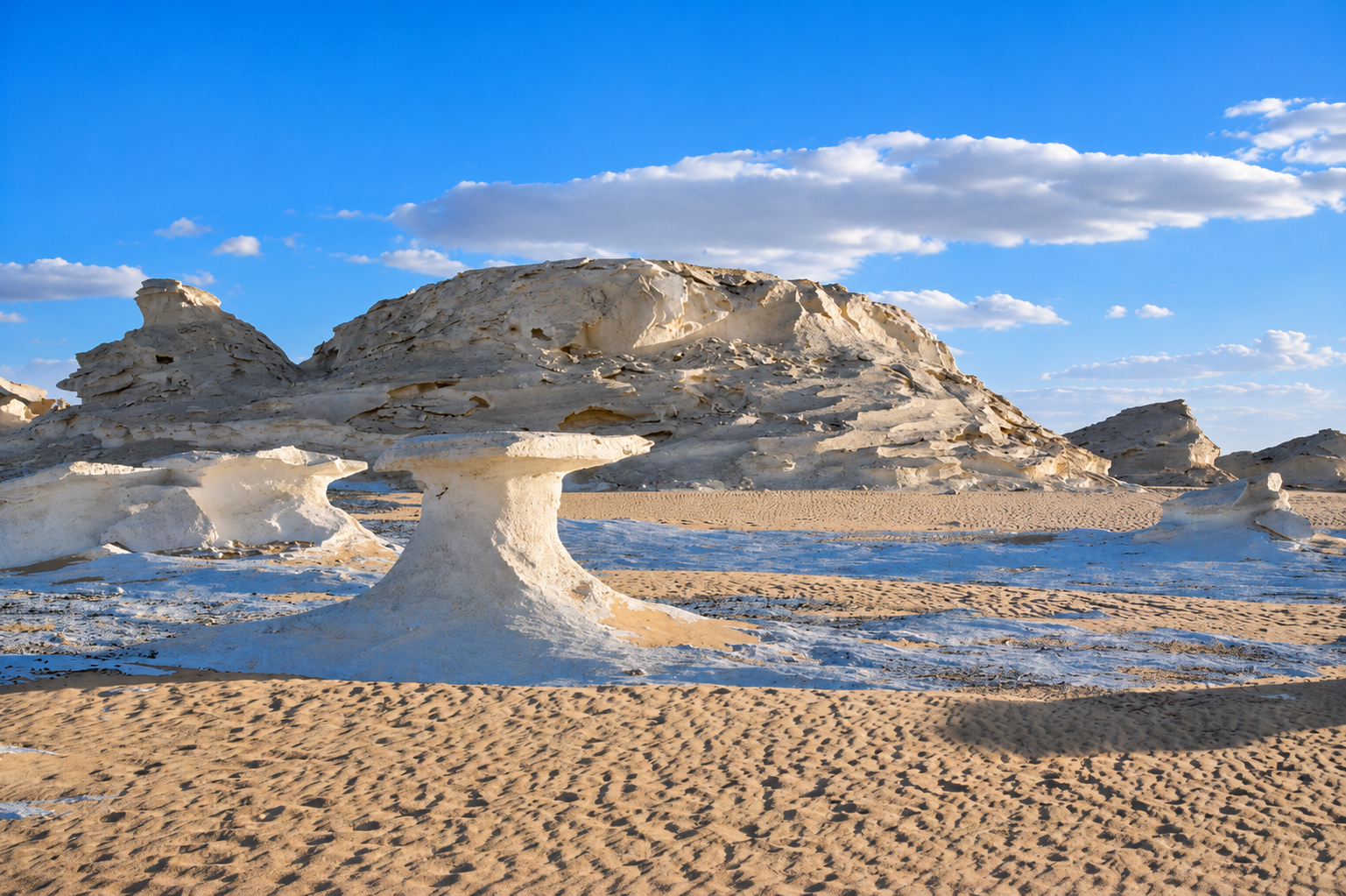
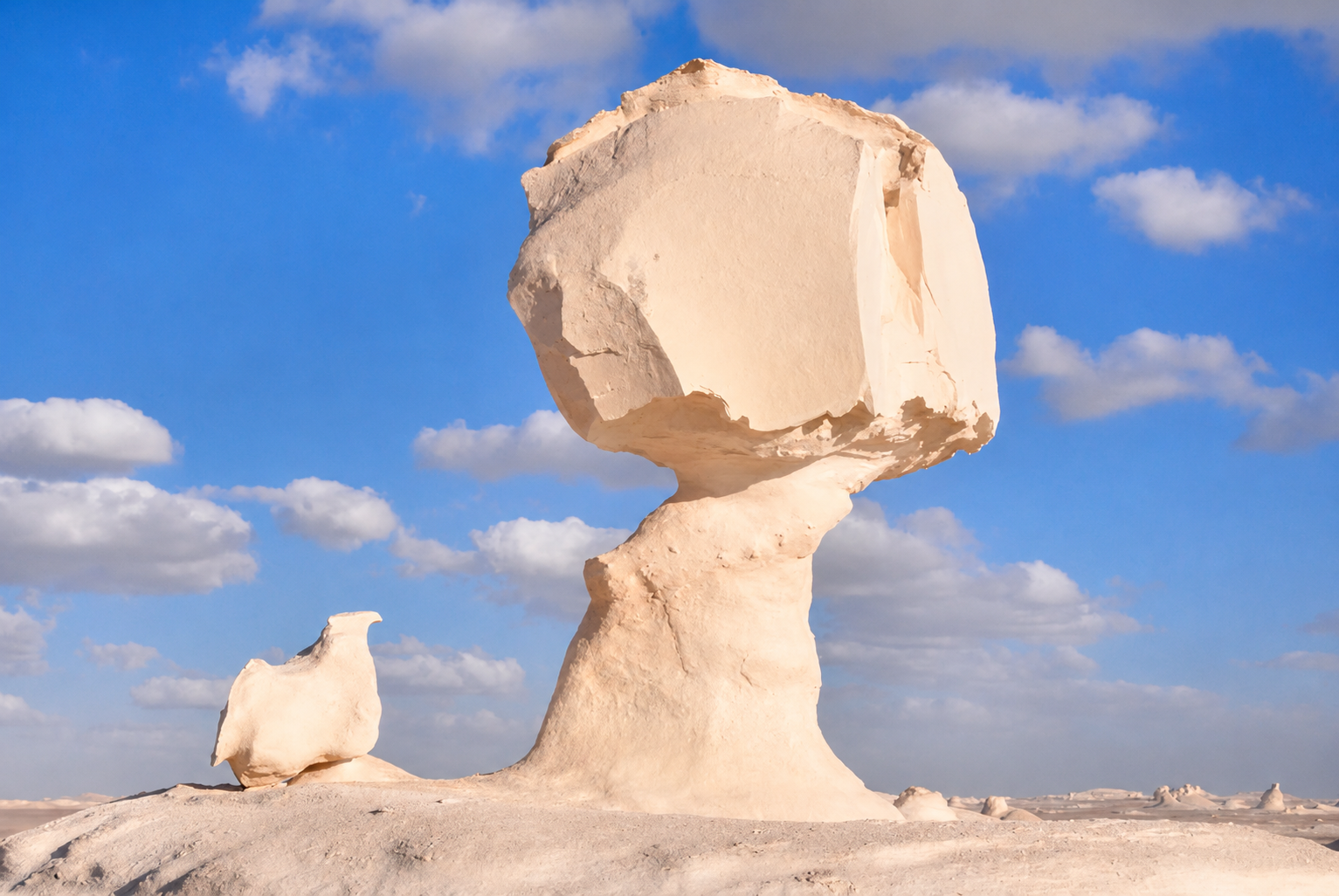
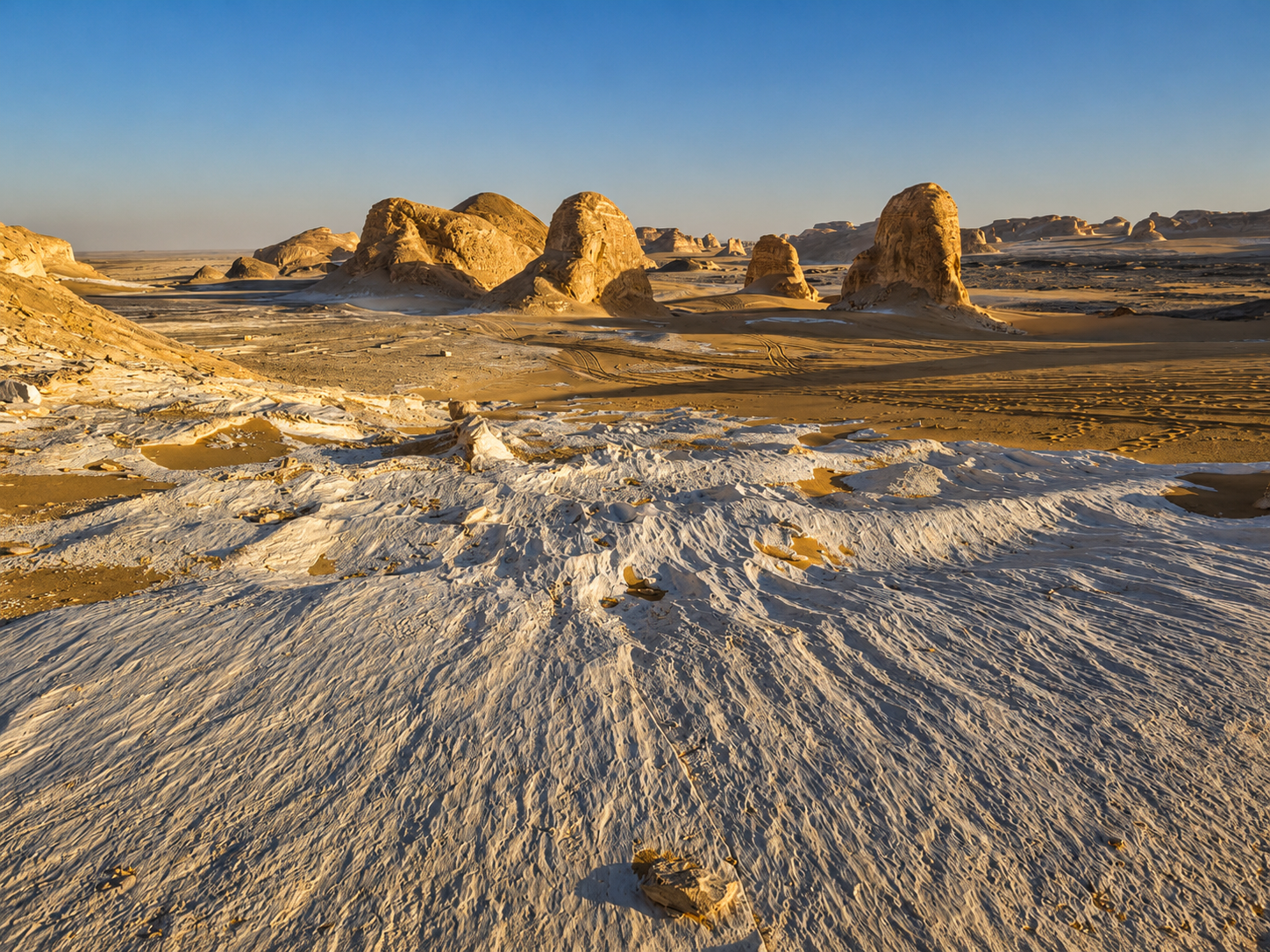
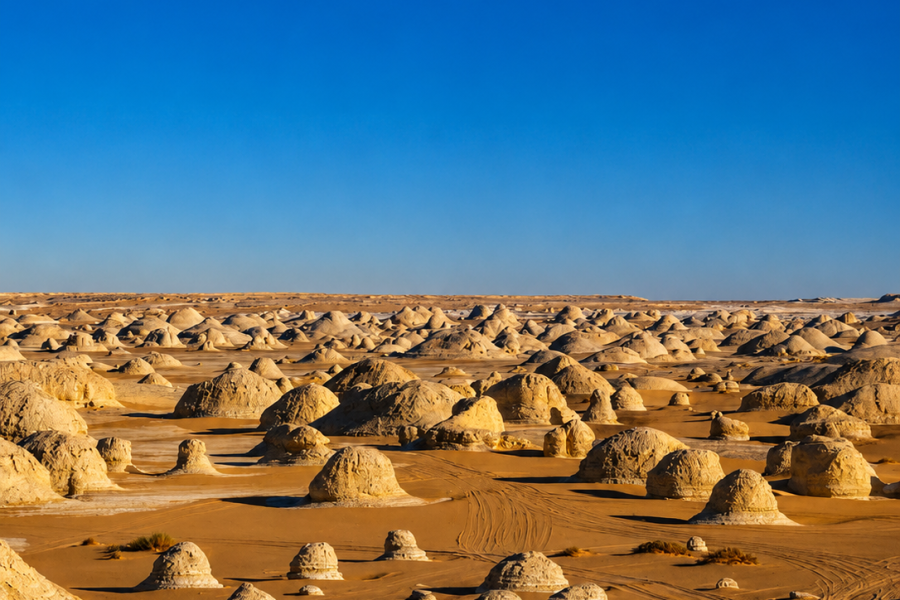
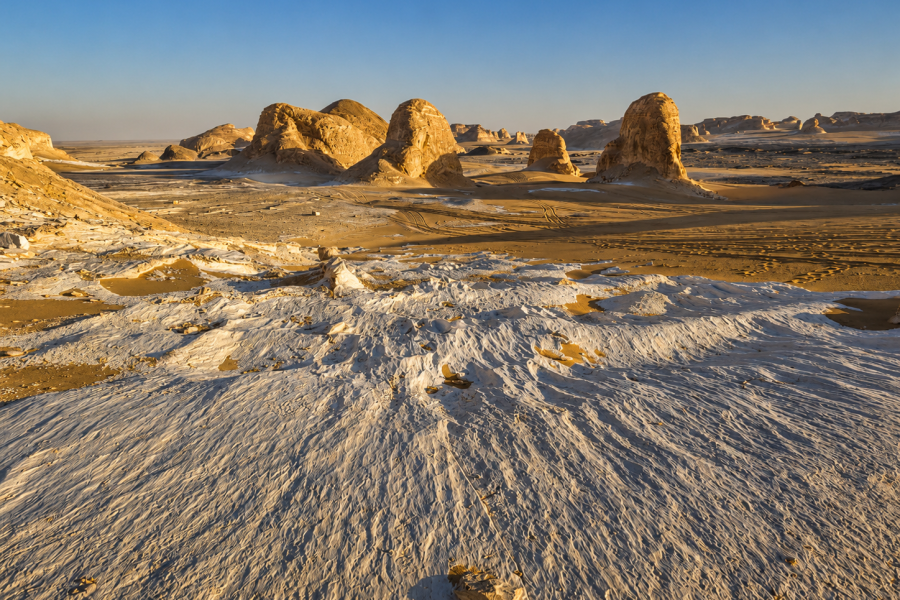
Eventually, the landscape becomes unmistakably white.

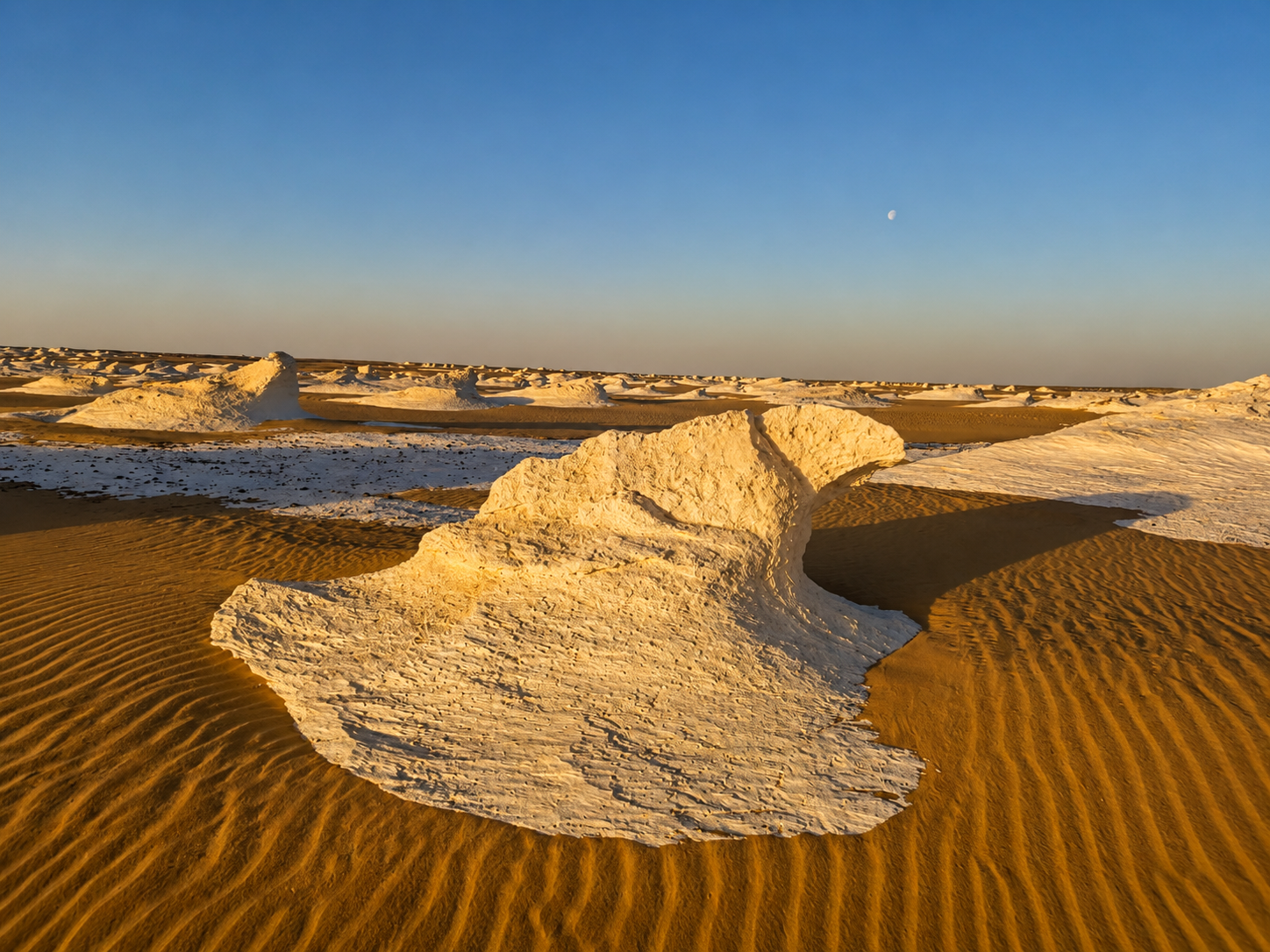
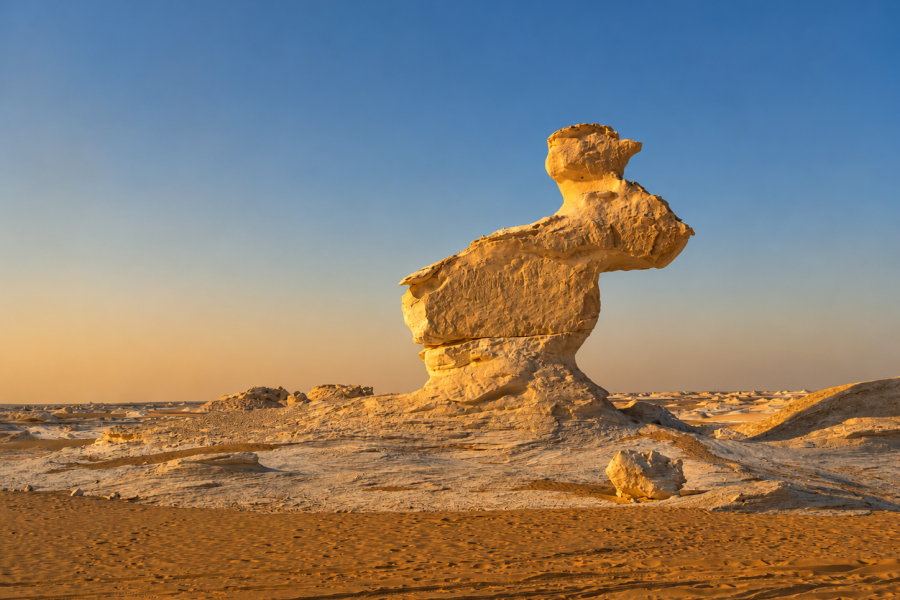
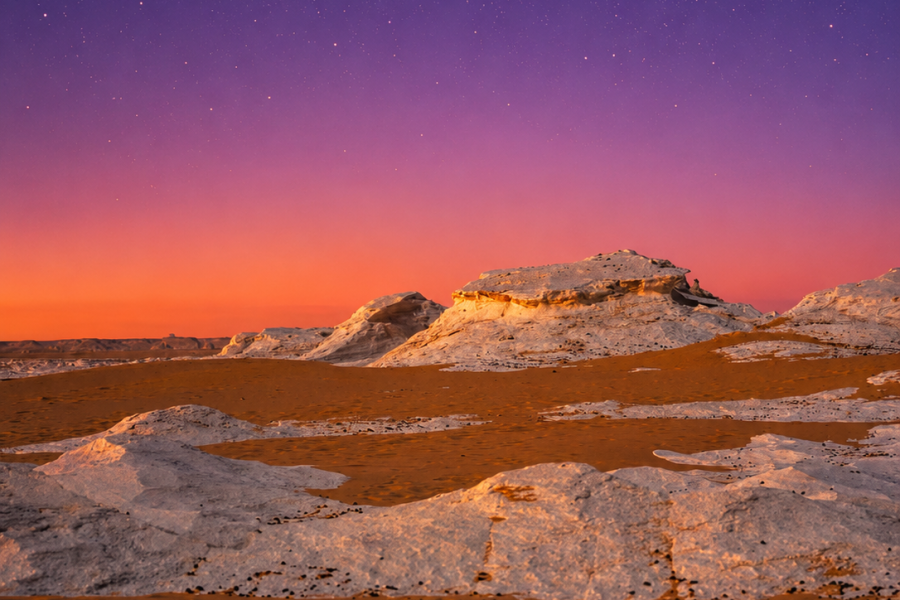
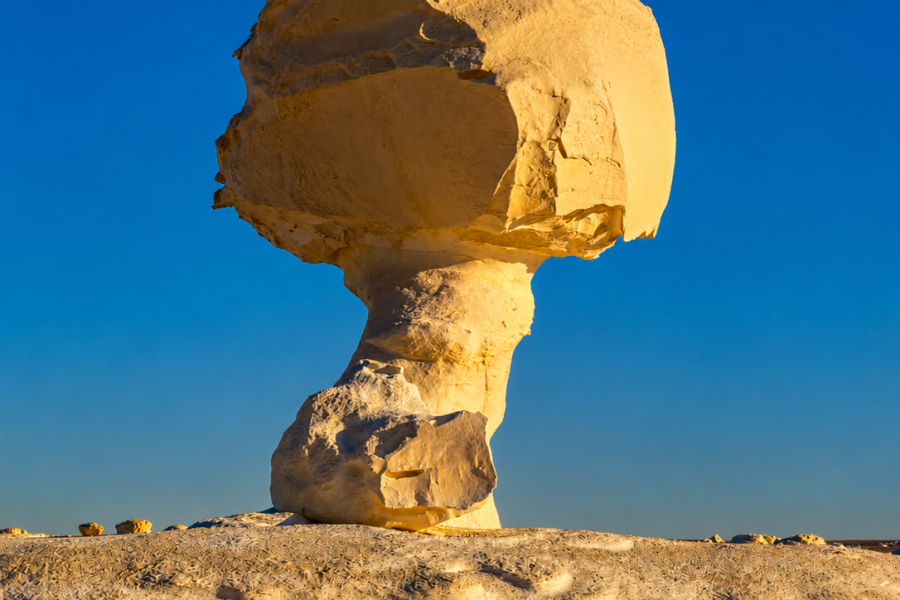
Bright chalk plains and unusual rock formations begin dominating the scenery.

This is the climax of the classic route.

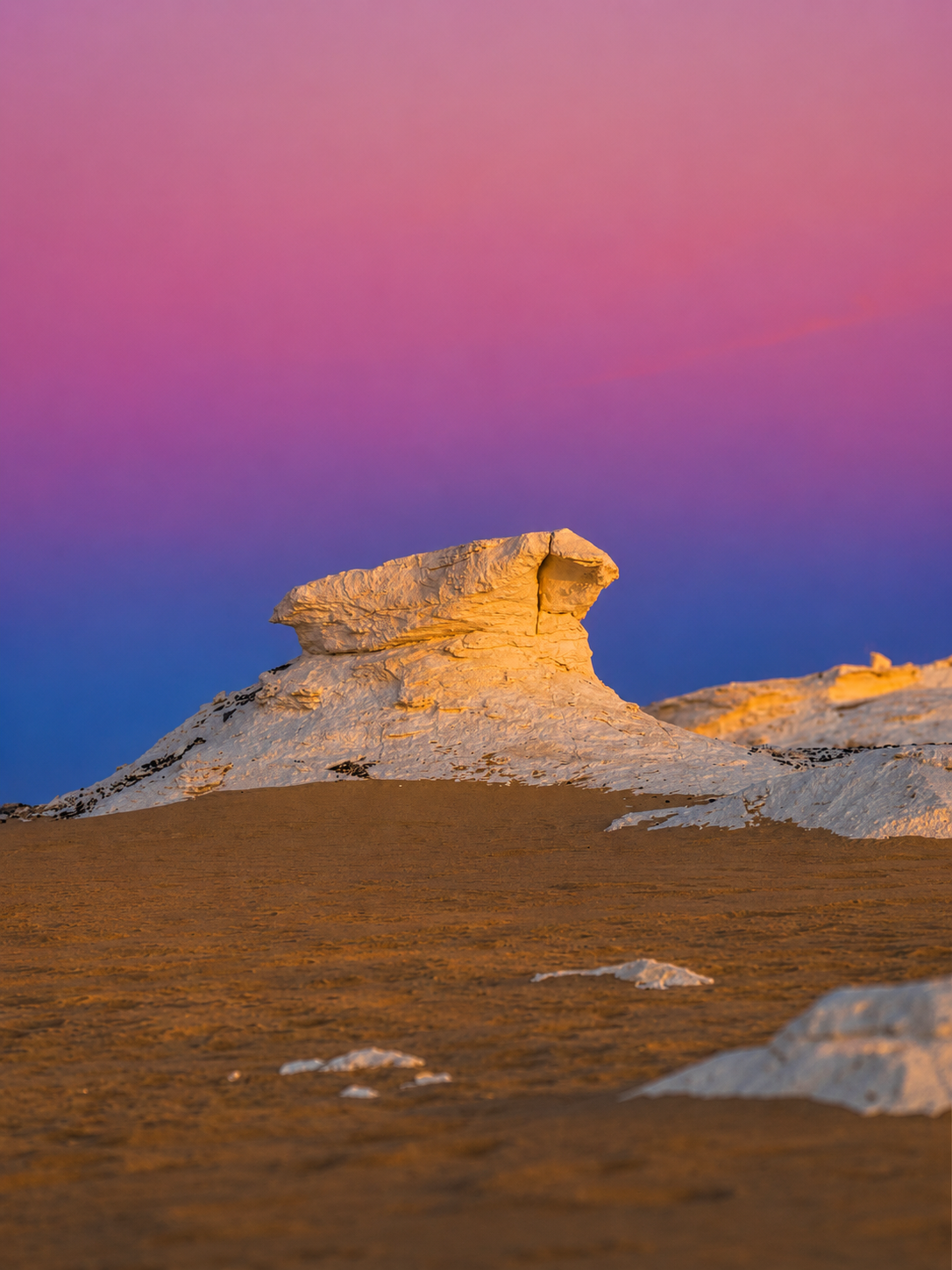
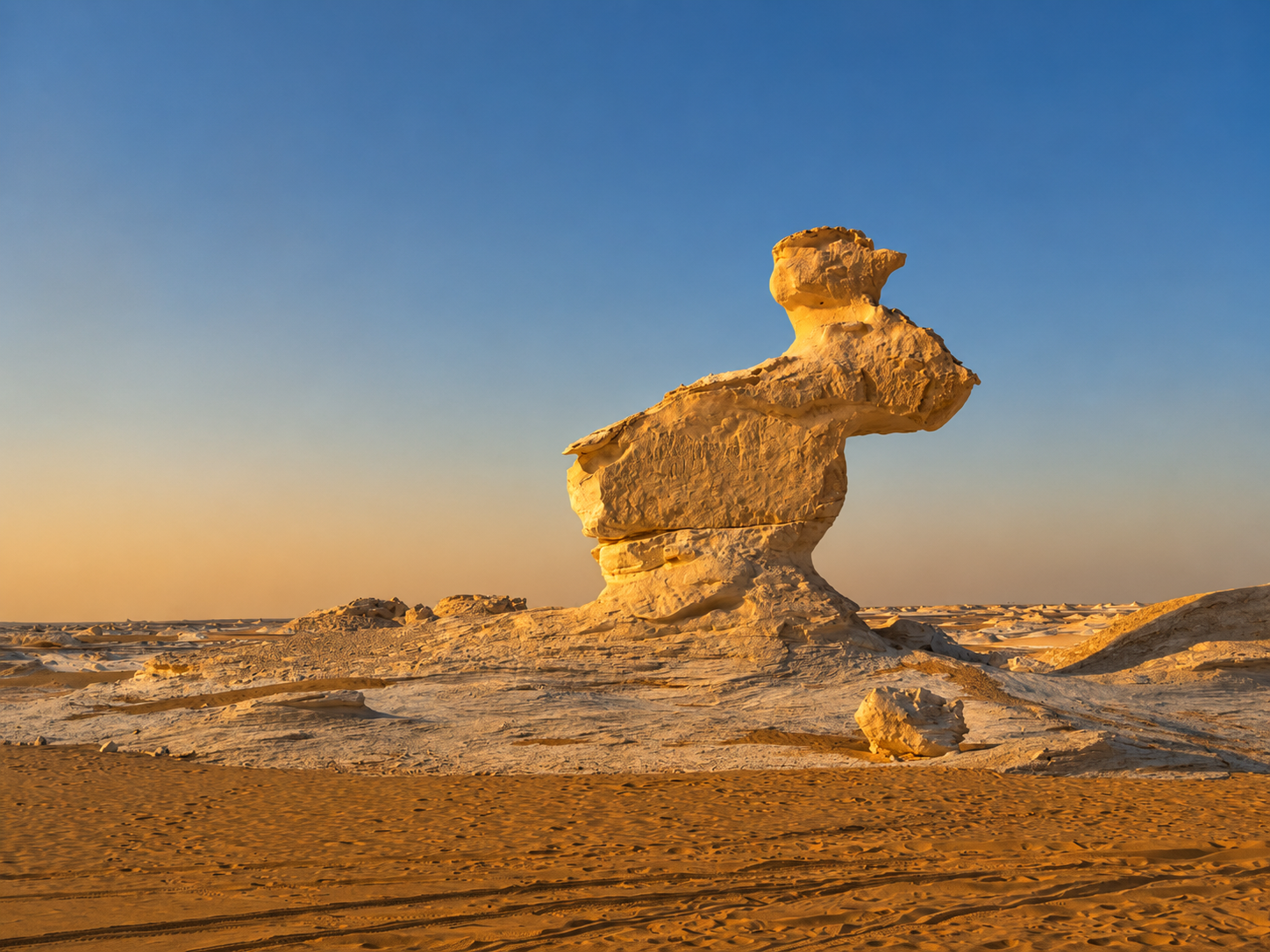
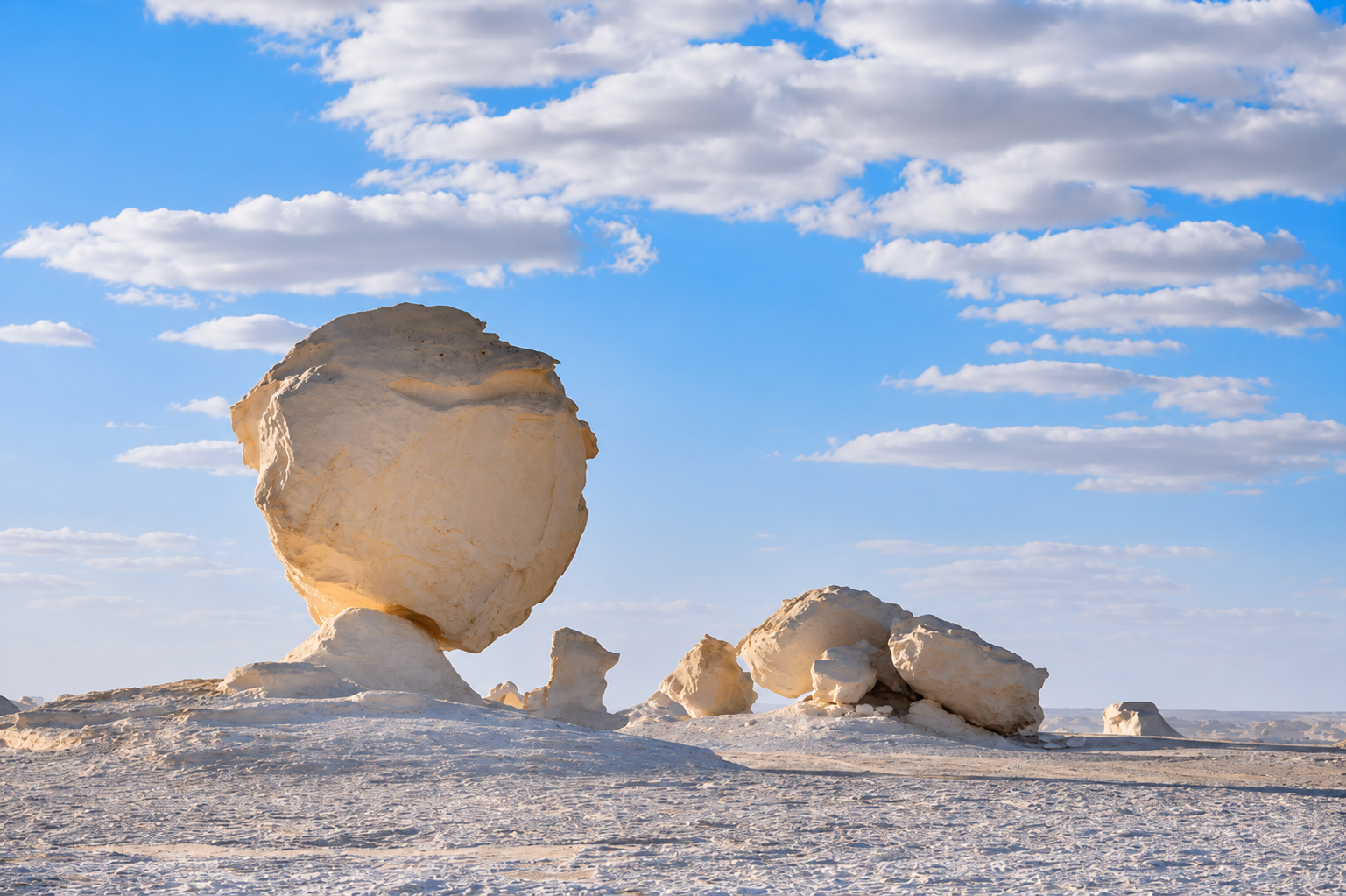
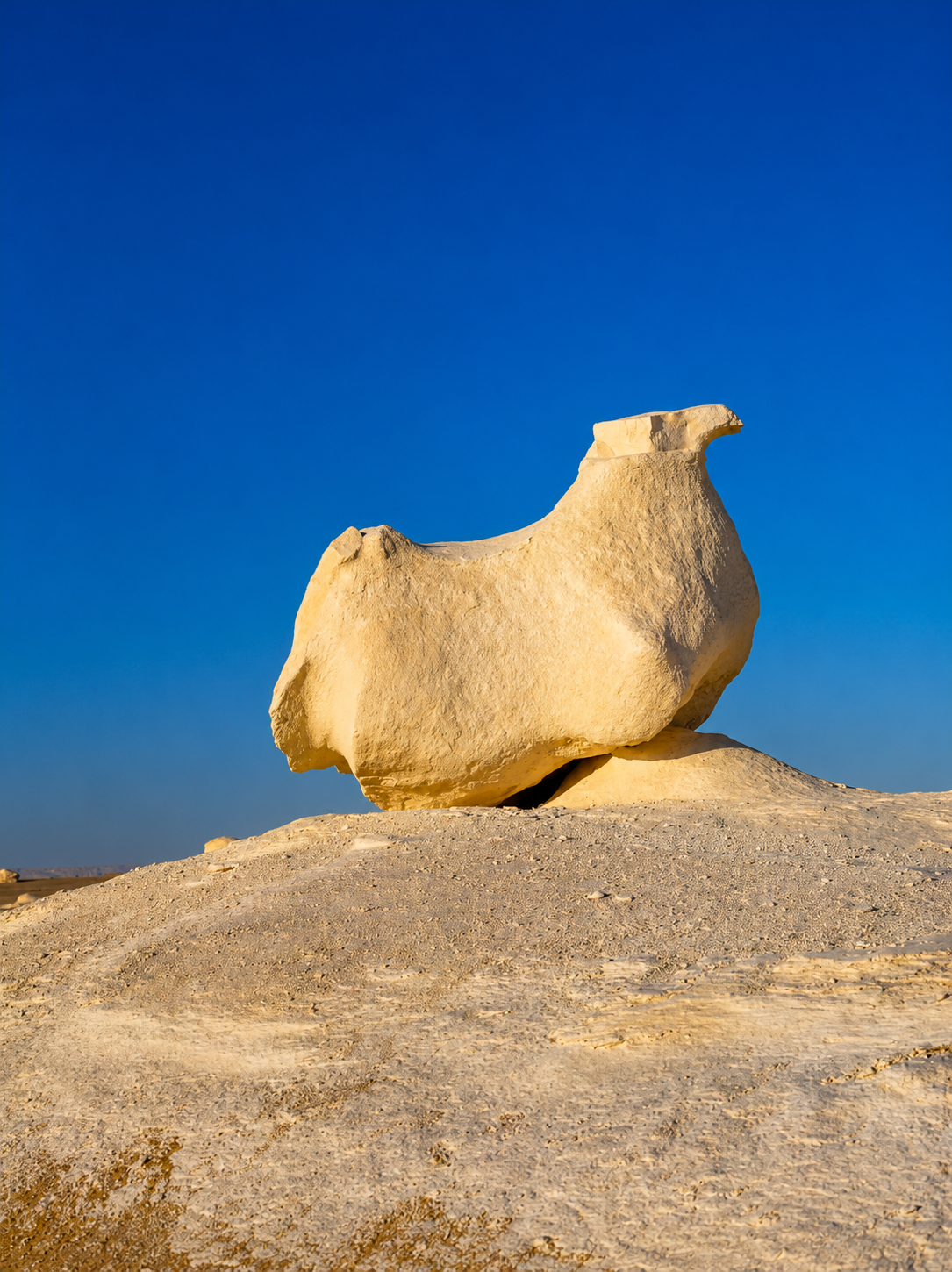
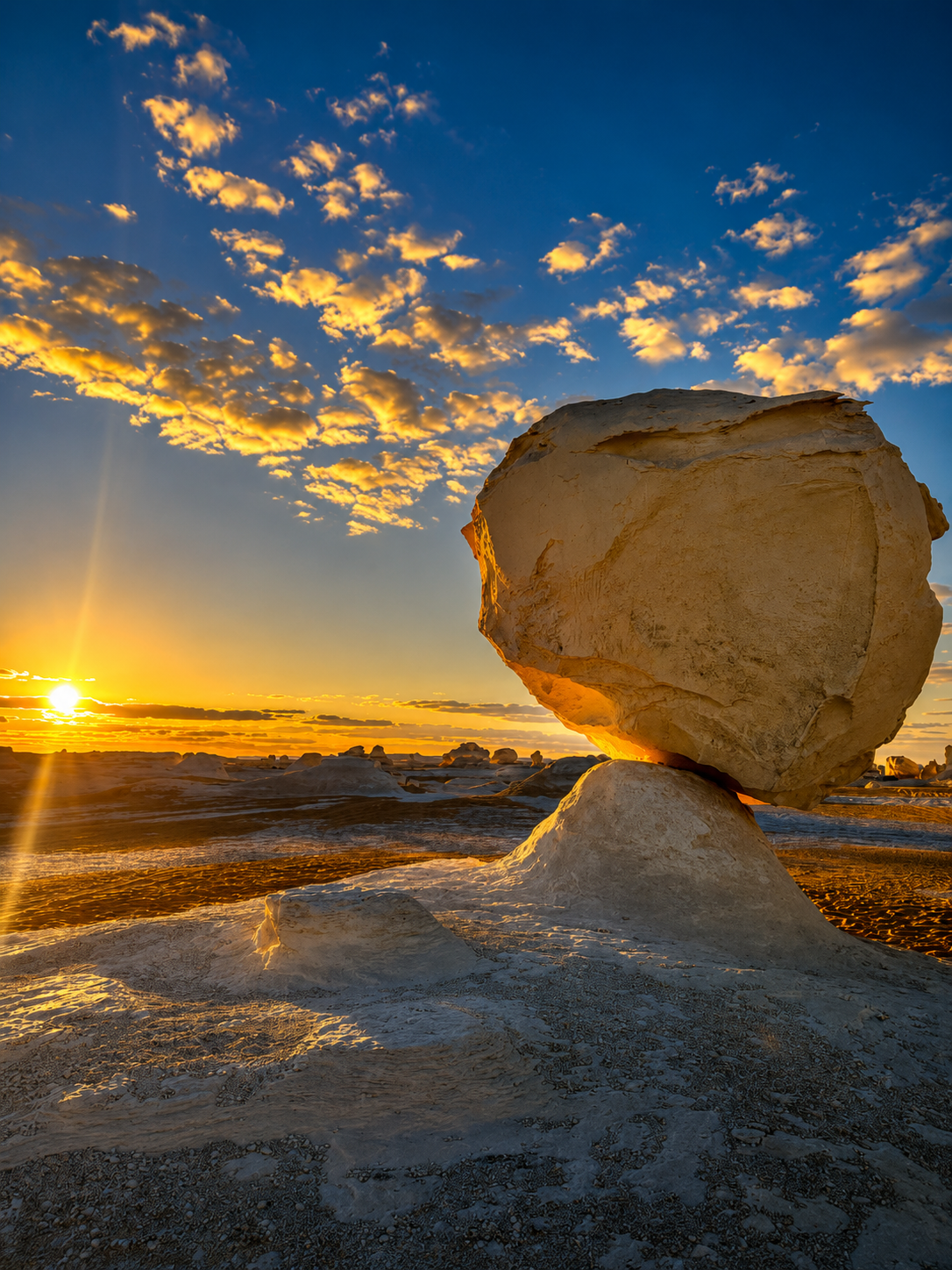
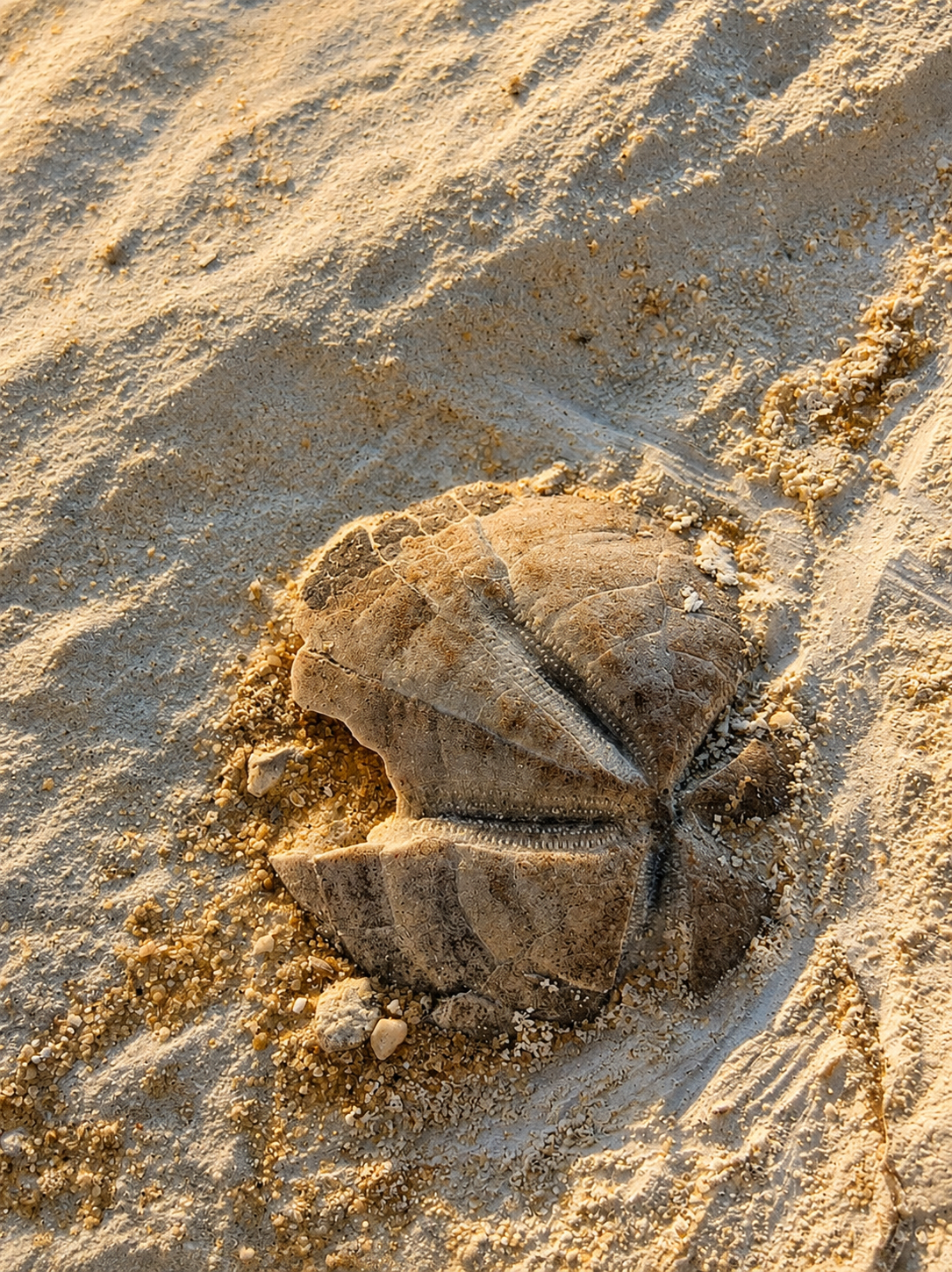
The White Desert is known for its brilliant chalk and limestone formations, fossils, karst landscapes and distinctive desert environment.

The protected area was officially declared in 2002.

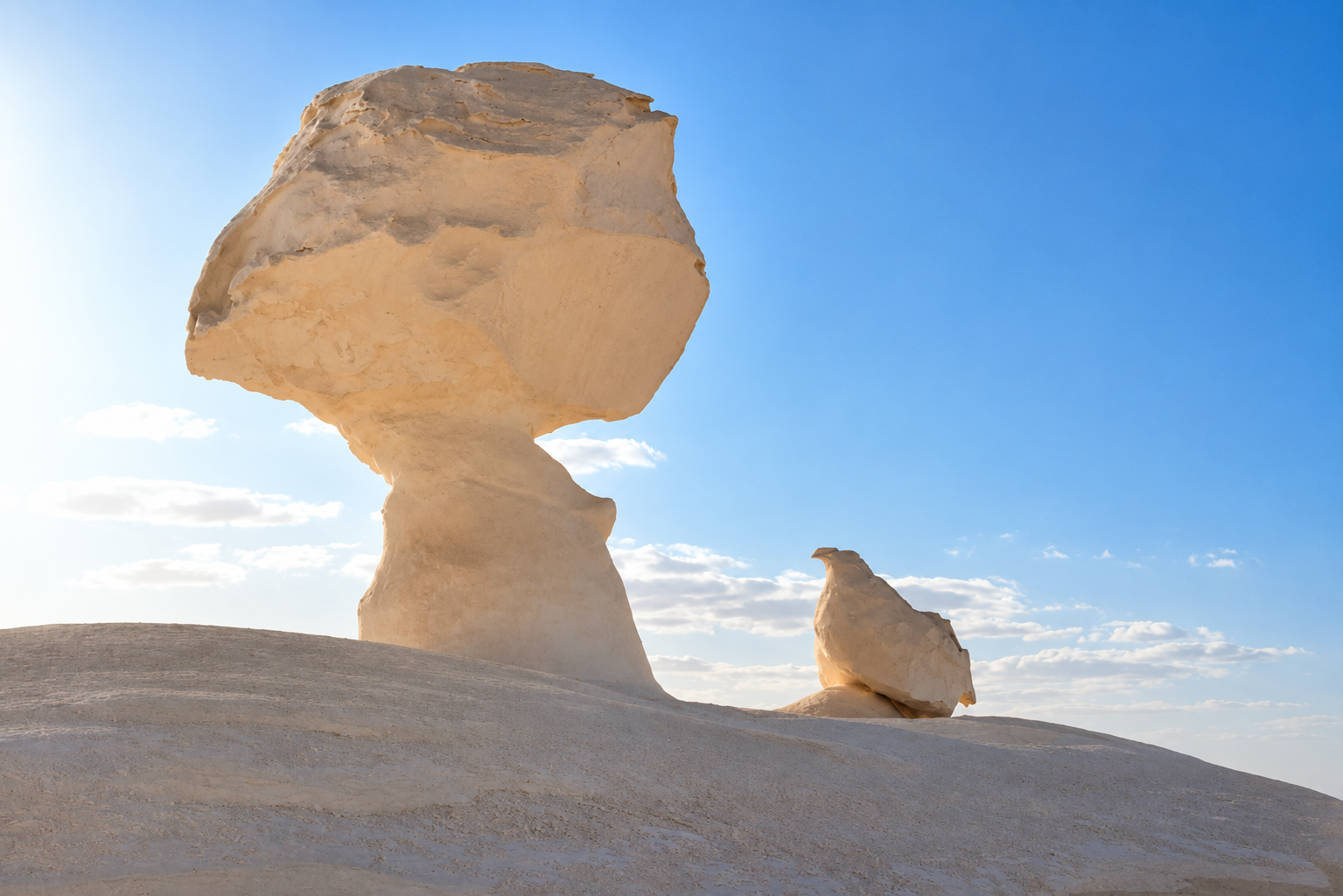
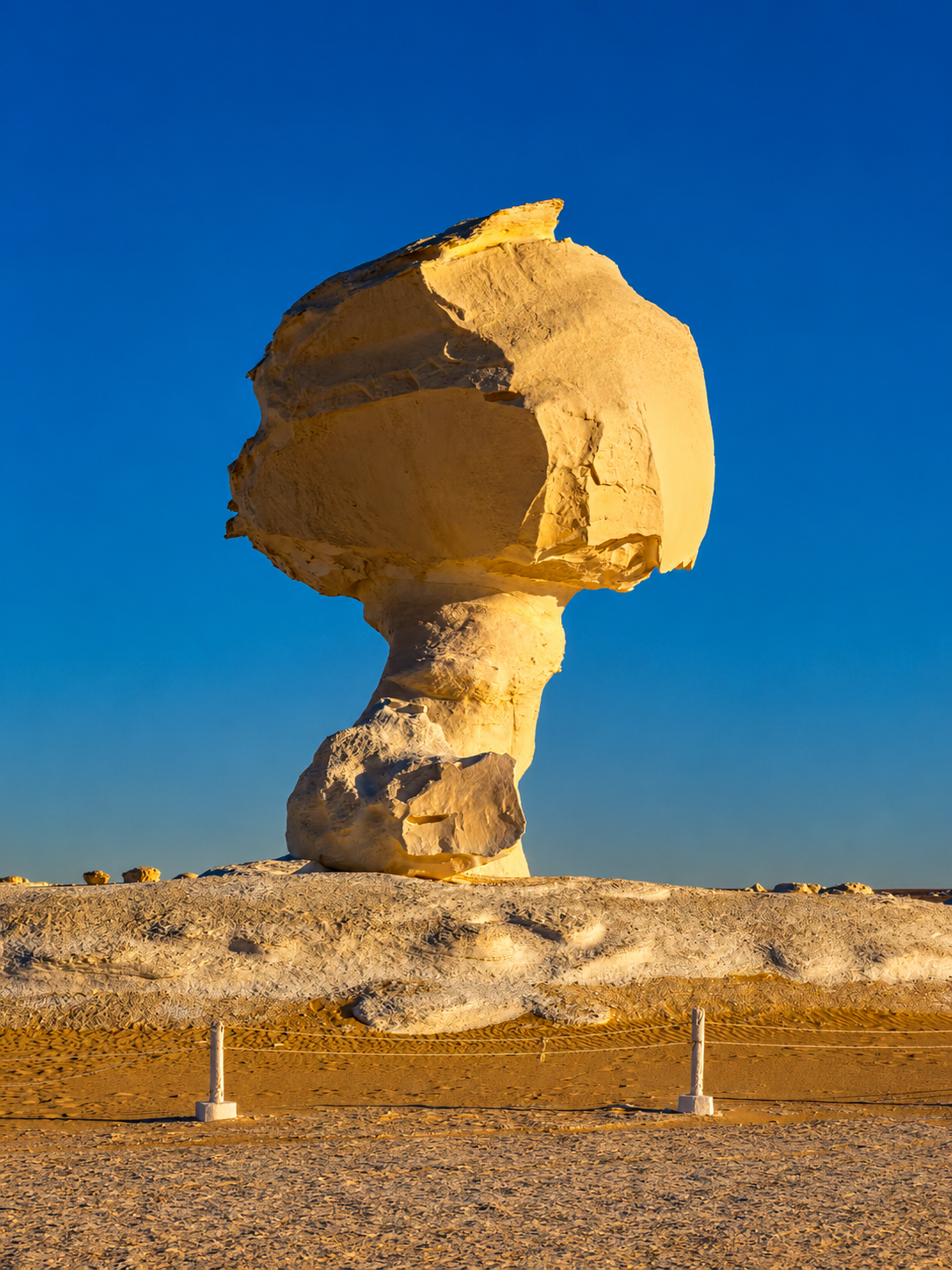
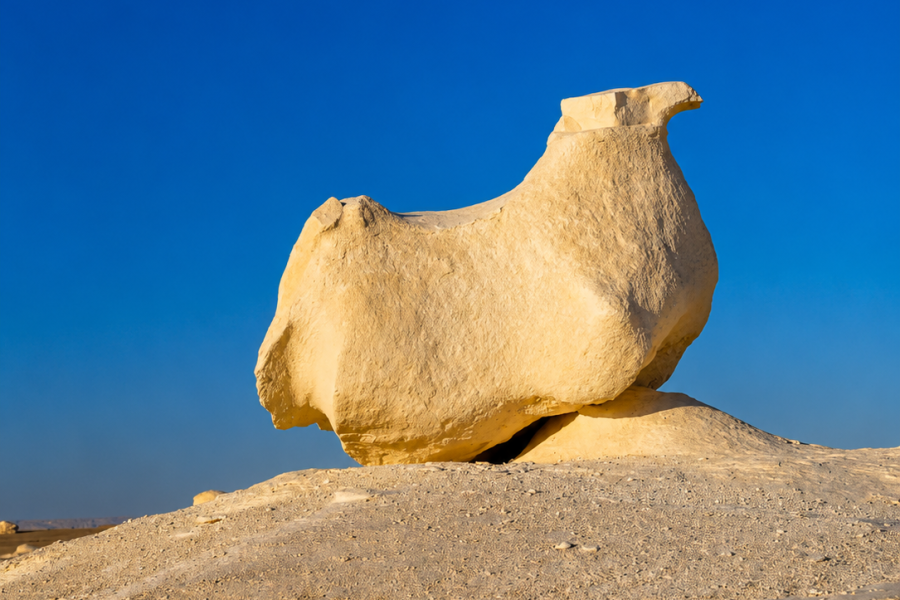
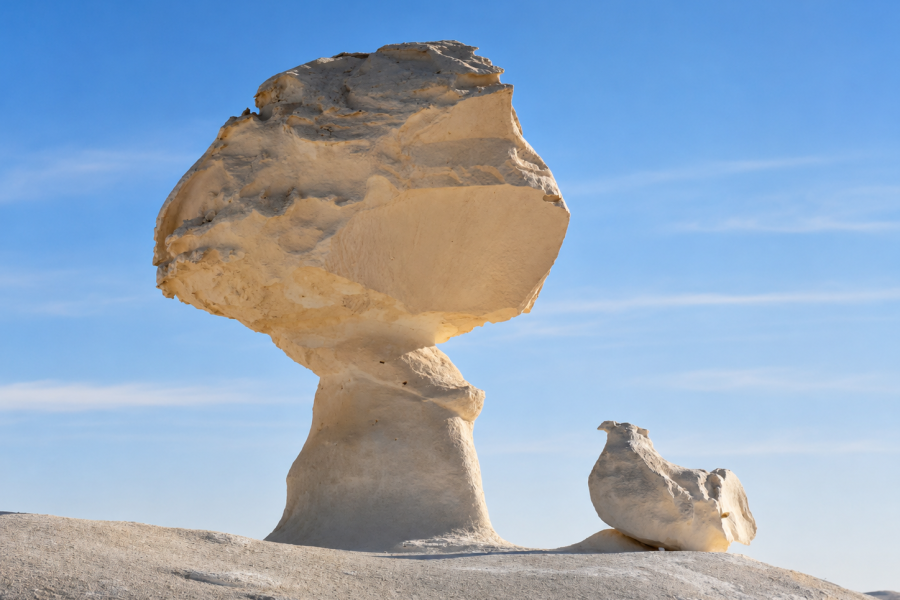
Many formations resemble familiar shapes, including:

  • Mushrooms
  • Birds
  • Towers
  • Animals
  • Domes
  • Tents

However, the White Desert should not be reduced to finding one famous mushroom-shaped rock.

The landscape is much larger.

Its scale, silence and changing light are what make the experience memorable.

For the geological story behind the landscape, read our White Desert Egypt Formations & Geology guide.

When Should You Reach the White Desert?

If possible, aim to reach the White Desert in the late afternoon.

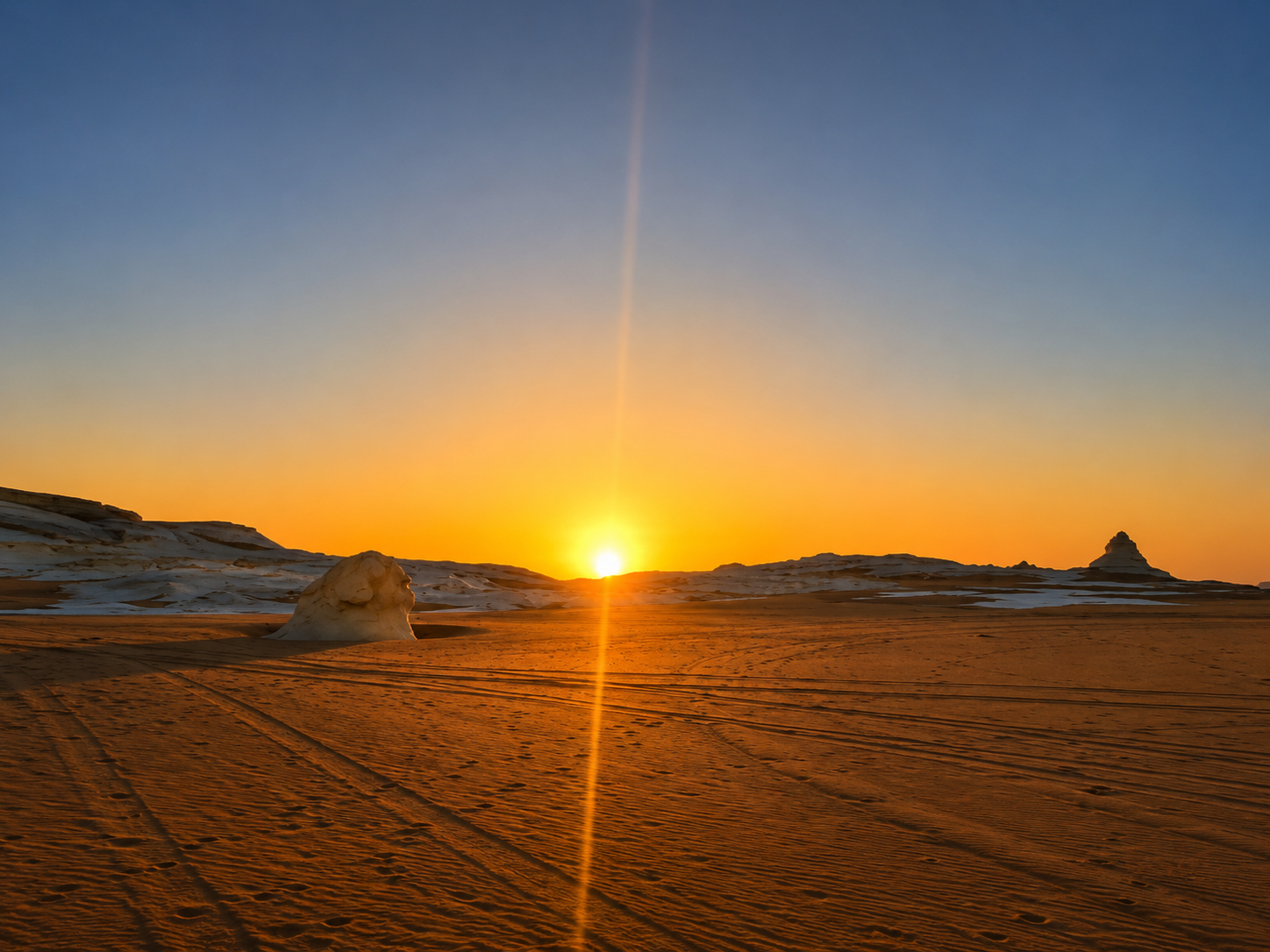
This allows you to experience the landscape before, during and after sunset.

Midday light can make the chalk extremely bright and reduce visible texture.

As the sun gets lower, shadows become longer and the formations appear more three-dimensional.

Then sunset changes the colors from bright white toward warmer gold and pink tones.

That timing is one of the strongest reasons to take an overnight trip.

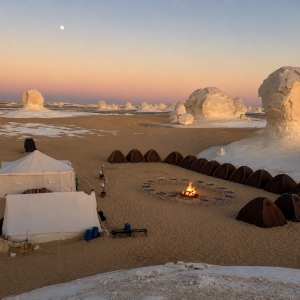
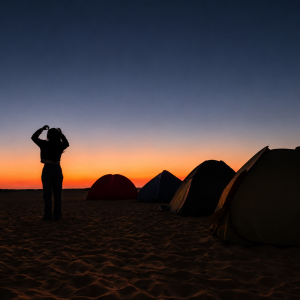
Instead of reaching the White Desert and immediately worrying about the drive back to Cairo, you can stop, set up camp, eat dinner, watch the stars and wake for sunrise.

Stop 10: White Desert Camping

For most travelers, the route should end with camping rather than another long drive.

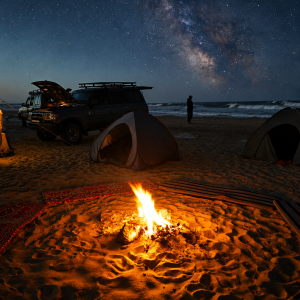
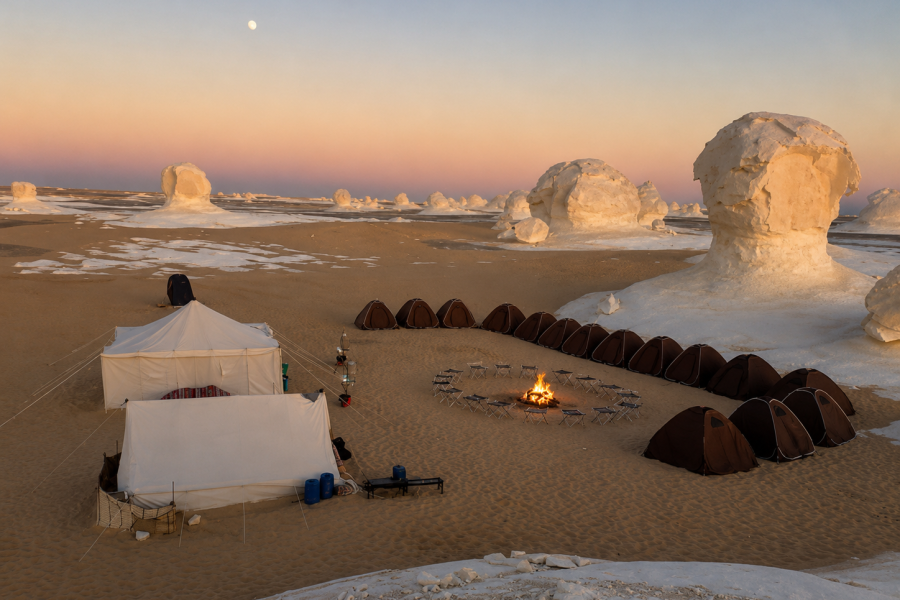
A typical organized camp may include:

  • Tents
  • Mattresses
  • Blankets or sleeping bags
  • Dinner
  • Breakfast
  • Desert seating

The exact setup varies according to the tour.

The point of camping is not hotel-style luxury.

It is location.

After sunset, traffic disappears.

The desert becomes quieter.

The formations turn into silhouettes.

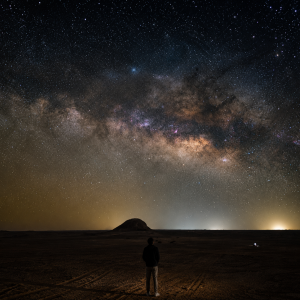
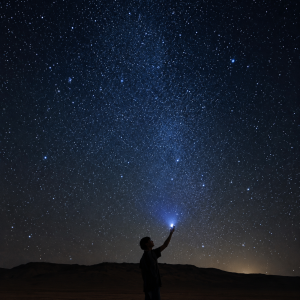
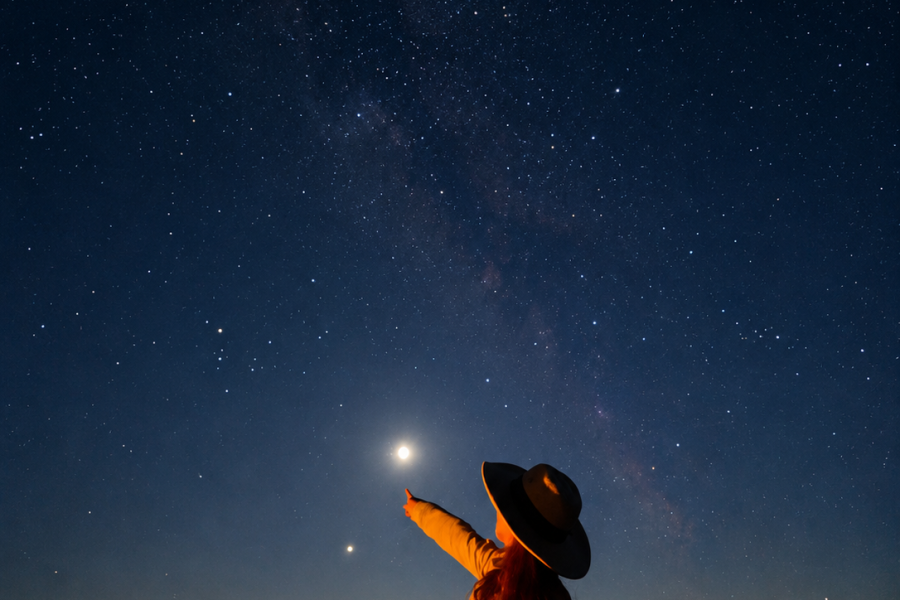
The sky becomes part of the experience.

This is why our White Desert Egypt Itinerary guide recommends 2 days / 1 night for most first-time visitors.

If you want details about tents, comfort, toilets, bedding and expectations, read White Desert Camping Egypt.

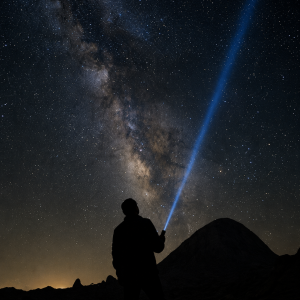
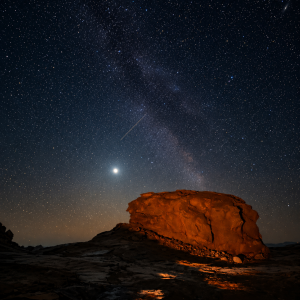
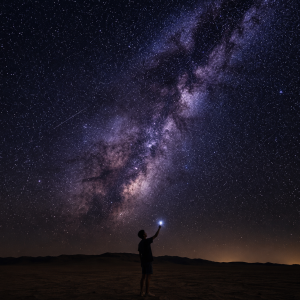
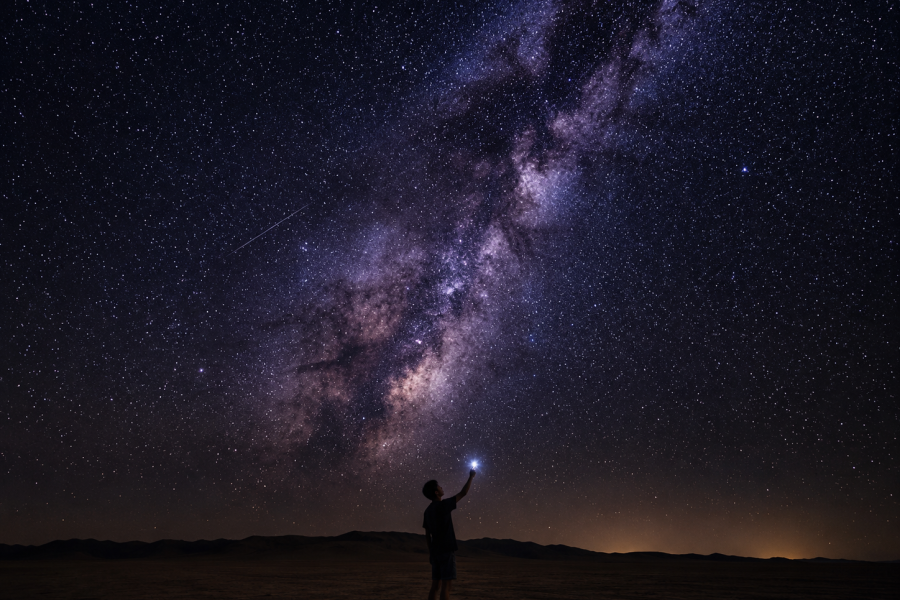
For the night sky specifically, continue to White Desert Egypt Stargazing.

Why Two Days Is the Best Route for Most Travelers

A one-day tour technically lets you see many major stops.

But there is a huge difference between visiting the White Desert and experiencing it overnight.

With two days, the route has a natural rhythm.

You travel from Cairo.

Enter Bahariya.

Explore the Black Desert.

Visit Crystal Mountain.

Cross Agabat.

Reach the White Desert.

Watch sunset.

Camp.

Wake for sunrise.

Then return.

That sequence feels like a complete journey.

The 1 Night 2 Days White Desert Tour from Cairo is therefore one of the strongest choices for most first-time visitors.


Best 1-Day White Desert Route

If you have only one available day, the route can be compressed into:

Cairo → Bahariya → Black Desert → Crystal Mountain → Agabat → White Desert → Cairo.

Depending on timing, additional stops may also be included.

The One Day White Desert Tour from Cairo is designed for travelers who cannot spend a night in the desert.

Who should choose it?

Travelers with no possibility of staying overnight.

Who should choose the overnight option instead?

Anyone with two available days.

The main drawback of the day trip is simple:

you spend a large percentage of the day traveling.

You may see the landscape, but you miss the full camping experience.

For the detailed comparison, read White Desert 1 Day vs Overnight Tour.

Best 2-Day / 1-Night White Desert Route

For most first-time travelers, this is the ideal route.

Day 1

Cairo → Bahariya Oasis → Black Desert → Gabal El Marsos → El Hez → Crystal Mountain → Agabat → sand dunes → White Desert → sunset → dinner → camping.

Day 2

Sunrise → breakfast → additional White Desert exploration → optional spring stop → Bahariya → Cairo.

The advantage is not simply the extra hours.

It is the change of atmosphere.

Day visitors see white formations.

Overnight visitors also experience silence, darkness, stars and sunrise.

Best 3-Day / 2-Night White Desert Route

Three days create a different kind of experience.

Instead of moving efficiently between famous landmarks, you have enough time to explore additional valleys, dunes and more remote landscapes.

The 2 Nights 3 Days White Desert Camping Tour extends the experience into deeper Western Desert areas.

Longer routes can include areas such as:

  • El Mattar
  • Aqabat
  • Hole Mountain
  • Great Karaween dunes
  • Ain El Serw
  • Big Valley
  • Small Valley
  • Henes Valley
  • Acacia Tree
  • Tents Valley

Three days are particularly good for:

  • Photographers
  • Adventure travelers
  • Camping enthusiasts
  • Repeat visitors to Egypt

The biggest advantage is that you stop treating every attraction as something you need to finish before sunset.

You begin experiencing the desert between the attractions.

Best 4-Day White Desert Route

Four days are not necessary for the average first-time visitor.

But they are excellent if the desert itself is one of the main reasons for your Egypt trip.

A longer program can combine deeper desert exploration with Bahariya sightseeing.

The 3 Nights 4 Days White Desert Tour from Cairo allows a slower pace and additional oasis experiences.

Four days are particularly suitable for:

  • Slow travelers
  • Landscape photographers
  • Couples wanting privacy
  • Travelers interested in Bahariya
  • People who dislike rushed itineraries

White Desert and Djara Cave Route

Travelers looking for something more specialized can extend their journey toward Djara Cave.

This is not simply another normal photo stop.

It changes the character of the itinerary into a deeper Western Desert expedition.

The White Desert & Djara Cave Tour from Cairo is better suited to people who already know they enjoy camping and remote desert travel.

For a first-time visitor with only two days, the classic route is generally enough.

For travelers deliberately seeking something deeper, Djara Cave can add another dimension to the journey.

White Desert and Bahariya Oasis Route

Some travelers want maximum desert.

Others want a balance between desert and oasis.

If you are in the second group, combine White Desert camping with more time in Bahariya.

The White Desert & Bahariya Oasis Tour from Cairo gives more attention to the oasis instead of treating it only as a vehicle-change point.

This type of itinerary can be especially good for:

  • Families
  • Older travelers
  • Travelers wanting more comfort
  • Visitors interested in oasis scenery and local life


Where Does Farafra Fit Into the White Desert Map?

Farafra is geographically important.

The White Desert lies roughly 40 km from Farafra Oasis, making Farafra much closer to the protected area than Cairo or Bahariya.

Yet many short Cairo tours do not spend significant time inside Farafra.

Why?

Because Bahariya is more convenient when your trip starts in Cairo.

Farafra becomes more important on longer Western Desert circuits and trips continuing farther south.

For travelers interested in the oasis itself, read our Farafra Oasis Egypt guide.

Can the White Desert Route Continue to Luxor?

Yes.

The map does not have to end back in Cairo.

Longer Western Desert journeys can continue south through the oasis chain toward Luxor, subject to current road and route arrangements.

Travelers can consider the White Desert Tour from Cairo to Luxor instead of returning to Cairo.

There is also the reverse White Desert Tour from Luxor to Cairo.

For another multi-oasis journey, see the 3 Days Cairo, Luxor, White Desert & Dakhla Tour.

These itineraries transform the White Desert from a side trip into part of a longer overland journey through Egypt.

Can You Visit the White Desert From Hurghada?

Yes, but it requires different planning.

Hurghada is on Egypt’s Red Sea side, while the White Desert is in the Western Desert.

It should therefore not be treated as a normal Hurghada day trip.

For most travelers, at least three days makes more sense when Hurghada is the real starting point.

Read our White Desert Tour From Hurghada guide for practical route options.

Do You Need a 4x4 for the Entire White Desert Route?

No.

The Cairo-to-Bahariya section normally uses a normal road vehicle.

The specialist 4×4 becomes important for the off-road desert safari itself.

That division is useful when understanding the cost of a White Desert trip.

You are not simply paying for transportation from Point A to Point B.

The journey can involve:

  • Cairo transfer
  • 4×4 safari
  • Driver
  • Guide
  • Fuel
  • Food
  • Camping equipment
  • Water
  • Protected-area arrangements

For the detailed price breakdown, read White Desert Egypt Cost.

Can You Drive the White Desert Route Independently?

For most international travelers, this is not a route to treat like a normal self-drive road trip.

The White Desert is a protected landscape.

Remote areas have limited services.

Permits and current access conditions matter.

Vehicle and route knowledge matter.

Communication may be limited.

A map pin does not tell you:

  • Whether a track is currently appropriate
  • Where camping is permitted
  • Which zones are protected
  • How much water or fuel is required
  • What to do if a vehicle develops a mechanical problem

Travelers should use experienced local desert guides and check current regulations before departure.

Why GPS Coordinates Are Not Enough

A GPS coordinate can tell you where Crystal Mountain or Agabat is.

It cannot tell you how to reach it safely.

Nor can it explain:

  • Which tracks are appropriate
  • Which areas have conservation restrictions
  • Where the sand becomes difficult
  • Where camping is permitted
  • What current regulations require

The White Desert route is not like navigating between city attractions.

Local route knowledge matters.


Best Route for Photography

Photographers can follow the same general route but should think differently about timing.

The main priorities become:

Agabat at good light → White Desert before sunset → night photography → sunrise.

That makes a rushed day tour much less attractive.

For serious photographers, 3 days / 2 nights provide considerably more flexibility.

You gain two sunsets, two nights and two sunrises.

If conditions are weak on the first day, you have another opportunity.

Use our White Desert Egypt Photography Guide for more detailed planning.

Best Route for Stargazing

If stars are one of your priorities, you need to stay overnight.

A day tour does not provide the same experience.

For the best conditions, factors such as moon phase, cloud cover and artificial light matter.

Choose a camping route and allow time for the desert to become properly dark.

Read our White Desert Egypt Stargazing Guide for new moon, full moon and Milky Way planning.


Best Route for Families

Families usually benefit from avoiding an overly complicated checklist of stops.

A private 2-day itinerary often works well because the pace can be adapted around:

  • Breaks
  • Food
  • Toilet stops
  • Children’s energy
  • Off-road driving intensity

School-age children often enjoy the 4×4 journey, unusual formations, sandboarding, camping and stars.

For younger children, the long Cairo-to-Bahariya road journey needs more planning.

Read Egypt Desert Safari for Families & Kids for more details.

Best Route for Couples

Couples normally do not need the longest itinerary.

They often benefit more from privacy.

A private 2-day route gives enough time for:

  • Sunset
  • Dinner
  • Camping
  • Stars
  • Sunrise

If greater comfort matters, prioritize bedding, camp privacy and itinerary flexibility instead of automatically adding another day.

Read Private Desert Safari Egypt and Luxury Desert Camping Egypt for more options.

Best Time to Travel the White Desert Route

For most visitors, October through April is the easiest period for Western Desert travel and camping.

Winter days can be comfortable, but nights may feel cold.

Travelers camping in December or January should bring proper warm layers.

For detailed seasonal planning, read Best Time to Visit White Desert Egypt.

Before departure, also check the White Desert Egypt Packing List.

Is the White Desert Route Worth the Long Journey?

If you only look at the map, the journey can seem long.

And it is.

But the value of the route is not measured only by the final destination.

The route gives you multiple contrasting landscapes in one trip.

You begin in Cairo.

Then:

oasis → black hills → springs → unusual geology → golden sand → white cliffs → chalk formations → sunset → camp → stars → sunrise.

That is why travelers who enjoy nature, photography and adventure often consider the White Desert one of the most memorable parts of an Egypt trip.

If you are still deciding, read Is White Desert Egypt Worth Visiting?.

Recommended White Desert Route for First-Time Visitors

For most first-time travelers, the strongest itinerary is:

Day 1

Cairo → Bahariya Oasis → Black Desert → Gabal El Marsos → El Hez → Crystal Mountain → Agabat Valley → sand dunes → White Desert → sunset → dinner → overnight camp.

Day 2

Sunrise → breakfast → additional White Desert exploration → optional spring stop → Bahariya → Cairo.

The recommended tour is:

1 Night 2 Days White Desert Tour from Cairo.

This duration provides a strong balance between travel time, major landscapes, cost, camping and the rest of your Egypt itinerary.

If you want more time inside the Western Desert, choose the 2 Nights 3 Days White Desert Camping Tour.


Final White Desert Egypt Map & Route Summary

The most useful way to understand the White Desert Egypt map is not to think in terms of one destination.

Think of a corridor.

It begins with Cairo.

Bahariya acts as the gateway.

The Black Desert introduces the safari.

Crystal Mountain adds another geological chapter.

Agabat opens into broader golden and pale landscapes.

Then the White Desert becomes the climax.

And if you stay overnight, camping transforms the journey from sightseeing into a genuine desert experience.

The core route is:

Cairo → Bahariya → Black Desert → Crystal Mountain → Agabat → White Desert → camp → Bahariya → Cairo.

For one day:

compress it.

For two days:

experience it properly.

For three days:

go deeper.

For four days:

slow down.

And for longer Western Desert travel, continue beyond the White Desert toward Farafra, Dakhla, Kharga and Luxor when current route arrangements allow.

The map helps you understand where everything is.

But the real White Desert experience comes from traveling through the landscape rather than simply reaching a point on a map.

4 Days Siwa Oasis Tour from Cairo

One Day Fayoum Tour from Cairo

Giza Pyramids & Grand Egyptian Museum Tour

One Day Tour to the White Desert from Cairo

1 Night Camping in Fayoum Desert from Cairo

2 Nights 3 Days Cairo – Siwa Tour

Siwa Program by Comfortable Bus from Cairo

1 Night 2 Days White Desert Tour from Cairo

2 Nights 3 Days White Desert & Dejara Cave Tour from Cairo

2 Nights 3 Days Camping Tour in White Desert

3 Nights 4 Days Cairo White Desert Tour

2 Nights 3 Days Tour in White Desert and Bahariya Oasis

2 Nights 3 Days Cairo – Siwa Tour

6 Nights 7 Days Cairo, Siwa, Marsa Matrouh & White Desert Tour

2 Nights 3 Days Fayoum and White Desert Tour from Cairo

5 Nights 6 Days Egypt Oasis Tour from Cairo

National Museum of Egyptian Civilization Tour

2 Days Tour in Cairo and Giza

4 Days 3 Nights Package to Luxor from Cairo by Sleeper Train

3 Days 2 Nights Tour from Cairo to Dakhla and Luxor

Full Day Tour to Alexandria from Cairo

Full Day Tour in West Bank of Luxor

Full Day Tour in East Bank of Luxor

Full Day Tour in Aswan

Frequently Asked Questions About the White Desert Egypt Map & Route

The classic route is Cairo → Bahariya Oasis → Black Desert → Crystal Mountain → Agabat Valley → White Desert. Most tours use normal road transportation to Bahariya and a 4x4 for the deeper desert sections.

The White Desert is located in Egypt's Western Desert near Farafra Oasis in the New Valley Governorate.

Egypt's Environmental Affairs Agency lists the White Desert protected area at approximately 570 km from Cairo.

Bahariya Oasis is approximately 370 km southwest of Cairo.

Bahariya is the closest major Western Desert oasis to Cairo and provides access to guides, vehicles, accommodation, supplies and established safari routes.

Yes. The White Desert lies approximately 40 km from Farafra Oasis.

Yes. Many classic tours from Cairo visit the Black Desert before continuing toward Crystal Mountain, Agabat and the White Desert.

Yes. Crystal Mountain is a common geological stop on the wider Bahariya-to-White-Desert safari route.

Yes. Agabat Valley is one of the major landscape areas on many White Desert routes and is known for golden sand, dunes and pale cliffs.

A suitable 4x4 is normally used for the off-road safari sections after Bahariya Oasis.

Yes, but it is a very long journey. Two days and one night provide a better experience for most visitors.

For most first-time travelers, two days and one night provide the best balance between travel time, major attractions and overnight camping.

Camping is possible in appropriate areas under current protected-area rules and organized tour arrangements.

Yes. One night is enough for most first-time visitors to experience sunset, dinner, stargazing and sunrise.

Yes. Longer Western Desert itineraries can continue south through the oasis route toward Luxor, subject to current route access and permit requirements.

Yes, but it requires a multi-day journey and should not be treated as a normal Hurghada day trip.

No. Although Farafra is geographically close to the White Desert, many short tours from Cairo use Bahariya as the gateway without spending significant sightseeing time in Farafra.

Independent off-road travel is not recommended for most international visitors. Experienced guides, appropriate vehicles and current route information are important.

For a first visit, prioritize Bahariya Oasis, Black Desert, Crystal Mountain, Agabat Valley and the White Desert itself.

For most first-time travelers, the 1 Night 2 Days White Desert Tour from Cairo provides the best overall experience.