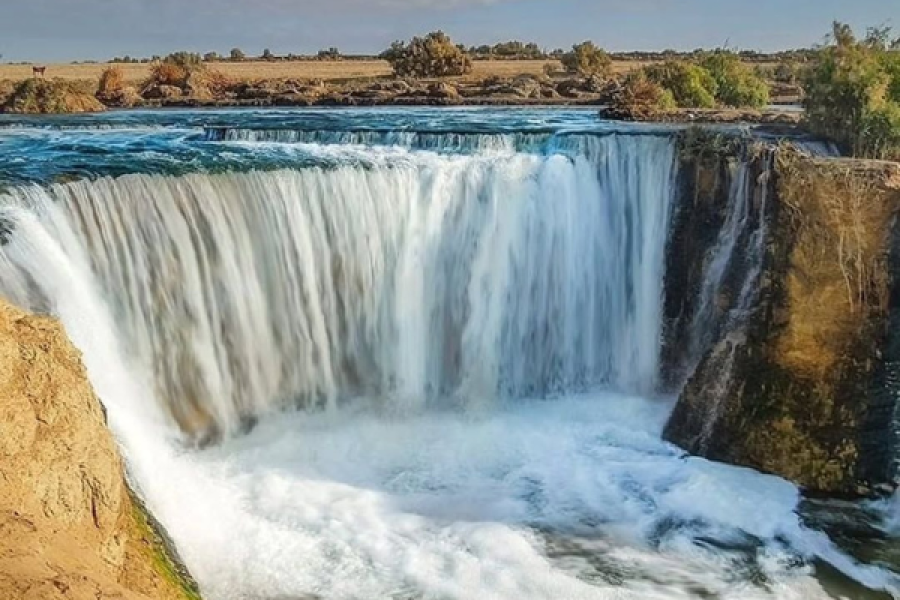
White Desert vs Black Desert Egypt: What Is the Difference?

White Desert or Black Desert Egypt—which one should you visit?

At first, the names make them sound like two competing destinations.

One is famous for bright white chalk formations rising from the desert floor. The other is known for dark hills and black stones scattered across golden sand.

But here is the most important thing to understand before planning your Egypt desert trip:

You usually do not have to choose between the White Desert and Black Desert.

Most desert safari itineraries from Cairo reach Bahariya Oasis first, explore the Black Desert, then continue through places such as Gabal El Marsos, Crystal Mountain and Agabat before reaching the White Desert.

In other words, the Black Desert is often part of the journey to the White Desert rather than an entirely separate expedition.

The Egyptian Tourism Authority also identifies both the Black Desert and White Desert as two of the major natural areas to explore around Bahariya Oasis.

However, the two landscapes feel completely different.

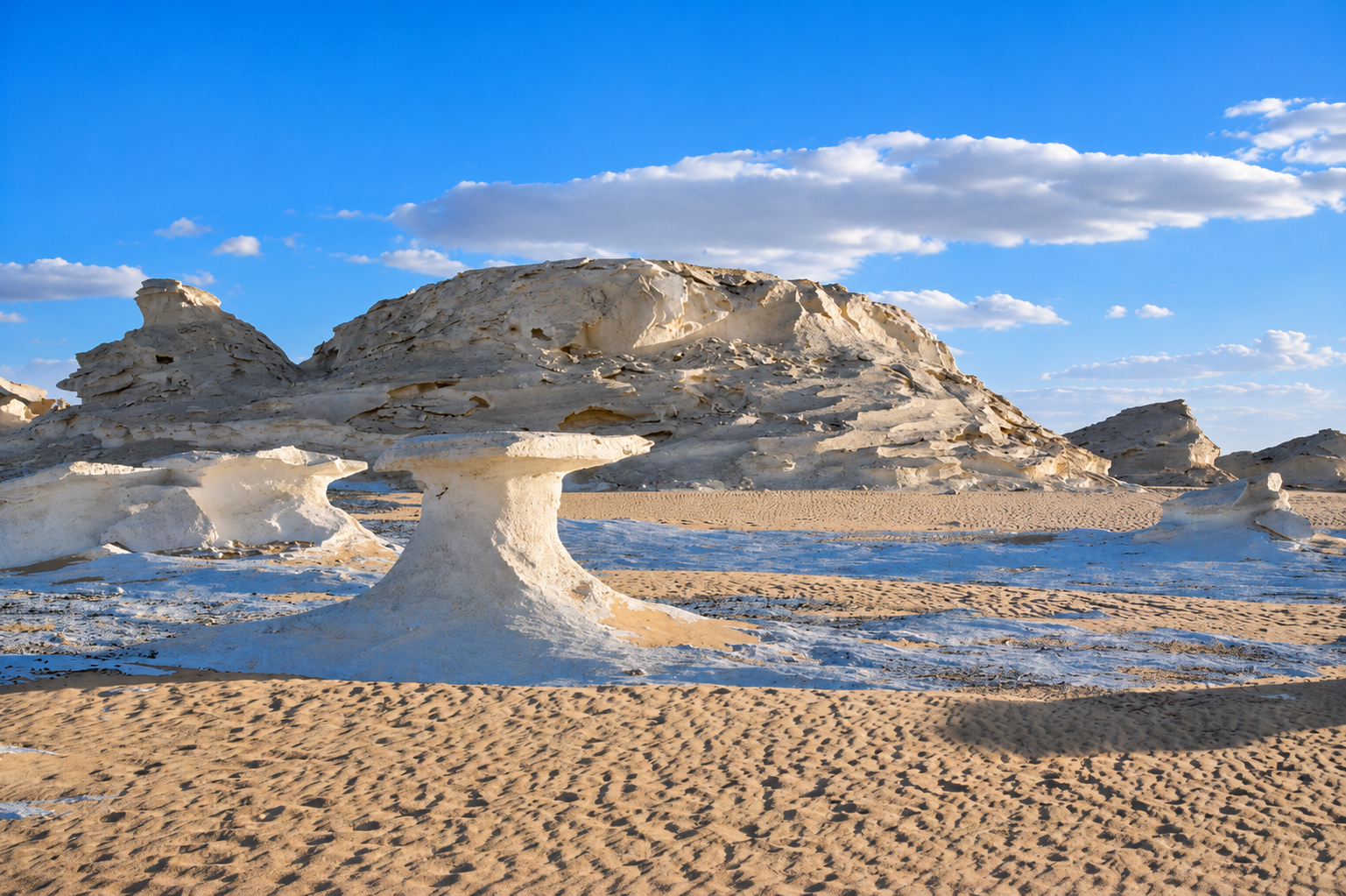
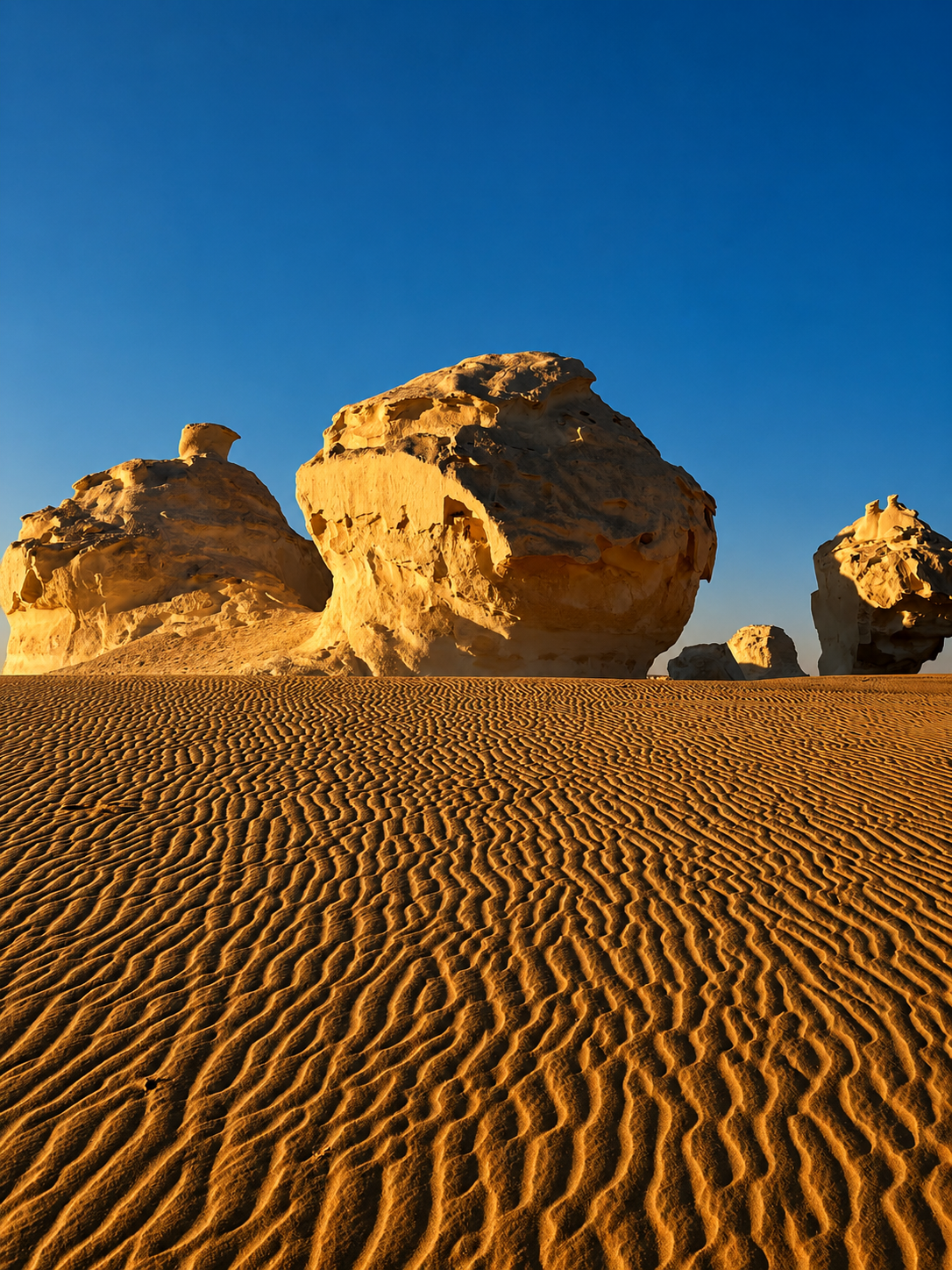
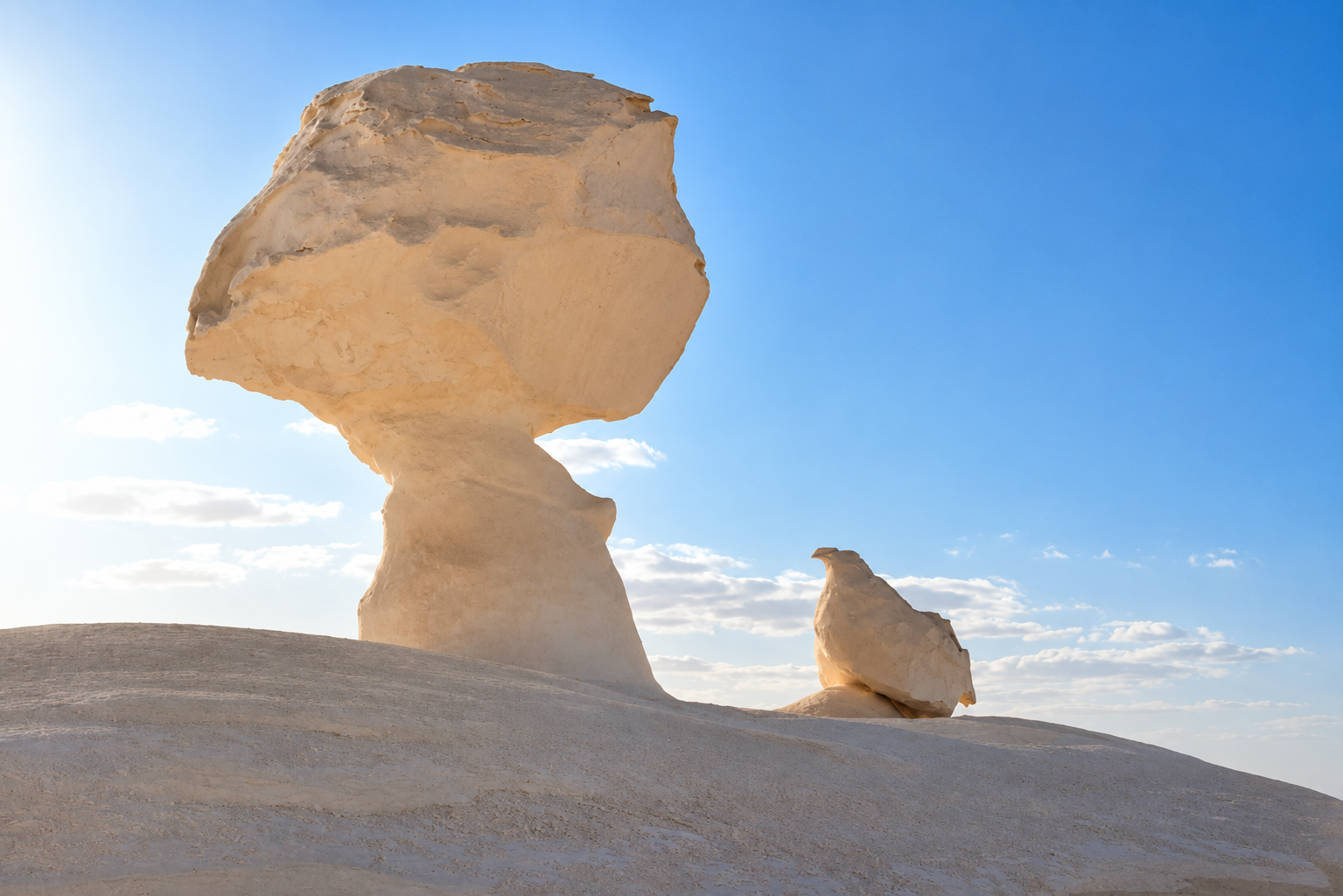
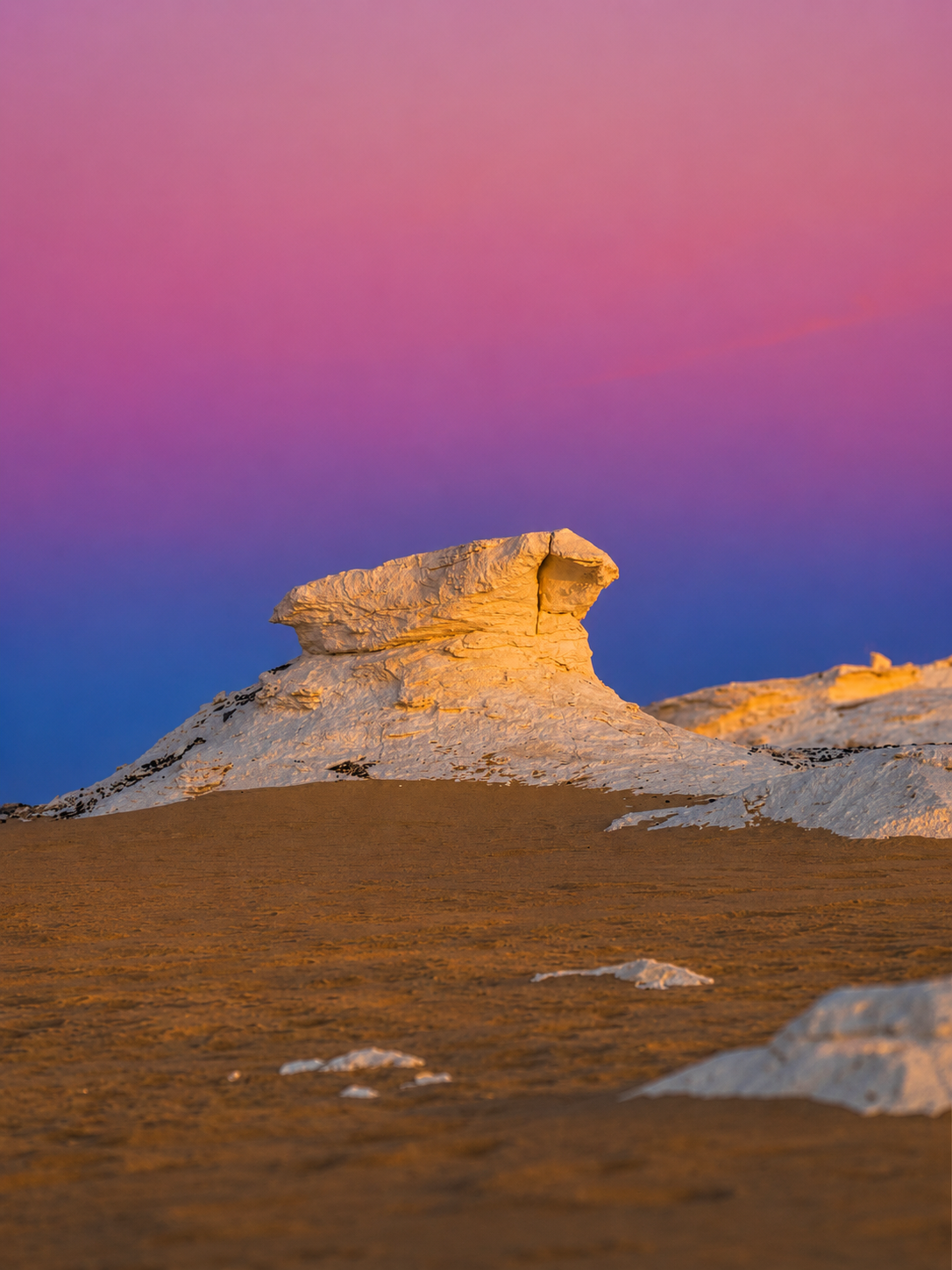
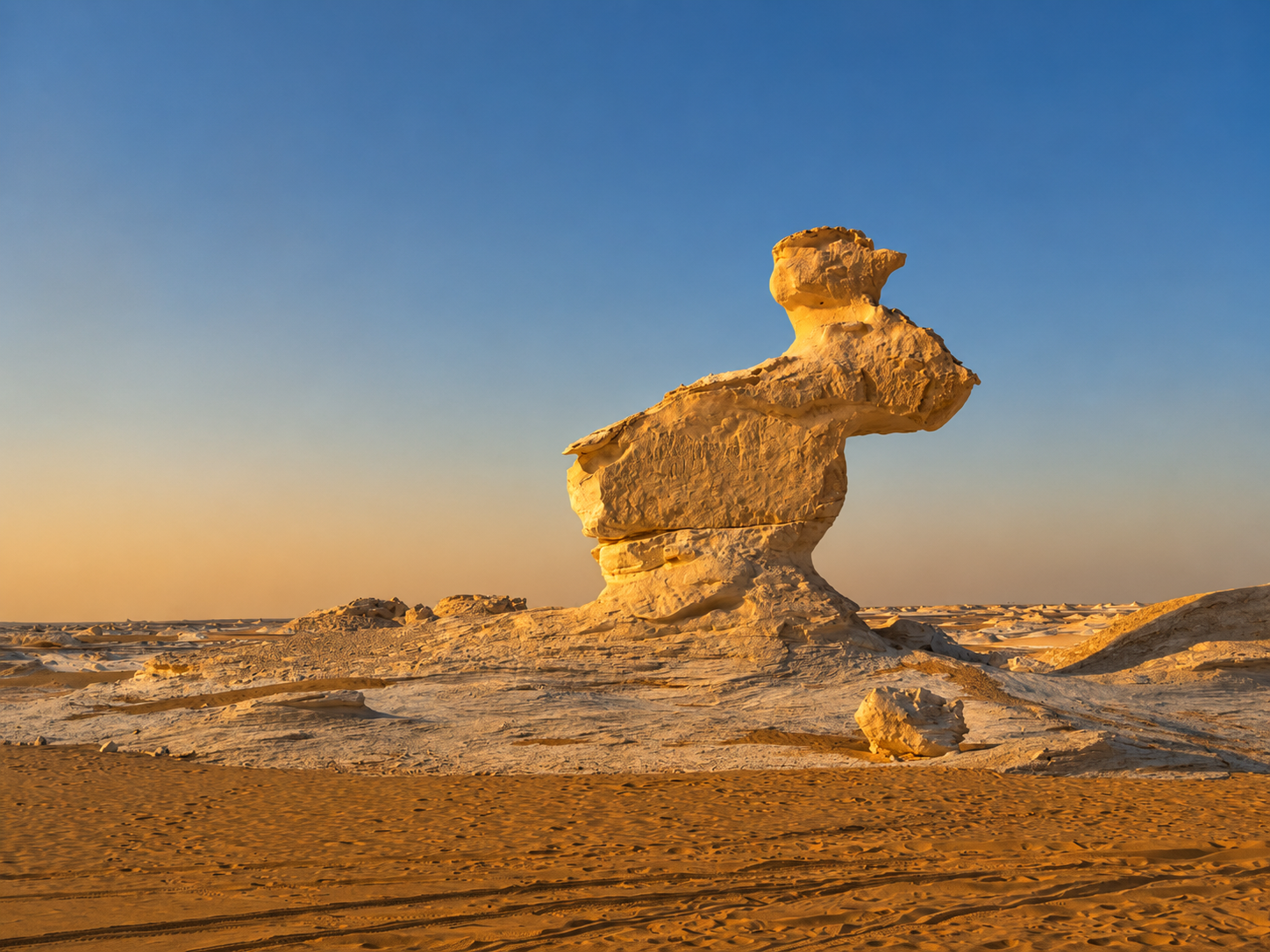
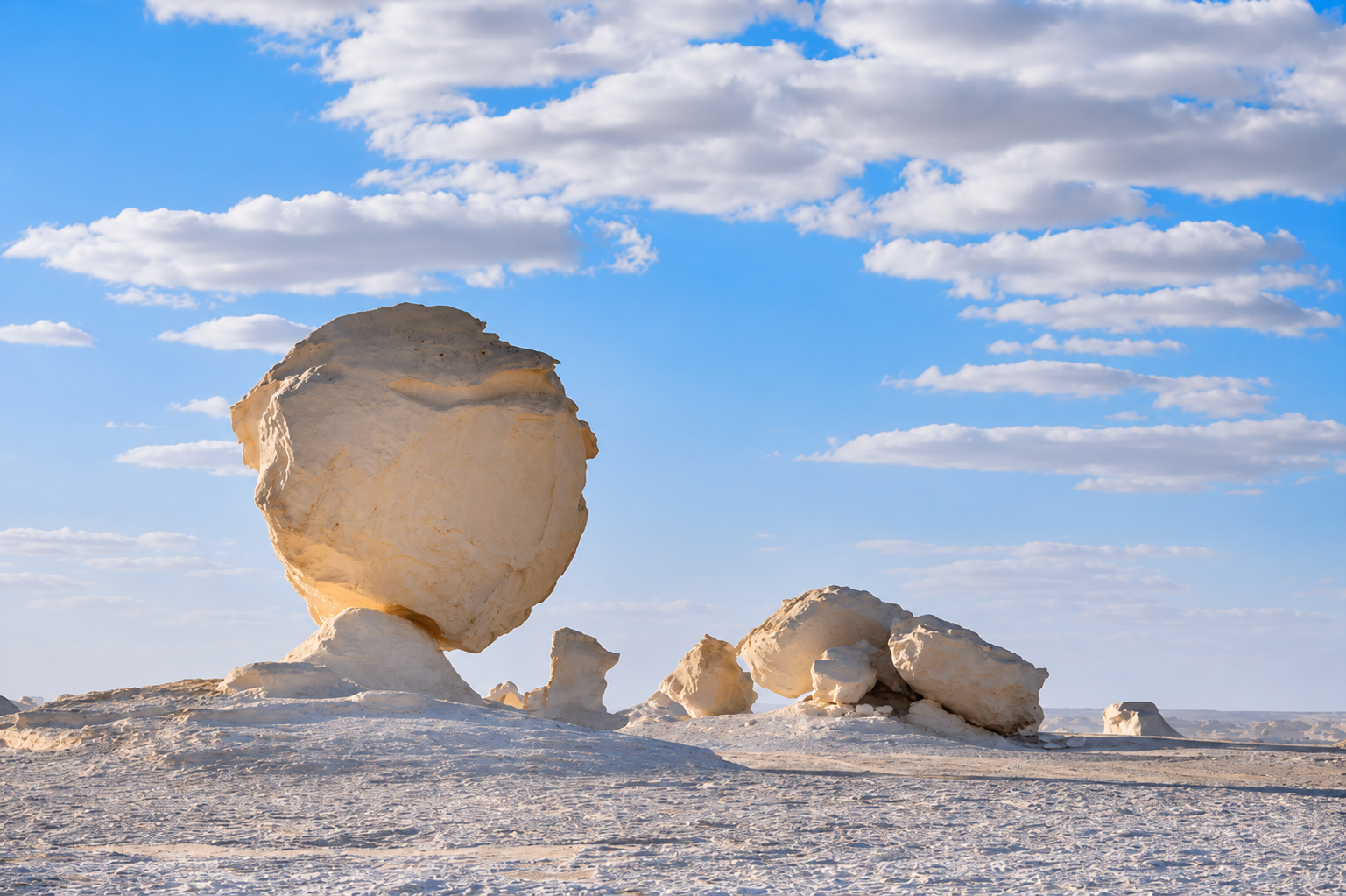
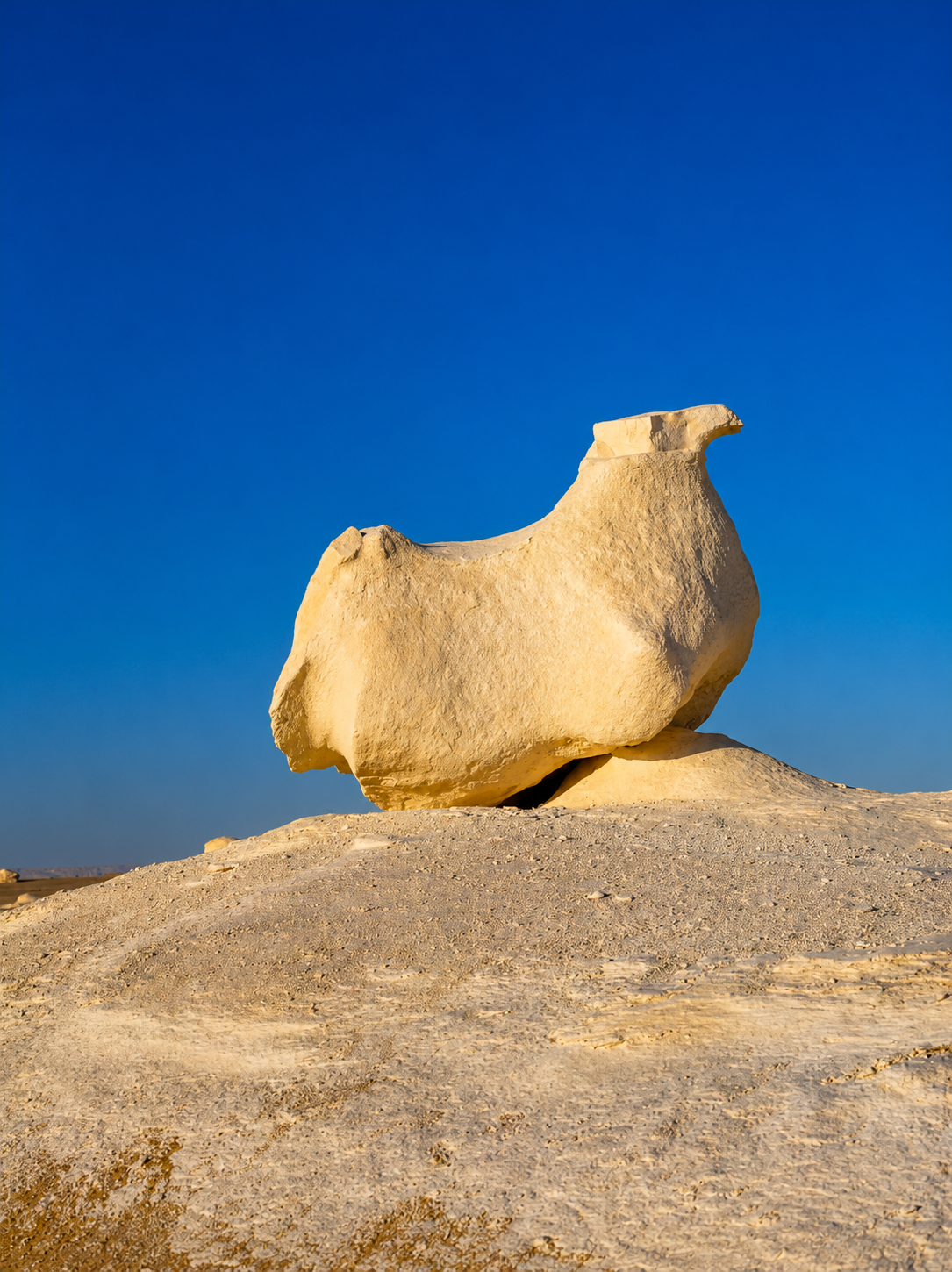
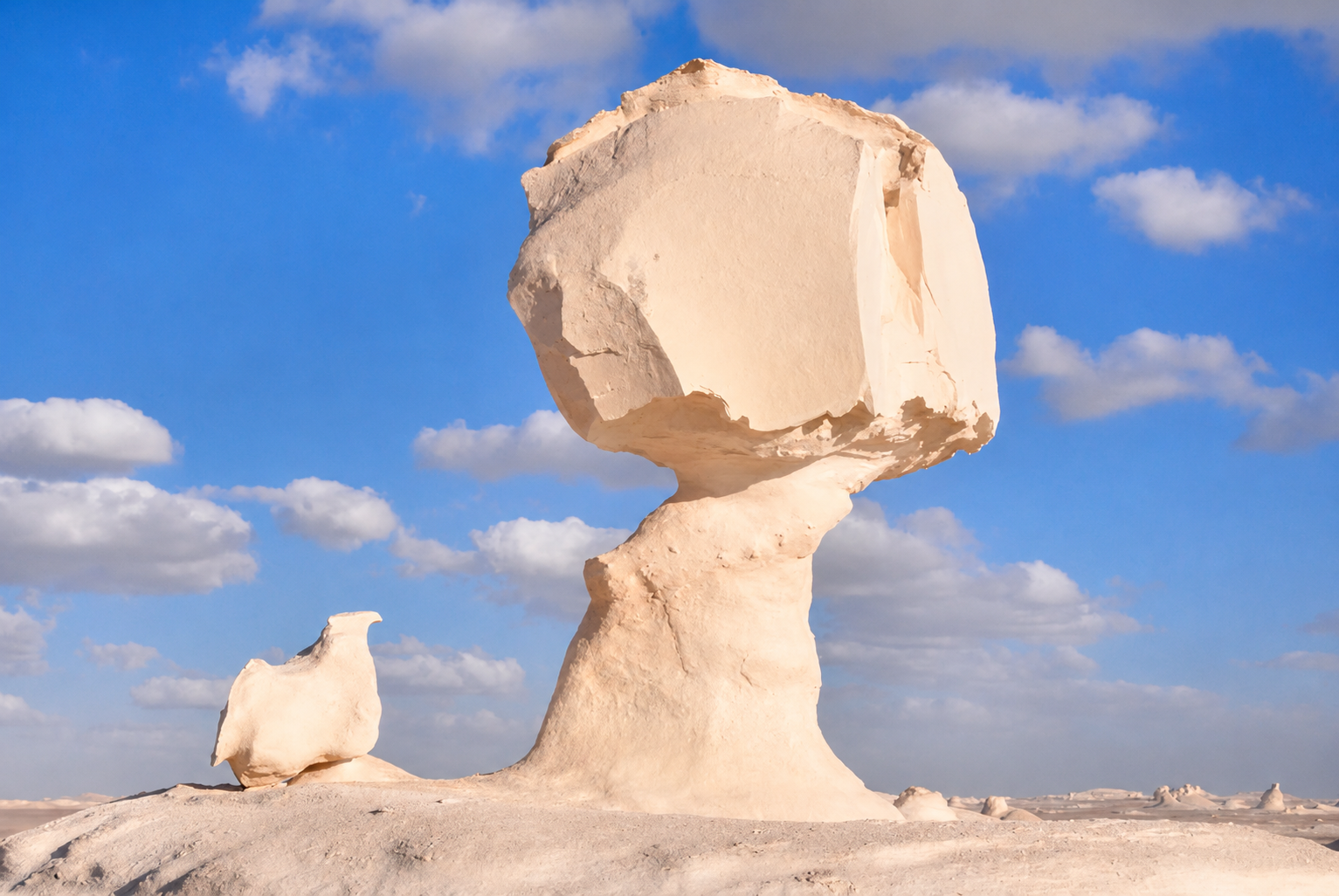
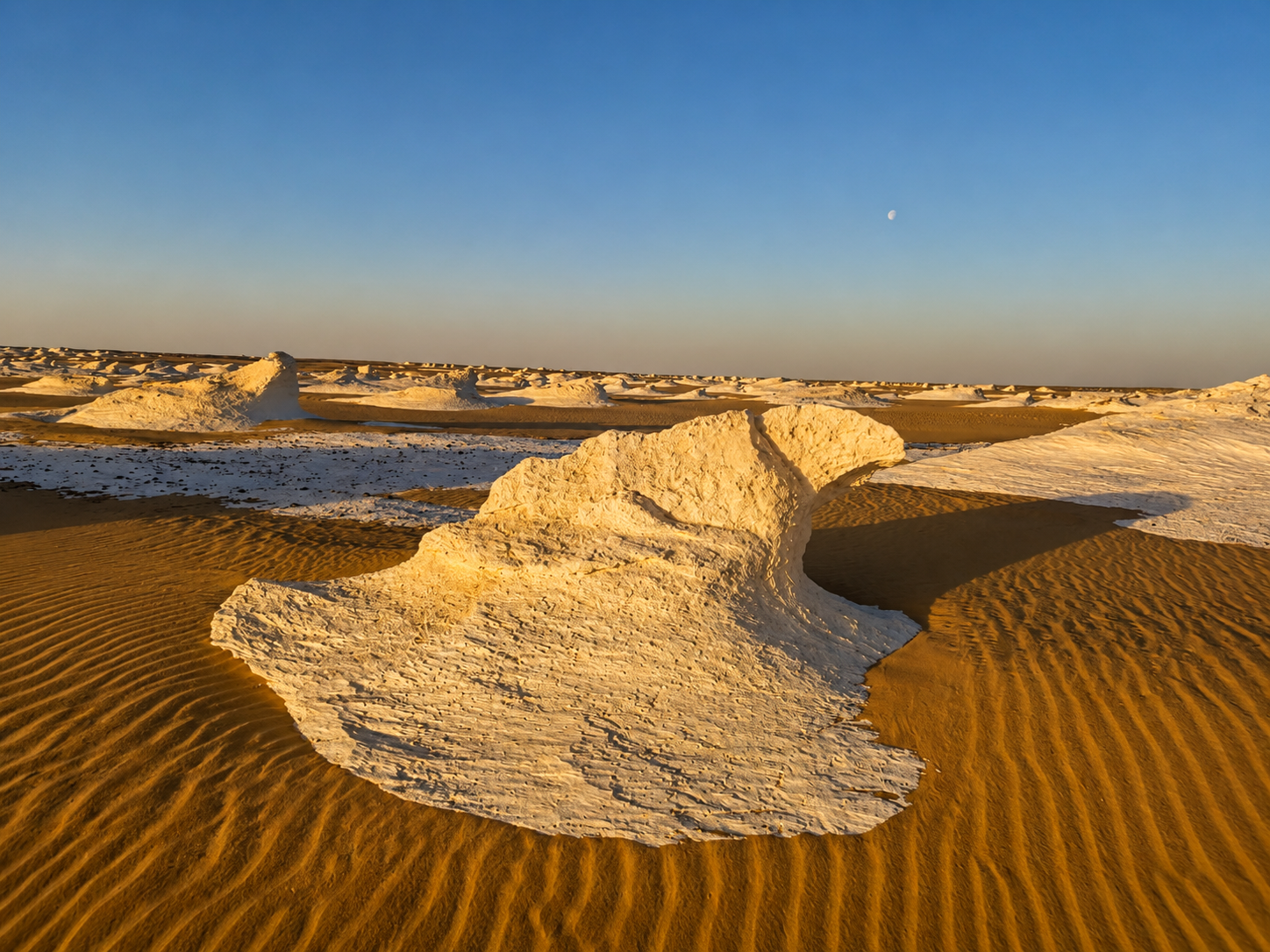
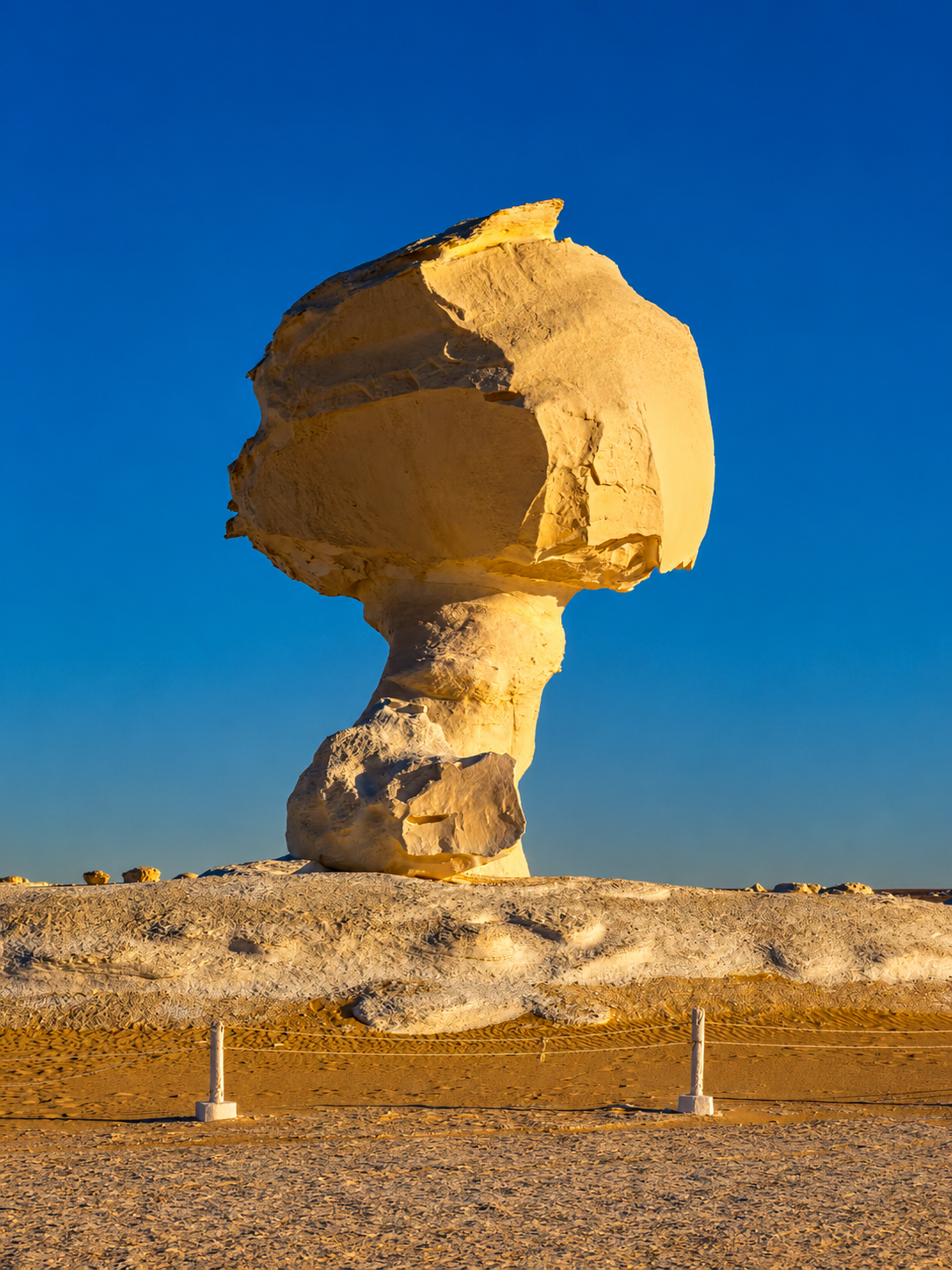
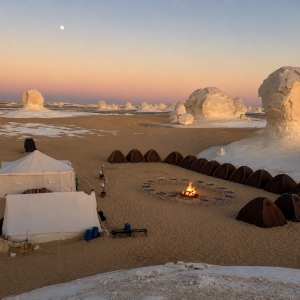
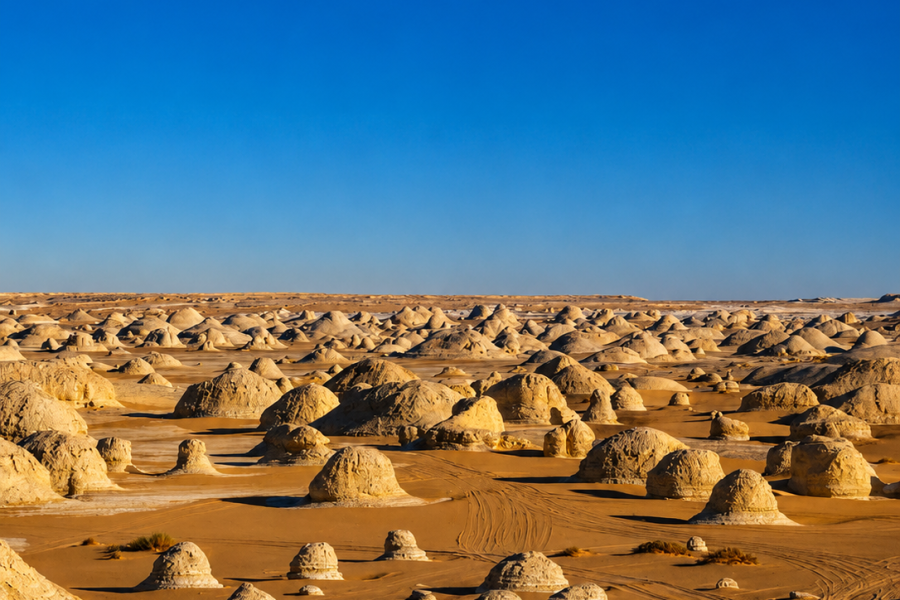
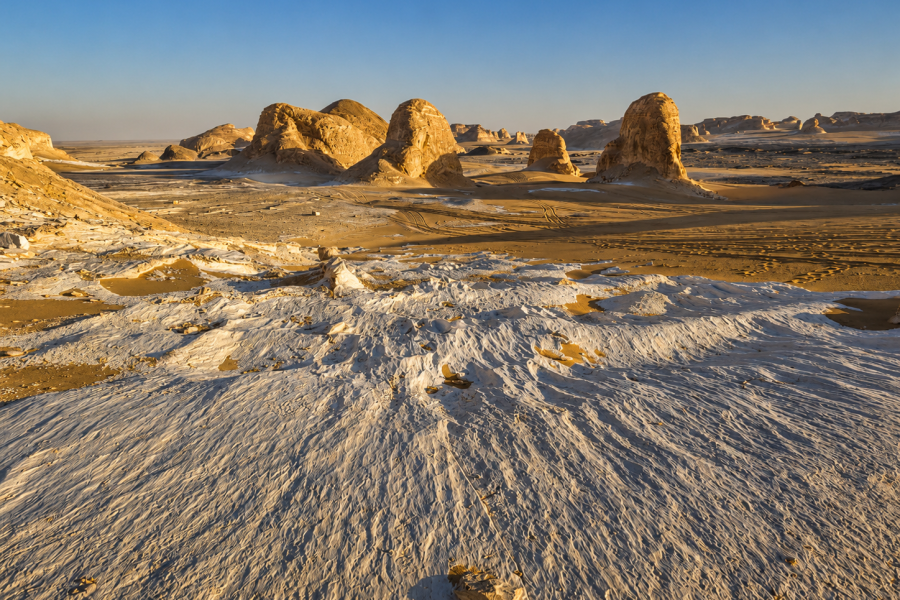
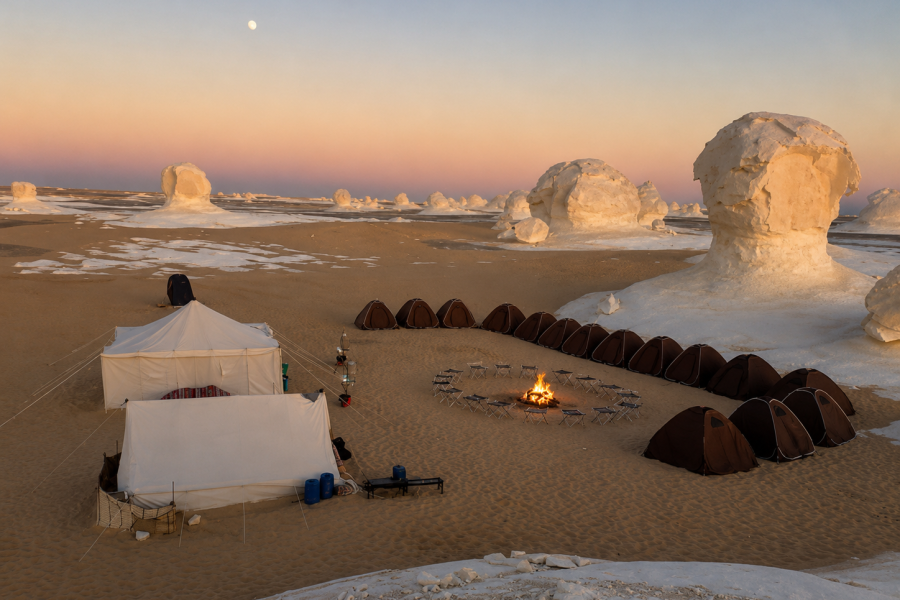
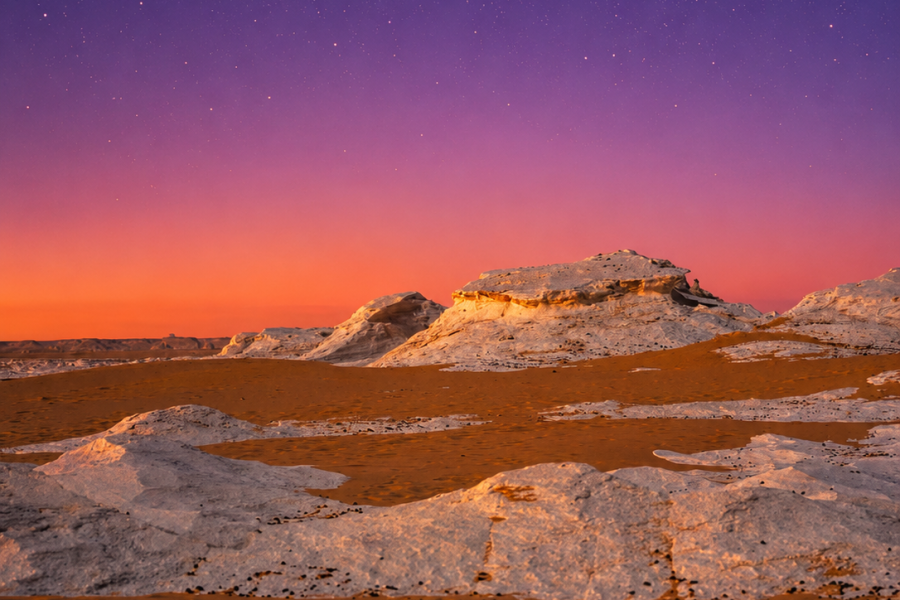
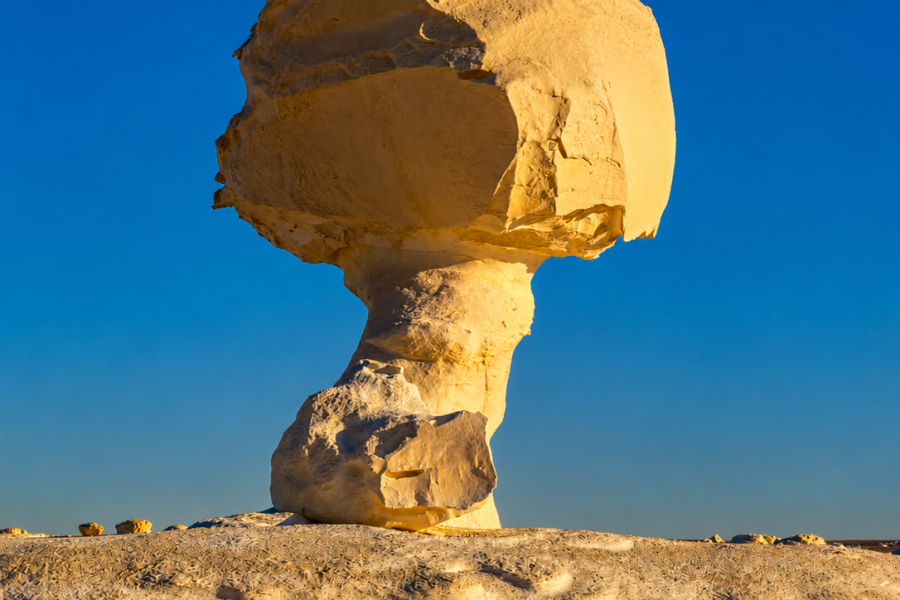
The White Desert is brighter, stranger and more sculptural. It is famous for chalk formations, mushroom-shaped rocks, sunset, camping and sunrise.

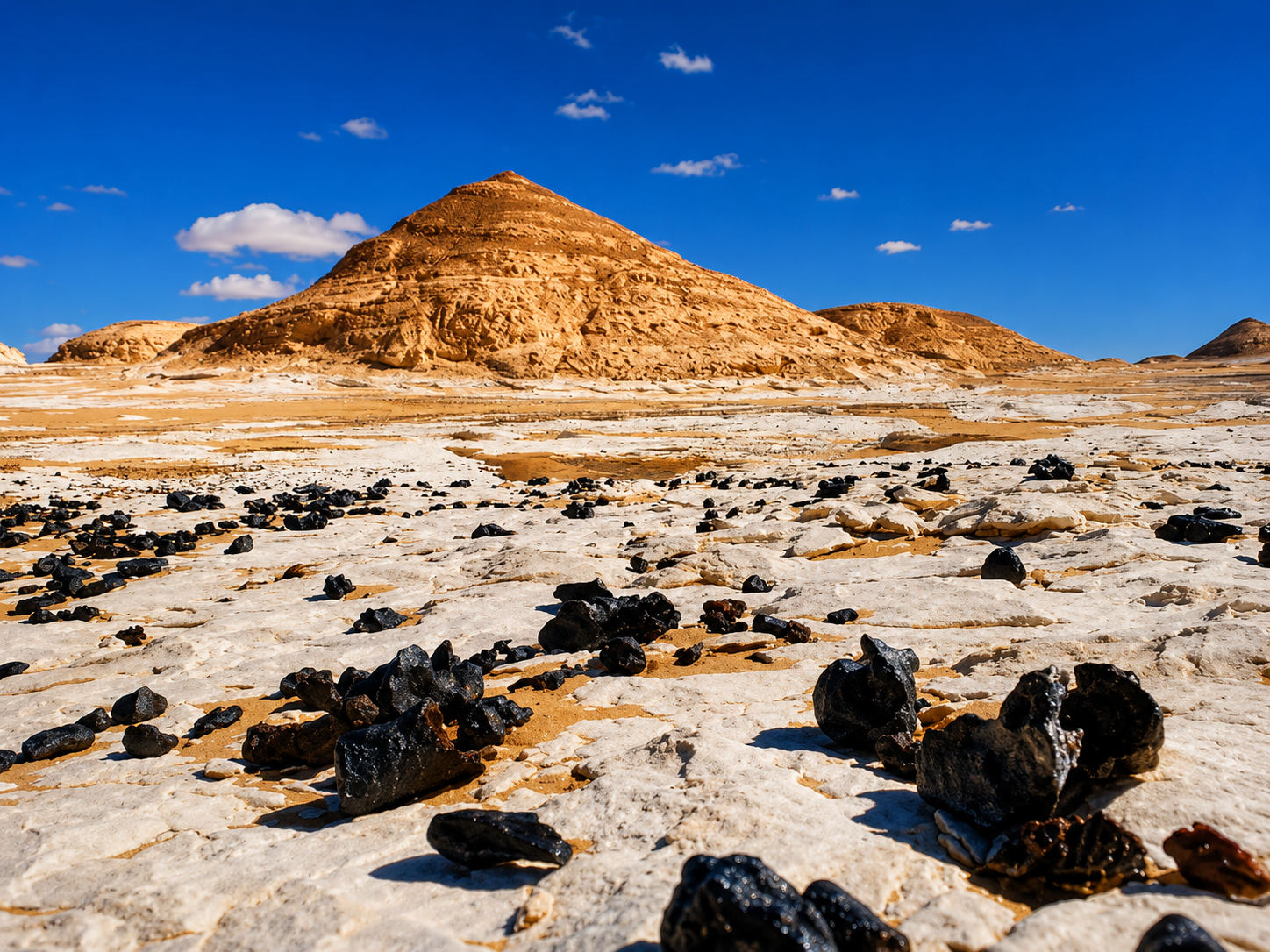
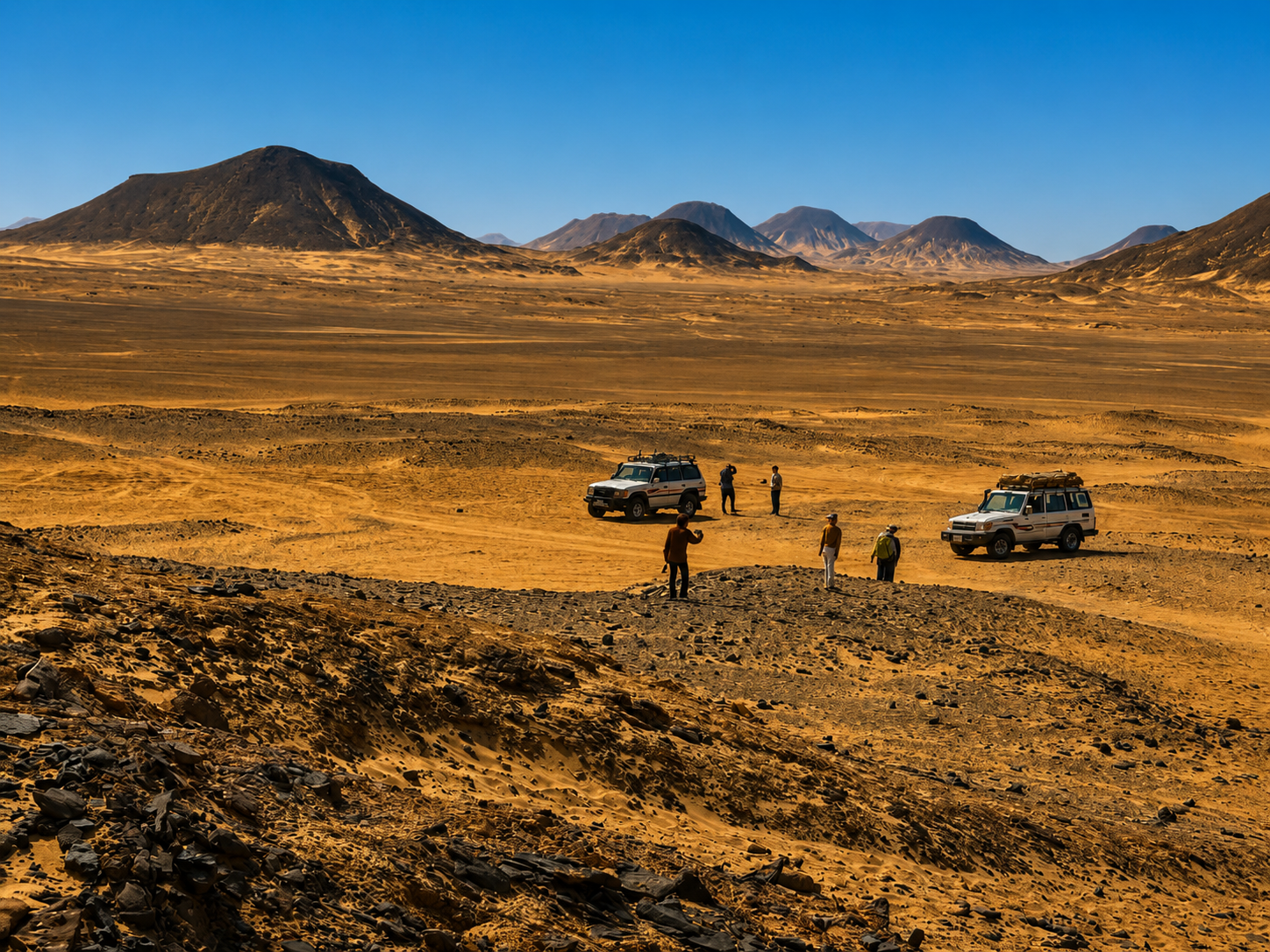
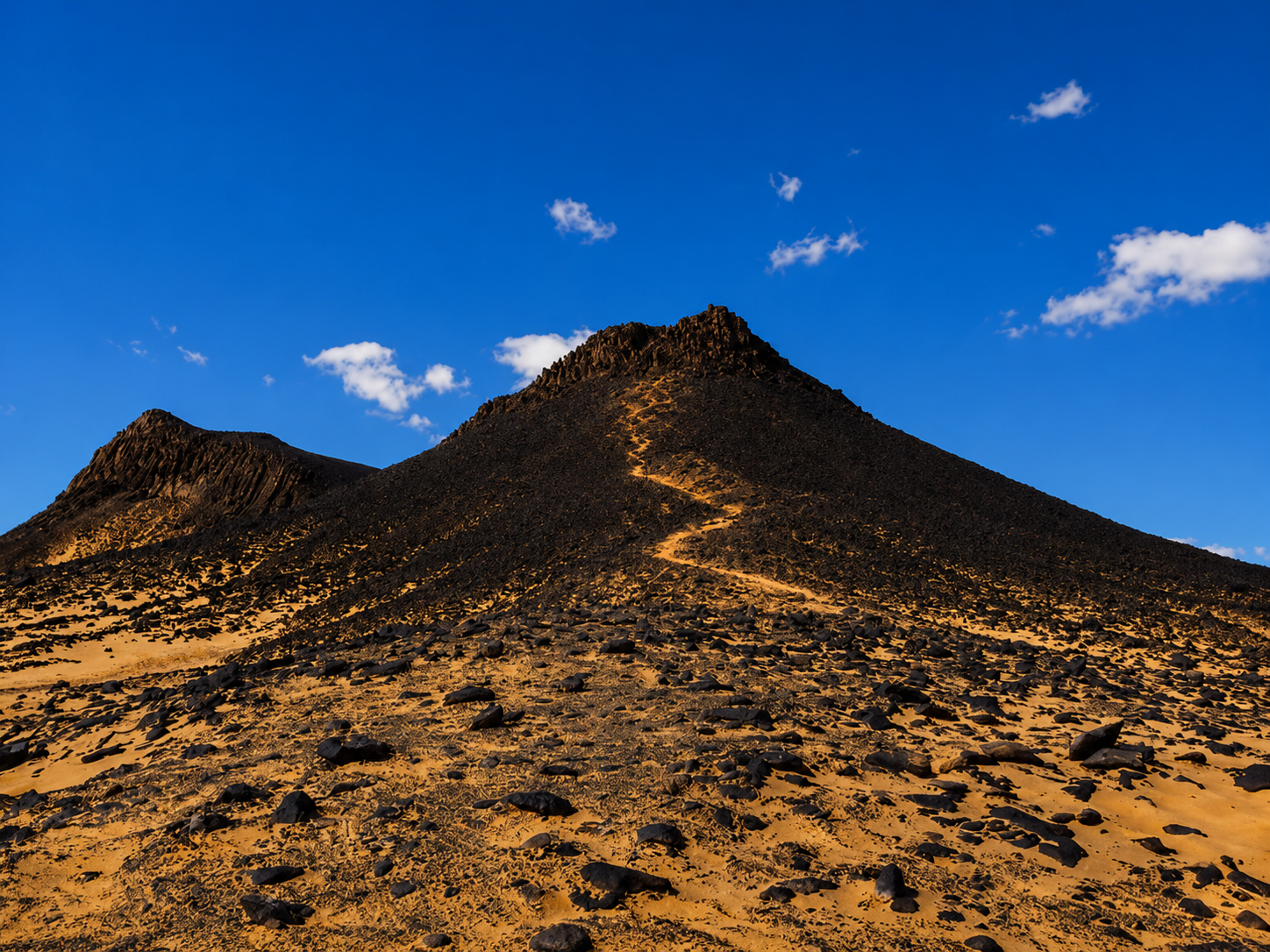
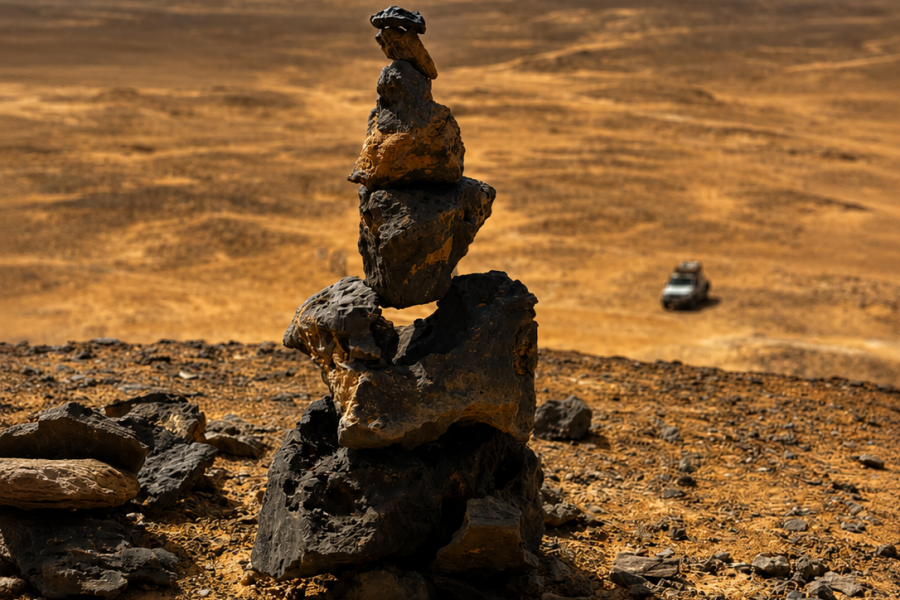
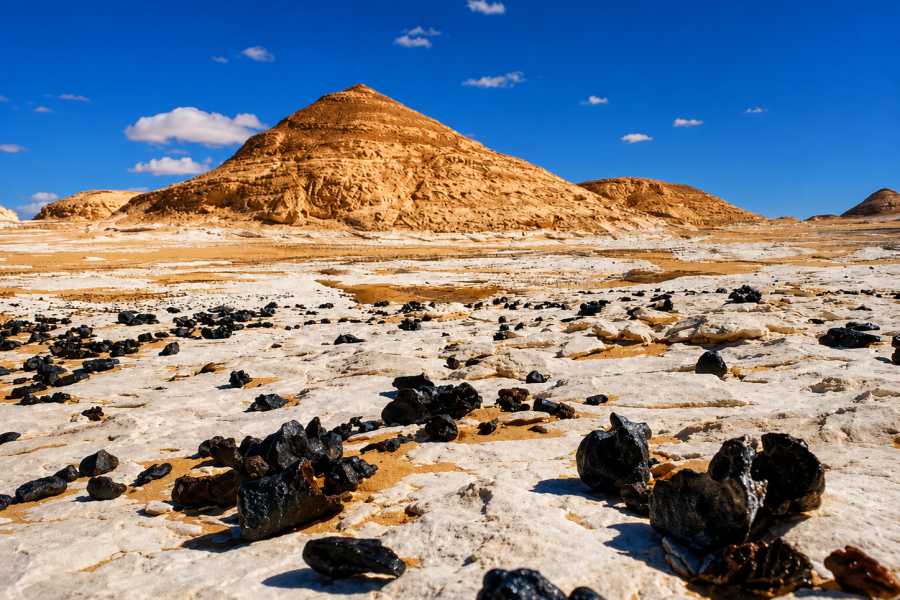
The Black Desert is darker, rougher and more dramatic. Its black-covered hills create a powerful contrast with the surrounding yellow and golden desert.

So which one is better?

For most first-time travelers, the best answer is:

Visit both on the same safari and spend the night in the White Desert.

This guide explains exactly why.

If you want detailed destination guides before comparing them, start with our White Desert Egypt guide and Black Desert Egypt guide.


What Is the White Desert Egypt?

The White Desert is one of the most recognizable landscapes in Egypt’s Western Desert.

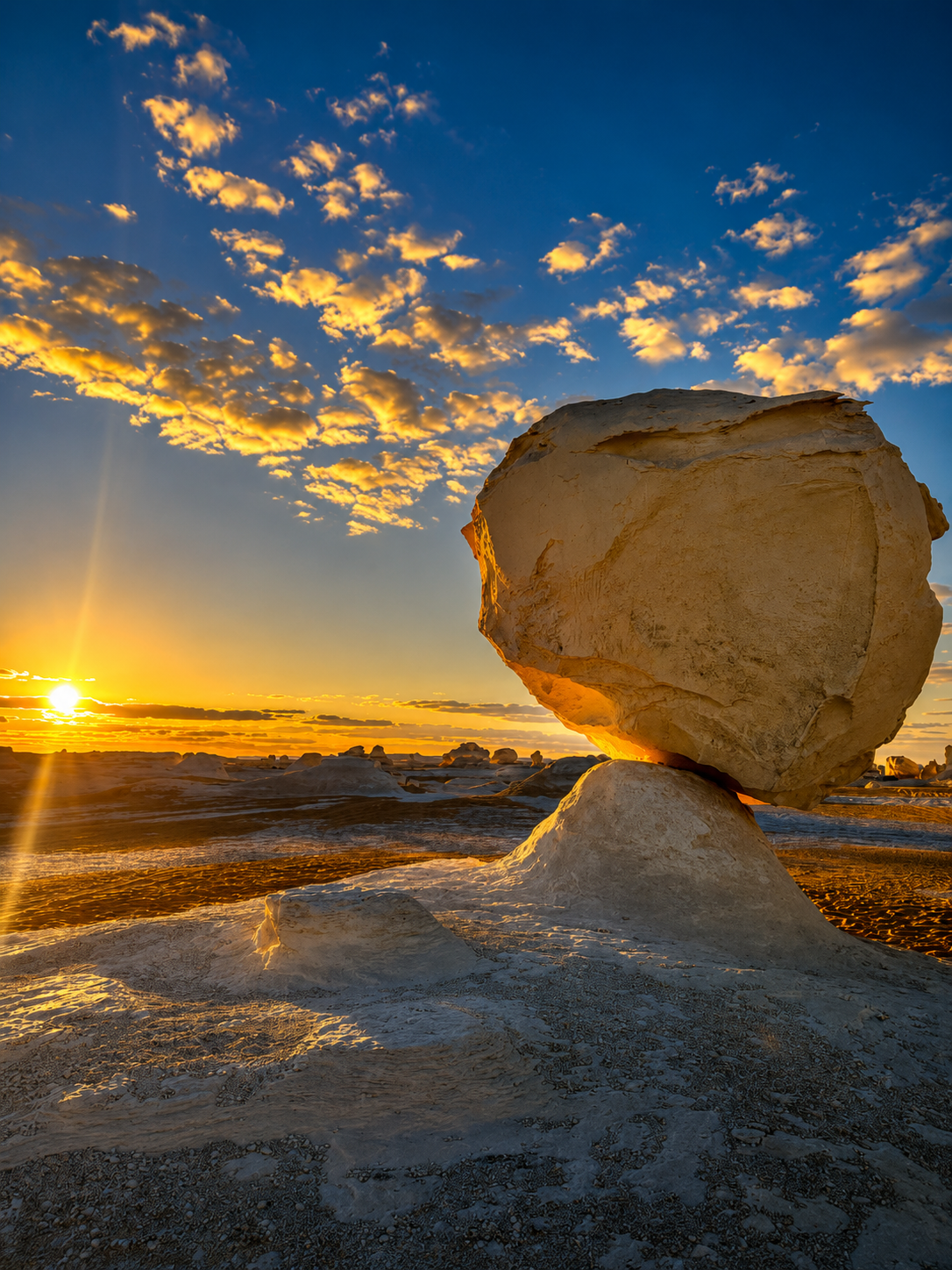
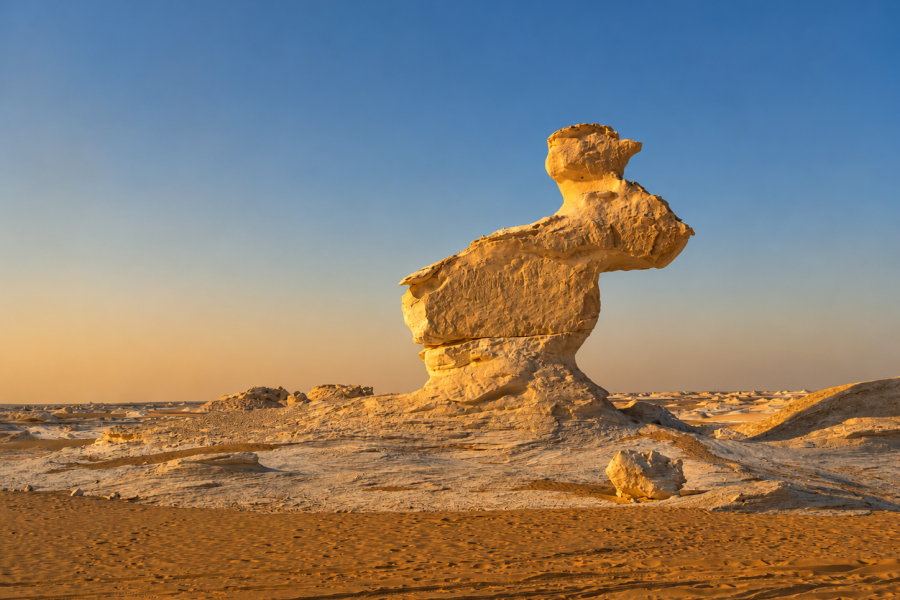
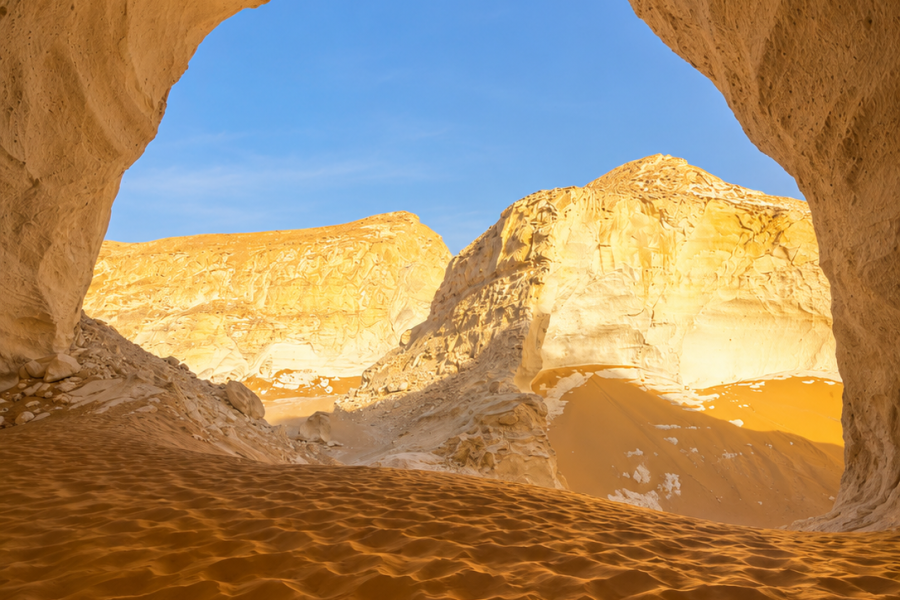
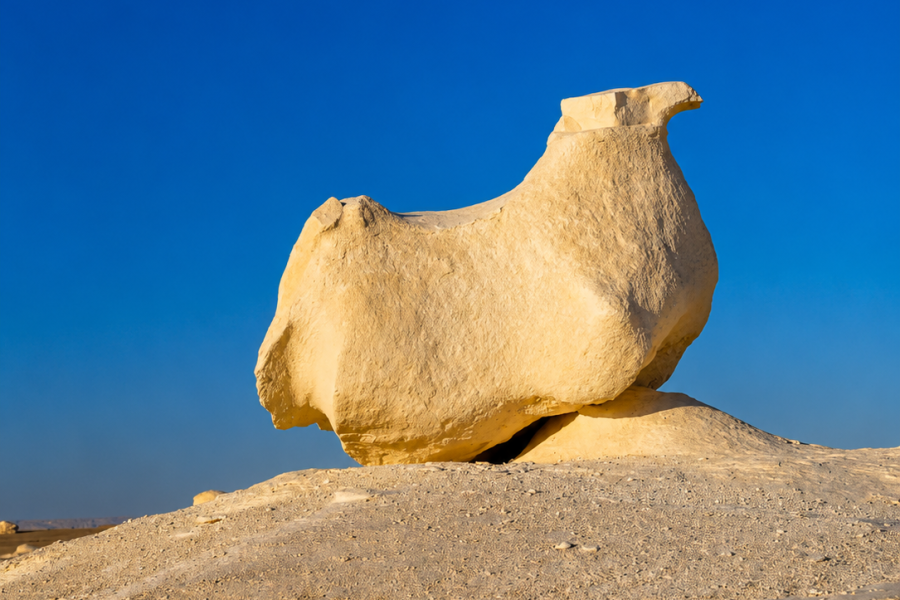
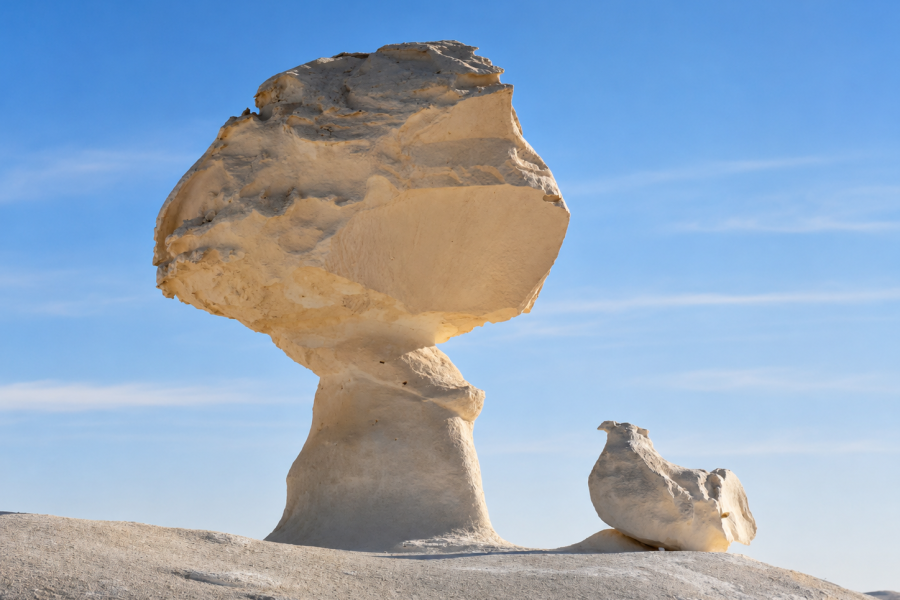
It is famous for white chalk and limestone formations shaped over time by natural erosion.

Some formations resemble:

  • mushrooms,
  • towers,
  • tents,
  • animals,
  • faces,
  • waves,
  • and abstract sculptures.

The landscape can look almost unreal, particularly during late afternoon when long shadows develop around the formations.

Your main White Desert Egypt page describes the area as a protected desert landscape commonly reached through Bahariya Oasis and combined with the Black Desert, Crystal Mountain and Agabat.

The Egyptian Tourism Authority also highlights the White Desert’s famous mushroom-shaped rocks and notes that excursions can range from short visits to multi-night camping and 4×4 adventures.

But the White Desert is not famous only because of the formations.

For many travelers, the real experience includes:

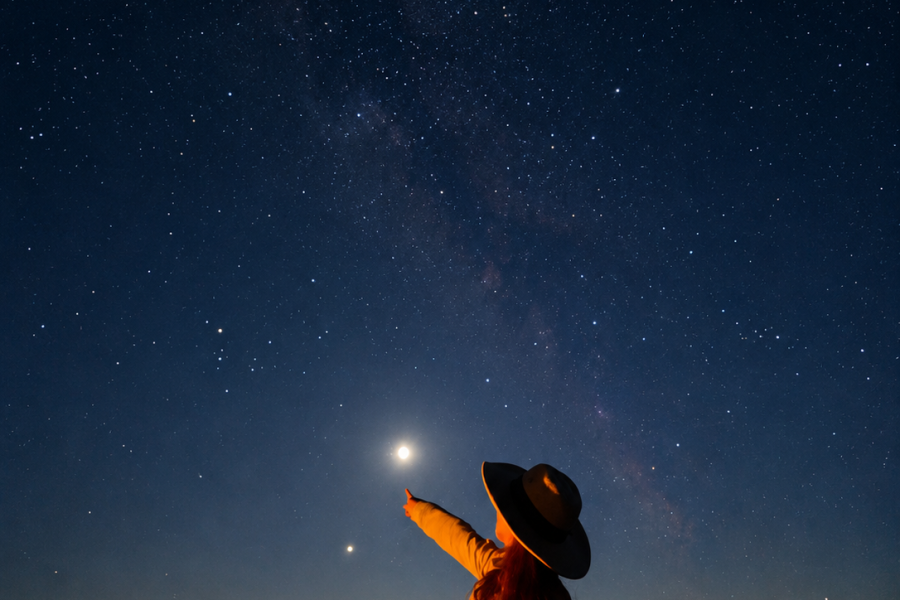
sunset → dinner → camping → stars → sunrise.

That overnight atmosphere is one of the biggest differences between simply seeing the White Desert and truly experiencing it.

What Is the Black Desert Egypt?

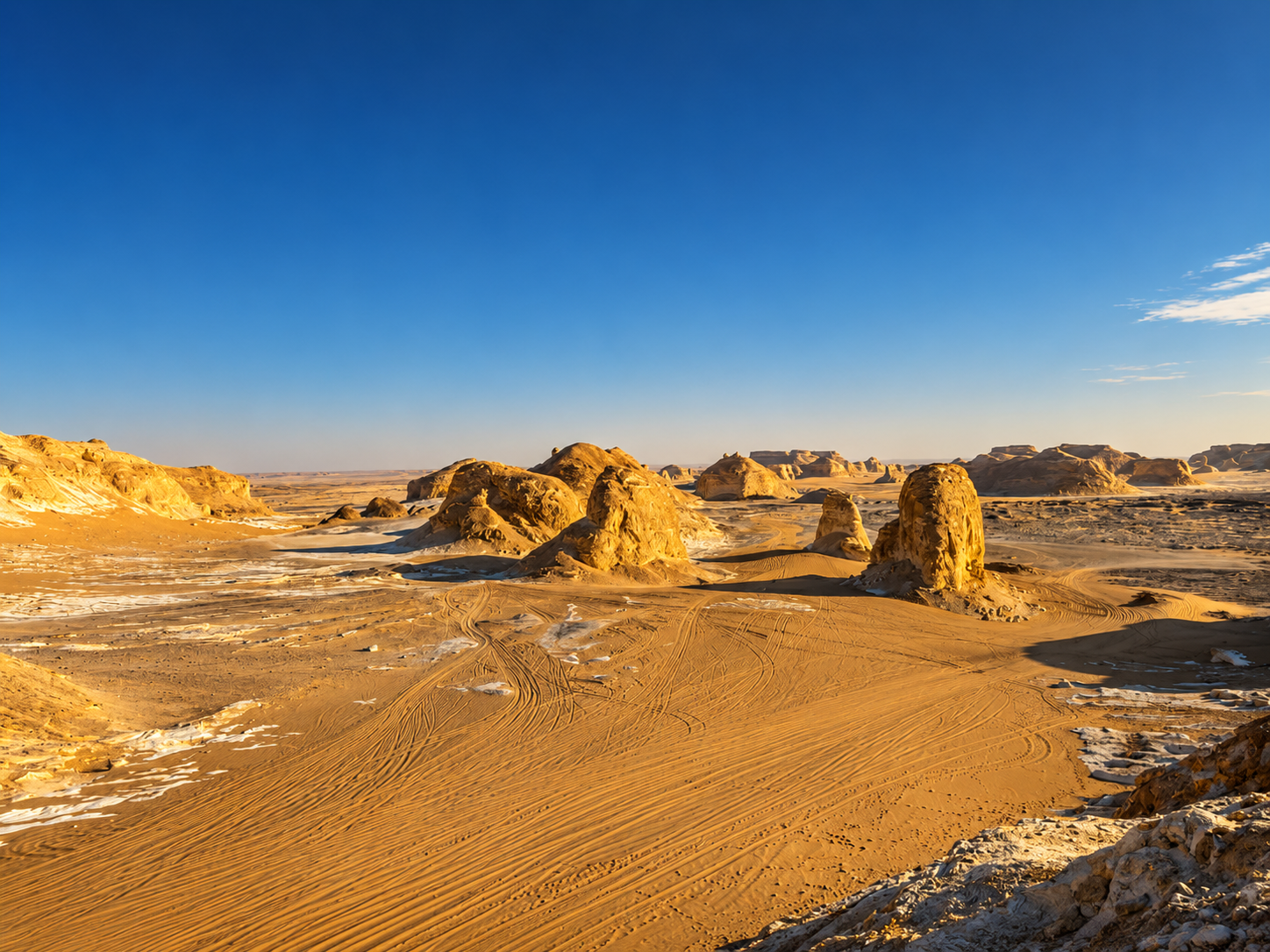
The Black Desert is located around Bahariya Oasis in Egypt’s Western Desert.

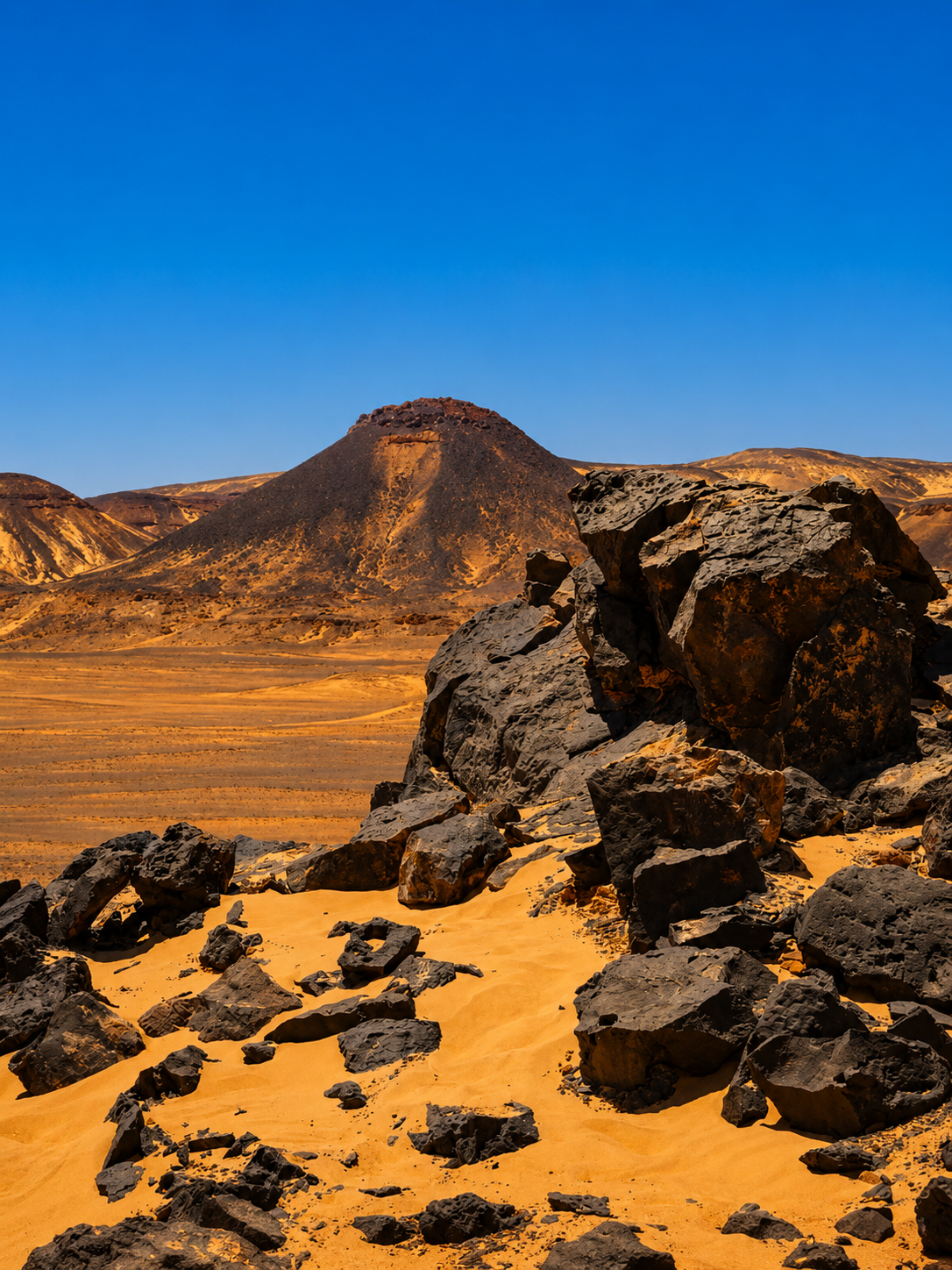
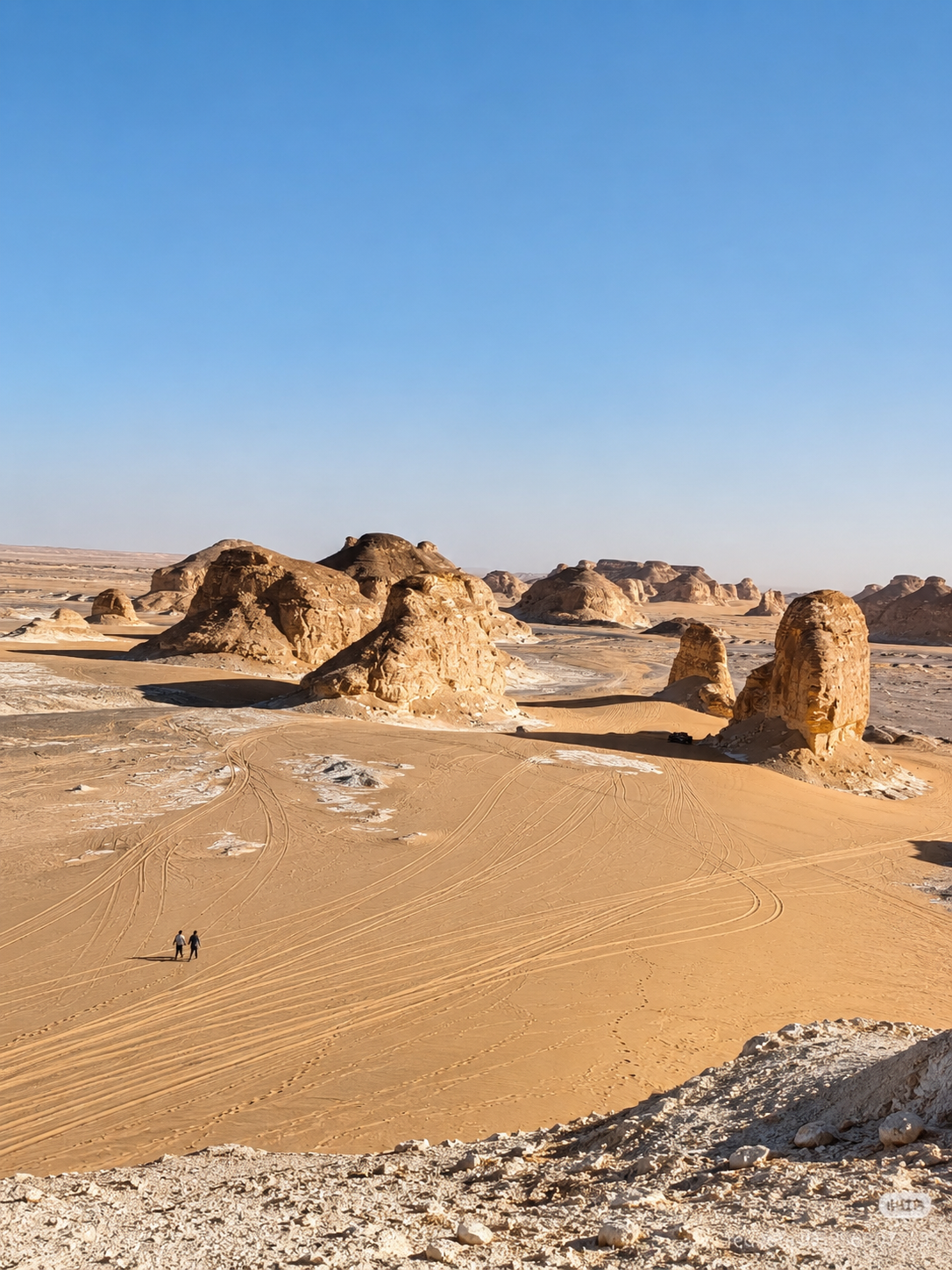
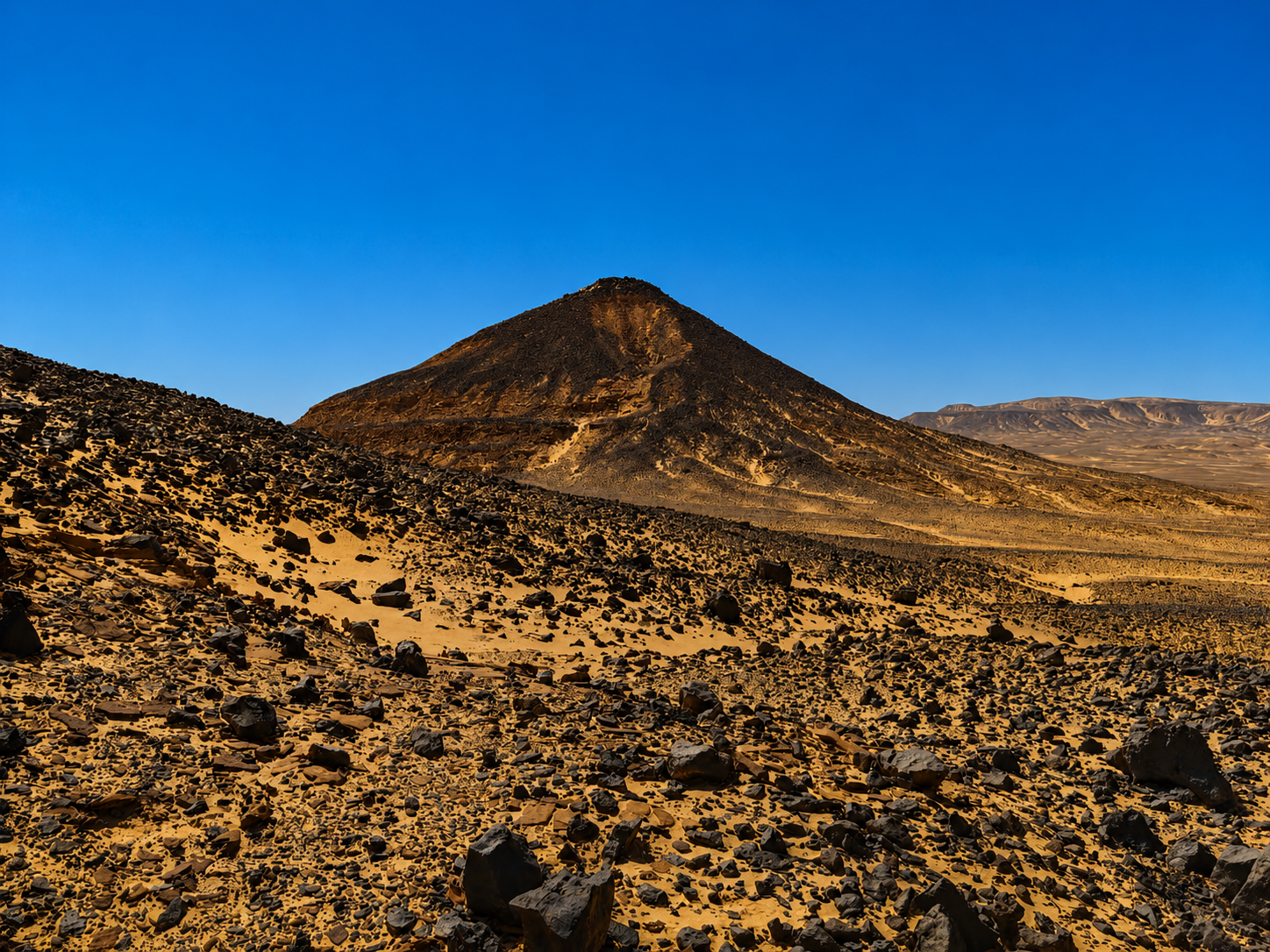
Its identity comes from dark hills and black stones spread across the golden desert landscape.

The Egyptian Tourism Authority describes the area as having volcanic-shaped mountains scattered with black stones.

Your Black Desert Egypt guide describes it as one of the first dramatic landscapes travelers encounter after leaving Bahariya Oasis and entering the deeper safari route.

That makes its role in the journey very different from the White Desert.

The White Desert often feels like the main destination.

The Black Desert feels like the dramatic beginning of the adventure.

You leave the oasis.

The normal roads begin disappearing.

The scenery becomes empty.

Dark hills start rising from the yellow landscape.

And suddenly the trip feels very far removed from Cairo.

Why Is the Black Desert Black?

One common misconception is that the entire surface of the Black Desert is completely black.

It is not.

You are still traveling through a sandy Western Desert landscape.

The visual effect comes from the dark stones and material covering many of the hills and surrounding terrain.

This produces a striking mixture of:

black + brown + gold + yellow.

Some hills look almost volcanic from a distance.

This is also why the Black Desert can look significantly different depending on the light.

At midday, the landscape can appear harsh and highly contrasted.

During early morning or late afternoon, shadows give the hills more depth and texture.

For photographers, this makes the Black Desert much more interesting than simply documenting “a black mountain.”

Why Is the White Desert White?

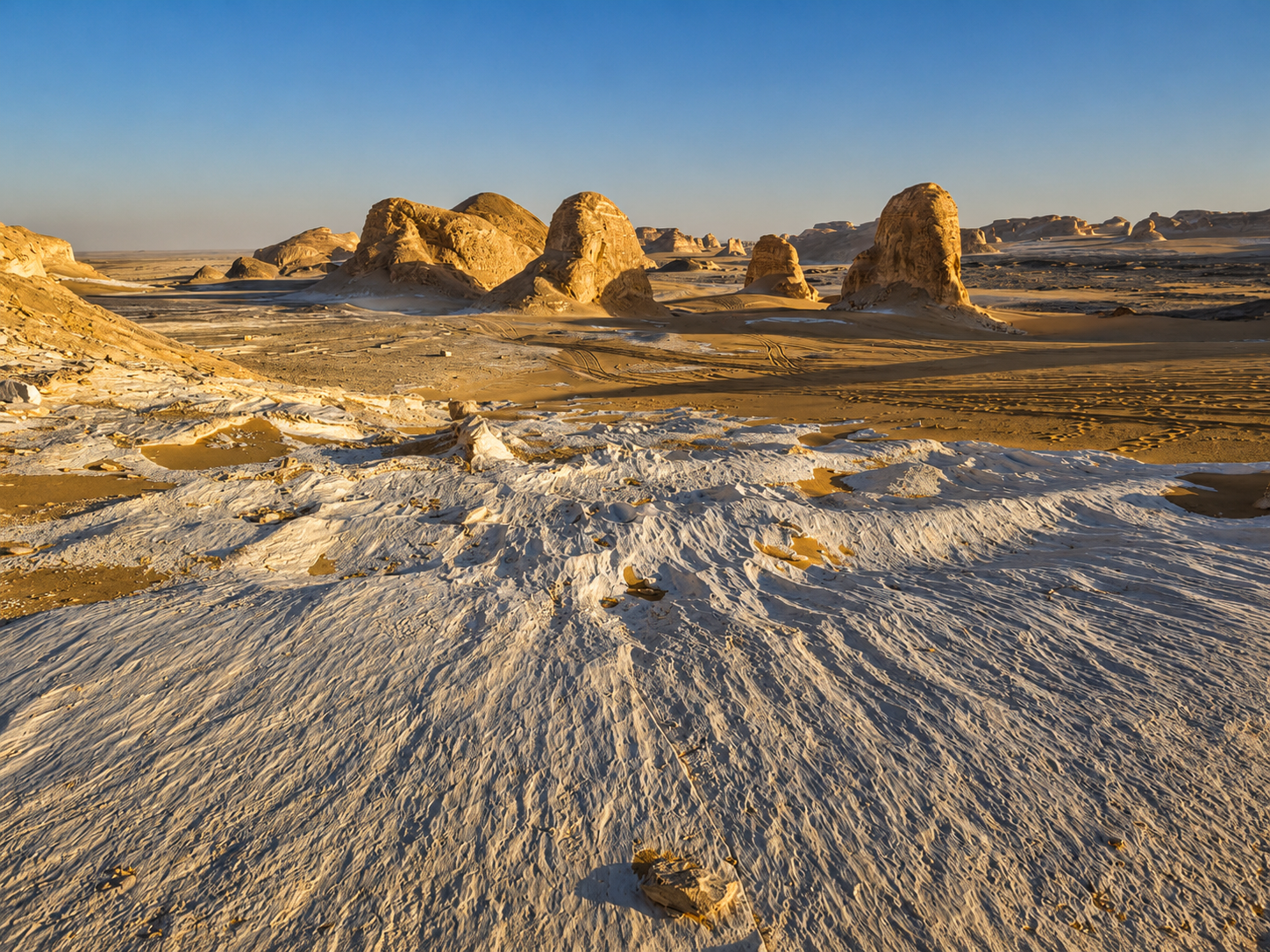
The White Desert receives its name from its pale chalk formations and light-colored landscape.

Wind, sand and weathering have gradually shaped formations into the unusual objects travelers photograph today.

The Egyptian Tourism Authority specifically highlights the area’s mushroom-shaped white rocks as one of its defining natural features.

When direct sunlight is strong, the formations can appear extremely bright.

But sunrise and sunset change them.

During golden hour, the landscape may take on:

  • cream,
  • gold,
  • pale orange,
  • pink,
  • soft blue,
  • and purple-gray shadows.

That makes the White Desert particularly attractive for photographers staying overnight.

Where Are the White Desert and Black Desert Located?

Both are part of Egypt’s Western Desert, but they are not located in exactly the same place.

The Black Desert is closely associated with Bahariya Oasis.

The White Desert lies farther south, toward the Farafra region.

For most travelers coming from Cairo, Bahariya acts as the gateway to both.

A typical private route looks like:

Cairo / Giza → Bahariya Oasis → Black Desert → Gabal El Marsos → El Hez → Crystal Mountain → Agabat → White Desert

That sequence is also reflected in the current safari routes on White and Black Desert Tours.

This explains why comparing them as if they require two separate holidays is misleading.

They fit naturally into one journey.

How Far Is Bahariya Oasis from Cairo?

Egypt’s official tourism portal places Bahariya Oasis around 370 km southwest of Cairo and describes it as the closest Western Desert oasis to the capital.

That makes Bahariya one of the most practical gateways for travelers who want a desert safari without committing to a much longer Western Desert expedition.

Most tours begin with road transportation from Cairo or Giza.

After reaching Bahariya, travelers usually change to a suitable 4×4 vehicle for the safari section.

From there, the trip progresses from oasis scenery into the Black Desert and eventually toward the White Desert.

For more detail, read our Bahariya Oasis Egypt guide.

Which Desert Do You See First?

If you are traveling from Cairo through Bahariya, the Black Desert normally comes first.

This actually improves the experience.

Imagine the visual sequence:

Bahariya Oasis

Palm trees, local settlements, farms and springs.

Then:

Black Desert

Dark hills and black stones appear across the desert.

Then:

Crystal Mountain

Bright mineral-like formations create another change.

Then:

Agabat

Open sand, white cliffs and dramatic valleys.

Then:

White Desert

The landscape becomes pale and filled with unusual chalk formations.

The Egyptian Tourism Authority highlights Crystal Mountain and Aqabat among the important desert excursion stops connecting this wider area.

This changing sequence is one reason the journey never feels visually repetitive.

2 Nights 3 Days White Desert & Dejara Cave Tour from Cairo

2 Nights 3 Days Tour in White Desert and Bahariya Oasis

Full Day Tour in West Bank of Luxor

Siwa Program by Comfortable Bus from Cairo

One Day Tour to the White Desert from Cairo

One Day Fayoum Tour from Cairo

Giza Pyramids & Grand Egyptian Museum Tour

2 Nights 3 Days Fayoum and White Desert Tour from Cairo

5 Nights 6 Days Egypt Oasis Tour from Cairo

Full Day Tour in East Bank of Luxor

Full Day Tour in Aswan

Full Day Tour to Alexandria from Cairo

4 Days Siwa Oasis Tour from Cairo

3 Nights 4 Days Cairo White Desert Tour

3 Days 2 Nights Tour from Cairo to Dakhla and Luxor

2 Nights 3 Days Camping Tour in White Desert

2 Nights 3 Days Cairo – Siwa Tour

2 Nights 3 Days Cairo – Siwa Tour

2 Days Tour in Cairo and Giza

1 Night Camping in Fayoum Desert from Cairo

1 Night 2 Days White Desert Tour from Cairo

White Desert vs Black Desert: Which Is More Beautiful?

Beauty is subjective, but the two areas create completely different reactions.

White Desert

Most visitors find the White Desert more unusual.

The shapes are distinctive.

The landscape feels almost sculpted.

Every few minutes, another formation creates a new composition.

It has the “wow” factor that travelers often expect after seeing White Desert photographs online.

Black Desert

The Black Desert is less about individual formations and more about the overall landscape.

The power comes from:

  • dark ridges,
  • large horizons,
  • black stones,
  • golden sand,
  • and strong visual contrast.

It feels more rugged.

If the White Desert is surreal, the Black Desert is dramatic.

Our verdict

If someone forced us to choose only one for a first visit, we would choose the White Desert.

But that is not the itinerary we recommend.

Seeing both is much better than choosing between them.

White Desert vs Black Desert for Photography

Photographers should absolutely visit both.

The two landscapes require different approaches.

Photography in the Black Desert

The Black Desert works especially well for:

  • wide-angle landscapes,
  • panoramic compositions,
  • strong shadow patterns,
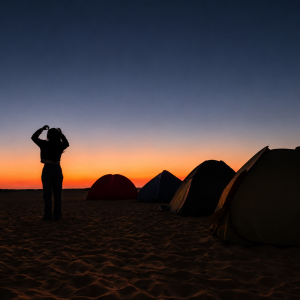
  • silhouettes,
  • hills against open sky,
  • travel portraits,
  • 4×4 safari images.

Low sunlight helps reveal the shape of the terrain.

Your Black Desert destination page also recommends early morning and late afternoon for stronger photographic depth.

Photography in the White Desert

The White Desert provides more variety in individual subjects.

You can photograph:

  • mushroom formations,
  • tent-shaped rocks,
  • isolated sculptures,
  • large landscapes,
  • desert camp,
  • sunset,
  • blue hour,
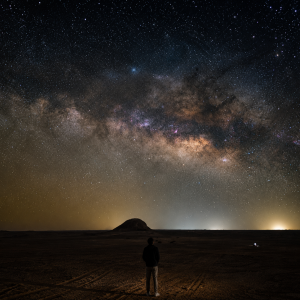
  • stars,
  • sunrise.

Camping gives photographers one major advantage:

time.

You are not forced to photograph everything during the same harsh midday light.

Instead, you can watch how the same formations change through sunset, night and sunrise.

Which Desert Is Better for Sunset?

Both can be excellent, but we give the White Desert the advantage.

Why?

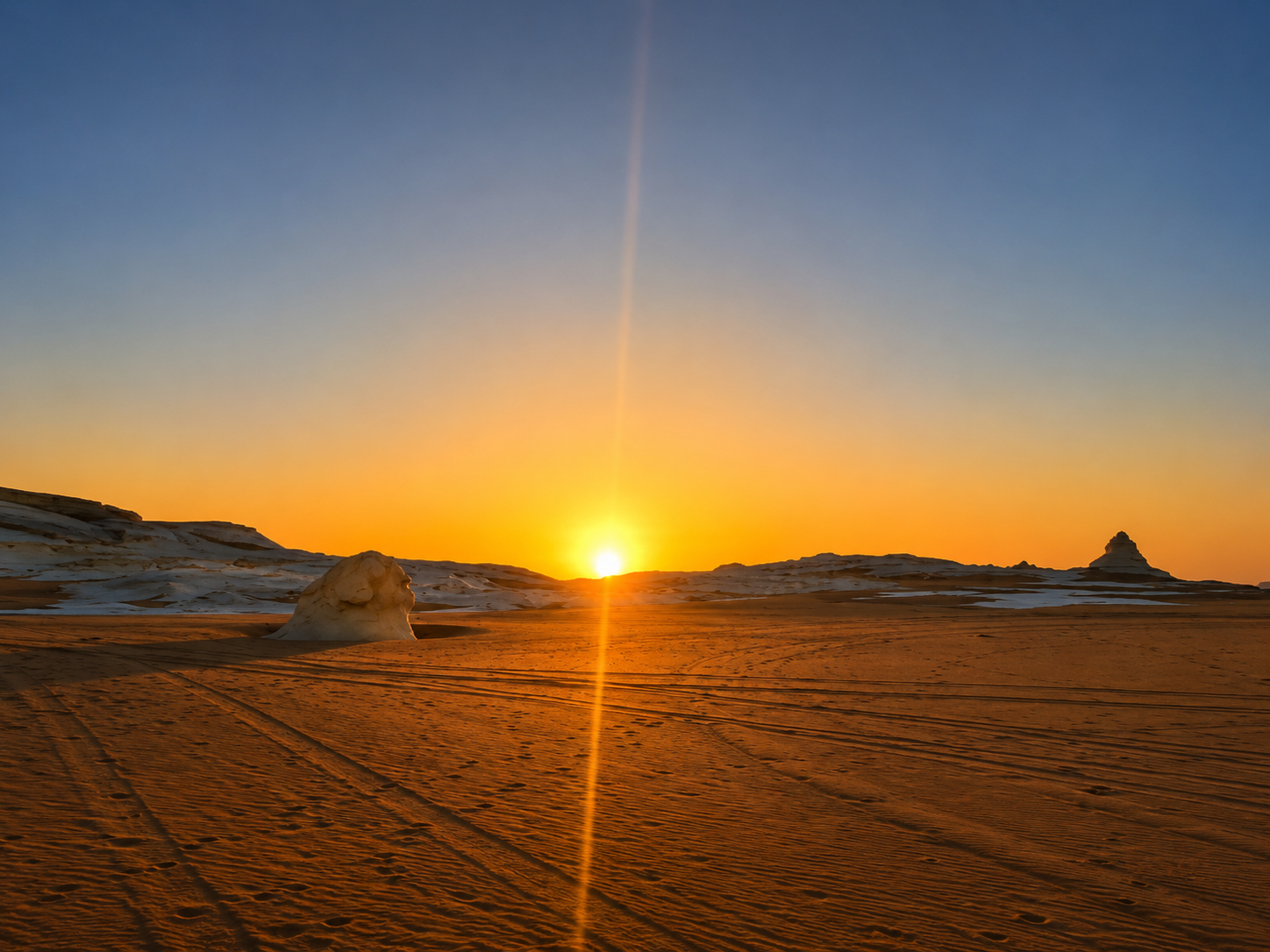
Because you can plan the day to reach the White Desert near sunset and then remain there for camping.

The current 1 Night 2 Days White Desert Tour from Cairo does exactly that: the safari passes through the Black Desert and other stops before reaching the White Desert for sunset, dinner and an overnight camp.

The pale formations also reflect warm sunset colors beautifully.

That makes the transition from daylight to night particularly memorable.

Which Desert Is Better for Sunrise?

Again, the White Desert normally wins.

Not because sunrise cannot be beautiful in the Black Desert.

It can.

The advantage comes from where you sleep.

Most classic overnight itineraries camp in or around the White Desert area.

That means you wake already inside the landscape.

There is no long drive.

No hotel checkout.

No need to reach the photography location.

You simply step outside and wait for sunrise.

The current overnight program on your site specifically includes sunrise before breakfast and further exploration.

White Desert vs Black Desert for Camping

For most travelers:

White Desert wins clearly.

Camping is one of the defining White Desert experiences.

The night is not simply accommodation between two sightseeing days.

It is part of the attraction.

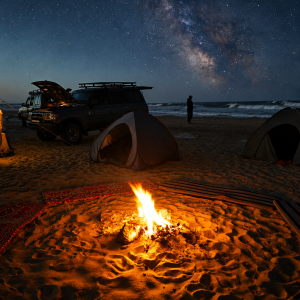
An organized camp can include:

  • tents,
  • mattresses,
  • blankets,
  • sleeping bags,
  • dinner,
  • tea,
  • stargazing,
  • breakfast.

Your current overnight program includes dome-shaped tents with mattresses, blankets and sleeping bags, along with meals during the safari.

The Black Desert, by comparison, is more commonly explored as one stage of the wider safari.

So if your question is specifically:

“Where should I spend the night?”

Our recommendation is the White Desert.

Read our complete White Desert Camping in Egypt guide if camping is your main priority.

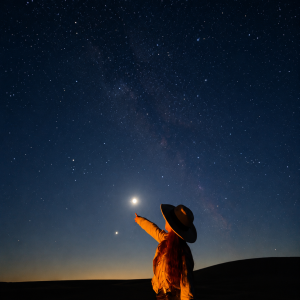
Which Desert Is Better for Stargazing?

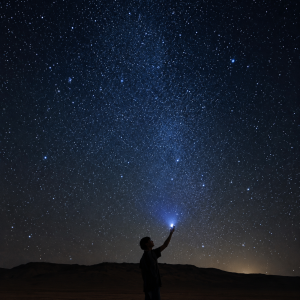
The White Desert is usually the stronger option simply because most overnight itineraries are designed around camping there.

When you stay overnight, you can spend much longer outside after dark.

On clear nights, the remote setting creates a completely different atmosphere from Cairo.

Remember that star visibility still depends on:

  • cloud conditions,
  • atmospheric clarity,
  • moonlight,
  • local camp lighting,
  • time of year.

No responsible tour operator should promise an identical night sky every night.

But staying overnight dramatically increases your opportunity to enjoy the desert after dark.

White Desert vs Black Desert for Adventure

This one is much closer.

The Black Desert provides a strong sense of entering remote desert terrain.

The journey through the wider route can involve:

  • 4×4 driving,
  • hill viewpoints,
  • desert walking,
  • remote roads,
  • panoramic stops.

The White Desert adds:

  • formations,
  • dunes,
  • camping,
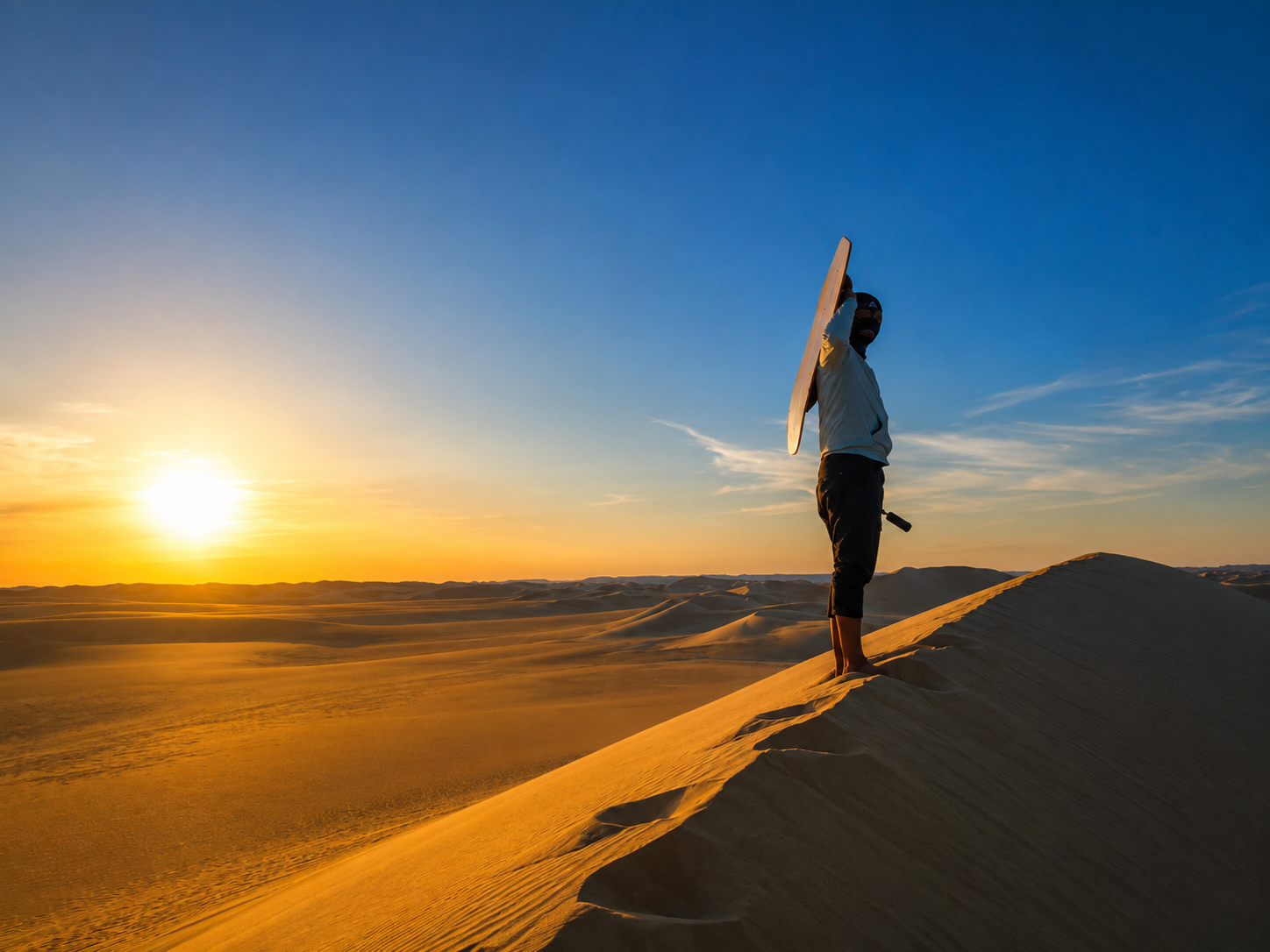
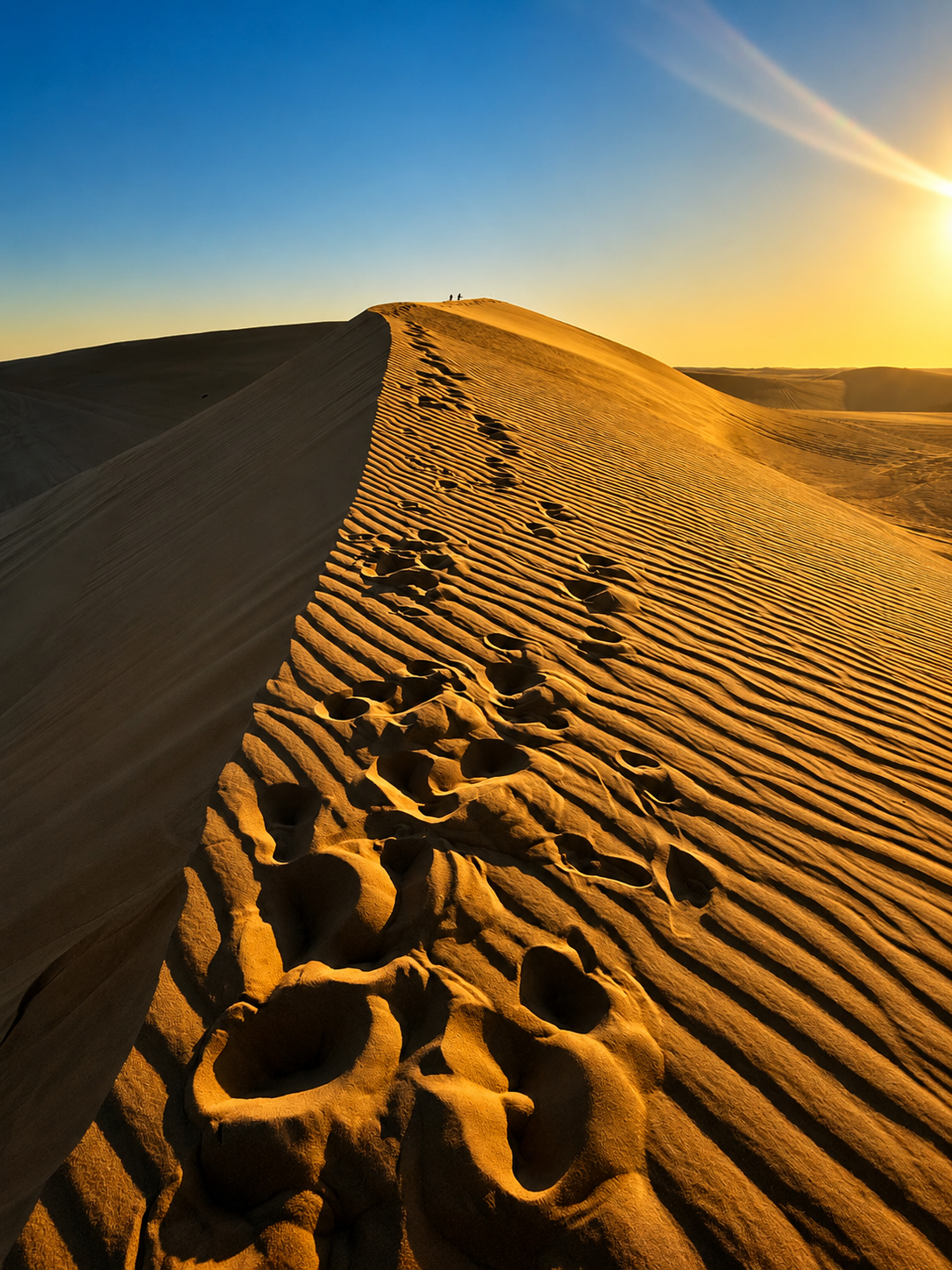
  • sandboarding on suitable parts of the wider route,
  • hiking,
  • sunset,
  • sunrise.

For the full adventure experience, the best answer is therefore the combined route.

Black Desert gives you the rugged beginning.

White Desert gives you the unforgettable ending.

Is the Black Desert a Volcano?

This is an area where travelers should be careful with terminology.

The Black Desert is often described visually as volcanic or volcanic-looking because of its dark hills and black stones.

Egypt’s official tourism portal uses the description volcanic-shaped mountains rather than simply describing the entire area as an active volcanic landscape.

For travel content, “volcanic-looking” is therefore a useful visual description without oversimplifying the geology.

What matters to most visitors is the appearance:

dark hills emerging from golden desert create one of the strongest visual contrasts on the Western Desert route.

What Is Gabal El Marsos?

Gabal El Marsos, also referred to on local itineraries as Divided Mountain, is one of the important stops around the Black Desert route.

It provides an opportunity to leave the vehicle, walk and photograph the darker terrain more closely.

Your Black Desert page places it naturally between the main Black Desert landscape and later stops such as El Hez, Crystal Mountain and Agabat.

This is important for one reason:

The Black Desert should not be experienced only through the window of a vehicle.

Stopping and walking among the terrain gives you a much better sense of its texture and scale.

What Is Crystal Mountain?

After the darker Black Desert landscape, Crystal Mountain creates another sudden change.

Egypt’s official tourism website describes Crystal Mountain as a former underground cave that was pushed to the surface and highlights its recognizable arch and reflective crystal formations.

It is normally a relatively short sightseeing and photography stop.

But within the overall safari, it performs an important role:

It changes the landscape again before you reach Agabat and the White Desert.

A strong itinerary is not simply:

Black Desert → White Desert.

It is:

Black → crystal → gold → white.

That variation is what makes the route memorable.

What Is Agabat?

Aqabat or Agabat Valley is another of the major landscapes encountered before reaching the White Desert.

Egypt’s Tourism Authority highlights its golden sand, dunes and signature white cliffs.

For many travelers, this is one of the most beautiful parts of the journey.

It creates the transition from the darker landscapes around Bahariya toward the pale formations farther south.

Photographers should not treat Agabat as merely a road stop.

If your itinerary allows, it deserves time.

Which Desert Is Better for First-Time Visitors?

For a first desert trip from Cairo, we recommend:

Bahariya + Black Desert + Crystal Mountain + Agabat + White Desert + overnight camping.

That route gives you the widest variety without requiring a very long expedition.

The 1 Night 2 Days White Desert Tour from Cairo currently follows this overall pattern and is our preferred starting point for most first-time visitors.

Why not visit only the White Desert?

Because the journey through the Black Desert makes the final arrival much more interesting.

Why not visit only the Black Desert?

Because after traveling all the way to Bahariya, continuing to the White Desert adds one of Egypt’s most unusual landscapes and opens the possibility of camping.

Which Is Better for a One-Day Trip?

If you have only one day, the same principle applies:

combine them.

Your One Day White Desert Tour from Cairo can include Bahariya, Black Desert, Crystal Mountain, Agabat and White Desert within one long itinerary.

However, the compromise is time.

A one-day route from Cairo is intensive.

You spend substantial time driving and have less time to relax at individual locations.

If you can dedicate two days, staying overnight provides a much better balance.

Which Is Better for an Overnight Trip?

Choose an itinerary that explores the Black Desert during the day and camps in the White Desert at night.

This gives you the strongest parts of both.

Day 1

Cairo → Bahariya → Black Desert → Gabal El Marsos → Crystal Mountain → Agabat → White Desert → sunset → dinner → camping.

Day 2

Sunrise → breakfast → further White Desert exploration → optional spring stop depending on the itinerary → Bahariya → Cairo.

That is why a Black Desert vs White Desert decision is often unnecessary.

The geography naturally creates the comparison for you during the journey.

Which Is Better for a 3-Day Desert Tour?

Three days make the combined experience even stronger.

With more time, you can explore additional:

  • dunes,
  • valleys,
  • springs,
  • off-road areas,
  • photography locations,
  • camping zones.

Your 2 Nights 3 Days White Desert Camping Tour is better for travelers who want the desert itself to become a major part of their Egypt trip rather than a quick excursion.

Photographers and adventure travelers benefit particularly from the additional time.

White Desert vs Black Desert for Couples

For couples, the White Desert is likely to become the emotional highlight.

Sunset, dinner, quiet desert surroundings and camping beneath the night sky create a very different mood from normal sightseeing.

However, the Black Desert improves the journey by giving the first day more variety.

Our recommendation for couples is therefore:

Do not choose one—explore the Black Desert and stay overnight in the White Desert.

A private tour also gives couples more flexibility for photography stops and pacing.

White Desert vs Black Desert for Families

Both can work well for families if the itinerary is planned appropriately.

The Black Desert section gives children and teenagers varied scenery rather than spending the entire day looking at similar landscapes.

The White Desert offers unusual formations and activities such as camping and sandboarding on suitable routes.

For families, a private itinerary is particularly useful because you can adjust:

  • rest stops,
  • meal timing,
  • walking distances,
  • photography stops,
  • camp arrangements.

Families with very young children should discuss the road journey, camping conditions and temperatures with the operator before booking.

Which Desert Is Better if You Do Not Want to Camp?

If you do not want to camp, you can still see both.

Camping is highly recommended for the White Desert, but it is not mandatory.

A long day tour can include several major highlights before returning toward Cairo.

You will miss:

  • the full night atmosphere,
  • stars,
  • camp dinner,
  • waking inside the desert,
  • sunrise.

But you still experience the main contrast between Black and White Desert landscapes.

If avoiding camping is more important than maximizing the experience, the one-day itinerary is the practical choice.

Which Desert Is Better in Winter?

Both.

The main safari season overlaps because travelers commonly experience the two areas on the same trip.

October through April is generally the more comfortable period for most desert exploration, while winter nights can become cold.

Your destination pages currently recommend this general window for walking, photography, 4×4 exploration and camping.

For exact seasonal advice, read our Best Time to Visit the White Desert Egypt for Camping & Photography.

What Should You Pack for Both Deserts?

The packing requirements are almost identical because most travelers experience both during the same safari.

Bring:

  • comfortable walking shoes,
  • breathable daytime clothing,
  • long trousers,
  • sunglasses,
  • hat or scarf,
  • sunscreen,
  • personal medication,
  • power bank,
  • camera,
  • small backpack.

If camping, add:

  • warm layers,
  • fleece or sweater,
  • wind-resistant jacket,
  • warm socks,
  • basic toiletries,
  • headlamp or flashlight.

You do not need separate Black Desert clothing and White Desert clothing.

The season and whether you camp matter much more than the color of the landscape.

See our complete White Desert Egypt Packing List before departure.

Is the White Desert More Famous Than the Black Desert?

Generally, yes.

The White Desert’s unusual formations make it highly recognizable in travel photography.

Searches for Egypt desert camping also naturally lead travelers toward the White Desert because overnight camping is such a major part of the experience.

However, this should not make the Black Desert feel like an optional filler stop.

Without it, you lose one of the strongest visual transitions of the entire journey.

Think of the Black Desert not as “the smaller attraction.”

Think of it as Chapter One of the safari.

Is the Black Desert Worth Visiting?

Absolutely—especially because it fits naturally into the route.

The question is not usually:

“Should I drive several hours from Cairo only to see the Black Desert?”

A better question is:

“Should I include the Black Desert while traveling through Bahariya toward the White Desert?”

Then the answer is clearly yes.

You add a completely different landscape without needing to design a separate trip.

For a deeper explanation, see our Black Desert Egypt guide.
Is the White Desert Worth Visiting?

For travelers interested in natural landscapes, camping, photography and adventure travel, yes.

It is unlike Cairo, Giza, Luxor or Aswan.

That contrast is one of its biggest strengths.

Egypt is often marketed primarily through monuments and archaeology.

The Western Desert shows a completely different side of the country:

  • oases,
  • springs,
  • dunes,
  • geological formations,
  • huge open landscapes,
  • desert camping.

That makes the White Desert particularly attractive to travelers who want something beyond a standard Egypt itinerary.

Can You Visit Both Deserts From Cairo?

Yes.

This is one of the most common ways to experience them.

The logical route is:

Cairo → Bahariya Oasis → Black Desert → Crystal Mountain → Agabat → White Desert → Bahariya → Cairo

Depending on the amount of time available, this can be arranged as:

One day

For travelers with extremely limited time.
2 days / 1 night

Our recommended option for most first-time visitors.
3 days / 2 nights

Better for photography and deeper safari exploration.

4 days

Better for travelers wanting additional Bahariya sightseeing and slower travel.

If you are unsure about duration, read our White Desert Egypt Itinerary: 1, 2, 3 and 4 Day Tour Ideas.

Do You Need a 4x4?

For the deeper desert safari sections, suitable desert transportation and local route knowledge are important.

The Egyptian Tourism Authority recommends using experienced licensed guides with appropriate 4×4 vehicles for excursions outside Bahariya and advises travelers to check current permits and logistics before heading out.

This is not the same type of trip as driving independently between normal Egyptian cities.

Remote desert travel involves:

  • off-road terrain,
  • long distances,
  • changing conditions,
  • navigation,
  • supplies,
  • permits and local regulations.

For international travelers, an organized safari is the practical approach.

White Desert vs Black Desert: Which Should You Choose?

Here is the simplest answer.

Choose the White Desert if:

You can only select one destination.

You want camping.

You want sunrise and sunset.

You love unusual rock formations.

You want stargazing.

You are interested in overnight photography.

Choose the Black Desert if:

You are mainly interested in rugged dark landscapes.

You are staying around Bahariya Oasis.

You enjoy panoramic photography.

You want a shorter safari element around the oasis.

But choose both if:

You are already traveling from Cairo.

You want the complete Western Desert experience.

You have at least one full day.

You are considering camping.

You want maximum landscape variety.

For most travelers, this is the correct choice.

Our Recommendation for First-Time Visitors

Do not build your trip around:

White Desert OR Black Desert.

Build it around:

Bahariya Oasis → Black Desert → Crystal Mountain → Agabat → White Desert.

Then spend the night in the White Desert if your schedule allows.

That gives you:

green oasis scenery,

black hills,

golden sand,

crystal formations,

dramatic valleys,

white chalk landscapes,

sunset,

camping,

stars,

sunrise.

Few short trips from Cairo provide this much visual variety.

Book a Black Desert and White Desert Tour From Cairo

Want to experience both landscapes instead of choosing between them?

A private desert safari from Cairo can combine Bahariya Oasis, the Black Desert, Crystal Mountain, Agabat and the White Desert in one route.

Best for First-Time Visitors

1 Night 2 Days White Desert Tour from Cairo

Explore the Black Desert during the safari and finish the day with sunset and overnight camping in the White Desert.

Only Have One Day?

One Day White Desert Tour from Cairo

Want More Time in the Desert?

2 Nights 3 Days White Desert Camping Tour

Explore the Destinations

White Desert Egypt

Black Desert Egypt

Bahariya Oasis Egypt

Send White and Black Desert Tours your travel dates, number of travelers, pick-up location and available number of days, and we can help you choose the right private Western Desert itinerary.

WhatsApp: +20 10 05014595

Email: contact@whiteandblackdeserttours.com

Tour Enquiry: Contact White and Black Desert Tours

4 Days Siwa Oasis Tour from Cairo

One Day Fayoum Tour from Cairo

Giza Pyramids & Grand Egyptian Museum Tour

One Day Tour to the White Desert from Cairo

1 Night Camping in Fayoum Desert from Cairo

2 Nights 3 Days Cairo – Siwa Tour

Siwa Program by Comfortable Bus from Cairo

1 Night 2 Days White Desert Tour from Cairo

2 Nights 3 Days White Desert & Dejara Cave Tour from Cairo

2 Nights 3 Days Camping Tour in White Desert

3 Nights 4 Days Cairo White Desert Tour

2 Nights 3 Days Tour in White Desert and Bahariya Oasis

2 Nights 3 Days Cairo – Siwa Tour

2 Nights 3 Days Fayoum and White Desert Tour from Cairo

5 Nights 6 Days Egypt Oasis Tour from Cairo

2 Days Tour in Cairo and Giza

3 Days 2 Nights Tour from Cairo to Dakhla and Luxor

Full Day Tour to Alexandria from Cairo

Full Day Tour in West Bank of Luxor

Full Day Tour in East Bank of Luxor

Full Day Tour in Aswan

Frequently Asked Questions About White Desert vs Black Desert Egypt

The White Desert is famous for pale chalk formations shaped into unusual natural sculptures, while the Black Desert is known for dark hills and black stones spread across golden desert terrain. They have very different appearances but are commonly visited on the same Western Desert safari.

For most first-time visitors, the White Desert is the stronger main destination because it offers distinctive formations, sunset, camping, stars and sunrise. However, the best itinerary includes both deserts rather than choosing only one.

Yes. Many tours from Cairo travel through Bahariya Oasis, explore the Black Desert first and then continue toward Crystal Mountain, Agabat and the White Desert.

For many safari routes starting through Bahariya Oasis, yes. The Black Desert is commonly one of the first major stops before continuing deeper toward Crystal Mountain, Agabat and the White Desert.

The Black Desert is located around Bahariya Oasis in Egypt's Western Desert. Bahariya is commonly used as the gateway for travelers coming from Cairo.

The White Desert is located farther south in Egypt's Western Desert, near Farafra Oasis. Travelers coming from Cairo commonly access it through Bahariya Oasis and the wider desert safari route.

The White Desert is generally better for overnight camping and is the usual camping highlight of combined Black and White Desert tours.

Both are excellent. The Black Desert is strong for dark hills, panoramic views and high-contrast landscapes, while the White Desert offers unusual formations, sunset, stars and sunrise. Photographers benefit most from seeing both.

Two days and one night provide a strong first-time experience for most travelers. A three-day itinerary is better if you want more photography, off-road exploration and camping.

Yes, it is possible on a long one-day safari. However, an overnight trip is generally more relaxed and allows you to experience White Desert camping, sunset and sunrise.

Yes. It provides a dramatic visual contrast with the White Desert and fits naturally into many safari routes from Bahariya Oasis.

Yes, especially for travelers interested in nature, photography, camping and adventure. Its unusual chalk formations create one of the most distinctive natural landscapes in Egypt.

October through April is generally the most comfortable period for most travelers. Winter days can be pleasant for exploration, while nights may become cold, especially during overnight camping.

Usually not. For travelers coming from Cairo through Bahariya Oasis, combining the Black Desert and White Desert within the same itinerary is generally the more practical and rewarding option.