Best Things to See in the Black Desert Egypt and Bahariya Oasis
Bahariya Oasis and Egypt’s Black Desert are often treated as stops on the way to the White Desert.
That is a mistake.
The area around Bahariya contains enough natural landscapes, desert viewpoints, springs, archaeological sites and safari stops to make it a destination in its own right.
Within one short trip from Cairo, you can move from green date-palm groves to black-covered desert hills, climb to panoramic viewpoints, visit natural springs, discover an important Graeco-Roman burial site and then continue deeper into the Western Desert toward Crystal Mountain and Agabat.
Egypt’s official tourism authority describes Al-Bahariyya as the closest Western Desert oasis to Cairo, located around 370 km southwest of the capital, and identifies both the Black Desert and White Desert as two of the most important natural areas to explore outside the oasis.
For travelers with limited time, that makes Bahariya one of the easiest places to experience a completely different side of Egypt without committing to a week-long desert expedition.
The best attractions include:
The Black Desert
Gabal El Marsos
Bahariya’s palm groves and oasis scenery
Natural hot and cold springs
English Mountain
Valley of the Golden Mummies
Gabal Maghrafa
Salty Lake
El Meftella and the surrounding oasis mountains
Crystal Mountain
Agabat Valley
Sand dunes and sandboarding
The White Desert as the natural extension of the route
This guide explains what makes each stop worth seeing, which ones fit into a short safari and how to combine them into the best route from Cairo.
Bahariya Oasis → Black Desert → Gabal El Marsos → Crystal Mountain → Agabat
If you have 2 days / 1 night, continue into:
White Desert → sunset → camping → sunrise
If you have 3 days / 2 nights, add more Bahariya sightseeing:
hot springs → Salty Lake → English Mountain → local oasis scenery → mountain viewpoints
This three-day balance is exactly why our current White Desert & Bahariya Oasis Tour from Cairo combines one desert camping night with one hotel night in Bahariya. The program currently includes the Black Desert, Gabal El Marsos, El Hez, Crystal Mountain, Agabat, White Desert and a second stage focused on Bahariya attractions.
1. Explore the Black Desert
The Black Desert is the natural place to begin.
After reaching Bahariya Oasis from Cairo, travelers typically change into a suitable 4×4 vehicle and enter the wider safari route.
The landscape quickly changes.
The palm groves disappear.
Open sand replaces cultivated land.
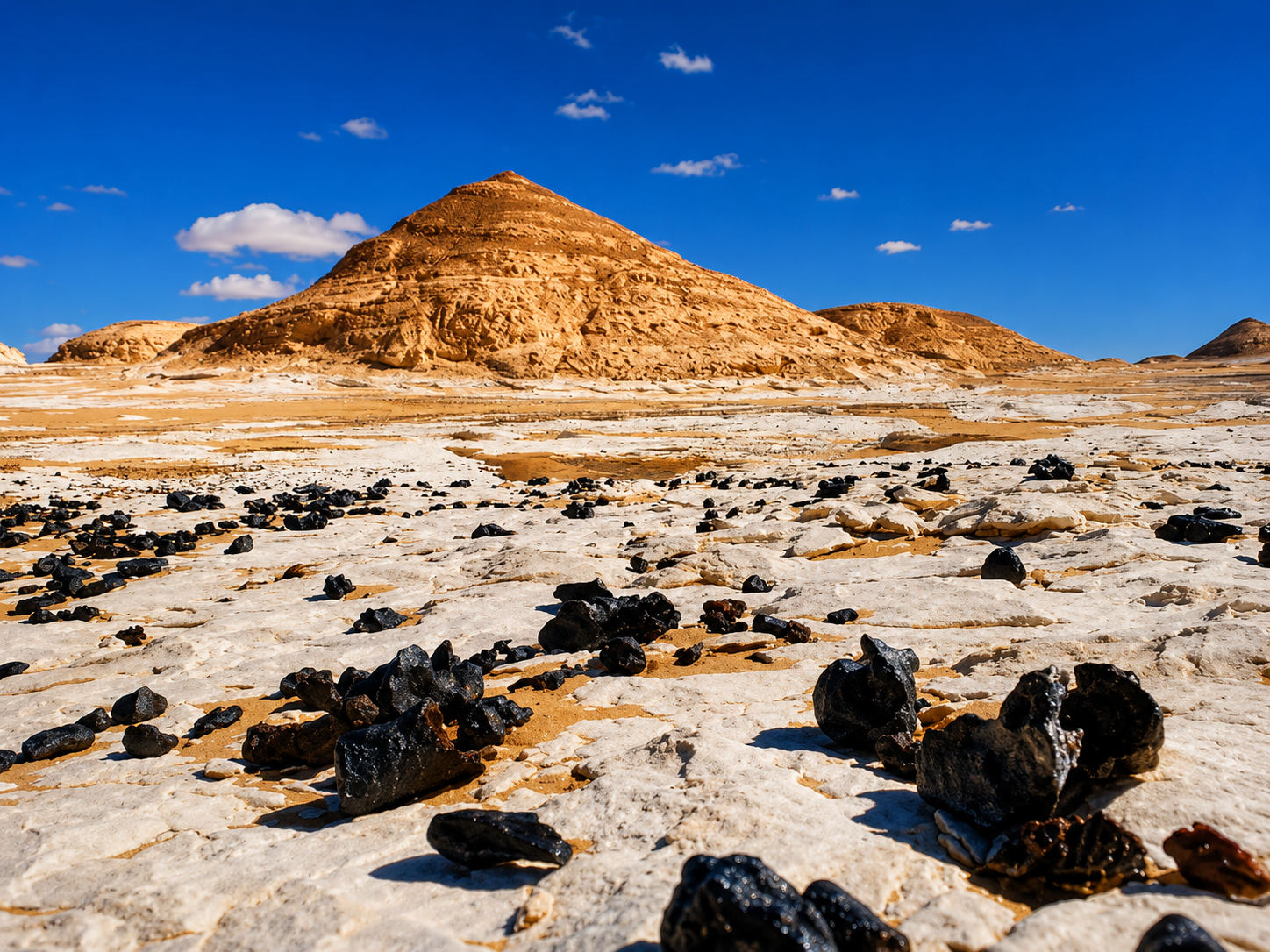
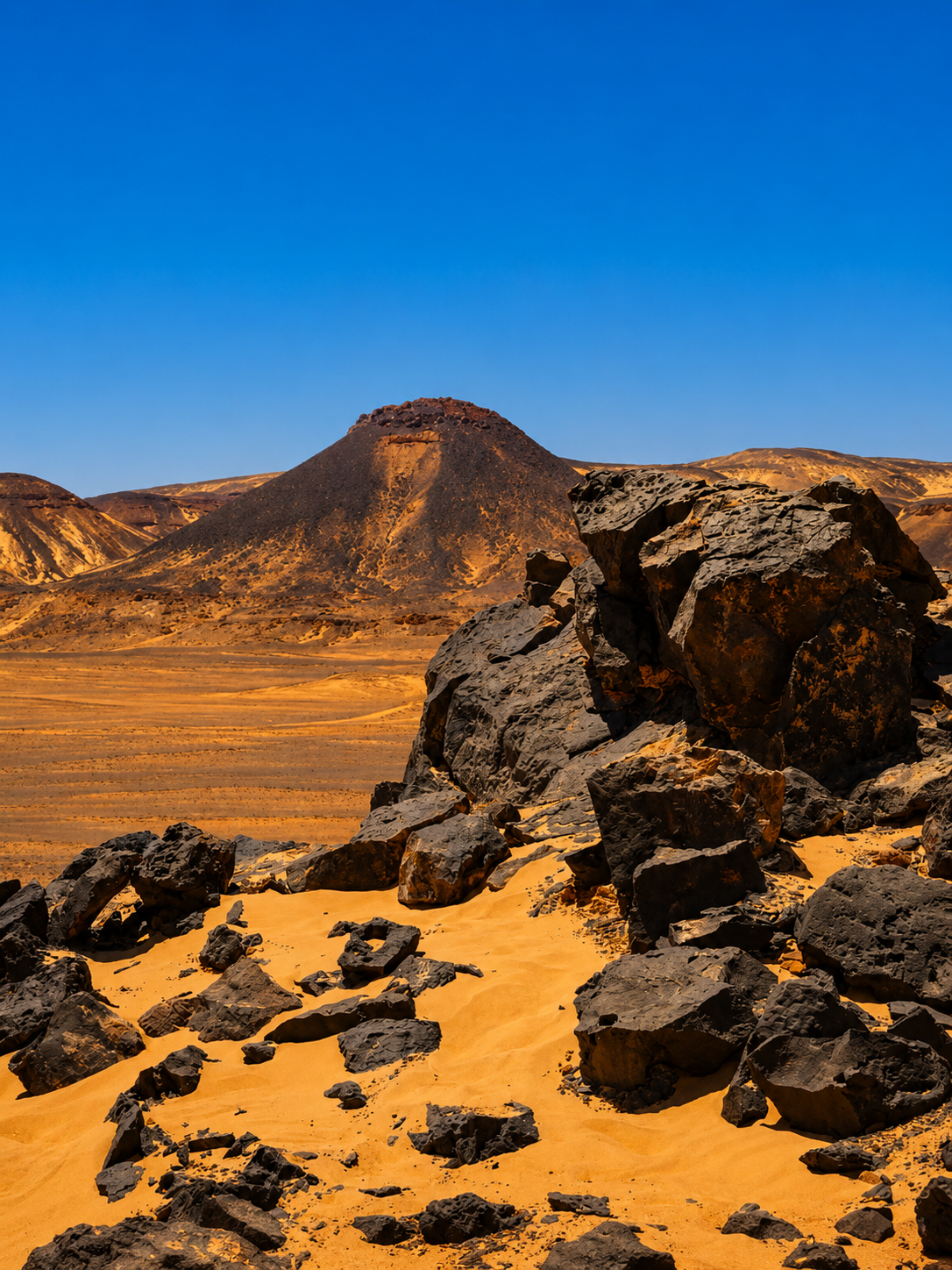
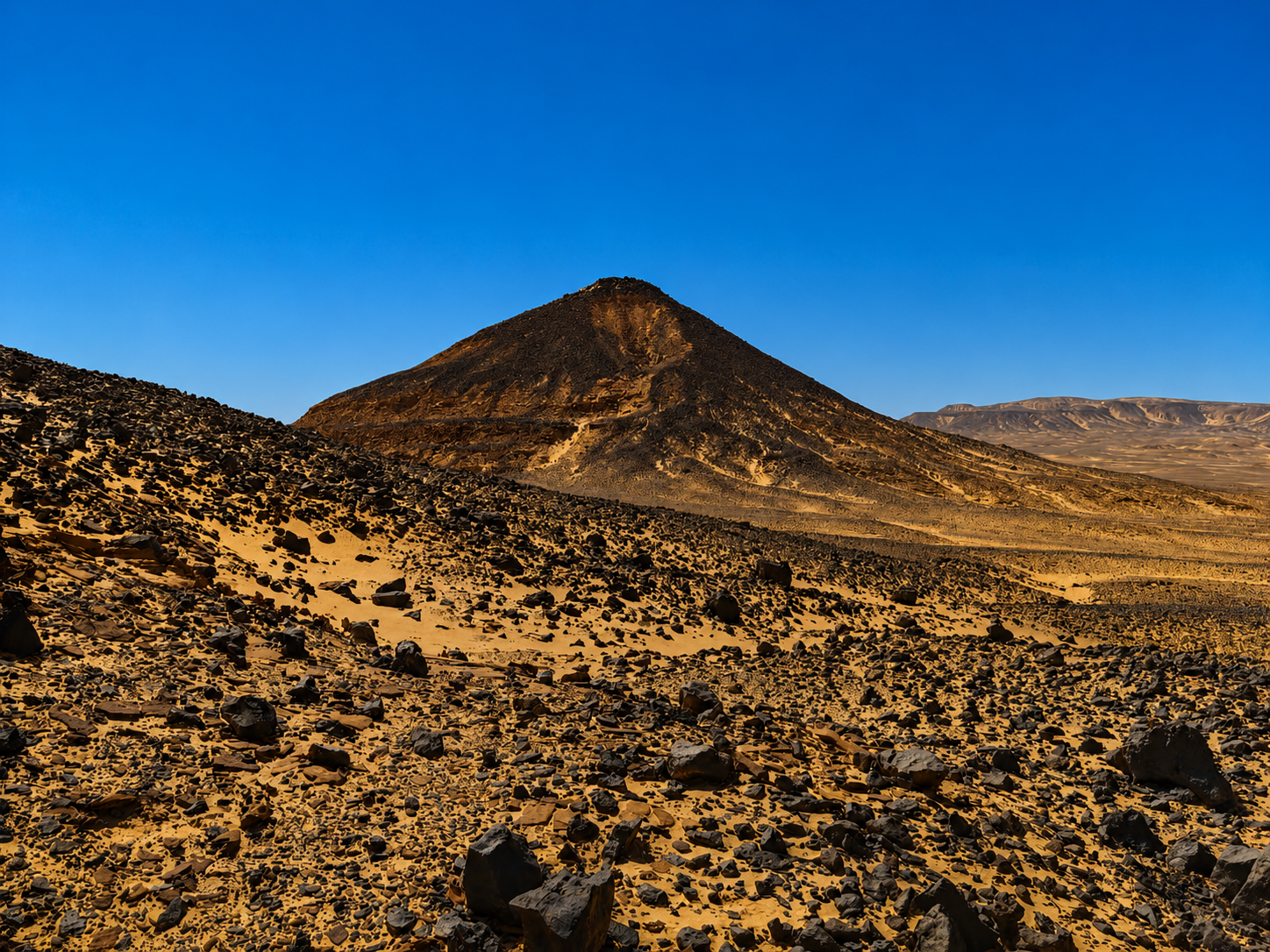
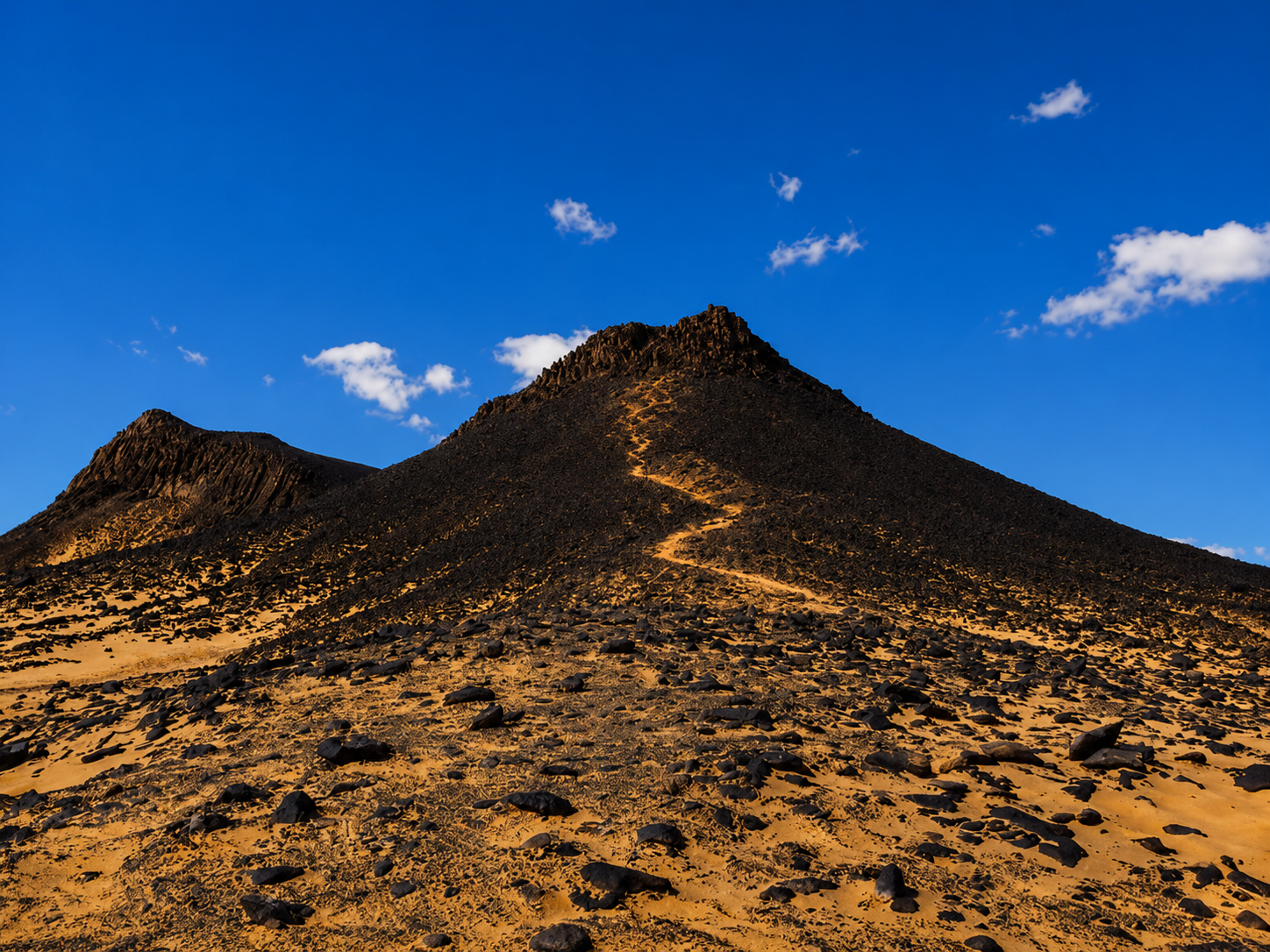
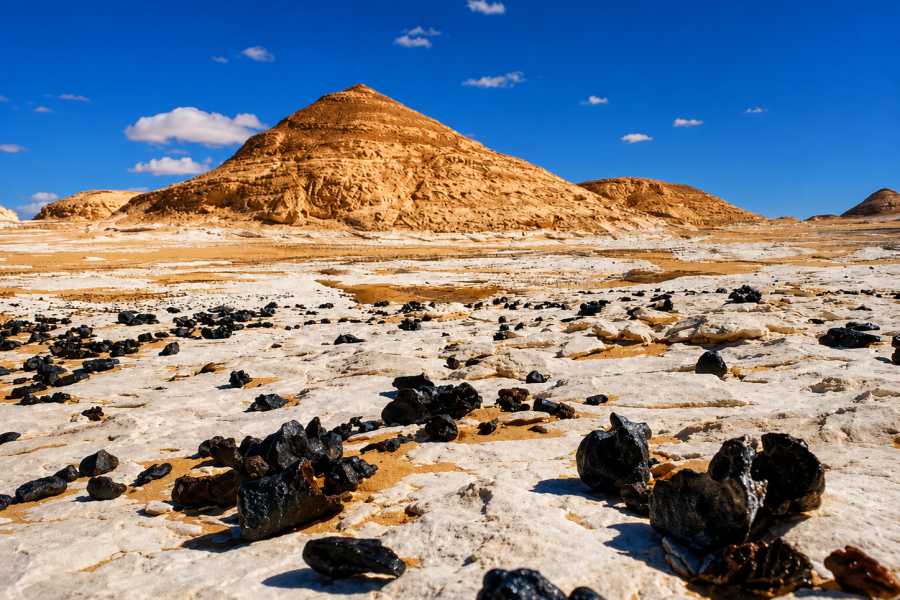
Dark hills and black stones begin appearing across the horizon.
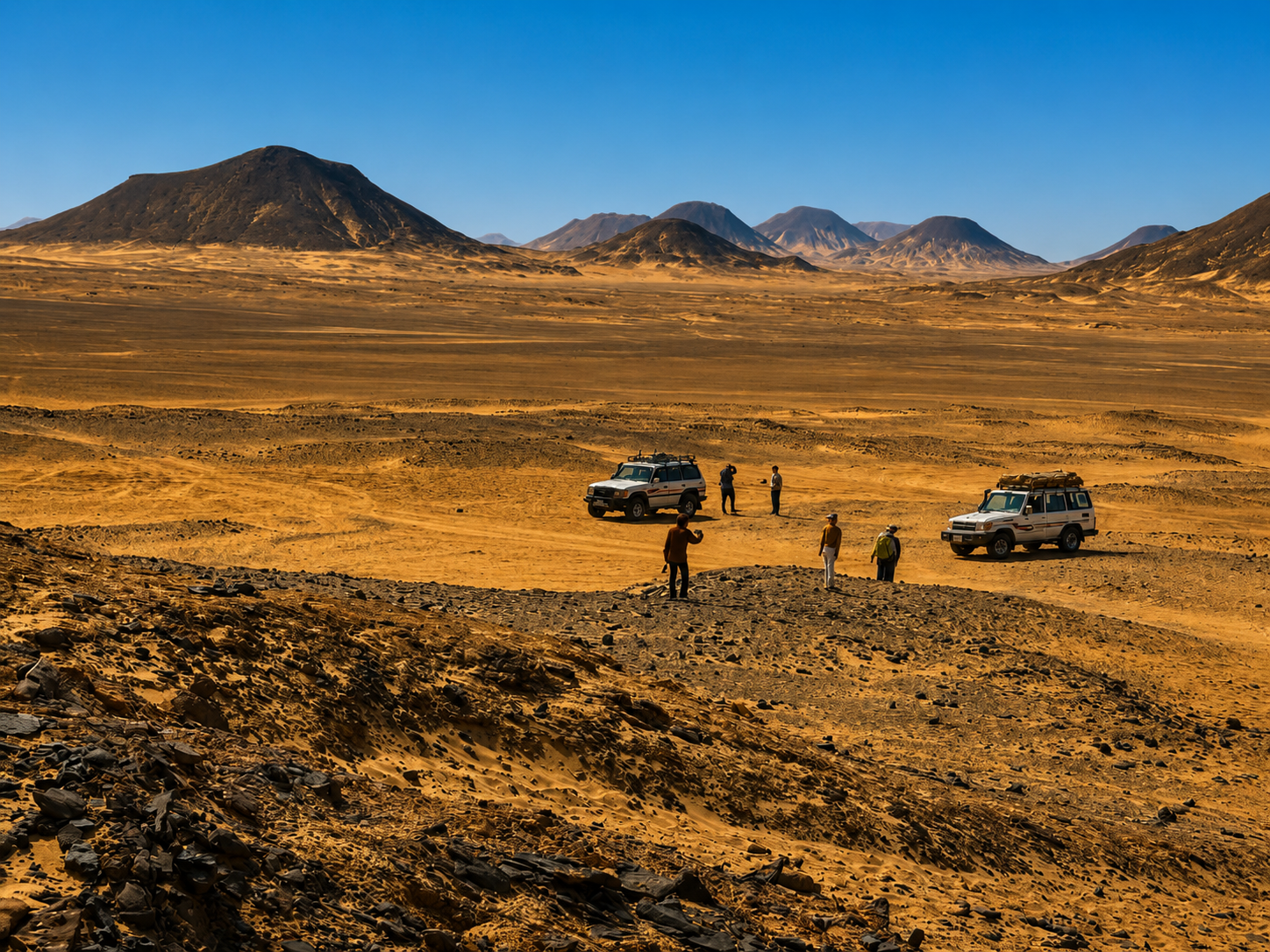
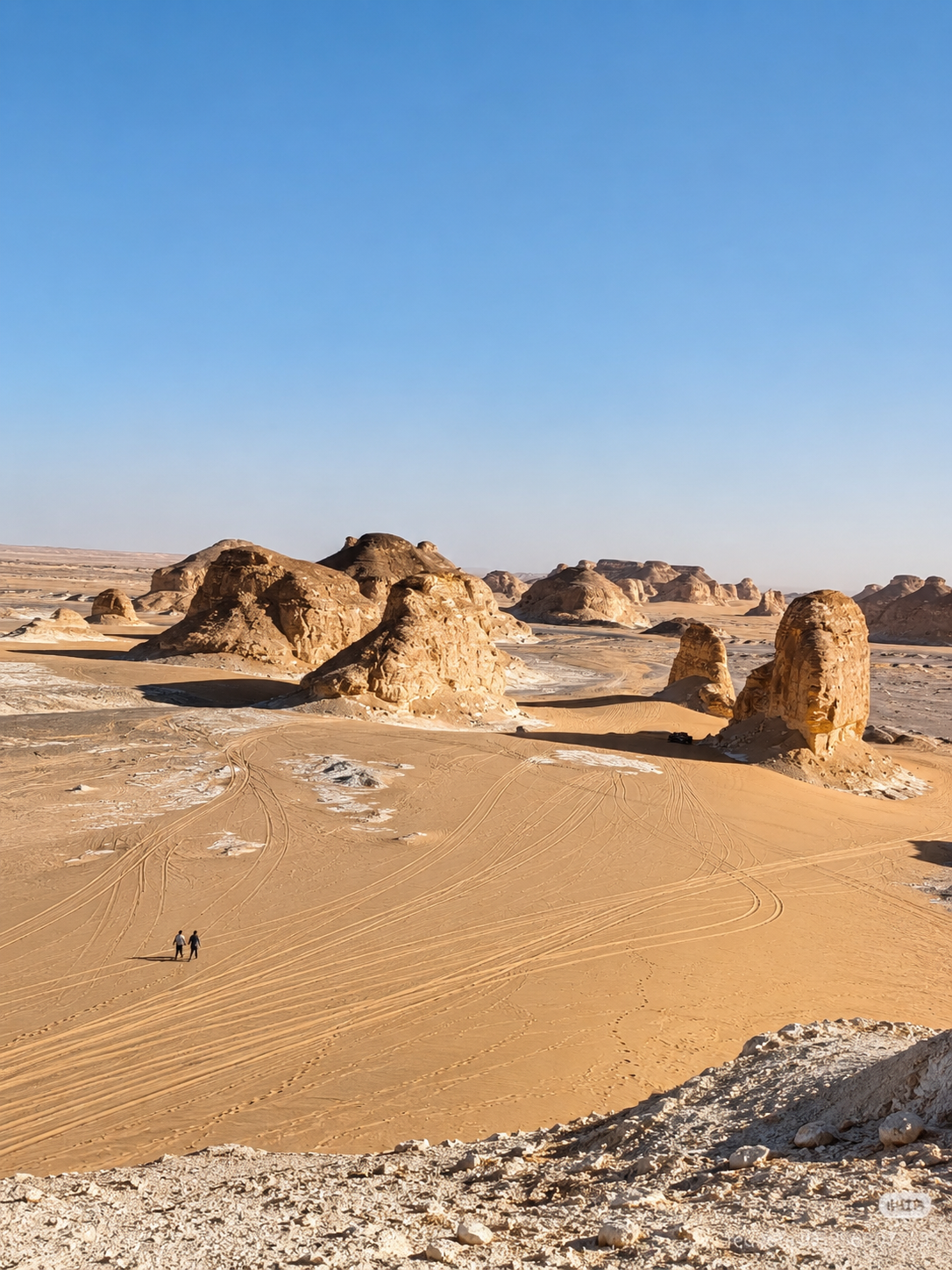
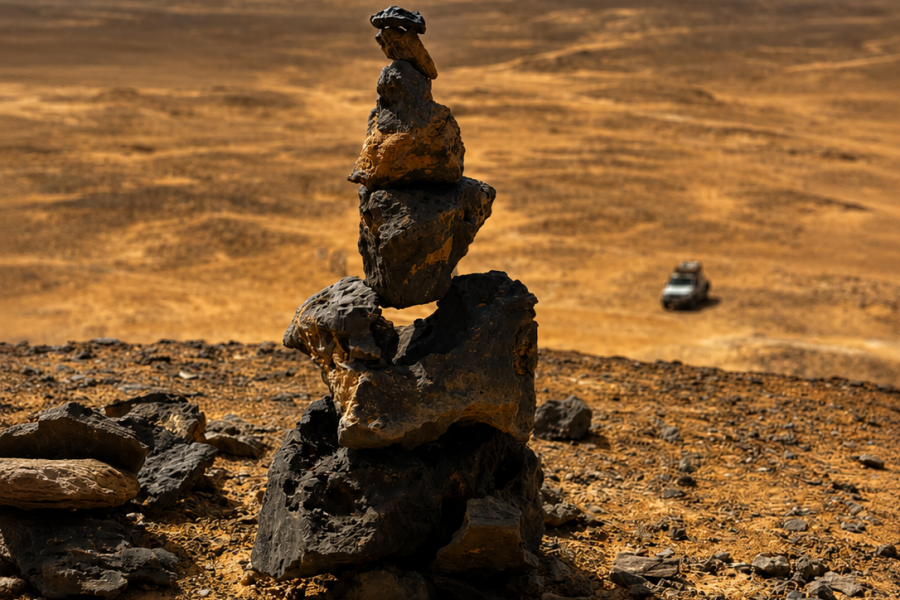
The Black Desert gets its visual character from these dark-covered hills rising above golden and brown desert terrain. Your current Black Desert destination page places it as the first major landscape stop after Bahariya and before Gabal El Marsos, El Hez, Crystal Mountain and Agabat.
Why is it worth seeing?
Because of contrast.
It does not look like the White Desert.
It does not look like the dunes many travelers imagine when they hear “Sahara.”
The dark hills give the region a rough, dramatic atmosphere.
One of the most important Black Desert stops is Gabal El Marsos, also known on local safari routes as Divided Mountain.
Your current Black Desert page and 3-day safari itinerary both include it as a regular stop after entering the Black Desert.
What makes it useful is that it gives you a reason to leave the vehicle.
The Black Desert is impressive from inside a 4×4, but walking changes your perspective.
You can see:
dark stones up close,
surrounding hills,
open plains,
the scale of the terrain.
For photographers, a person or 4×4 vehicle can work particularly well in the frame because it provides scale.
How long do you need?
This is usually a safari stop rather than a half-day hike.
Allow enough time to walk, photograph and enjoy the view without rushing.
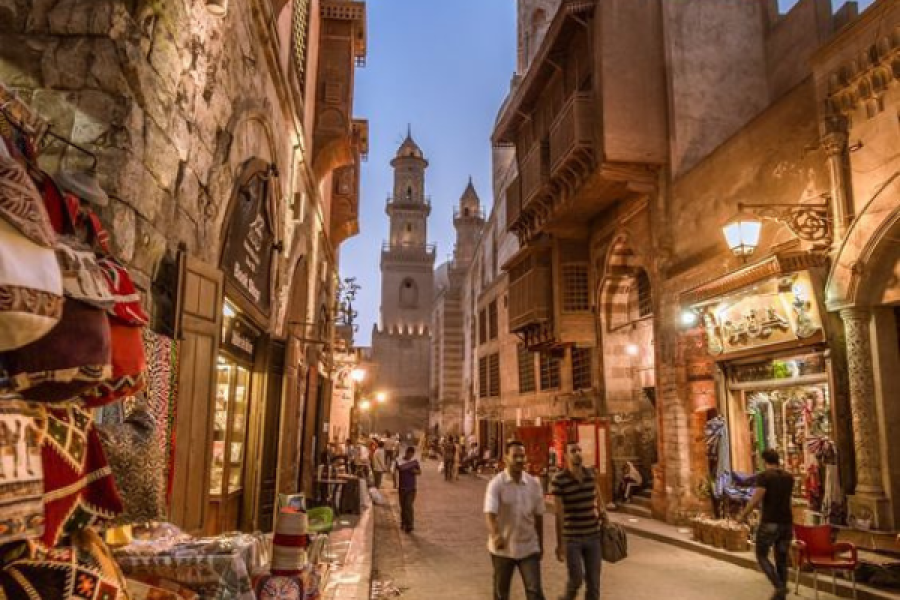
3. See Bahariya's Palm Groves and Oasis Landscape
One of the most underrated attractions is Bahariya itself.
The Egyptian Tourism Authority describes the oasis as a lush landscape filled with date palms and olive trees, surrounded by the Western Desert.
That contrast is important.
If you move directly from Cairo into the Black Desert without paying attention to Bahariya, you miss part of the story.
The oasis demonstrates how dramatically life changes when underground water reaches an otherwise arid landscape.
Around Bahariya you can see:
palm groves,
orchards,
agricultural areas,
villages,
desert hills in the background.
Best way to experience it
Do not necessarily search for one famous palm tree.
Drive or walk slowly through selected oasis areas and look at the relationship between green farmland and barren desert.
For photographers, that contrast can be more interesting than another isolated geological formation.
4. Visit Bahariya's Natural Hot and Cold Springs
Bahariya is particularly well known for its springs.
Experience Egypt identifies Ain Gomma, Al-Jaffara, Bir Al-Mattar and Bir Ramla among the better-known natural hot and cold springs found in and around the oasis.
A spring stop is especially welcome after:
several hours from Cairo,
a dusty safari,
hiking,
or an overnight desert camp.
Some current White and Black Desert Tours itineraries include warm-spring stops during the journey back toward Bahariya.
Should you swim?
That depends on the exact spring, current conditions and your selected itinerary.
Ask your guide.
The important point is that Bahariya’s springs are part of the oasis landscape and help explain why communities and agriculture developed here.
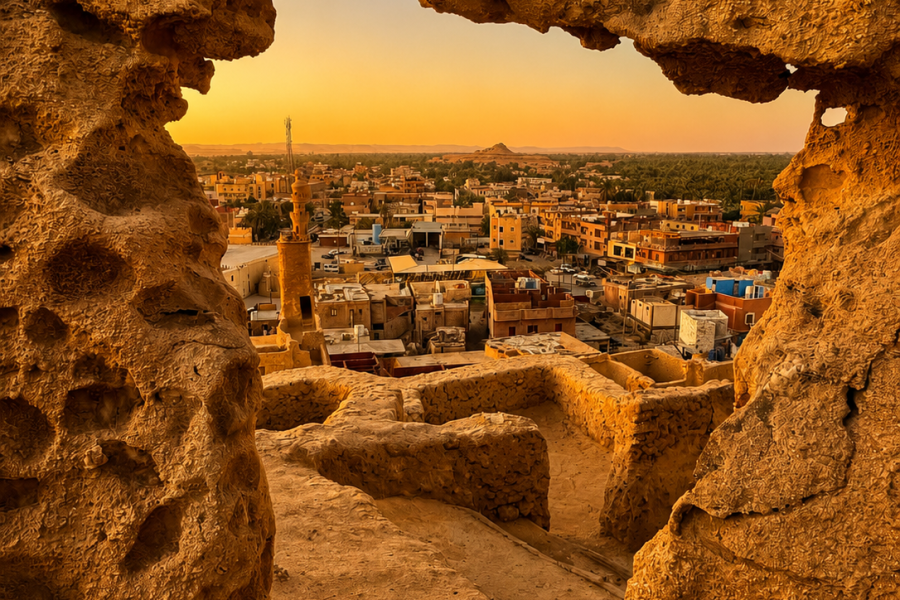
5. Watch the View From English Mountain
Gabal al-Ingleez, often called English Mountain, is one of Bahariya’s best-known viewpoints.
Egypt’s official tourism site specifically recommends it for views across Bahariya and the surrounding desert.
This is a completely different experience from standing among Black Desert hills.
From an elevated viewpoint you can understand the oasis as a whole.
You see the relationship between:
villages + palm groves + cultivated land + desert mountains.
That makes English Mountain particularly useful toward the end of a Bahariya sightseeing day.
Your current 3-day tour also includes English Mountain as a possible sunset stop when timing allows.
Best time to visit
Late afternoon is attractive because the lower sun creates more depth across the oasis.
If timing allows, sunset can be even better.
6. Discover the Valley of the Golden Mummies
Bahariya is not only about nature.
It has an important archaeological side.
The Valley of the Golden Mummies is one of the oasis’s best-known historical attractions.
Egypt’s official tourism authority describes it as a major Graeco-Roman burial site and says its discovery significantly increased archaeological interest in Bahariya. Many of the burials were decorated with gilded funerary masks, which inspired the site’s modern name.
This makes Bahariya especially interesting for travelers who want to combine:
archaeology + oasis landscape + desert safari
rather than choosing only one type of experience.
Who should prioritize it?
Add the Valley of the Golden Mummies if:
archaeology is important to you,
you have three days,
you want more than desert scenery,
you are a repeat visitor to Egypt.
If you only have one night, your limited time is usually better focused on the Black and White Desert route.
Always confirm current access and opening arrangements when planning your itinerary.
Another attraction highlighted by Egypt’s official tourism website is Gabal Maghrafa.
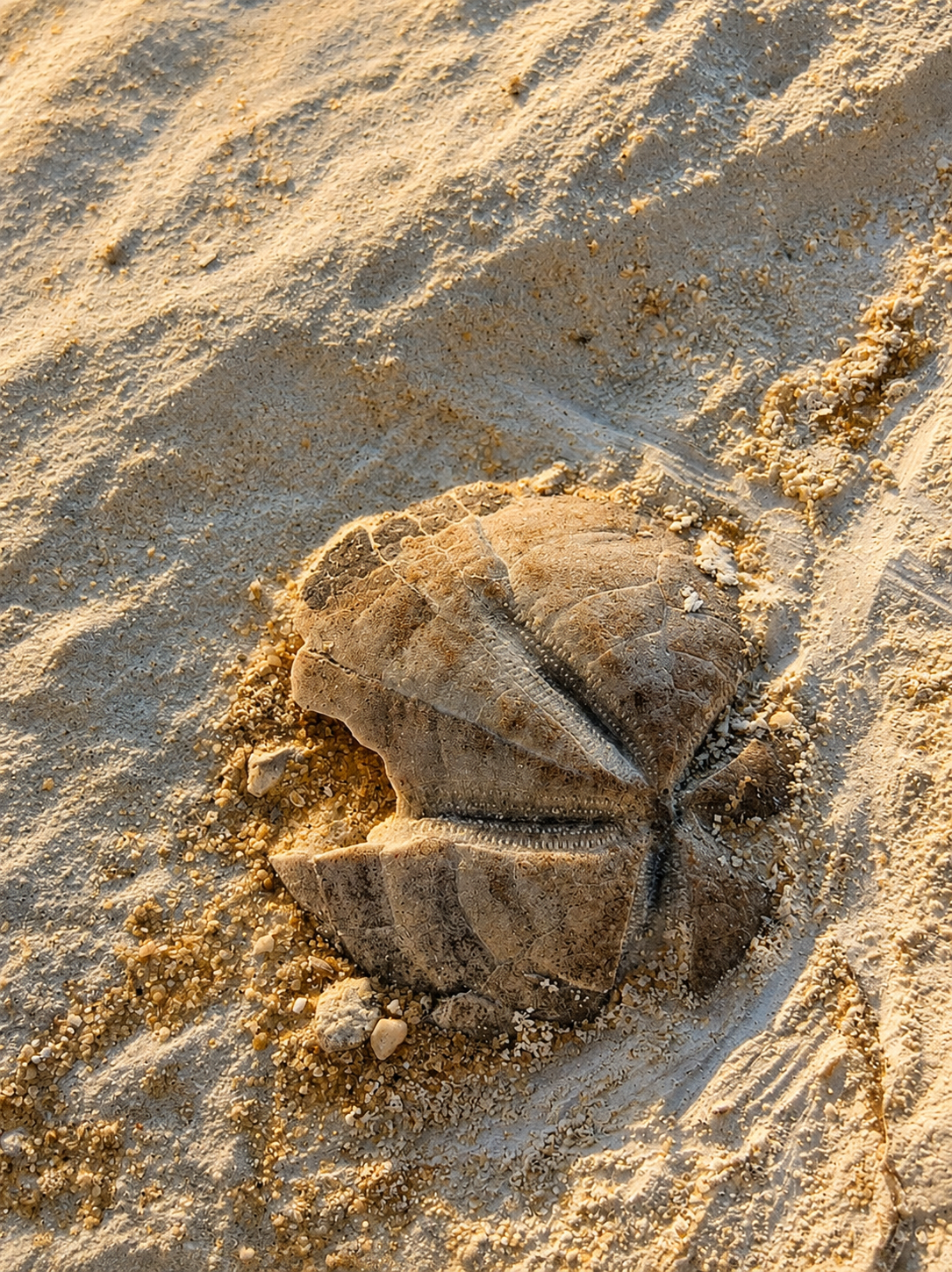
The mountain is known for fossil discoveries and is recommended by Experience Egypt as one of Bahariya’s more unusual hiking and geological attractions.
This is a good choice for travelers interested in:
geology,
paleontology,
hiking,
unusual landscapes,
photography.
It also shows that Bahariya’s natural history extends beyond the obvious Black Desert and White Desert route.
Who should add it?
Gabal Maghrafa makes more sense on a 3- or 4-day itinerary than a quick overnight safari.
If your main goal is the White Desert, prioritize the classic route.
If your main goal is Bahariya itself, this becomes much more worthwhile.
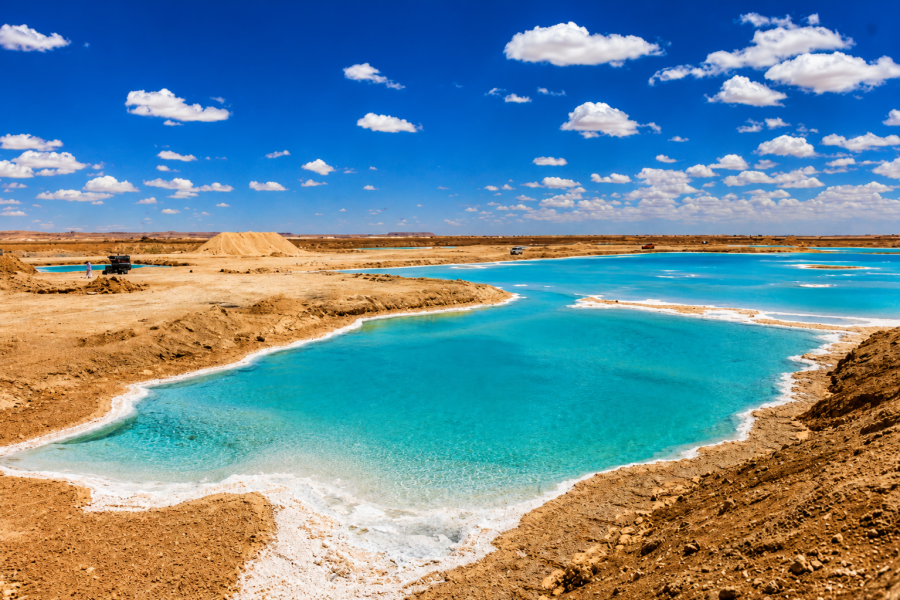
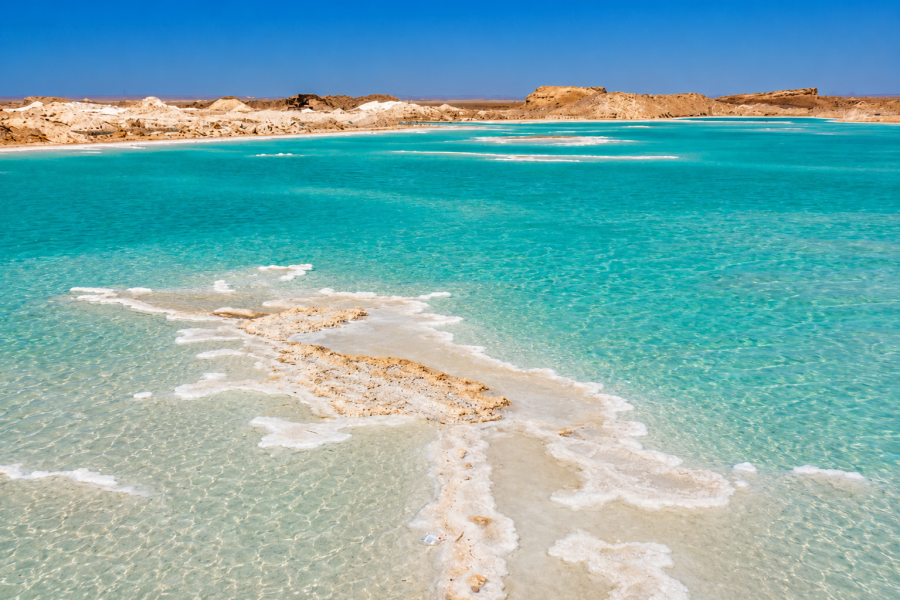
8. Stop at Salty Lake
Salty Lake is included among the Bahariya sightseeing stops on the current White Desert & Bahariya Oasis 3-day itinerary.
The attraction is primarily visual.
Water creates a striking contrast with the dry surrounding environment.
After spending a day among:
Black Desert hills,
sand,
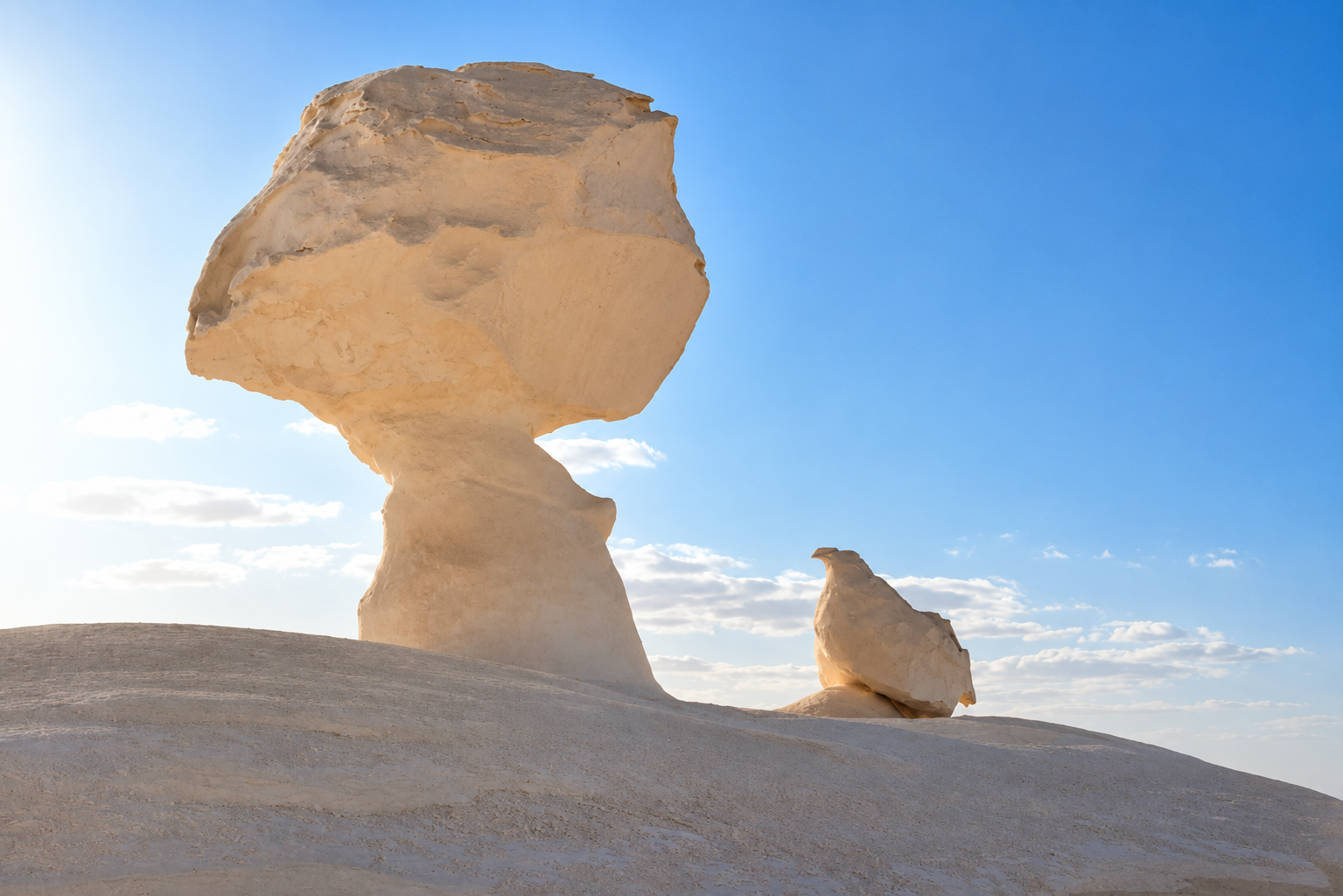
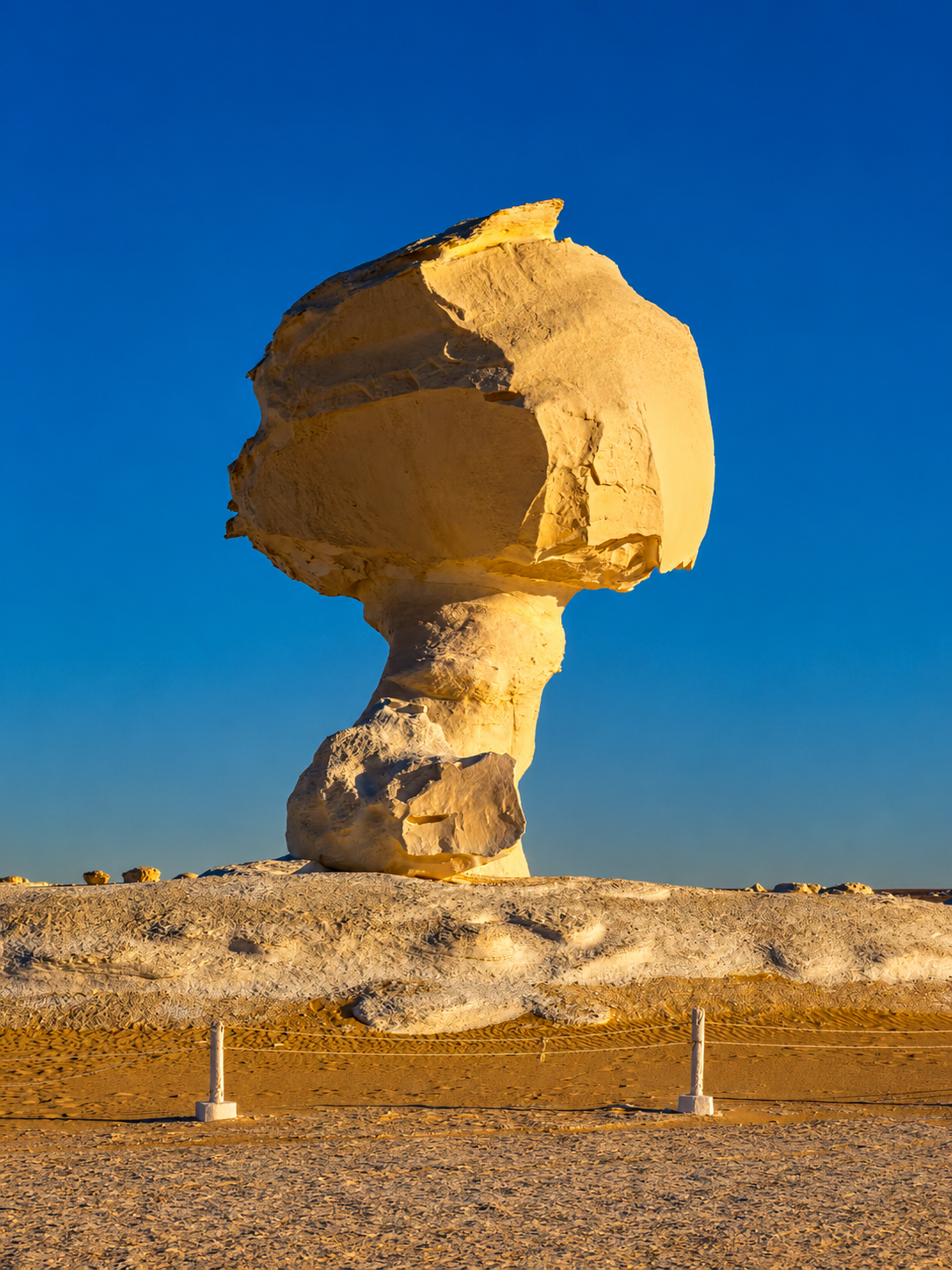
chalk formations,
and rocky valleys,
a lake inside an oasis feels unexpectedly different.
This is also a useful stop for:
photography,
relaxing,
seeing another side of Bahariya.
Important
Do not confuse Bahariya’s lake experience with the famous floating salt pools of Siwa Oasis.
They are different destinations and should be marketed differently.
If salt lakes are the main reason for your Egypt trip, Siwa Oasisis the stronger destination.
9. Explore El Meftella, Dest and Bahariya's Desert Mountains
Longer Bahariya programs can include several smaller mountain and viewpoint stops.
Your current three-day tour lists:
El Meftella Mountain
Dest Pyramid Mountain
Maghrafa Mountain
among the Bahariya sightseeing component.
These stops are useful because they prevent the oasis day from becoming one long drive between villages.
Each gives a slightly different angle on the surrounding terrain.
Are they all essential?
Not necessarily.
This is where a private itinerary helps.
If you are primarily interested in photography, your guide may focus on the strongest viewpoints.
If archaeology is your priority, you may want more historical sites.
If you prefer relaxing travel, spend longer around springs and palm groves.
Trying to visit every named hill does not automatically create a better trip.
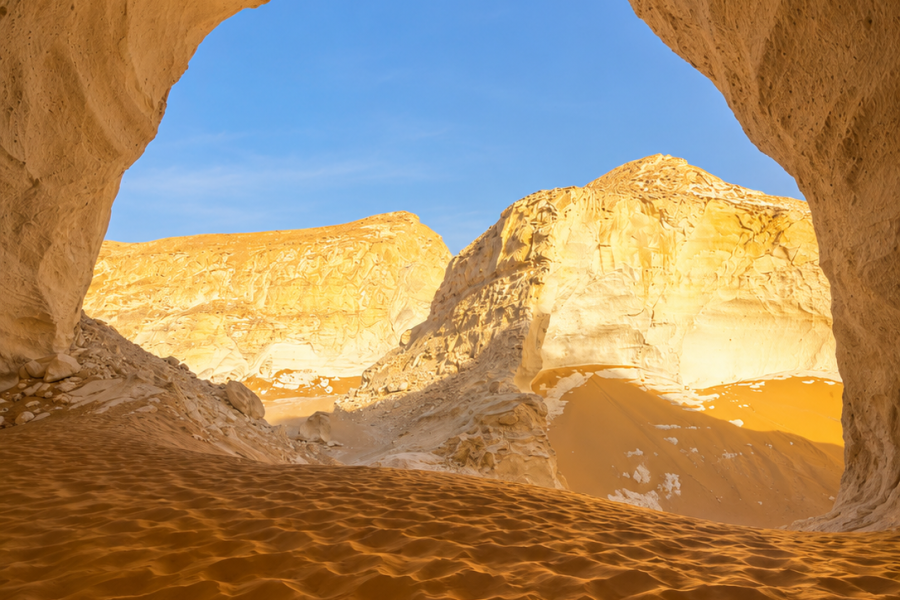
10. Visit Crystal Mountain
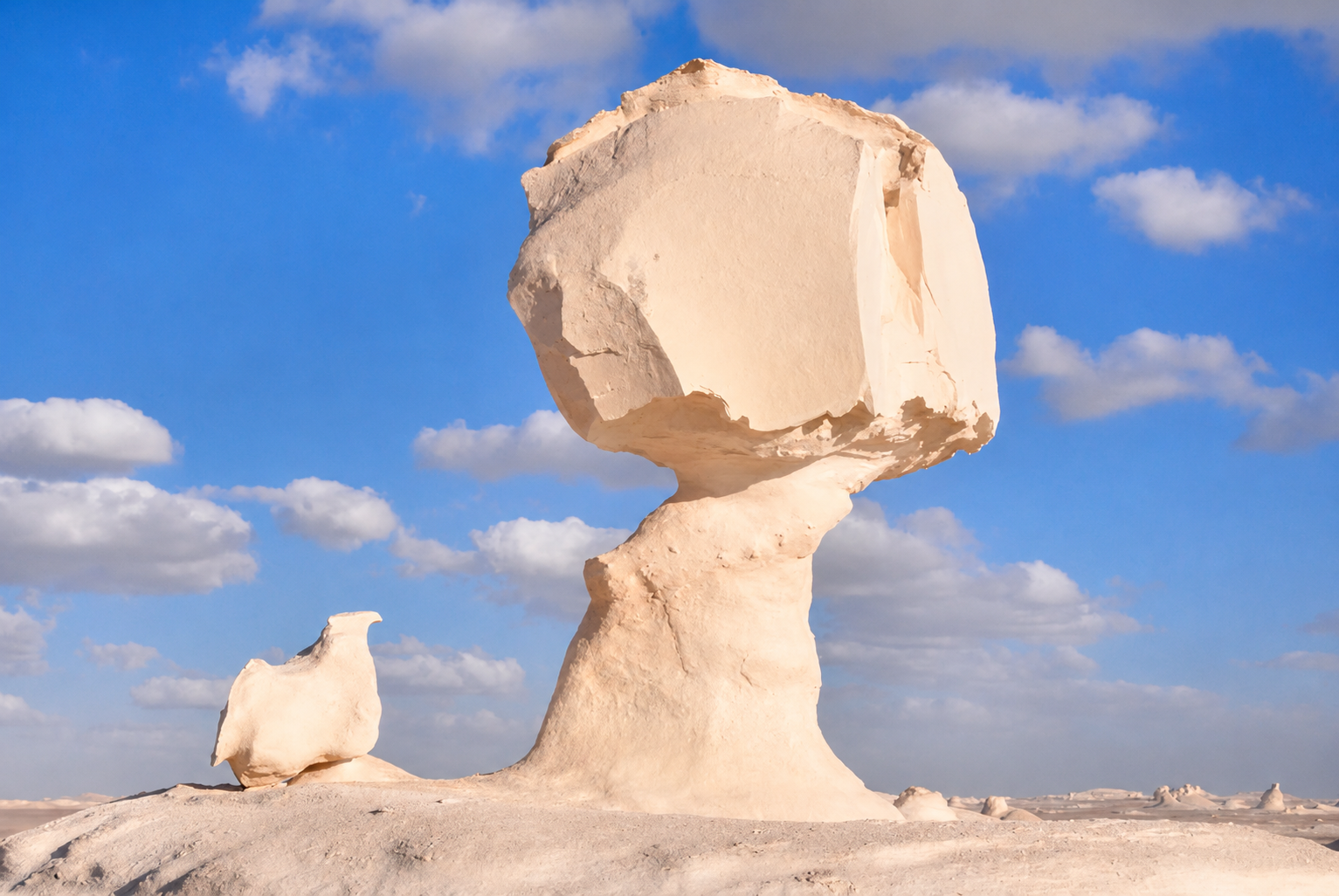
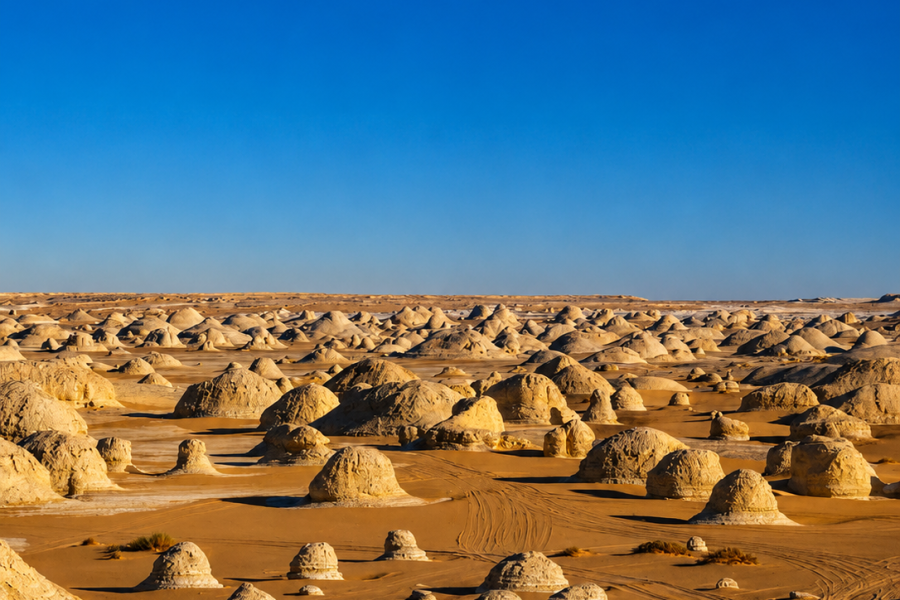
Once you leave the immediate Bahariya area and continue deeper toward the White Desert route, Crystal Mountain becomes one of the most recognizable stops.
It provides another dramatic landscape change.
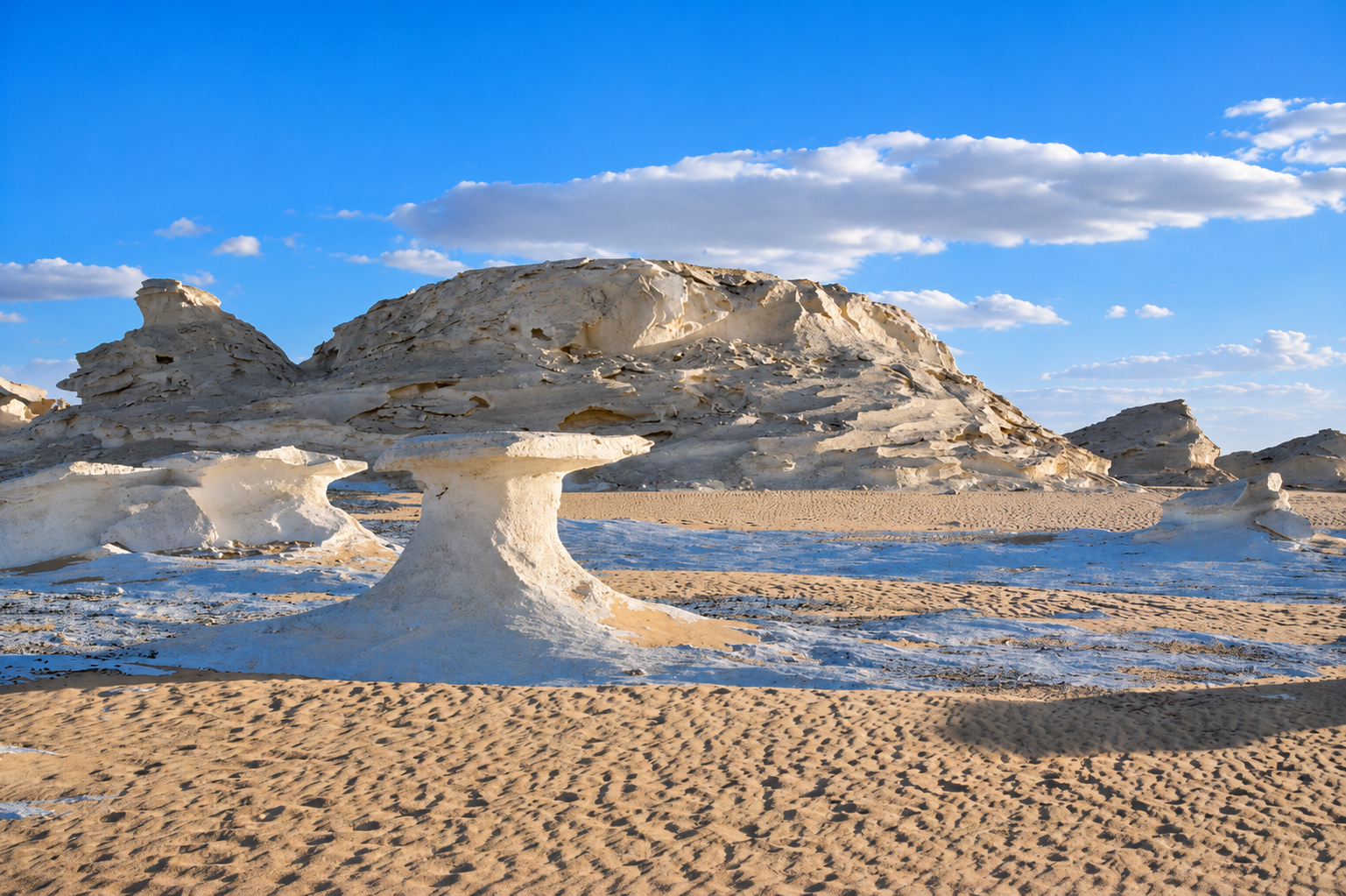
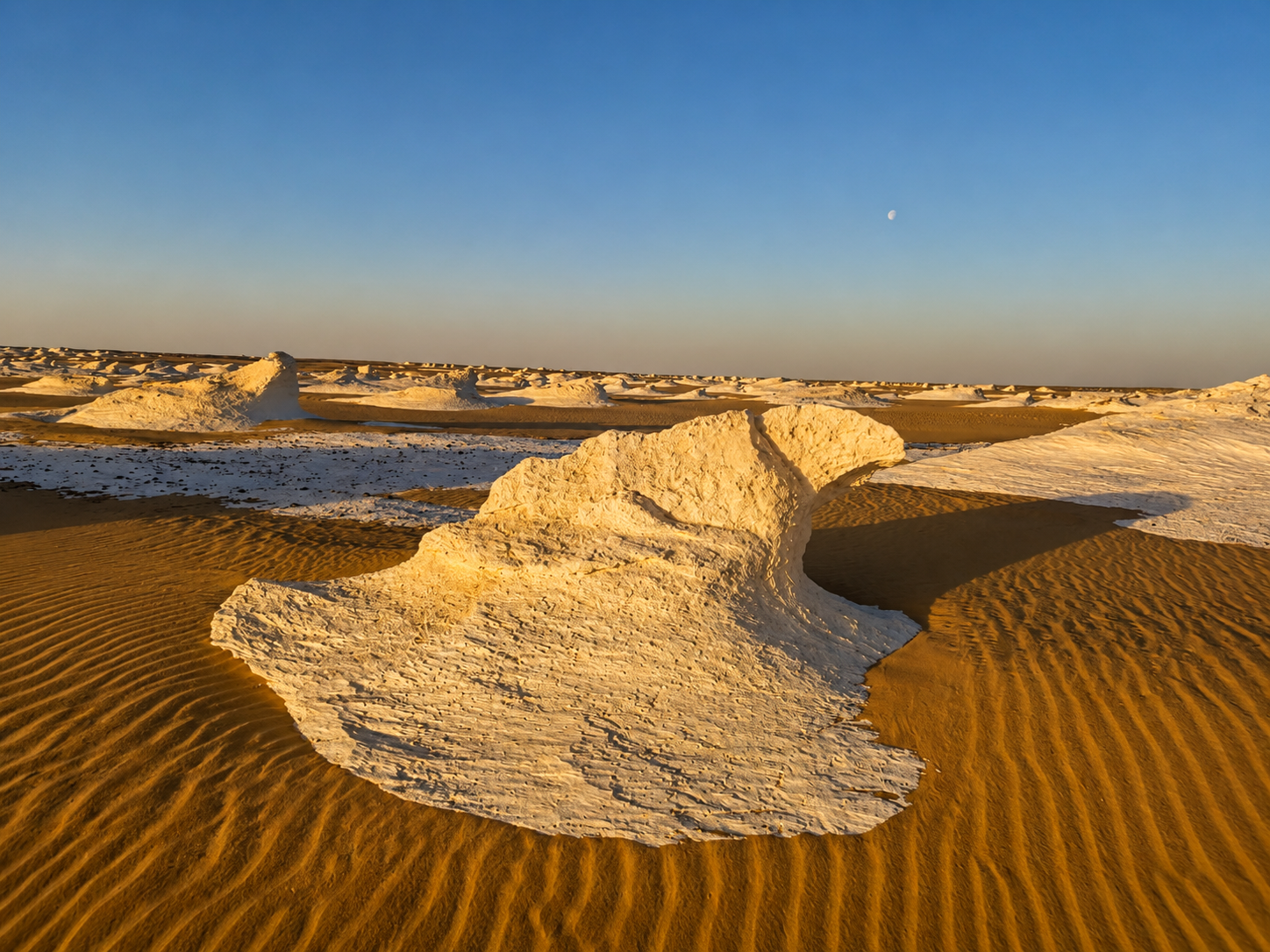
Black hills give way to a lighter geological formation with reflective mineral features.
Your current Black Desert route places Crystal Mountain naturally after El Hez and before Agabat.
What should you do there?
Walk around the formation.
Look closely at textures.
Take photographs from different angles.
But do not expect a long technical mountain hike.
Crystal Mountain is usually a short geological and photography stop within a wider safari.
Photography tip
Do not shoot only wide.
Details can be more interesting here than panoramic landscapes.
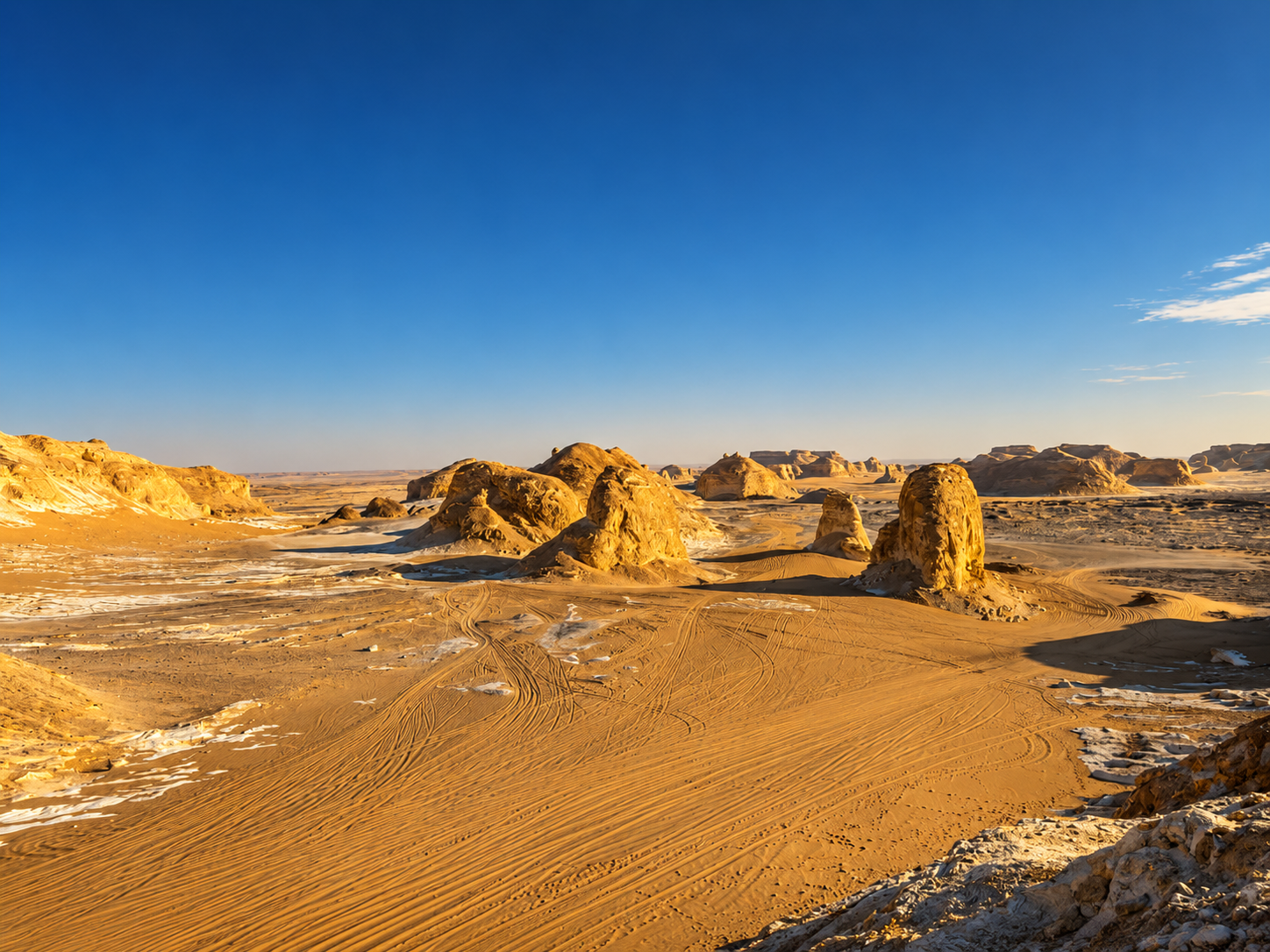
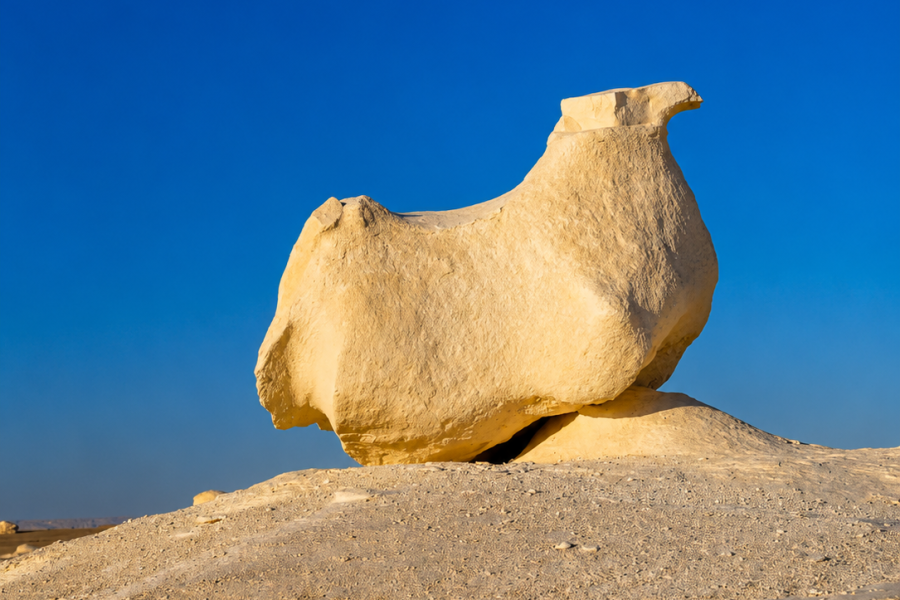
11. Explore Agabat Valley
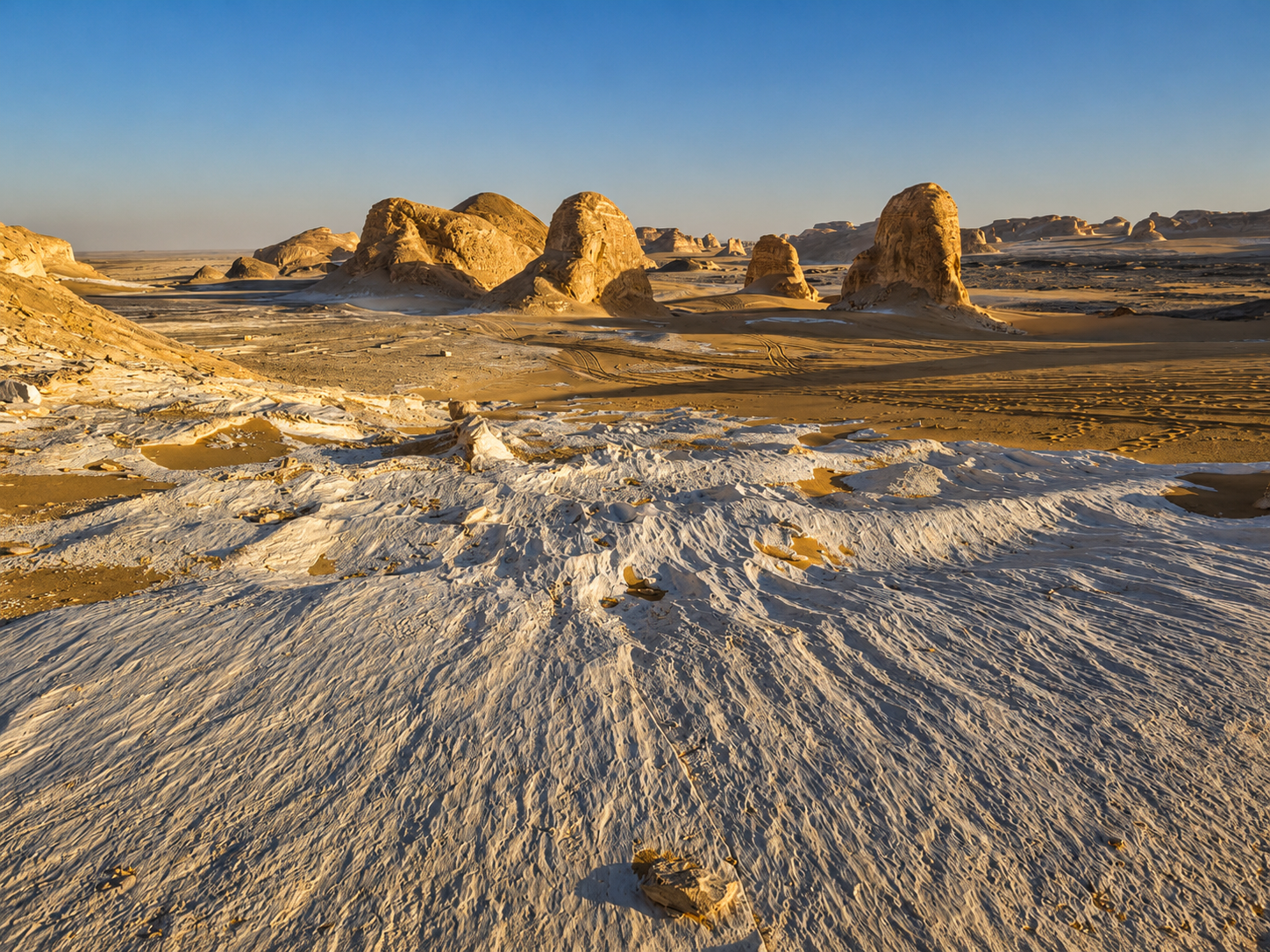
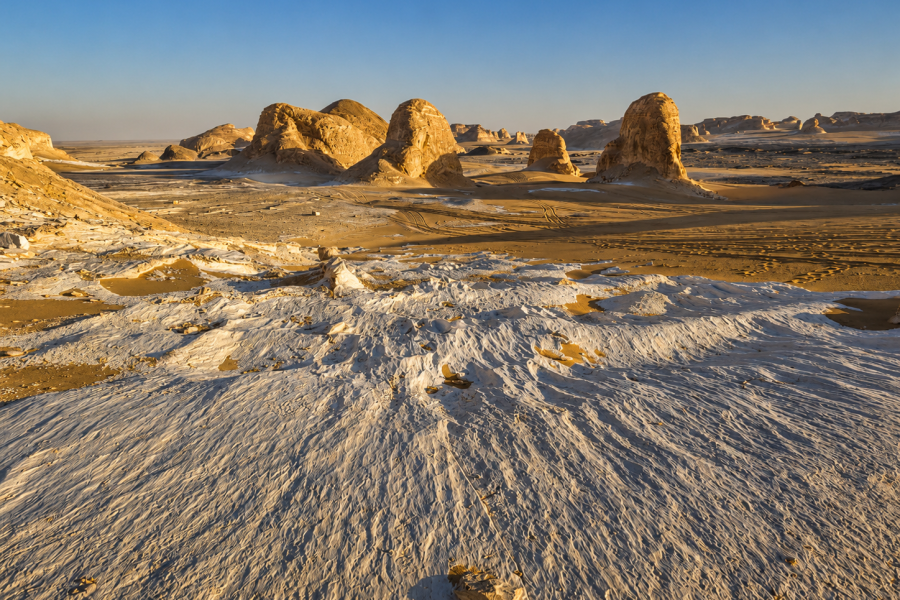
Agabat is one of the places that often surprises visitors most.
Many travelers book a tour because they have seen White Desert photographs.
Then they reach Agabat and discover another spectacular landscape.
The area is known for:
broad sandy valleys,
pale formations,
dunes,
open horizons.
Current White and Black Desert Tours routes place Agabat directly between Crystal Mountain and the deeper White Desert experience.
Why is Agabat special?
Scale.
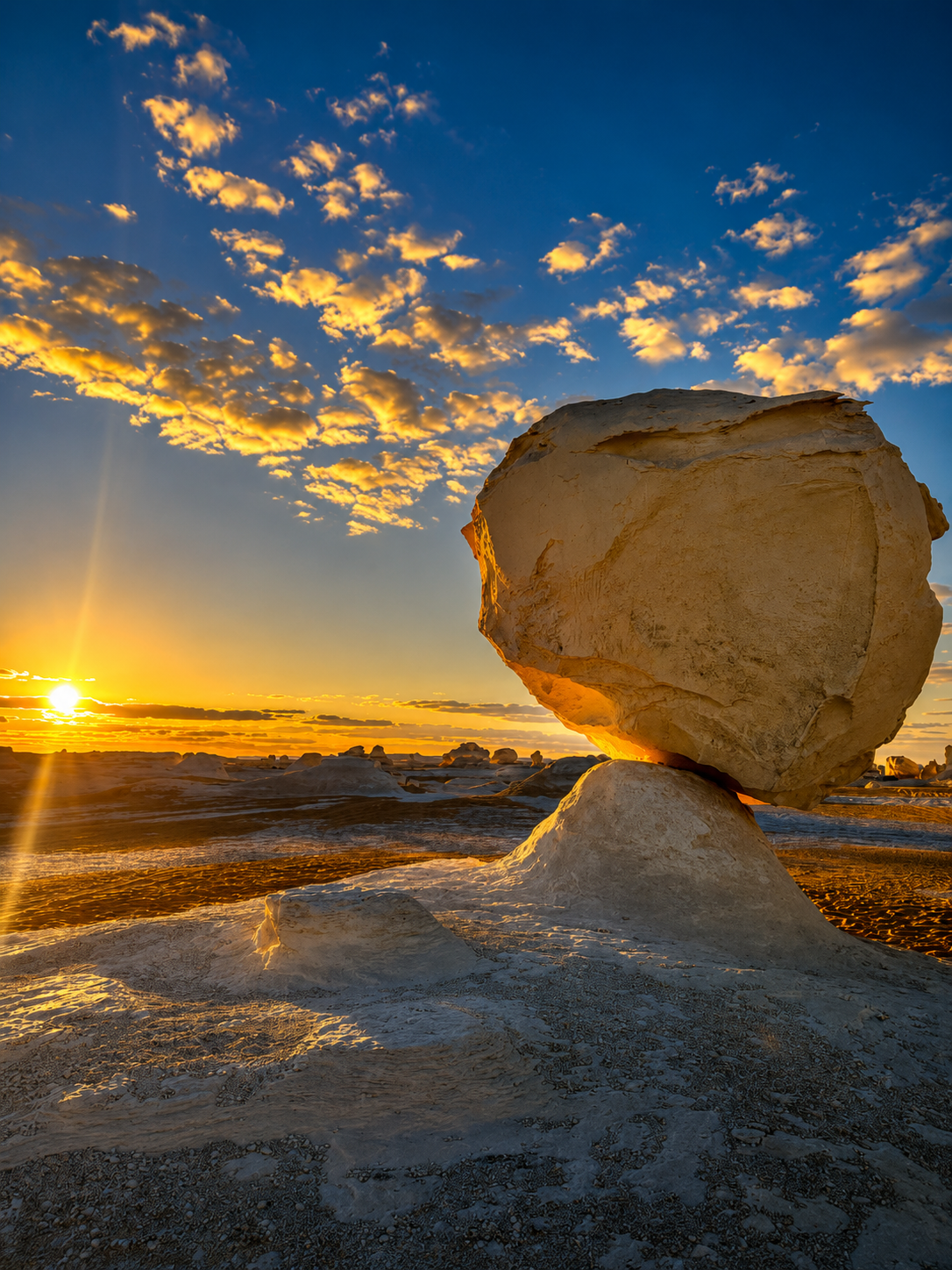
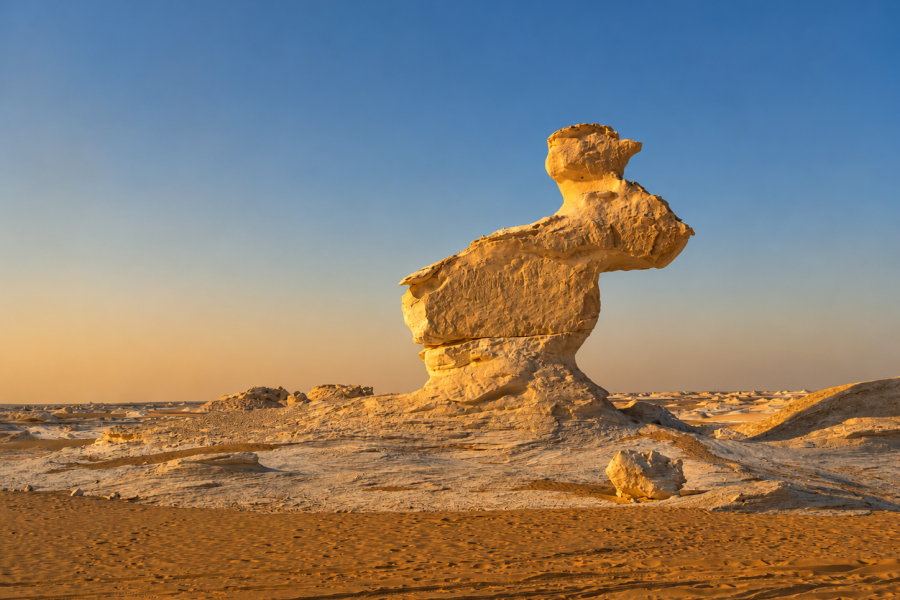
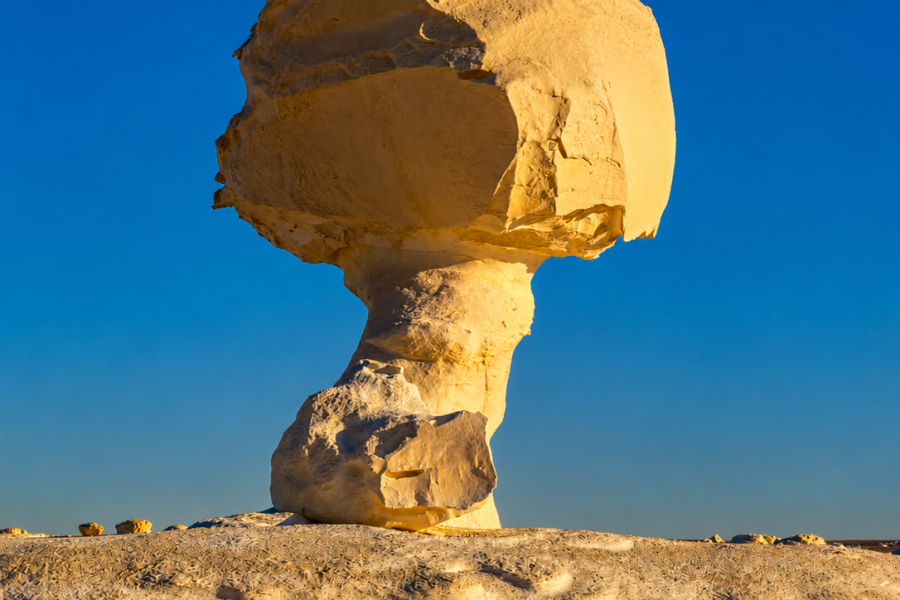
The White Desert often produces strong photographs of individual formations.
Agabat works differently.
It gives you:
layers,
huge horizons,
sweeping panoramas,
vehicle-in-landscape photographs.
For serious photographers, Agabat deserves time.
Do not treat it as a two-minute photo stop.
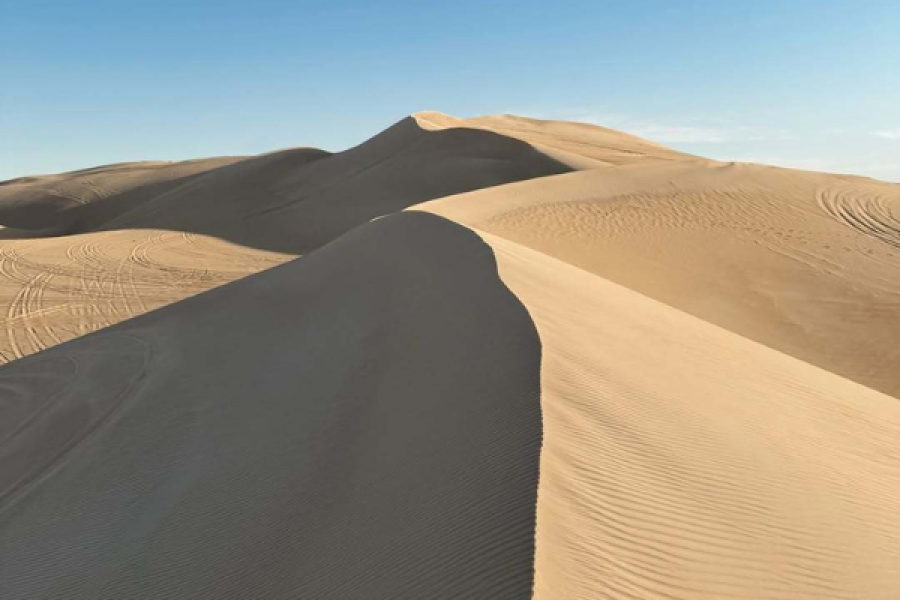
12. Enjoy the Sand Dunes and Try Sandboarding
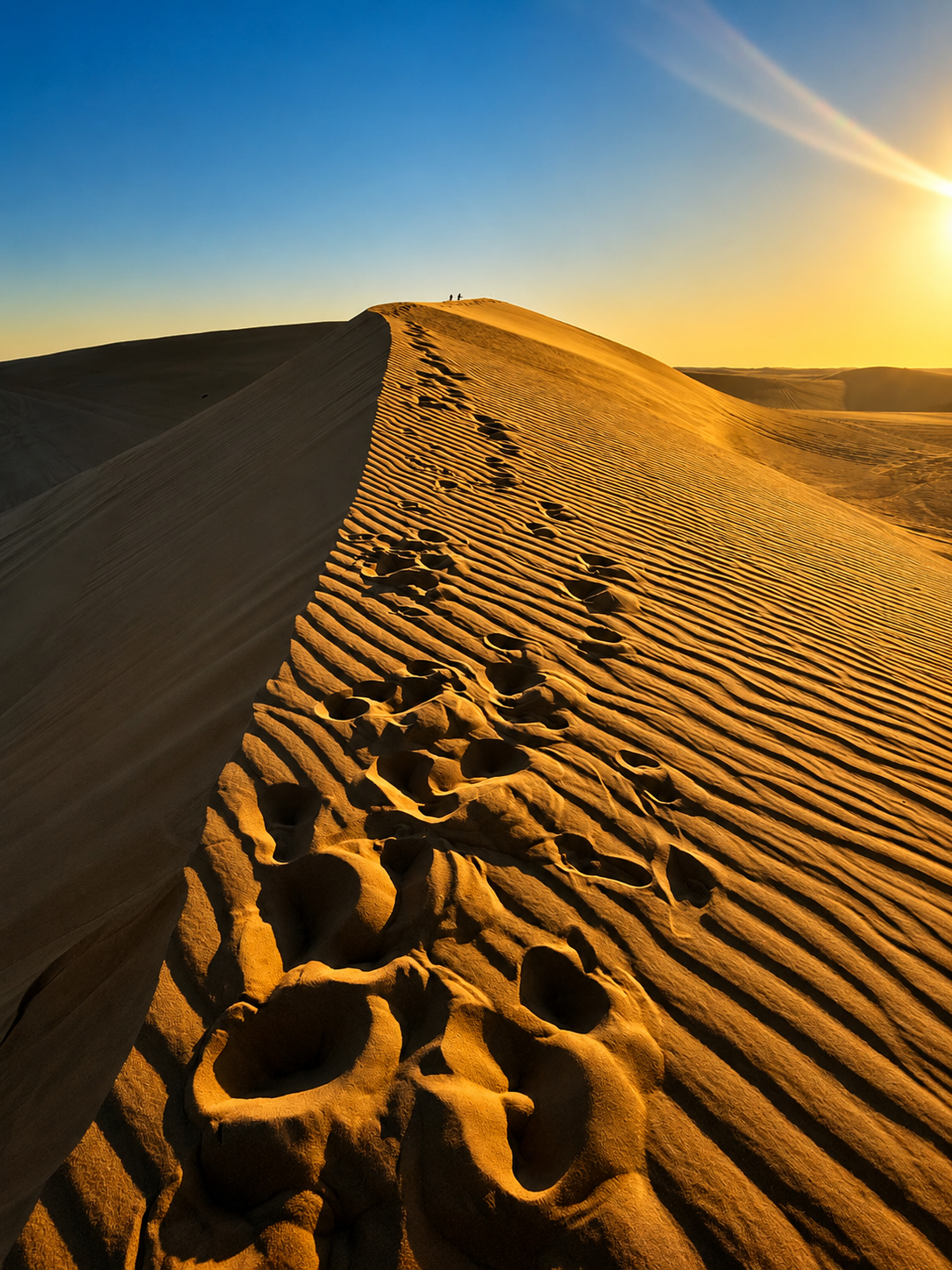
The wider Bahariya–Black Desert–White Desert route includes areas of open sand and suitable dunes.
Current 3-day programs on the site include both dune views and sandboarding.
You do not need experience.
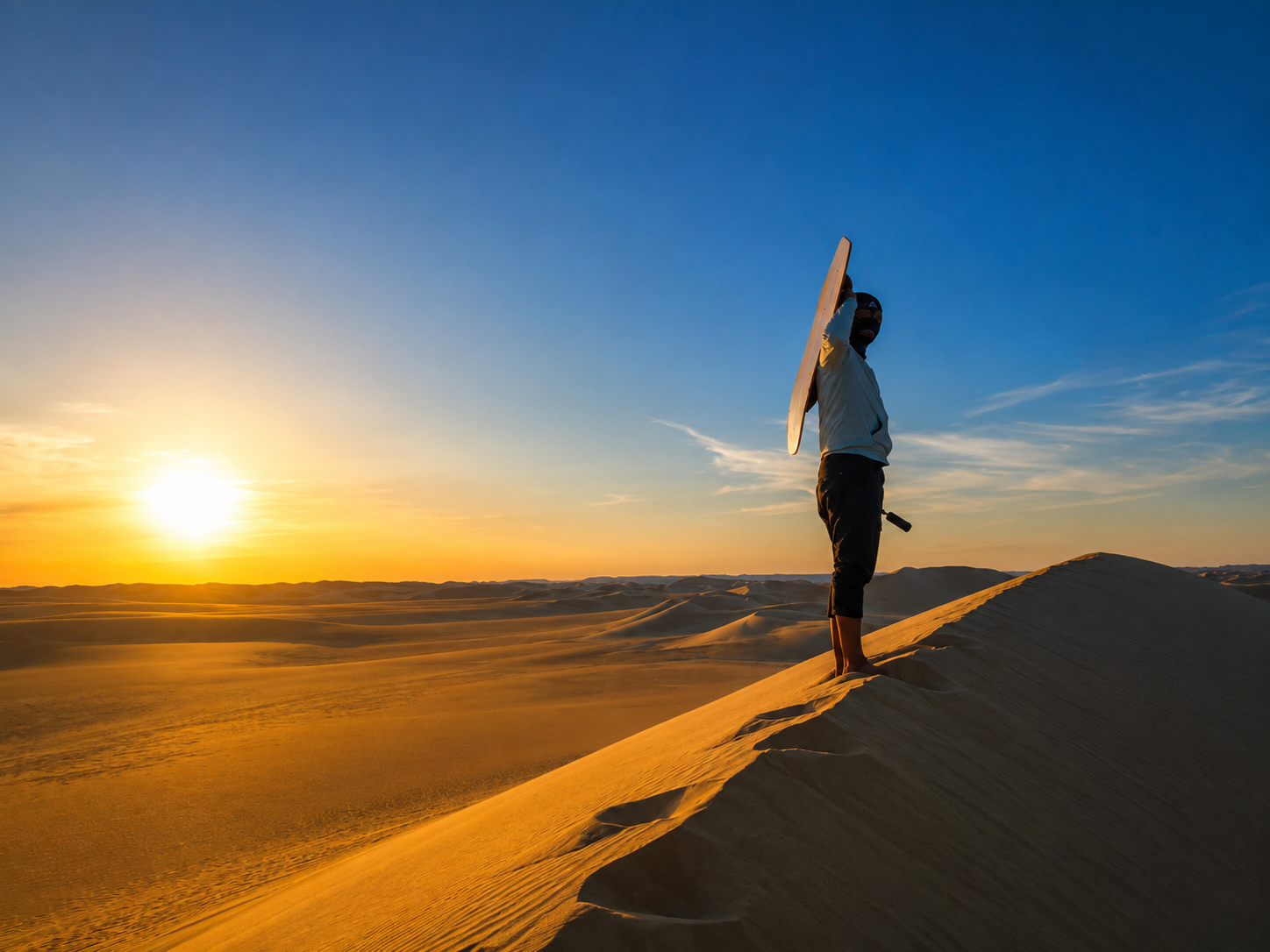
For most visitors, sandboarding is simply a fun activity between sightseeing stops.
If you do not want to participate, dunes are still worth visiting.
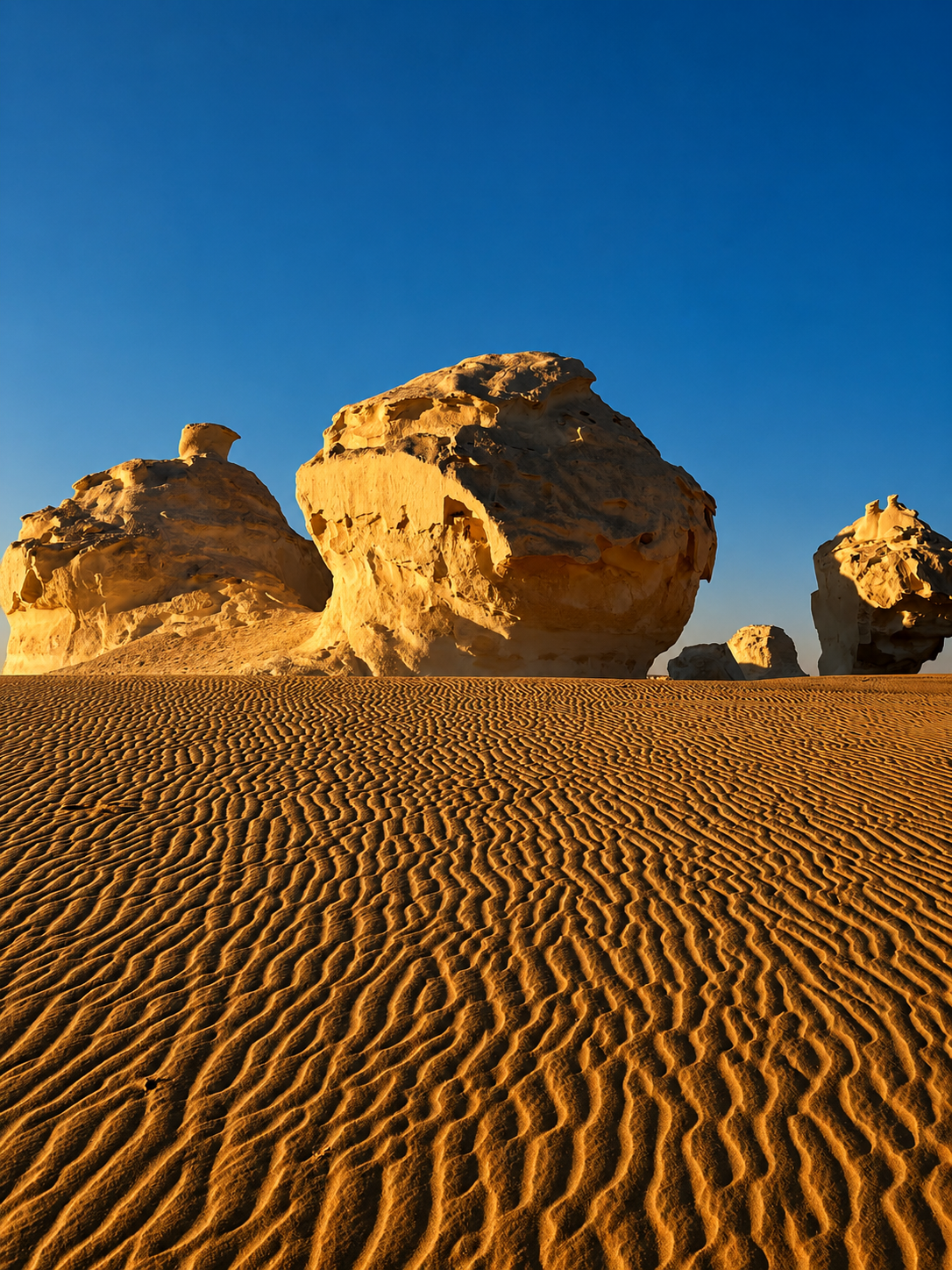
They are excellent for photography because they provide simple shapes.
Look for:
shadow lines,
ridges,
footprints,
a person for scale,
4×4 tracks.
Late-afternoon light works especially well when shadows begin separating one dune from another.
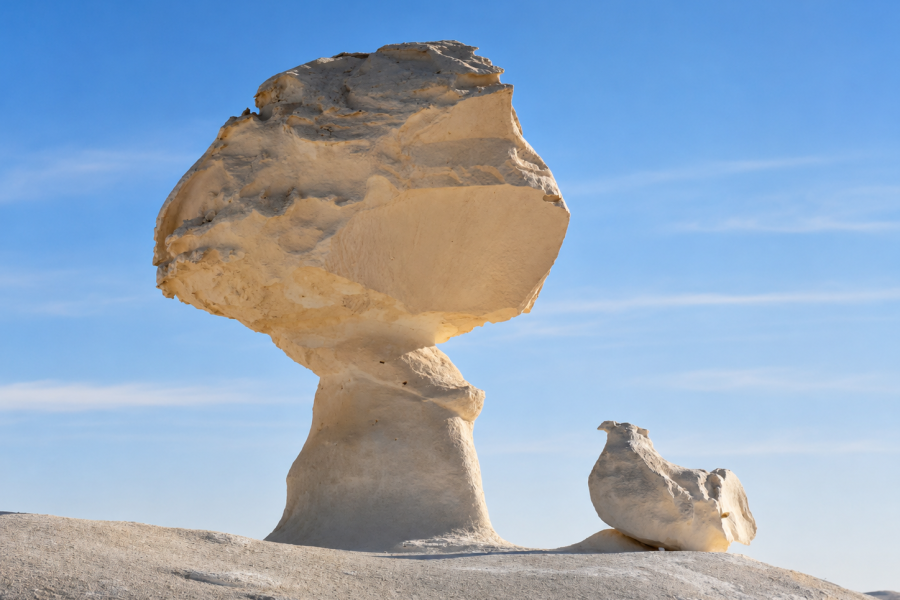
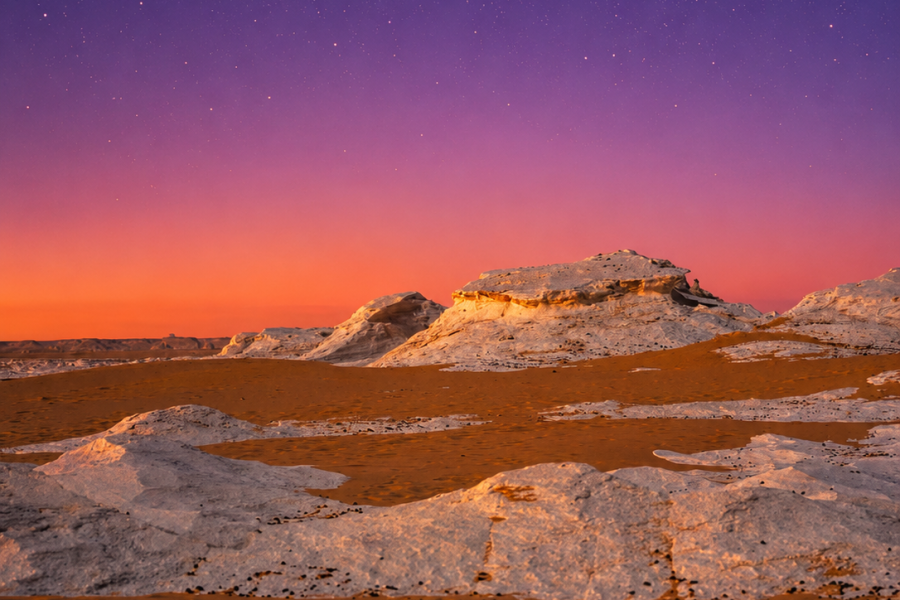
13. Continue to the White Desert
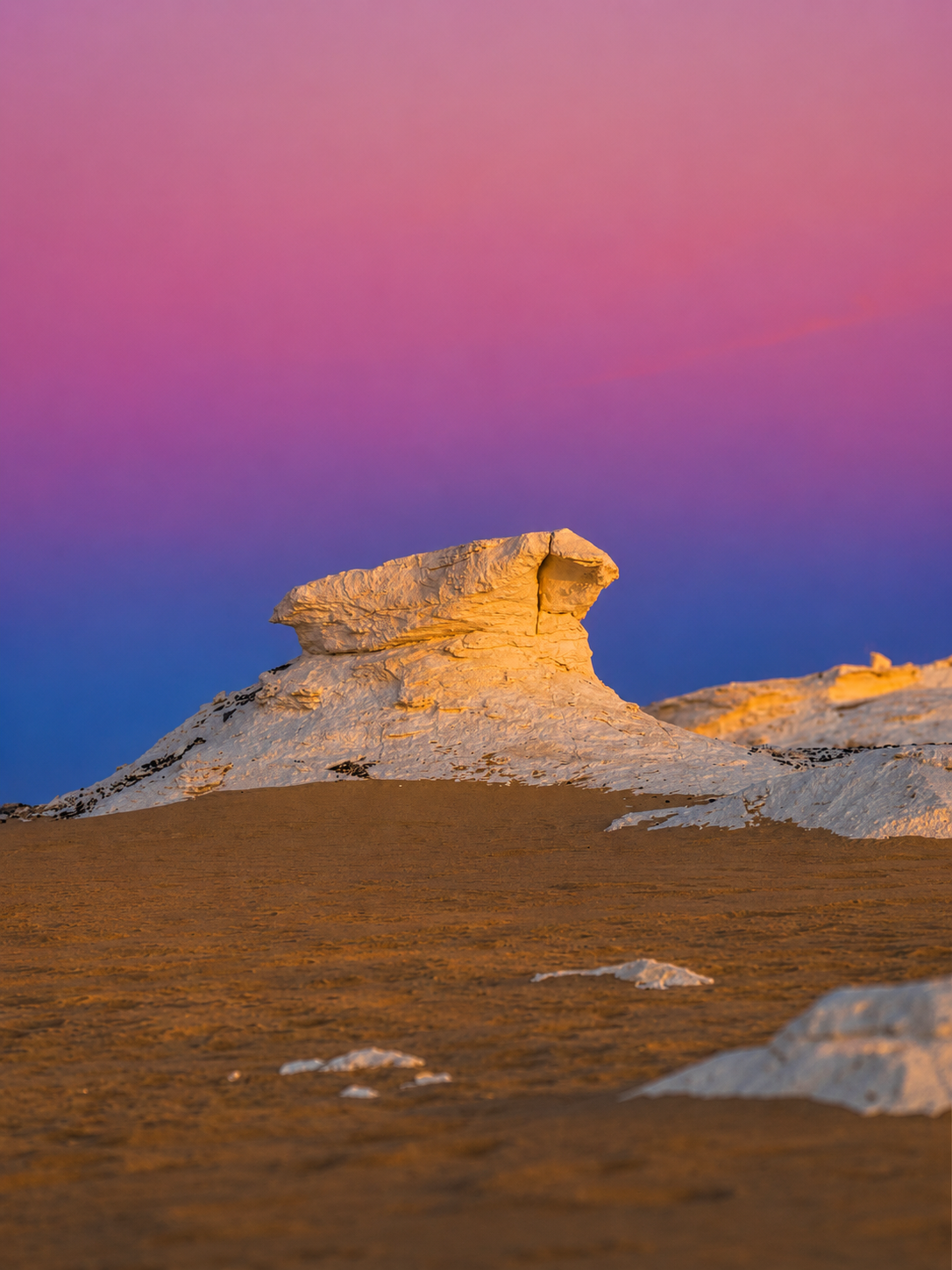
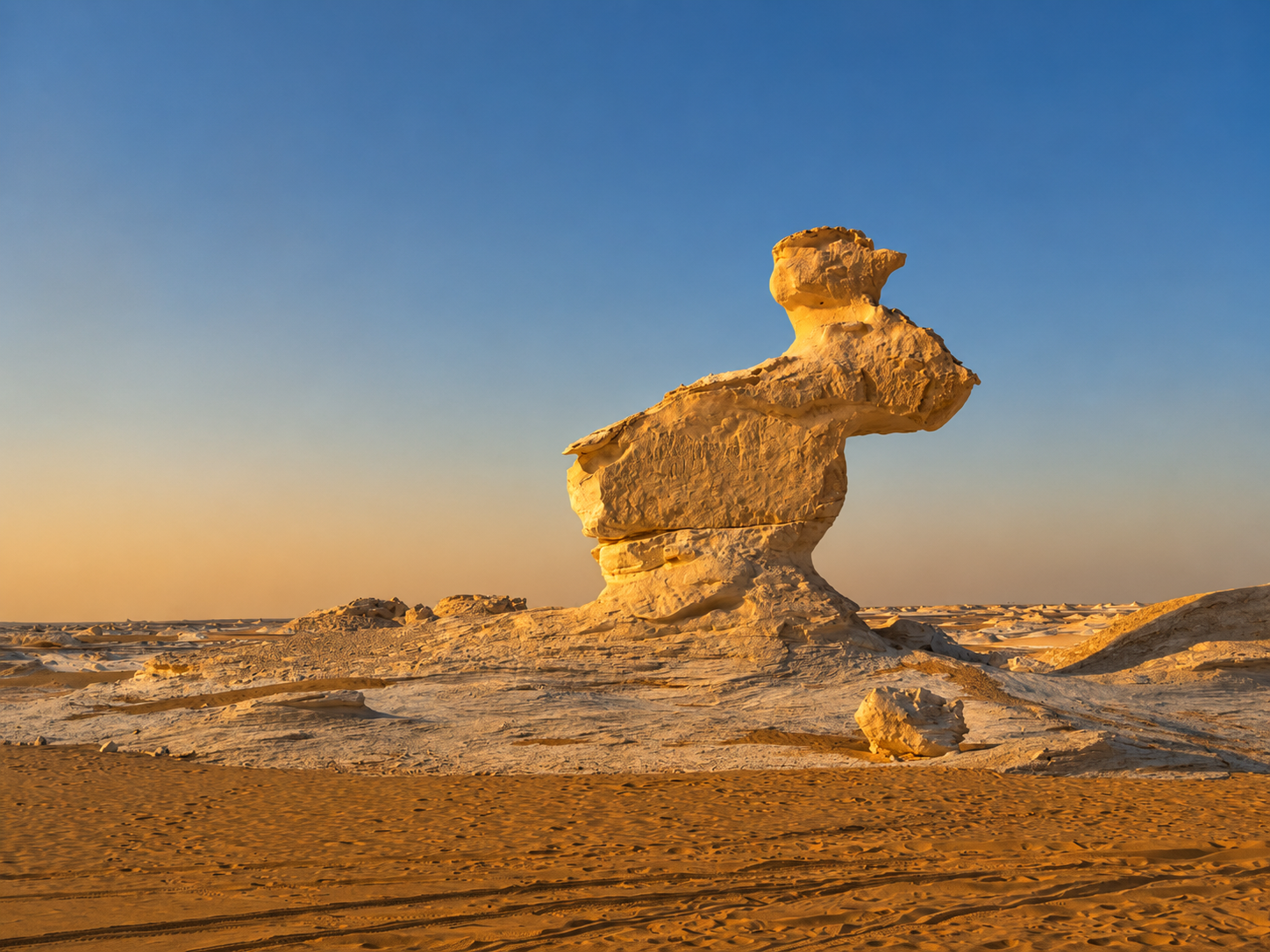
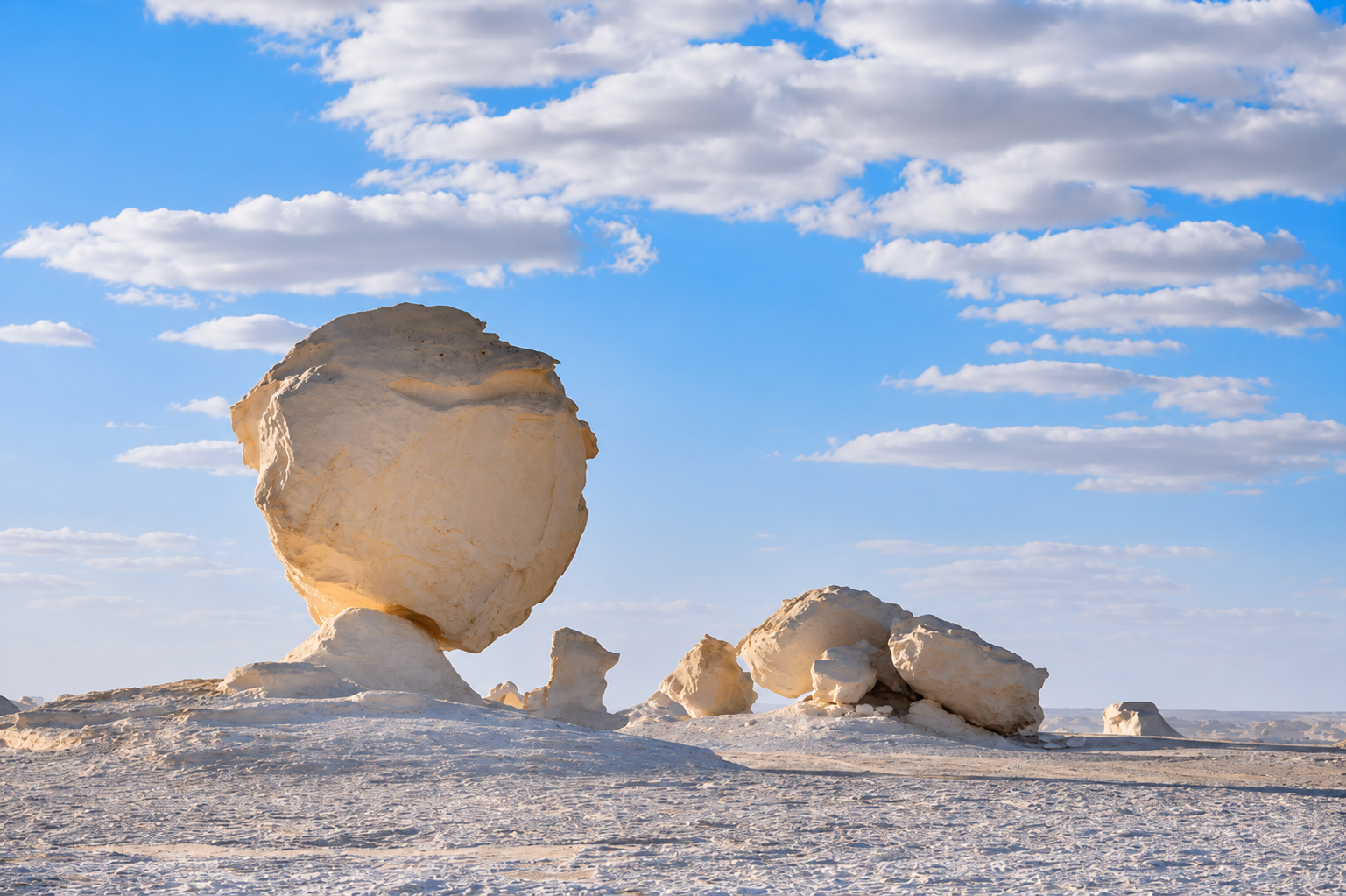
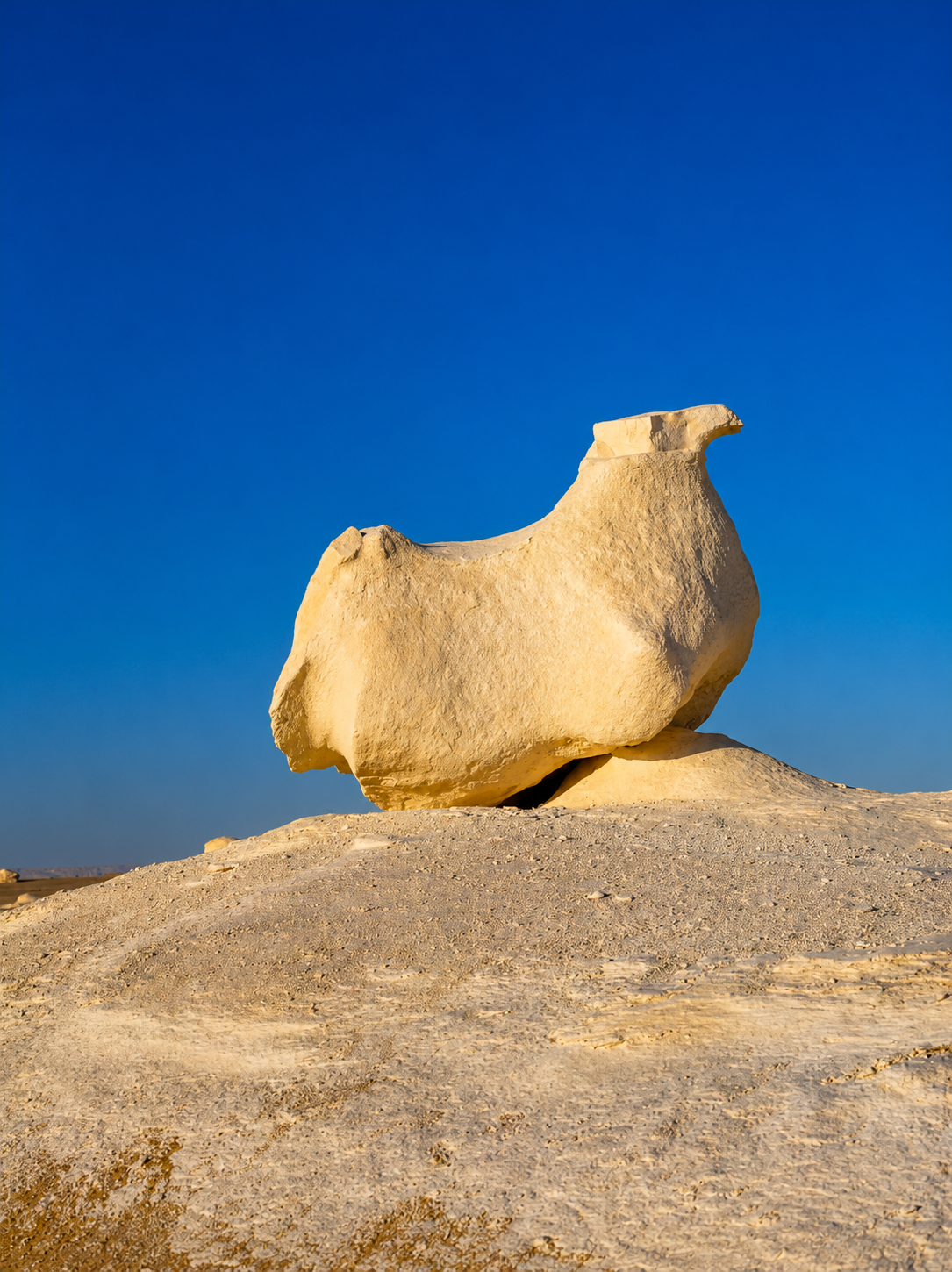
Technically, the White Desert lies beyond the core Bahariya and Black Desert attractions.
But for most international travelers, it is the natural extension of the trip.
Egypt’s official tourism authority identifies both the Black Desert and White Desert as two of the most important regions to explore outside Bahariya.
Your site’s main route reflects the same relationship:
Bahariya → Black Desert → Gabal El Marsos → El Hez → Crystal Mountain → Agabat → White Desert.
Why continue?
Because it completes the visual progression.
You move from:
green → black → gold → white.
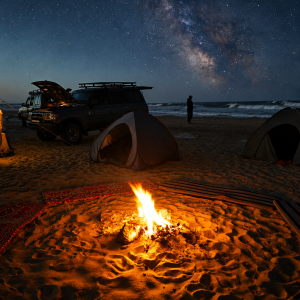
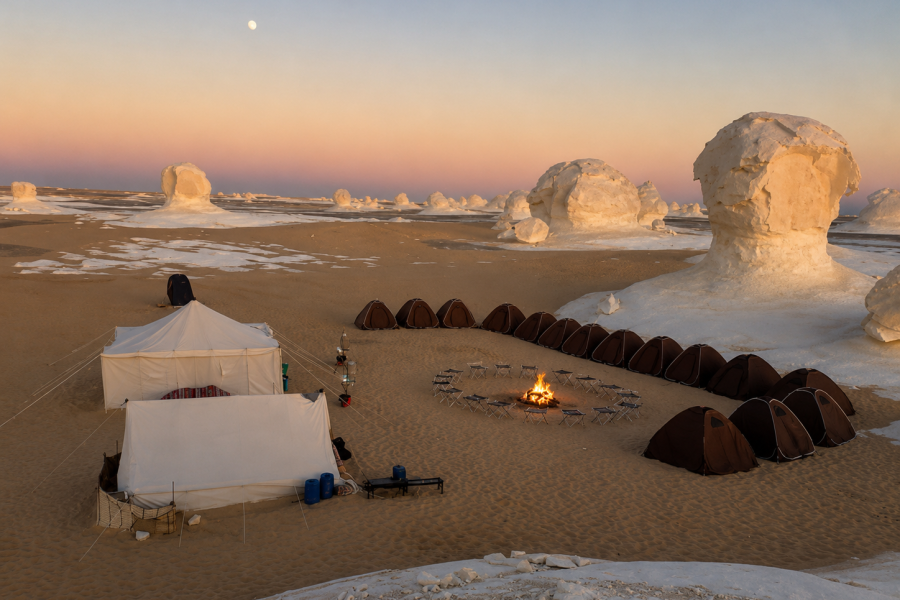
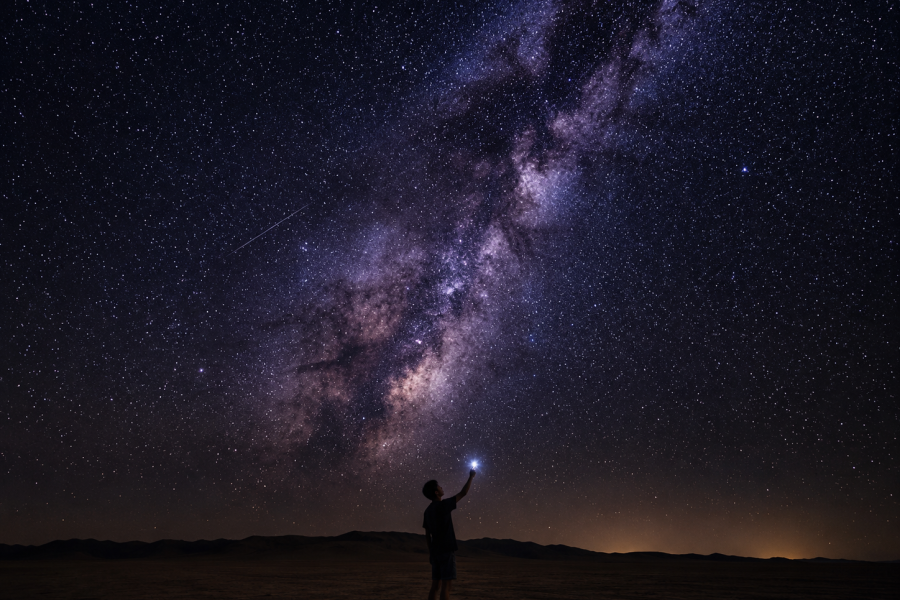
And if you stay overnight, the White Desert adds:
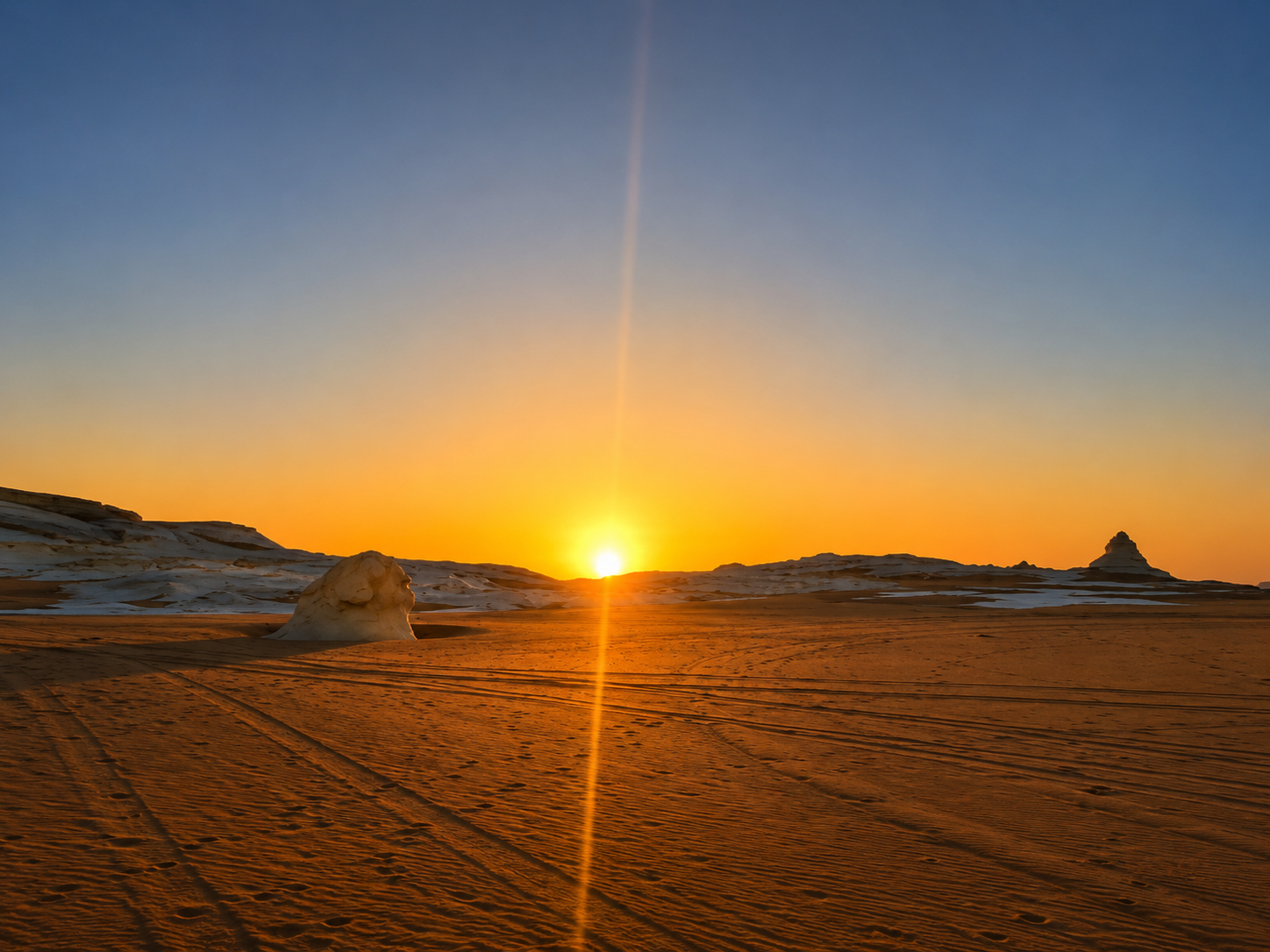
sunset,
BBQ dinner,
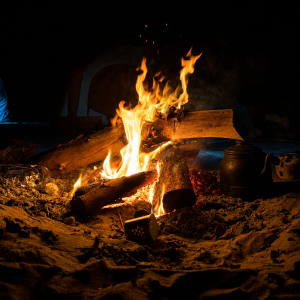
camping,
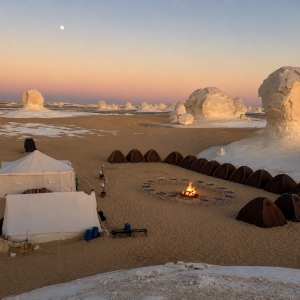
stars,
sunrise.
The current three-day Bahariya program includes one overnight White Desert camp plus one hotel night back in Bahariya.
For most first-time visitors, this is the most balanced way to experience the region.
Bonus: El Hez Village
El Hez is a smaller human stop along the safari route.
Your current Black Desert and three-day itineraries place it between Gabal El Marsos and Crystal Mountain.
It adds something that purely geological itineraries sometimes lack:
people and local desert life.
Instead of moving endlessly from one rock formation to another, you pass through a small settlement connected to the wider oasis environment.
It may not be the main reason to book the tour, but it improves the story of the journey.
Bonus: Photograph the Oasis at Sunset
Some of Bahariya’s best moments are not official “attractions.”
One of them is simply watching the light change across the oasis.
From elevated areas, late-afternoon light can reveal layers of:
palm trees,
villages,
desert mountains,
golden sand.
Experience Egypt specifically recommends Bahariya’s elevated Gabal al-Ingleez viewpoint for broad views over the oasis.
For photographers, this can be a very strong final stop on a Bahariya-focused day.
Black Desert Attractions vs Bahariya Oasis Attractions
It helps to separate the two when planning.
Black Desert and Safari Route
Best for:
4×4 adventure
landscape photography
Gabal El Marsos
dark hills
Crystal Mountain
Agabat
dunes
connection to White Desert
Bahariya Oasis
Best for:
palm groves
springs
archaeological attractions
Golden Mummies
English Mountain
oasis viewpoints
Salty Lake
villages
hotel stay
So ask yourself:
Do I want maximum desert?
or
Do I want both desert and oasis?
That answer determines your ideal itinerary.
Best Things to See If You Have Only One Day
If you are traveling from Cairo and have only one day, keep the itinerary focused.
Prioritize:
Bahariya Oasis
Short rest or lunch.
Black Desert
Main panoramic stop.
Gabal El Marsos
Short walk.
Crystal Mountain
Geological stop.
Agabat
Landscape and dunes.
White Desert
If your route and timing allow, continue to the main formations before returning.
Cairo → Bahariya Oasis → Black Desert → Gabal El Marsos → El Hez → Crystal Mountain → Agabat → dunes → White Desert → sunset → camping.
Day 2
Sunrise → breakfast → short White Desert exploration → possible spring stop → Bahariya → Cairo.
This is the best balance for most first-time travelers.
Your Black Desert pillar currently recommends this format for travelers who want the safari route plus White Desert camping without using too many vacation days.
This is the stronger option if the title of this article matches exactly what you want:
Black Desert + Bahariya Oasis.
Instead of returning directly to Cairo after camping, stay in Bahariya and explore the oasis.
The current 3-day itinerary combines one White Desert camping night with one hotel night in Bahariya and lists additional oasis stops including Salty Lake, El Meftella, Dest Pyramid Mountain, Maghrafa, warm springs and English Mountain if timing allows.
To understand the cultural landscape surrounding the archaeological discoveries.
Historical sites available during your dates
Ask your operator which archaeological areas are currently open and practical to combine with the safari.
Experience Egypt identifies the Valley of the Golden Mummies as one of Bahariya’s major archaeological attractions and describes the oasis as an important site for Graeco-Roman discoveries.
If archaeology is your top priority, tell the tour operator before booking.
A standard desert safari is not automatically designed around archaeological visiting hours.
Which Attractions Are Best for Couples?
A good couples itinerary would be:
Bahariya palm groves → Black Desert → Crystal Mountain → Agabat → White Desert sunset → camp → stars → sunrise → warm spring → Bahariya viewpoints.
The strength is variety.
The trip moves from active safari travel to slower evening experiences.
Three days work especially well if you want one camping night followed by a more comfortable hotel night.
Which Attractions Are Best for Families?
For families, prioritize experiences rather than maximizing the stop count.
Good choices include:
Black Desert viewpoints
short Gabal El Marsos walk
Crystal Mountain
sandboarding
oasis palm groves
springs
White Desert formations
Depending on children’s ages, a long archaeological stop or difficult hike may be less appealing.
A private tour gives you more control over breaks and pace.
Best Time to See Bahariya and the Black Desert
For most visitors, the cooler part of the year is easier for long safari days.
Your current Black Desert content recommends roughly October through April, especially for walking, photography and camping, while noting that winter nights can feel cold.
Current conditions still matter.
Before departure, check:
temperature,
wind,
desert route conditions,
access requirements.
Experience Egypt also advises travelers to confirm current permits, transport and logistics with an authorized travel agency or tour operator before leaving the oasis for desert excursions.
How to Reach These Attractions From Cairo
Bahariya is the logical base.
Experience Egypt places the oasis approximately 370 km southwest of Cairo and estimates the road trip at about five hours depending on transport and conditions.
The basic travel structure is:
Cairo or Giza
↓
Private road transfer
↓
Bahariya Oasis
↓
4×4 desert safari
↓
Black Desert and wider route
For excursions outside the oasis, Egypt’s official tourism site recommends experienced licensed guides with suitable 4×4 vehicles and advises confirming logistics before departure.
Do You Need to Visit Every Attraction?
No.
And this is one of the most important planning tips.
A bad itinerary says:
“We have 17 attractions, so it must be better.”
A good itinerary asks:
“What does this traveler actually want?”
If you love photography:
spend more time at Black Desert, Agabat and sunset.
If you love history:
add the Golden Mummies.
If you want relaxation:
add springs and oasis scenery.
If you want adventure:
go deeper into the desert.
If this is your first trip:
choose the classic overnight route.
Do not turn Bahariya into a checklist.
Our Recommended First-Time Route
For most travelers, we recommend:
Day 1
Cairo → Bahariya Oasis → Black Desert → Gabal El Marsos → El Hez → Crystal Mountain → Agabat → dunes → White Desert → sunset → camp.
Day 2
Sunrise → White Desert exploration → warm spring if included → Bahariya sightseeing → hotel.
Day 3
Palm groves → selected Bahariya attractions → English Mountain or another viewpoint depending on timing → Cairo.
This gives the trip a natural progression:
city → oasis → black desert → geological landscapes → white desert → camping → oasis.
It does not feel repetitive.
And it allows Bahariya to become a real destination rather than simply a lunch stop.
Final Verdict: What Are the Best Things to See?
If we had to choose only seven, we would pick:
Black Desert
Gabal El Marsos
Bahariya palm groves
Natural springs
English Mountain
Crystal Mountain
Agabat
Then continue into the White Desert if your schedule allows.
For history-focused travelers, add the Valley of the Golden Mummies.
For a proper Bahariya experience, allow three days.
For a classic Western Desert safari, two days and one night are enough.
Bahariya is not simply the place where your White Desert tour begins. Spend enough time here and you discover an oasis of springs, archaeology, green palm groves and desert viewpoints surrounded by some of the most dramatic landscapes in Egypt’s Western Desert.
The main highlights include the dark hills and panoramic Black Desert landscape, Gabal El Marsos, nearby oasis scenery and the wider route toward Crystal Mountain and Agabat.
Top attractions include palm groves, natural hot and cold springs, English Mountain, the Valley of the Golden Mummies, Gabal Maghrafa, oasis viewpoints and surrounding Black Desert landscapes.
Yes. It combines oasis scenery, archaeology, springs and access to the Black and White Desert, making it one of the most varied short Western Desert destinations from Cairo.
Yes. Its dark hills and black stones create a striking contrast with Bahariya Oasis, Crystal Mountain, Agabat and the White Desert.
Two days and one night are enough for a classic desert route. Three days are better if you want to explore Bahariya attractions as well as the Black and White Desert.
Yes. Bahariya is the main gateway to the Black Desert, so the two are naturally combined on private safari routes.
Gabal El Marsos, also called Divided Mountain on local safari itineraries, is a Black Desert stop where visitors can walk and photograph the surrounding dark desert terrain.
Gabal al-Ingleez, commonly called English Mountain, is an elevated viewpoint offering wide views across Bahariya Oasis and its surrounding desert.
Experience Egypt lists Ain Gomma, Al-Jaffara, Bir Al-Mattar and Bir Ramla among the better-known natural hot and cold springs in and around the oasis.
It is an important Graeco-Roman burial site in Bahariya known for mummies decorated with gilded funerary masks and other archaeological discoveries.
Crystal Mountain is commonly included on safari routes continuing from the Black Desert toward Agabat and the White Desert.
Yes. Agabat is one of the most photogenic landscapes on the wider desert route, known for large open views, sand and pale formations.
Yes, but the itinerary should be spread over two or three days for the best experience. Bahariya is around 370 km southwest of Cairo and is the main gateway to these Western Desert attractions.
For travelers who want to explore the oasis itself as well as the desert, a three-day itinerary with one camping night and one Bahariya hotel night provides a strong balance.
Yes. This is one of the classic Western Desert combinations, with Bahariya serving as the gateway before the safari continues through the Black Desert, Crystal Mountain, Agabat and White Desert.