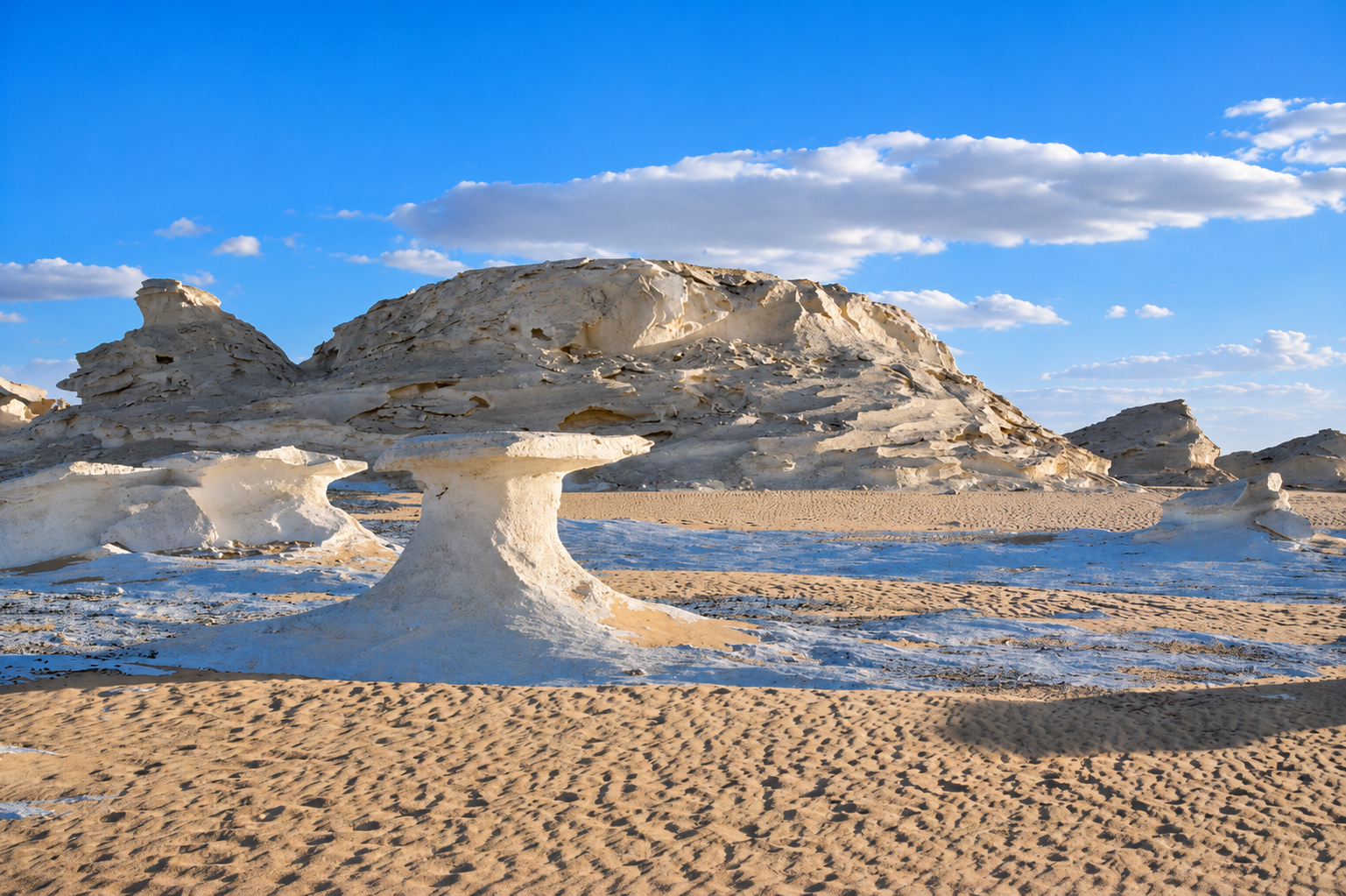
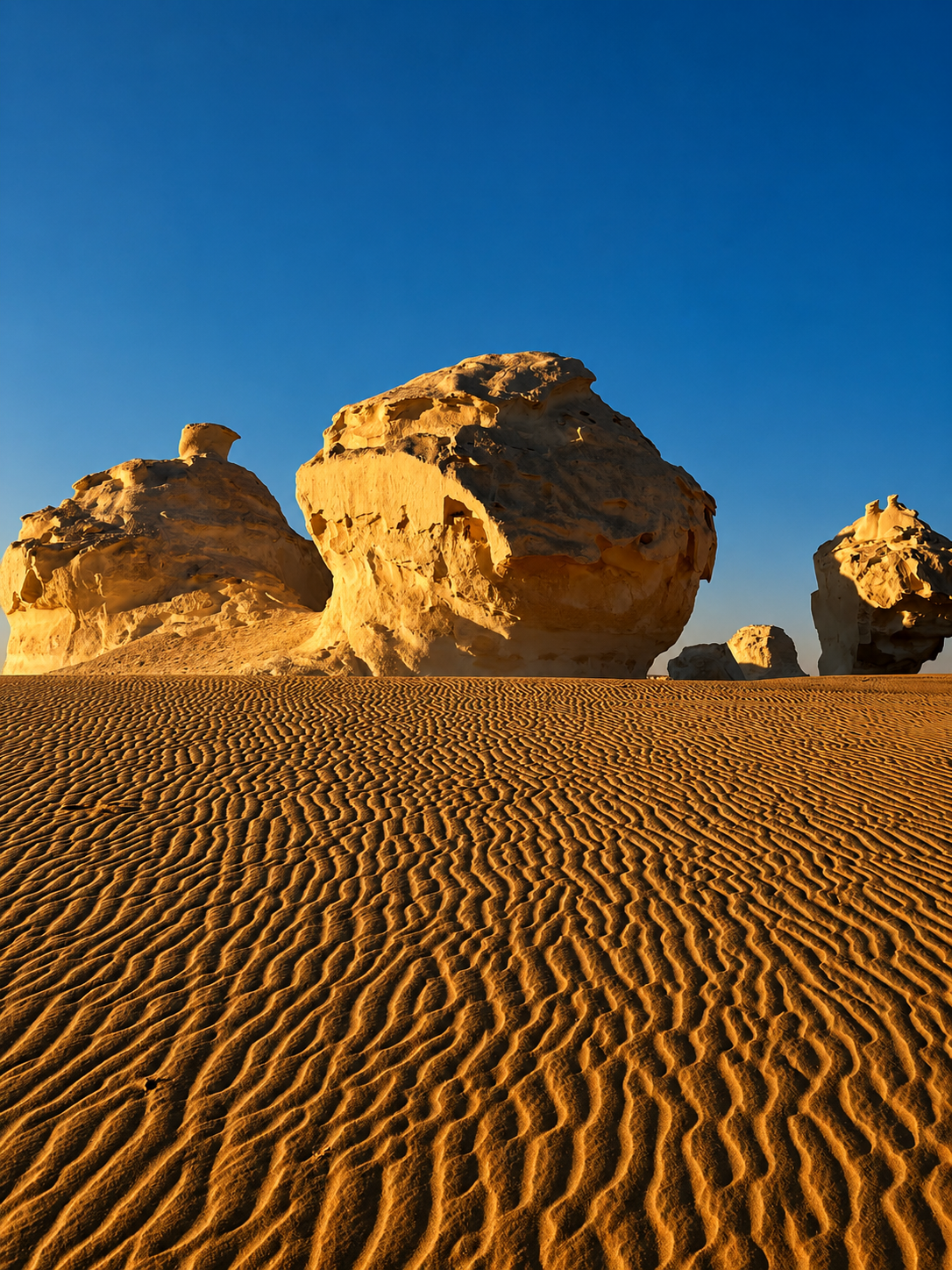
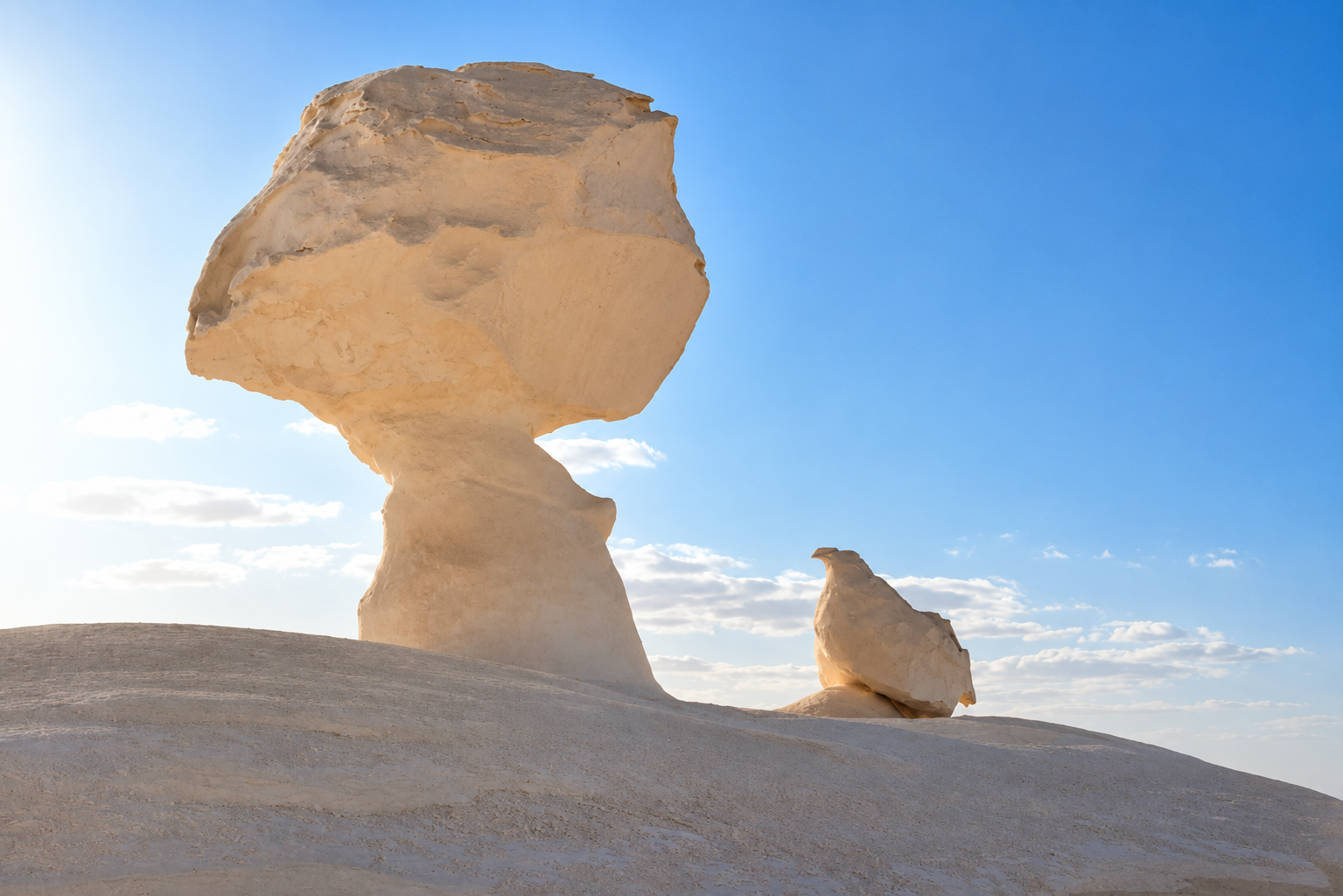
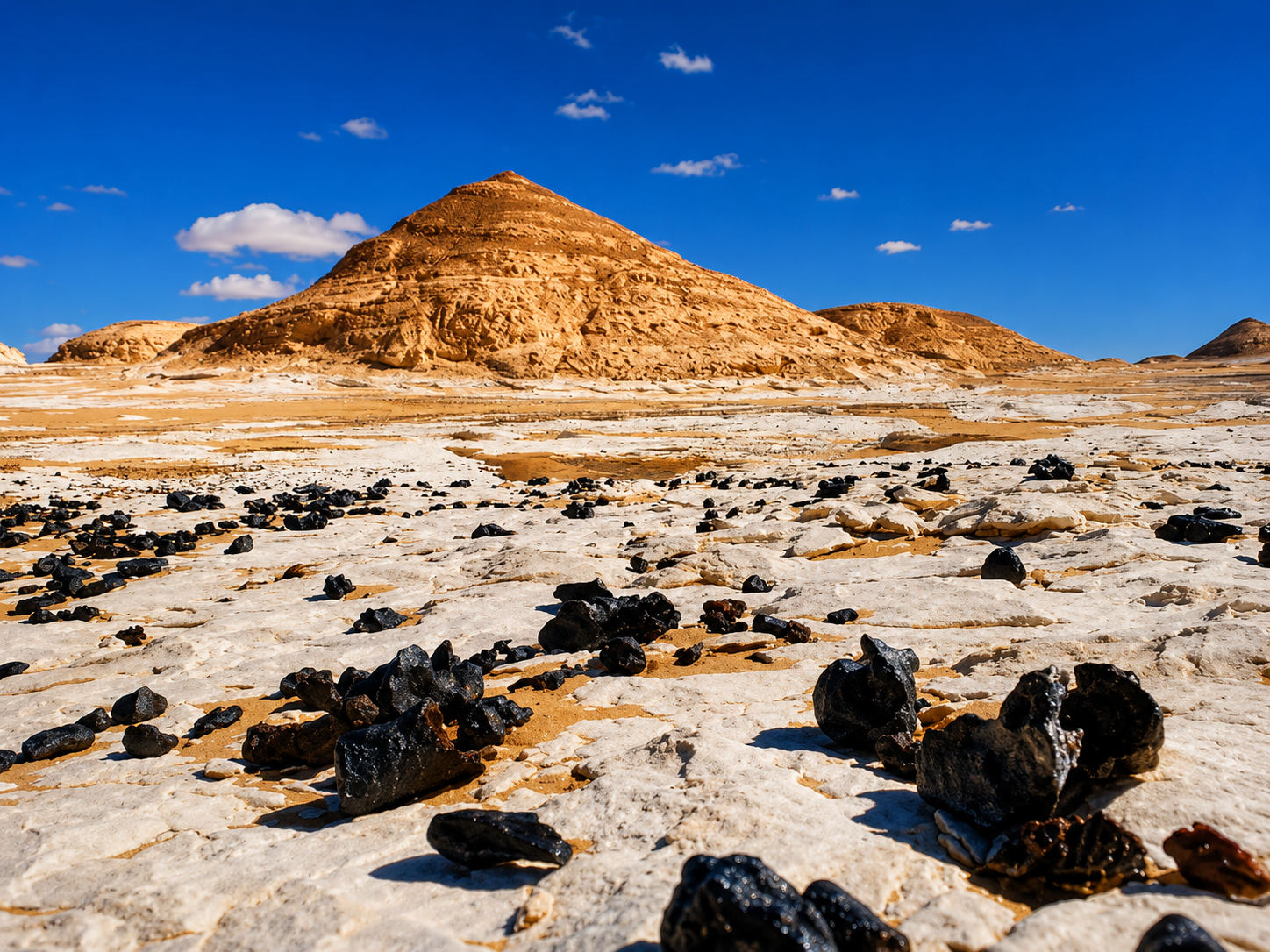
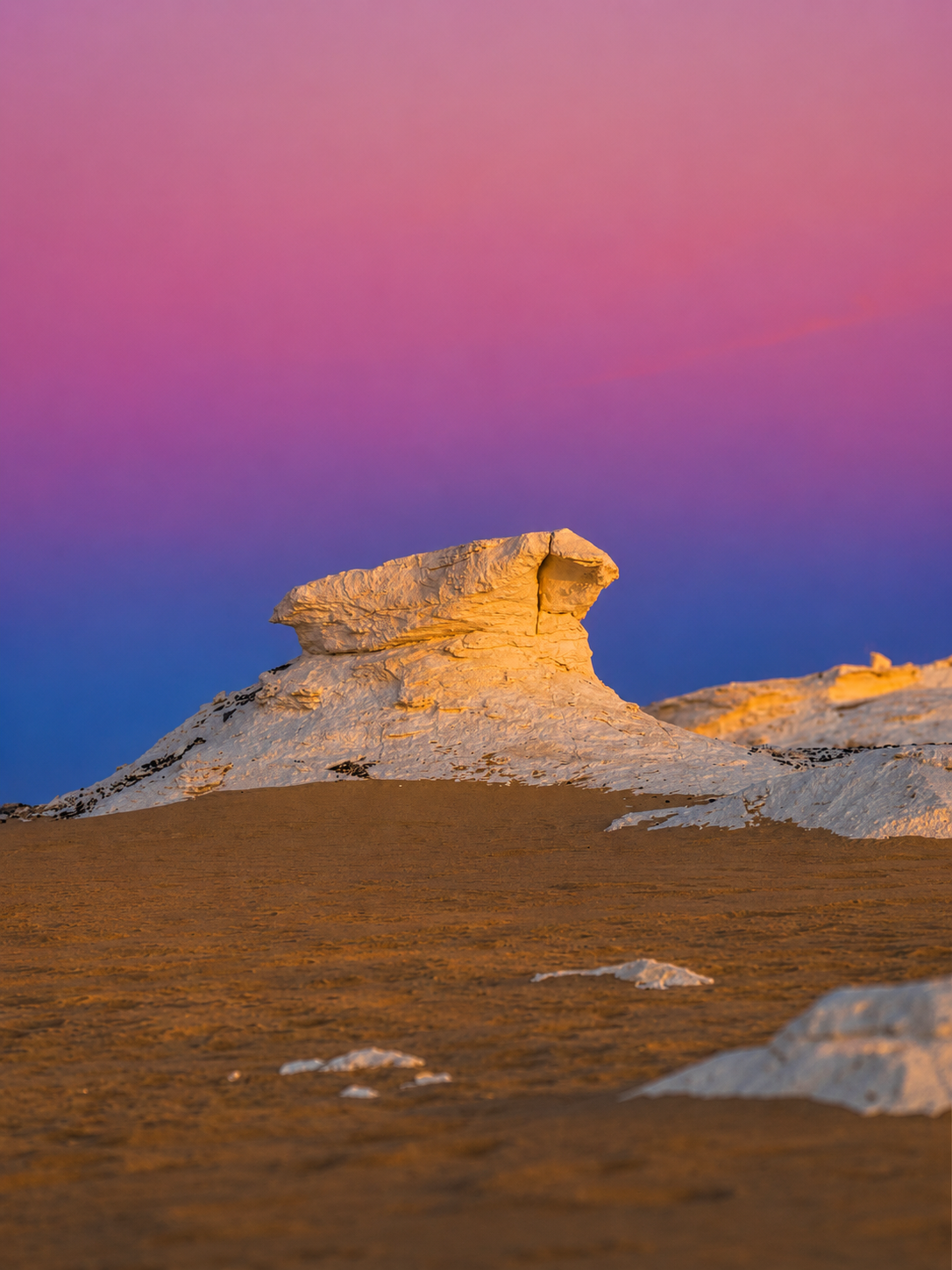
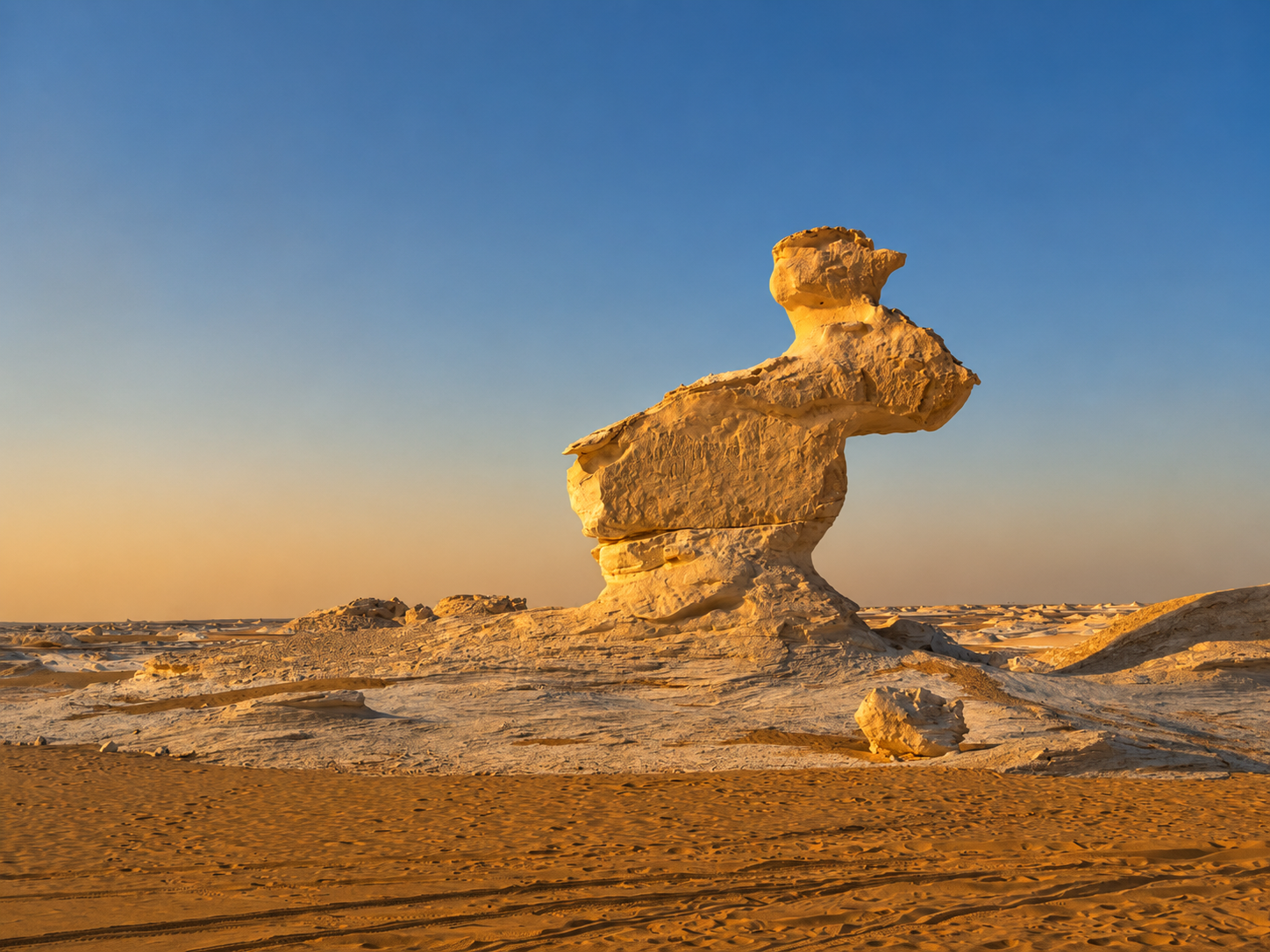
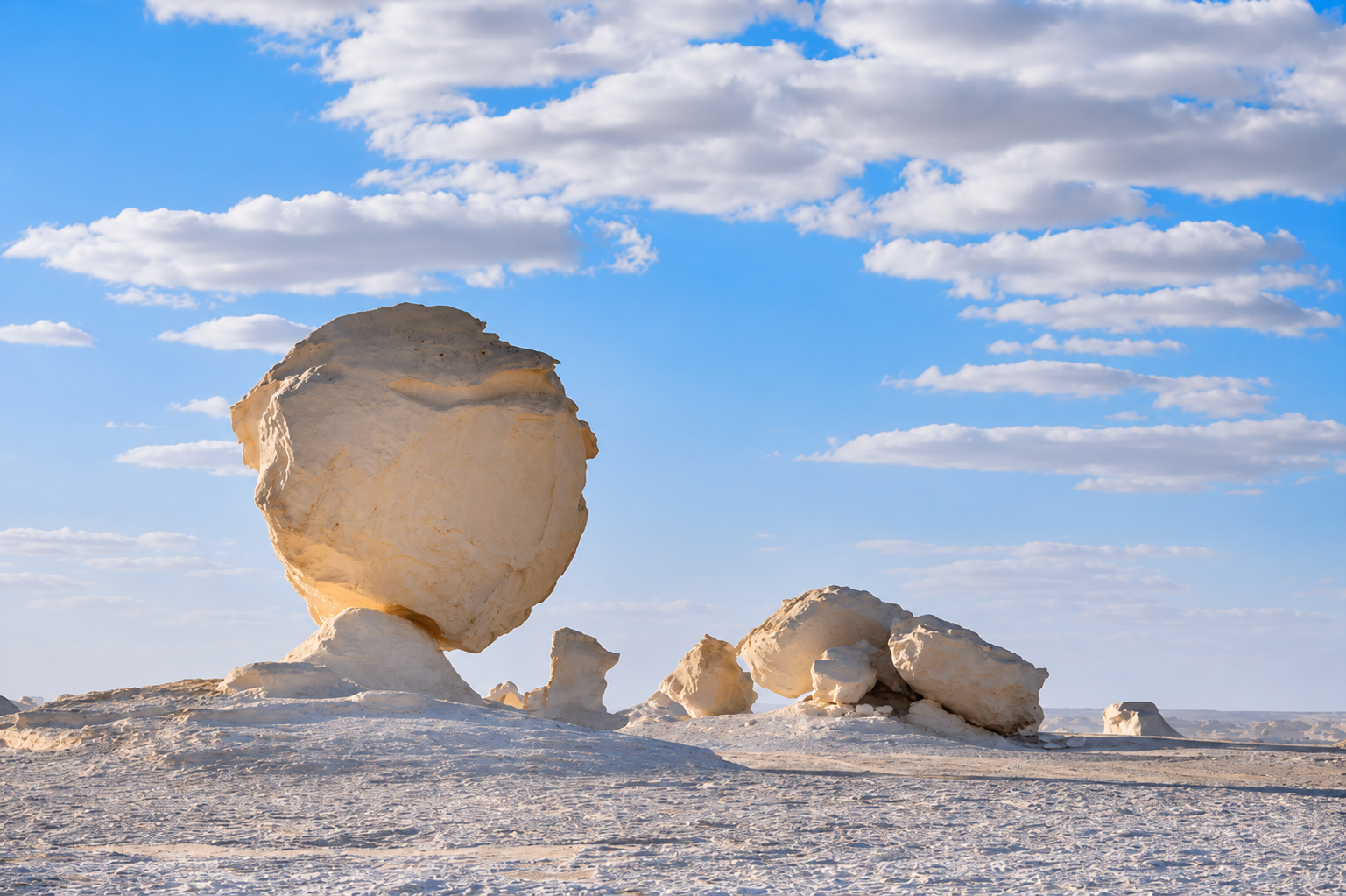
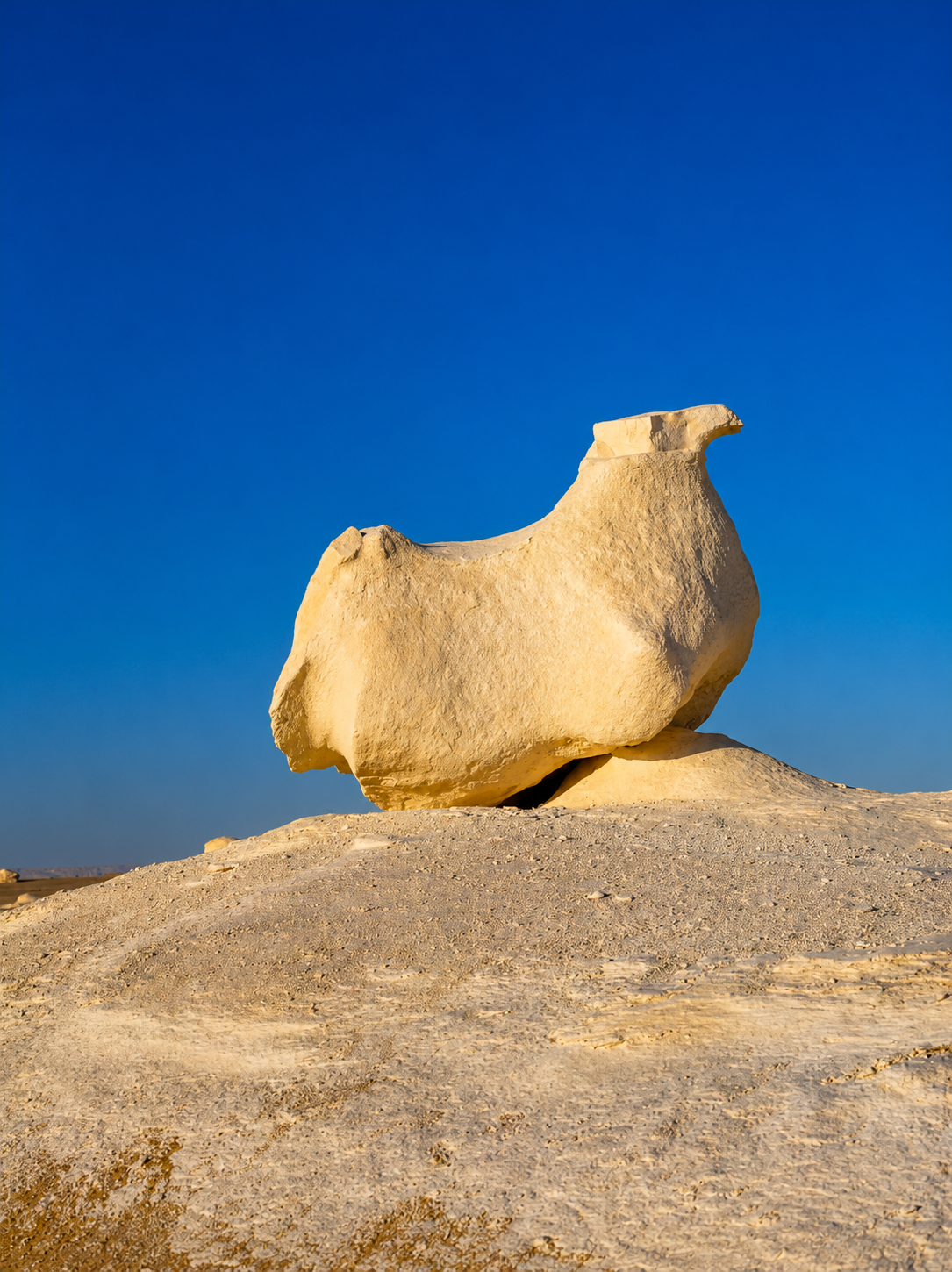
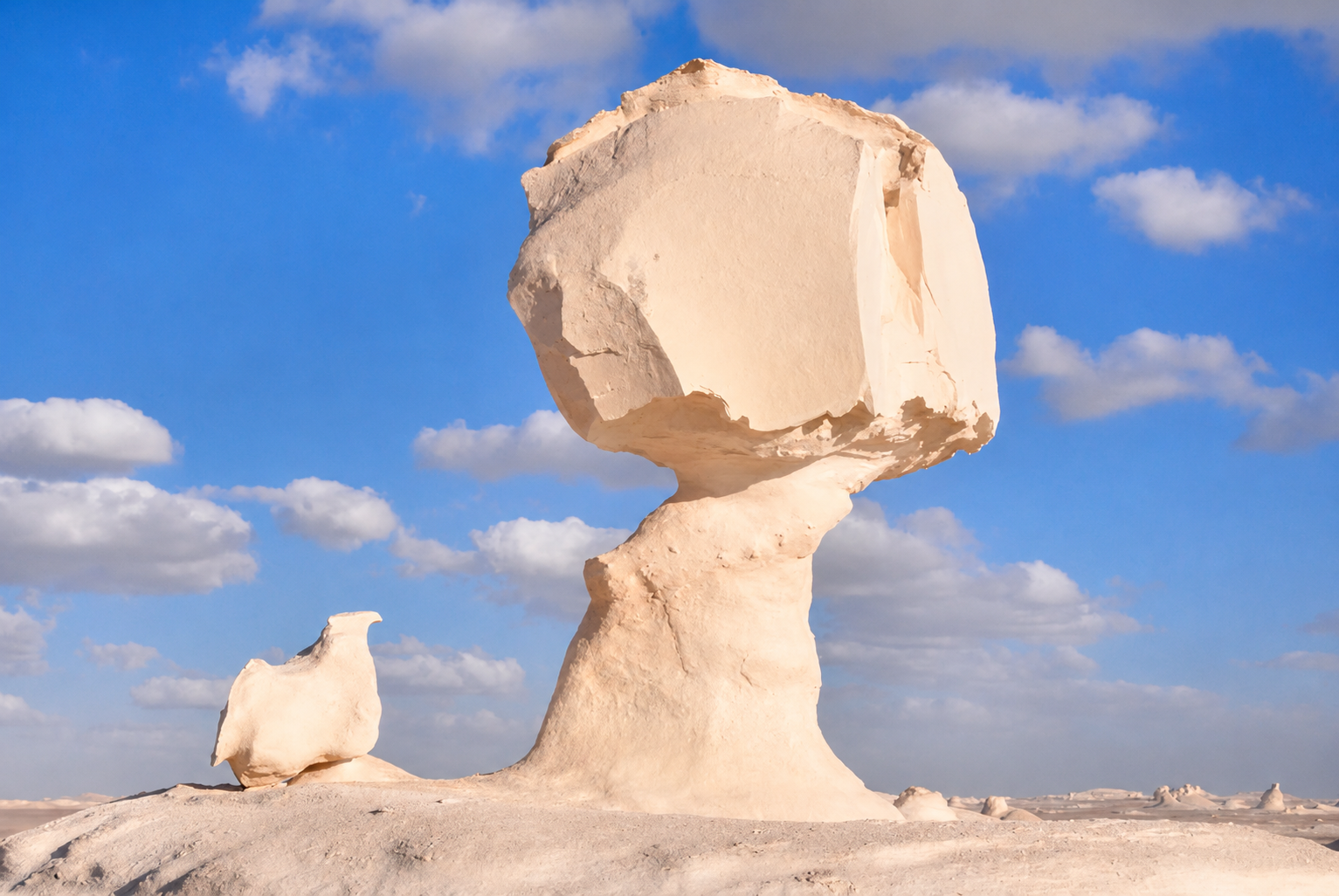
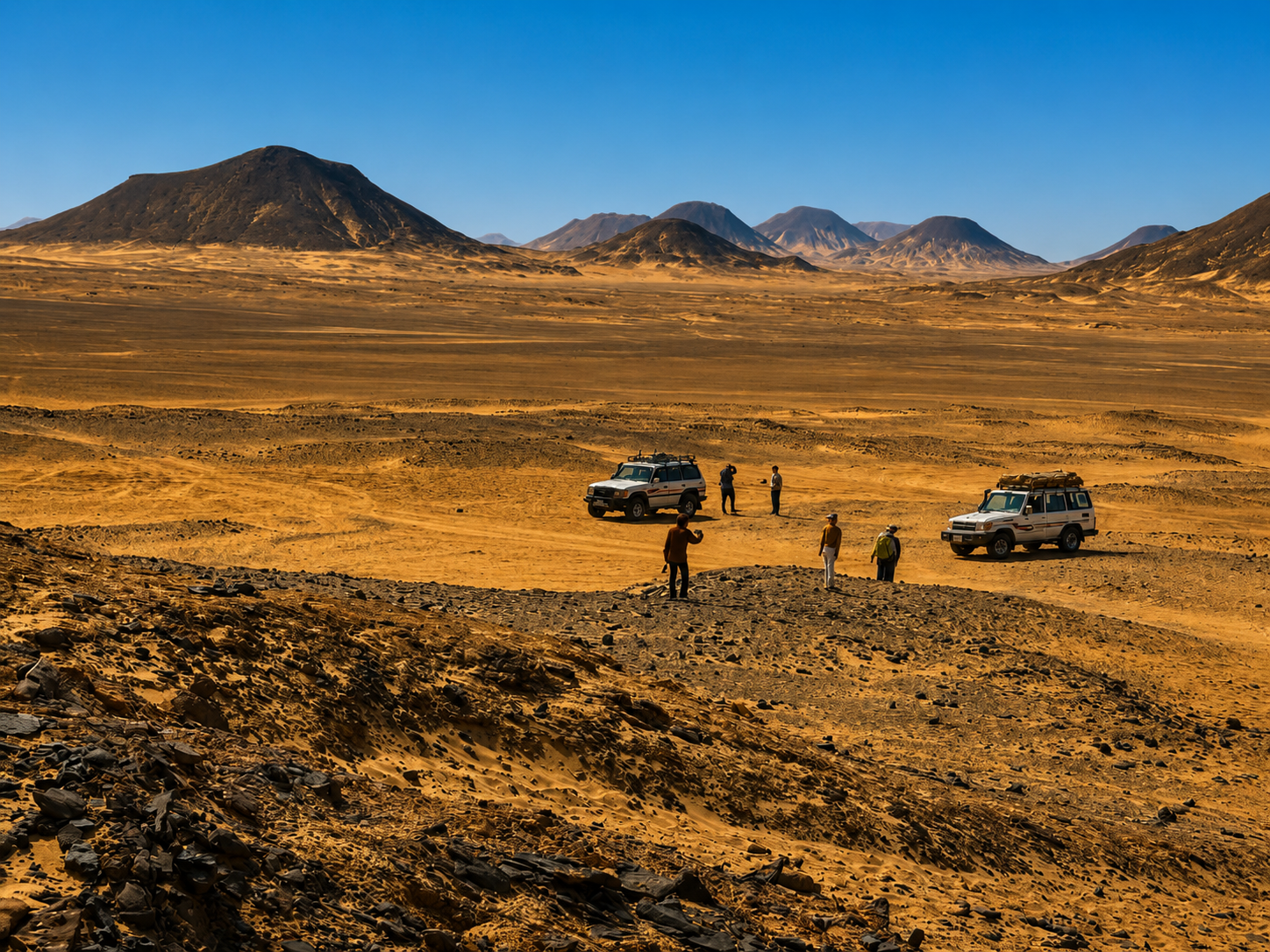
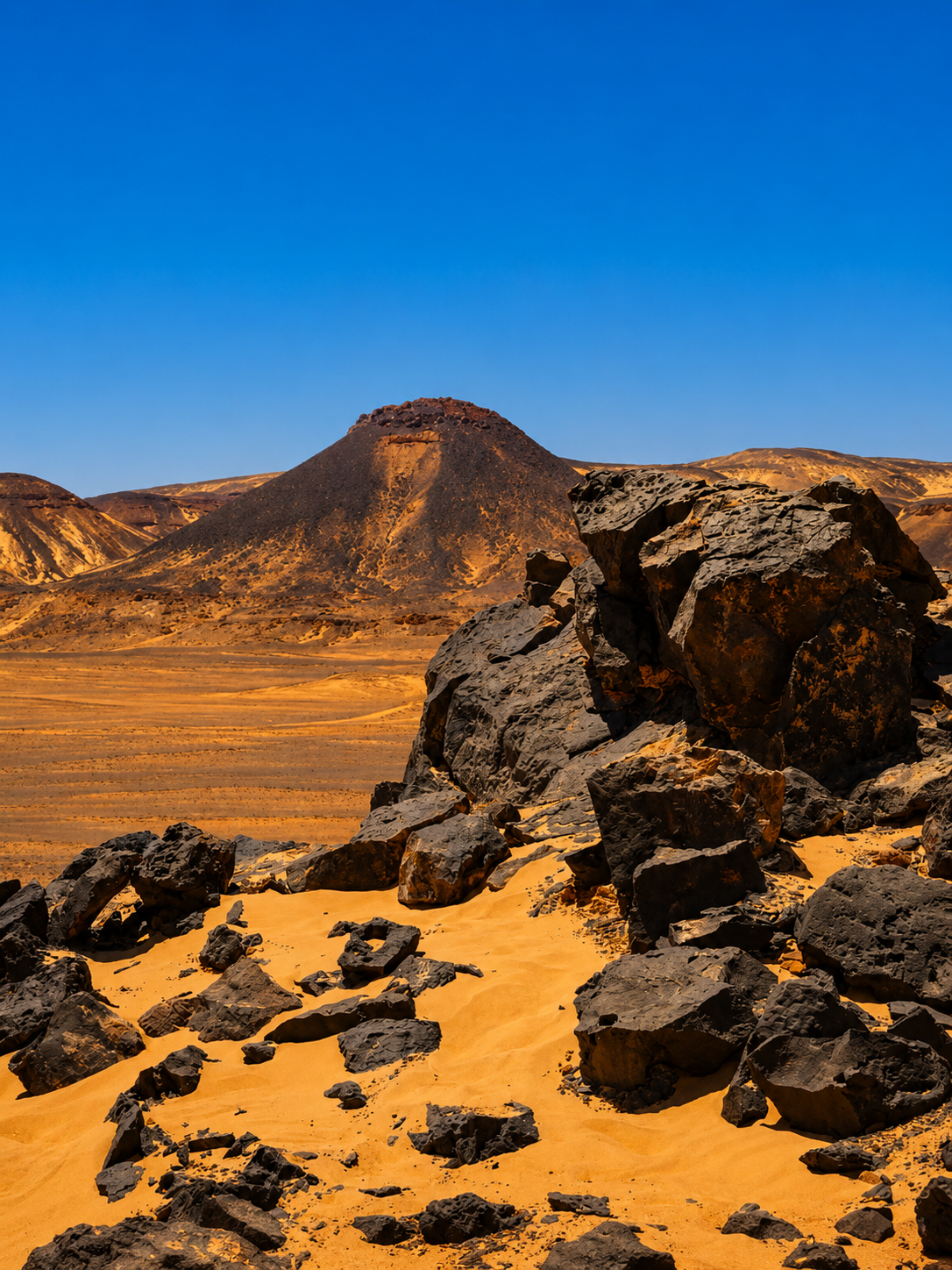
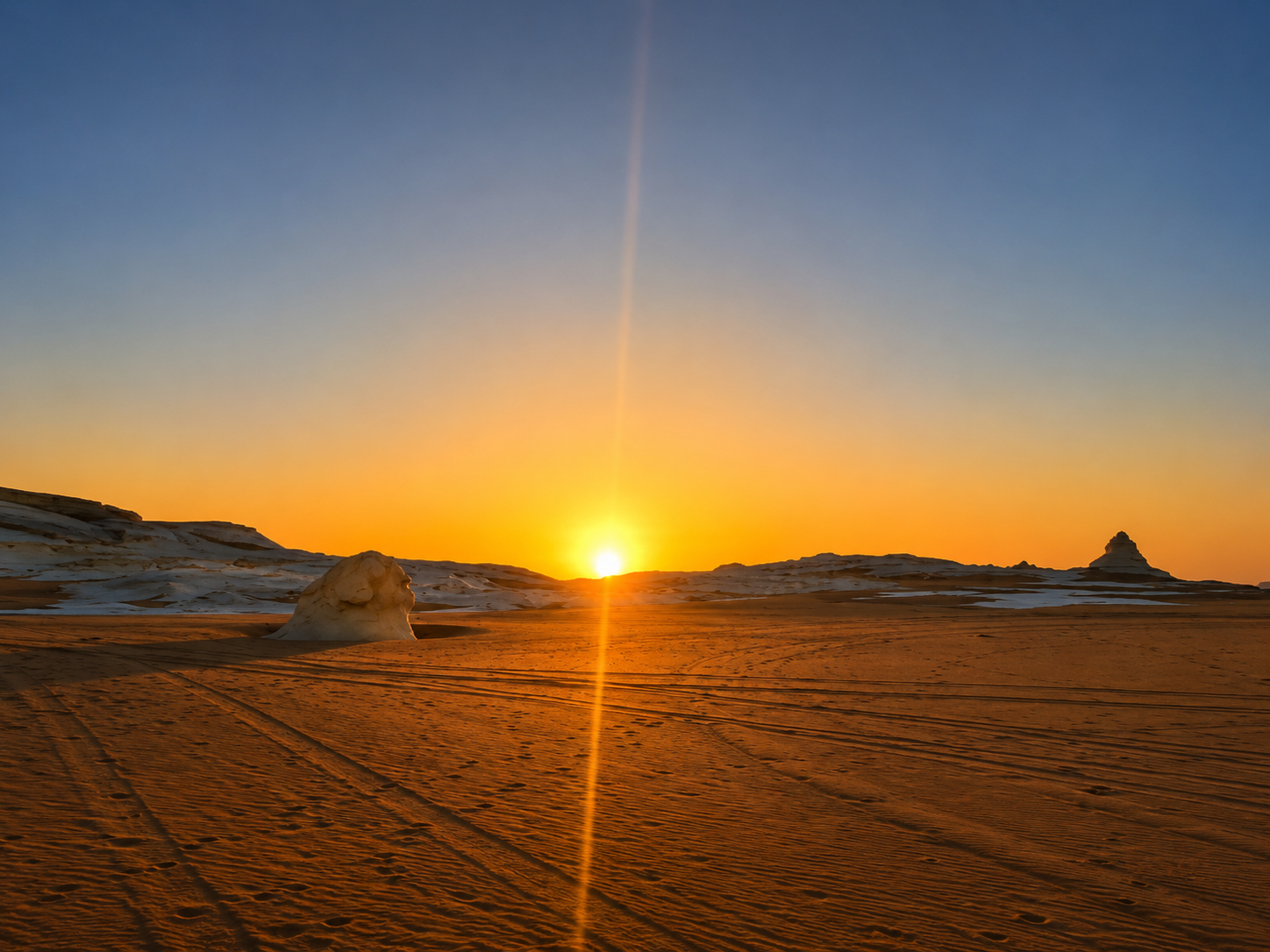
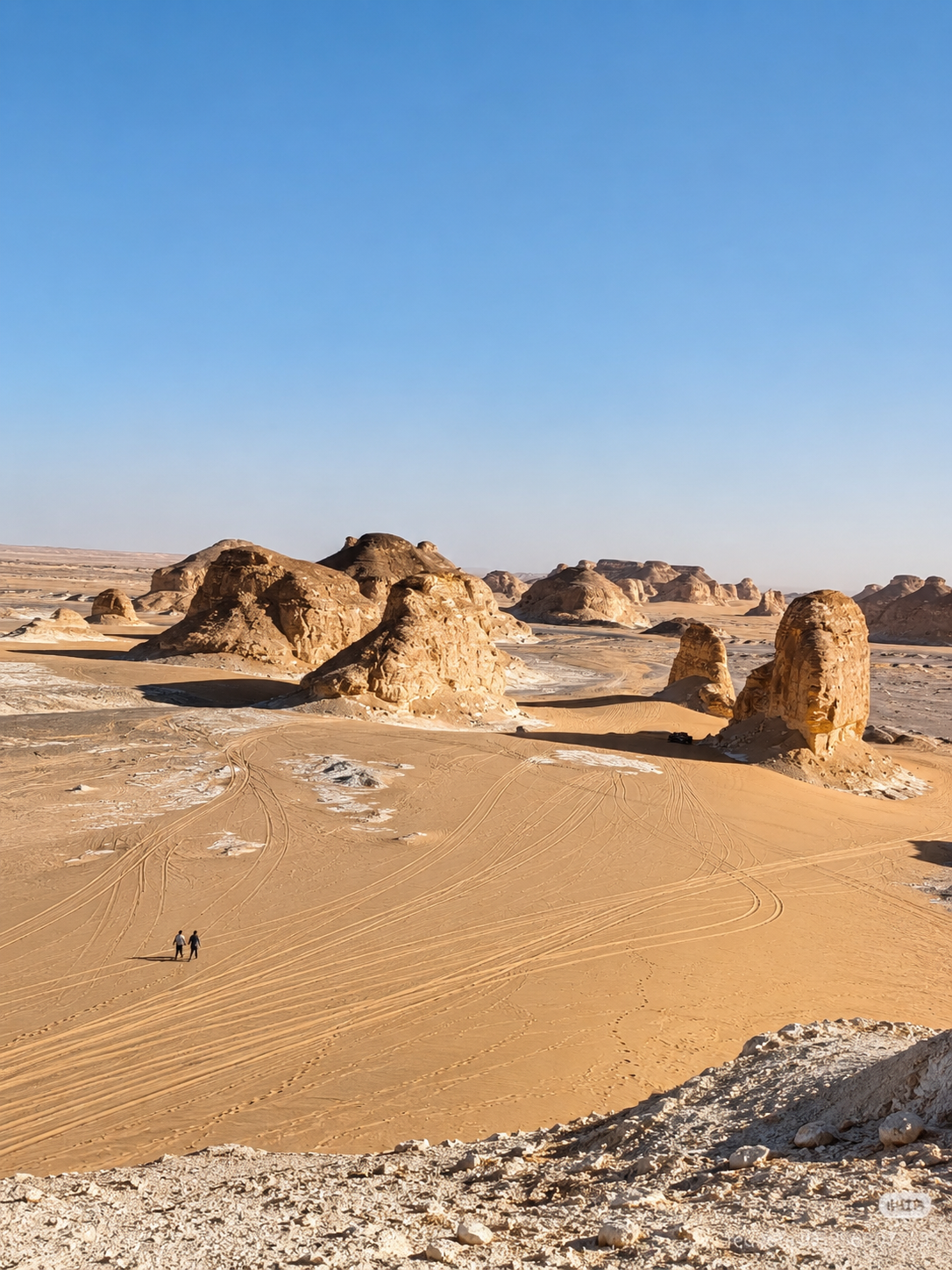
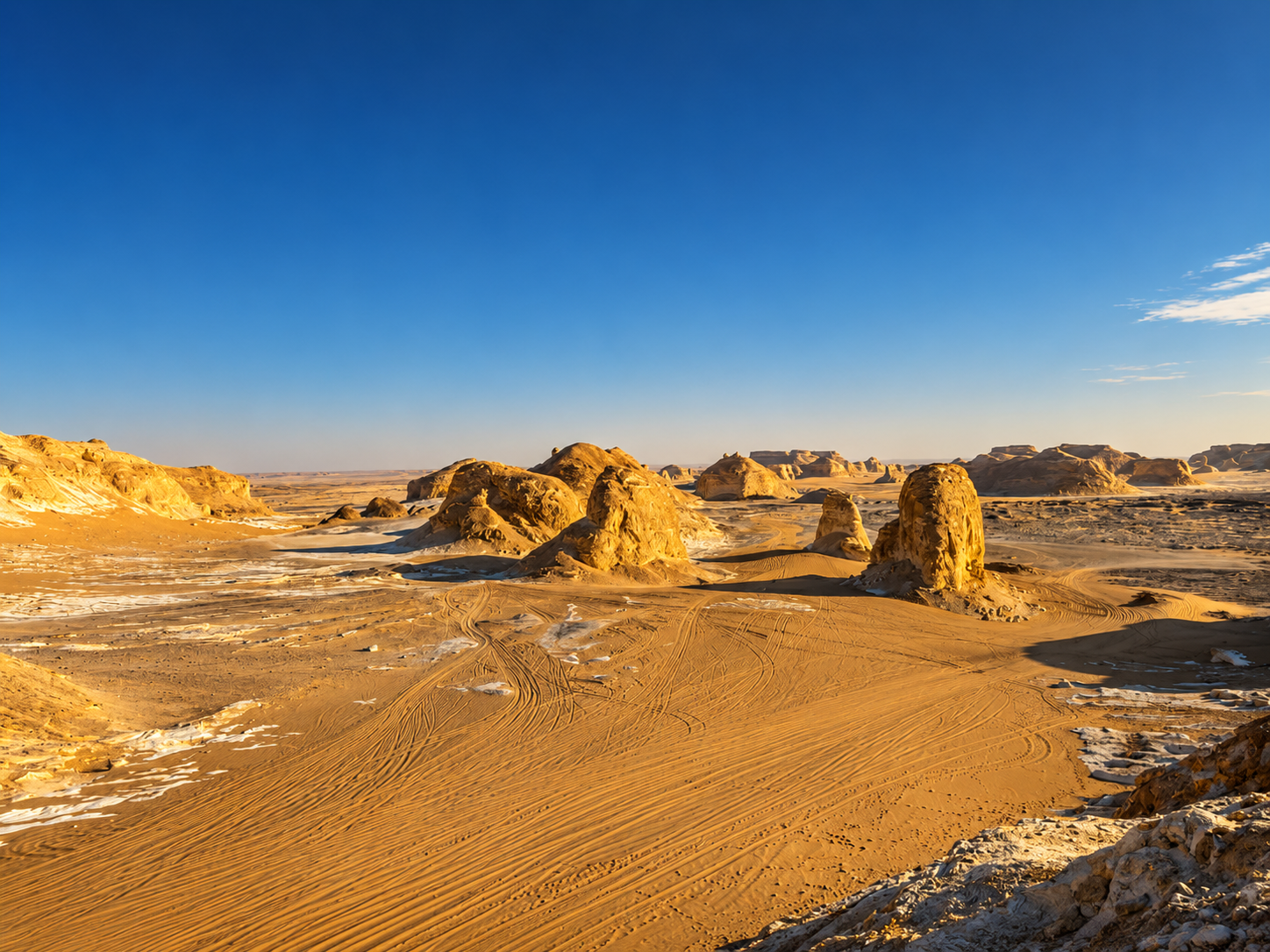
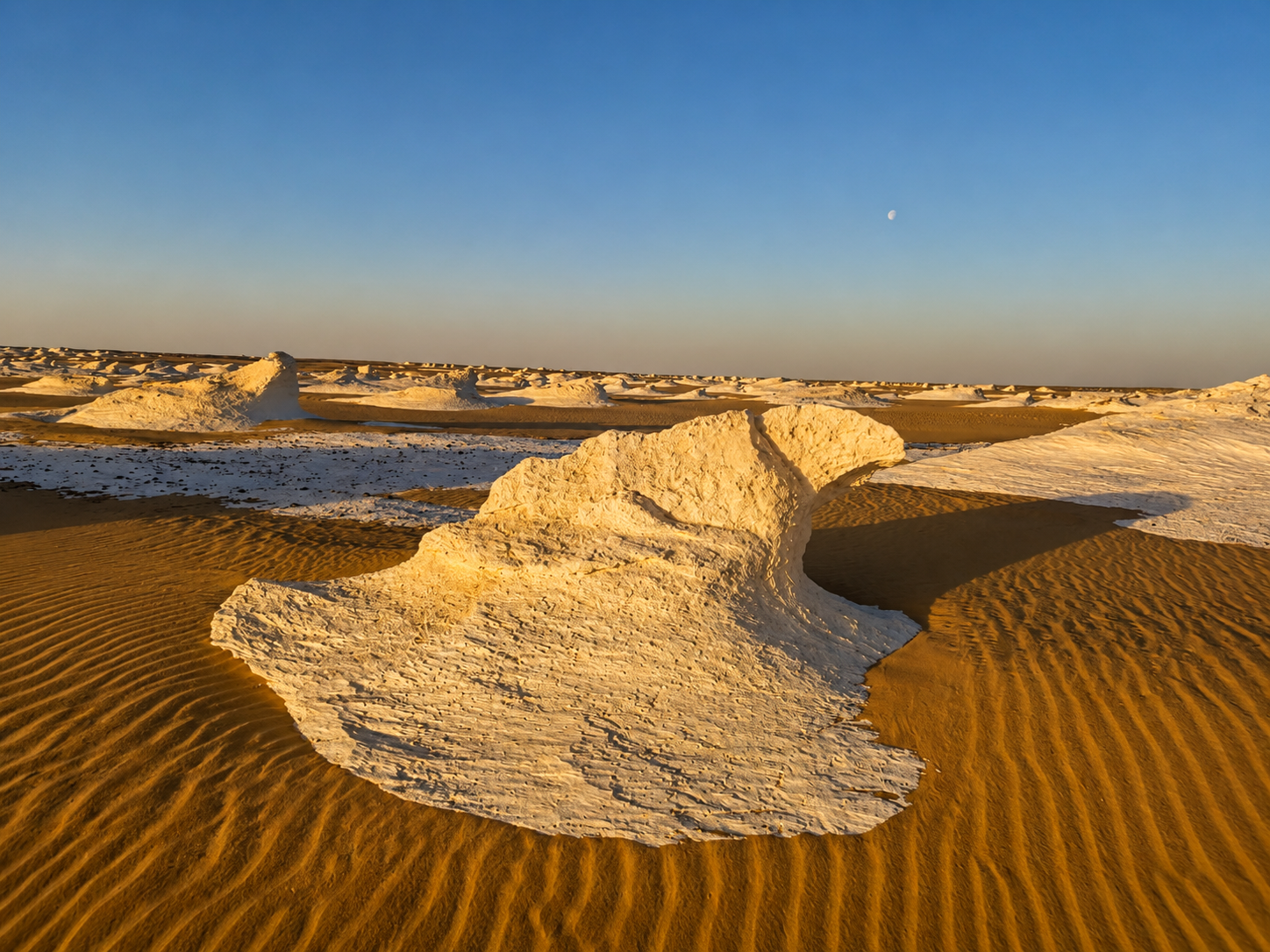
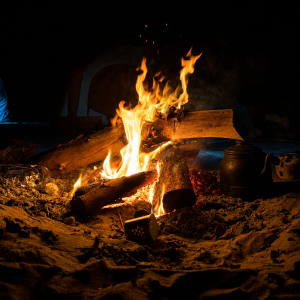
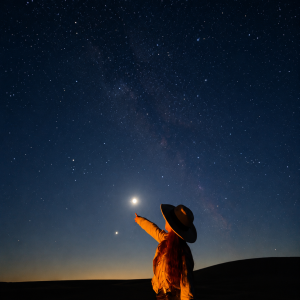
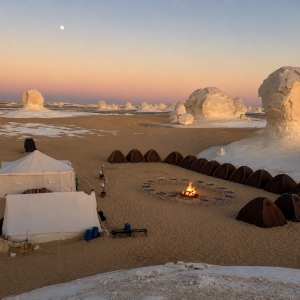
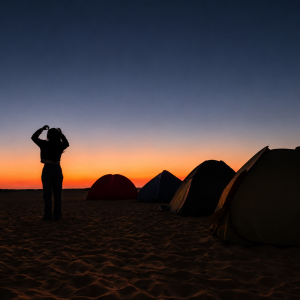
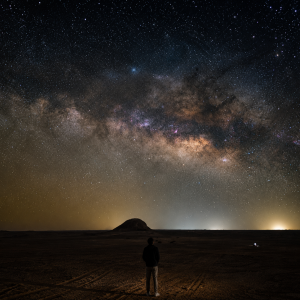
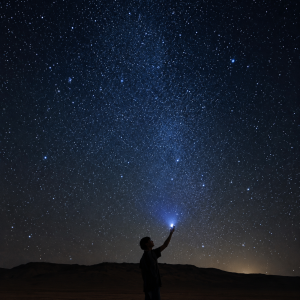
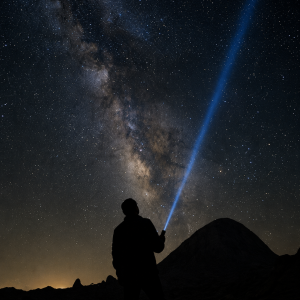
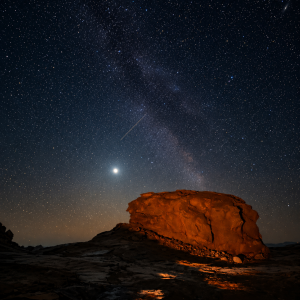
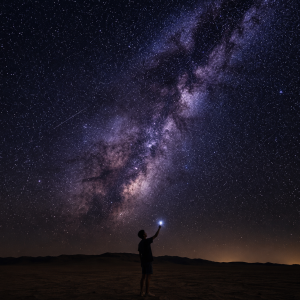
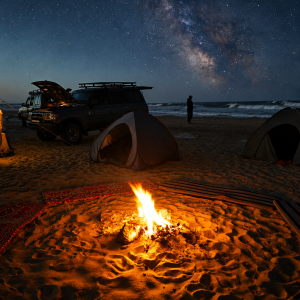
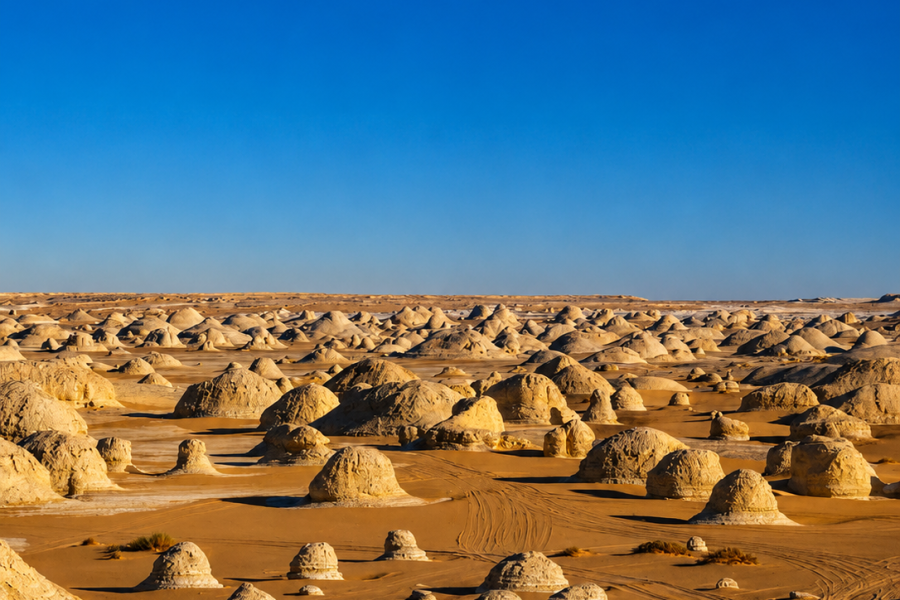
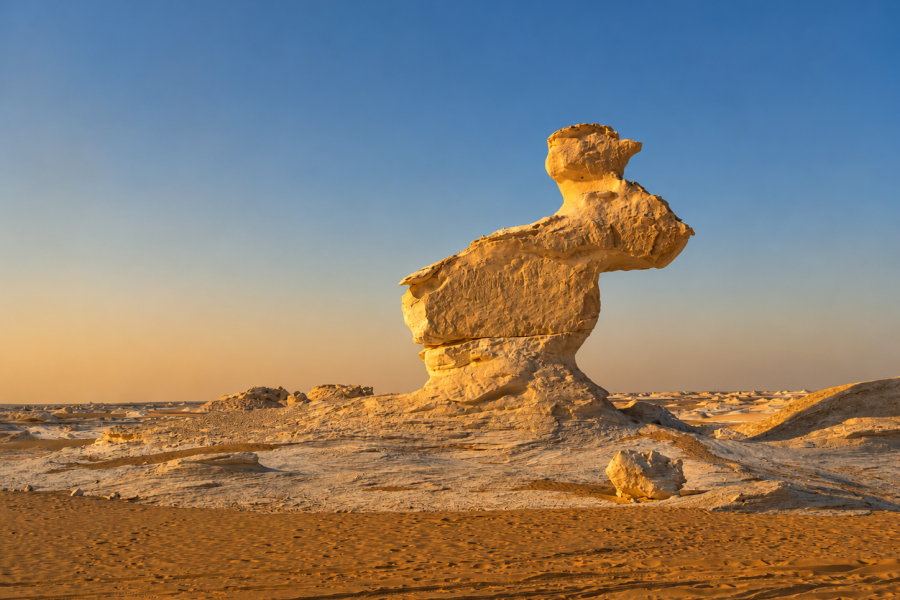
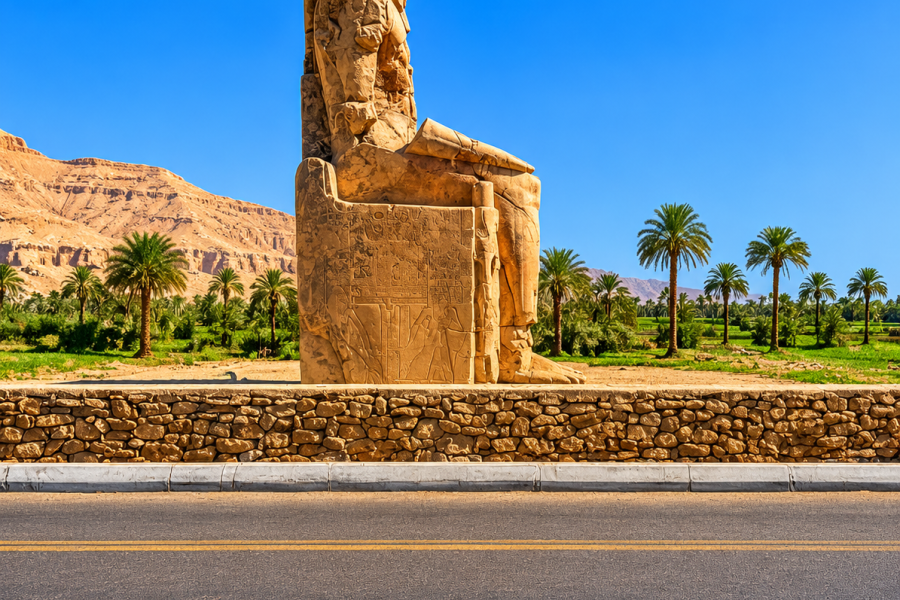
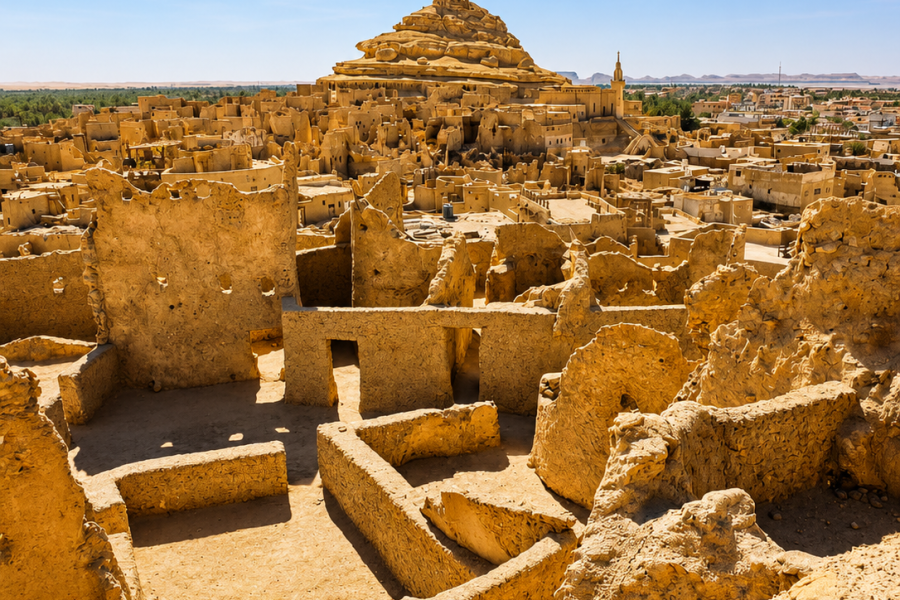
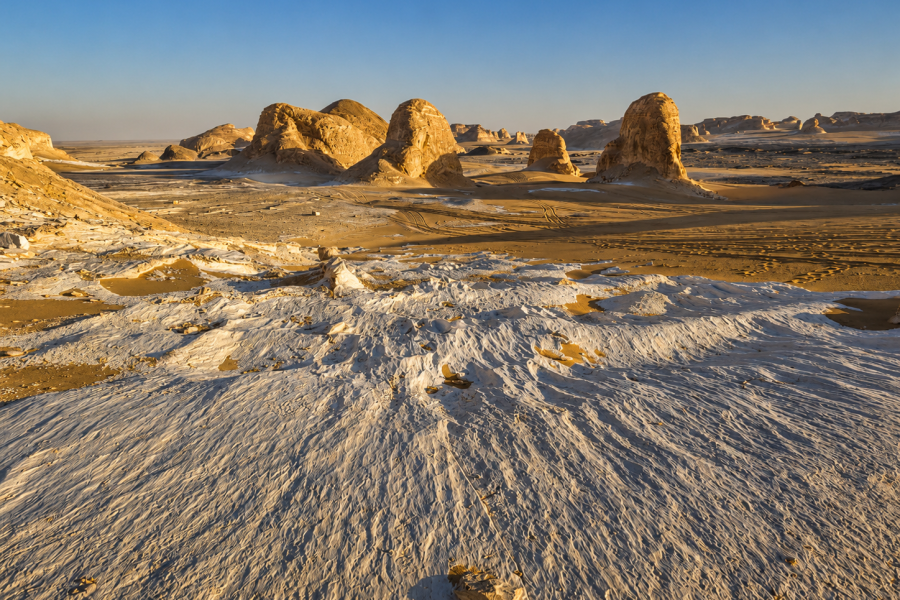
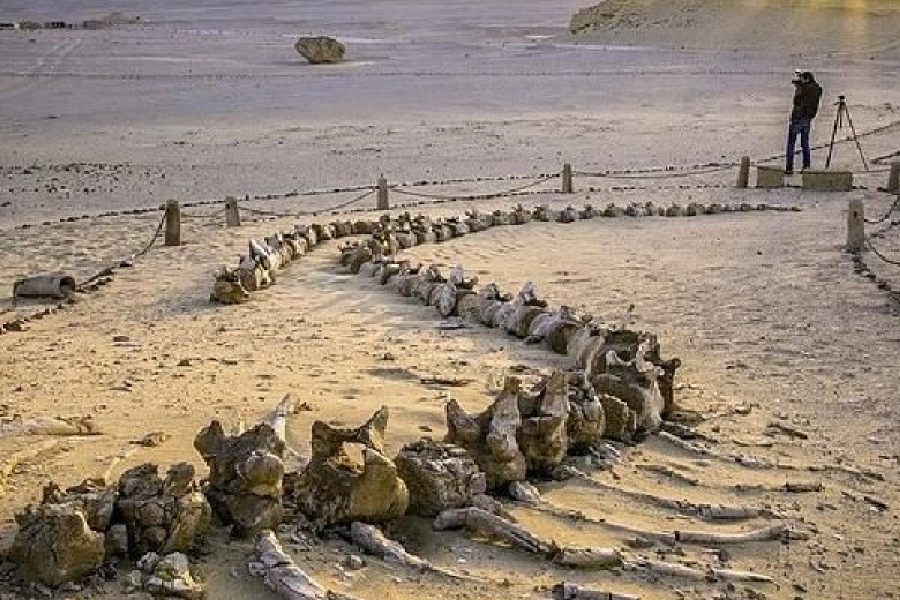
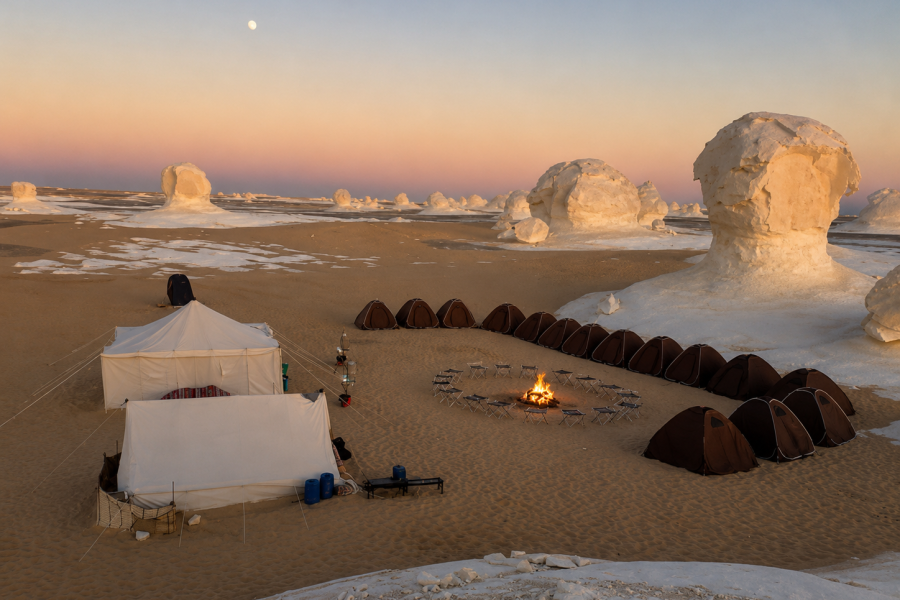
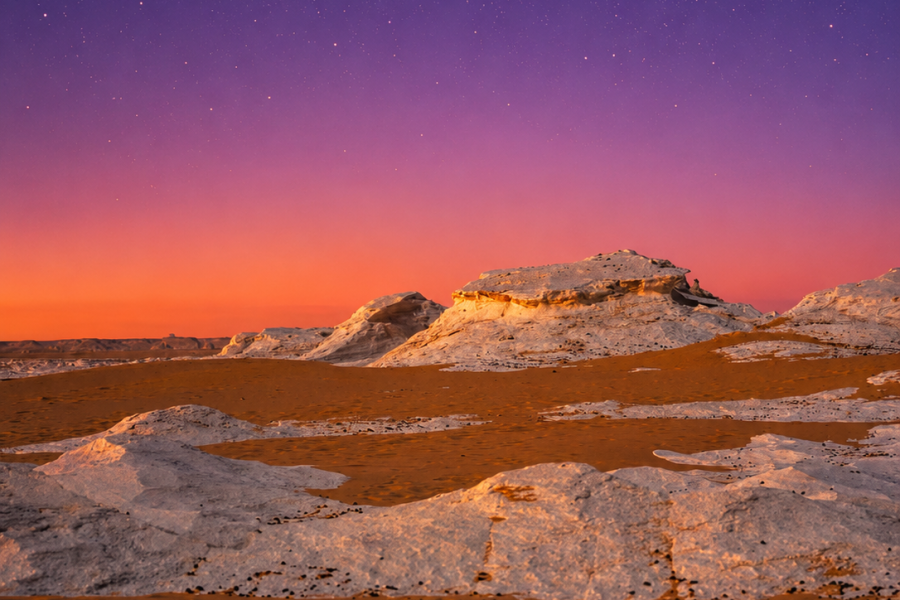
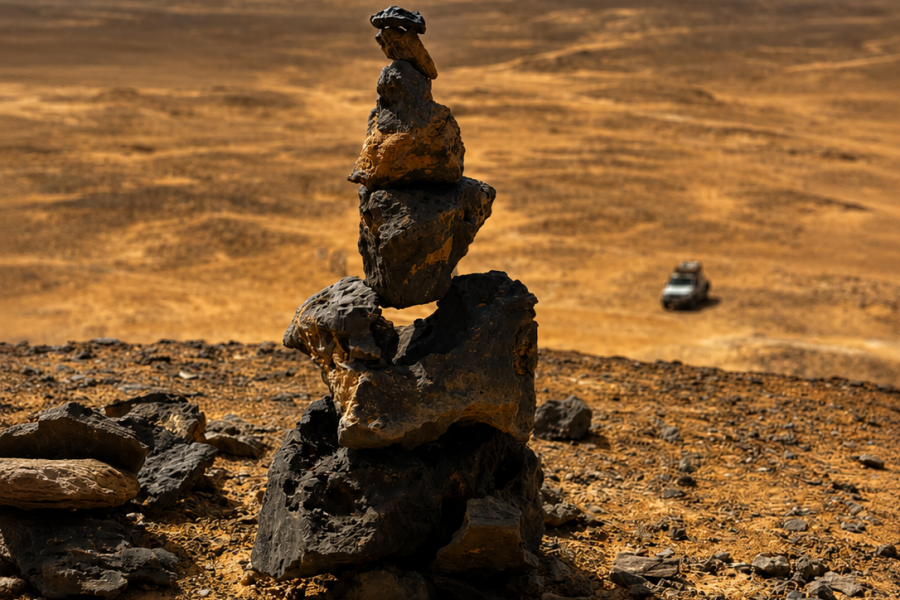
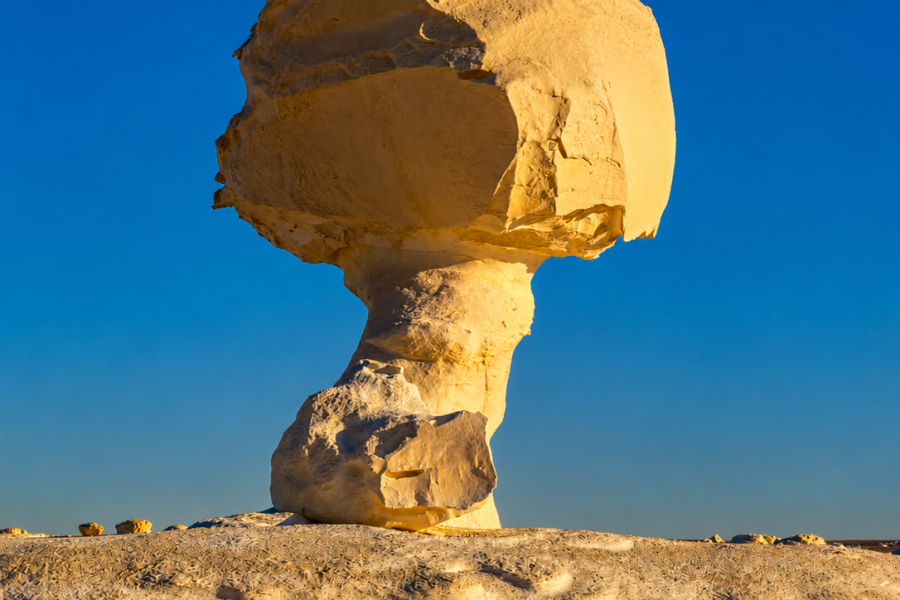
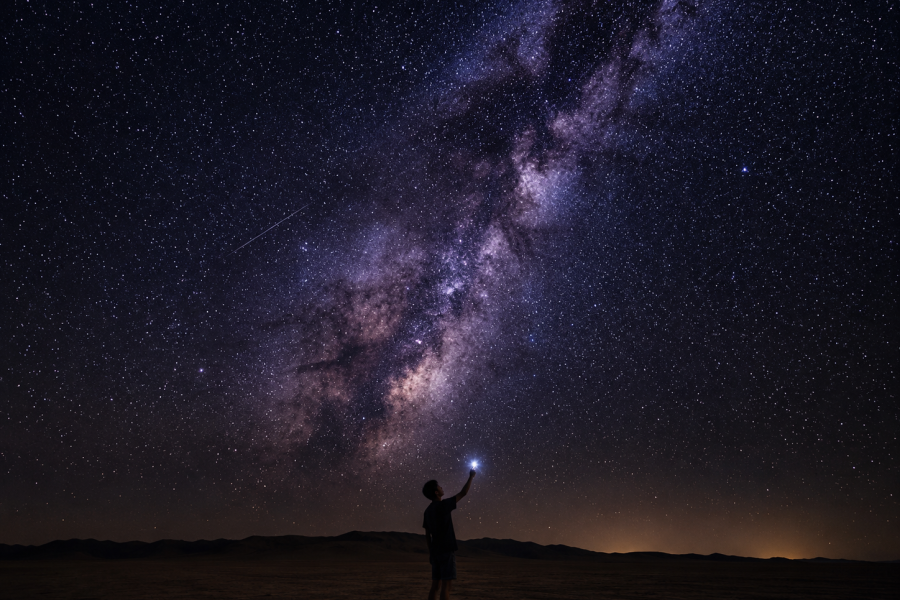
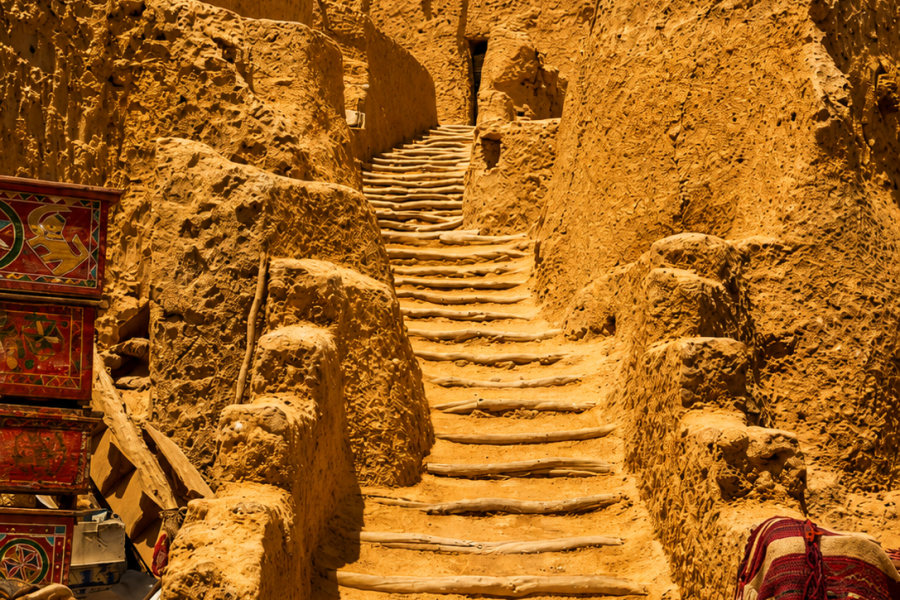
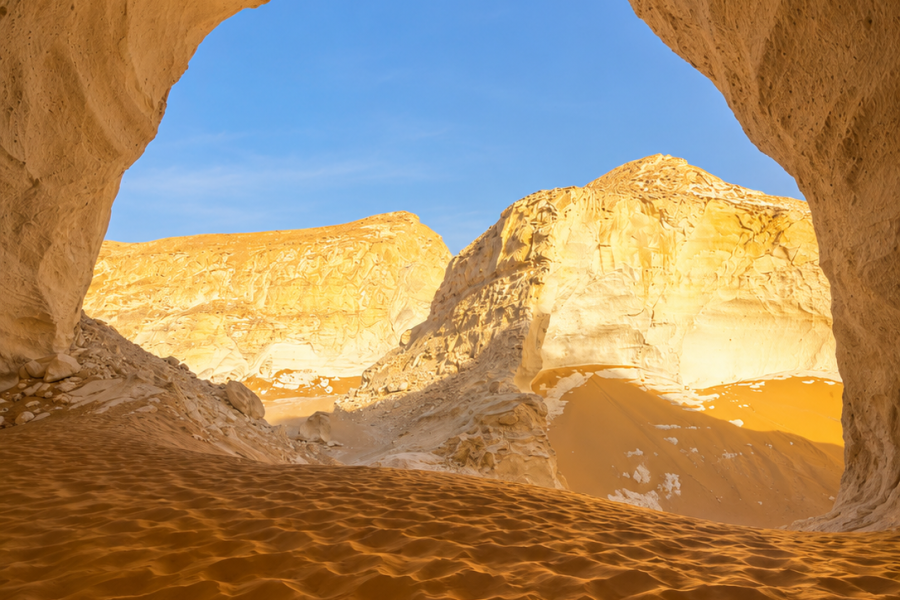
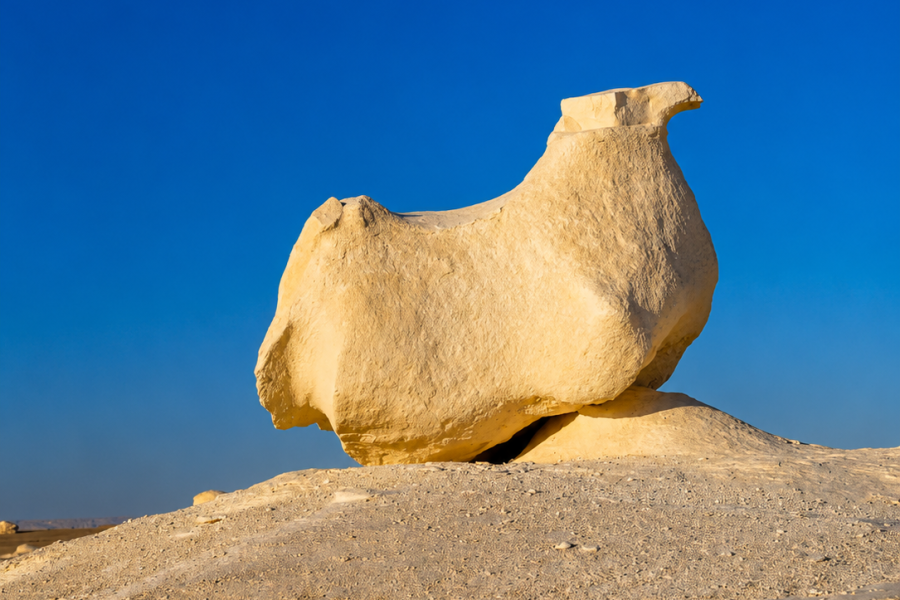
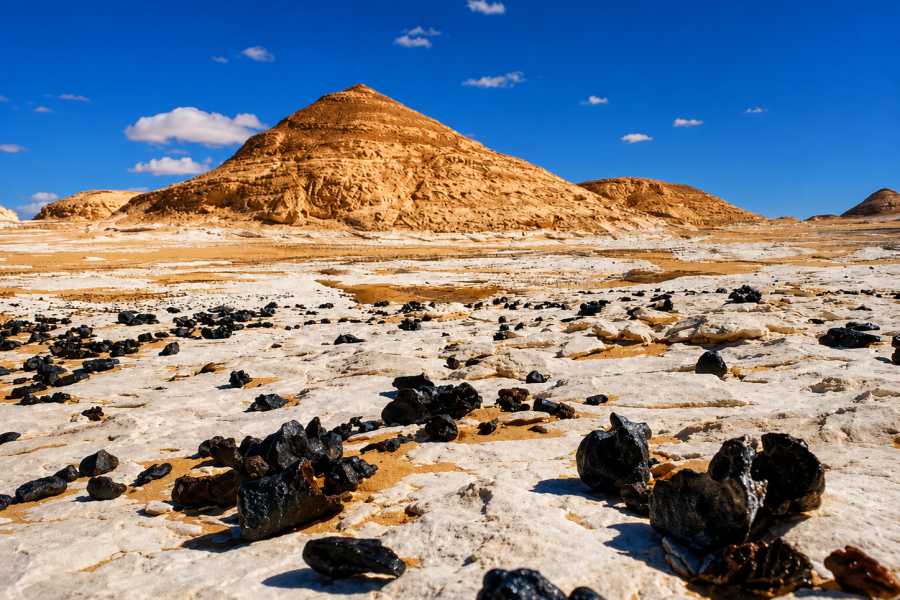
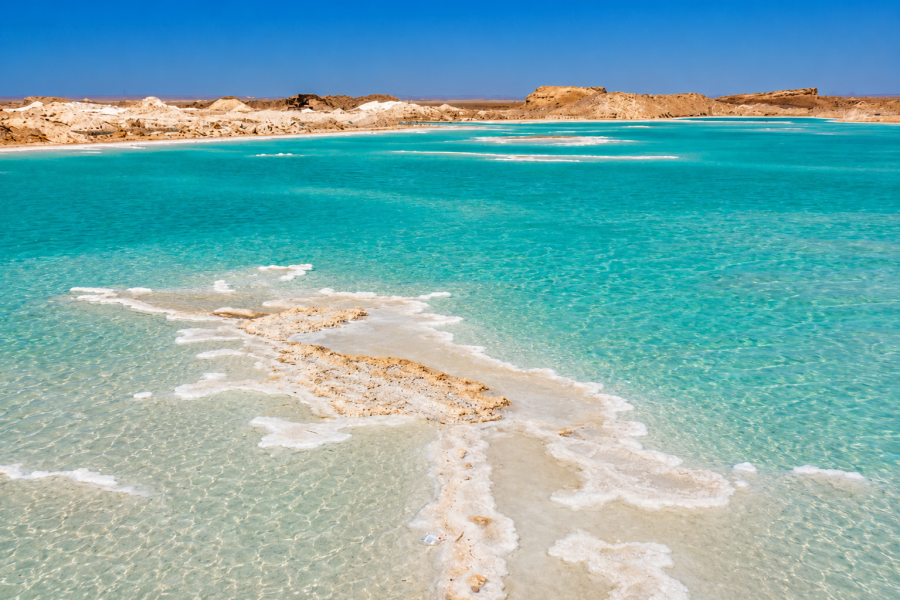
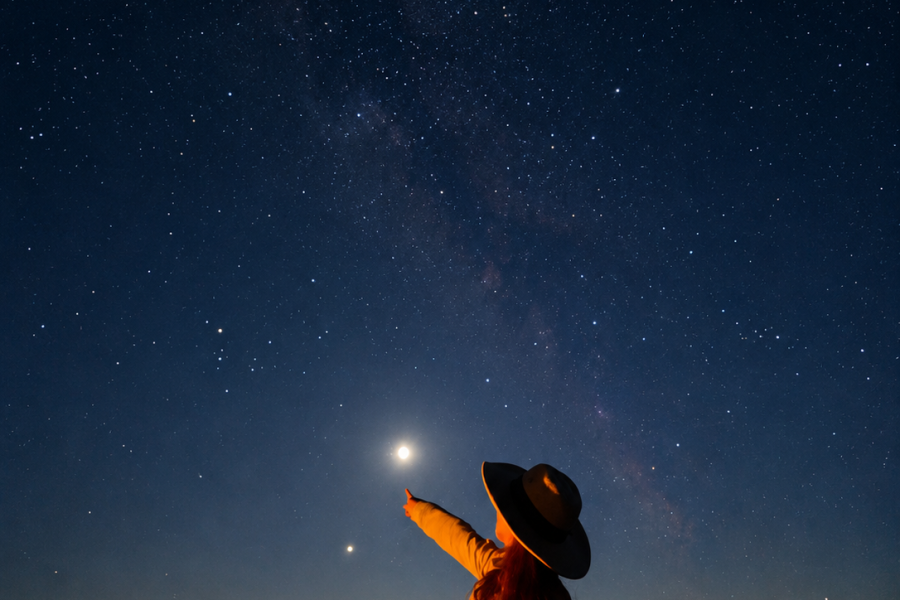
White Desert Egypt is an excellent destination for stargazing because overnight camps are located far from Cairo’s urban lighting, giving travelers access to much darker skies than they would experience in major Egyptian cities. For the darkest conditions, plan around a new moon, choose an overnight safari, minimize camp lighting and allow your eyes at least 20–30 minutes to adjust to the darkness.
For most travelers, the ideal combination is:
October to April + overnight camping + a night close to new moon.
But there is an important distinction.
A moonless night is best if your priority is seeing faint stars and potentially the Milky Way.
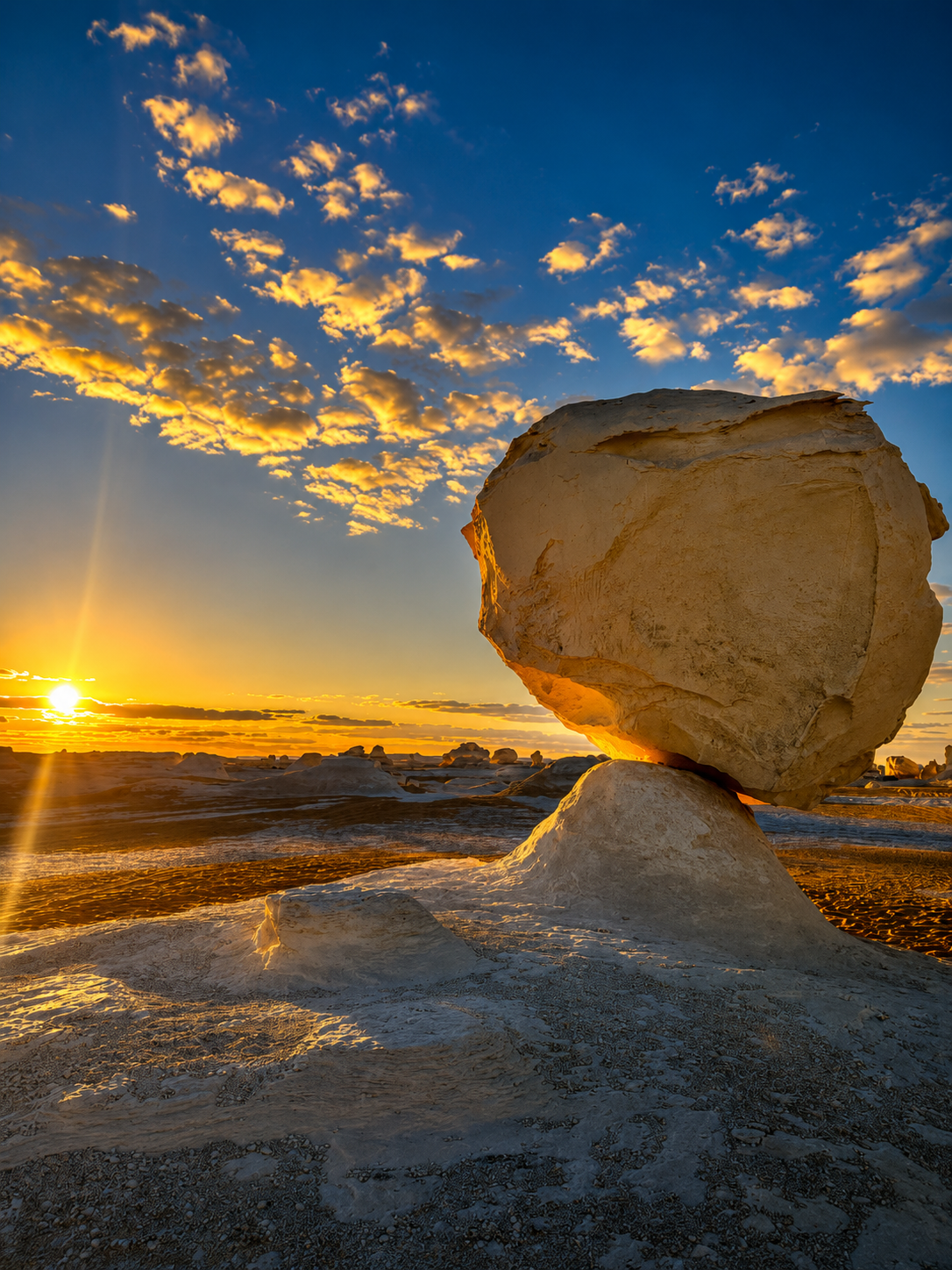
A bright moon can be beautiful for a completely different reason: it illuminates the White Desert’s pale chalk formations and creates an almost surreal landscape.
So there is no single perfect night.
There are really two different White Desert night experiences:
Dark-sky stargazing and moonlit desert scenery.
NASA explains that darker skies away from urban lights reveal more stars, while a bright moon can create enough skyglow to hide faint objects. For observers particularly interested in the Milky Way or meteor showers, the period around new moon generally offers the strongest conditions.
The White Desert is particularly suited to this experience because most visitors reach it through an organized overnight safari rather than staying in a brightly illuminated urban resort.
Once dinner is finished, the vehicles stop moving and unnecessary lights are reduced, the atmosphere changes completely.
The famous chalk formations disappear into silhouettes.
The horizon opens.
And the sky becomes part of the destination.
For the broader destination overview, begin with our White Desert Egypt guide.
If camping itself is your main concern, use our White Desert Camping Egypt guide alongside this article.
For most travelers, the strongest overall combination is:
The single most important planning detail after weather is:
Check the Moon.
NASA notes that the Moon’s phase materially affects how many faint celestial objects you can see. Around full moon, reflected sunlight brightens the night sky and makes faint stars harder to observe; around new moon, the Moon is essentially absent from the nighttime sky.
The fundamental requirement for good stargazing is darkness.
Cities create artificial skyglow.
Streetlights, buildings, vehicles, advertisements and other sources scatter light into the atmosphere.
The White Desert offers a very different environment.
After leaving Cairo and Bahariya and continuing into the Western Desert, artificial lighting becomes increasingly limited.
At an appropriate remote camp, your main nearby light sources may simply be:
the campfire,
a lantern,
vehicle lights,
and other campers’ phones.
NASA’s guidance for stargazing is straightforward: darker areas away from cities reveal substantially more stars than urban environments, especially when observing faint features such as the Milky Way.
That gives remote desert camping an obvious advantage.
But do not describe White Desert Egypt as an official International Dark Sky Park unless such a designation is formally confirmed.
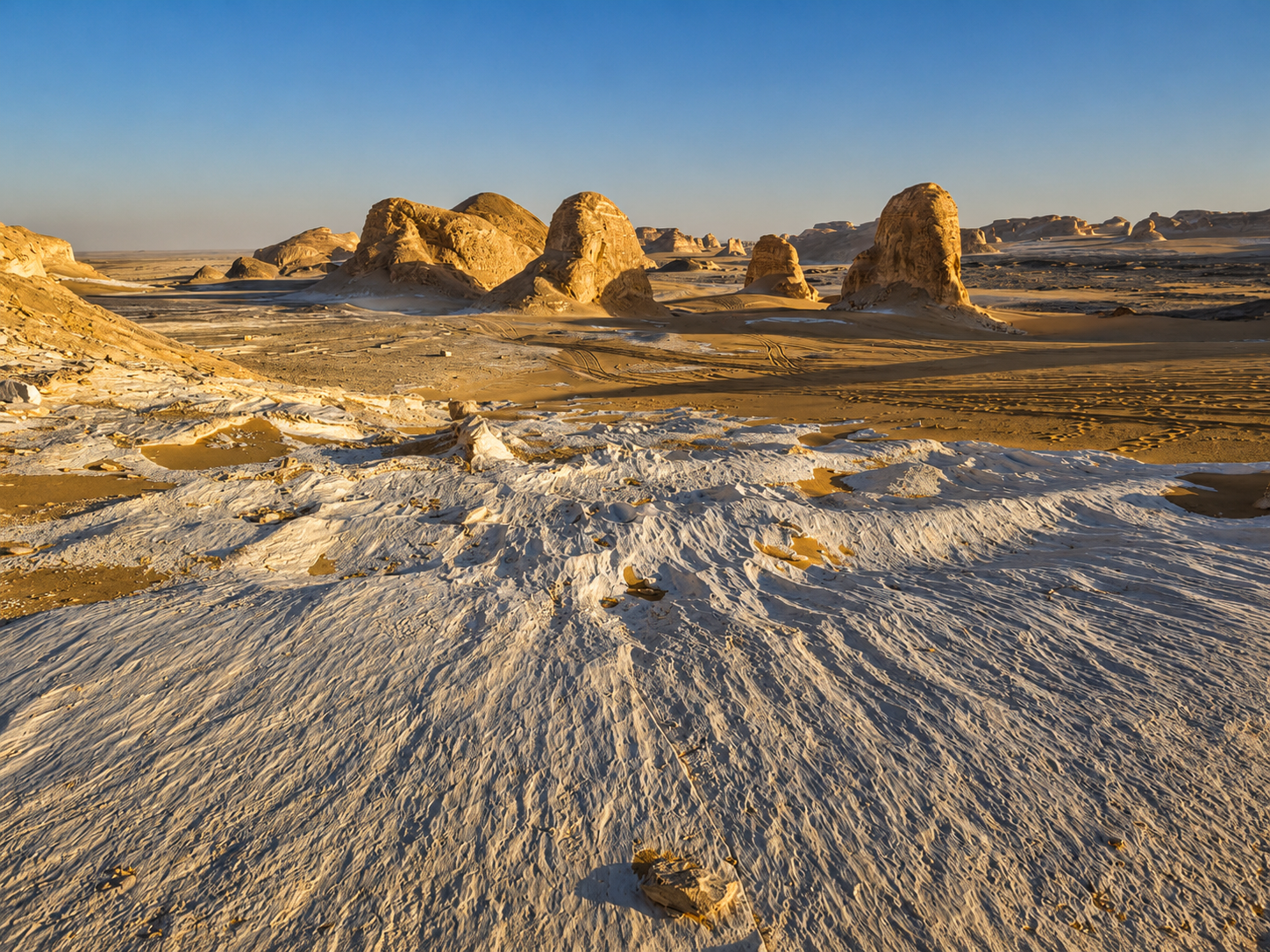
During the day, the White Desert is defined by contrast.
Bright chalk.
Golden sand.
Deep blue sky.
At night, that visual hierarchy disappears.
The formations become silhouettes against the sky.
On a moonless night, the ground can become extremely dark once camp lights are turned down.
On a bright moonlit night, the opposite happens.
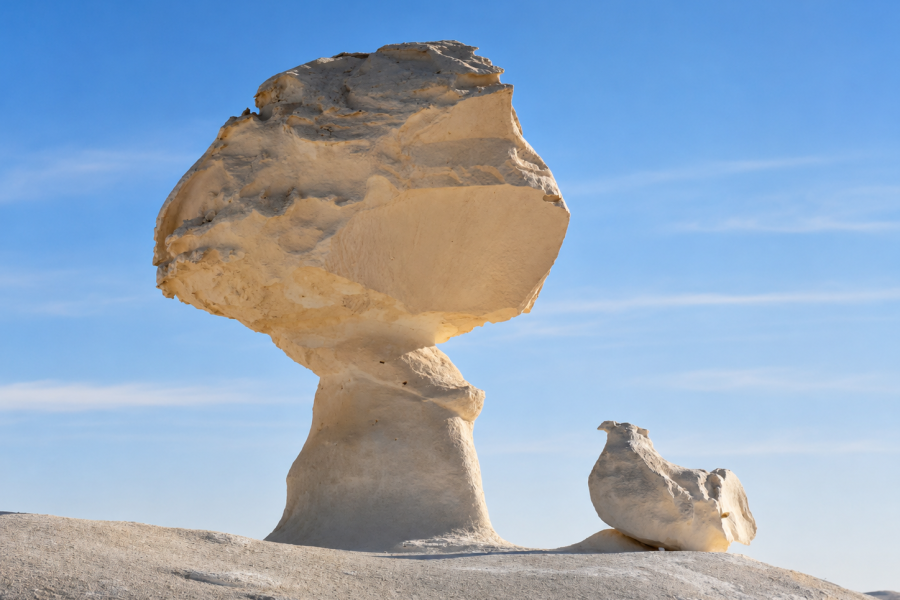
The pale chalk reflects moonlight and can become surprisingly visible.
That means two travelers visiting on different moon phases may come home with completely different impressions.
One may remember a black sky filled with stars.
Another may remember white formations glowing in moonlight.
Both experiences can be excellent.
They are simply different.
This is the most important decision for anyone booking specifically for stargazing.
Stars.
The Milky Way.
Meteor showers.
Deep night-sky photography.
Seeing faint celestial objects.
A darker overall camp.
NASA recommends the period around new moon for observers seeking faint stars and Milky Way visibility because a bright moon acts similarly to artificial light pollution by raising the brightness of the sky.
Moonlit chalk formations.
Landscape photography involving the moon.
Walking around the immediate camp area with greater natural illumination.
A dramatic white-desert atmosphere.
A full moon rises around sunset and remains visible for much of the night, which means it can illuminate the landscape strongly but also wash out many faint stars.
So asking:
“Is new moon or full moon better?”
is the wrong question.
Ask:
For pure stargazing:
new moon wins.
You do not have to arrive on the exact astronomical new moon.
A few nights around it can still provide excellent darkness.
NASA explains that approximately the two weeks surrounding new moon provide progressively stronger dark-sky opportunities than the period around full moon, although exact moonrise and moonset times should always be checked for your travel date.
The practical strategy is simple.
Before booking:
check your travel date,
check moon phase,
then check local moonrise and moonset.
A night can sometimes still produce good dark-sky conditions even if the Moon is not technically new, particularly if it rises very late or sets early.
Under favorable conditions:
potentially, yes.
But this needs a more accurate answer than many travel websites provide.
Seeing a dramatic Milky Way depends on several variables:
NASA emphasizes that Milky Way viewing requires dark surroundings and benefits strongly from nights close to new moon.
The bright central region of the Milky Way is also not equally positioned in the night sky throughout the year.
So don’t advertise:
“You will definitely see the Milky Way every night.”
That’s not responsible.
A better claim is:
White Desert’s remote setting can provide excellent Milky Way and star-viewing conditions when the season, moon phase, weather and timing align.
That’s both more accurate and more trustworthy.


These are related but not identical activities.
You can have an excellent stargazing night without capturing a spectacular Milky Way photograph.
Your eyes and a camera behave differently.
A long camera exposure can reveal stars and galactic structure that appear much fainter to the naked eye.
Likewise, a beautiful clear star-filled sky may not have the bright galactic center positioned exactly where a photographer wants it relative to a specific chalk formation.
If photography is your priority, read our dedicated White Desert Egypt Photography Guide.
This page should remain the authority for stargazing and night-sky planning, while the Photography Guide handles camera technique in more detail.
For most travelers, the overall White Desert travel season is:
October through April.
That recommendation is driven primarily by desert comfort rather than astronomy alone.
The night sky exists year-round.
The question is whether you want to spend hours outdoors and sleep in the desert during very hot periods.
Our current Best Time to Visit White Desert Egypt guide recommends the cooler months for camping and multi-day safari travel.
For stargazing, the seasonal decision should therefore balance:
night-sky objectives,
temperature,
moon phase,
and your tolerance for cold.
October is one of the best transition months.
Daytime conditions become more manageable after summer.
Nights are generally easier for campers who dislike the colder midwinter period.
October works particularly well for travelers wanting:
camping,
sunset,
stargazing,
and comfortable outdoor time.
Check the moon phase rather than assuming every October night will be equally dark.
November is one of my strongest overall recommendations.
You get cooler desert conditions without necessarily facing the coldest winter nights.
This makes it easier to spend longer outside camp after dinner.
For first-time travelers trying to combine:
comfort + camping + stars
November is excellent.
These months can be excellent for desert exploration and clear night-sky experiences.
The main challenge is not the stars.
It is the cold.
Standing still while looking upward for an hour feels much colder than walking around during the day.
Pack properly.
A jacket that feels excessive in sunny Cairo may feel completely reasonable at midnight in an exposed desert camp.
Use our White Desert Egypt Packing List before departure.
February remains a strong overall desert month.
The daytime safari is usually comfortable, while nights can still be cold enough to require proper layers.
It is particularly good for travelers combining White Desert with Cairo, Luxor and Aswan during a winter Egypt trip.
Again:
moon phase matters more to the darkness of the sky than the word “February.”
March provides an excellent balance.
Nights begin becoming milder.
Desert camping remains attractive.
Photography conditions can be excellent.
For someone who wants to sit outside camp for a long time rather than immediately entering a sleeping bag after dinner:
March is a strong choice.
April remains useful, especially early in the month.
Temperatures rise progressively.
For many visitors, nights remain comfortable while daytime safari conditions are warmer than winter.
After April, the heat becomes a more significant factor when deciding whether a camping trip makes sense.
Astronomically, darkness still exists.
The issue is travel comfort.
A multi-day Western Desert safari during hotter months can be considerably more demanding.
If your sole goal is photographing a particular astronomical target, a specialist might willingly accept heat for the right sky alignment.
But for a normal visitor planning their first White Desert trip:
I would prioritize the cooler season.
A great sky is less enjoyable if the overall desert experience is uncomfortable.
There is no universal astronomical answer because different celestial objects are visible in different seasons.
From a travel perspective, winter wins for most visitors.
From a specific astrophotography perspective, you need to plan around the target you want to photograph.
This distinction is important.
The best season for a tourist and the best season for a specific Milky Way composition are not necessarily identical.
On a good dark night, you do not need expensive equipment to enjoy the sky.
The experience begins with your eyes.
Depending on date, season and conditions, you may observe:
bright planets,
constellations,
dense star fields,
the Moon,
satellites,
occasional meteors,
and potentially the Milky Way.
Exactly which planets or constellations are visible changes throughout the year.
Avoid writing permanent travel content that says:
“Jupiter will be in the east at 9 PM.”
That information becomes outdated.
Instead, check a reputable astronomy app or current NASA skywatching information immediately before your trip.
No.
For most White Desert travelers:
I would not make a telescope the priority.
The strongest experience is the scale of the open sky itself.
A pair of binoculars can be easier to carry and can reveal more stars and details without requiring a complicated setup.
A telescope becomes more relevant if astronomy is your main purpose rather than simply one part of a desert safari.
For the normal 2-day White Desert experience:
your eyes are enough.
This sounds obvious, but tourists often sabotage their own night-sky experience.
Imagine reaching a remote desert after driving hundreds of kilometers.
The sky is dark.
Then everyone switches on:
phone flashlights,
vehicle headlights,
tent lights,
powerful LED lanterns.
Your eyes lose their dark adaptation.
NASA recommends allowing your eyes time to adjust to darkness and minimizing bright white light while skywatching. Dark adaptation can take roughly 20–30 minutes.
So one of the best pieces of stargazing equipment is simply:
patience.
If stargazing is important to you, tell your operator in advance.
After dinner, ask whether unnecessary lights can be reduced for a period.
You do not need to turn safety lights off recklessly.
Just avoid lighting the entire camp like a city café.
Photographers will particularly appreciate this.
A private camp makes light control much easier than a large shared campsite.
Usually.
Not because the sky itself changes.
Because you control the environment.
On a shared camp, someone may:
use a bright flashlight,
keep a lantern running,
watch videos on a bright phone,
walk repeatedly between tents.
None of that is unreasonable.
But it can interfere with astronomy or long-exposure photography.
A Private Desert Safari Egypt is therefore particularly valuable for:
astrophotographers,
couples,
serious stargazers,
and travelers who value silence.
No.
If stargazing is your objective, a one-day tour defeats the purpose.
You need darkness.
That means overnight camping.
A One Day White Desert Tour from Cairo is useful for someone who cannot camp.
But it is not the product I would choose for someone specifically searching:
For that query, the minimum recommendation is:
2 days / 1 night.
The 1 Night 2 Days White Desert Tour from Cairo is the logical starting point.
The broader route typically connects:
Cairo → Bahariya Oasis → Black Desert → Crystal Mountain → Agabat → White Desert → sunset → dinner → camping → stars → sunrise.
Our current White Desert itinerary guide identifies 2 days / 1 night as the best overall balance for most first-time visitors.
The important point for stargazers is:
you actually spend the night in the desert.
That turns the night sky into part of the itinerary rather than something seen briefly through a hotel window.
If night photography matters seriously:
consider 2 Nights 3 Days White Desert Camping Tour.
Why?
You receive:
two sunsets,
two nights,
two sunrise opportunities.
That greatly increases your chances of getting favorable conditions.
A cloud, haze, strong wind or an inconvenient camp-light situation on Night 1 doesn’t automatically ruin the entire photography trip.
You also explore a broader range of foreground landscapes.
Our current 3-day route extends beyond the classic highlights into deeper desert areas before reaching the main White Desert environment.
For a photographer:
two nights are significantly more valuable than one.
Usually not.
The 3 Nights 4 Days White Desert Tour from Cairo makes sense when you also want deeper safari travel and Bahariya sightseeing.
If astronomy is the only reason you’re extending the trip, three days will be enough for many visitors.
Four days makes more sense when:
the desert itself is a major part of your Egypt journey,
you enjoy slow travel,
or you want extra photographic opportunities.
This question requires caution.
Do not publish random coordinates telling tourists to drive into protected desert zones.
White Desert National Park is a managed protected landscape.
EEAA’s official management plan divides the protected area into zones with different access and camping conditions. Some sensitive zones restrict public vehicle access, while recreational zones allow managed tourism and appropriate camping.
The correct strategy is:
use an experienced local operator,
camp in an appropriate permitted area,
then stargaze around the camp.
You do not need a secret Instagram coordinate.
The sky is above you.
The White Desert is not simply empty government-free land.
Egypt’s Environmental Affairs Agency currently publishes visitor, vehicle and camping fee categories specifically for the White Desert protected area.
The park itself was declared in 2002 and covers approximately 3,133.5 km² according to EEAA.
That means nighttime travel should remain part of responsible protected-area tourism.
Do not drive off looking for a darker camp simply because a photography app says another location has less light.
Your guide should determine the appropriate route and campsite.
Most Cairo-based White Desert journeys use Bahariya Oasis as the gateway.
Experience Egypt recommends that excursions beyond Bahariya be arranged with experienced licensed guides using suitable 4×4 vehicles, and notes that local operators can arrange tents, food and other camping equipment.
The typical route works well because the sky progressively darkens as you move away from populated areas.
Bahariya handles logistics.
The remote desert provides the night-sky experience.
Yes, but it is not the same experience.
The oasis has settlements, hotels, roads and local lighting.
You can still see stars.
But if the goal is an immersive desert-night experience, a remote White Desert camp is stronger.
Bahariya is better treated as the gateway and support base.
The White Desert is where most visitors want to spend the night.
Potentially, yes.
The wider Western Desert offers many remote areas with limited artificial light.
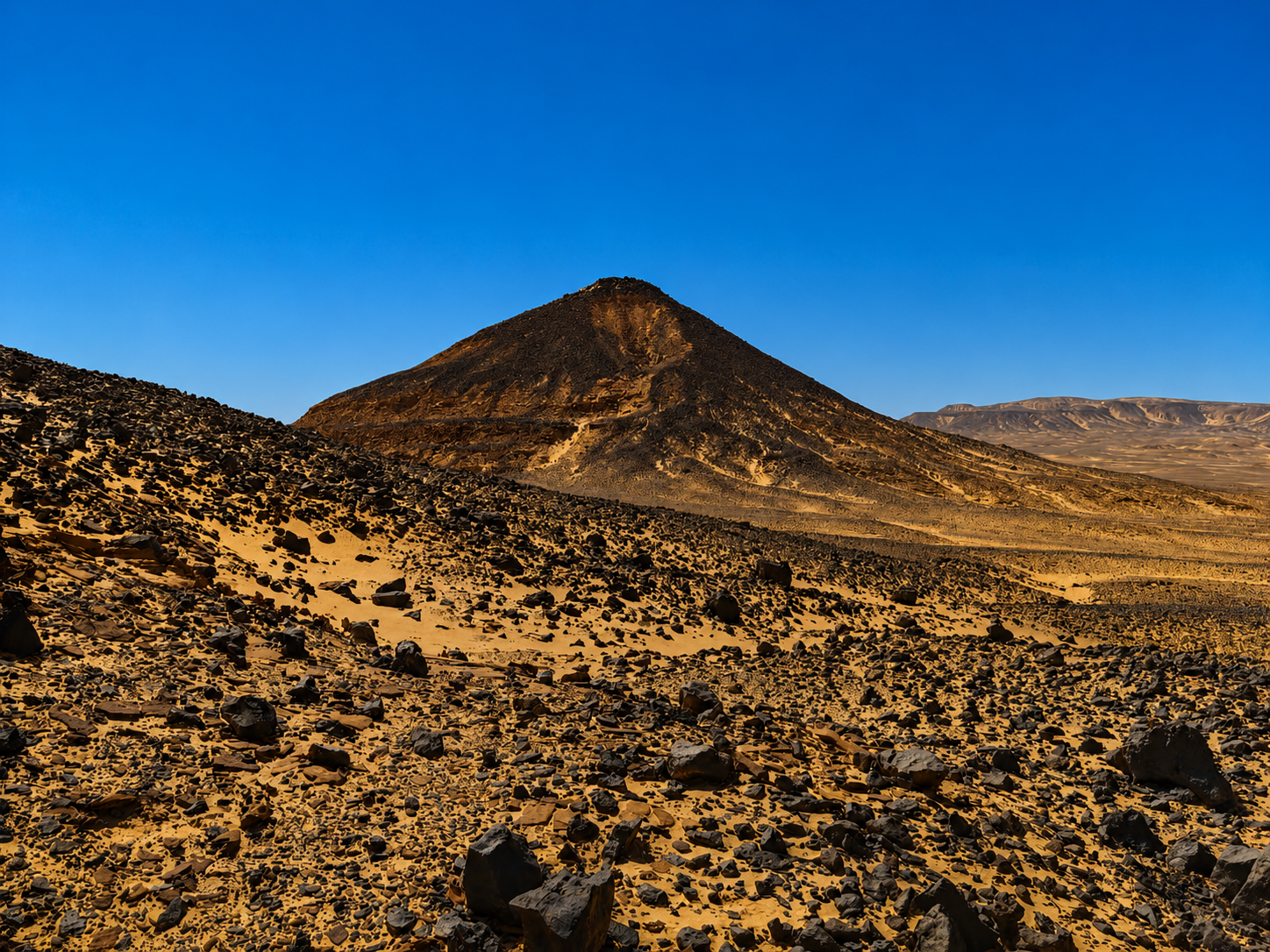
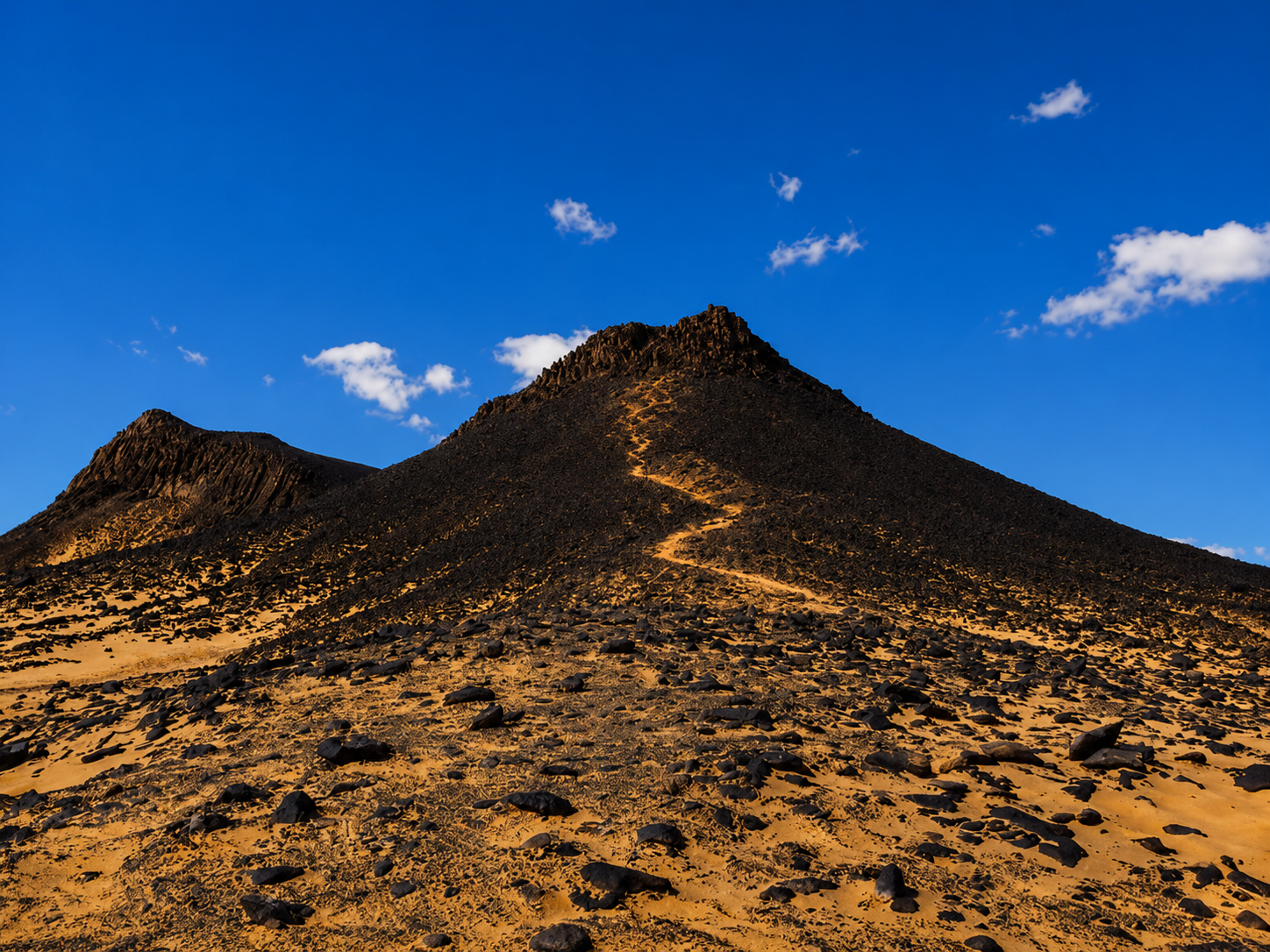
However, most classic itineraries use daytime to explore the Black Desert, Crystal Mountain and Agabat, then reach the White Desert for sunset and camping.
That flow works naturally:
Black Desert by day → White Desert at night.
Our White Desert vs Black Desert Egypt guide explains why they work better together than as competing destinations.
The White Desert is particularly strong for couples.
After sunset, the experience becomes extremely simple.
Dinner.
Tea.
Quiet.
Stars.
There are no nightclubs.
No hotel lobby.
No city traffic.
For couples who value experiences over conventional luxury, a private camp can feel much more memorable than another expensive hotel room.
If comfort matters too, see Luxury Desert Camping Egypt.
Children can enjoy stargazing enormously because the activity requires almost no equipment.
The easiest approach is not to turn it into an astronomy lesson.
Start with simple questions:
Can you find the brightest object?
Can you see a satellite moving?
Can you identify a pattern?
How many stars become visible after ten minutes without phone lights?
This makes dark adaptation itself part of the experience.
Families still need to consider:
long road transfers,
cold,
camp toilets,
and basic sleeping arrangements.
See our Egypt Desert Safari for Families guide before booking.
Darkness is what makes stargazing beautiful.
It is also what makes navigation more difficult.
Do not walk far away from camp alone because you want a darker foreground.
The desert contains:
uneven ground,
formations,
vehicle tracks,
and features that are much harder to recognize after dark.
Phone reception may also be limited in remote desert environments.
Stay within the area your guide identifies as safe.
For broader planning, use Is Egypt Desert Safari Safe?.
Astronomers often prefer dim red light because it is less disruptive to dark adaptation than a powerful white flashlight.
But safety remains more important than astronomy.
Use enough light to move safely around:
tent lines,
rocks,
camp equipment,
and cooking areas.
Once seated and settled:
reduce unnecessary light.
The goal is not:
total darkness at any cost.
It is:
controlled lighting.
Stargazing involves sitting still.
That makes cold feel stronger.
During a safari you may be warm while walking around at sunset.
An hour later, sitting quietly beneath the sky, you may feel completely different.
Bring appropriate layers.
Winter travelers should take nighttime clothing seriously.
A useful combination can include:
long trousers,
warm socks,
base layer,
fleece or sweater,
jacket.
The exact requirement depends on date and weather.
Use our White Desert Egypt Packing List rather than relying on Cairo weather alone.
You do not need much.
A normal traveler can enjoy the night with:
warm clothes,
a headlamp,
a phone astronomy app,
optional binoculars,
a power bank,
and something comfortable to sit on.
For photographers, add the equipment covered in our dedicated photography guide.
Avoid carrying excessive specialist equipment unless astronomy is the main reason for your trip.
Yes.
A sky-map app can help identify:
constellations,
planets,
the Milky Way position,
moonrise,
moonset.
But turn the screen brightness down.
A fully bright phone screen can damage the dark adaptation you just spent 20 minutes developing.
This is particularly annoying when several people are stargazing together.
For the darkest astrophotography conditions, aim for:
minimal moonlight,
clear skies,
low haze,
low wind,
low artificial lighting.
A tripod is essential for serious long exposures.
You may also need:
fast lens,
manual focus,
remote shutter or timer,
spare batteries.
But we intentionally won’t turn this page into a complete camera tutorial.
That’s what White Desert Egypt Photography Guide is for.
This article should rank around the experience and planning intent, while the other page handles photography technique.
Do not cancel your trip simply because you discover it coincides with a full moon.
Your astrophotography plan changes.
Instead of chasing the faintest stars, use moonlight creatively.
White chalk reflects light beautifully.
A full moon can reveal:
formation shapes,
surface texture,
long shadows,
silhouettes.
The sky will contain fewer visible faint stars.
But the landscape may become easier to photograph.
This is why I would describe full moon as:
bad for maximum star visibility, excellent for a different style of night landscape.
Potentially, if a meteor shower coincides with your trip and observing conditions are suitable.
But do not promise a meteor shower to every traveler.
Meteor activity has specific annual peaks.
Moonlight and weather also influence visibility.
If a major shower matters to your travel plan, check its current peak date with a reputable astronomy source shortly before booking.
NASA specifically notes that meteor-shower viewing benefits from dark areas away from city lights and can be significantly affected by bright moonlight.
It is certainly one of the strongest desert camping experiences for travelers already visiting Cairo and the Western Desert.
But be careful with absolute claims like:
“the #1 darkest place in Egypt.”
Egypt contains enormous remote desert regions.
Without comparable professional sky-brightness measurements, that claim would be difficult to support.
What we can say confidently is:
The White Desert combines:
remote terrain,
limited artificial lighting,
organized camping,
extraordinary foreground formations,
and practical access through Bahariya.
That combination makes it an exceptional travel stargazing destination, even without claiming a national darkness ranking.
Both can offer remote desert skies.
Choose White Desert if you want:
chalk formations,
overnight mobile camping,
2-day access from Cairo,
photography foregrounds.
Choose Siwa Oasis if you want:
oasis accommodation,
Great Sand Sea excursions,
salt lakes,
a longer 3–4 day trip.
For a pure overnight camping atmosphere from Cairo:
White Desert has the advantage.
Fayoum is much easier for short trips from Cairo.
But the White Desert provides a deeper wilderness feeling.
Choose Fayoum if:
you have one night,
want less driving,
or are traveling with very young children.
Choose White Desert if:
the night sky and remote camp are among your priorities.
See Best Desert Safari From Cairo for the complete comparison.
For many travelers:
yes.
But only if you stay overnight.
Driving all the way to the White Desert and returning before the night experience makes much less sense for someone whose main interest is stars.
The overnight adds:
sunset,
dinner,
darkness,
stars,
camping,
sunrise.
That’s why our Is White Desert Egypt Worth Visiting? guide recommends the overnight format for most travelers who have enough time.
There is no separate astronomical admission ticket.
Stargazing comes naturally with an overnight White Desert safari.
Your main costs are:
Cairo transportation,
4×4 safari,
guide,
camp,
food,
protected-area arrangements.
See our current White Desert Egypt Cost guide for the live tour-price breakdown.
Do not choose the cheapest trip purely because you want to see the stars.
The quality of:
camp location,
guide,
bedding,
and overall logistics
matters much more when you’re spending the night outdoors.
Many remote locations have dark skies.
What makes the White Desert special is the foreground.
You are not looking at stars above an empty flat field.
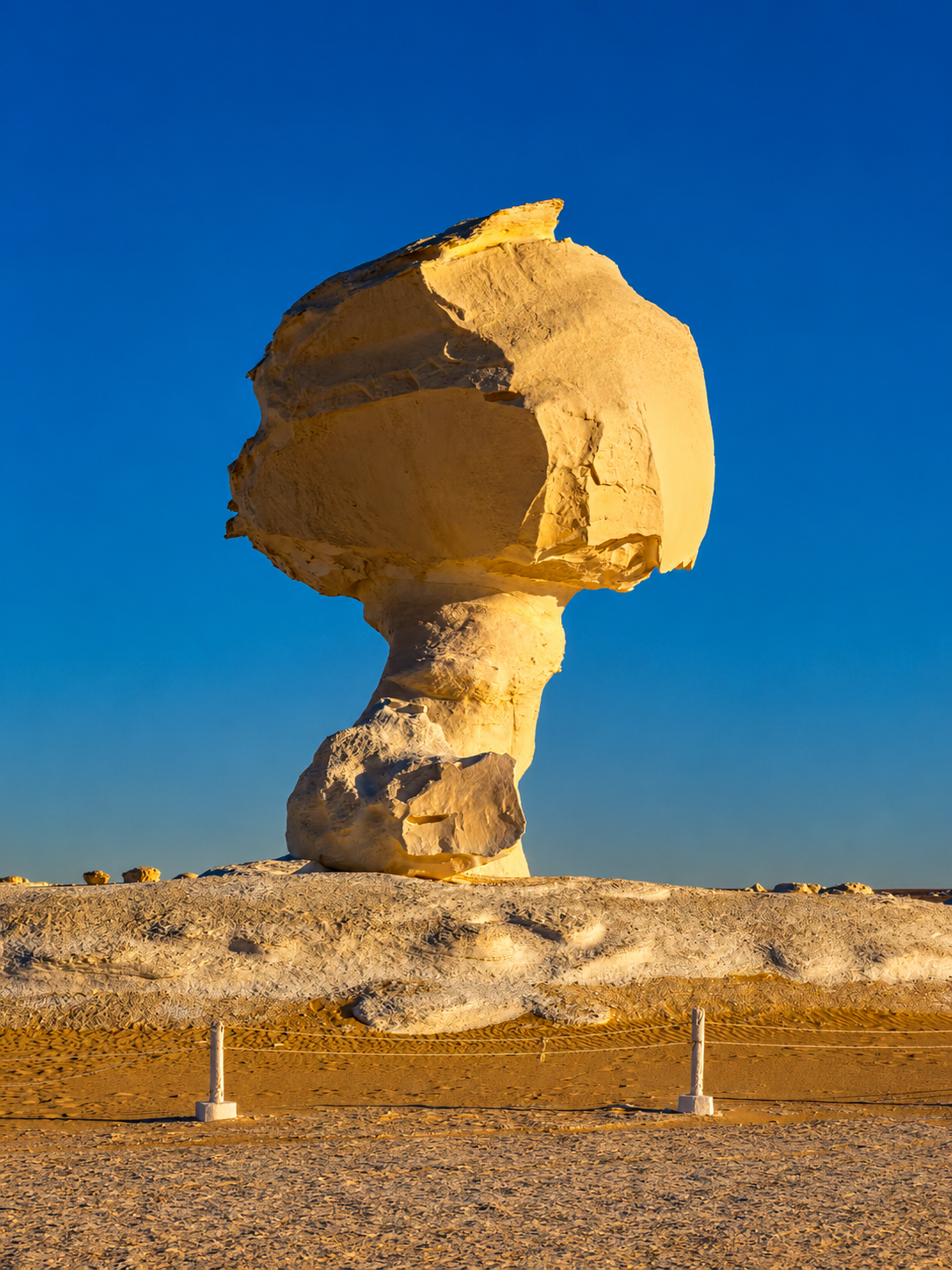
You’re looking upward while surrounded by formations that resemble:
mushrooms,
towers,
animals,
domes.
The formations become silhouettes under stars or pale sculptures under moonlight.
That is the difference between:
astronomy and a travel experience involving astronomy.
The White Desert excels at the second.
For the geological story behind those shapes, read White Desert Egypt Formations & Geology.
The desire for darkness should never become an excuse for damaging a protected area.
Do not:
drive away from permitted tracks to find a darker foreground,
climb fragile formations,
move rocks for photographs,
collect fossils,
leave equipment or rubbish behind.
The White Desert is an official Egyptian protected area with managed access and camping regulations.
The perfect astrophotography composition is not worth damaging the landscape that created it.
For a first visit, I recommend:
Day 1
Cairo → Bahariya Oasis → Black Desert → Crystal Mountain → Agabat → White Desert → sunset → dinner → stargazing → camping
The nighttime section should remain relaxed.
Don’t schedule ten artificial activities after sunset.
Eat.
Reduce the lights.
Give your eyes time.
Look up.
Day 2
Sunrise → additional White Desert exploration → Bahariya → Cairo
This gives you four completely different light conditions:
late afternoon,
sunset,
darkness,
sunrise.
For most first-time visitors, that is enough to understand why an overnight White Desert trip is so much stronger than a day trip.
Explore the 1 Night 2 Days White Desert Tour From Cairo for the classic format.
If night photography is one of your main trip objectives, use the 2 Nights 3 Days White Desert Camping Tour instead.
Yes. White Desert Egypt is an excellent stargazing destination when you stay overnight and plan around the right conditions.
Its strengths are not based on one dramatic marketing claim.
They come from a combination of practical advantages:
remoteness from major urban lighting,
overnight desert camping,
wide horizons,
limited nearby infrastructure,
and extraordinary chalk formations that create a memorable foreground.
For maximum star visibility:
choose a night close to new moon.
For moonlit landscapes:
choose a brighter moon.
For the strongest first-time experience:
book 2 days / 1 night.
For astrophotography:
consider 3 days / 2 nights.
And remember that even the perfect moon phase cannot guarantee perfect stars.
Clouds, haze, wind and atmospheric conditions still matter.
The best approach is not to travel to the White Desert expecting a guaranteed photograph copied from Instagram.
Travel because the entire night is part of the experience.
You finish a day of 4×4 exploration.
The sun disappears behind chalk formations.
Dinner is prepared.
The camp grows quieter.
Lights are reduced.
Your eyes adjust.
And one by one, stars that were invisible a few minutes earlier begin appearing.
That progression—from bright desert afternoon to almost complete darkness—is one of the strongest reasons to spend a night in the White Desert rather than visiting only during daylight.
Continue planning with:
White Desert Egypt Formations & Geology
Best Time to Visit White Desert Egypt
White Desert Egypt Photography Guide
Is White Desert Egypt Worth Visiting?