White Desert Camel Safari Egypt: Trekking, Camping & Best Routes

A White Desert camel safari is one of the slowest and most immersive ways to experience Egypt’s Western Desert. Instead of moving quickly between attractions by 4×4, a camel trek allows travelers to cross dunes, valleys and chalk landscapes at a walking pace, camp in remote desert areas and experience the silence of the White Desert over several days.

The experience is very different from a standard White Desert Egypt tour.

A normal safari may follow:

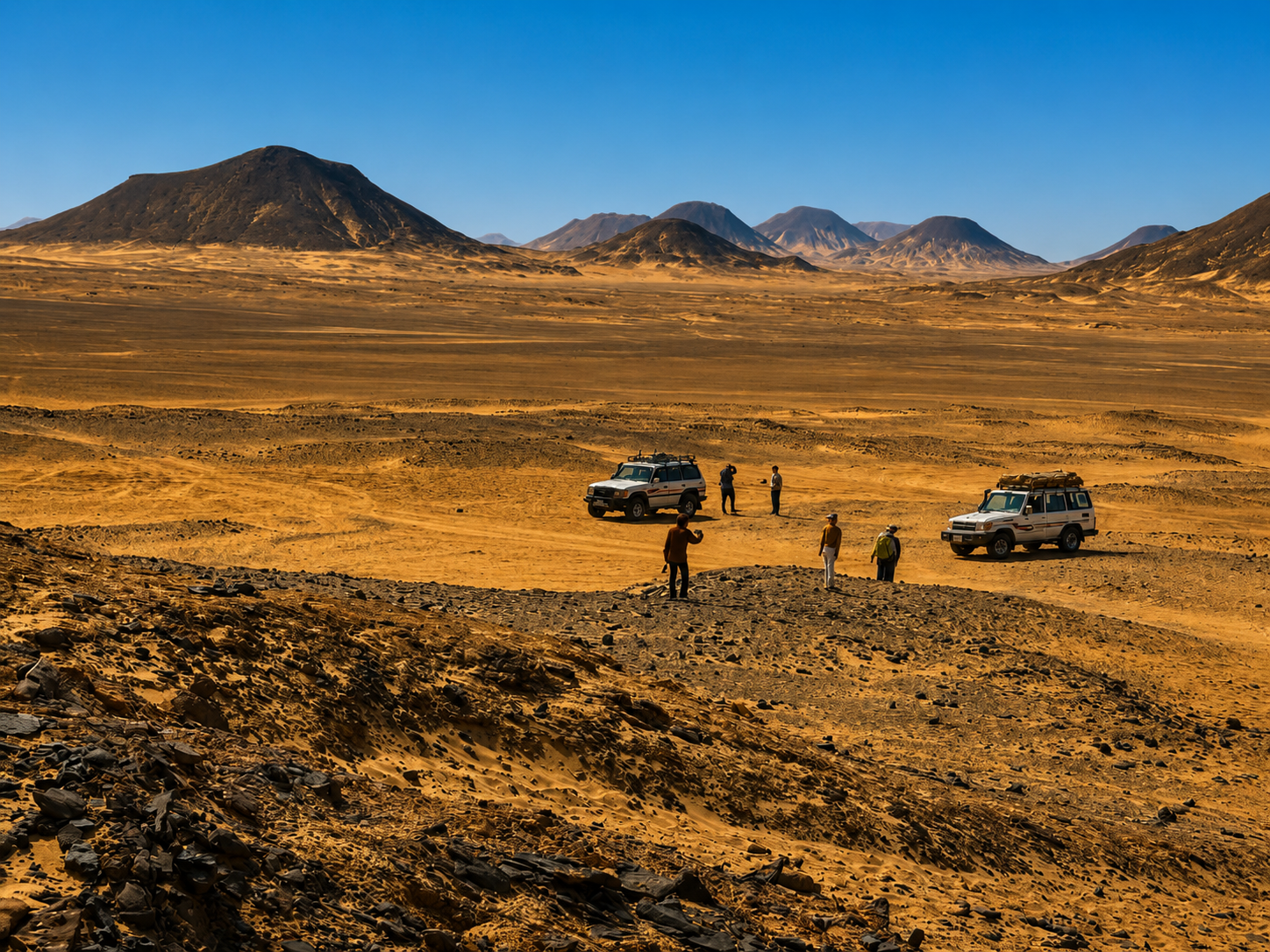
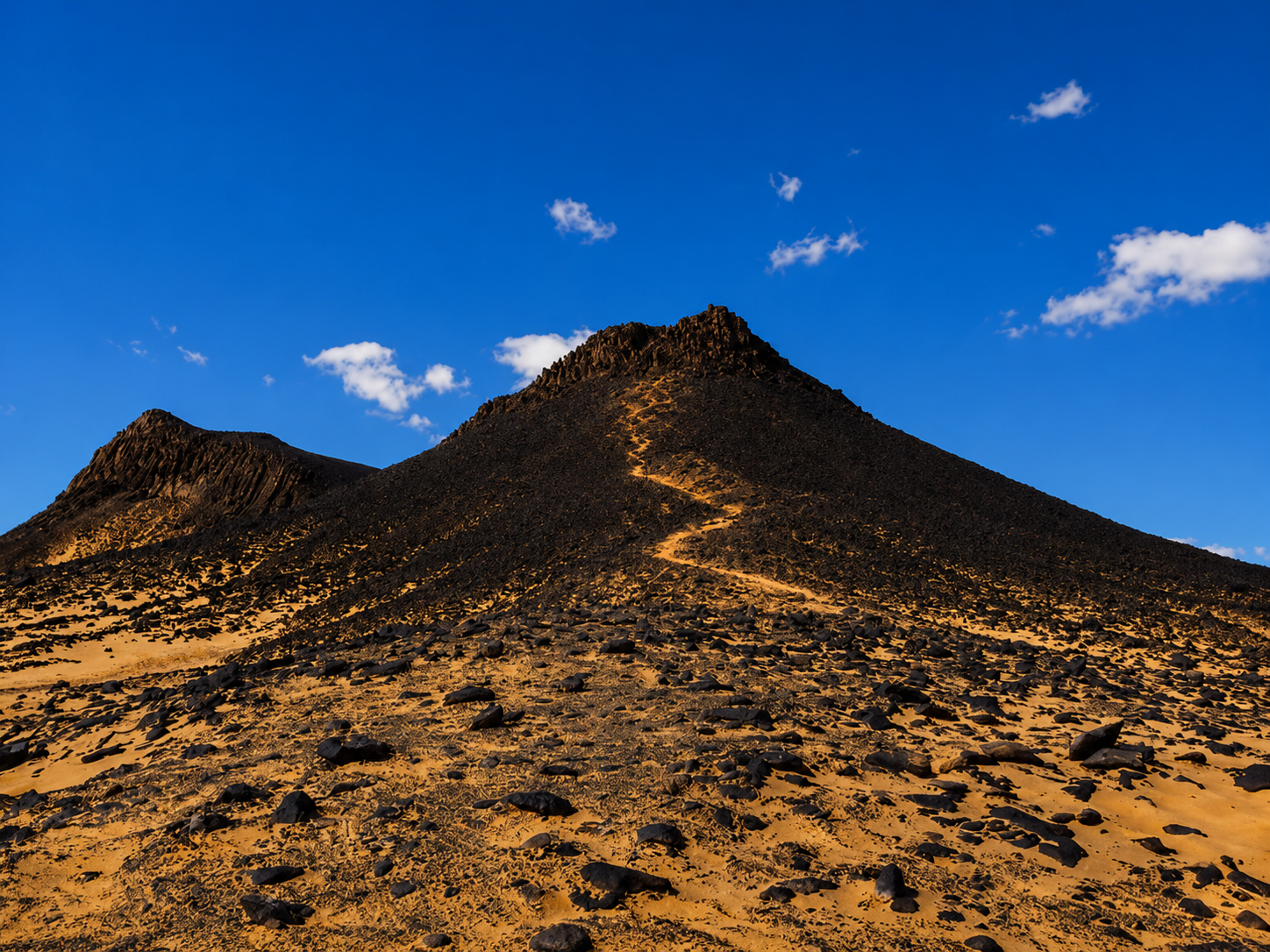
Cairo → Bahariya Oasis → Black Desert → Crystal Mountain → Agabat → White Desert → camping → Cairo

and complete the main journey in one or two days.

A true camel expedition moves much more slowly.

The support vehicle may transport travelers and equipment to the starting area, but once the caravan begins, the focus changes from seeing the maximum number of landmarks to actually traveling through the desert.

Egypt’s official tourism portal specifically lists camel riding alongside hiking, camping and 4×4 exploration as ways to experience the White Desert and notes that desert excursions around Farafra can range from one to ten nights depending on the style of trip.

For travelers looking for silence, camping, landscape photography and a deeper connection with the desert, camel trekking can be one of the most memorable ways to experience the region.

What Is a White Desert Camel Safari?

A White Desert camel safari is a guided desert journey where camels are used for riding, carrying supplies, or both.

There are two very different experiences that are often marketed under the same name.

Short Camel Riding Experience

This may involve riding a camel for a relatively short section of a larger 4×4 safari.

The vehicle still handles most transportation.

This format is useful for travelers who want to try camel riding without committing to several days in the saddle.

Multi-Day Camel Trek

A real camel trek is different.

You travel through the desert with a caravan over several days.

Camels may carry:

  • Riders
  • Water
  • Food
  • Tents
  • Bedding
  • Cooking equipment
  • Personal bags
  • Other camp supplies

A support 4×4 may also be used depending on the itinerary.

The journey becomes less about quickly reaching the next tourist stop and more about the experience of crossing the desert itself.

For a true White Desert camel safari, this second format is usually what experienced adventure travelers are looking for.

Why Explore the White Desert by Camel?

The biggest advantage is pace.

A 4×4 lets you cover enormous distances quickly.

That is excellent when you have only one or two days.

A camel caravan does the opposite.

It slows everything down.

You notice:

the texture of the sand,

the changing shape of cliffs,

animal tracks,

small plants,

wind patterns,

rock formations,

and subtle changes in the landscape.

Places that seem like brief transitions during a Jeep safari become part of the experience.

The silence also changes.

Without a vehicle engine running, the desert feels much more open.

For some travelers, this slower rhythm is the main reason to choose a camel safari.

Is Camel Trekking Traditional in Egypt's Western Desert?

Camels have been used for transportation across North African deserts for centuries.

Before modern vehicles, desert travel depended heavily on caravan routes connecting oases, settlements and trade networks.

Modern camel safaris are tourism experiences rather than recreations of ancient life, but they still use a mode of transport historically associated with long-distance desert travel.

Egypt’s official tourism material confirms that the White Desert can be explored by camel as well as on foot or by 4×4.

The important distinction is that modern organized trips also depend on contemporary logistics:

permits,

water supplies,

camping equipment,

emergency planning,

and sometimes support vehicles.

So a camel safari can feel traditional without pretending modern safety and logistics do not exist.

Where Do White Desert Camel Safaris Start?

There is no single universal starting point.

The two main gateway areas are:

Bahariya Oasis

and

Farafra Oasis.

Starting From Bahariya Oasis

Bahariya Oasis is particularly practical for travelers arriving from Cairo.

The road journey from Cairo reaches Bahariya first, after which a 4×4 can transport travelers toward the camel-trekking starting area.

Some multi-day camel programs in the region use Crystal Mountain or Agabat as the point where travelers meet the camel caravan and begin the slower section of the trip. Current Western Desert camel itineraries show this mixed transport model in practice.

Starting From Farafra Oasis

Farafra is geographically closer to the White Desert.

Experience Egypt places the White Desert approximately 40 km from Farafra and describes the oasis as an ideal base for desert excursions including camel riding.

Farafra can therefore make sense for longer trekking programs and travelers already moving through the Western Desert.

For most visitors starting in Cairo, however, Bahariya remains the more practical gateway.

White Desert Camel Safari Route From Cairo

2 Nights 3 Days White Desert & Dejara Cave Tour from Cairo

2 Nights 3 Days Tour in White Desert and Bahariya Oasis

Full Day Tour in West Bank of Luxor

Siwa Program by Comfortable Bus from Cairo

One Day Tour to the White Desert from Cairo

One Day Fayoum Tour from Cairo

National Museum of Egyptian Civilization Tour

4 Days 3 Nights Package to Luxor from Cairo by Sleeper Train

Giza Pyramids & Grand Egyptian Museum Tour

2 Nights 3 Days Fayoum and White Desert Tour from Cairo

5 Nights 6 Days Egypt Oasis Tour from Cairo

Full Day Tour in East Bank of Luxor

6 Nights 7 Days Cairo, Siwa, Marsa Matrouh & White Desert Tour

Full Day Tour in Aswan

Full Day Tour to Alexandria from Cairo

4 Days Siwa Oasis Tour from Cairo

3 Nights 4 Days Cairo White Desert Tour

3 Days 2 Nights Tour from Cairo to Dakhla and Luxor

2 Nights 3 Days Camping Tour in White Desert

2 Nights 3 Days Cairo – Siwa Tour

2 Nights 3 Days Cairo – Siwa Tour

2 Days Tour in Cairo and Giza

1 Night Camping in Fayoum Desert from Cairo

1 Night 2 Days White Desert Tour from Cairo

A typical journey from Cairo can begin like this:

Cairo → Bahariya Oasis → 4×4 transfer → Crystal Mountain / Agabat region → meet camel caravan → multi-day desert trek → Old and New White Desert → 4×4 return → Bahariya → Cairo.

The exact route depends on:

number of days,

weather,

current access,

protected-area regulations,

water planning,

fitness level,

and the operator’s chosen trekking route.

The important thing is not to assume that you ride a camel all the way from Cairo.

You don’t.

Road transportation gets you into the Western Desert.

A support vehicle or 4×4 usually gets you deeper into the safari region.

Then the camel journey begins.

For the overall geography, read our White Desert Egypt Map & Route Guide.

White Desert Camel Safari Through Crystal Mountain

Crystal Mountain Egypt is one of the important landmarks on many longer Western Desert routes.

The site is known for exposed calcite crystals and its unusual karst geology.

On a normal 4×4 safari, you may stop here relatively briefly.

On a longer camel-based journey, the surrounding region can become part of the transition into deeper desert terrain.

Some current camel trekking itineraries begin the camel section around the Crystal Mountain area after using a vehicle from Bahariya.

This makes logistical sense.

Travelers avoid using valuable trekking days simply reaching the desert from Cairo and begin the camel experience once they are already inside the landscape.

Camel Trekking Through Agabat Valley

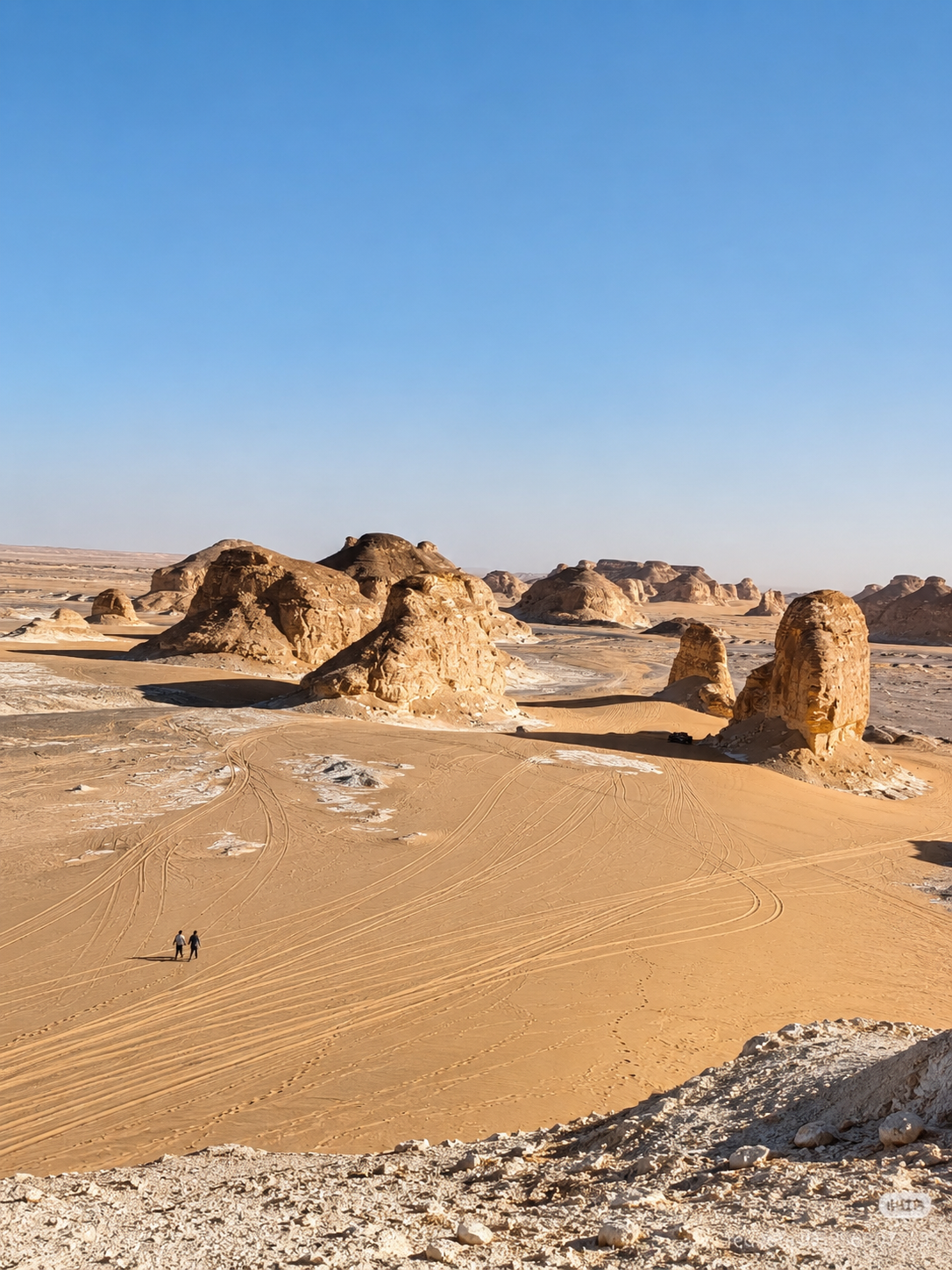
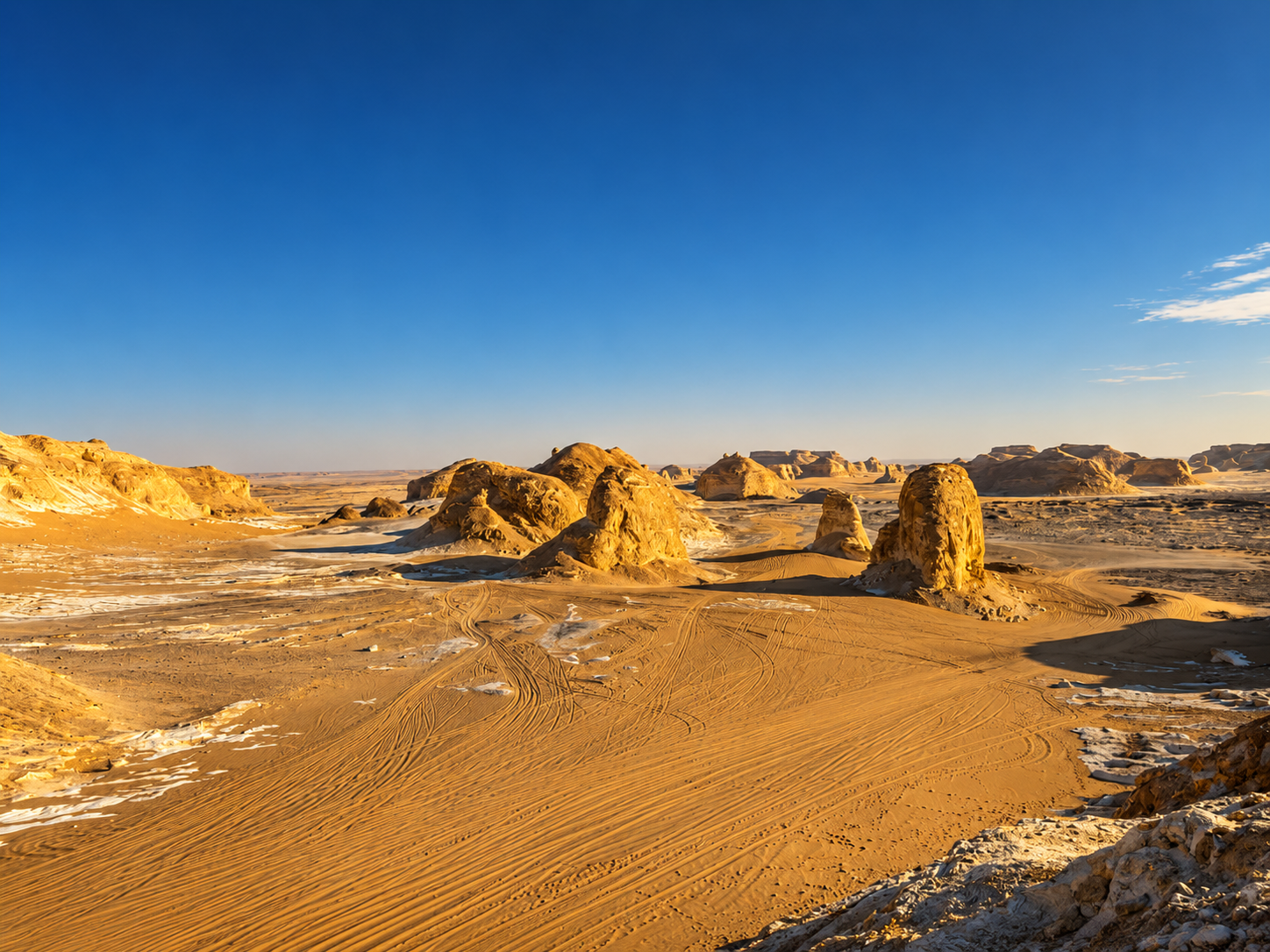
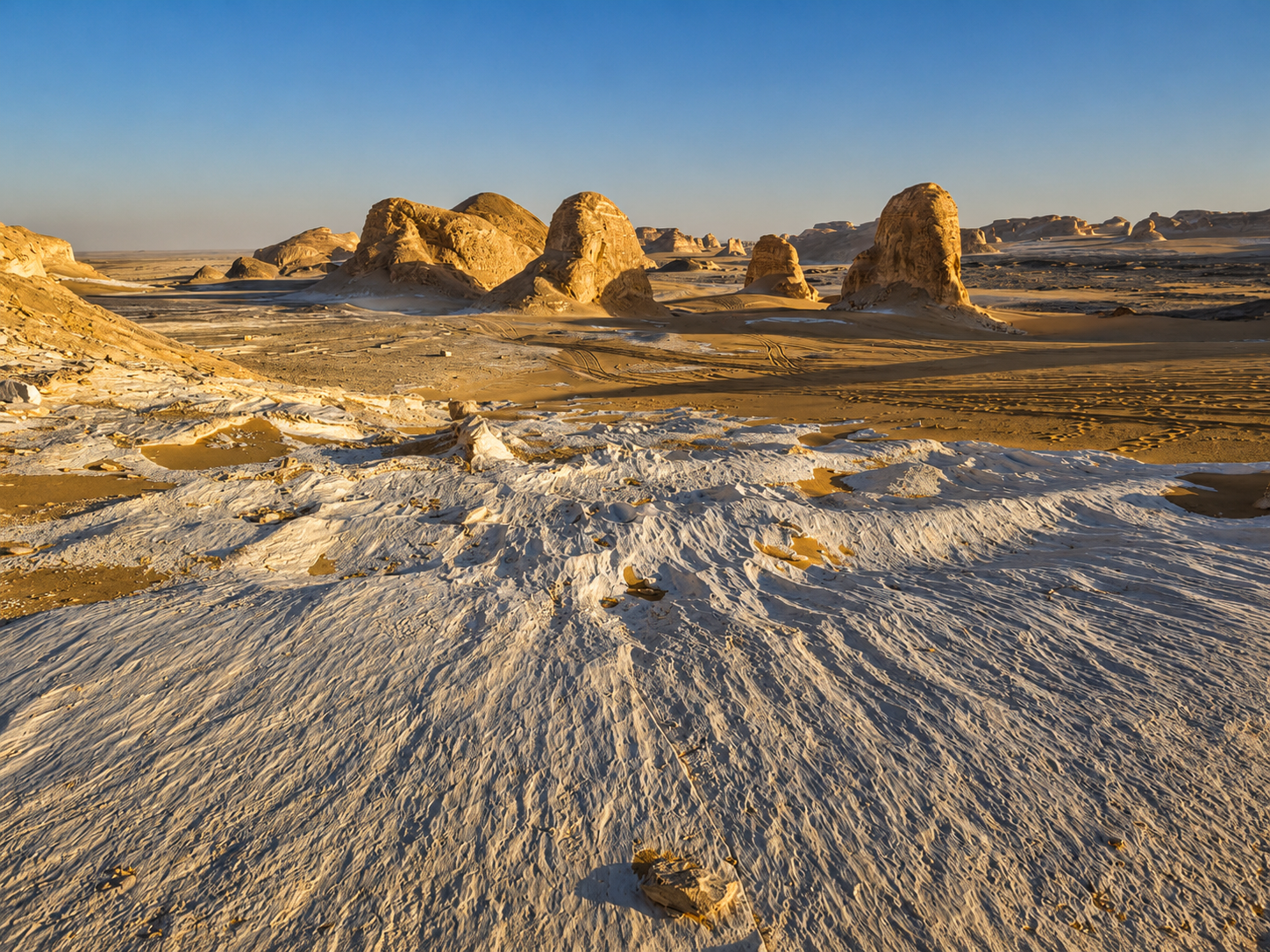
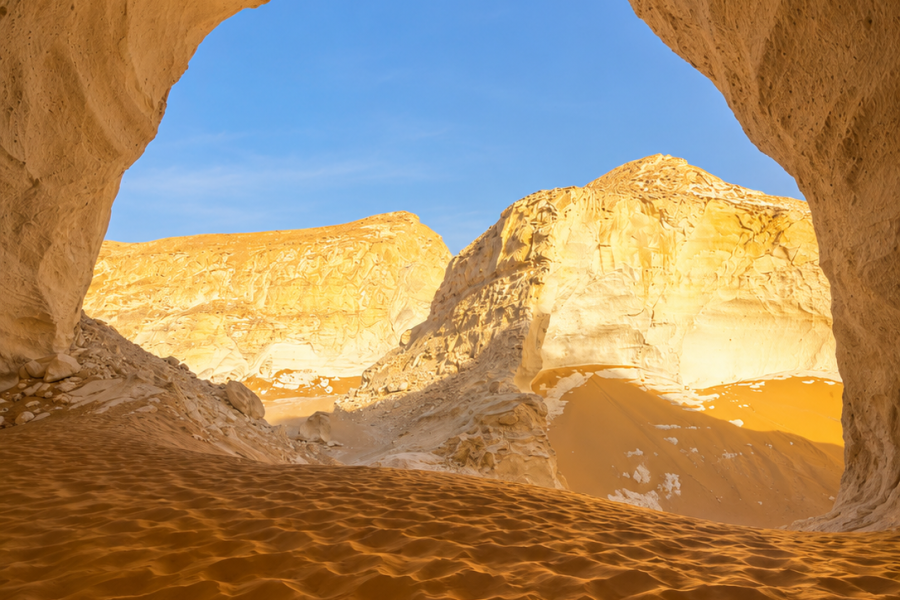
Agabat Valley Egypt is one of the strongest landscapes for a slower expedition.

The valley combines:

golden sand,

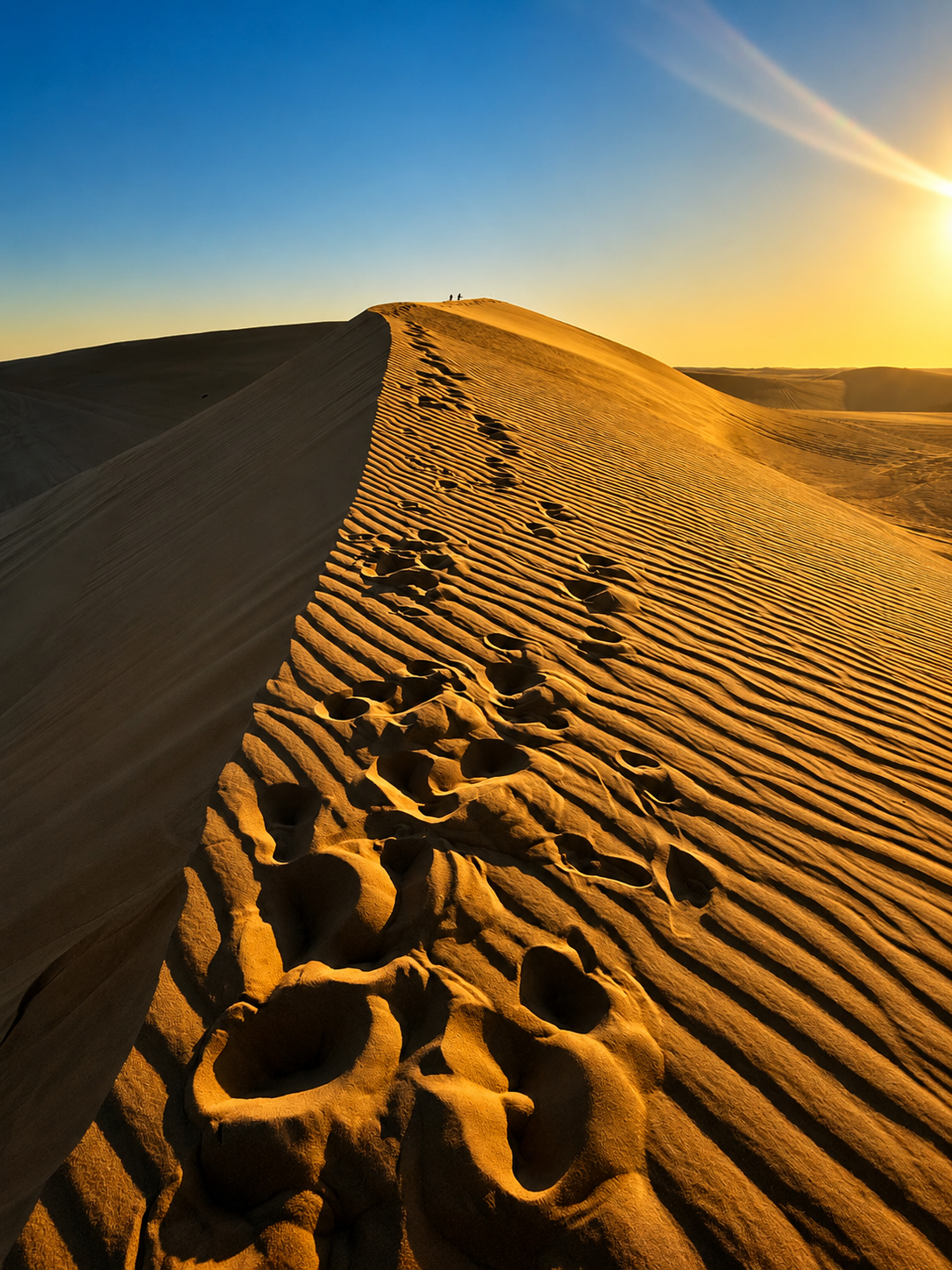
large dunes,

pale cliffs,

isolated rock formations,

and huge open views.

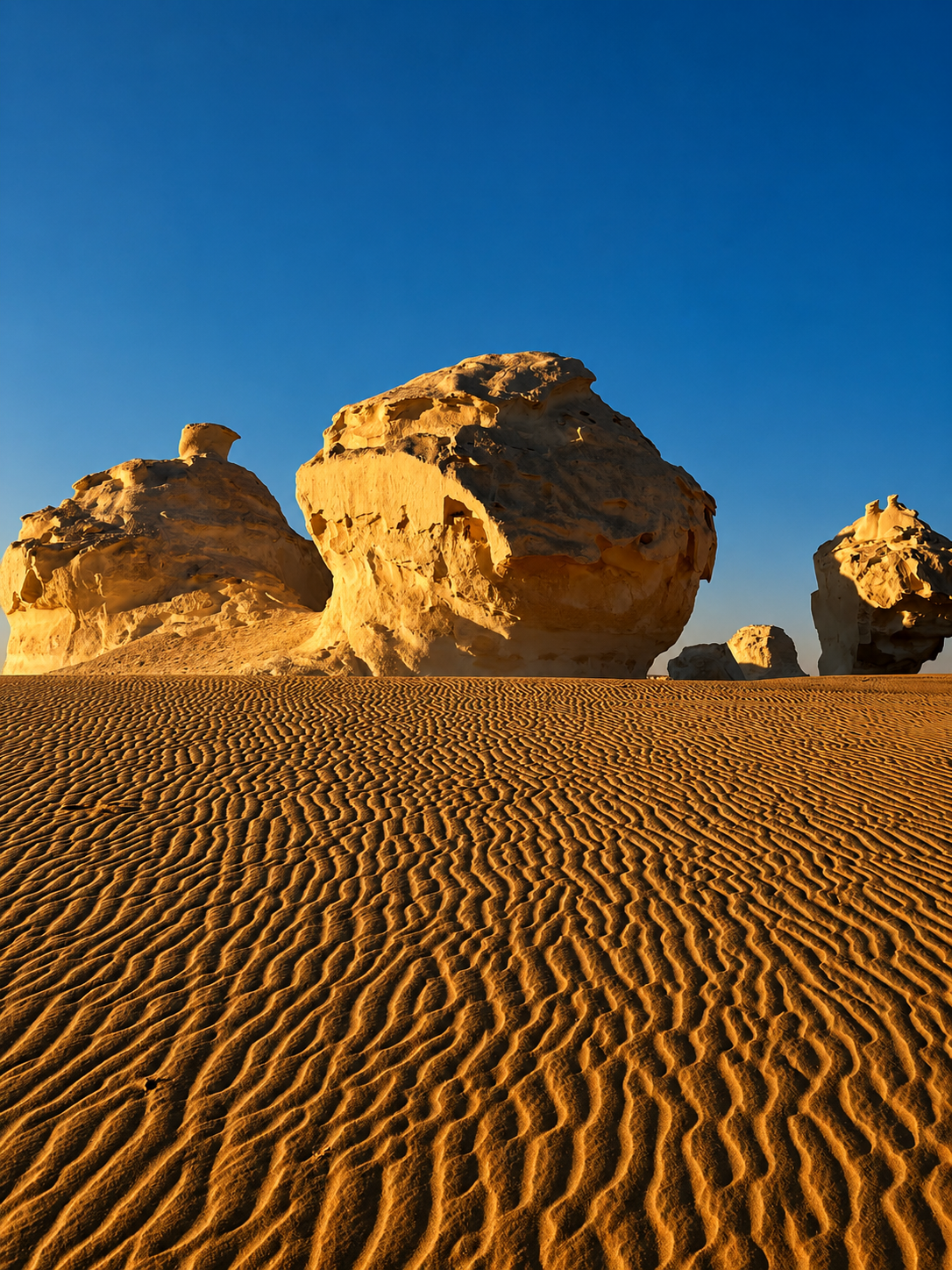
Experience Egypt describes Aqabat Valley as famous for its soft golden sand, dunes and white cliffs.

In a 4×4, you can cross large sections relatively quickly.

On camel or on foot, the same landscape feels completely different.

The scale becomes much more obvious.

The distance between formations matters.

The journey becomes part of the scenery.

That is why Agabat works particularly well as part of a camel or trekking itinerary.

Old White Desert vs New White Desert

Longer camel safaris may distinguish between the Old White Desert and New White Desert.

These names are commonly used by local guides and tour operators to describe different sections of the broader landscape.

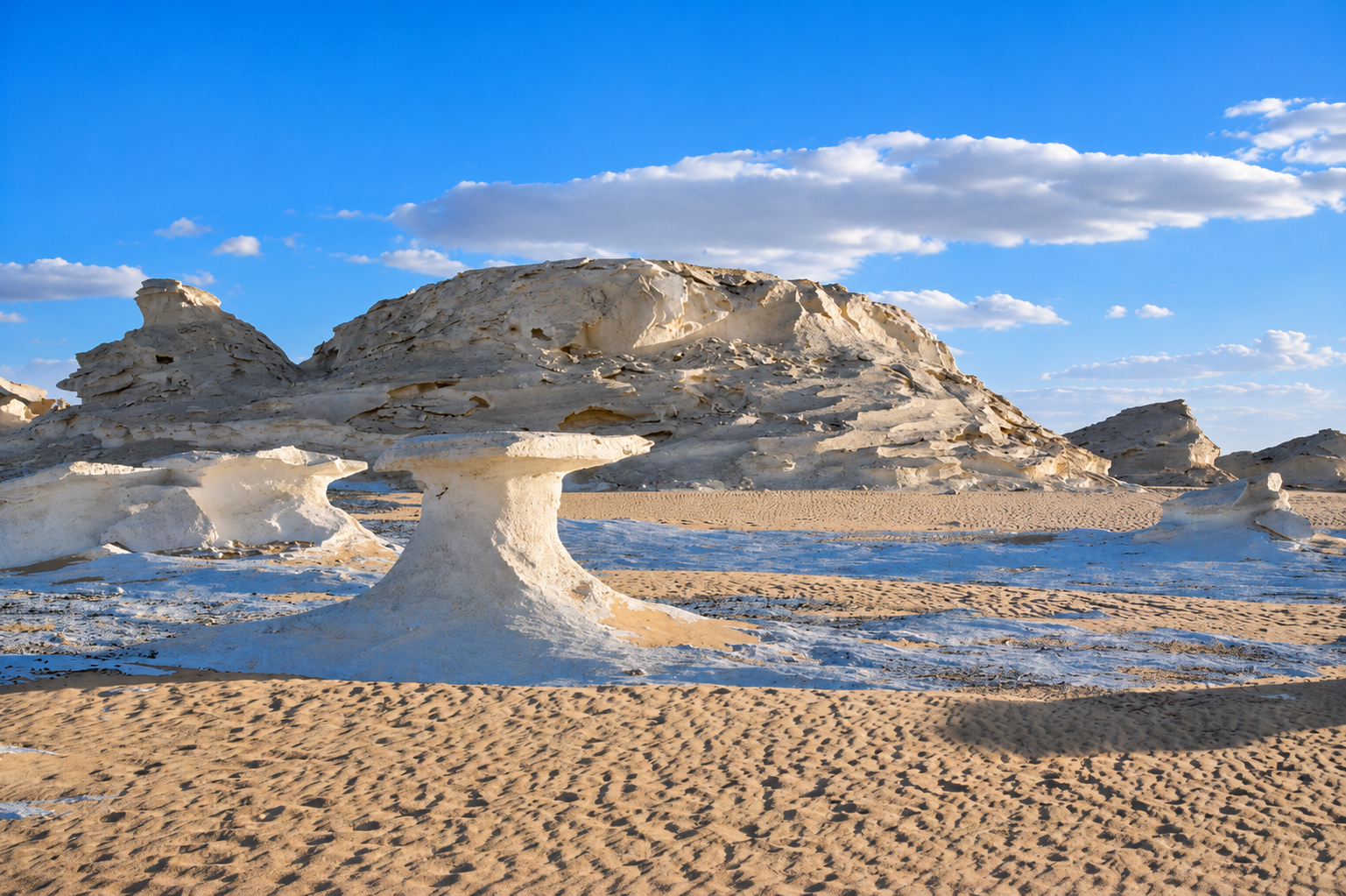
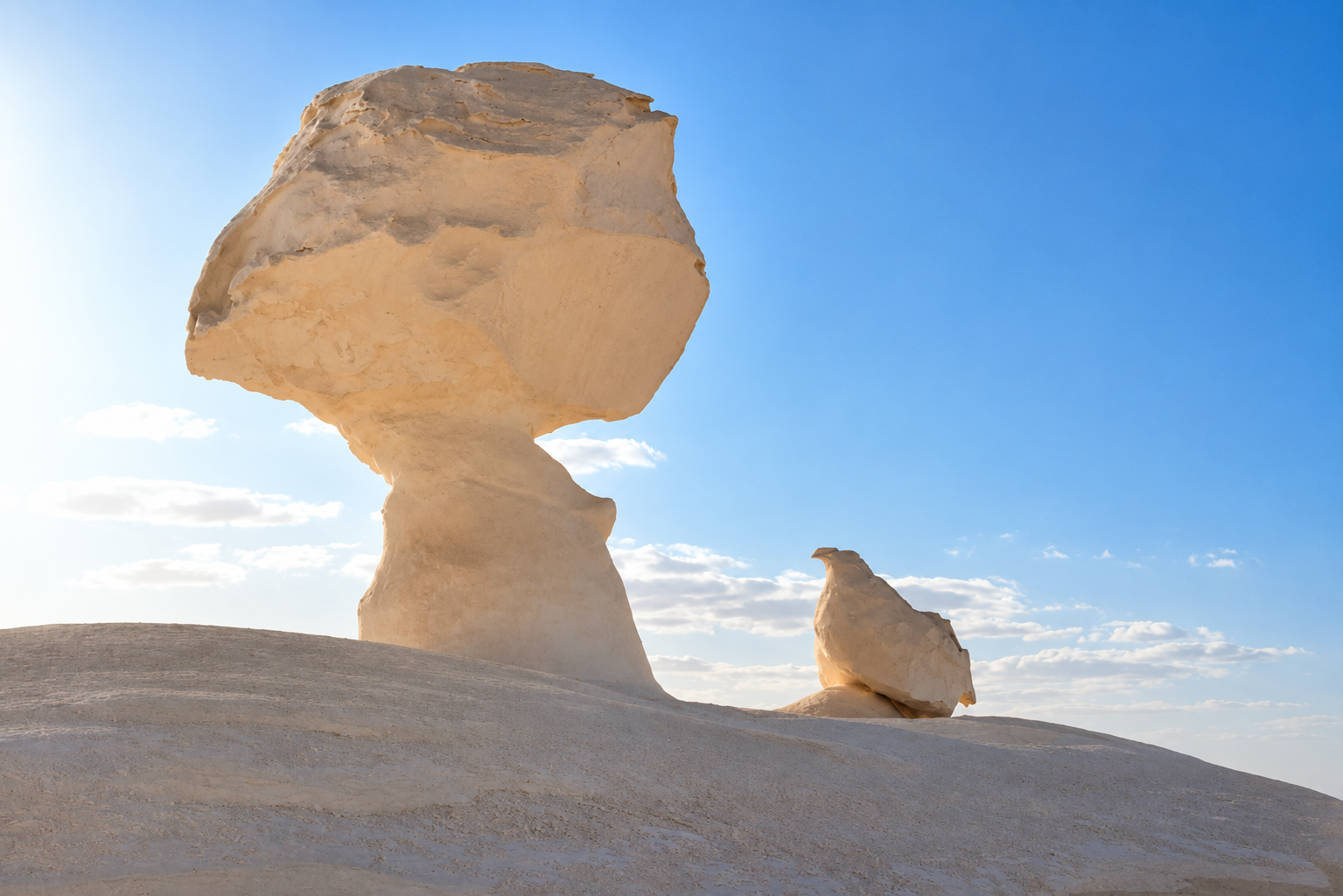
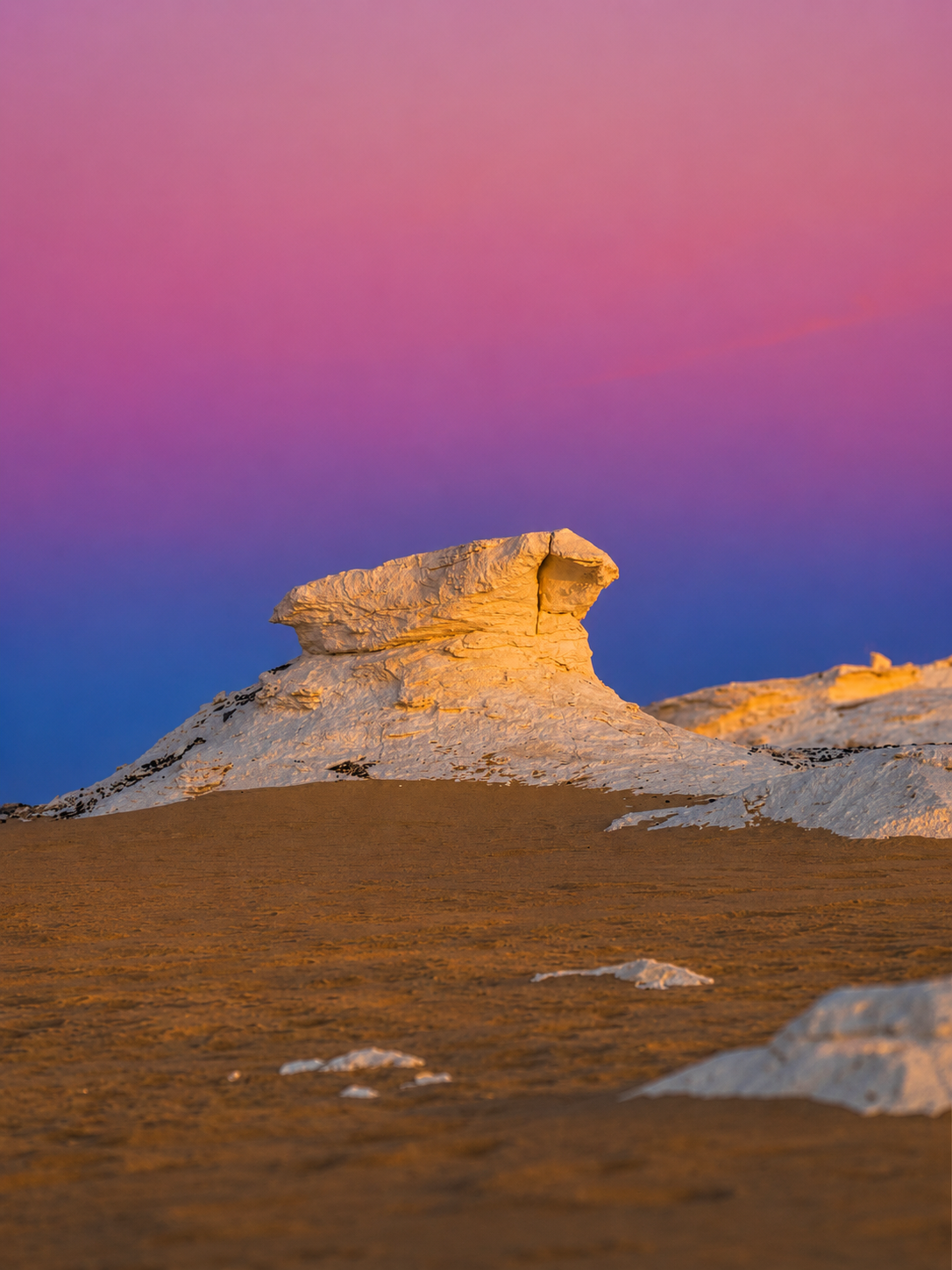
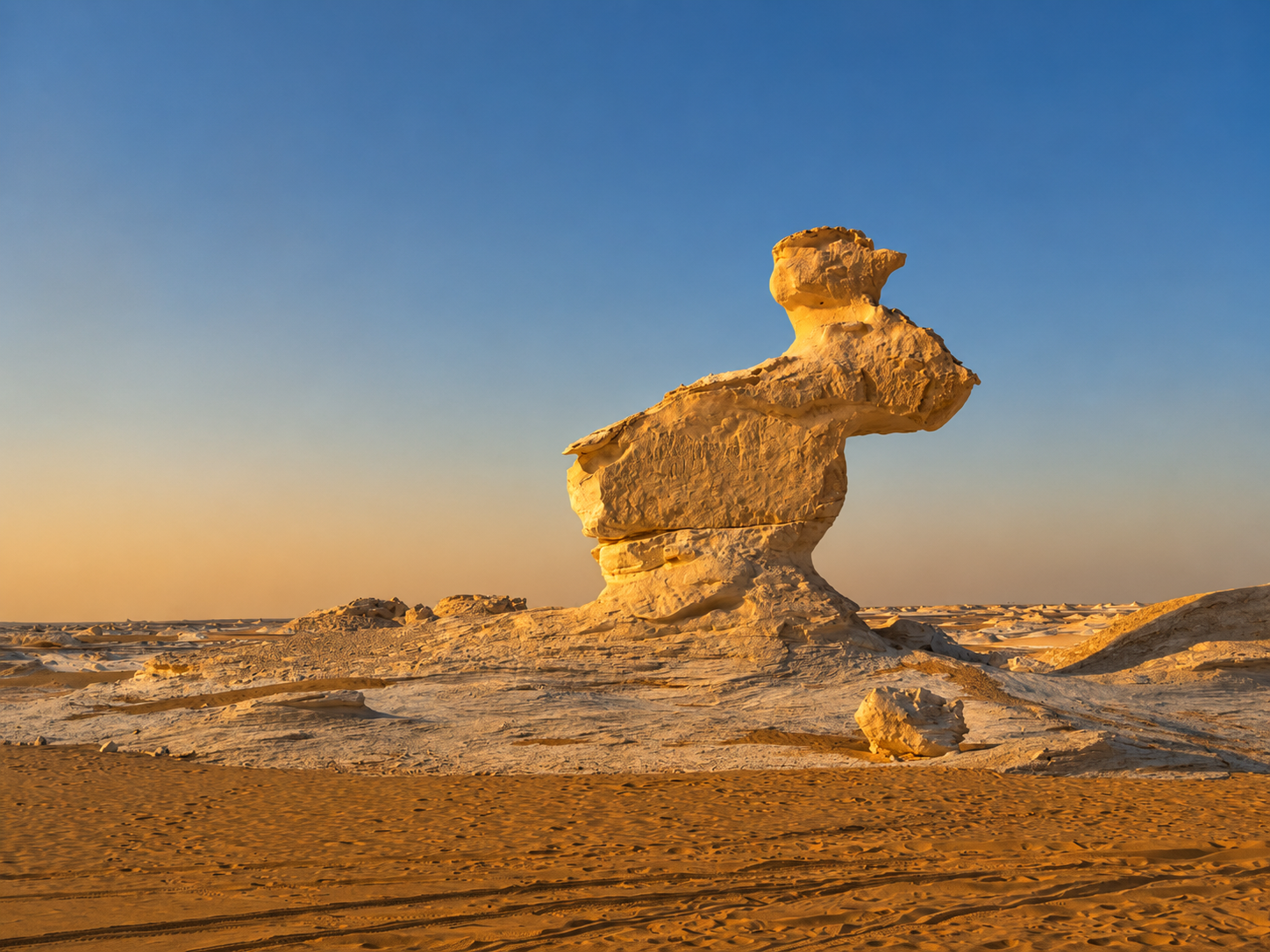
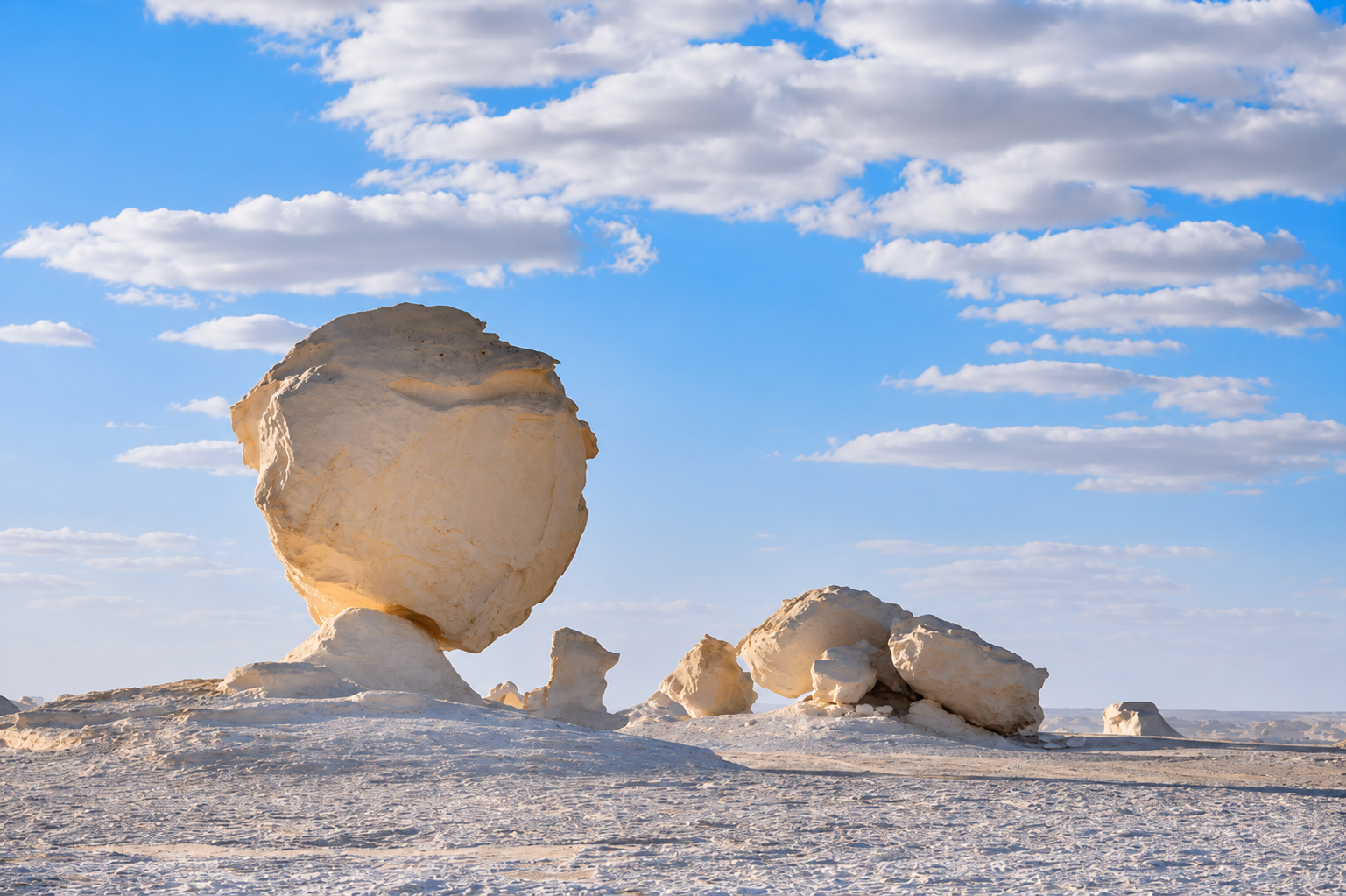
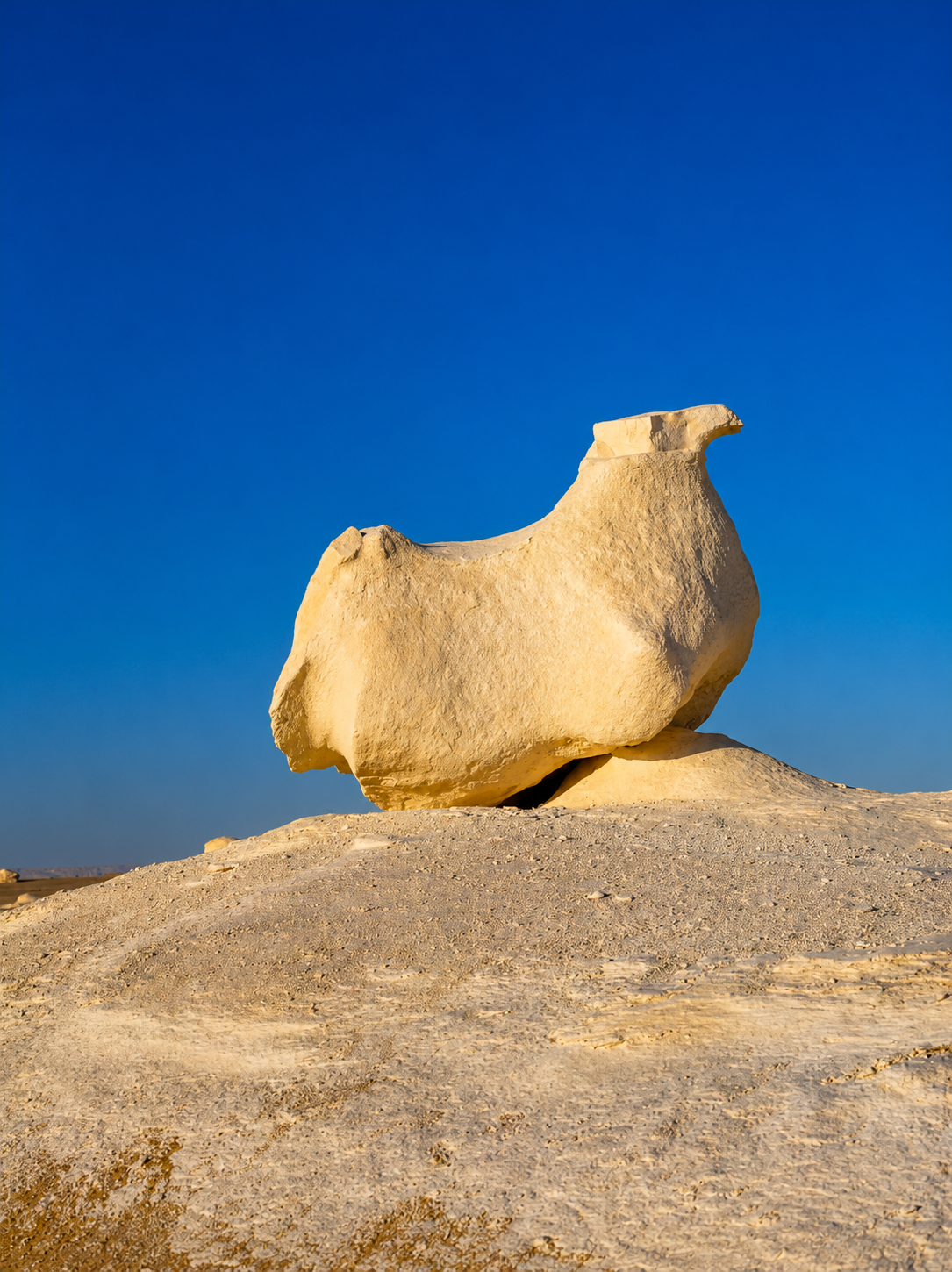
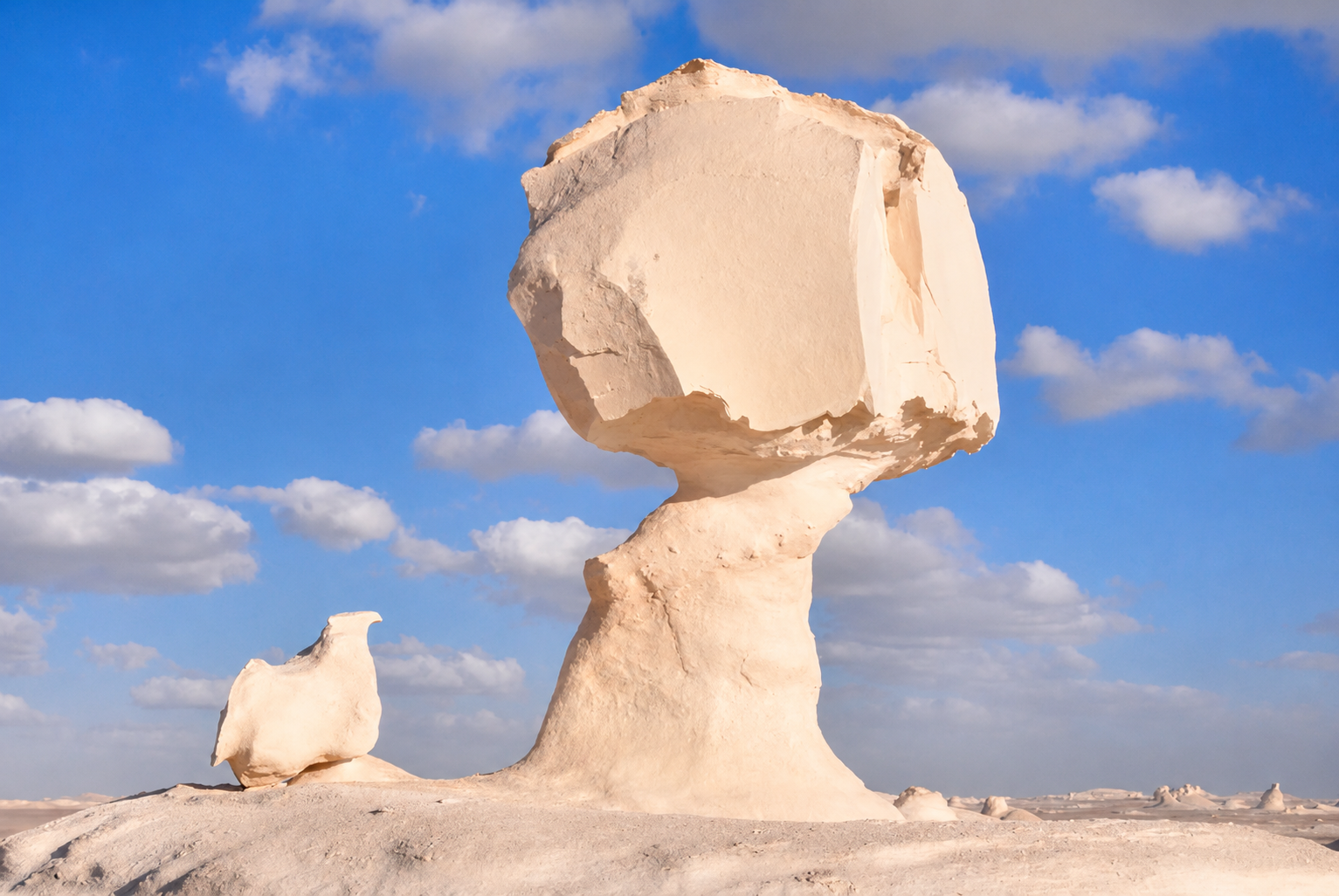
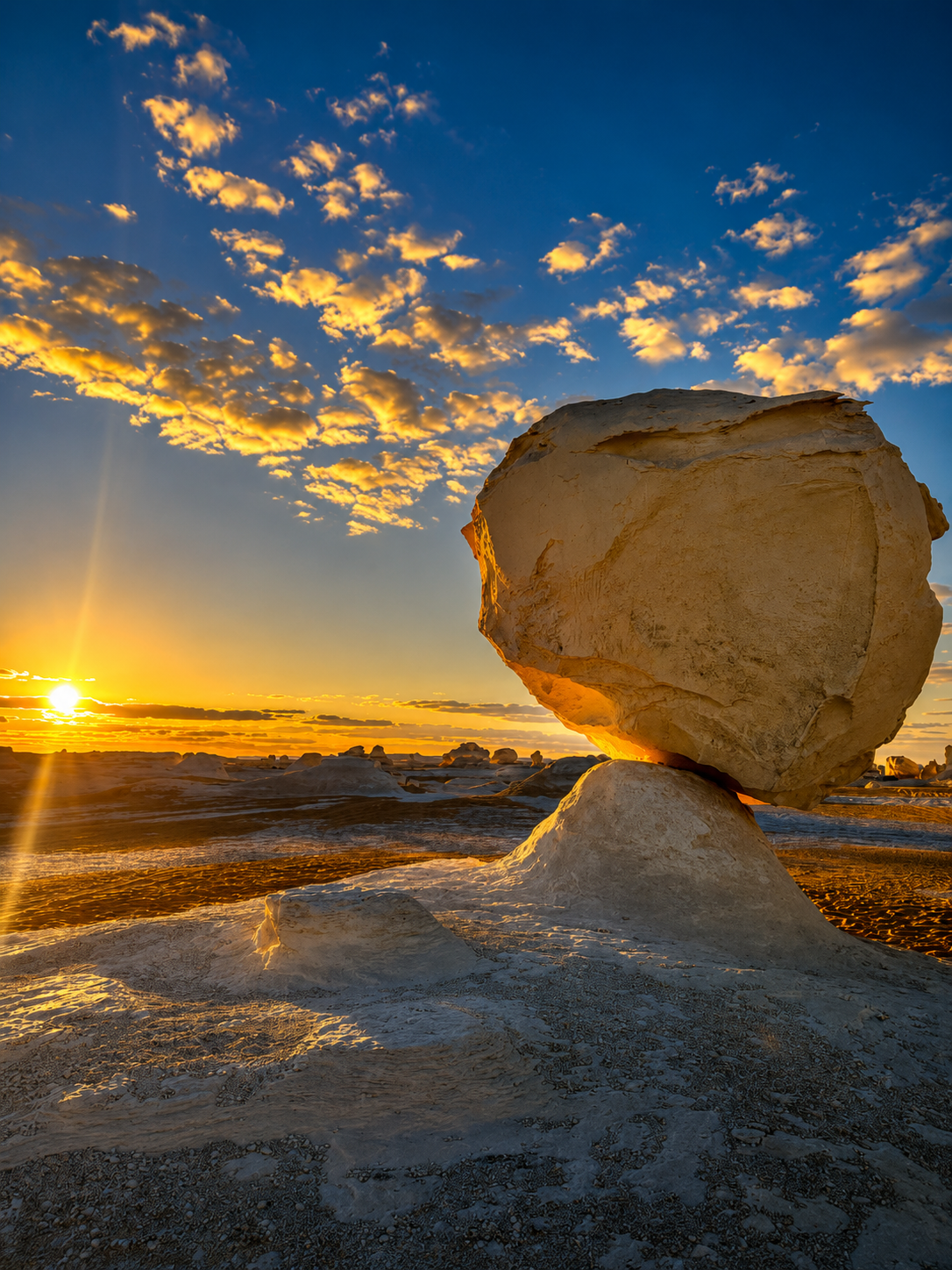
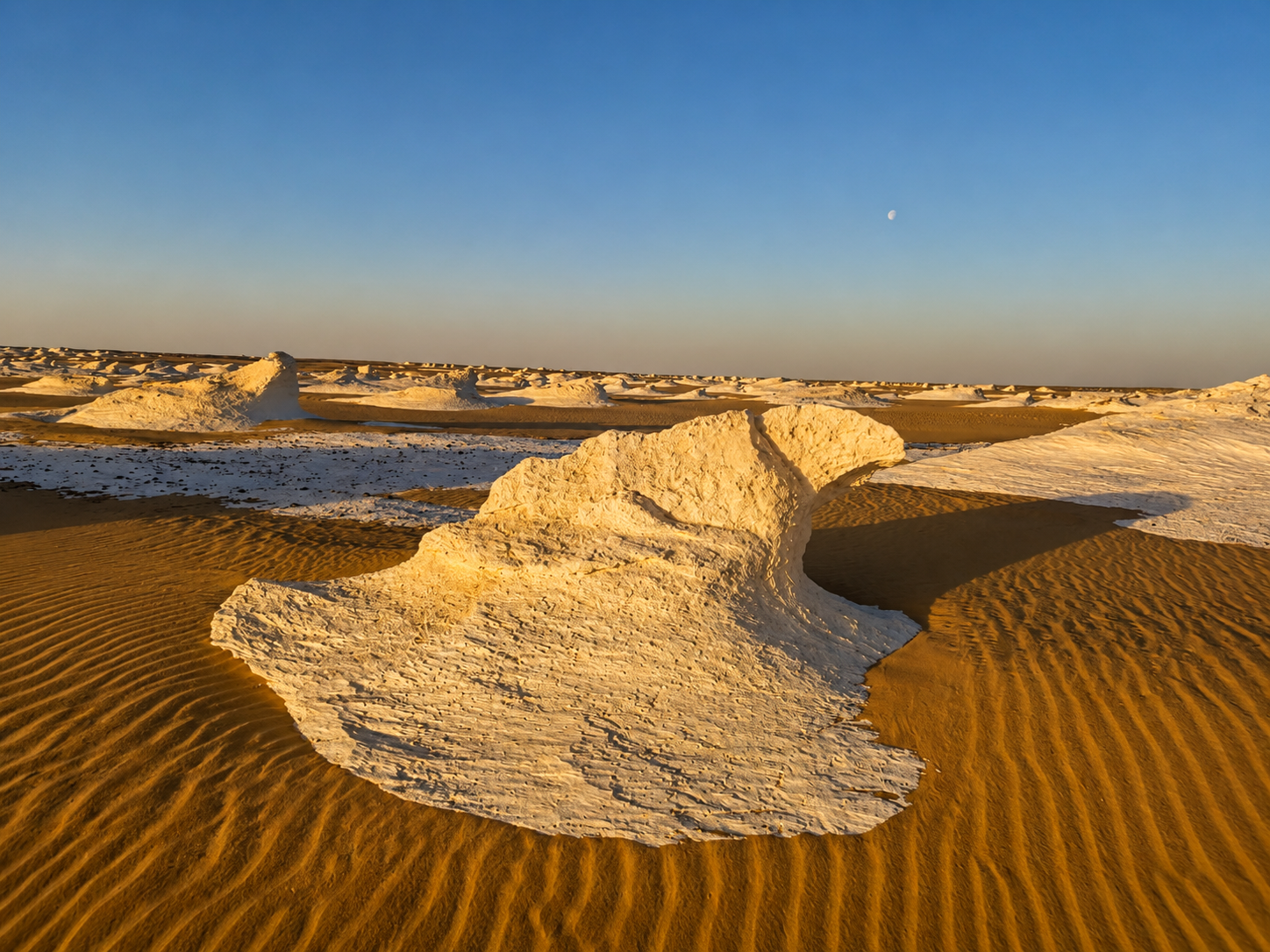
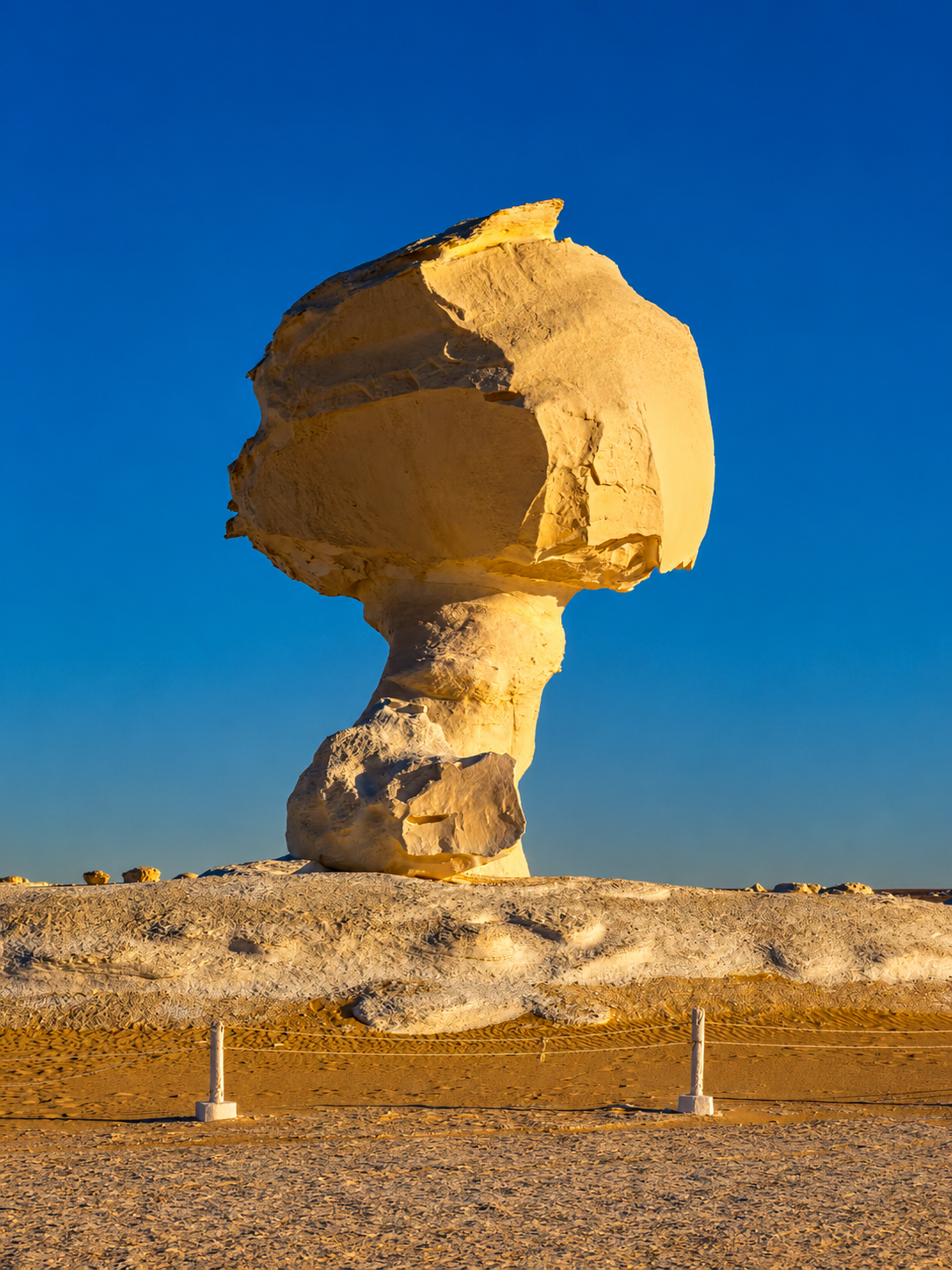
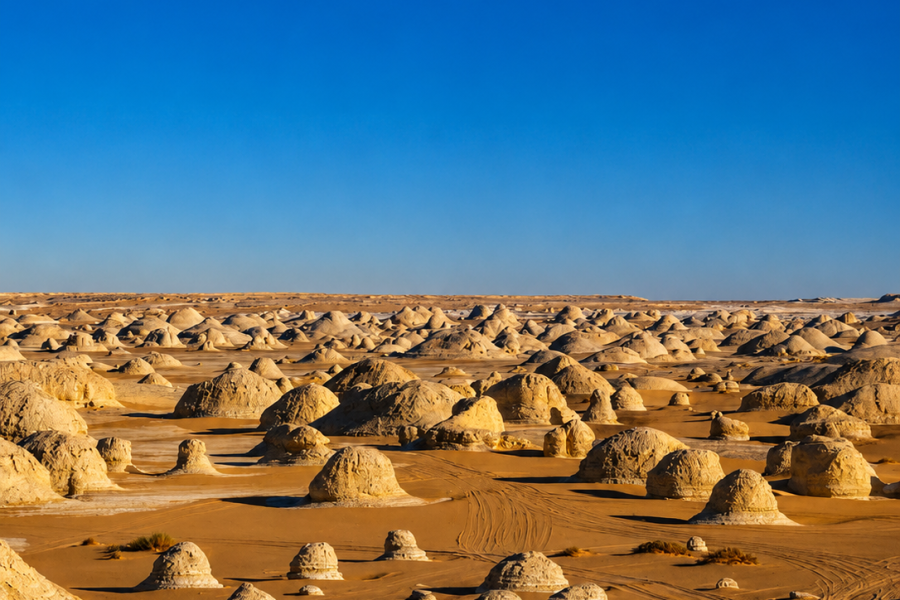
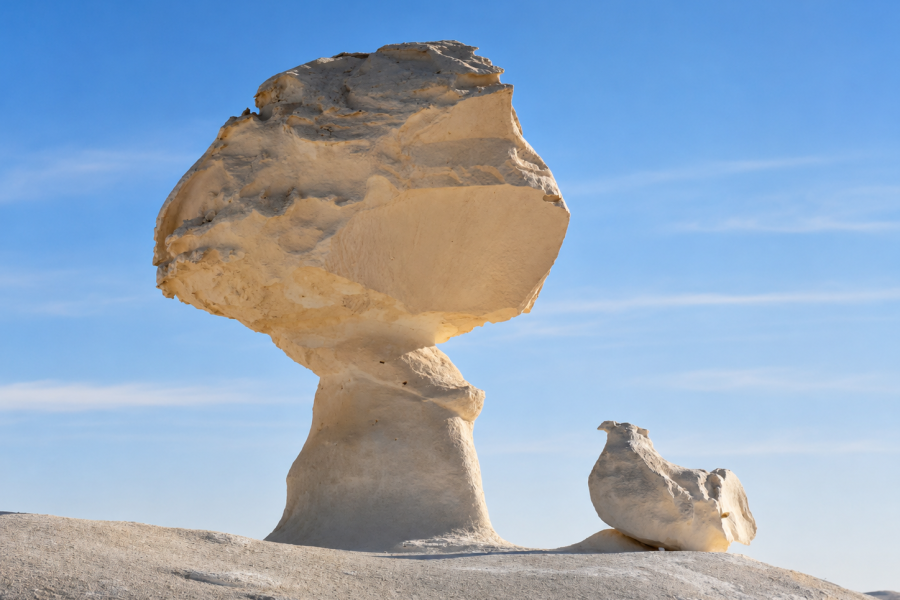
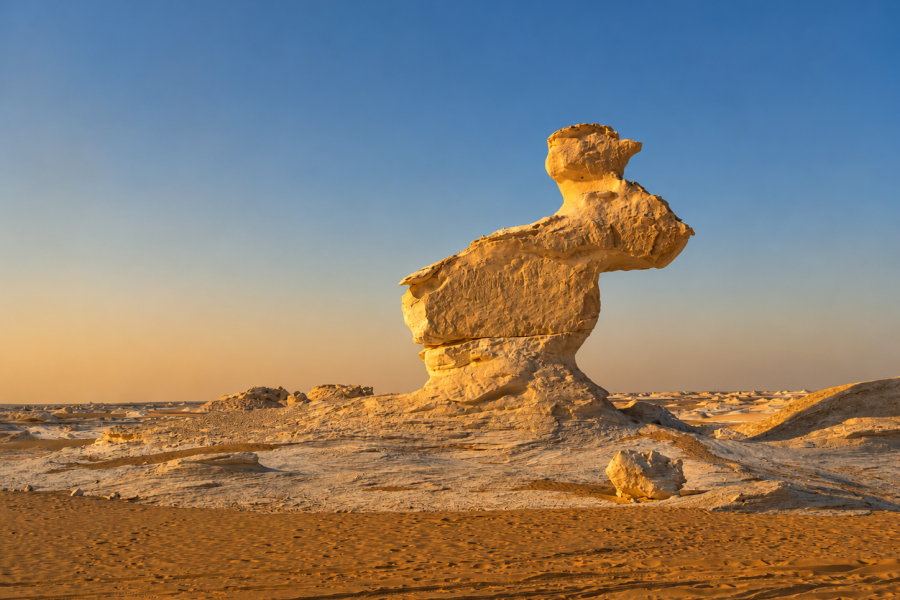
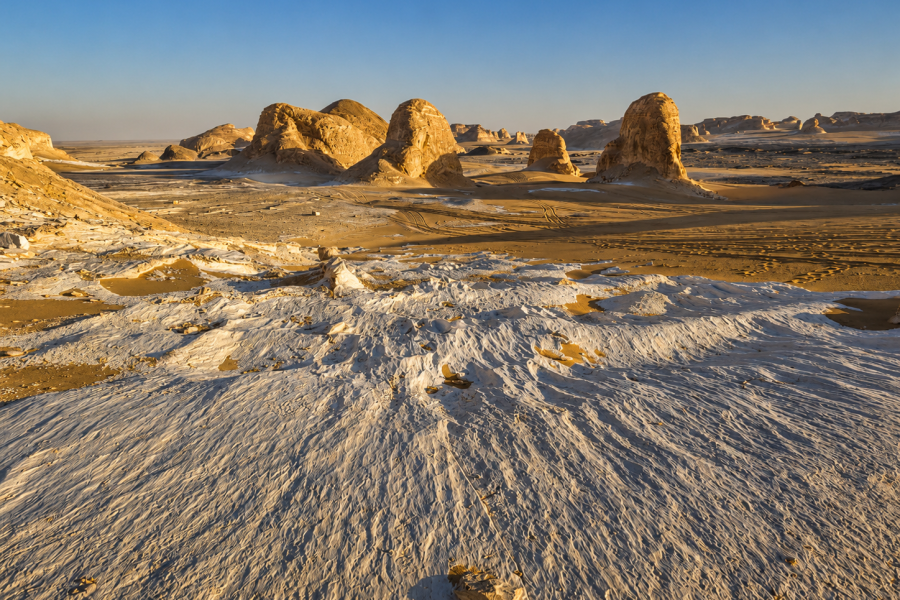
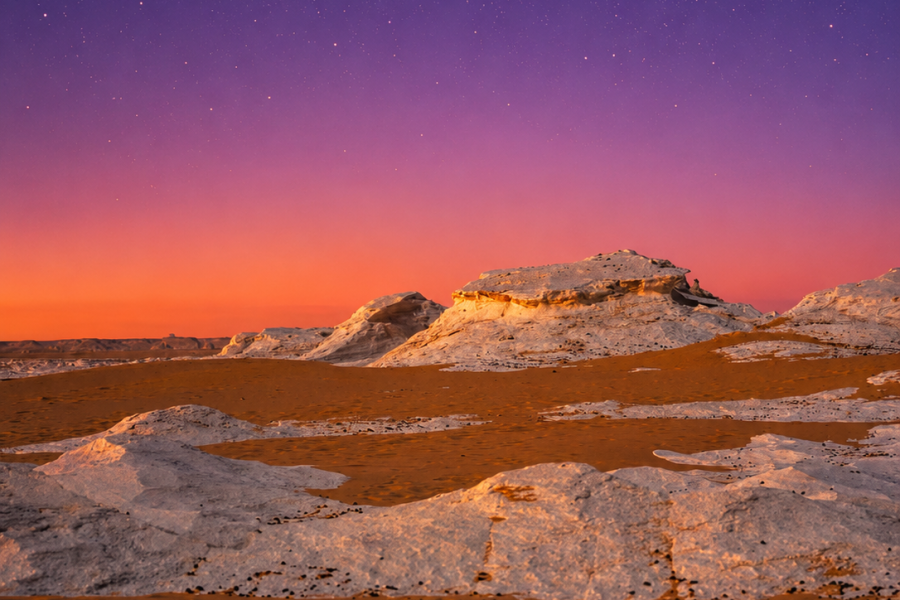
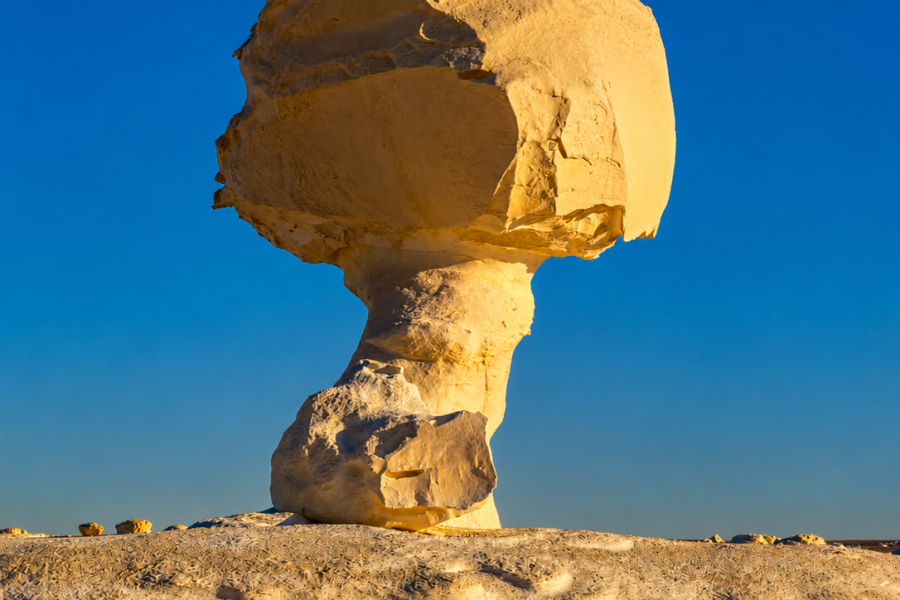
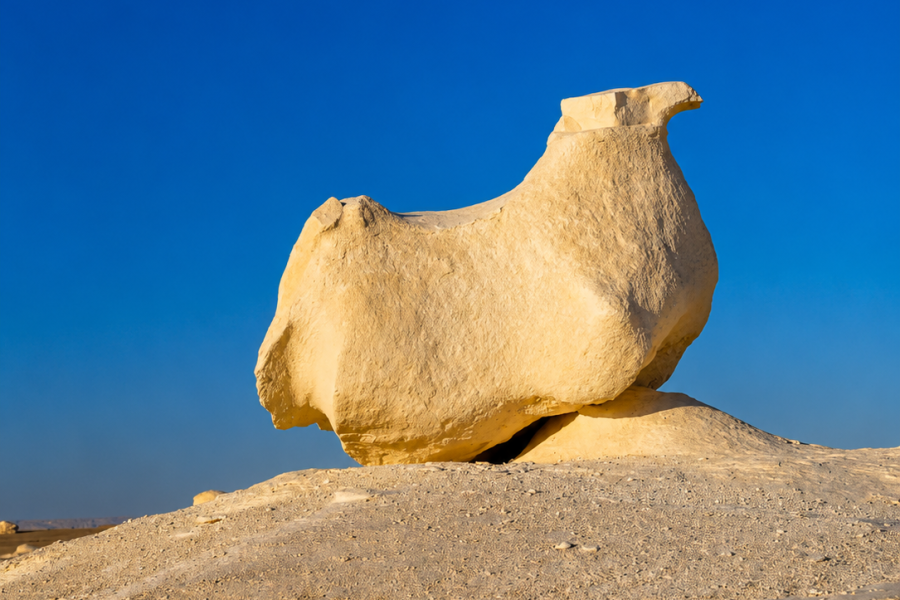
The New White Desert is associated with many of the famous sculptural chalk formations travelers recognize from photographs.

The Old White Desert offers different limestone scenery, cliffs and broader geological landscapes.

A longer camel trek can connect both rather than focusing only on the most photographed formations.

This is one of the major advantages of spending several days in the region.

You stop viewing the White Desert as a single viewpoint.

Instead, it becomes a large landscape through which you travel.

How Many Days Do You Need for a White Desert Camel Safari?

This depends on what you mean by camel safari.

1 Day

A one-day trip can include camel riding.

But it is not a true multi-day camel expedition.

Most of the journey would still need to be completed by road vehicle and 4×4.

If you only have one day, the One Day White Desert Tour From Cairo is more practical than trying to turn the trip into a serious camel trek.

2 Days / 1 Night

Two days are excellent for the classic White Desert camping experience.

But again, there is limited time for meaningful long-distance camel travel.

The 1 Night 2 Days White Desert Tour From Cairo remains the best choice for most first-time visitors.

A short camel-riding section could potentially be added to a customized program, but the main journey is better handled by 4×4.

3–4 Days

This begins to make much more sense for a hybrid camel experience.

You can use vehicles for long transfers and spend meaningful sections moving by camel.

A longer itinerary also gives you enough time for multiple camps.

Travelers who primarily want deeper desert exploration but are not ready for a long camel expedition can also consider the 2 Nights 3 Days White Desert Camping Tour or the 3 Nights 4 Days White Desert Tour From Cairo.

5–7 Days

This is where a real White Desert camel trek becomes much more convincing.

Existing programs in the region commonly use approximately five to seven days for extended camel journeys through the White Desert landscapes.

This gives enough time to:

develop a daily trekking rhythm,

cross larger landscapes,

spend several nights camping,

and avoid turning the experience into a race.

Up to 10 Nights

Egypt’s official tourism portal notes that White Desert excursions can range from one to ten nights, depending on whether travelers want to camp, hike, explore, ride camels or use a 4×4.

Trips at the longer end of this range are best understood as expeditions rather than ordinary tours.

How Far Do You Ride Each Day?

There is no universal daily distance.

It depends on:

terrain,

weather,

camel condition,

traveler experience,

riding versus walking balance,

route,

and time available.

Some trekking expeditions combine long walking days with camel support rather than keeping travelers mounted all day. One contemporary Western Desert trekking program, for example, describes daily walking distances of around 20–25 km while using camels as part of the expedition support system.

A dedicated riding safari may operate differently.

The important point is that you should not choose a camel trek simply by comparing kilometers.

A well-paced expedition is better than an itinerary that tries to maximize distance every day.

Do You Ride the Camel All Day?

Not necessarily.

In fact, many travelers find a mixture of riding and walking more comfortable.

Long periods in the saddle can become physically tiring for people who are not used to camel riding.

A good trek may alternate between:

camel riding,

walking,

rest stops,

lunch,

and camp time.

The exact balance should depend on the traveler and the animals.

You should be honest with the operator about your riding experience before departure.

Is Camel Riding Difficult?

The actual movement of a camel is different from riding a horse.

The rocking motion can feel unusual at first.

The moment when a camel stands up or sits down often surprises first-time riders because the animal moves its front and back legs in stages.

Your guide should explain:

how to sit,

where to hold,

how to position your body when the camel rises,

and how to dismount safely.

Most healthy travelers can learn the basics quickly.

But being able to ride for twenty minutes is very different from being comfortable over multiple days.

Do You Need Camel Riding Experience?

Usually not for beginner-friendly organized trips.

However, a multi-day safari requires more preparation than a short tourist ride.

Tell your operator if you have:

never ridden before,

back problems,

hip problems,

knee problems,

balance issues,

recent injuries,

or other mobility concerns.

The guide can then advise whether the planned itinerary is appropriate.

Do not wait until you are deep in the desert to mention a significant physical limitation.

Is a Camel Safari Physically Demanding?

It can be.

Travelers sometimes imagine camel riding as passive transportation.

But multi-day riding can place stress on:

hips,

lower back,

knees,

inner thighs,

and core muscles.

Walking across sand also requires more effort than normal city walking.

Add:

strong sun,

dry air,

camping,

and several days away from normal facilities,

and the trip becomes a genuine adventure experience.

You do not need to be an athlete.

But a reasonable level of general fitness helps.

What If You Get Tired of Riding?

This is one reason a support vehicle can be valuable.

On some organized camel expeditions, a 4×4 provides logistics and backup.

Ask before booking whether:

a support vehicle follows the caravan,

it remains accessible every day,

and what happens if a traveler can no longer ride.

Never assume.

Camel expeditions vary significantly in how they are organized.

Camel Safari or Walking Trek?

These experiences overlap but are not identical.

Camel Safari

Better if you want:

traditional desert transport,

less walking,

camel experience,

a caravan atmosphere.

Walking Trek

Better if you want:

more physical activity,

closer connection with the terrain,

greater control over your pace,

a trekking challenge.

Camel-Supported Walking Trek

For many travelers, this is the strongest combination.

You walk significant sections while camels carry much of the equipment.

Then you can ride where appropriate.

This provides a genuine trekking experience without requiring you to carry expedition-level camp supplies yourself.

Our next dedicated content cluster also includes a full White Desert trekking and walking guide, while this page focuses specifically on camel-based travel.

Camel Safari vs 4x4 White Desert Safari

The two formats serve completely different travelers.

4×4 Safari

Best for:

first-time visitors,

limited schedules,

families,

people who want to see many attractions,

1–3 day trips.

Advantages:

fast,

comfortable transfers,

covers more distance,

easier access to major landmarks.

Camel Safari

Best for:

slow travel,

adventure travelers,

multiple-day trips,

desert camping enthusiasts,

people interested in traditional-style travel.

Advantages:

silence,

slower pace,

deeper immersion,

less time inside vehicles.

For most first-time visitors to Egypt:

take the 4×4 safari first.

For travelers specifically seeking the desert as the main experience:

consider the camel expedition.

Camel Safari vs Private Desert Safari

A private desert safari in Egypt focuses primarily on privacy and itinerary control.

It can still use a 4×4.

A camel safari focuses on mode and pace of travel.

The two can also be combined.

A private camel expedition means the caravan, guide and route are arranged specifically for your group rather than joining a larger departure.

That can be especially valuable on a multi-day journey because fitness level and preferred pace vary from one traveler to another.

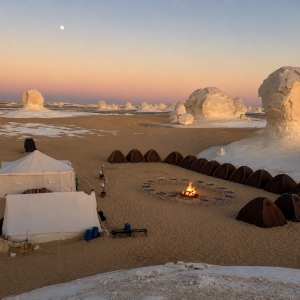
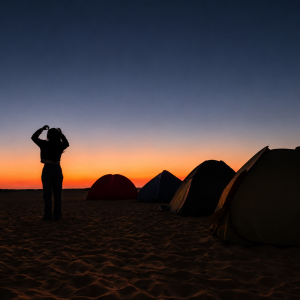
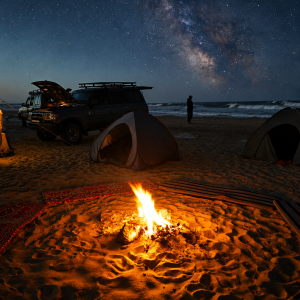
What Is Camping Like on a Camel Safari?

Camping is one of the central parts of the experience.

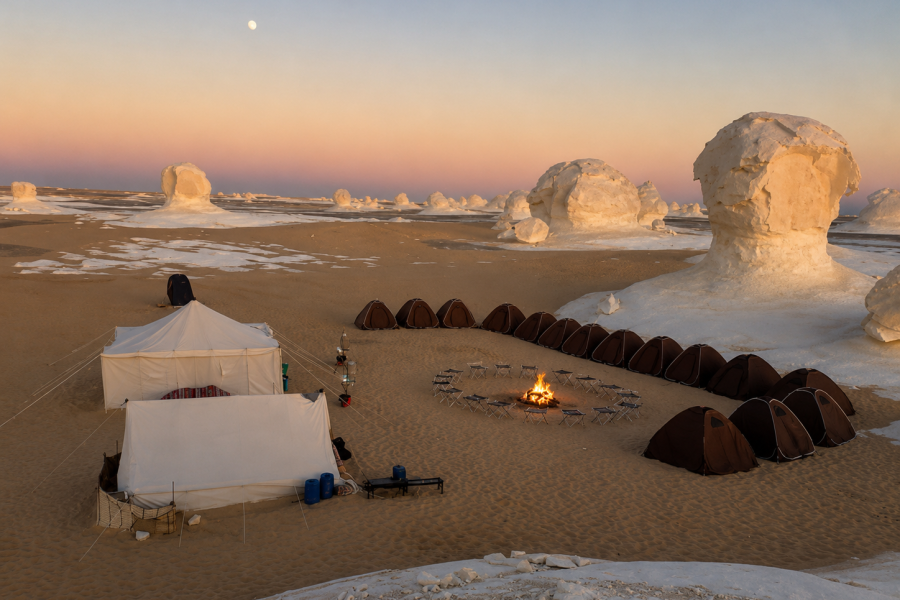
Once the caravan stops for the day, the camp may include:

tents,

mattresses,

blankets or sleeping bags,

desert seating,

cooking equipment,

water,

and food supplies.

Facilities are normally much simpler than a hotel.

You should expect wilderness rather than resort-style accommodation.

The reward is location.

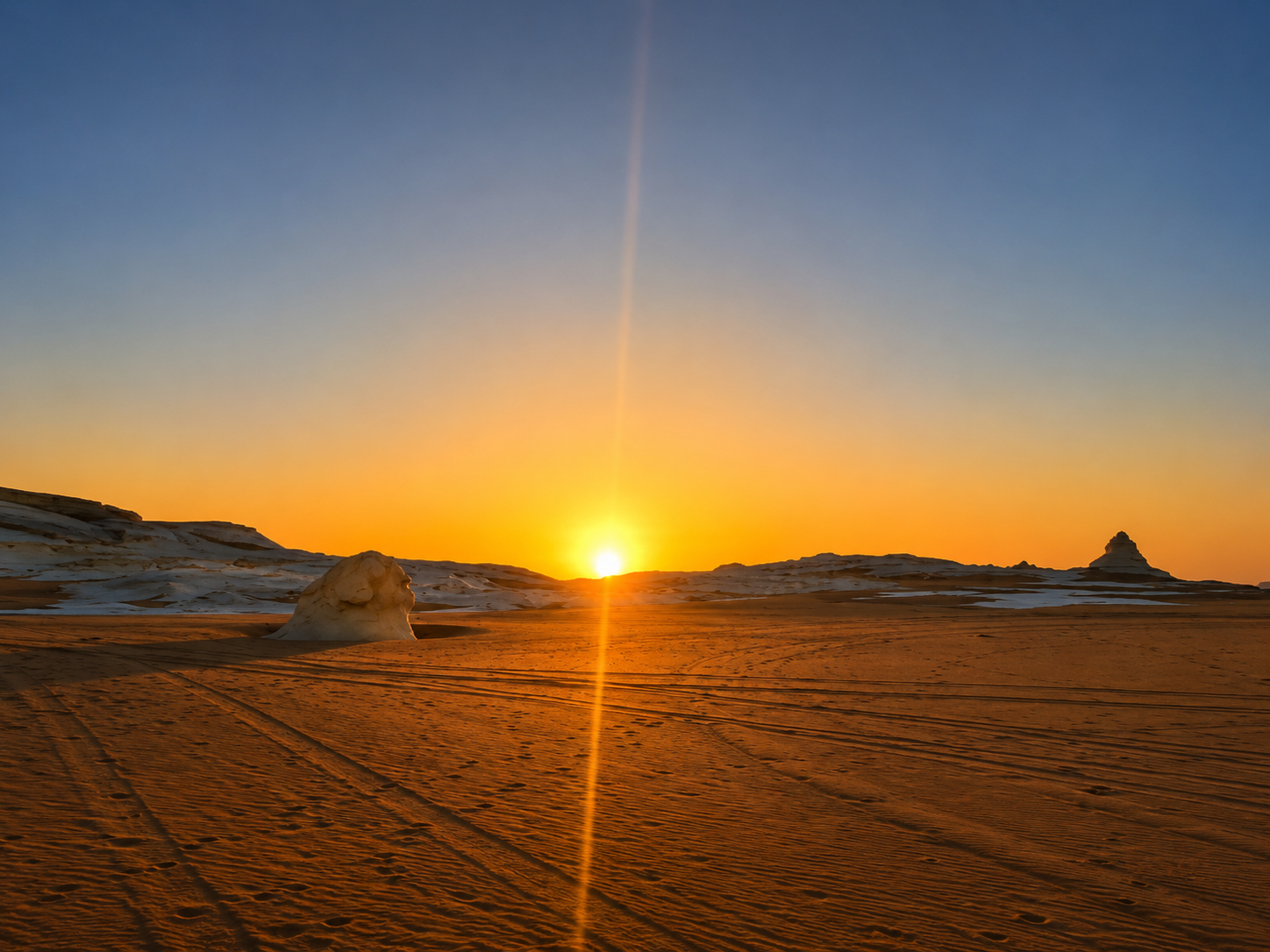
You can watch sunset without needing to reach a road.

Eat dinner in the desert.

See the sky become dark.

Sleep far from urban lights.

Then wake up inside the landscape.

For realistic expectations, read our White Desert Camping Egypt Guide.

What Do You Eat on a Camel Safari?

Meals vary by operator and expedition style.

Typical desert-trip food may include:

rice,

vegetables,

chicken or meat,

soups,

bread,

cheese,

eggs,

fruit,

dates,

tea,

and simple snacks.

Longer expeditions require careful food planning because supplies must last several days.

Dietary requirements should always be provided before departure.

If you are vegetarian, vegan, have allergies or follow another specific diet, tell the operator before the supplies are purchased.

How Much Water Do You Need?

Water planning is one of the most important parts of any desert expedition.

The amount required depends on:

temperature,

activity level,

trip duration,

food preparation,

and emergency reserve.

Do not try to plan a deep camel expedition independently using a generic internet rule.

Your desert team should calculate the complete water load for travelers, guides, camp operations and animals.

Longer commercial camel programs commonly include bottled or carried water as part of the expedition logistics.

Where Do Camels Get Water?

Camel water requirements depend on workload, temperature, feed and journey conditions.

The animals’ welfare needs must be planned by experienced handlers.

Do not assume the popular myth that camels simply “do not need water.”

They are extremely well adapted to arid environments, but they still need appropriate hydration and care.

On an organized caravan, camel handlers are responsible for managing feeding, water, rest and daily workload.

How to Choose an Ethical Camel Safari

This matters.

A camel is a living animal, not adventure equipment.

Before booking, look for operators who use experienced camel handlers and are willing to answer questions about animal care.

Pay attention to the camels themselves.

A healthy working camel should not appear severely underweight, injured or exhausted.

Equipment should fit properly.

Loads should be managed responsibly.

The animal should receive appropriate rest, food and water.

If an animal appears distressed or injured, do not insist on riding it simply because your itinerary says you are supposed to.

Responsible tourism includes animal welfare.

Should Everyone Ride the Same Camel?

Not necessarily.

Long expeditions may involve several animals with different roles.

Some carry riders.

Others may carry supplies.

Handlers understand which animals are suitable for particular tasks.

Travelers should follow the caravan leader’s decisions rather than choosing animals based only on appearance.

Is There a Weight Limit for Camel Riding?

There is no single responsible universal weight limit that applies to every camel safari.

The appropriate load depends on:

the individual camel,

health,

age,

equipment,

terrain,

duration,

temperature,

and whether the animal carries other luggage.

Ask the specific operator before booking.

If you are concerned that your body weight may affect suitability, discuss it privately and directly.

A serious operator should be able to give you a clear answer based on the animals being used.

Best Time for a White Desert Camel Safari

For longer camel journeys, season matters even more than on a short 4×4 trip.

The most comfortable period for most travelers is generally:

October through April.

Long hours outdoors during peak summer heat are far more demanding.

Autumn, winter and early spring make walking, riding and camping more manageable.

Winter nights can become cold, especially in open camps.

Bring suitable layers.

For month-by-month conditions, use our Best Time to Visit White Desert Egypt.

What Should You Pack for a Camel Safari?

Pack lighter than you would for a normal road trip.

Space and weight matter more when equipment is carried through the desert.

Useful items include:

  • Comfortable lightweight trousers
  • Long-sleeved breathable tops
  • Warm evening layer
  • Closed shoes
  • Comfortable walking footwear
  • Hat
  • Sunglasses
  • High-SPF sunscreen
  • Scarf
  • Personal medication
  • Headlamp
  • Power bank
  • Small daypack
  • Reusable water bottle if advised
  • Toiletries
  • Wet wipes
  • Camera
  • Spare batteries
  • Sleeping bag if not supplied

Avoid unnecessary luggage.

A large suitcase belongs at the hotel or vehicle base, not on the camel caravan.

Use the full White Desert Egypt Packing List before departure.

What Should You Wear While Riding a Camel?

Comfort matters more than fashion.

Long trousers are generally preferable because they reduce friction between your legs and the saddle.

Very tight clothing can become uncomfortable over long periods.

Extremely loose fabric can catch on equipment.

Closed shoes are usually more practical than sandals when riding and walking.

A scarf is useful for:

sun,

dust,

wind,

and temperature changes.

White Desert Camel Safari for Couples

A private camel trek can be an exceptional experience for couples who enjoy adventure.

The strongest part is not necessarily the riding.

It is the complete rhythm of the journey:

travel together,

reach camp,

watch sunset,

eat dinner,

stargaze,

wake for sunrise,

continue across the landscape.

For couples expecting hotel-level comfort, however, a multi-day caravan may be too basic.

A shorter private 4×4 safari with upgraded camping may be more appropriate.

Compare options in our Luxury Desert Camping Egypt guide.

Is a Camel Safari Good for Families?

It depends heavily on the children.

A short camel experience can be fun for many families.

A five- or six-day expedition is a completely different commitment.

Before booking a multi-day camel journey with children, consider:

age,

patience,

heat tolerance,

camping experience,

ability to handle long days outdoors,

and comfort around large animals.

Families visiting the White Desert for the first time may be better starting with the 1 Night 2 Days White Desert Tour From Cairo.

For broader family planning, read Egypt Desert Safari for Families & Kids.

Is Camel Trekking Good for Older Travelers?

Age alone does not determine suitability.

Fitness, balance and mobility matter more.

A physically active older traveler may enjoy camel trekking.

A younger traveler with back or hip problems may struggle.

The main concerns include:

mounting and dismounting,

long periods in the saddle,

walking on uneven sand,

basic camping,

and several days away from conventional facilities.

Discuss your needs with the operator before booking.

Camel Safari for Solo Travelers

A private camel expedition can technically be arranged for one traveler, but it may become expensive because guides, camels and logistics still need to be organized.

Joining a small planned expedition can reduce costs.

Solo travelers should especially confirm:

who the guides are,

how many staff travel with the caravan,

whether a support vehicle is present,

communication arrangements,

and emergency procedures.

White Desert Camel Safari for Photographers

For landscape photographers, the pace can be exceptional.

You are not constantly rushing from one famous stop to another.

A multi-day trek creates more opportunities for:

sunrise,

sunset,

blue hour,

camel silhouettes,

camp scenes,

dunes,

remote chalk formations,

and night photography.

Camels themselves can also add scale to landscape images.

A caravan moving beneath enormous White Desert formations communicates the size of the landscape much better than an empty photograph.

For broader camera planning, read White Desert Egypt Photography Guide.

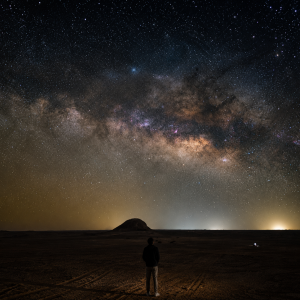
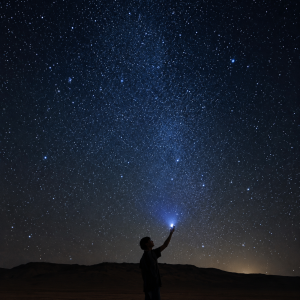
Stargazing During a Camel Safari

Multi-night expeditions give you multiple chances for good night-sky conditions.

That is an advantage over one-night trips.

Clouds, haze or moonlight can affect one night.

A longer expedition gives you additional opportunities.

If dark skies are a major priority, moon phase should be considered when choosing your dates.

Read our White Desert Egypt Stargazing Guide before booking.

Wildlife on a Camel Safari

Moving more slowly may make you notice wildlife signs you would miss from a vehicle.

That does not mean you should expect a wildlife safari.

The White Desert supports foxes, birds, reptiles, small mammals and rarer desert wildlife, but sightings are never guaranteed.

Tracks may be easier to notice than animals themselves.

At night, desert activity often increases as temperatures fall.

For the ecosystem in detail, read White Desert Egypt Wildlife & Desert Ecology.

Can You Combine Camel Trekking With Djara Cave?

Potentially, but this becomes a much more complex expedition.

Djara Cave Egypt lies deeper in the Western Desert and already requires significant off-road travel.

The current White Desert & Djara Cave Tour From Cairo uses 4×4 transportation because of the distance and logistics involved.

A custom expedition combining camel trekking and Djara would require considerably more time and careful route planning.

It should not be improvised by simply adding another attraction to a normal camel tour.

Do Camel Safaris Need Permits?

The White Desert is a protected area.

Current UK travel advice states that tourists entering Bahariya, Farafra, the White Desert and Black Desert must arrange permits in advance and use an official guide. It also notes limited phone reception and medical facilities in these areas.

Egypt’s official tourism portal similarly advises travelers to check permits and regulations with their travel agency or authorized guide before heading into the desert.

A camel does not exempt a traveler from protected-area rules.

The route still needs to follow current regulations.

White Desert Protected-Area Rules and Camel Trekking

The White Desert is divided into management zones.

Some strict nature zones do not permit public vehicle access or camping, while access on foot may be treated differently under the management framework. Other zones are managed for recreation and tourism.

This does not mean travelers can independently walk or ride camels anywhere they want.

Protected-area zoning, permits and current management decisions still apply.

Use an authorized guide who understands current access.

White Desert Entrance and Camping Fees

Egypt’s Environmental Affairs Agency currently lists separate White Desert categories for visitor entry, camping and vehicles. The page also references Ministerial Decree No. 360 of 2025.

Fees and implementation can change.

Always confirm the current amount and whether the fee is included in the tour price before departure.

Is a Camel Safari Safer Than a 4x4 Safari?

Neither is automatically safer.

They involve different risks.

Camel trekking adds:

animal handling,

long outdoor exposure,

physical fatigue,

and slower evacuation if there is no support vehicle nearby.

4×4 travel adds:

vehicle-related risks,

higher speeds,

and off-road driving.

The safest option is the one that is professionally organized with experienced guides, correct equipment and an appropriate route.

Emergency Planning on a Camel Expedition

This is one of the questions you should ask before booking.

A serious multi-day trip should have a plan for:

illness,

injury,

camel-related problems,

vehicle problems,

route changes,

extreme weather,

and communication.

Ask:

Is there a support vehicle?

Is there satellite communication or another backup where mobile signal fails?

How quickly can the group reach a road if someone needs medical care?

Who carries first-aid supplies?

Current travel guidance specifically warns that phone reception and medical facilities are limited in the Western Desert.

How Much Does a White Desert Camel Safari Cost?

Camel safaris do not have one universal price.

A multi-day camel expedition involves significantly different logistics from a normal 2-day 4×4 safari.

Cost depends on:

number of days,

number of travelers,

number of camels,

camel handlers,

guides,

support vehicle,

Cairo transfers,

food,

water,

camp equipment,

permits,

and route.

This means a 6-day private camel trek should not be compared directly with the starting price of a 2-day White Desert tour.

For general White Desert safari pricing, read White Desert Egypt Cost.

For a dedicated camel itinerary, request a customized quote based on your group and trip duration.

Can You Add Camel Riding to a Standard White Desert Tour?

Potentially, yes, depending on availability and the itinerary.

This is a good option for travelers who want the experience of riding a camel but do not want to commit to a week-long trek.

However, it should be arranged in advance.

Do not assume there will always be camels waiting beside every White Desert camp.

Camel logistics require:

animals,

handlers,

meeting location,

timing,

and route planning.

If camel riding matters to you, request it when the trip is being organized.

Best White Desert Tour Before Trying a Camel Expedition

If you have never visited the region, a classic overnight trip is an excellent introduction.

The 1 Night 2 Days White Desert Tour From Cairo lets you understand:

the road from Cairo,

Bahariya,

the Black Desert,

Crystal Mountain,

Agabat,

the White Desert,

camping,

and desert conditions.

After that, you will have a much better idea whether you want to return for a deeper camel trek.

Best Longer 4x4 Alternative

If you like the idea of spending more time in the desert but are unsure about several days on camelback, choose a deeper vehicle-supported route.

The 2 Nights 3 Days White Desert Camping Tour gives more off-road time and two camping nights.

The 3 Nights 4 Days White Desert Tour From Cairo provides an even slower itinerary.

These tours are good stepping stones between the classic overnight safari and a serious camel expedition.

Example 6-Day White Desert Camel Safari

A true camel itinerary may be structured roughly like this.

The precise route should always be customized according to current conditions and permits.

Day 1: Cairo to Bahariya Oasis

Travel from Cairo to Bahariya.

Have lunch and prepare expedition equipment.

Continue by 4×4 toward the deeper desert.

Meet the camel handlers and caravan.

Complete a short introductory ride.

Camp in the desert.

Day 2: Camel Trek Toward Agabat

Begin riding and walking after breakfast.

Travel through open desert and dune landscapes.

Stop for lunch and rest during the warmer part of the day.

Continue in the afternoon.

Camp near the Agabat region according to permitted routes.

Day 3: Agabat and Deep Desert

Continue through Agabat Valley.

Explore golden dunes and pale cliffs.

Alternate between riding and walking.

Reach a remote camp before sunset.

Day 4: Toward the White Desert

Continue the caravan into increasingly pale landscapes.

Explore quieter sections away from the main short-tour circuit.

Camp inside an appropriate permitted area.

Day 5: Old and New White Desert

Travel through broader White Desert landscapes.

See chalk formations and distinctive natural sculptures.

Spend another sunset and night under the desert sky.

Day 6: Return to Bahariya and Cairo

Complete the final morning camel section.

Meet the support vehicle.

Return toward Bahariya.

Have lunch or rest before driving back to Cairo.

Existing commercial camel programs in the region commonly use approximately five or six nights for this type of deeper experience, although routes vary widely.


Who Should Choose a White Desert Camel Safari?

Choose it if you:

love slow travel,

have several days available,

enjoy camping,

are comfortable with basic facilities,

want silence,

enjoy walking,

are curious about traditional desert transport,

want the desert itself to be the main destination.

Who Should Choose a 4x4 Tour Instead?

Choose a 4×4 safari if you:

only have 1–3 days,

want to see the major attractions quickly,

have significant back or mobility issues,

travel with very young children,

prefer easier logistics,

or want more comfort.

There is nothing less authentic about choosing a vehicle.

The best safari is the one that matches your travel style.

Responsible Camel Safari Travel

A good camel expedition should protect both the animals and the landscape.

Do not litter.

Do not damage chalk formations.

Do not collect fossils or crystals.

Do not insist on driving or camping in restricted zones.

Keep camp waste controlled.

Respect wildlife.

Use responsible camel handlers.

Do not overload animals.

Follow protected-area rules.

The White Desert is officially protected for its landscape, geology, wildlife, fossils and archaeological importance.

Traveling slowly should also mean traveling carefully.

Is a White Desert Camel Safari Worth It?

For the right traveler:

absolutely.

But it is not automatically better than a 4×4 safari.

The two experiences answer different questions.

A 4×4 safari asks:

How much of the White Desert can we experience in the time available?

A camel safari asks:

What does it feel like to actually move through this landscape slowly?

That distinction is everything.

You cover less ground.

But you experience the ground you cross much more deeply.

You notice silence.

Distance.

Wind.

Tracks.

Light.

The rhythm of the caravan.

The transition from day to night.

And the enormous scale of Egypt’s Western Desert.

For travelers who already know they love remote landscapes, camping and slow adventure travel, a multi-day camel expedition can become one of the most memorable experiences in Egypt.

4 Days Siwa Oasis Tour from Cairo

One Day Fayoum Tour from Cairo

Giza Pyramids & Grand Egyptian Museum Tour

One Day Tour to the White Desert from Cairo

1 Night Camping in Fayoum Desert from Cairo

2 Nights 3 Days Cairo – Siwa Tour

Siwa Program by Comfortable Bus from Cairo

1 Night 2 Days White Desert Tour from Cairo

2 Nights 3 Days White Desert & Dejara Cave Tour from Cairo

2 Nights 3 Days Camping Tour in White Desert

3 Nights 4 Days Cairo White Desert Tour

2 Nights 3 Days Tour in White Desert and Bahariya Oasis

2 Nights 3 Days Cairo – Siwa Tour

6 Nights 7 Days Cairo, Siwa, Marsa Matrouh & White Desert Tour

2 Nights 3 Days Fayoum and White Desert Tour from Cairo

5 Nights 6 Days Egypt Oasis Tour from Cairo

National Museum of Egyptian Civilization Tour

2 Days Tour in Cairo and Giza

4 Days 3 Nights Package to Luxor from Cairo by Sleeper Train

3 Days 2 Nights Tour from Cairo to Dakhla and Luxor

Full Day Tour to Alexandria from Cairo

Full Day Tour in West Bank of Luxor

Full Day Tour in East Bank of Luxor

Full Day Tour in Aswan

Frequently Asked Questions About White Desert Camel Safari Egypt

Yes. Egypt's official tourism portal lists camel riding as one of the ways to explore the White Desert alongside hiking, camping and 4x4 travel.

Trips vary widely. Short itineraries may include only a camel-riding section, while true camel expeditions commonly last several days. Official tourism information notes that White Desert excursions can range from one to ten nights depending on the activity.
Many programs use Bahariya Oasis or Farafra Oasis as logistical gateways. Travelers from Cairo commonly reach Bahariya first and then continue deeper into the desert.

No normal tourism itinerary does this. Travelers normally use road transportation from Cairo to an oasis and begin the camel section inside the Western Desert.

Neither is universally better. A 4x4 is ideal for shorter trips and covering more attractions, while a camel safari is better for slow travel and deeper immersion.

Not necessarily for beginner-friendly guided programs, but multi-day trips are physically more demanding than short recreational camel rides.

Not always. Many expeditions combine camel riding with walking, rest periods and camp time.

It can be moderately demanding because of long periods outdoors, time in the saddle, walking on sand and basic camping.

For a deeper camel expedition, approximately five to seven days provides a much more complete experience than a one- or two-day trip.

Yes. Multi-day White Desert camel safaris normally include desert camping.

Wear comfortable long trousers, breathable clothing, sun protection and practical closed footwear.

October through April is generally the most comfortable period for longer desert journeys.

Short camel experiences can suit many families, but multi-day expeditions are better for older children who are comfortable with camping and long days outdoors.

It depends more on fitness, mobility, balance and back or joint health than age alone.

There is no single responsible universal limit. Suitability depends on the individual camel, equipment, terrain and duration, so travelers should ask the operator directly.

Private camel expeditions can be arranged, although some operators also offer small-group departures.
Many longer expeditions use 4x4 support for supplies, emergencies or transfers, but arrangements vary and should be confirmed before booking.

Yes. Current travel guidance requires tourists entering the White Desert, Black Desert, Bahariya and Farafra areas to arrange permits in advance and use an official guide.

Yes. Agabat's dunes and pale cliffs make it a natural landscape for longer camel and trekking routes.

Yes. Some itineraries use the Crystal Mountain region as a transfer point before beginning the longer camel section.

There is no standard price because costs depend on duration, number of travelers, camels, handlers, support vehicles, camping logistics and route. Multi-day camel expeditions should be quoted individually.