Black Desert Egypt Photography Guide: Best Views, Stops & Timing
The Black Desert is one of the most underrated photography landscapes in Egypt.
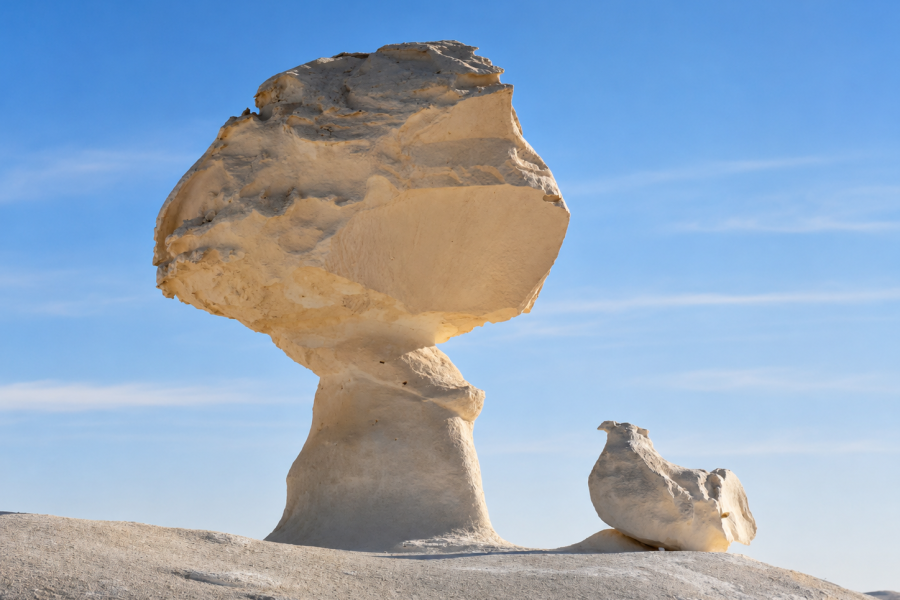
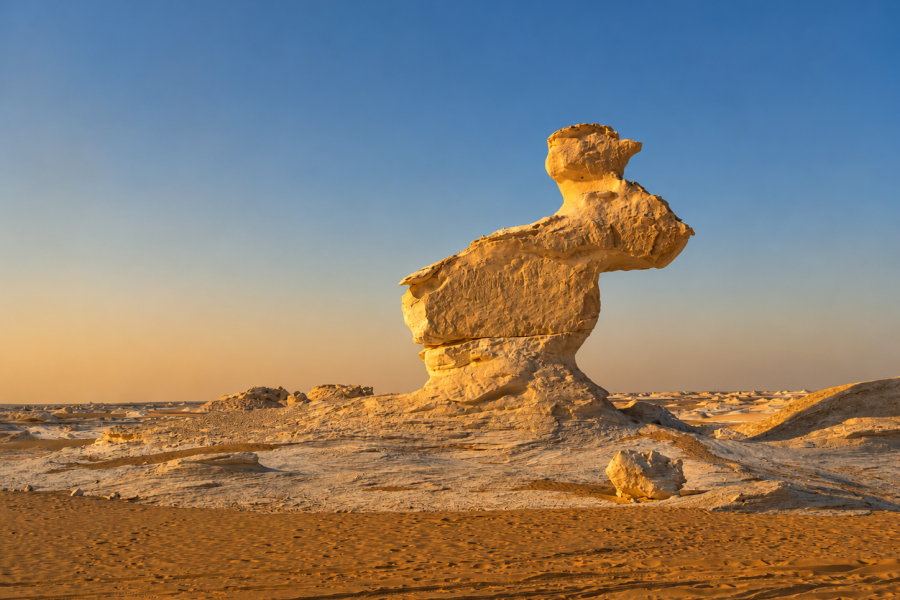
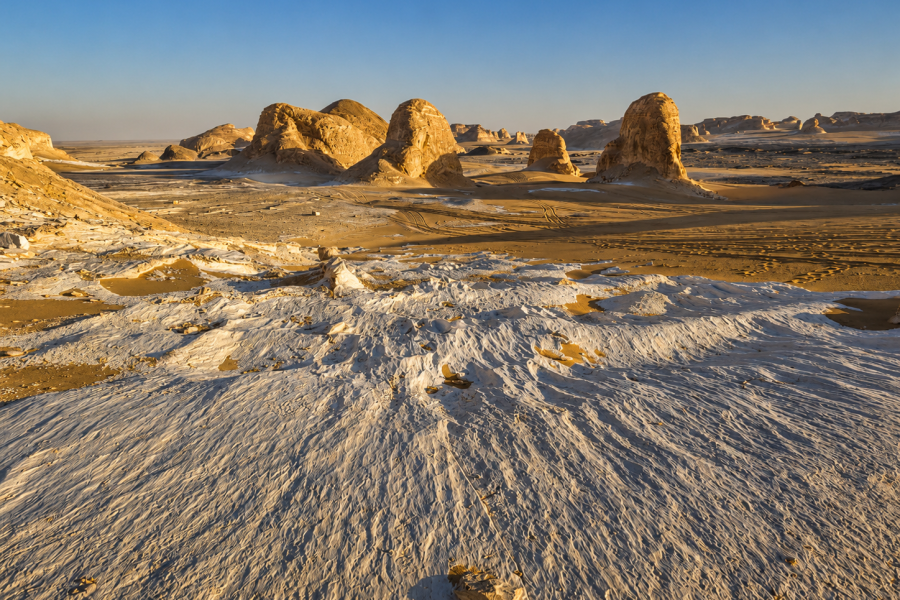
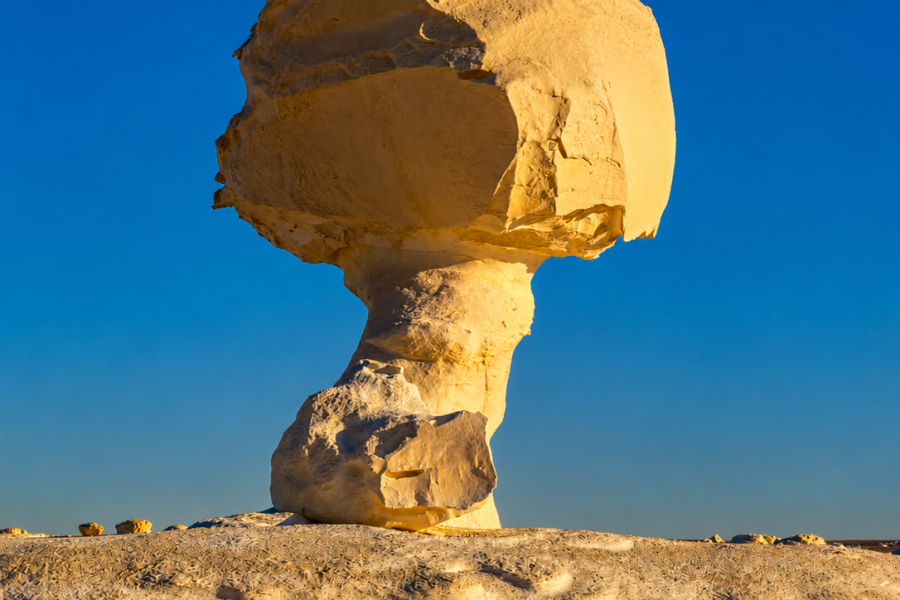
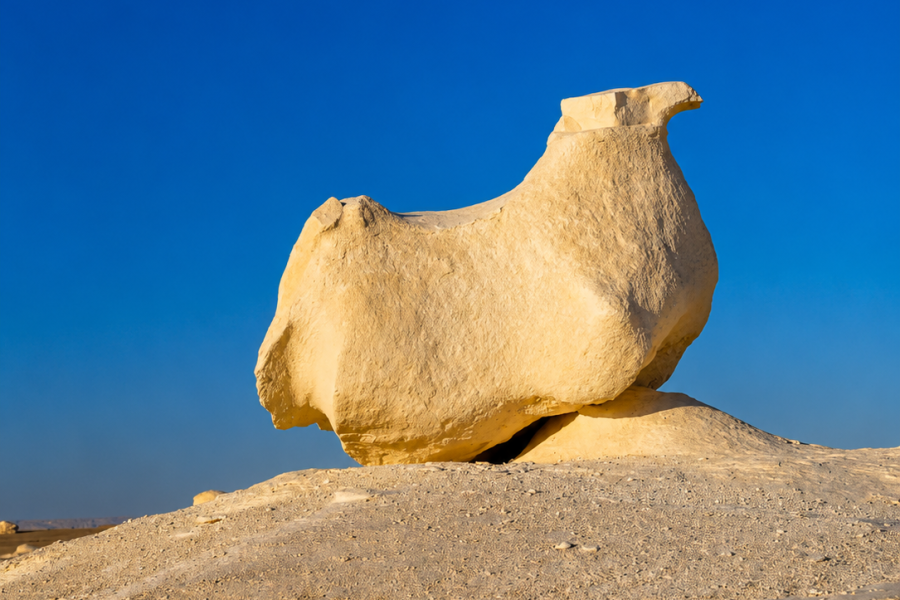
It does not have the instantly recognizable pyramids of Giza or the strange white chalk sculptures that make the White Desert Egypt famous.
Instead, its strength is contrast.
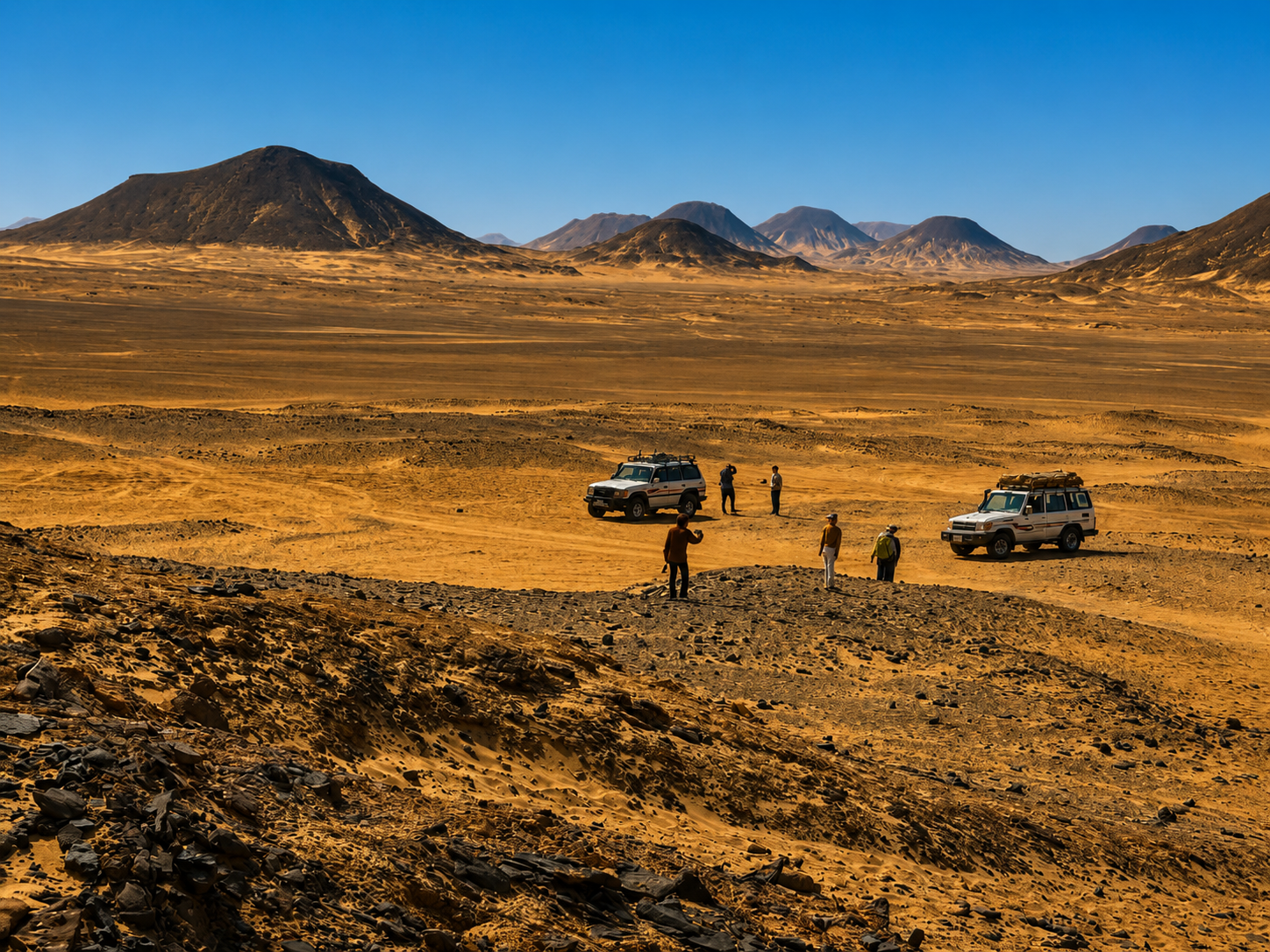
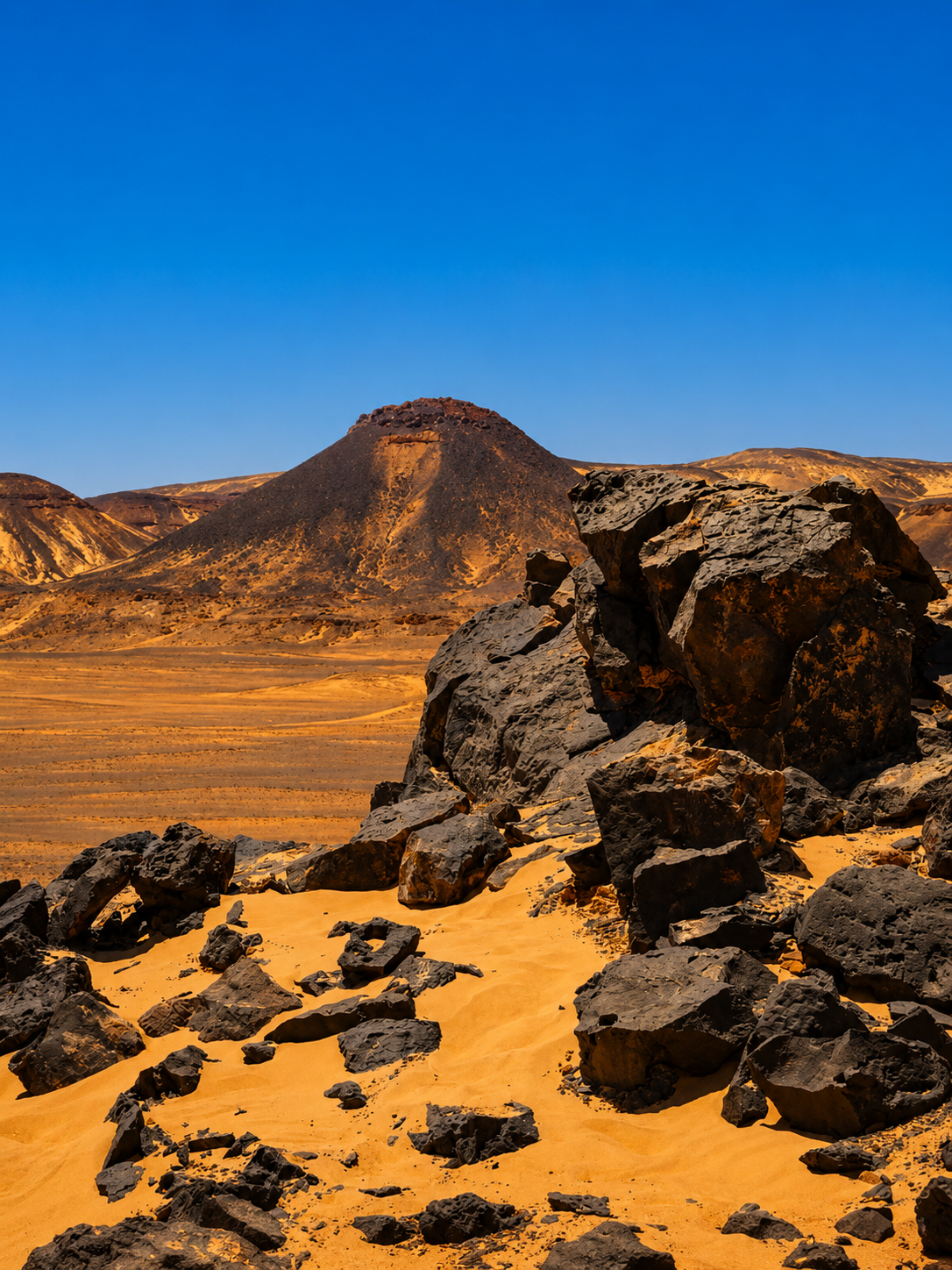
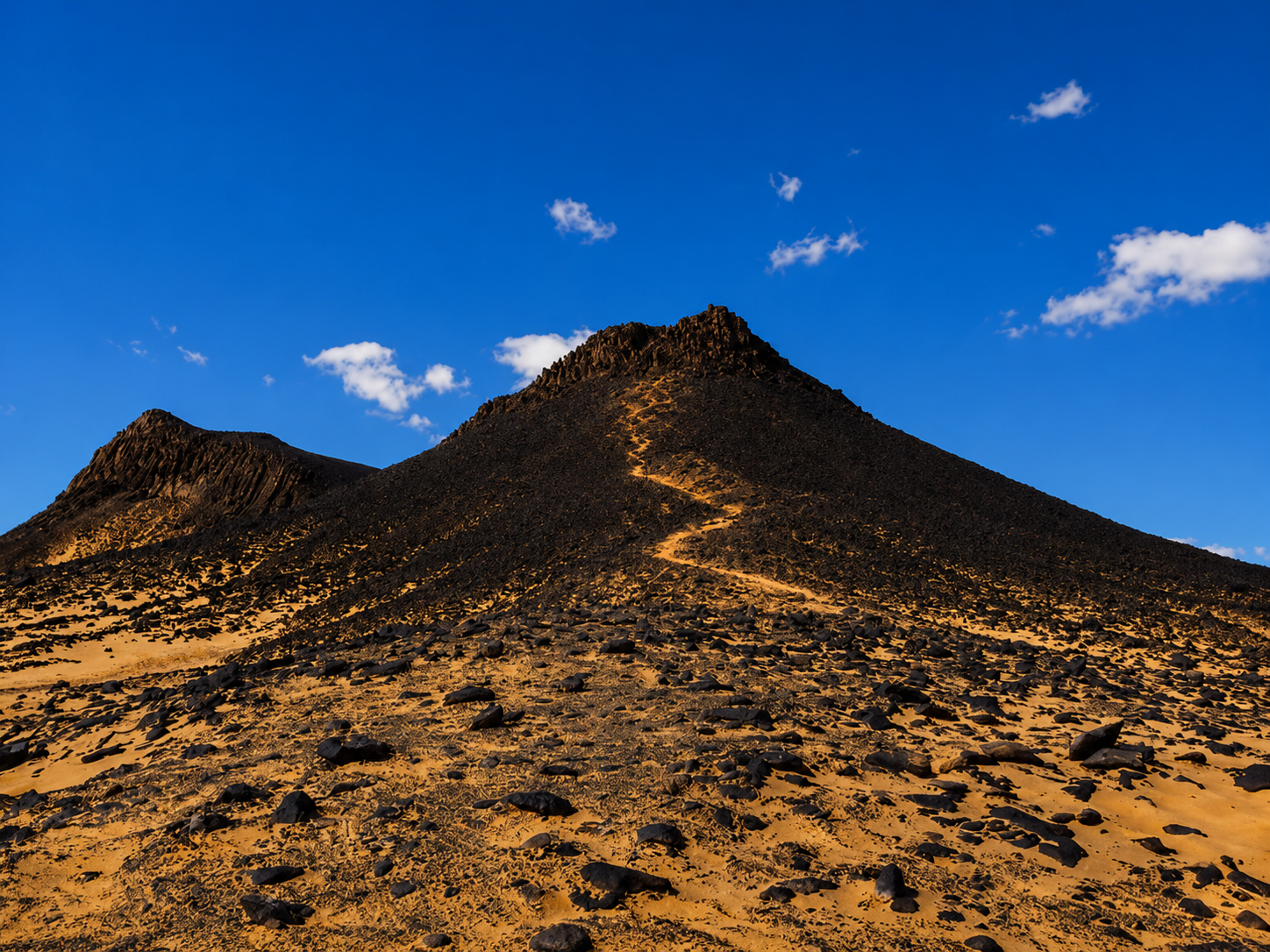
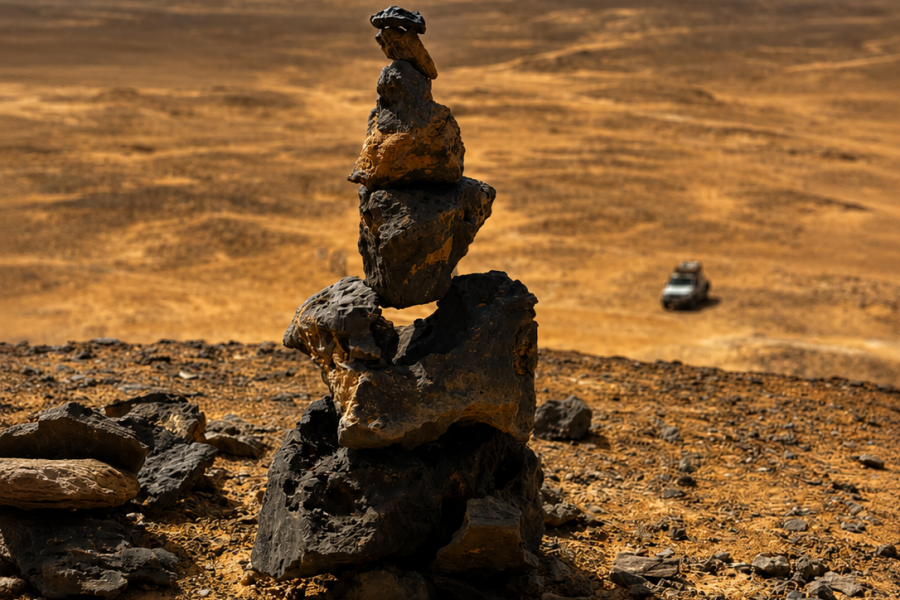
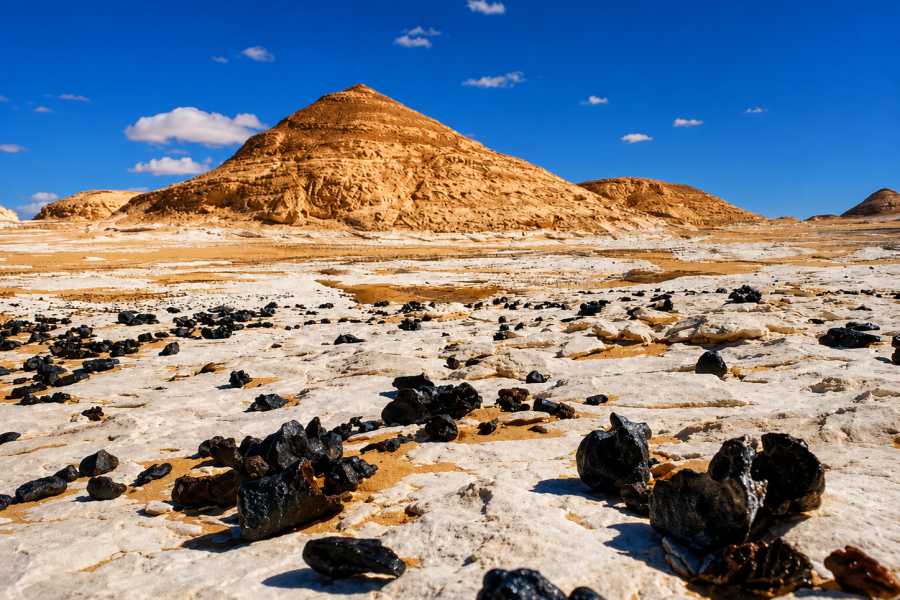
Dark hills rise from golden and pale desert plains. Black stones spread across otherwise warm-colored terrain. A lone 4×4 can look tiny against a horizon filled with rugged hills.
And because the Black Desert sits around Bahariya Oasis, photographers can capture an even wider visual story: palms and cultivated oasis landscapes followed by black hills, Crystal Mountain, Agabat and eventually the White Desert.
Egypt’s official tourism authority positions Bahariya as the closest Western Desert oasis to Cairo and one of the main gateways for exploring the surrounding desert landscapes.
For photographers, that creates an excellent route:
Cairo → Bahariya Oasis → Black Desert → Gabal El Marsos → Crystal Mountain → Agabat → White Desert.
The current Black Desert Egypt guide on White and Black Desert Tours follows this same geographical relationship and specifically highlights panoramic views, Gabal El Marsos and photography opportunities as major reasons to explore the region.
This guide explains where to photograph the Black Desert, when the light is strongest, which lenses are useful, how to photograph Gabal El Marsos, how many days photographers need and why the best Black Desert photography trip usually continues beyond the Black Desert itself.
Is the Black Desert Egypt Good for Photography?
Yes—particularly for landscape and travel photographers.
The Black Desert is very different from the White Desert.
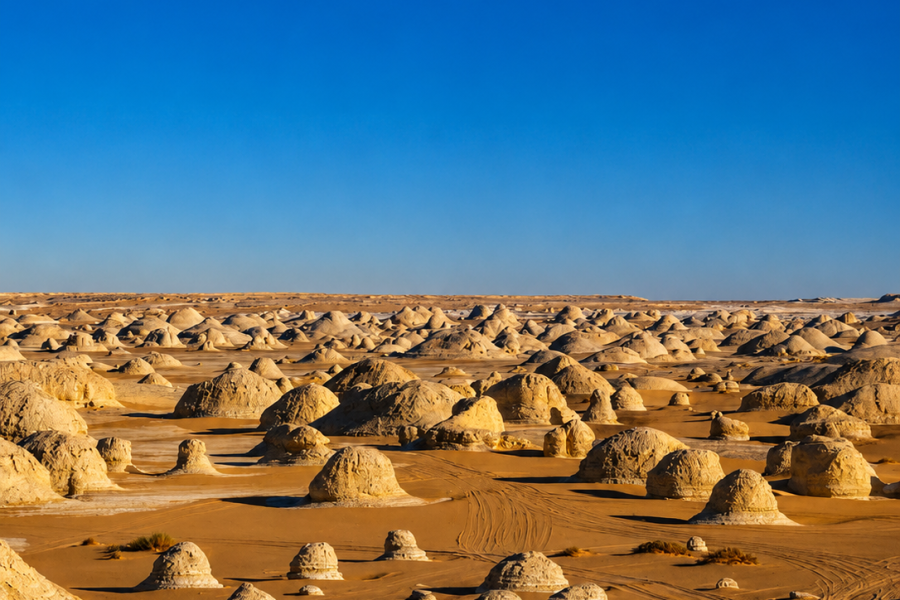
The White Desert vs Black Desert Egypt guide explains the main visual distinction: the White Desert is dominated by pale formations, while the Black Desert is characterized by darker hills and stones set against warmer desert colors.
For photographers, the Black Desert is especially strong for:
panoramic landscapes,
layered hills,
telephoto compression,
minimalist desert photography,
environmental portraits,
4×4 safari photography,
high-contrast images,
silhouettes,
travel storytelling.
It is less about finding one famous formation and more about arranging the larger landscape into a composition.
That makes it particularly rewarding for photographers willing to slow down and observe.
Quick Guide: Best Black Desert Photography Spots
If photography is your main priority, focus on:
Black Desert panoramic viewpoints
Gabal El Marsos
Dark hill layers around Bahariya
4×4 tracks through the Black Desert
Bahariya Oasis transition landscapes
Crystal Mountain
Agabat Valley
Sand dunes farther along the safari route
White Desert sunset and overnight camp
A longer safari allows photographers to capture all of these as one visual sequence rather than treating the Black Desert as a separate isolated destination. The current 3-day camping itinerary on White and Black Desert Tours combines the Black Desert, Gabal El Marsos, Crystal Mountain, Aqabat, large dunes, multiple valleys and the White Desert over two camping nights.
1. Photograph the Black Desert Panorama
Start with the wider landscape.
Do not immediately search for a named mountain.
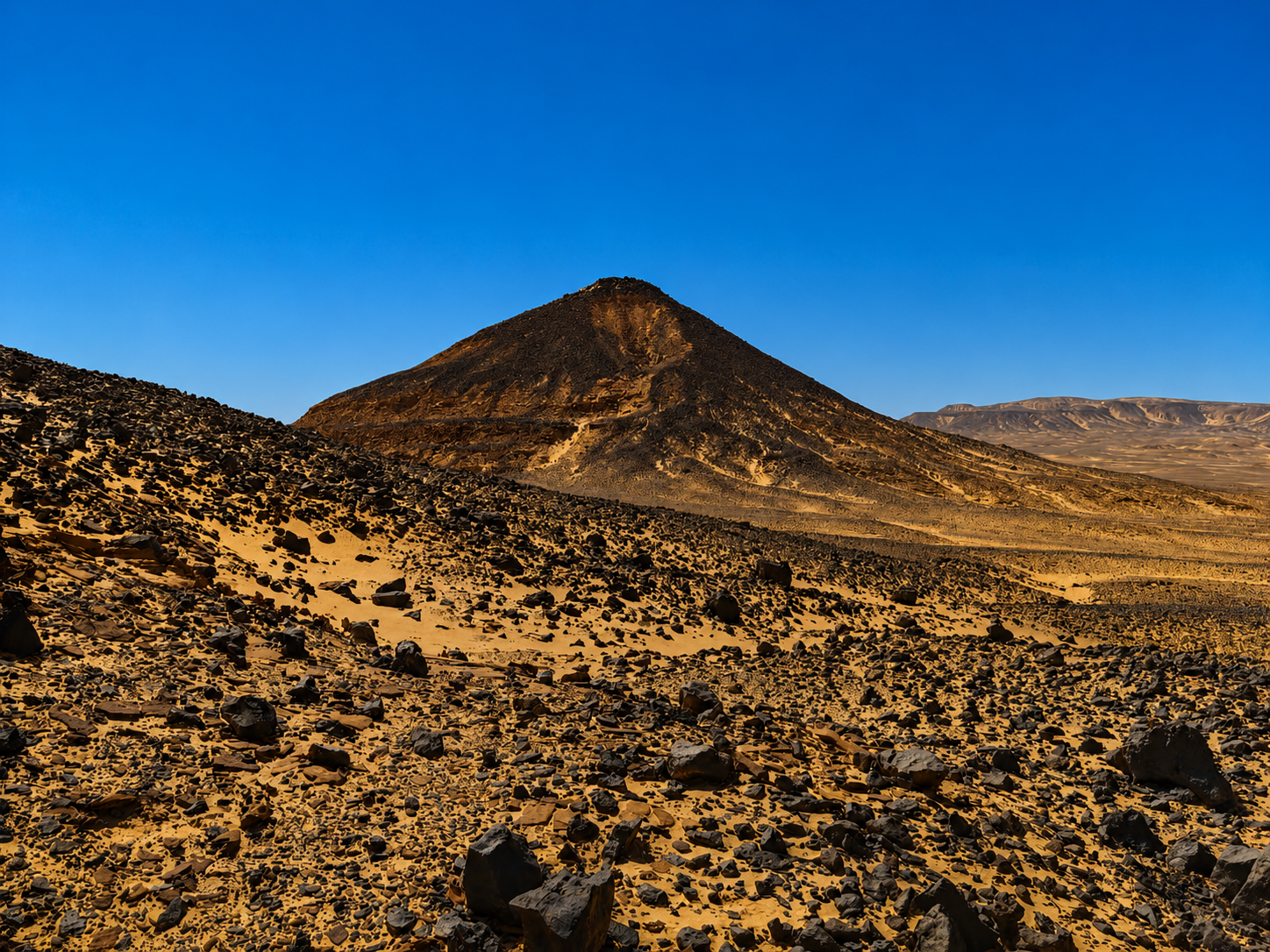
The Black Desert is visually powerful because dark hills appear repeatedly across a much lighter desert floor.
Your goal should be to capture that repetition.
Look for a viewpoint where you can arrange:
foreground stone → middle-distance hill → distant hills → horizon.
This creates depth.
The Black Desert Egypt pillar page highlights wide panoramic views as one of the area’s defining visual characteristics.
Wide-angle approach
Use a wider focal length when the foreground itself is interesting.
Look for:
dark rocks,
vehicle tracks,
ridges,
textured ground.
These can lead the viewer toward the hills.
Avoid too much empty sky
One common mistake in desert photography is composing half the image as featureless blue sky.
Unless the sky contains interesting clouds or dramatic light, allow the terrain to dominate.
2. Use a Telephoto Lens for Layered Hills
A telephoto lens may actually be one of the best tools in the Black Desert.
Why?
Because the landscape contains hills at different distances.
With the naked eye, you see:
one hill here,
another farther away,
another near the horizon.
A longer focal length compresses those distances.
Suddenly you can create:
dark hill → dark ridge → distant mountain → another layer behind it.
This makes the desert feel denser and more dramatic.
It is almost the opposite of photographing the White Desert, where wide lenses are frequently used to exaggerate individual formations.
For photographers visiting both landscapes, this contrast in technique is part of what makes the combined route so rewarding.
3. Photograph Gabal El Marsos
Gabal El Marsos is one of the strongest named photography stops in the Black Desert.
It is commonly included on safari itineraries after entering the Black Desert from Bahariya Oasis, before continuing toward El Hez, Crystal Mountain and Agabat. The site’s current 3-day safari specifically includes a walk at Gabal El Marsos, also called Divided Mountain.
Its advantage for photographers is simple:
you can get out and walk.
Instead of shooting everything from vehicle level, you can change your position and search for a better angle.
Try photographing:
the mountain with a person for scale,
the 4×4 below the mountain,
surrounding hills from an elevated position,
textures in the dark stones,
compressed hill layers with a telephoto lens.
If you’re planning specifically around this stop, read the full Gabal El Marsos Black Desert guide.
4. Use People to Show Scale
One of the biggest challenges in desert photography is communicating size.
A huge hill can look surprisingly small when there is nothing familiar in the frame.
The easiest solution is a human figure.
Ask a traveler to walk along a ridge or stand at a safe distance in the open landscape.
Keep them small in the frame.
That communicates:
human → mountain → desert scale.
Do not always ask the person to face the camera.
A traveler looking toward the landscape often feels more natural and cinematic.
This approach works especially well at Gabal El Marsos and around panoramic Black Desert viewpoints.
5. Use the 4x4 as Part of the Composition
Your safari vehicle is not necessarily something you need to remove in Photoshop.
It can become one of your strongest storytelling elements.
A 4×4 provides:
scale,
movement,
context,
visual contrast,
a sense of expedition.
Current Black Desert routes from Bahariya use 4×4 travel as the practical way of linking the Black Desert with places such as Gabal El Marsos, Crystal Mountain and the deeper White Desert route.
Try compositions such as:
Vehicle on a track
Use the road or tire marks as leading lines.
Vehicle beneath a hill
Excellent for showing scale.
Vehicle approaching
Ask the driver to move slowly through an open safe section where stopping and photography are permitted.
Vehicle photographed from above
A slightly elevated position can transform the car into a small visual element within a huge landscape.
Road and track photographs are extremely useful in travel storytelling.
Look for:
a paved road disappearing toward dark hills,
4×4 tracks crossing open sand,
a vehicle moving into the distance,
tracks curving between mountains.
These images communicate movement.
They explain how the traveler reached the landscape.
That is particularly important in a destination like the Black Desert because the journey itself is a major part of the experience.
Your existing Black Desert Egypt from Cairo guide explains how travelers generally reach Bahariya first and then begin the deeper safari route. The official Egyptian tourism portal likewise describes Bahariya as the practical nearby oasis for short Western Desert exploration.
8. Photograph Crystal Mountain
Once you leave the Black Desert, the next visual change can be Crystal Mountain.
This is useful to photographers because it adds close-up geological images to a collection otherwise dominated by wide landscapes.
A typical route connects:
Black Desert → Gabal El Marsos → El Hez → Crystal Mountain → Agabat.
The current 3-day camping itinerary confirms this same progression.
At Crystal Mountain, think smaller.
Photograph:
textures,
details,
mineral reflections,
shapes,
the relationship between formation and surrounding desert.
A standard or short telephoto lens may work better here than an ultra-wide lens.
The goal is variety.
Your portfolio becomes stronger if it contains intimate details as well as giant panoramas.
9. Photograph Agabat Valley
For landscape photographers, Agabat can become one of the strongest locations of the entire journey.
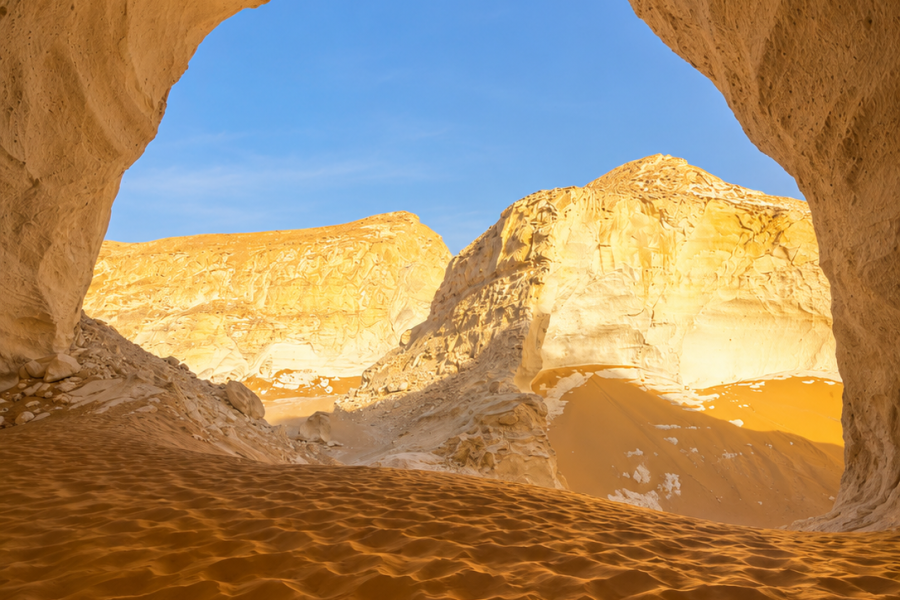
After the dark hills of the Black Desert and the tighter geological compositions around Crystal Mountain, Agabat opens into much larger golden and pale landscapes.
This gives you excellent opportunities for:
panoramas,
telephoto layers,
dunes,
environmental portraits,
vehicle photography.
Agabat is also an important visual bridge between the Black Desert and the White Desert on combined routes. The current Black/White Desert itinerary architecture on the site consistently places Crystal Mountain and Agabat between these two headline landscapes.
If photography matters, do not rush this area.
Black Desert vs Agabat for Photography
They require very different approaches.
Black Desert
Focus on:
darkness,
contrast,
rugged hills,
repetition,
telephoto compression.
Agabat
Focus on:
depth,
layered cliffs,
sand,
huge views,
soft curves.
A strong photography safari contains both.
The images should feel as if they were made on two completely different trips even though the locations belong to the same Western Desert route.
10. Continue to the White Desert for Sunset
This may sound strange in a Black Desert photography guide.
But if you are already traveling through the region, photographers should consider where they want to spend their best light.
For most first-time visitors, we recommend photographing the Black Desert during the daytime route and saving sunset for the White Desert.
Why?
The White Desert’s pale formations change dramatically in warm evening light, and an overnight camp means you can remain there for blue hour, night photography and sunrise.
For photographers, this creates a much richer visual sequence.
What Is the Best Light for Black Desert Photography?
There is no single correct answer.
Different light produces different Black Desert images.
Early Morning
Low light can give hills strong dimensional shape.
Long shadows add texture.
The challenge is route logistics: many Cairo-based travelers only reach the Black Desert later after driving to Bahariya.
If sunrise in the Black Desert specifically matters to you, you need to discuss the itinerary with the operator rather than assuming a standard tour schedule will place you there.
Late Afternoon
This is one of the strongest periods for the Black Desert.
Lower sunlight can create:
longer shadows,
deeper terrain,
warmer sand,
stronger separation between hills.
If Black Desert photography is your main goal, ask whether the itinerary can spend more late-afternoon time here.
But remember the trade-off:
You may then reach Agabat or the White Desert later.
A photography-oriented private itinerary is valuable precisely because you can prioritize one location instead of treating every traveler identically.
Midday Photography in the Black Desert
Do not put your camera away.
The Black Desert can work surprisingly well under harsh light.
Use midday for a more graphic style.
Look for:
strong contrast,
black hills against pale sand,
dark rocks against blue sky,
minimal compositions,
shadows beneath stones,
monochrome photography.
The Black Desert’s own high-contrast palette can suit harder light better than many softer landscapes.
This is one reason it works well earlier in a combined safari while the best golden-hour light is saved for the White Desert.
Black-and-White Photography
Despite the name, most visitors photograph the Black Desert in color.
And they should.
The relationship between:
black,
brown,
gold,
yellow,
blue
is one of the attractions.
But monochrome photography can also be extremely effective.
Look for compositions built around:
texture,
shape,
repeating hills,
silhouettes,
tire tracks,
shadow.
Black and white works particularly well when midday color feels less interesting.
Instead of fighting harsh light, use it.
Best Lens for Black Desert Photography
There is no single perfect lens.
A useful kit might include three ranges.
Wide-Angle
Best for:
foreground-heavy landscapes,
vehicle tracks,
large skies,
environmental portraits.
Standard Zoom
Probably the most useful all-around lens.
It works for:
documentary travel images,
people,
medium landscapes,
Crystal Mountain.
Telephoto
Potentially the most underrated choice.
Excellent for:
layered dark hills,
compressed ridges,
distant vehicles,
isolated details.
If you want to travel light, a good standard zoom plus a compact telephoto is an excellent combination.
Do You Need a Tripod?
For most Black Desert daytime photography:
no.
A tripod can slow you down during a fast-moving safari.
However, it becomes valuable later if the trip continues into:
sunset,
blue hour,
White Desert camping,
astrophotography,
sunrise.
That is why photographers taking an overnight or 3-day route may still want one.
Choose a tripod you are actually willing to carry.
A giant studio tripod sitting inside your luggage is useless.
Protecting Your Camera From Desert Sand
The Western Desert is not a clean studio environment.
Bring:
closed camera bag,
blower,
microfiber cloth,
lens caps,
spare protective cloth or cover.
Avoid unnecessary lens changes during strong wind.
When changing lenses:
turn away from the wind,
keep the camera opening facing downward when practical,
work quickly.
Do not place the camera directly on sand.
Check tripod joints and bag zippers after returning from the desert.
For the broader non-photography packing list, see our White Desert Egypt Packing List.
Batteries and Charging
Assume electricity may be less convenient once you enter remote camping areas.
Bring:
fully charged batteries,
spare batteries,
power bank,
charging cables.
The longer 2 Nights 3 Days camping itineraryinvolves two nights and a deeper route across the Western Desert, so photographers should plan power requirements accordingly.
Do not arrive with one camera battery and expect unlimited charging.
How Many Days Do Photographers Need?
This is probably the most important planning decision.
One Day
Possible.
But rushed.
A one-day journey can introduce you to the Black Desert and additional Western Desert landscapes.
For first-time visitors who want good photographs but also have a wider Egypt itinerary, this is a strong compromise.
3 Days / 2 Nights: Best for Serious Photographers
For photographers, this is our preferred choice.
The current 2 Nights 3 Days White Desert Camping Tour includes the Black Desert, Gabal El Marsos, El Hez, Crystal Mountain, El Mattar, Aqabat, Great Karaween dunes, Ain El Serw, multiple valleys, Acacia Tree, Tents Valley and White Desert National Park.
The advantage is not merely the bigger attraction list.
It is time.
You get:
more landscapes,
two evenings,
two mornings,
two nights,
more opportunity for changing light,
less pressure at every stop.
If photography is one of the main reasons you are traveling to the Western Desert, choose this route.
Should Photographers Book a Private Safari?
In many cases, yes.
A photographer does not experience an attraction in the same way as a standard sightseeing traveler.
One traveler might see a hill and think:
“Nice. Next stop.”
A photographer might need:
ten minutes scouting,
twenty minutes waiting,
five minutes moving position,
another ten minutes shooting.
Private travel can make that easier.
Your current White Desert pillar describes the company’s tours as private and flexible, including options specifically for photographers.
Tell the operator before departure that photography is a priority.
Do not wait until the first viewpoint to explain that you want a different pace.
A Good Black Desert Photography Itinerary: 2 Days
Day 1
Cairo → Bahariya Oasis
Use the road section for documentary images rather than expecting major landscapes immediately.
Bahariya Oasis
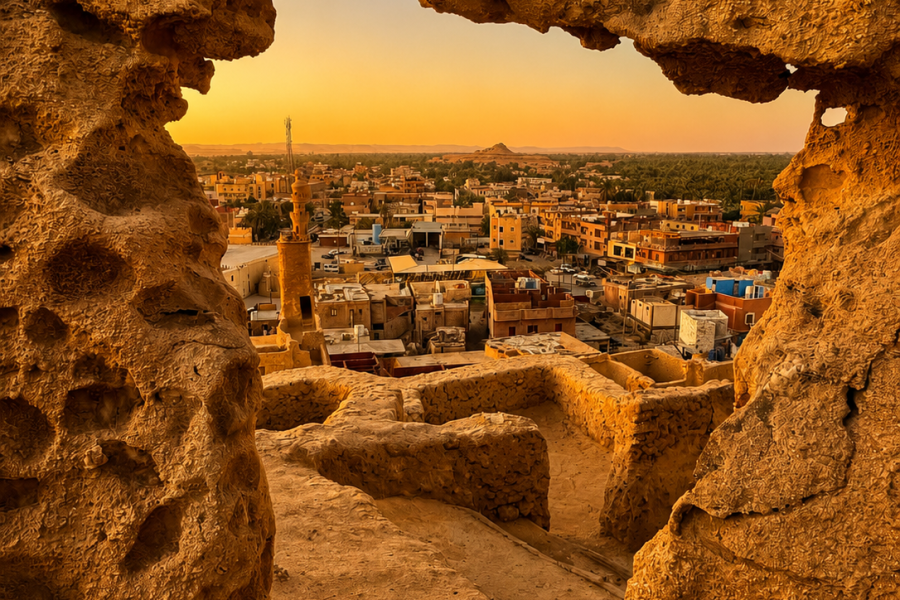
Photograph palms and the transition between oasis and desert.
Black Desert
Shoot panoramic landscapes and hill layers.
Gabal El Marsos
Walk and look for scale compositions.
Crystal Mountain
Switch to geological details.
Agabat
Return to large landscapes.
White Desert
Scout before sunset.
Photograph sunset and blue hour.
Night
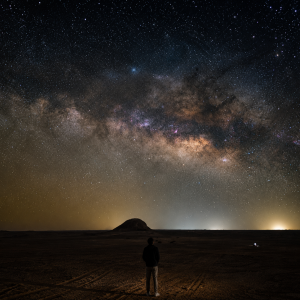
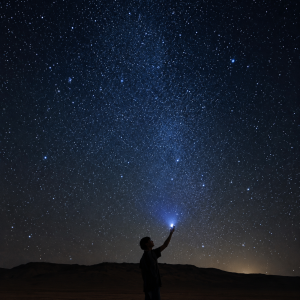
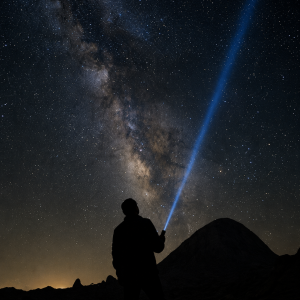
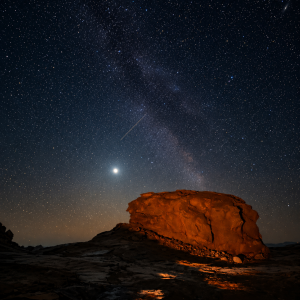
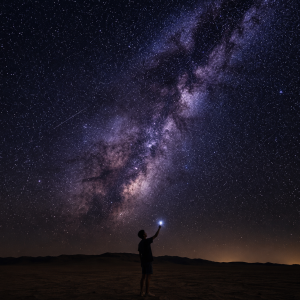
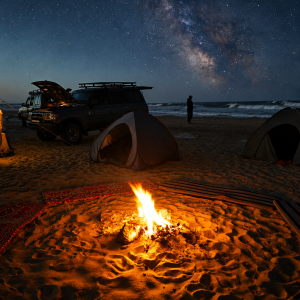
Photograph camp and stars if conditions allow.
Day 2
Wake for sunrise.
Photograph White Desert morning light.
Then continue with documentary travel images on the return journey.
Best Black Desert Photography Itinerary: 3 Days
Day 1
Cairo → Bahariya Oasis → Black Desert → Gabal El Marsos → El Hez → Crystal Mountain → El Mattar.
Photograph camp and evening landscapes.
Day 2
Sunrise.
Continue deeper through Aqabat and larger dune areas.
Photograph:
dunes,
valleys,
vehicles,
springs,
Acacia Tree,
Tents Valley.
Reach the White Desert for the second evening.
Day 3
Sunrise among the White Desert formations.
Continue photographing the morning landscape before returning through Bahariya.
This mirrors the broader location sequence in the current 3-day camping route.
Black Desert Photography vs White Desert Photography
The two landscapes reward different techniques.
Black Desert
Think:
contrast + repetition + scale + layers.
Best tools:
telephoto,
standard zoom,
wide panoramas.
White Desert
Think:
shape + individual formations + negative space + changing light.
Best tools:
wide-angle,
standard zoom,
tripod at night.
The best photographic journey uses both.
That is why we recommend reading our dedicated White Desert Egypt Photography Guide alongside this article.
The two pages target different photographic problems rather than competing with each other.
Common Black Desert Photography Mistakes
Shooting Every Hill the Same Way
Change focal lengths.
Move.
Simplify compositions.
Using Only a Wide-Angle Lens
Telephoto compression can be much more effective.
Removing Every Human Element
A person or vehicle gives scale.
Photographing Only Gabal El Marsos
The surrounding Black Desert is equally important.
Ignoring Bahariya Oasis
The green-to-black transition strengthens your visual story.
Rushing Agabat
It is one of the strongest landscape areas later in the route.
Expecting Golden Hour Everywhere
A multi-stop safari cannot place every attraction in perfect light.
Prioritize.
Not Telling the Guide You’re a Photographer
This is probably the most avoidable mistake.
Best Time of Year for Black Desert Photography
For most travelers, the cooler period is generally more comfortable for extended desert photography and camping.
Your current seasonal guide recommends roughly October through April for the broader Black and White Desert experience, with winter nights requiring warmer layers.
For photography, however, think beyond temperature.
Consider:
sunrise time,
sunset time,
wind,
moon phase if camping,
trip length,
desired light.
A photographer planning astrophotography has different needs from someone interested only in Black Desert panoramas.
Is the Black Desert Worth Visiting Just for Photography?
Yes—although we would still recommend combining it with the surrounding route.
If you enjoy:
landscapes,
geology,
minimalism,
telephoto compositions,
road-trip photography,
the Black Desert is worthwhile.
But the photographic value increases dramatically when you connect it with:
Bahariya → Black Desert → Crystal Mountain → Agabat → White Desert.
That is why our Is the Black Desert Egypt Worth Visiting? article recommends treating it as part of a wider Western Desert experience rather than driving from Cairo only for one isolated stop.
Which Black Desert Stops Should Photographers Prioritize?
If time is limited, prioritize:
Black Desert panoramic landscape
Essential.
Gabal El Marsos
Best named Black Desert walking/photography stop.
Agabat
Best broad landscape later in the route.
White Desert sunset
Best late-afternoon conclusion for the combined safari.
Sunrise after camping
Worth waking up for.
If you have more time, add Crystal Mountain details and deeper dunes.
This is our first recommendation for serious photographers because the current itinerary covers the Black Desert, Gabal El Marsos and a much deeper range of Western Desert landscapes over two camping nights.
Frequently Asked Questions About Black Desert Egypt Photography
Yes. Dark hills, golden terrain, large horizons and 4x4 safari scenes make the Black Desert particularly strong for landscape, telephoto and environmental travel photography.
The wider Black Desert panorama and Gabal El Marsos are two of the strongest stops. Photographers should also continue toward Crystal Mountain and Agabat for greater visual variety.
Yes. Gabal El Marsos provides strong panoramic Black Desert views and opportunities to use travelers or 4x4 vehicles for scale.
A standard zoom is the most versatile, but a telephoto lens is extremely useful for compressing distant Black Desert hills. A wide-angle lens works well for foreground-heavy landscapes and travel storytelling.
Not usually for daytime Black Desert photography. A tripod becomes much more useful if the safari continues into sunset, night photography or sunrise.
Low morning or late-afternoon light can reveal terrain through stronger shadows, but midday also works well for high-contrast and minimalist photography.
Two days and one night are a good minimum. Three days and two nights are better for serious photographers because they provide more landscapes and more cycles of sunset and sunrise.
Yes. Combining the Black and White Desert gives photographers two completely different landscapes within the same safari. See our White Desert vs Black Desert comparison.
Yes. Palm groves and oasis landscapes create an excellent contrast with the Black Desert and help tell the story of the transition from inhabited oasis to remote desert.
Neither is universally better. The Black Desert excels at rugged hills, contrast and panoramic views, while the White Desert is stronger for individual formations, sunset, camping and night photography.
Yes, but time is limited. An overnight route provides a more relaxed pace and allows photographers to continue toward the White Desert for sunset and sunrise.
It can be. A private route allows more flexibility with photography stops and pacing than a fixed sightseeing schedule.
Keep your camera bag closed, minimize lens changes during wind, use a blower and lens cloth, and avoid placing equipment directly on the sand.
For serious photographers, the 2 Nights 3 Days White Desert Camping Tour provides the widest variety and more time for changing light.