Farafra Oasis Egypt: Gateway to the White Desert, Springs & Travel Guide

Hidden deep in Egypt’s Western Desert, Farafra Oasis Egypt is one of the country’s smallest and most remote oases — and one of the easiest places to overlook.

Many travelers pass through the region on their way toward the famous White Desert without realizing that Farafra is a destination in its own right.

That is a mistake.

Farafra offers a very different experience from Cairo, Luxor, Aswan and even Siwa Oasis.

Here, the attraction is not one famous monument.

It is the combination of:

  • Palm groves
  • Desert springs
  • Traditional oasis life
  • Local art
  • Quiet settlements
  • Vast Western Desert landscapes
  • Extraordinary access to the White Desert

Egypt’s official tourism portal describes Al-Farafra as a charming Western Desert oasis surrounded by the White Desert, Black Desert and Great Sand Sea, making it an excellent base for desert exploration.

For most international travelers, however, Farafra becomes especially valuable when it is combined with a larger Western Desert itinerary.

A typical journey might connect:

Cairo → Bahariya Oasis → Black Desert → Crystal Mountain → Agabat Valley → White Desert → Farafra Oasis

or continue farther south through Egypt’s New Valley.

This guide explains everything you need to know before visiting Farafra Oasis, including what to see, how to get there, the connection with the White Desert, springs, accommodation, best time to visit and which desert tours make the most sense.

If the White Desert is already your main reason for researching the region, start with our complete White Desert Egypt guide.


Quick Guide to Farafra Oasis Egypt

Farafra is best for travelers interested in:

  • Western Desert landscapes
  • White Desert trips
  • Springs
  • Small oasis settlements
  • Local culture
  • Photography
  • Longer overland itineraries
  • Off-the-beaten-path Egypt

Für die meisten Reisenden:

Best time to visit: October to April

Ideal stay: One night as part of a wider desert journey, or longer for slow travelers

Main nearby attraction: Weiße Wüste

Best combined route: Bahariya + Black Desert + White Desert + Farafra

From Cairo: Approximately 545 km by road according to Egypt’s official tourism portal

From Bahariya: Approximately 180 km

Official tourism information also notes that accommodation in Farafra is limited compared with larger destinations, with simple eco-style options forming much of the local tourism infrastructure.

That simplicity is part of the oasis’s character.

Where Is Farafra Oasis?

Farafra is located in Egypt’s Western Desert within the New Valley Governorate.

It sits south of Bahariya Oasis and close to the extraordinary landscapes of the White Desert.

According to the official Egyptian tourism portal, Farafra is roughly:

545 km from Cairo

and approximately:

180 km from Bahariya Oasis.

This geographical position is extremely important for travelers.

Farafra sits close enough to the White Desert to act as one of its natural gateways, while Bahariya provides the more common approach from Cairo.

That creates a useful Western Desert corridor:

Cairo → Bahariya → Black Desert → White Desert → Farafra

For travelers who want more than a quick overnight safari, this route provides a much stronger understanding of the Western Desert.

Why Is Farafra Oasis Famous?

Farafra is primarily known for three things.

  1. Its proximity to the White Desert

The White Desert is the region’s biggest international attraction.

  1. Springs and oasis landscapes

Farafra has wells and springs that create a striking contrast with the surrounding desert.

  1. Its quiet local character

Unlike major Egyptian tourism centers, Farafra remains small and relatively isolated.

The official Egyptian Tourism Authority calls Farafra the smallest and most isolated of Egypt’s major oases and describes the surrounding desert landscapes as among its greatest attractions.

For travelers looking for a quieter side of Egypt, that isolation is part of the appeal.

Farafra and the White Desert: What Is the Connection?

Understanding Farafra means understanding the White Desert Egypt.

The White Desert lies immediately within the broader Farafra depression and is geologically connected with the region.

Egypt’s Environmental Affairs Agency explains that the Farafra depression cuts through the distinctive white chalk layer that defines the protected area’s landscape.

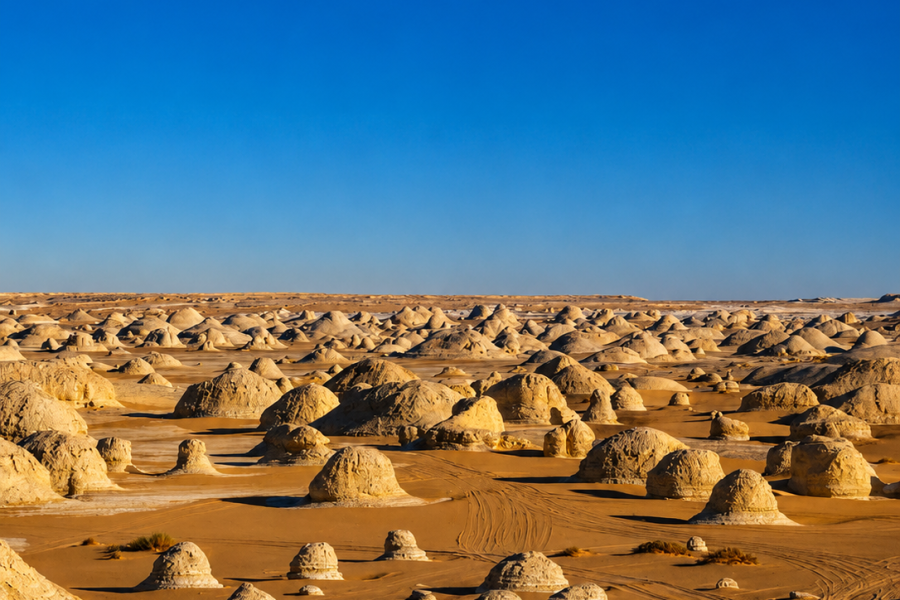
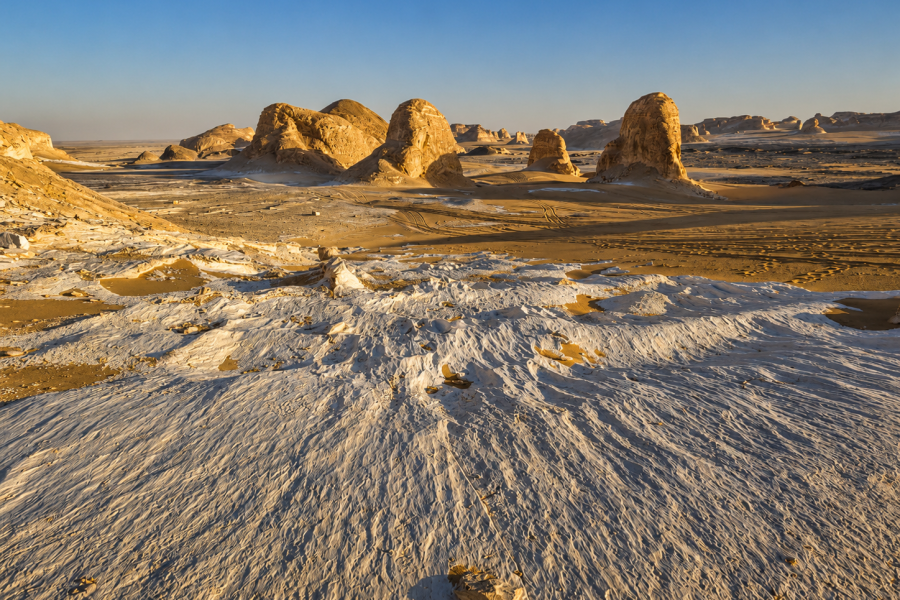
The White Desert was officially declared a protected area in 2002 and is famous for:

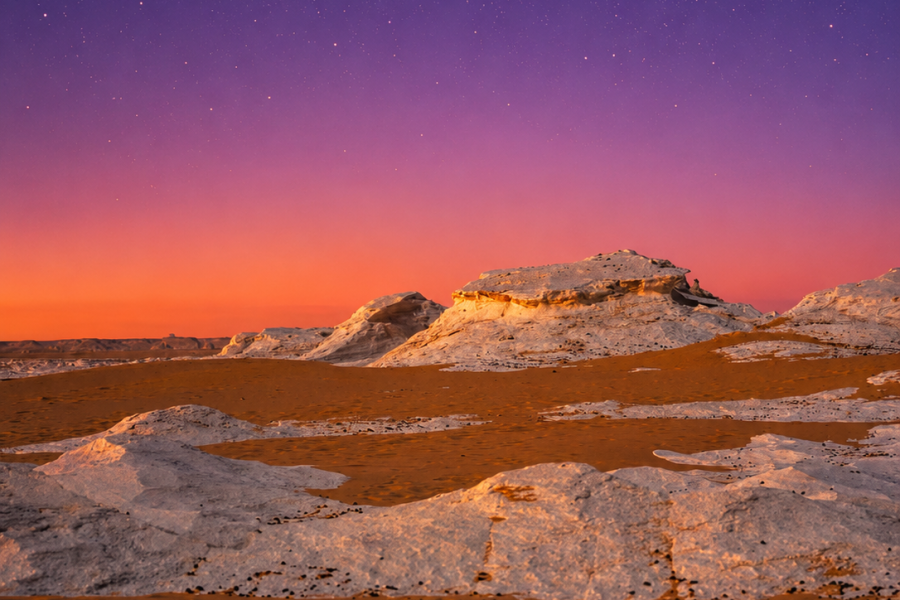
  • White chalk ground
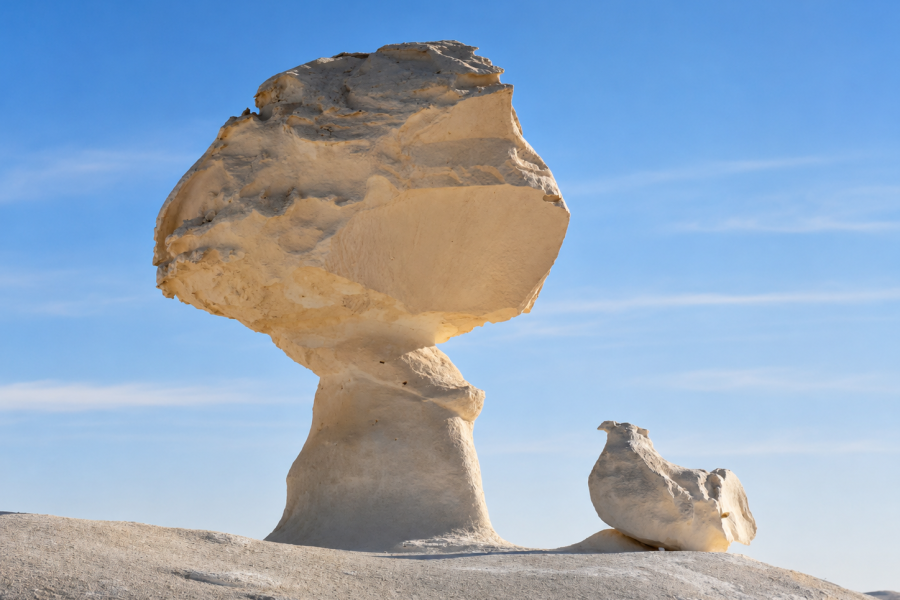
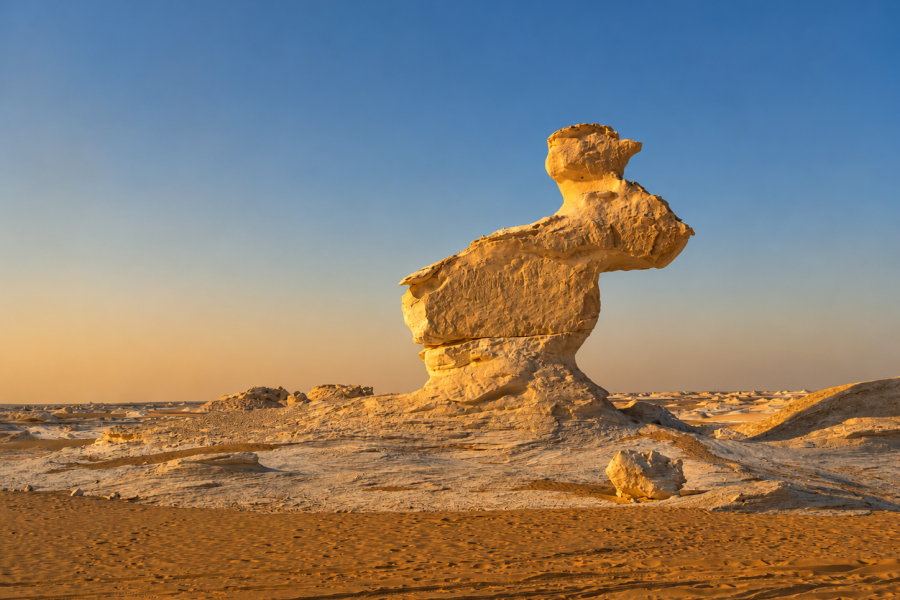
  • Wind-shaped formations
  • Fossils
  • Sanddünen
  • Geological landscapes
  • Wildlife
  • Prehistoric evidence

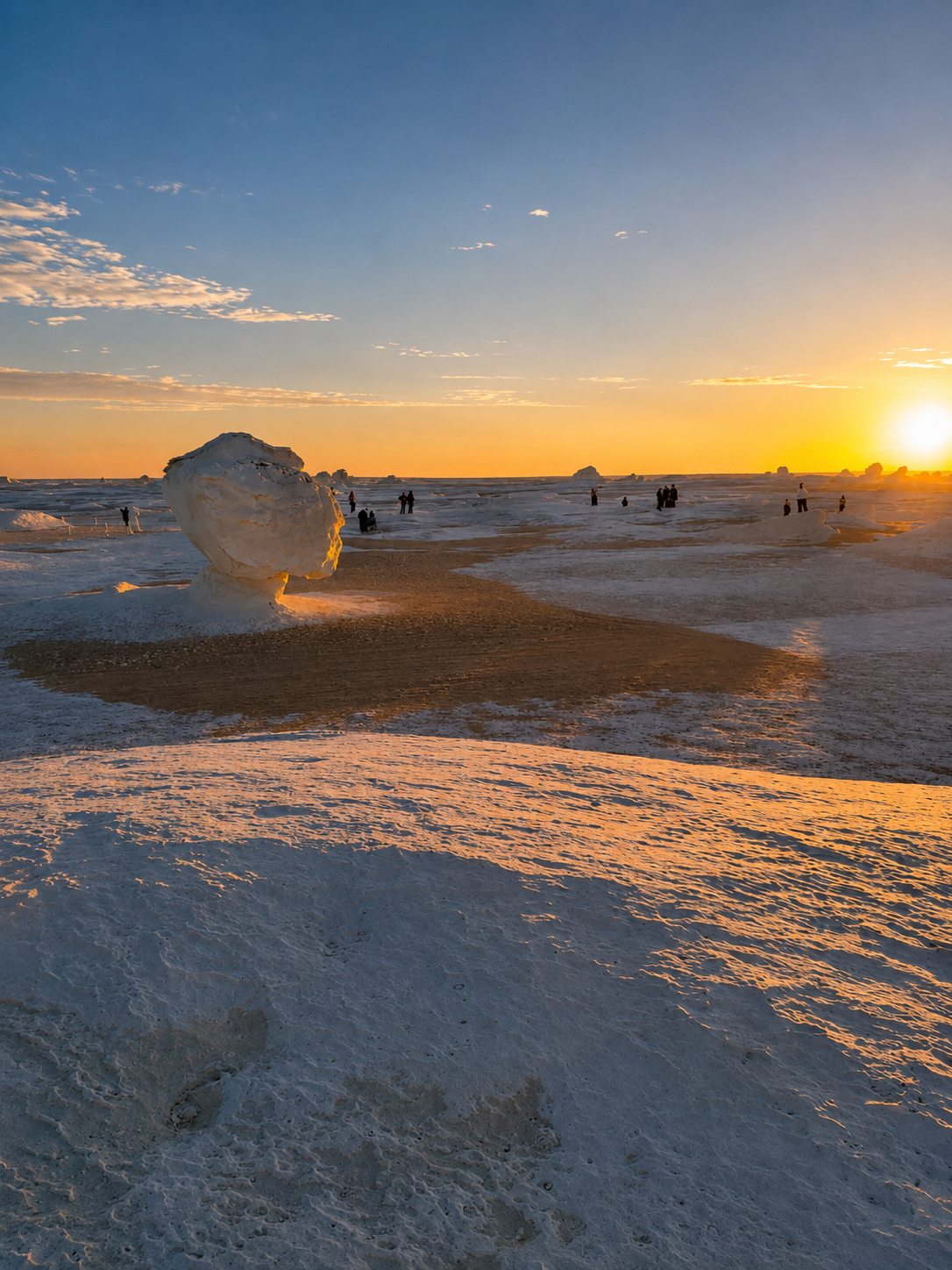
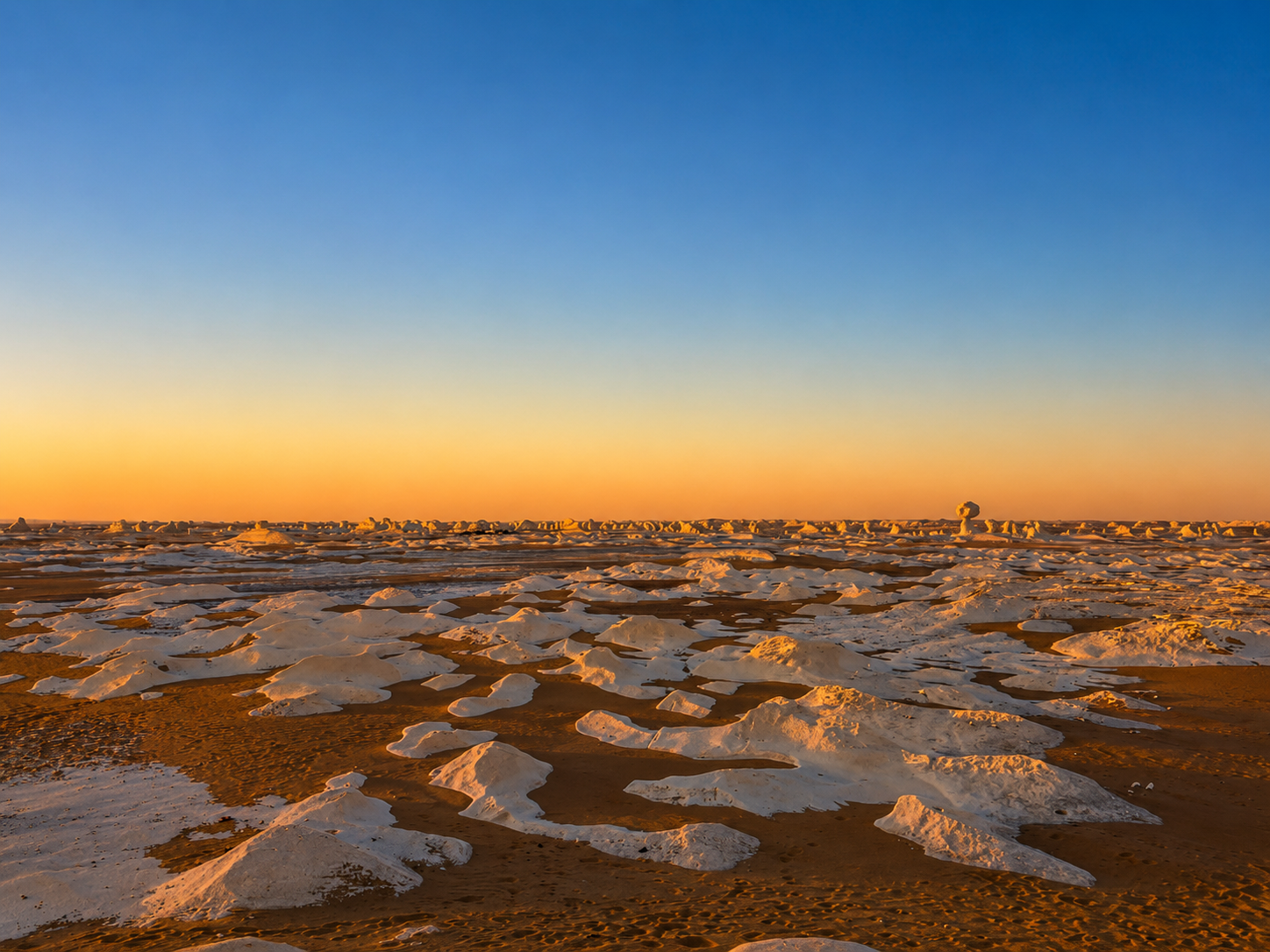
For visitors, the landscape looks almost surreal.

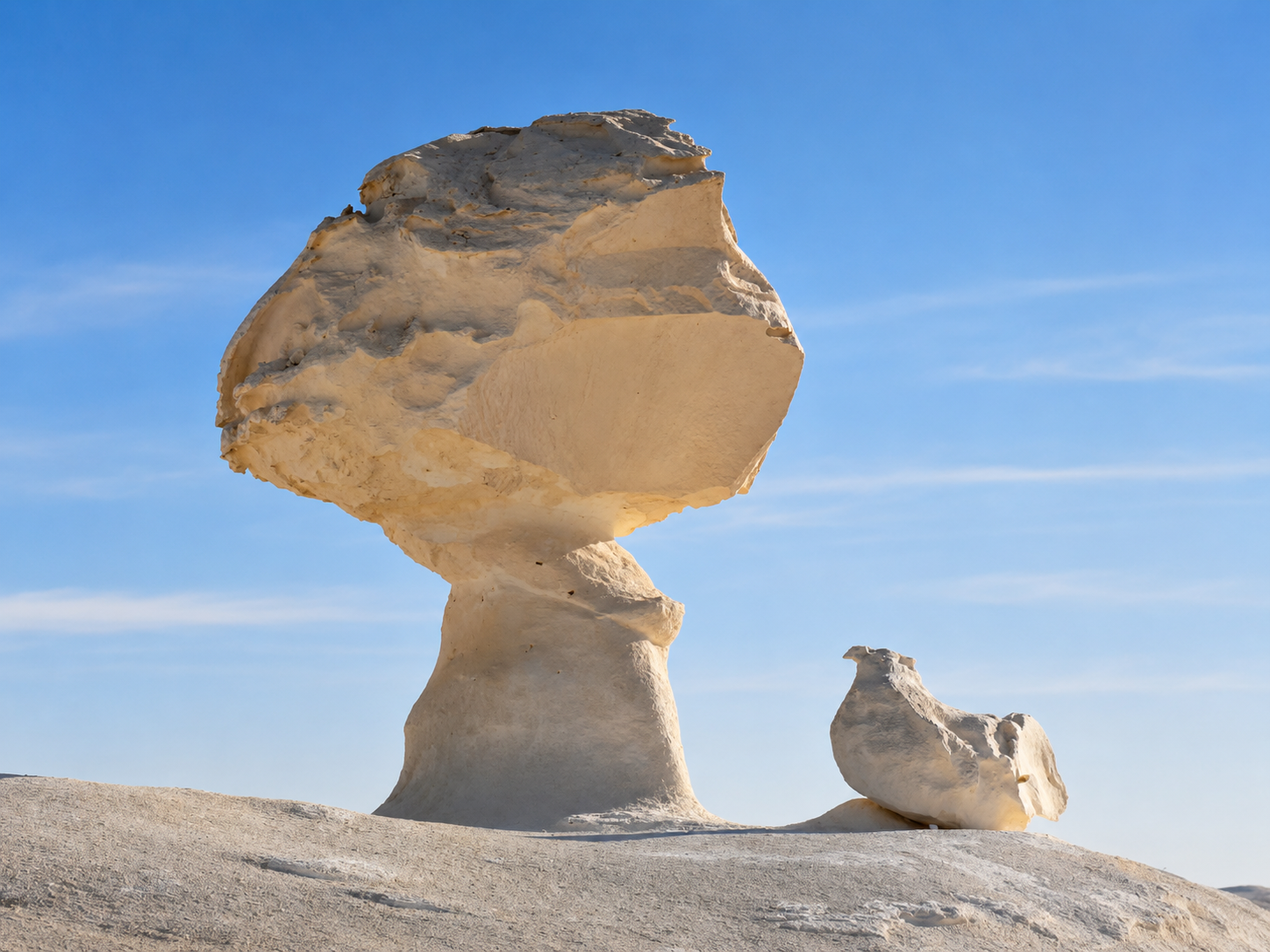
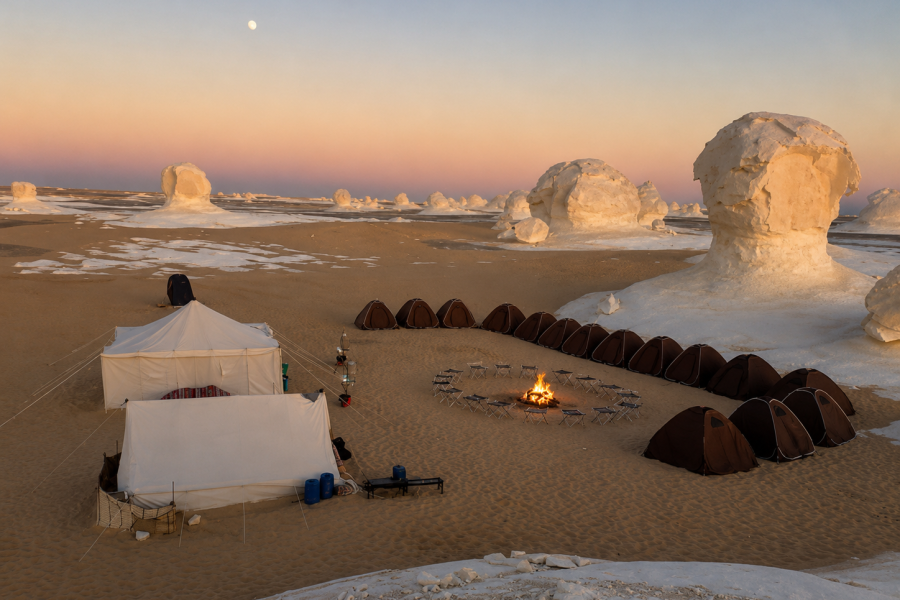
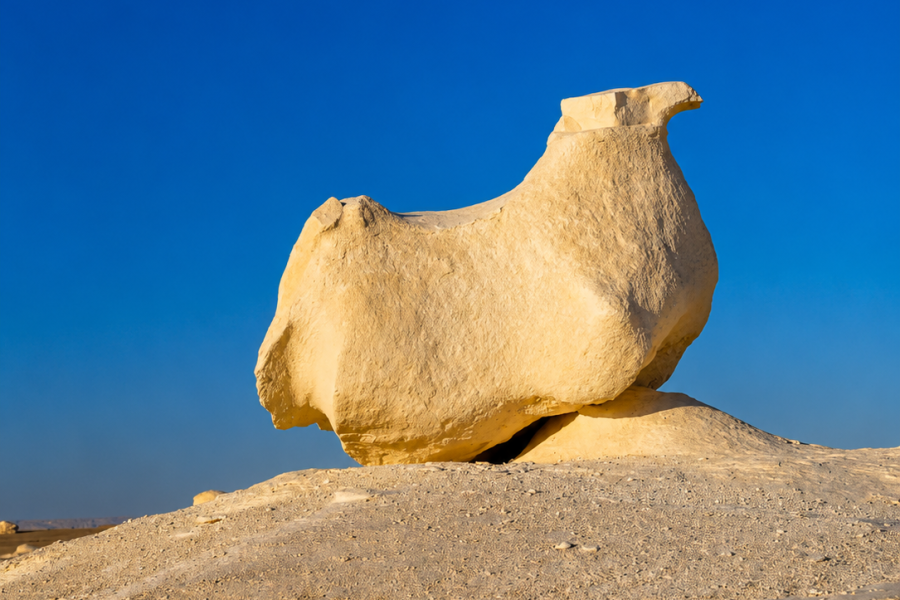
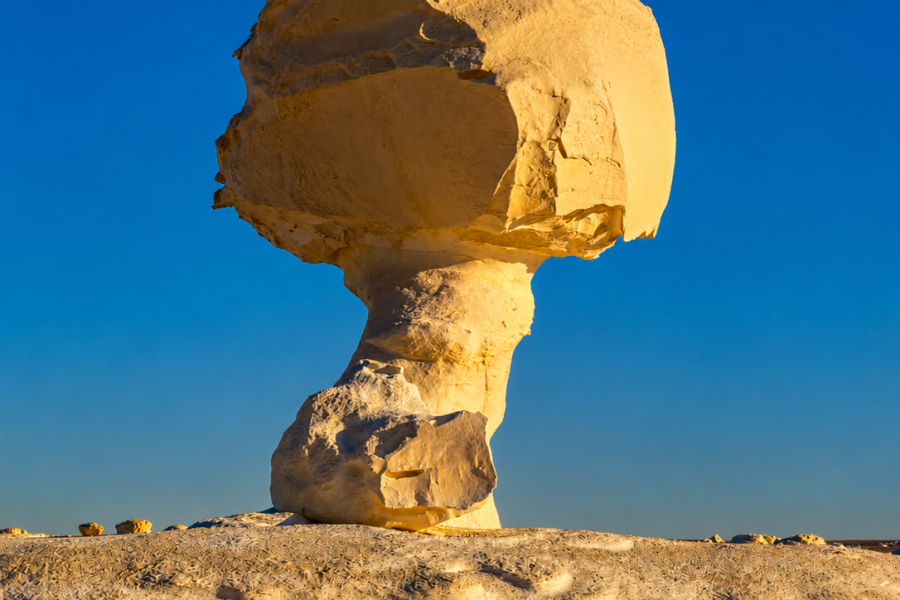
White formations rise from golden desert floors in shapes resembling:

  • Mushrooms
  • Towers
  • Animals
  • Abstract sculptures

If geological landscapes are your main interest, read our detailed things to do in White Desert Egypt guide before choosing your itinerary.

Is Farafra the Best Gateway to the White Desert?

3 Nights 4 Days Tour from Cairo to White Desert, Bahariya Oasis & Luxor

2 Nights 3 Days White Desert & Dejara Cave Tour from Cairo

3-tägige Tour zur Weißen Wüste und Bahariya-Oase (2 Übernachtungen)

Ganztägige Tour am Westufer von Luxor

Siwa-Programm mit komfortablem Bus ab Kairo

Eintägige Tour zur Weißen Wüste ab Kairo

Eintägige Fayyum-Tour ab Kairo

Tour zum Nationalmuseum der Ägyptischen Zivilisation

4-tägiges Luxor-Paket ab Kairo mit Schlafwagenzug (3 Übernachtungen)

Giza Pyramids & Grand Egyptian Museum Tour

3-tägige Fayyum- und Weiße-Wüste-Tour ab Kairo (2 Übernachtungen)

6-tägige Ägypten-Oasen-Tour ab Kairo (5 Übernachtungen)

Ganztägige Tour am Ostufer von Luxor

5 Nights 6 Days Cairo, Siwa, White Desert & Bahariya Oasis Tour

6 Nights 7 Days Cairo, Siwa, Marsa Matrouh & White Desert Tour

Ganztägige Tour in Assuan

Ganztägige Tour nach Alexandria ab Kairo

4-tägige Siwa-Oasen-Tour ab Kairo

3 Nights 4 Days Cairo White Desert Tour

3-tägige Tour von Kairo nach Dakhla und Luxor (2 Übernachtungen)

3-tägige Camping-Tour in der Weißen Wüste (2 Übernachtungen)

3-tägige Kairo–Siwa-Tour (2 Übernachtungen)

3-tägige Kairo–Siwa-Tour (2 Übernachtungen)

2-tägige Tour durch Kairo und Gizeh

1 Übernachtung beim Camping in der Fayyum-Wüste ab Kairo

2-tägige Weiße-Wüste-Tour ab Kairo (1 Übernachtung)

Historically and geographically, Farafra is closely connected with the White Desert.

However, for travelers starting from Cairo, Bahariya Oasis is currently the most practical starting point for many short White Desert tours.

Warum?

Bahariya is significantly closer to Cairo.

That is why many modern 2-day White Desert itineraries follow:

Cairo → Bahariya → 4×4 desert route → White Desert → Bahariya → Cairo

Our White Desert from Cairo guide explains this route in detail.

Farafra becomes especially interesting when:

  • You have more than two days
  • You want a deeper Western Desert route
  • You are continuing south
  • You want to see oasis life beyond Bahariya
  • You want to avoid treating the White Desert as a simple overnight photo stop

Is Farafra Oasis Worth Visiting?

Yes — but mainly for the right type of traveler.

Farafra is worth visiting if you:

  • Love deserts
  • Want to understand oasis life
  • Are already visiting the White Desert
  • Prefer quiet places
  • Enjoy photography
  • Have enough time for a longer route

Farafra may be less important if you have only two days from Cairo.

In that situation, concentrating on the classic White Desert route is generally more efficient.

Our 1-Day vs Overnight White Desert Tour comparison explains why time makes such a big difference in this region.

Farafra is not about ticking off dozens of famous landmarks.

It rewards slower travel.

Best Things to Do in Farafra Oasis

Although the White Desert dominates international attention, Farafra has several experiences worth adding to your itinerary.

1. Explore Qasr Al-Farafra

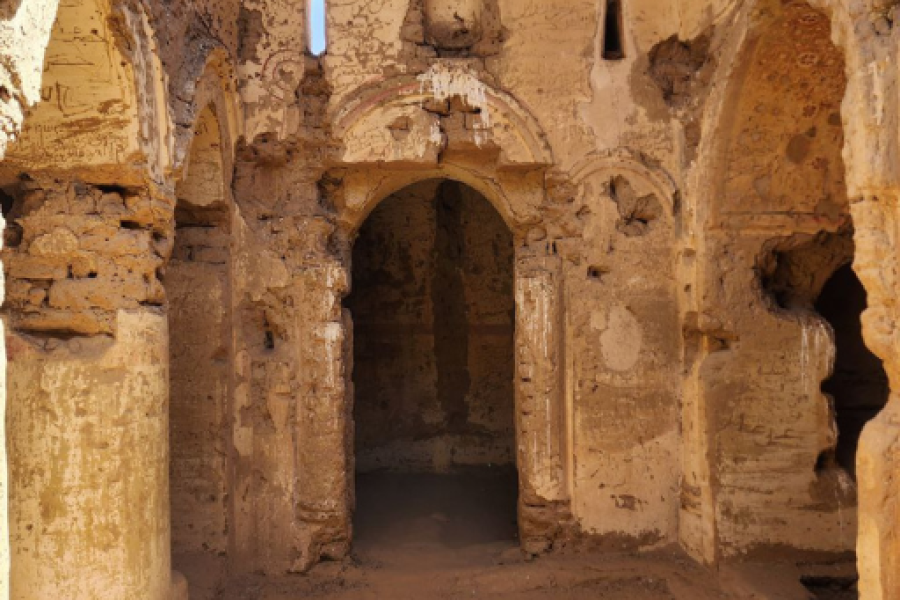
Qasr Al-Farafra forms the historic heart of the oasis.

Official Egyptian tourism information highlights the old settlement and its long history, describing Qasr Al-Farafra as the traditional capital of the oasis.

The surrounding streets provide an opportunity to see a more local side of Western Desert life.

Do not expect the scale of Historic Cairo.

The attraction is the opposite.

It is small, quiet and connected with the history of the oasis community.

2. Visit the Badr Museum

One of Farafra’s most interesting cultural stops is the Badr Museum.

The museum is associated with local artist Badr Abdel Moghny and contains work inspired by:

  • Oasis life
  • Desert landscapes
  • Local traditions
  • People
  • Everyday Farafra culture

This is an important addition to a desert-heavy itinerary because it gives the oasis a human dimension.

Without cultural stops, Western Desert travel can become a sequence of beautiful geological formations.

Farafra reminds visitors that people have lived within these landscapes for generations.

3. Experience Farafra's Springs

Springs are among the defining features of Egypt’s Western Desert oases.

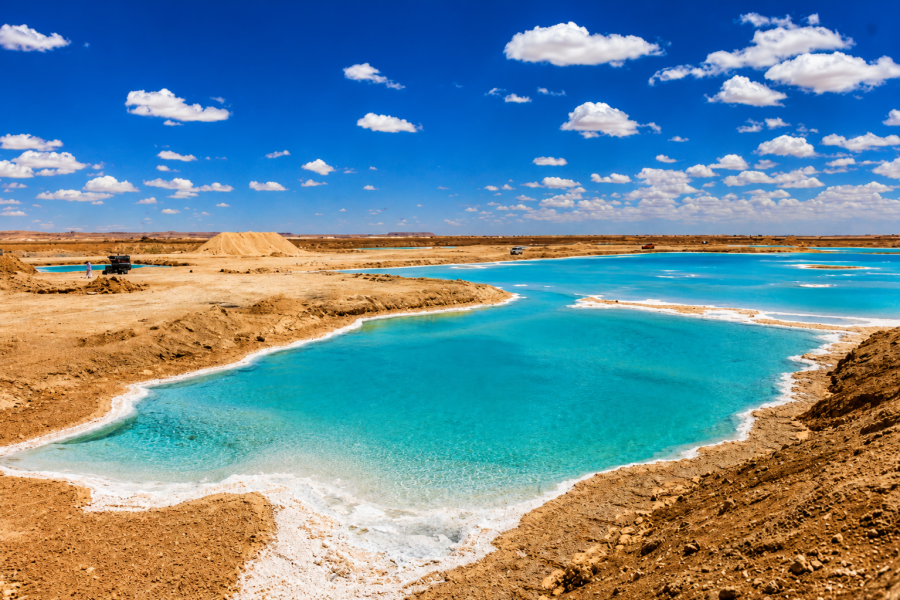
The contrast is remarkable.

You may spend hours crossing dry landscapes and then reach an area where groundwater supports:

  • Palms
  • Gardens
  • Farms
  • Pools
  • Vegetation

Official Experience Egypt information specifically highlights Farafra’s wells and springs.

Among the best-known names are Bir Sitta and other local water sources.

Depending on current conditions and access arrangements, springs may be used as relaxing stops during an oasis itinerary.

Always follow local guidance before entering water.

4. Visit Bir Sitta

Bir Sitta is one of the springs most commonly associated with Farafra.

The official tourism portal recommends evening or nighttime soaking experiences around Farafra’s hot-spring environments, particularly because of the desert atmosphere and clear sky.

Imagine finishing a day of off-road travel and relaxing in warm water beneath a desert sky.

That contrast is exactly what makes oasis travel special.

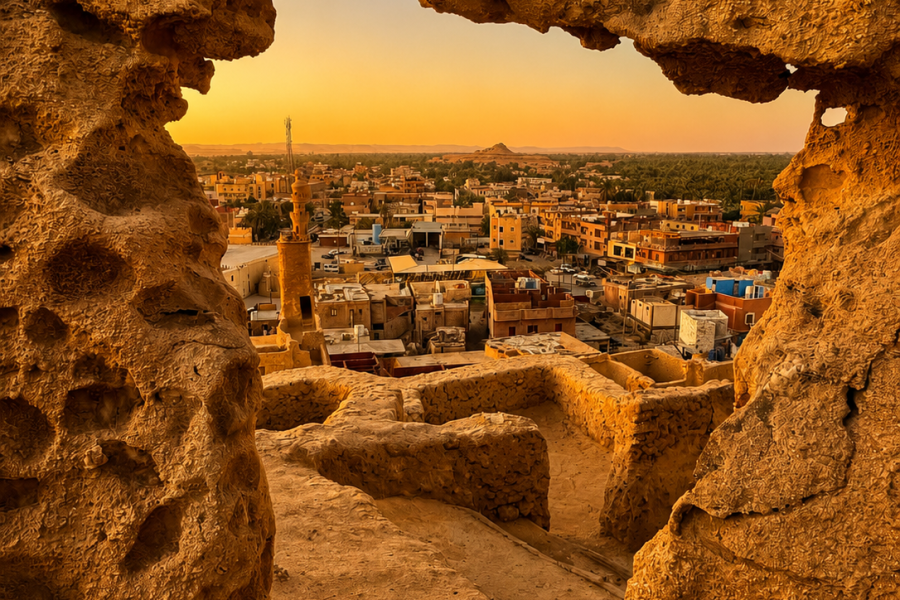
5. See Farafra's Palm Groves and Gardens

Farafra is an oasis.

That means the landscape changes dramatically once groundwater allows vegetation to grow.

Palm trees and agricultural areas form islands of green surrounded by desert.

For photographers, the contrast between green vegetation and dry desert earth can be as interesting as the White Desert itself.

It also helps travelers understand how oasis settlements survive.

Water is the foundation of the entire environment.

6. Explore the White Desert

No Farafra guide would be complete without the White Desert.

For many visitors, this is the main reason for coming.

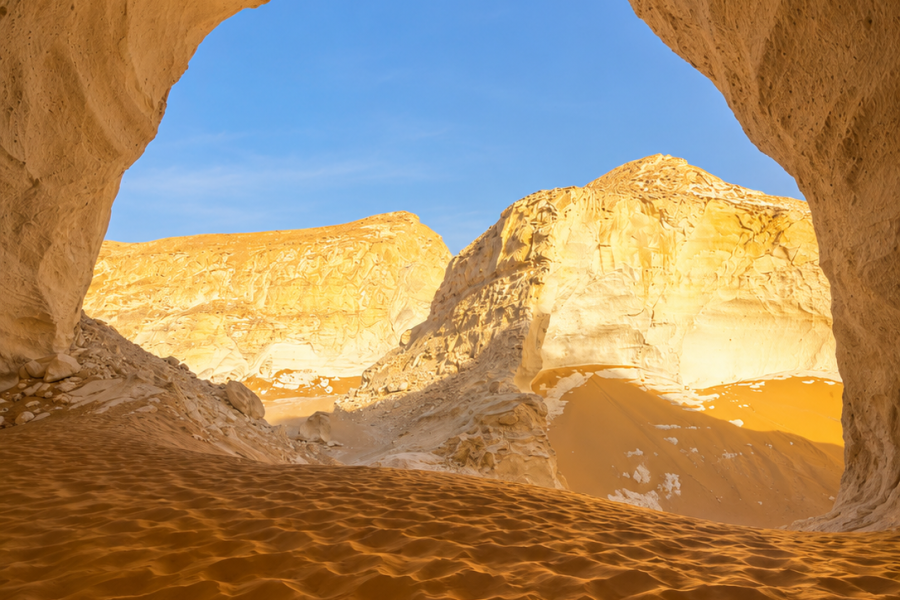
The landscape includes famous chalk formations formed through long-term erosion.

A proper visit may include:

  • Mushroom formations
  • White chalk fields
  • Desert viewpoints
  • Sonnenuntergang
  • Camping
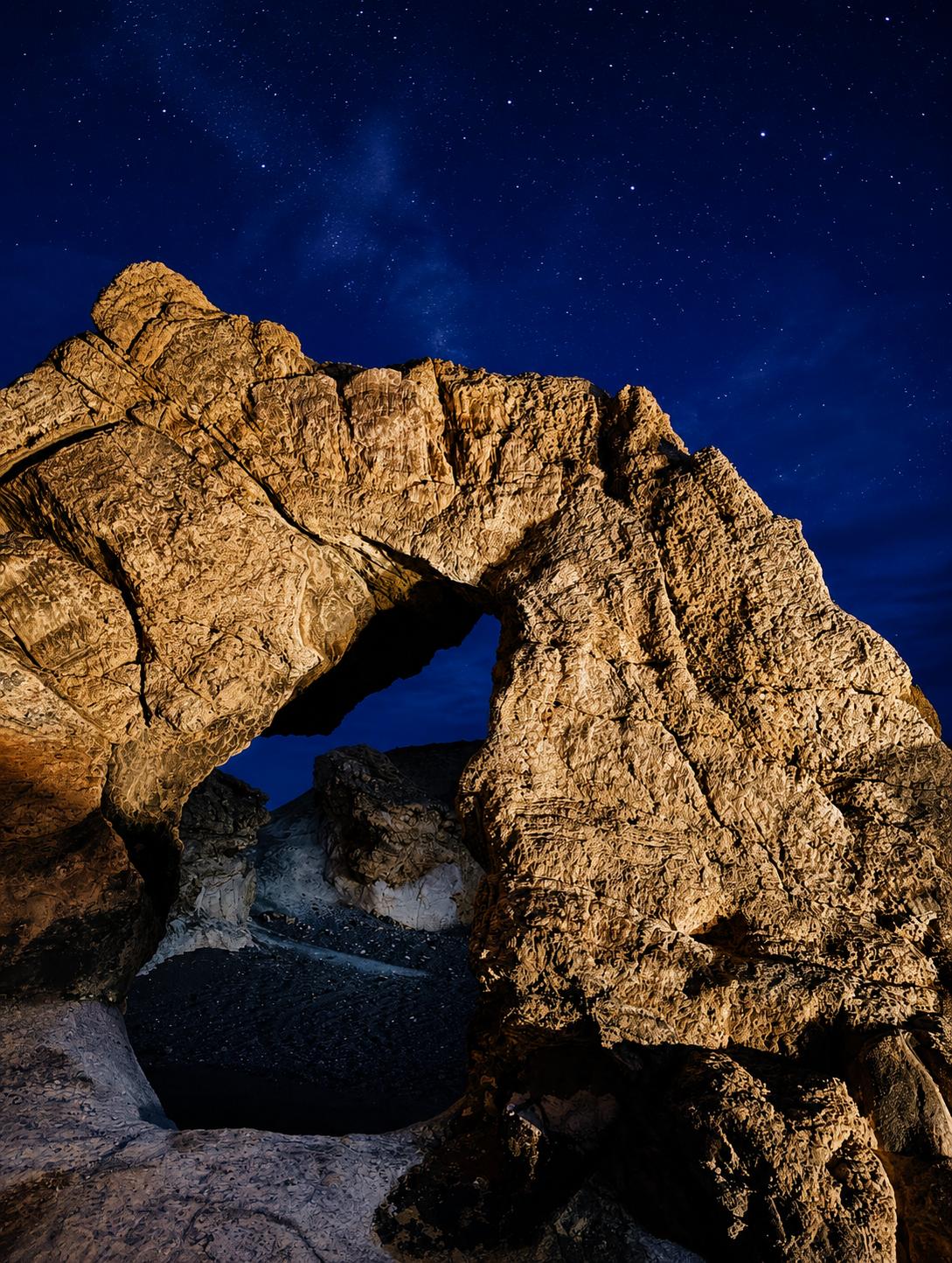
  • Stargazing
  • Sonnenaufgang

Our complete White Desert camping guide explains what to expect if you decide to stay overnight.

Camping is one of the experiences that changes the White Desert from a sightseeing stop into a real desert journey.

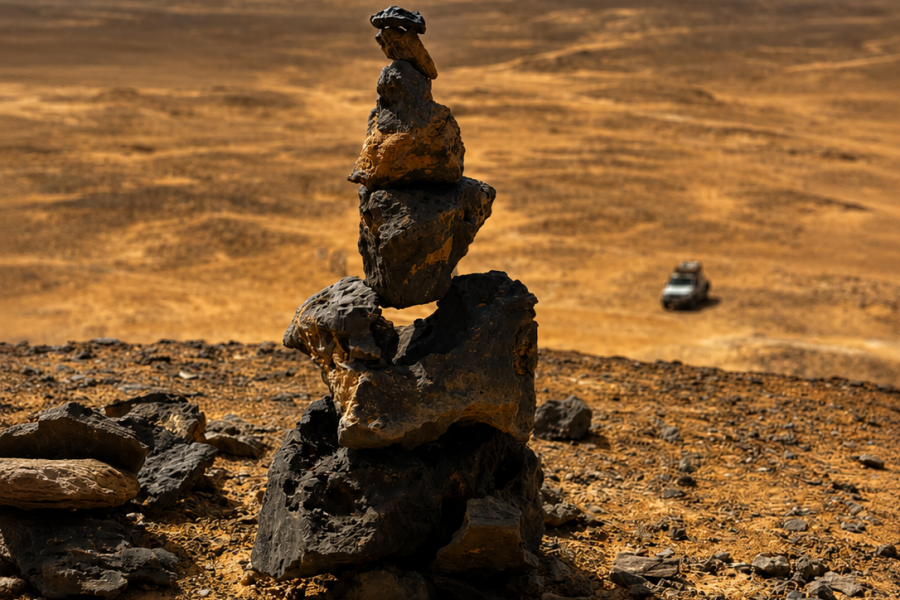
7. Explore the Black Desert

A longer route toward or away from Farafra can also include the Black Desert Ägypten.

The visual difference is dramatic.

The White Desert is pale.

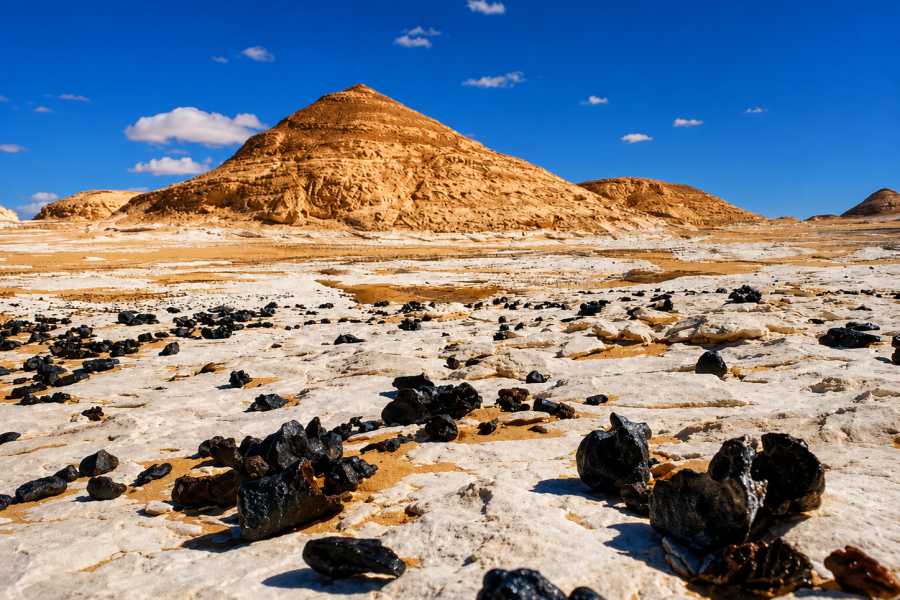
The Black Desert is covered with dark rocks and hills that create an almost volcanic appearance.

Travelers commonly combine both because they lie along the wider Bahariya–Farafra desert route.

Read our White Desert vs Black Desert Egypt comparison to understand why seeing both gives a much better impression of the Western Desert.

8. Stop at Crystal Mountain

Crystal Mountain is another classic Western Desert stop between the Black and White Desert landscapes.

Its exposed mineral formations create another change in scenery.

Although the name “mountain” makes it sound enormous, travelers should think of it more as a distinctive geological formation along the desert route.

It works especially well as part of a longer sequence:

Black Desert → Crystal Mountain → Agabat → White Desert

rather than as a destination by itself.

9. Experience Agabat Valley

Agabat Valley is one of the most dramatic landscapes on the classic Western Desert route.

Large pale formations rise above sandy valleys, creating one of the most photographed sections of the journey.

For photographers, Agabat often becomes a major highlight.

It also reinforces one of the strongest reasons to choose a multi-day Western Desert itinerary:

the scenery never stays the same for long.

Our White Desert Egypt itinerary explains how these stops fit together.

Farafra vs Bahariya Oasis: What Is the Difference?

Travelers often confuse the roles of the two oases.

Both are connected with White Desert travel.

But they serve different purposes.

Bahariya-Oase

Bahariya is closer to Cairo and functions as the main gateway for many short desert tours.

It offers:

  • Palm groves
  • Springs
  • Local villages
  • Black Desert access
  • Safari departure points

Read our full Bahariya Oasis Egypt guide for details.

Farafra-Oase

Farafra is farther south and geographically closer to the White Desert.

Es lautet:

  • Smaller
  • More remote
  • Quieter
  • Better suited to longer routes

Choose Bahariya if:

You have only two days from Cairo.

Include Farafra if:

You have three or more days and want a deeper Western Desert experience.

Farafra vs Siwa Oasis

Farafra and Siwa are both Western Desert oases, but the travel experience is very different.

Farafra

Am besten geeignet für:

  • White Desert access
  • Quiet oasis life
  • Springs
  • Longer desert routes

Siwa

Am besten geeignet für:

  • Salzseen
  • Großes Sandmeer
  • Ancient Oracle Temple
  • Shali
  • Amazigh culture
  • Multi-day destination travel

Read our Siwa Oasis Egypt guide if you are comparing Western Desert destinations.

If you are specifically deciding between Siwa and a White Desert-focused trip, our Siwa Oasis vs White Desert comparison gives a complete breakdown.

How to Get to Farafra Oasis From Cairo

According to Egypt’s official tourism portal, the road distance between Cairo and Farafra is approximately 545 km.

Travel options can include:

  • Private vehicle
  • Organized tour
  • Bus services depending on current schedules

For international tourists whose goal is desert exploration, an organized Western Desert itinerary is often the simplest option because transportation can be coordinated with:

  • 4×4 vehicles
  • Desert guides
  • Unterkunft
  • Camping
  • Protected-area access requirements

This is particularly important once you leave normal paved routes.

A standard city vehicle is not the same as a properly organized desert safari vehicle.

Can You Visit Farafra Oasis on a Day Trip From Cairo?

No, not realistically.

The distance is far too great for a sensible tourism day trip.

A Cairo–Farafra–Cairo return would involve so much road time that you would gain very little from the destination.

If you only have one free day from Cairo, consider a closer destination such as Fayoum Egypt.

If you have two days, a 2-tägige Weiße-Wüste-Tour ab Kairo (1 Übernachtung) makes far more sense.

Farafra becomes more realistic when you have several days.

How Many Days Do You Need for Farafra and the White Desert?

This depends on your priorities.

2 Tage / 1 Übernachtung

Best for the classic White Desert experience from Cairo.

You will normally prioritize:

  • Bahariya
  • Schwarze Wüste
  • Kristallberg
  • Agabat
  • Weiße Wüste
  • Camping

Farafra itself may receive little or no meaningful sightseeing time.

3 Tage / 2 Übernachtungen

Now the experience becomes deeper.

You have more time for:

  • Desert stops
  • Photography
  • Camping
  • Oasis experiences
  • Less rushed driving

Our 2 Nächte, 3 Tage Camping-Tour durch die Weiße Wüste is designed for travelers who want more time in the Western Desert.

4 Days

Four days allows a much broader journey.

Our 3 Nights 4 Days White Desert Tour from Cairo is better suited to travelers who want to explore beyond the standard overnight route.

Can You Travel Through Farafra Between Cairo and Luxor?

Longer Western Desert itineraries can connect the Cairo/White Desert region with southern Egypt.

This creates a dramatically different experience from simply returning to Cairo.

For travelers continuing toward Upper Egypt, our White Desert Tour from Cairo to Luxor is particularly relevant.

We also offer the reverse direction through the White Desert Tour from Luxor to Cairo.

These routes are ideal for travelers who want the Western Desert to become part of their overall Egypt itinerary rather than a separate return excursion.

What Is the Best Time to Visit Farafra Oasis?

For most international visitors, October through April is the easiest period for Farafra and White Desert travel.

Warum?

Western Desert trips involve extensive time outdoors.

You may spend hours:

  • Driving in 4×4 vehicles
  • Walking
  • Photographing landscapes
  • Setting up camp
  • Watching sunset
  • Stargazing

Cooler weather makes all of this more comfortable.

Summer travel is possible, but daytime temperatures can become intense.

For detailed advice specifically related to the nearby protected area, read our best time to visit White Desert Egypt.

Farafra Oasis in Winter

Winter is one of the best times to visit.

Days are generally more comfortable for sightseeing and safari activities.

But nights can become cold.

This matters particularly if your itinerary includes desert camping.

Bitte mitbringen:

  • Warm layer
  • Jacket
  • Lange Hosen
  • Closed shoes

Do not assume “Egypt is always hot.”

Desert temperature drops after sunset can surprise travelers.

Farafra Oasis in Summer

Summer requires more careful planning.

Long periods under direct sun become more demanding.

If summer is your only option:

  • Start early
  • Stay hydrated
  • Protect yourself from the sun
  • Use lightweight clothing
  • Limit unnecessary midday walking
  • Follow your guide’s schedule

Camping and safari experiences may also need to be adjusted according to weather.

Where to Stay in Farafra Oasis

Farafra does not offer the same accommodation range as Cairo, Luxor or Siwa.

Official tourism information describes accommodation as limited but notes that simple and clean eco-lodges are available.

That reflects the nature of the destination.

Travelers come here for:

  • Desert
  • Quiet
  • Oasis atmosphere

not international hotel chains.

Depending on your itinerary, your overnight may also be in the desert rather than inside Farafra itself.

Farafra Oasis or White Desert Camping?

These are not really competing choices.

The strongest itinerary often combines both.

Spend time in the oasis and then camp in the White Desert.

Camping allows you to experience:

sunset → dinner → stars → silence → sunrise

without returning immediately to a town.

Our detailed White Desert camping Egypt guide covers tents, toilets, meals, temperatures and what travelers should expect overnight.

Is White Desert Camping Worth It?

Yes, especially if you have already traveled this far into the Western Desert.

A day-only visit shows you the formations.

An overnight visit lets you experience the atmosphere.

The White Desert changes dramatically after the day visitors leave.

There is less movement.

Light disappears.

The sky becomes the main attraction.

For many travelers, this becomes the most memorable part of the trip.

Best Farafra and White Desert Photography Tips

This region is excellent for photography.

Photograph Farafra’s Greenery

Use palm groves against desert backgrounds.

Photograph the White Desert at Low Light

Sunrise and sunset create stronger shadows and warmer tones.

Use People for Scale

Large formations appear much more dramatic when a person or 4×4 is included.

Protect Your Equipment

Fine desert dust can enter:

  • Lenses
  • Cameras
  • Phones
  • Bags

Photograph the Black Desert Too

The color contrast strengthens the story of your trip.

For more detailed photography planning, see our White Desert Egypt photography guide.

What Should You Pack for Farafra Oasis?

Your packing list should reflect both oasis and desert conditions.

Bitte mitbringen:

  • Lightweight clothing
  • Comfortable closed shoes
  • Sonnenbrillen
  • Hat
  • Sonnenbrillen
  • Trinkwasser
  • Powerbank
  • Camera
  • Persönliche Medikamente
  • Warm layer in cooler months

For an overnight desert route, additional camping equipment should normally be arranged by your tour operator.

Read our full White Desert Egypt packing list before departure.

Is Farafra Safe for Independent Desert Driving?

Travelers should distinguish between:

driving to an oasis on established roads

and:

driving independently into remote desert terrain.

Das ist nicht dasselbe.

Deep desert travel requires knowledge of:

  • Sand
  • Navigation
  • Vehicle recovery
  • Fuel
  • Water
  • Current regulations
  • Protected areas

For White Desert exploration, use experienced local safari arrangements.

The White Desert is an officially protected natural area, and visitors should respect access requirements and current regulations.

Egypt’s Environmental Affairs Agency publishes information about the White Desert Protectorate and official protected-area visitor arrangements.

Responsible Travel in Farafra and the White Desert

The Western Desert may look empty, but it is environmentally important.

Travelers should follow simple rules.

Leave no rubbish

Take everything out with you.

Do not damage chalk formations

They took thousands or millions of years to form.

Do not write on rocks

Graffiti permanently damages natural landscapes.

Follow protected-area rules

Routes and regulations exist for a reason.

Respect wildlife

Do not chase, feed or disturb animals.

Respect oasis communities

Ask before photographing people.

Support local services

Guides, drivers and small businesses help connect tourism with local livelihoods.

Egypt’s Environmental Affairs Agency describes the White Desert as an important landscape protectorate containing significant geological, fossil and wildlife resources.

Farafra Oasis and the Black Desert

Farafra is usually associated more strongly with the White Desert, but the wider route also connects naturally to the Black Desert.

That makes Farafra useful within a larger topic cluster.

Travelers researching Farafra should also explore:

These landscapes form parts of the same wider Western Desert journey rather than isolated attractions.

Farafra as Part of a Complete Western Desert Itinerary

For travelers with enough time, the strongest experience is not:

“visit one oasis and return.”

It is to understand how the Western Desert changes from region to region.

A longer route can include:

Kairo

Starting point.

Bahariya-Oase

Gateway to the classic safari region.

Schwarze Wüste

Dark hills and rocky landscapes.

Kristallberg

Distinctive geological stop.

Agabat-Tal

Large pale desert formations.

Weiße Wüste

Chalk sculptures and camping.

Farafra-Oase

Springs, palms and oasis culture.

And longer routes can continue toward additional Western Desert destinations.

This type of itinerary is ideal for photographers and adventure travelers.

Can You Combine Farafra With Siwa?

Yes, but this becomes a serious multi-day Western Desert journey.

Siwa lies much farther northwest, while Farafra belongs to a different oasis corridor.

Travelers combining them need enough time.

A broader route can connect:

Cairo → Siwa → Bahariya → Black Desert → White Desert → Farafra

Our Cairo, Siwa, Bahariya and White Desert Tour is particularly relevant for travelers interested in combining multiple oasis and desert environments.

Read our Siwa Oasis vs White Desert guide if you are deciding whether a combined trip is worth the extra time.

Farafra for First-Time Visitors to Egypt

Should Farafra be one of the first places you visit in Egypt?

It depends on the length of your trip.

If you only have five days in Egypt, prioritize major destinations.

For example:

  • Kairo
  • Gizeh
  • Luxor

If you have 10–14 days, adding the Western Desert becomes much easier.

Farafra and the White Desert then provide an excellent contrast with the Nile Valley.

For wider itinerary ideas, browse our best places to visit in Egypt guide.
Farafra for Repeat Visitors to Egypt

Farafra becomes especially attractive for repeat visitors.

If you have already experienced:

  • Gizeh
  • Kairo
  • Luxor
  • Aswan
  • Alexandria

then the Western Desert reveals a completely different side of the country.

Instead of temples and cities, the focus becomes:

  • Geological landscapes
  • Oasis communities
  • Desert camps
  • Springs
  • Long-distance journeys

For travelers looking beyond classic Egypt itineraries, this can be extremely rewarding.

A Sample 3-Day Farafra and White Desert Itinerary

A possible itinerary might look like this.

Day 1 – Cairo to Bahariya and Desert Safari

Travel from Cairo to Bahariya.

Continue by 4×4 toward:

  • Schwarze Wüste
  • Desert viewpoints
  • Kristallberg
  • Agabat-Tal

Camp according to the itinerary.

Day 2 – White Desert Exploration

Explore:

  • White chalk formations
  • Major desert landscapes
  • Photography locations

Continue toward Farafra depending on the selected route.
Visit oasis areas or springs.
Day 3 – Farafra and Return or Continue

Spend time around Farafra.

Then either:

  • Return toward Cairo
  • Continue south
  • Follow another Western Desert route

The exact route depends on access conditions and tour design.

A Sample 4-Day Western Desert Itinerary

With four days, the pace improves considerably.

Tag 1

Cairo → Bahariya → Black Desert.

Tag 2

Crystal Mountain → Agabat → White Desert.

Tag 3

Deeper White Desert exploration → Farafra.

Tag 4

Farafra sightseeing and onward journey or return.

This extra time allows more photography, longer stops and less rushing.

See our 3 Nights 4 Days White Desert Tour from Cairo for a longer commercial option.

Can Farafra Be Combined With Dakhla Oasis?

Ja.

Longer Western Desert journeys can continue south from Farafra toward Dakhla and other parts of the New Valley.

This is where Farafra becomes especially important as a connecting destination.

Instead of returning north, travelers can continue through a much larger oasis route.

Our 3 Days Cairo, Luxor, White Desert and Dakhla route is relevant for travelers exploring combinations between the desert and Upper Egypt.

Farafra Oasis: Pros and Cons

Pros

  • Very quiet
  • Close to White Desert
  • Authentic oasis atmosphere
  • Springs
  • Excellent for photographers
  • Works well in longer Western Desert routes
  • Far less urban than major tourism destinations

Cons

  • Far from Cairo
  • Limited accommodation
  • Not many famous standalone monuments
  • Requires more time
  • Best experienced with wider desert itinerary

Farafra’s weaknesses are closely connected with its strengths.

Its remoteness makes it inconvenient.

Its remoteness also makes it special.

Who Should Visit Farafra Oasis?

Farafra is especially suitable for:

Desert lovers

The oasis sits beside some of Egypt’s most dramatic desert scenery.

Fotografen

The landscape contrast is exceptional.

Abenteuerreisende

Long overland routes become possible.

Repeat Egypt visitors

Farafra offers something very different from the classic tourist route.

Langsamreisende

The oasis rewards visitors who are not rushing.

Travelers already visiting the White Desert

Adding Farafra can deepen the journey.

Who Should Skip Farafra?

You may want to skip it if:

  • You only have one free day
  • You dislike long drives
  • You want nightlife
  • You expect luxury resort infrastructure
  • Your first Egypt trip is extremely short
  • Your only goal is seeing the White Desert as quickly as possible

In those cases, a shorter Bahariya-based White Desert tour is more practical.

Plan Your Farafra Oasis and White Desert Trip

Farafra works best when it becomes part of a complete Western Desert route.

Start with our main destination guides:

Then use our planning guides:

For organized trips, compare:

And if you are building a larger journey around the country, browse our complete Ägypten-Touren.

Farafra may not have the fame of Siwa or the instant visual recognition of the White Desert.

But that is precisely why it remains interesting.

For travelers willing to slow down, it reveals the oasis behind the famous desert — a quieter Western Desert world of springs, palms, local culture and extraordinary landscapes.

4-tägige Siwa-Oasen-Tour ab Kairo

Eintägige Fayyum-Tour ab Kairo

Giza Pyramids & Grand Egyptian Museum Tour

Eintägige Tour zur Weißen Wüste ab Kairo

1 Übernachtung beim Camping in der Fayyum-Wüste ab Kairo

3-tägige Kairo–Siwa-Tour (2 Übernachtungen)

Siwa-Programm mit komfortablem Bus ab Kairo

2-tägige Weiße-Wüste-Tour ab Kairo (1 Übernachtung)

2 Nights 3 Days White Desert & Dejara Cave Tour from Cairo

3-tägige Camping-Tour in der Weißen Wüste (2 Übernachtungen)

3 Nights 4 Days Cairo White Desert Tour

3-tägige Tour zur Weißen Wüste und Bahariya-Oase (2 Übernachtungen)

3-tägige Kairo–Siwa-Tour (2 Übernachtungen)

3 Nights 4 Days Tour from Cairo to White Desert, Bahariya Oasis & Luxor

6 Nights 7 Days Cairo, Siwa, Marsa Matrouh & White Desert Tour

3-tägige Fayyum- und Weiße-Wüste-Tour ab Kairo (2 Übernachtungen)

5 Nights 6 Days Cairo, Siwa, White Desert & Bahariya Oasis Tour

6-tägige Ägypten-Oasen-Tour ab Kairo (5 Übernachtungen)

Tour zum Nationalmuseum der Ägyptischen Zivilisation

2-tägige Tour durch Kairo und Gizeh

4-tägiges Luxor-Paket ab Kairo mit Schlafwagenzug (3 Übernachtungen)

3-tägige Tour von Kairo nach Dakhla und Luxor (2 Übernachtungen)

Ganztägige Tour nach Alexandria ab Kairo

Ganztägige Tour am Westufer von Luxor

Ganztägige Tour am Ostufer von Luxor

Ganztägige Tour in Assuan

Frequently Asked Questions About Farafra Oasis Egypt

Farafra Oasis is located in Egypt's Western Desert in the New Valley Governorate. It lies south of Bahariya Oasis and close to the White Desert.

Egypt's official tourism portal lists the road distance from Cairo to Farafra at approximately 545 km.

Farafra is approximately 180 km from Bahariya according to official Egyptian tourism information.

Yes, especially for travelers already exploring the White Desert or planning a longer Western Desert itinerary. Farafra offers springs, palm groves, local culture and access to extraordinary desert landscapes.

Farafra is best known for its proximity to the White Desert, its springs, quiet oasis atmosphere, traditional settlements and desert landscapes.

Farafra is geographically very close to the White Desert and historically associated with it. However, many short modern tours from Cairo begin through Bahariya Oasis because Bahariya is closer to the capital.

The White Desert lies close to Farafra, with official tourism information placing the main desert attraction roughly 40 km from the oasis depending on the route and reference point.

No. The distance makes a normal day trip impractical. Farafra should be included in a multi-day Western Desert itinerary.

One night may be enough when Farafra is part of a larger route, but three or four total days are better when combining it properly with Bahariya and the White Desert.

Highlights include exploring Qasr Al-Farafra, visiting the Badr Museum, relaxing around local springs, seeing palm groves and using the oasis as a base for White Desert exploration.

Yes. Springs and wells are important features of the oasis, and Bir Sitta is among the best-known local spring locations.

October through April is generally the most comfortable period because temperatures are better suited to desert safari, sightseeing and camping.

Yes. White Desert camping is one of the main overnight experiences in the region when arranged as part of an appropriate desert itinerary.

Neither is universally better. Bahariya is more practical for short White Desert trips from Cairo, while Farafra is quieter, more remote and better suited to longer Western Desert routes.

Farafra and the Black Desert form parts of the wider Western Desert travel corridor, although the Black Desert is more closely associated with the Bahariya side of the classic route.

Yes. A common longer route combines Bahariya Oasis, Black Desert, Crystal Mountain, Agabat Valley, White Desert and Farafra Oasis.

Yes, but the distances make this a much longer Western Desert journey. Travelers should allow several days and use a properly planned route.

Longer Western Desert itineraries can continue through additional oases and eventually connect with Upper Egypt, including routes toward Luxor.

Yes. Palm groves, springs, desert roads and the nearby White Desert provide excellent landscape and travel photography opportunities.

Yes. Egypt officially declared the White Desert a protected natural area in 2002 because of its exceptional geological landscapes, fossils, wildlife and environmental importance.