Best Time to Visit the White Desert Egypt for Camping & Photography

The best time to visit the White Desert Egypt is generally from October to April, especially if your trip includes camping, hiking, photography, sandboarding or a long 4×4 safari.

But that simple answer does not tell the whole story.

October is very different from January.

January is very different from April.

And the best month for a traveler who wants comfortable camping may not be exactly the same as the best month for someone hoping to photograph sunsets, stars and the surreal white formations of Egypt’s Western Desert.

For many first-time travelers, October, November, March and early April offer an excellent balance between comfortable daytime exploration and manageable nighttime conditions. Winter months from December through February can also be excellent, particularly for daytime activities and clear desert scenery, but nighttime temperatures can feel surprisingly cold.

Summer travel is possible under appropriate conditions, but extreme daytime heat makes long outdoor exploration and camping more demanding, so careful planning becomes much more important.

In this guide, we will break down the White Desert season month by month and help you choose the right time according to your priorities:

  • Camping,
  • Fotografie,
  • Sternbeobachtung,
  • comfortable daytime exploration,
  • quieter travel,
  • or a longer Western Desert safari.

If you are still researching the destination itself, start with our complete White Desert Egypt guide before choosing your dates.

Quick Answer: When Is the Best Time to Visit the White Desert Egypt?

Für die meisten Reisenden:

Best overall season: October to April

Best balance of weather and camping: October–November and March–April

Best for cool daytime exploration: December–February

Best for photographers: October–April, with sunrise and sunset timing often more important than the specific month

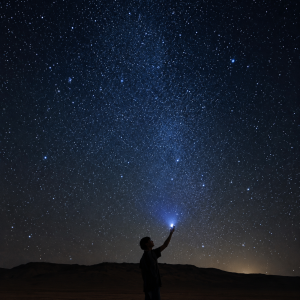
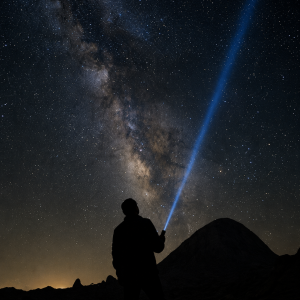
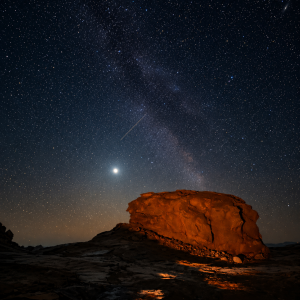
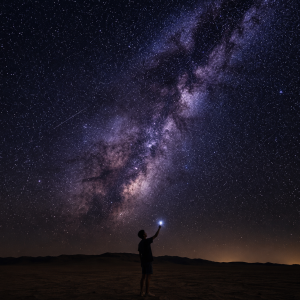
Best for stargazing: Clear nights throughout the main camping season, with darker moon phases preferable when seeing faint stars is the priority

Most demanding period: The hotter summer months, particularly for long daytime activities

Our existing White Desert and camping guides also recommend roughly October through April as the more comfortable general period for desert travel.

However, there is no single “perfect” month.

Your ideal season depends on what you actually want to do.

Why Season Matters in the White Desert

The White Desert is not a normal city attraction where you move between air-conditioned museums, restaurants and hotels.

A White Desert safari can involve:

  • several hours of road travel,
  • 4×4 off-road driving,
  • walking around geological formations,
  • sand dunes,
  • Das Fotografieren wird unterbrochen,
  • sunset viewing,
  • outdoor meals,
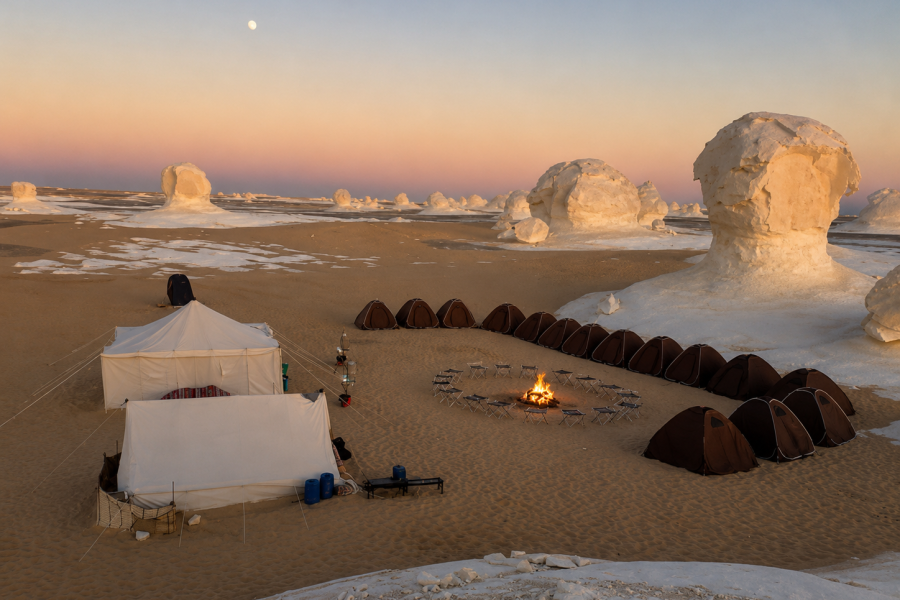
  • overnight camping,
  • sunrise,
  • and extended time far from urban areas.

The Egyptian Tourism Authority presents camping, hiking and 4×4 exploration as key ways to experience the region, with White Desert excursions ranging from short visits to multi-night journeys.

That means weather affects much more than what clothing you wear.

It affects the entire rhythm of the trip.

Very hot conditions make extended daytime exploration harder.

Cold winter nights require proper layers and suitable camping equipment.

Wind can affect both comfort and photography.

Clouds can influence the night sky.

And the amount of daylight changes how much time photographers have around sunrise and sunset.

Choosing the right month therefore makes a real difference.

October: Start of the Prime White Desert Season

October is one of our favorite months for White Desert travel.

The intense summer heat begins to ease, making daytime safari activities more comfortable.

For travelers arriving in Egypt during autumn, October can offer an excellent opportunity to combine Cairo sightseeing with a Western Desert adventure.

Why visit in October?

October works particularly well for:

  • first-time visitors,
  • Paare,
  • overnight campers,
  • Fotografen,
  • adventure travelers,
  • travelers combining Cairo and the desert.

The biggest advantage is balance.

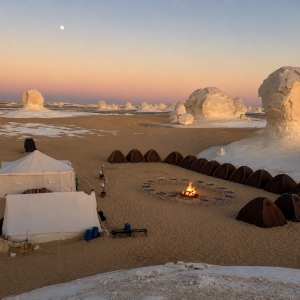
Days can still feel warm, which makes outdoor activity comfortable for travelers who enjoy sunshine, while evenings begin becoming more pleasant for camping.

October for photography

October is strong for landscape photography because you can comfortably stay outdoors through more of the day.

But remember:

The best photographs are often determined by the hour rather than the month.

The harsh midday sun creates strong contrast.

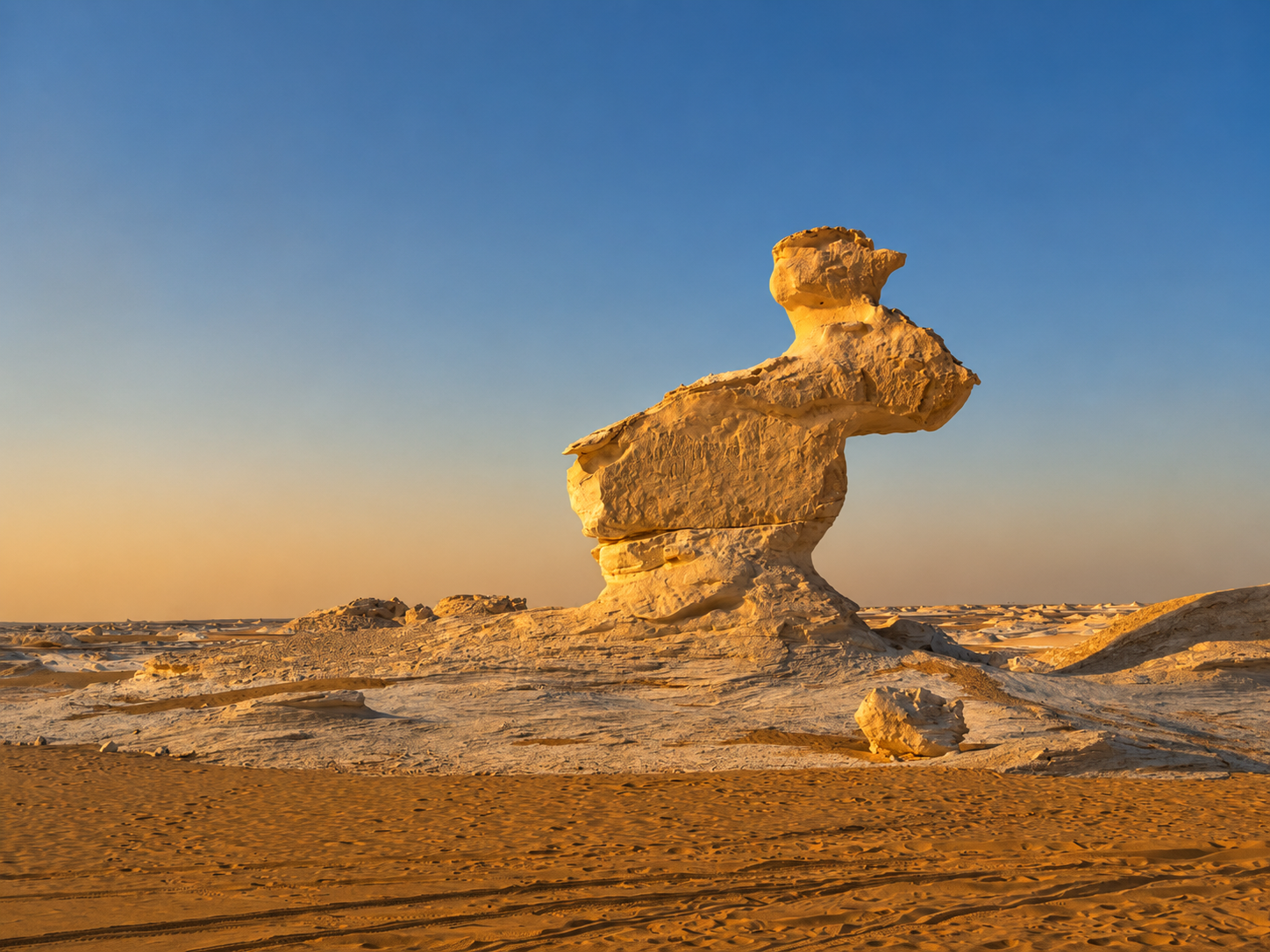
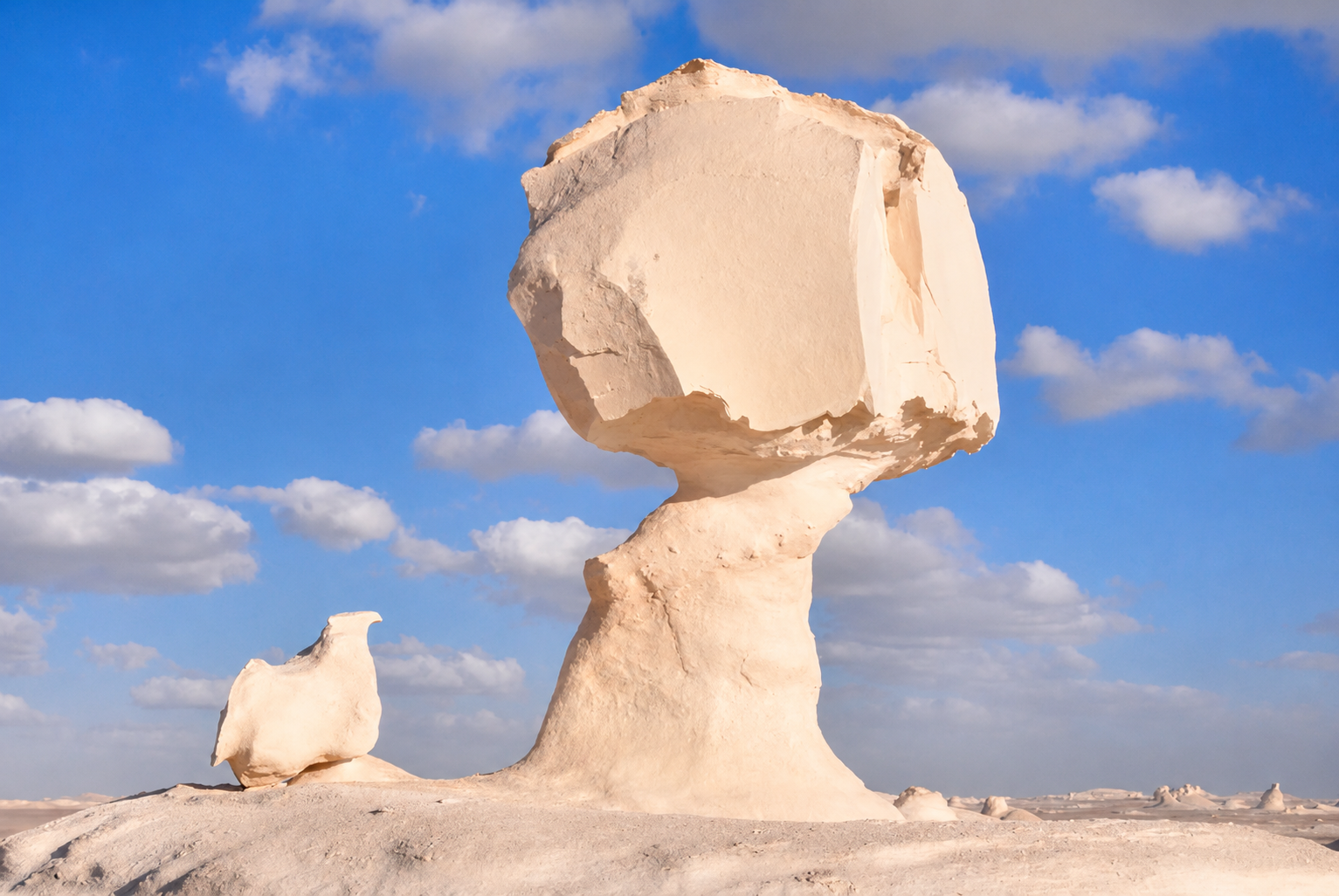
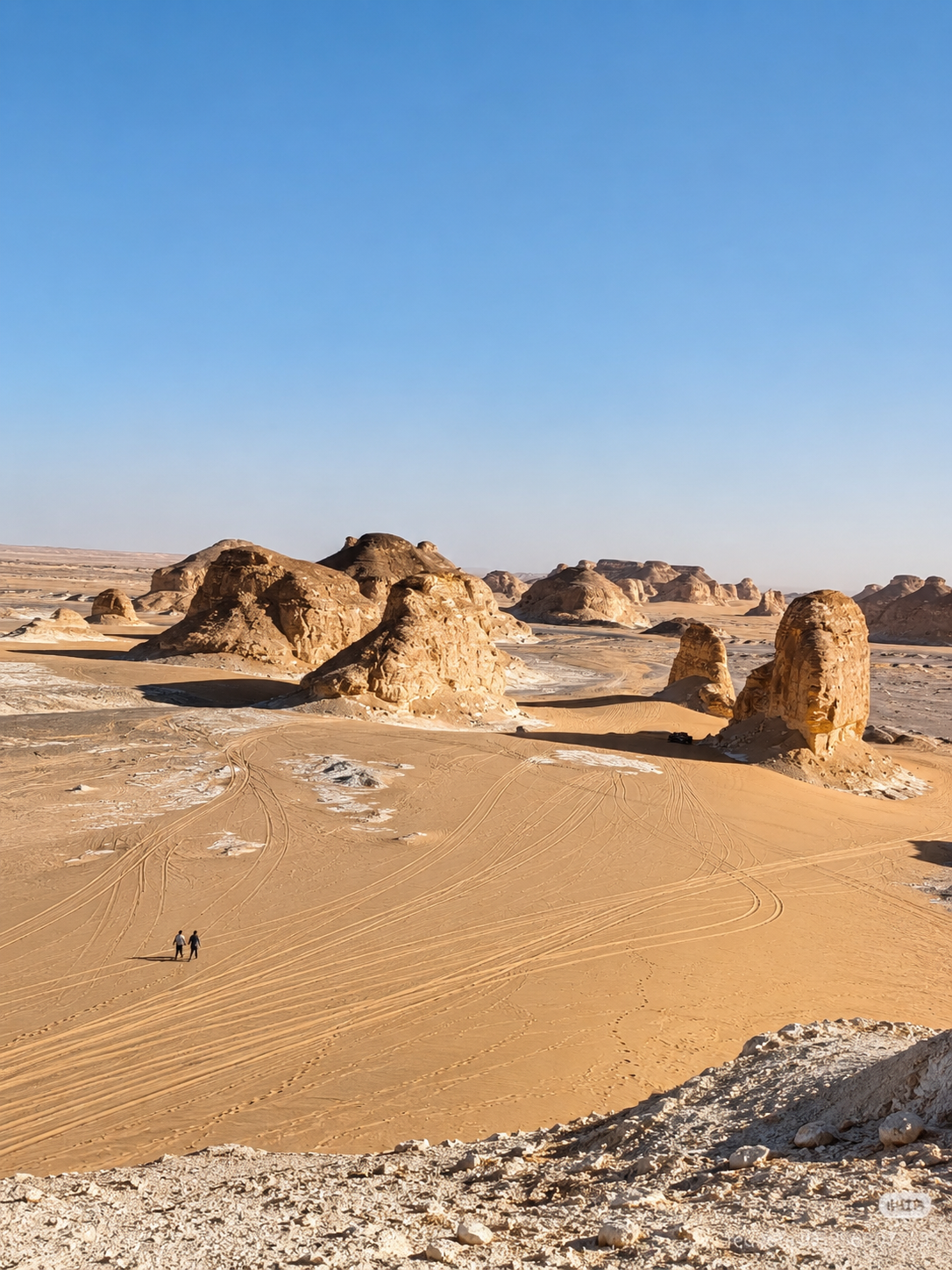
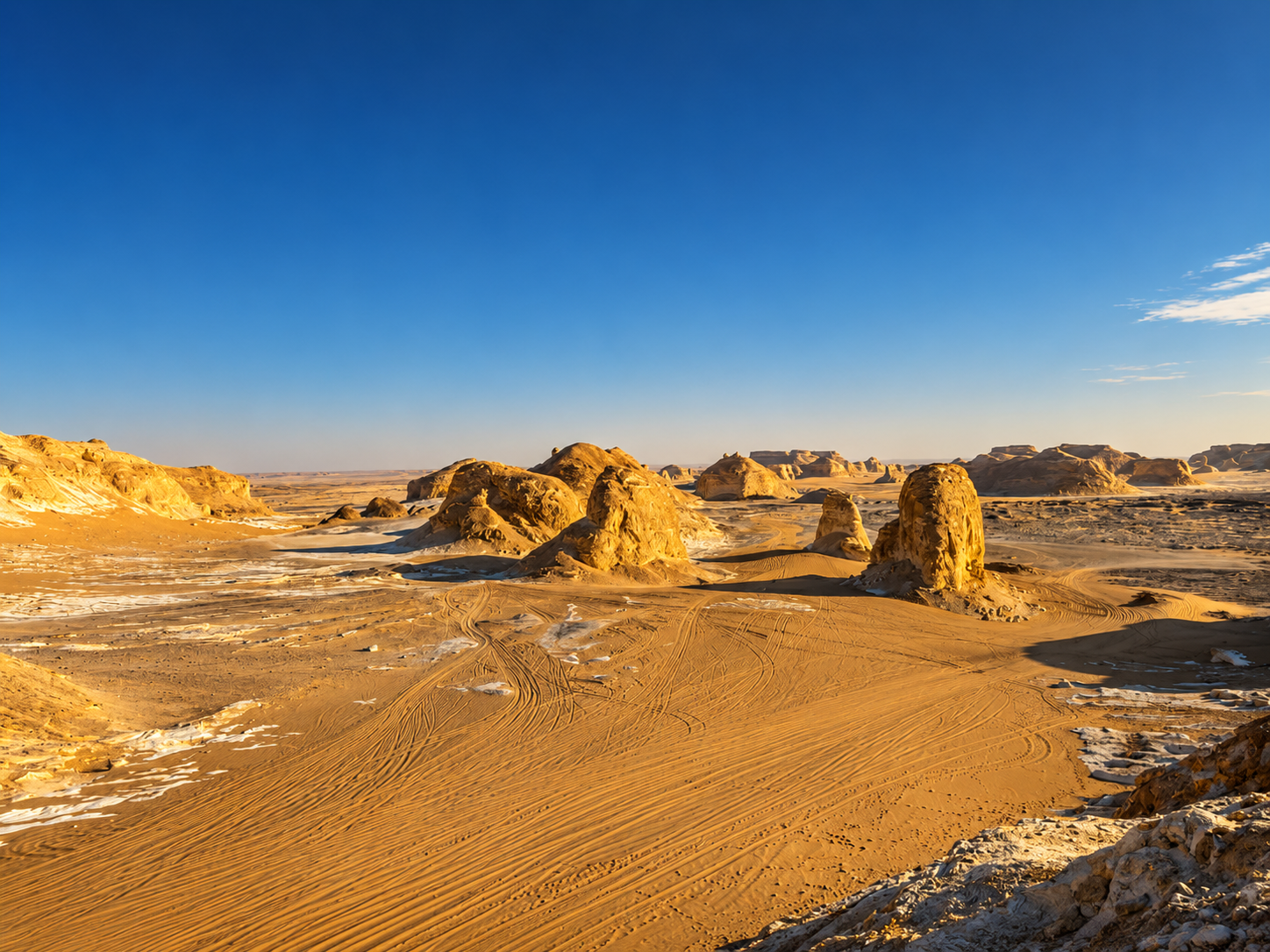
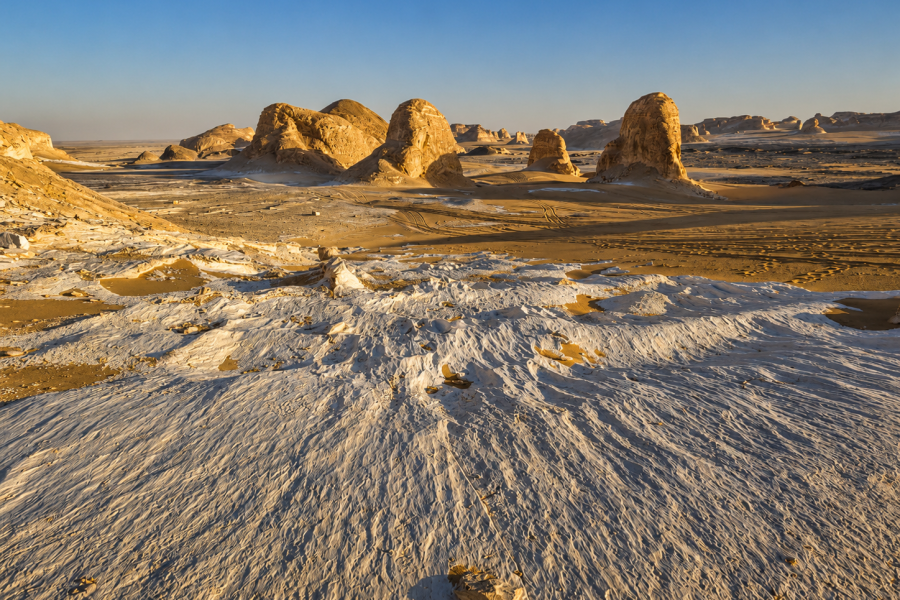
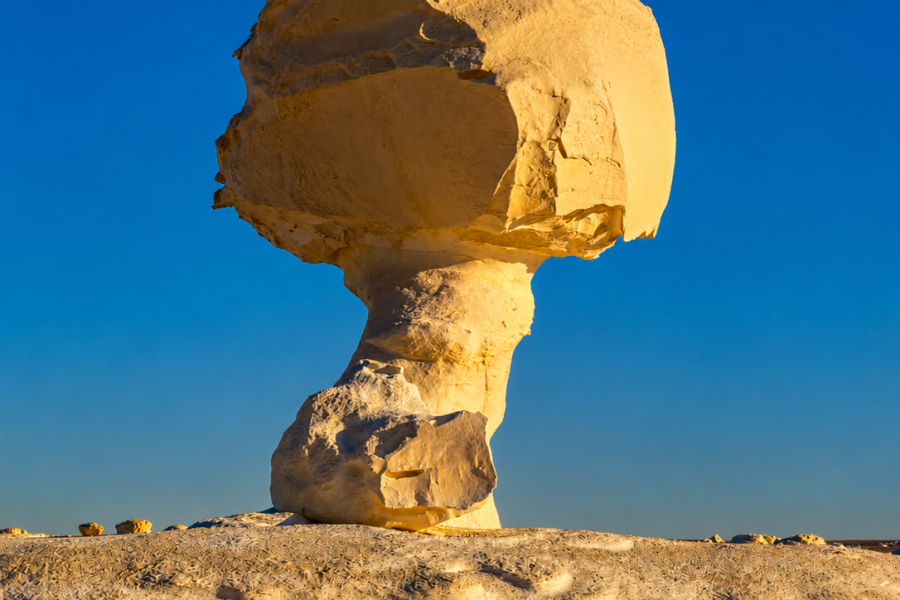
Late-afternoon light creates longer shadows across the white formations.

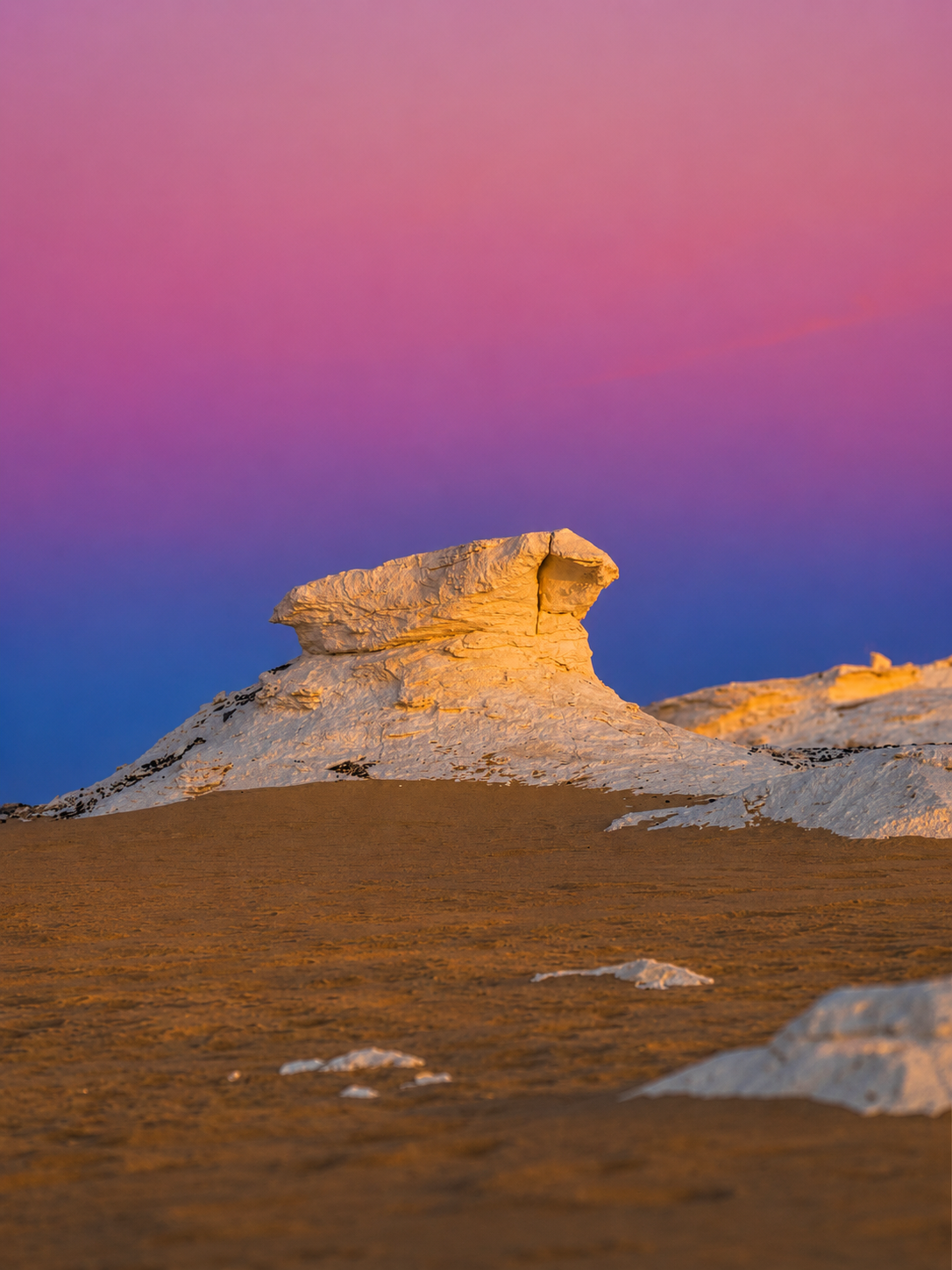
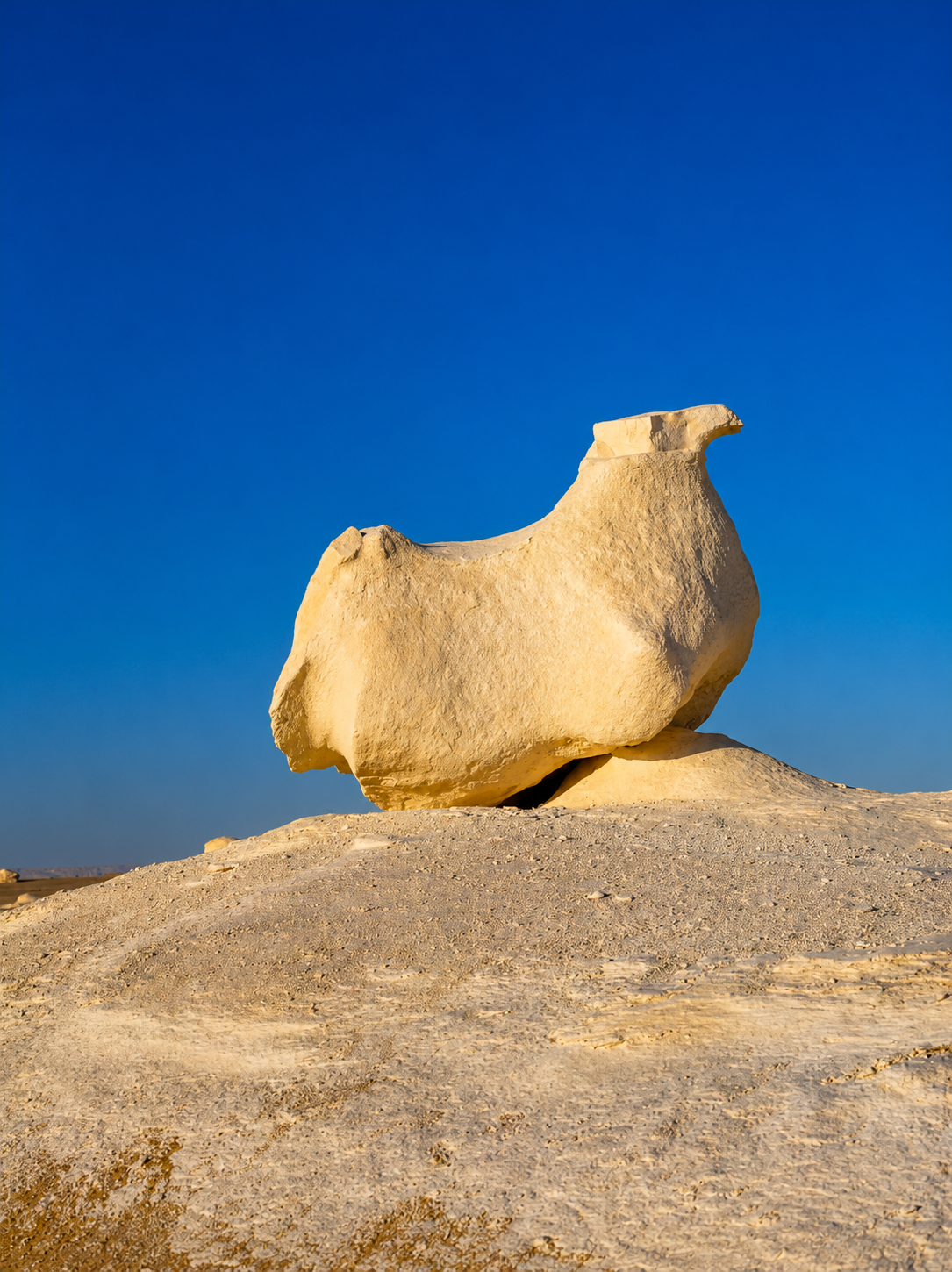
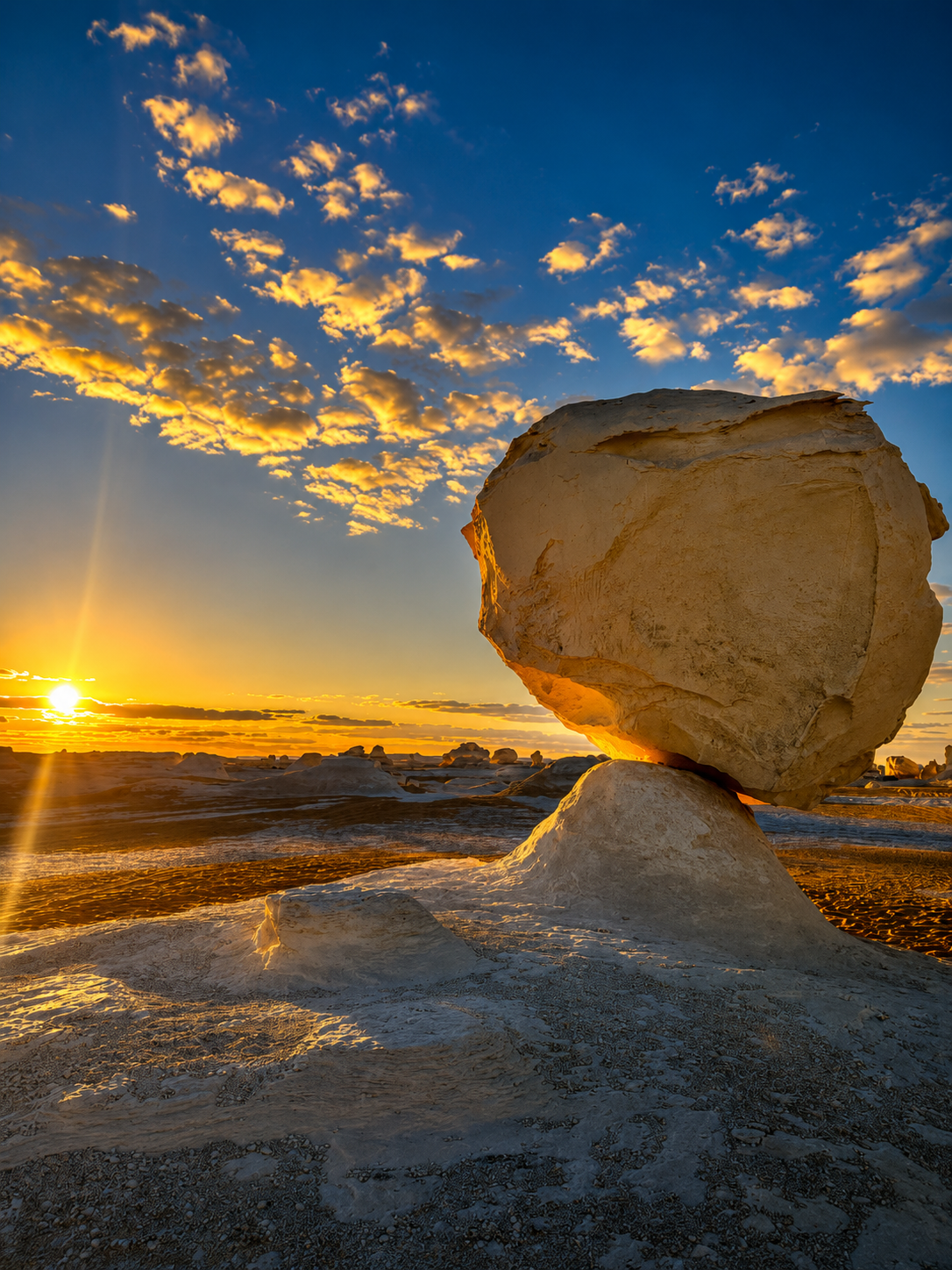
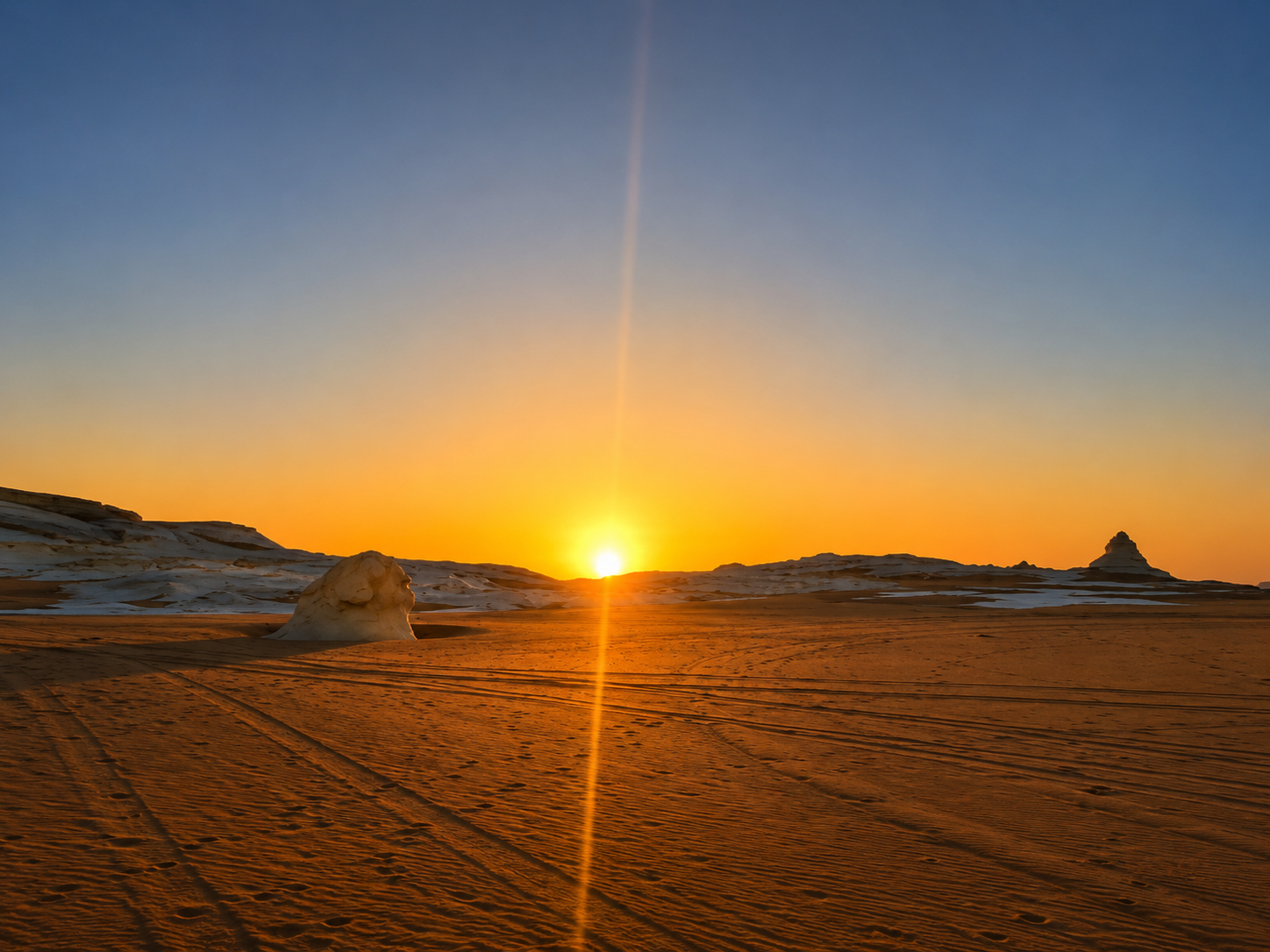
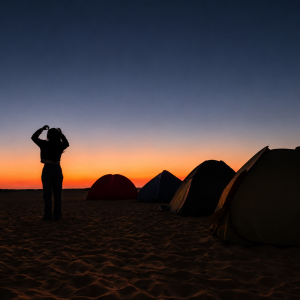
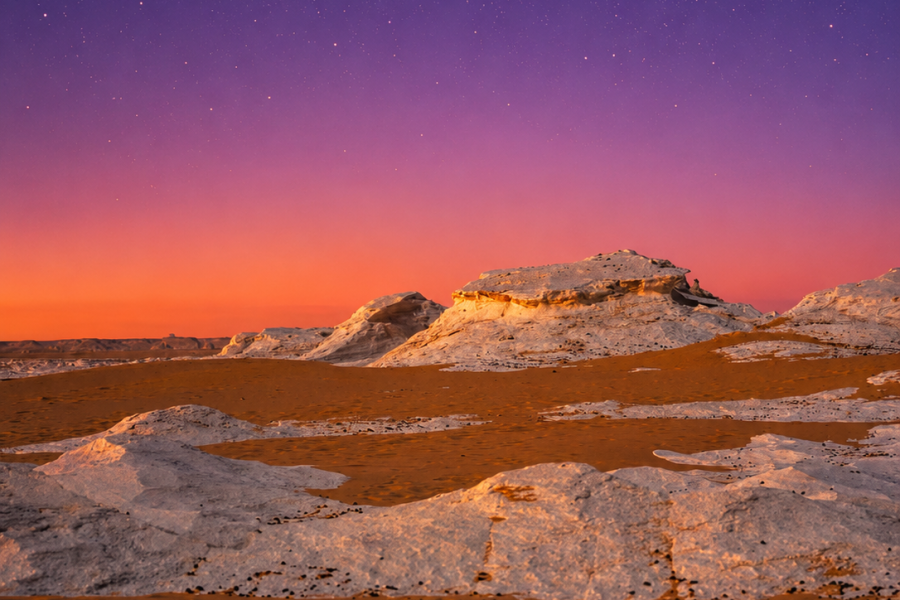
Sunset can bring warmer color into a landscape that looks pale and almost monochromatic during midday.

Staying overnight adds an entirely different photographic opportunity.

For that reason, photographers should strongly consider an overnight itinerary rather than a day trip.

See our White Desert Camping in Egypt guide if camping photography is one of your priorities.

November: One of the Best Months Overall

If you ask us to choose one of the strongest months for a first White Desert trip, November belongs near the top of the list.

By November, conditions are generally moving firmly into the cooler desert season.

This creates an excellent balance for:

  • Spazierengehen,
  • 4×4 safaris,
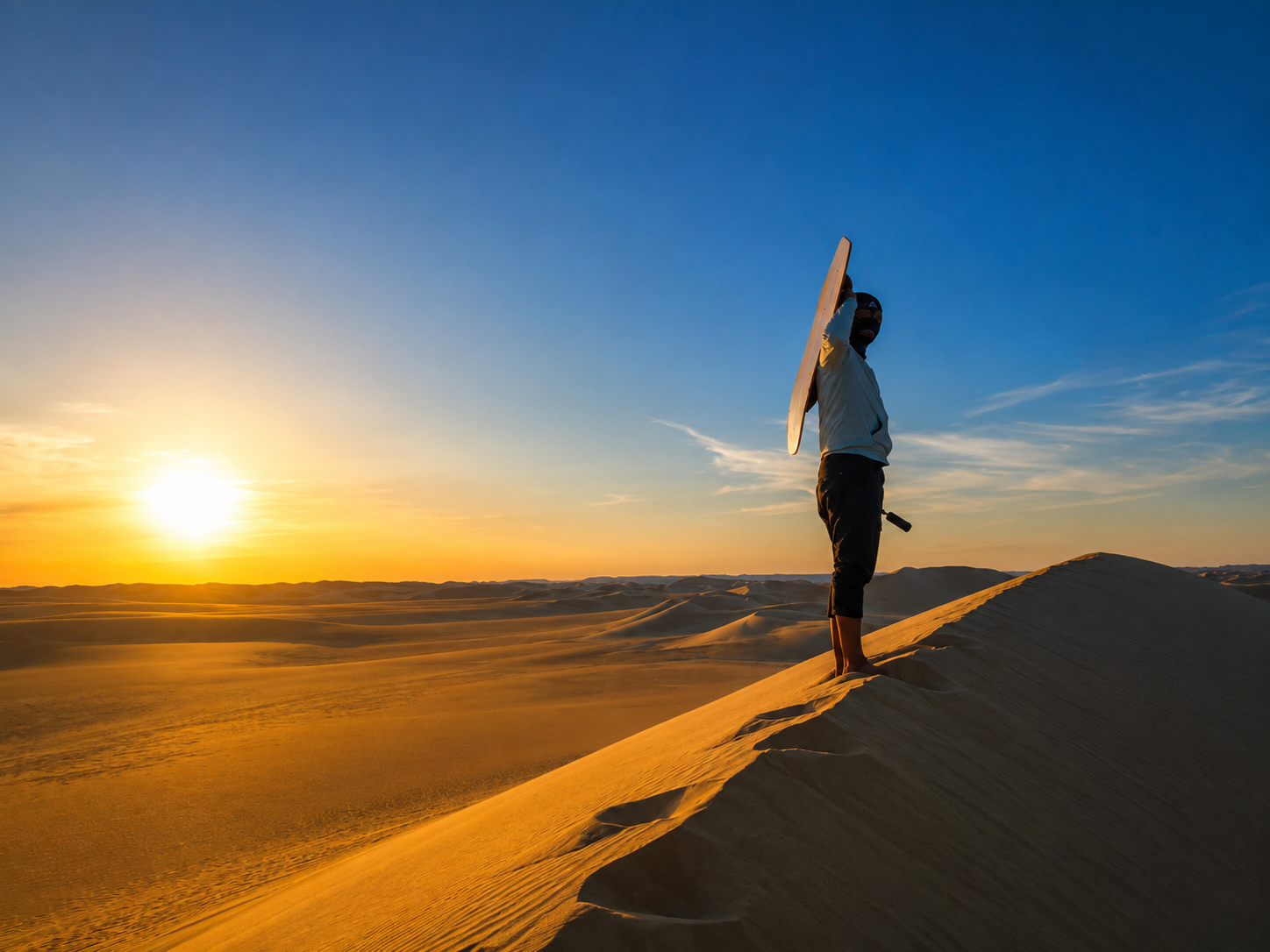
  • Sandboarding,
  • Landschaftsfotografie,
  • Camping,
  • sunset viewing,
  • and longer itineraries.

Our own White Desert camping content identifies October and November as particularly attractive months for safari and photography.

Is November good for camping?

Ja.

For many travelers, it provides one of the easiest transitions between warm daytime exploration and cooler nights.

You should still bring layers.

A desert may be associated with heat, but after sunset conditions can change quickly.

Never pack only according to Cairo’s afternoon temperature.

If you want the classic one-night experience, consider our 2-tägige Weiße-Wüste-Tour ab Kairo (1 Übernachtung).

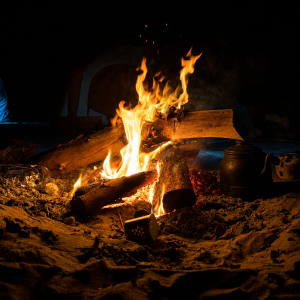
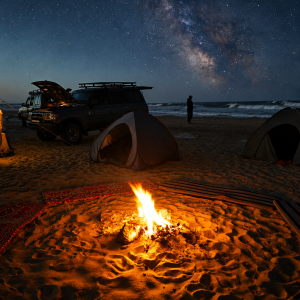
The current itinerary includes sunset, dinner, camping, a clear night-sky experience and sunrise.

December: Excellent Days, Colder Nights

December is a very good month for travelers who prefer cooler daytime exploration.

Instead of worrying about extreme daytime heat, you can spend more time walking, photographing and exploring.

But December introduces an important consideration:

the night can feel cold.

This becomes especially noticeable when you are camping in open desert terrain and spending time outside after sunset.

Our existing White Desert resources specifically warn that December through February can become cold at night and recommend warm layers.

What should you pack in December?

Consider bringing:

  • fleece,
  • warm jacket,
  • lange Hosen,
  • warme Socken,
  • comfortable closed shoes,
  • thermal base layer if you feel the cold easily,
  • hat or warm head covering for night,
  • daytime sun protection.

Organized camping equipment may include sleeping bags and blankets depending on your chosen tour, but personal warm clothing is still important.

Is December good for photography?

Sehr.

Cooler daytime conditions make it easier to stay outside waiting for better light instead of rushing back to shade.

December can also be ideal for travelers carrying larger camera equipment because prolonged outdoor work can feel more comfortable than during hotter months.

January: Great for Exploration, Coldest Camping Feel

January is one of the coolest periods of the year in Egypt’s desert regions.

For daytime exploration, that can be an advantage.

For overnight campers, preparation matters.

January is best for travelers who:

  • dislike hot weather,
  • want active daytime exploration,
  • are comfortable with cool nights,
  • have suitable winter layers,
  • want photography-focused trips.

Is January too cold for the White Desert?

Not necessarily.

Many travelers enjoy winter desert trips.

The important point is expectation.

Do not arrive expecting a warm tropical night simply because you are in Egypt.

A desert can experience a large difference between daytime and nighttime comfort.

Proper clothing and appropriate sleeping equipment make the experience completely different.

January photography

Winter conditions can be particularly attractive for photographers who want to spend long periods working around formations and dunes.

Instead of planning every stop around avoiding midday heat, you have more flexibility.

If photography is a major part of your trip, consider a longer itinerary such as the 2 Nächte, 3 Tage Camping-Tour durch die Weiße Wüste.

That tour currently includes two nights of camping plus extended exploration of dunes, springs and deeper off-road landscapes.

February: Excellent Winter Desert Travel

February remains within the strong winter travel season.

Daytime touring is generally comfortable for most travelers, while nights still require warm clothing.

For travelers visiting Egypt primarily for archaeological sightseeing, February is also convenient because you can combine the desert with Cairo, Luxor and Aswan without building a separate seasonal trip around the White Desert.

Who should choose February?

February is especially good for:

  • first-time Egypt visitors,
  • active travelers,
  • landscape photographers,
  • multi-day safari travelers,
  • people who dislike extreme heat.

A common strategy is:

Cairo → White Desert → Cairo/Luxor

This provides a dramatic contrast between monuments and natural landscapes.

Longer routes can also continue through Egypt’s Western Desert toward Luxor rather than returning directly to Cairo.

3 Nights 4 Days Tour from Cairo to White Desert, Bahariya Oasis & Luxor

2 Nights 3 Days White Desert & Dejara Cave Tour from Cairo

3-tägige Tour zur Weißen Wüste und Bahariya-Oase (2 Übernachtungen)

Ganztägige Tour am Westufer von Luxor

Siwa-Programm mit komfortablem Bus ab Kairo

Eintägige Tour zur Weißen Wüste ab Kairo

Eintägige Fayyum-Tour ab Kairo

Tour zum Nationalmuseum der Ägyptischen Zivilisation

4-tägiges Luxor-Paket ab Kairo mit Schlafwagenzug (3 Übernachtungen)

Giza Pyramids & Grand Egyptian Museum Tour

3-tägige Fayyum- und Weiße-Wüste-Tour ab Kairo (2 Übernachtungen)

6-tägige Ägypten-Oasen-Tour ab Kairo (5 Übernachtungen)

Ganztägige Tour am Ostufer von Luxor

5 Nights 6 Days Cairo, Siwa, White Desert & Bahariya Oasis Tour

6 Nights 7 Days Cairo, Siwa, Marsa Matrouh & White Desert Tour

Ganztägige Tour in Assuan

Ganztägige Tour nach Alexandria ab Kairo

4-tägige Siwa-Oasen-Tour ab Kairo

3 Nights 4 Days Cairo White Desert Tour

3-tägige Tour von Kairo nach Dakhla und Luxor (2 Übernachtungen)

3-tägige Camping-Tour in der Weißen Wüste (2 Übernachtungen)

3-tägige Kairo–Siwa-Tour (2 Übernachtungen)

3-tägige Kairo–Siwa-Tour (2 Übernachtungen)

2-tägige Tour durch Kairo und Gizeh

1 Übernachtung beim Camping in der Fayyum-Wüste ab Kairo

2-tägige Weiße-Wüste-Tour ab Kairo (1 Übernachtung)

March: One of the Best All-Round Choices

March is another month we would put near the top of the list.

Winter begins transitioning toward warmer spring conditions, but the intense summer heat is still ahead.

For many visitors this creates a strong combination of:

  • comfortable exploration,
  • easier camping,
  • pleasant photography sessions,
  • manageable nights.

March vs November

Both are excellent.

November comes after summer.

March comes after winter.

The practical experience can vary according to the specific weather during your dates, but both sit within the wider October–April window that we recommend for most travelers.

If your schedule is flexible, you do not need to obsess over choosing between them.

Instead, consider:

  • flight prices,
  • your wider Egypt itinerary,
  • moon phase if astrophotography matters,
  • how many nights you want to camp,
  • and whether you prefer warmer or cooler evenings.

April: Good, but Conditions Begin Getting Warmer

April can still be a very good time for White Desert travel.

It sits near the end of the main comfortable season before hotter conditions become a more significant factor.

Our Black and White Desert content also places April within the generally comfortable October–April travel window.

Why choose April?

April works well for:

  • travelers visiting Egypt during spring,
  • people who prefer warmer conditions than January or February,
  • Fotografen,
  • short camping trips,
  • travelers combining several destinations.

What is the disadvantage?

As the month progresses, daytime conditions can become warmer.

That does not automatically make a safari unsuitable, but it means timing, hydration, sun protection and itinerary planning become increasingly important.

Early morning and late afternoon also become especially valuable parts of the day.

May: Can You Visit the White Desert?

Yes, but the character of the trip begins changing.

May is outside what we consider the easiest all-round season for many international travelers.

Daytime heat becomes more relevant.

If you are planning long walks, photography sessions or extended outdoor stops, you need to be more deliberate.

May can work if:

  • you tolerate heat well,
  • your trip is organized carefully,
  • your outdoor activities are timed appropriately,
  • you have strong sun protection,
  • you stay hydrated,
  • you follow your guide’s advice.

It may be less attractive for someone whose dream trip involves sitting comfortably outside camp for hours during the afternoon.

June, July and August: What About Summer?

Summer requires the greatest caution when planning a White Desert trip.

The issue is not whether the White Desert physically exists or tours are theoretically possible.

The issue is comfort and exposure during extended daytime travel in a remote desert environment.

A White Desert safari is not the same as walking from an air-conditioned hotel into an air-conditioned museum.

You can spend substantial periods outdoors.

If your schedule forces you to travel during the hotter season, discuss the current conditions, route, departure timing and suitability with an experienced operator before booking.

Summer photography

Photographers also face challenges.

The middle of the day can be visually harsh and physically demanding.

Early morning and late afternoon become even more important.

You may need to plan around:

sunrise → rest during harsher hours → late-afternoon exploration → sunset

rather than maintaining the same pace all day.

For most first-time travelers with complete flexibility over dates, we would choose October–April instead.

September: Transition Back Toward the Main Season

September begins the transition away from peak summer conditions, but it can still be hot.

Late September may feel different from early September, so current weather matters more than simply looking at the name of the month.

For travelers whose Egypt trip already falls in September, a White Desert safari may still be possible with appropriate planning.

But if your only goal is optimizing weather for camping, waiting until October generally provides an easier experience.

Best Time for White Desert Camping

If camping is your priority, our preferred general window is:

October to April

Within that:

October–November

Excellent balance between daytime comfort and camping conditions.

December–February

Excellent for daytime safari activities but potentially cold at night.

March–April

Another excellent balance as winter transitions into spring.

Our existing dedicated camping guide also recommends October–April as the more comfortable season for most visitors.

Best Time for White Desert Photography

The first mistake photographers make is focusing exclusively on the month.

The second mistake is ignoring the time of day.

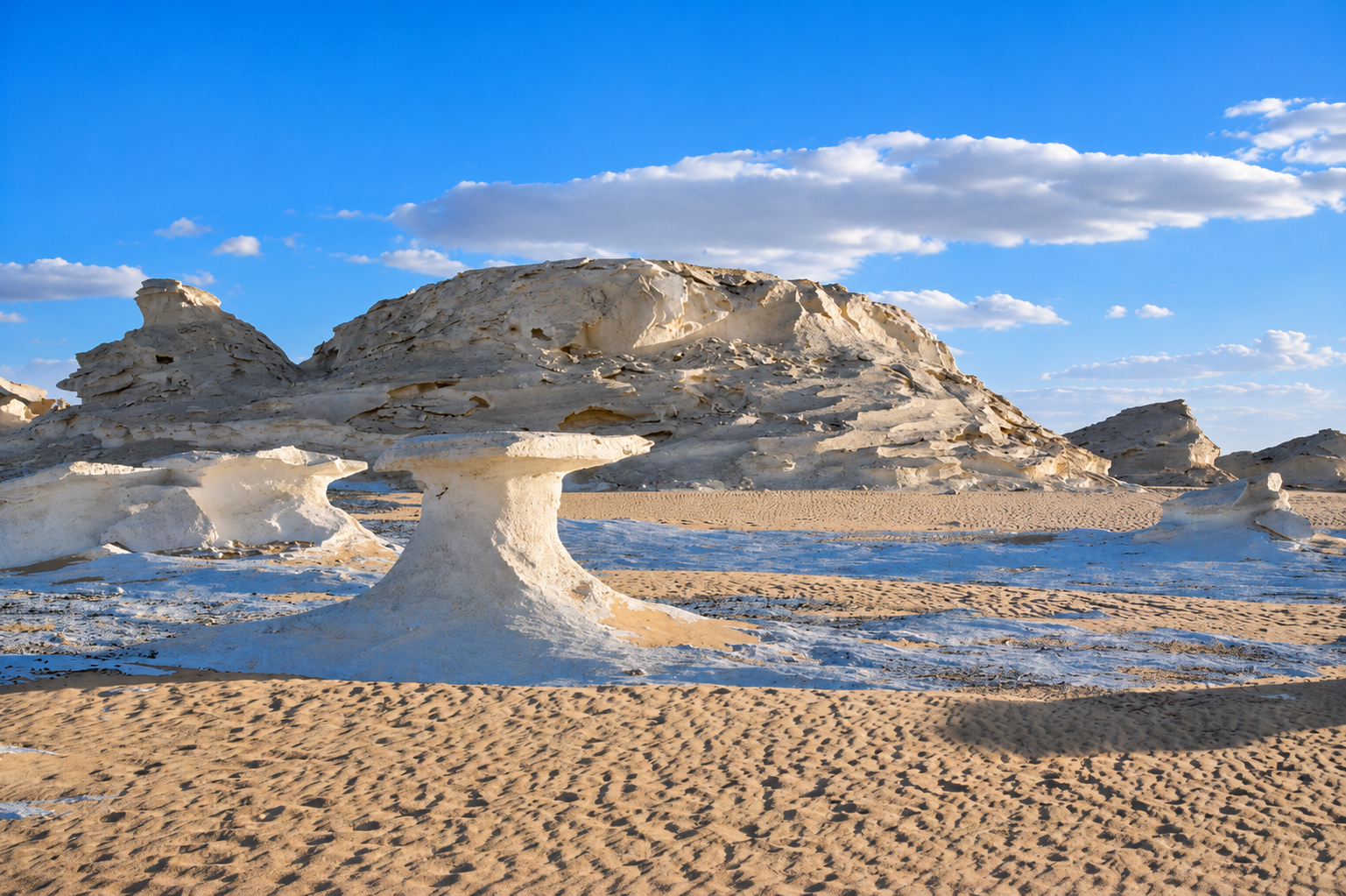
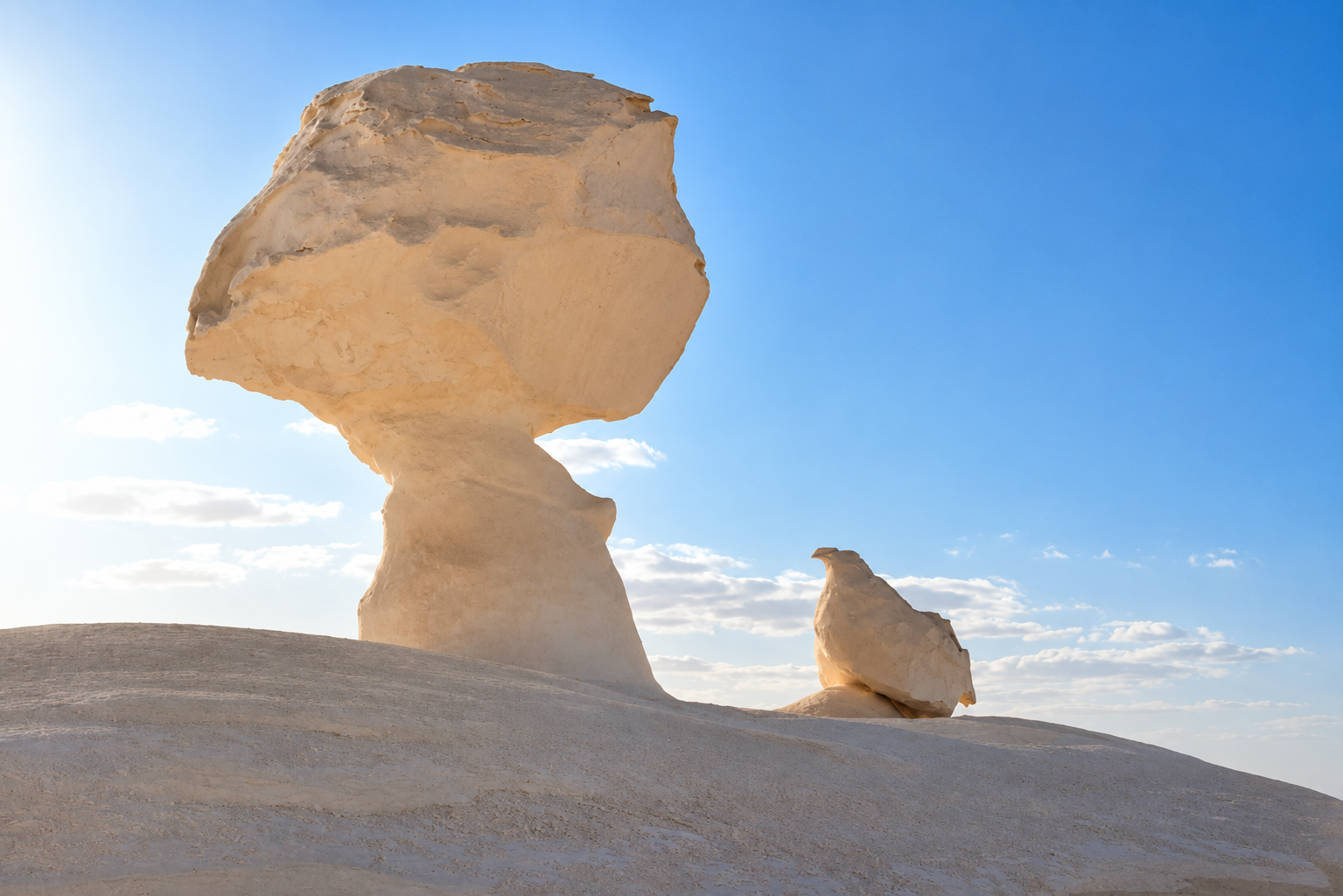
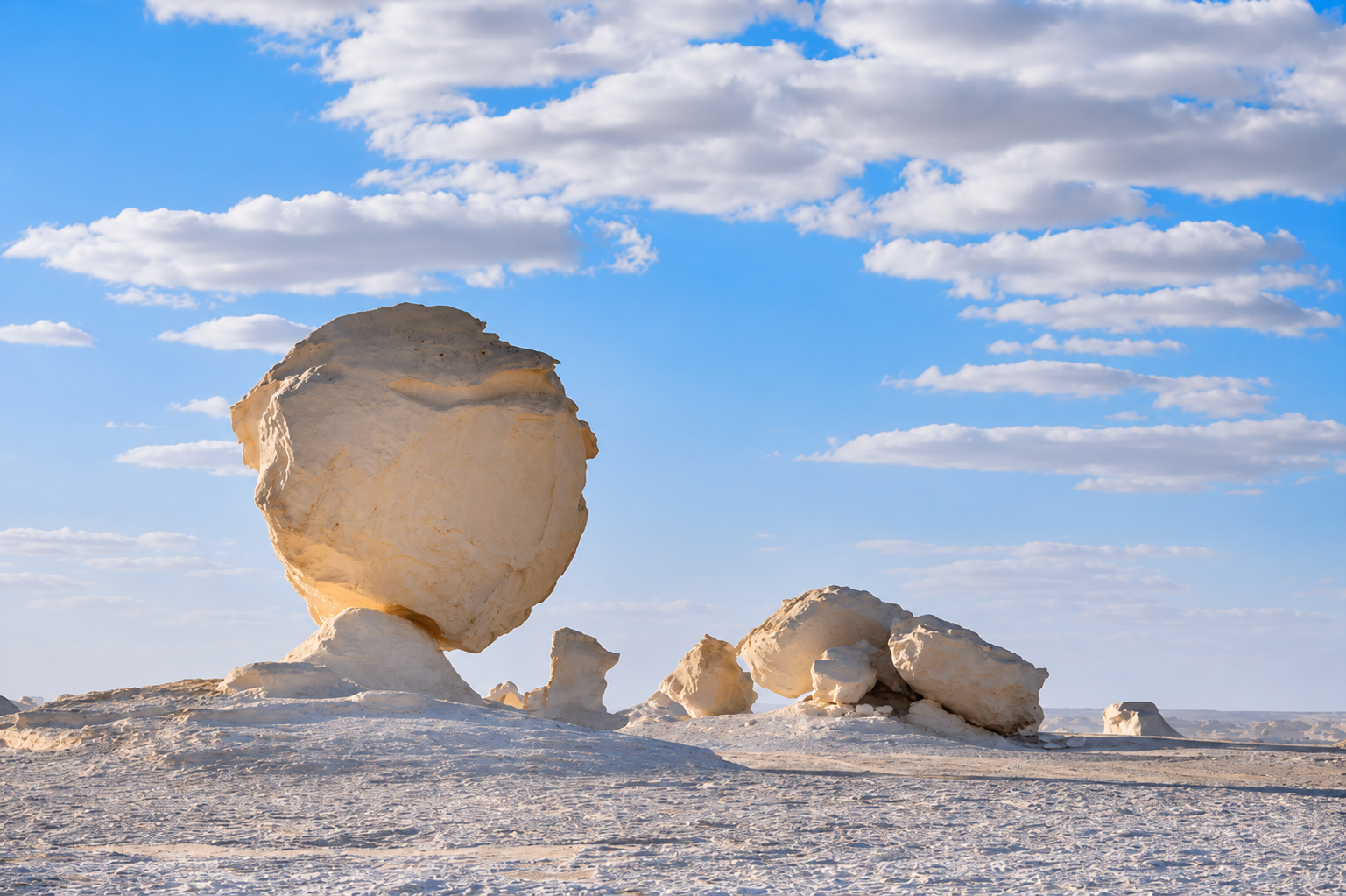
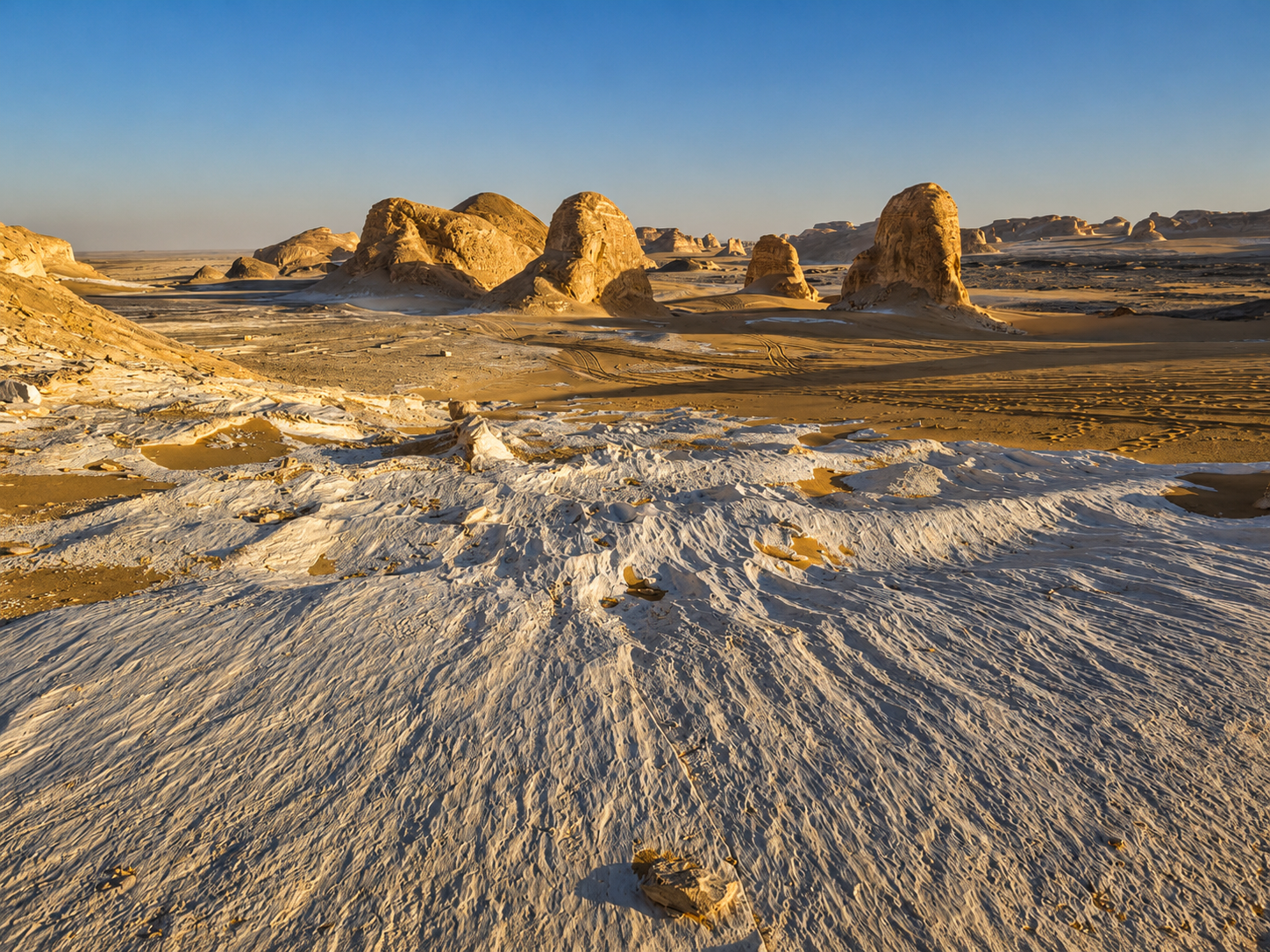
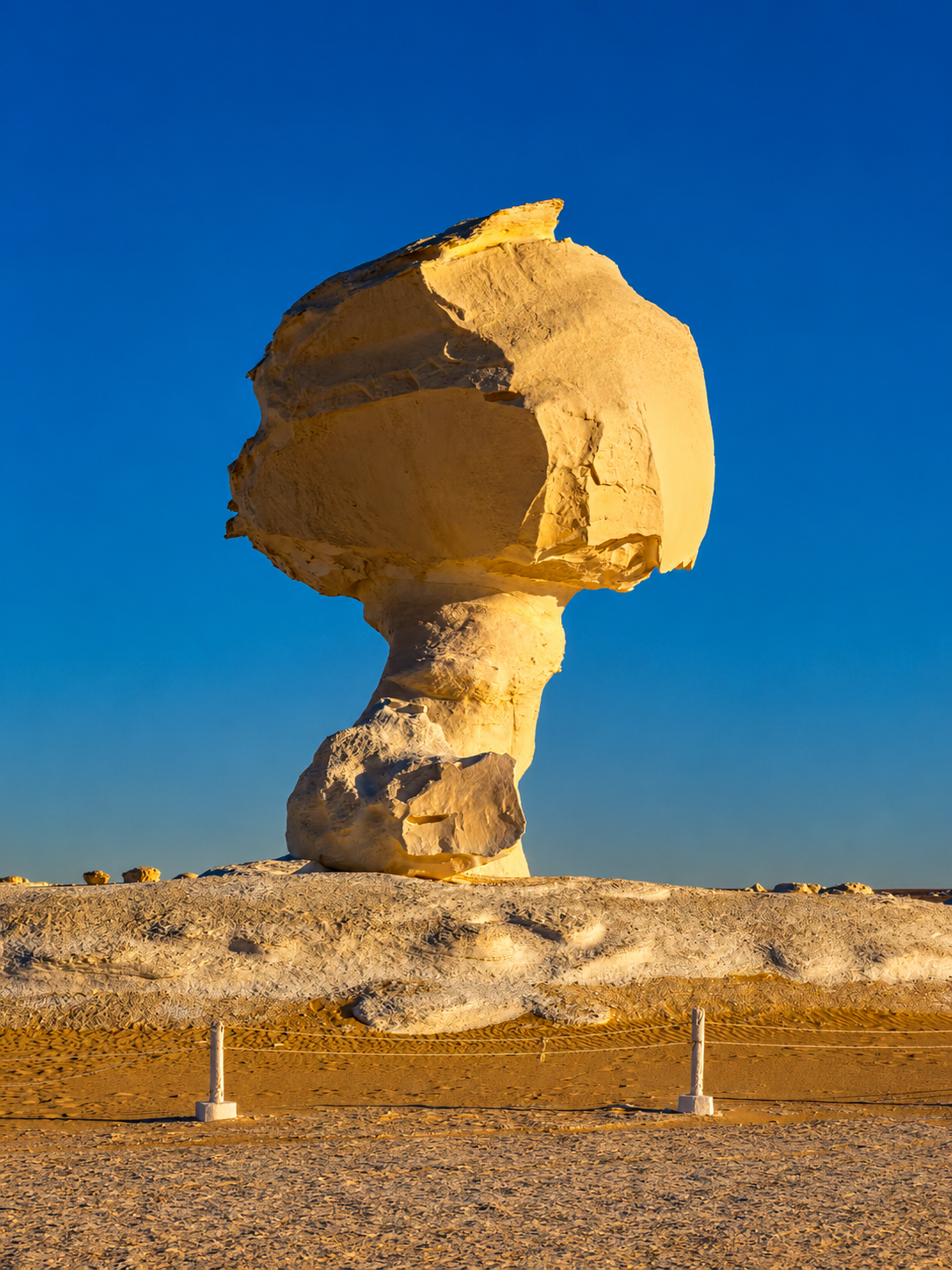
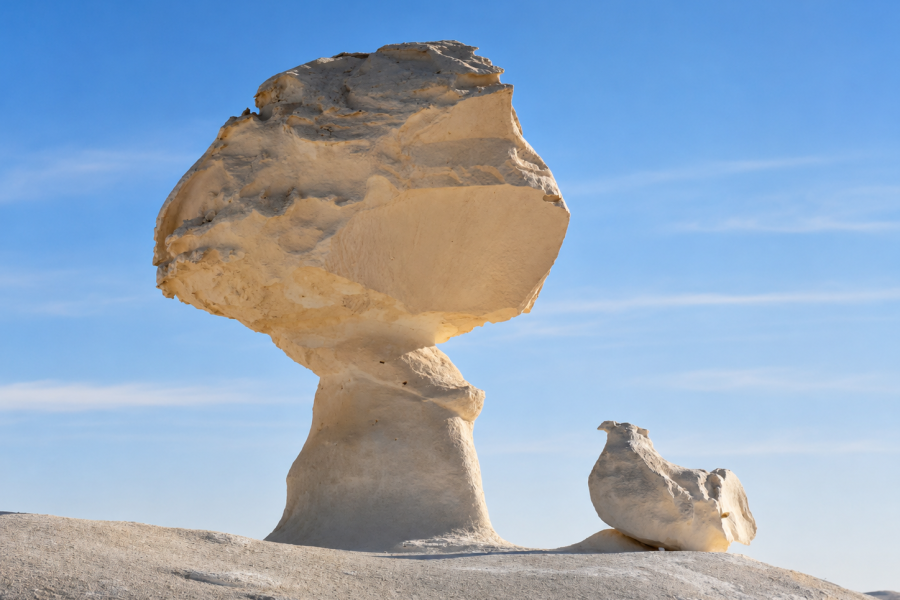
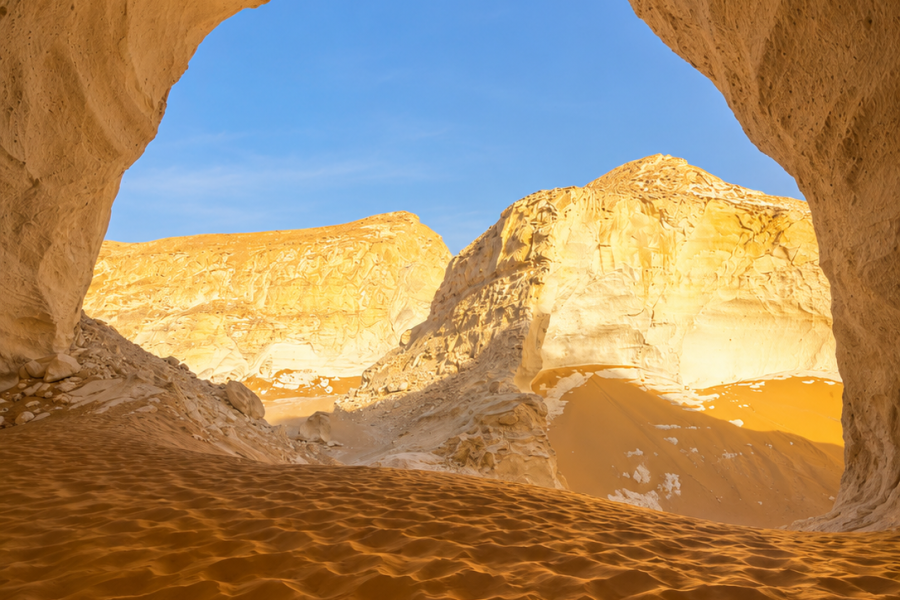
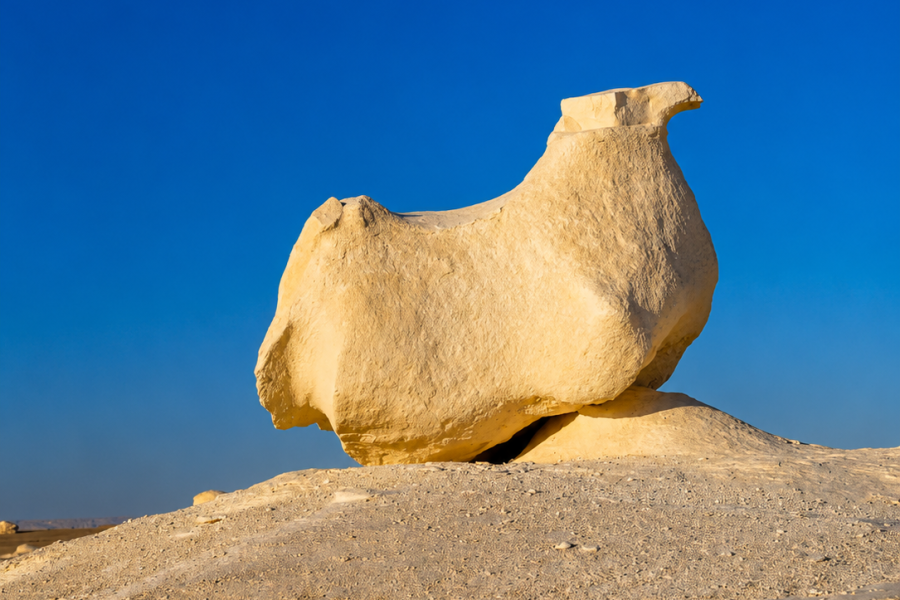
The White Desert’s pale formations react dramatically to changing light.

Mittag

The sun can be strong and direct.

This may produce:

  • high contrast,
  • short shadows,
  • bright chalk surfaces,
  • clear geological detail.

It can work for documentary images, but it may not provide the most dramatic landscape photographs.

Late Afternoon

As the sun becomes lower, shadows grow longer.

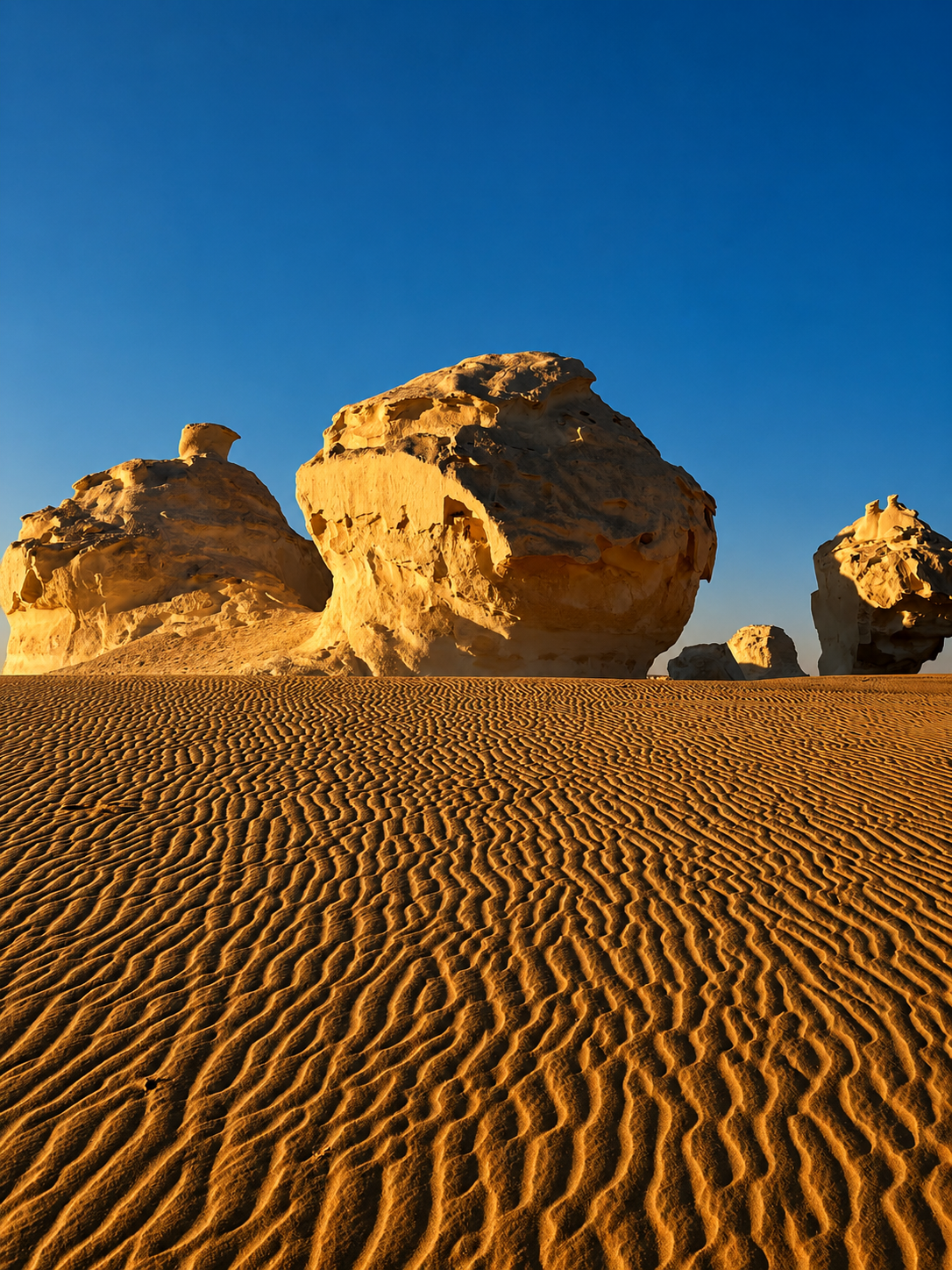
This can reveal the shapes and textures of formations much more clearly.

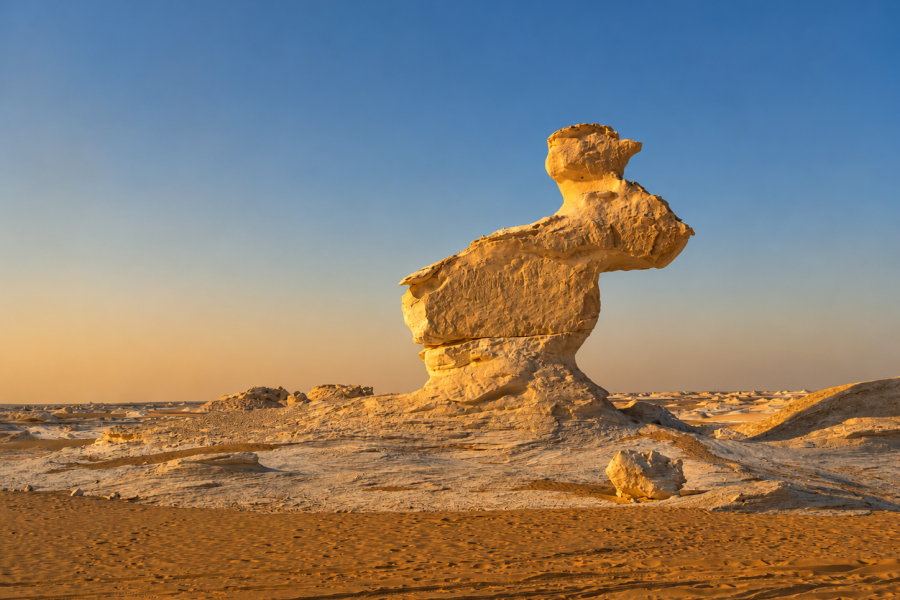
Warm light can also contrast beautifully against the pale chalk landscape.

Sonnenuntergang

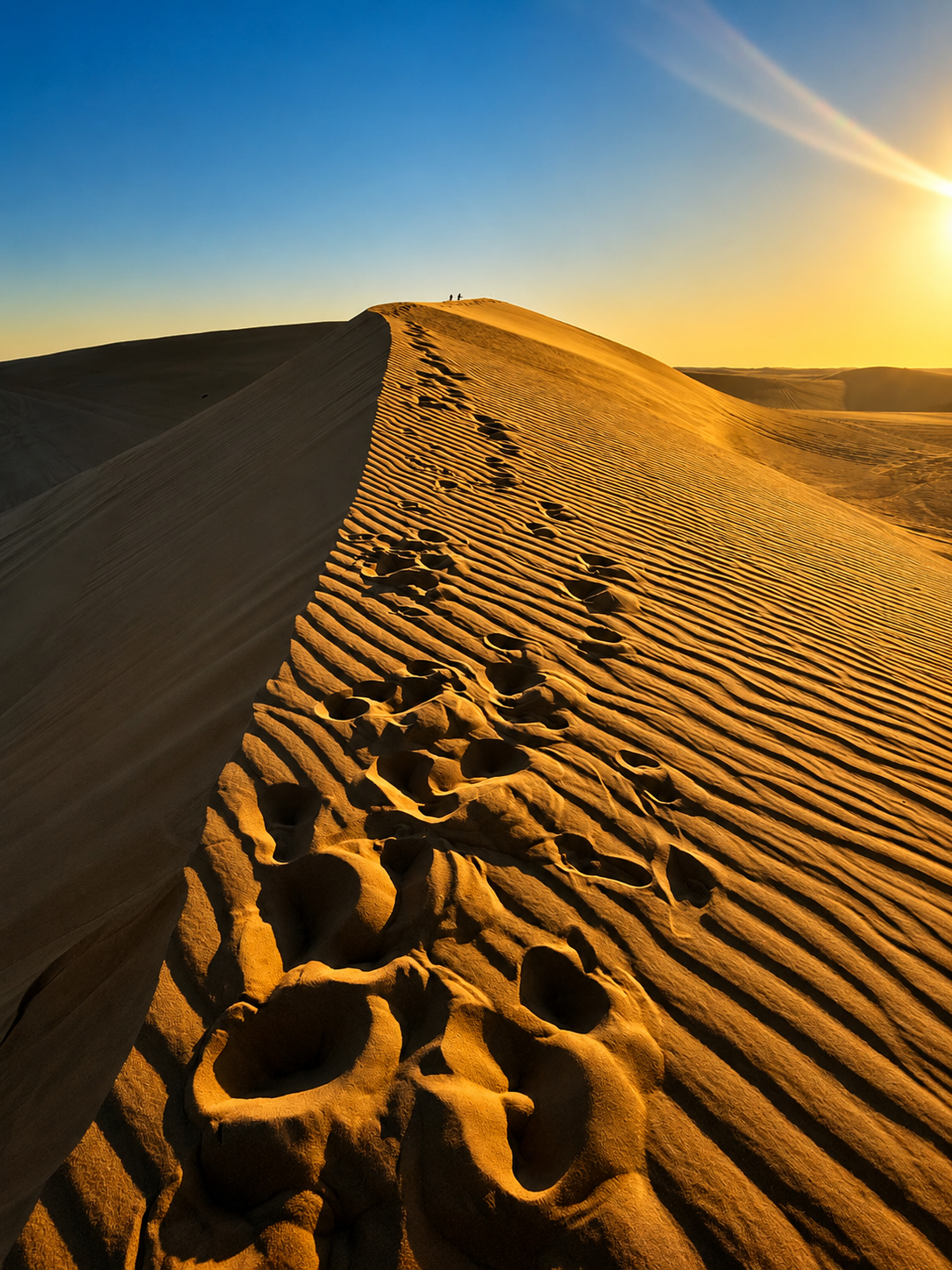
Sunset is one of the most valuable periods for landscape photography.

The desert can move through subtle combinations of:

  • white,
  • beige,
  • Gold,
  • orange,
  • rosa,
  • blue.

The exact result depends on weather and atmospheric conditions.

No operator can guarantee a dramatic sunset every night.

Blue Hour

Do not pack the camera immediately after sunset.

The period between sunset and full darkness can produce some of the most atmospheric desert images.

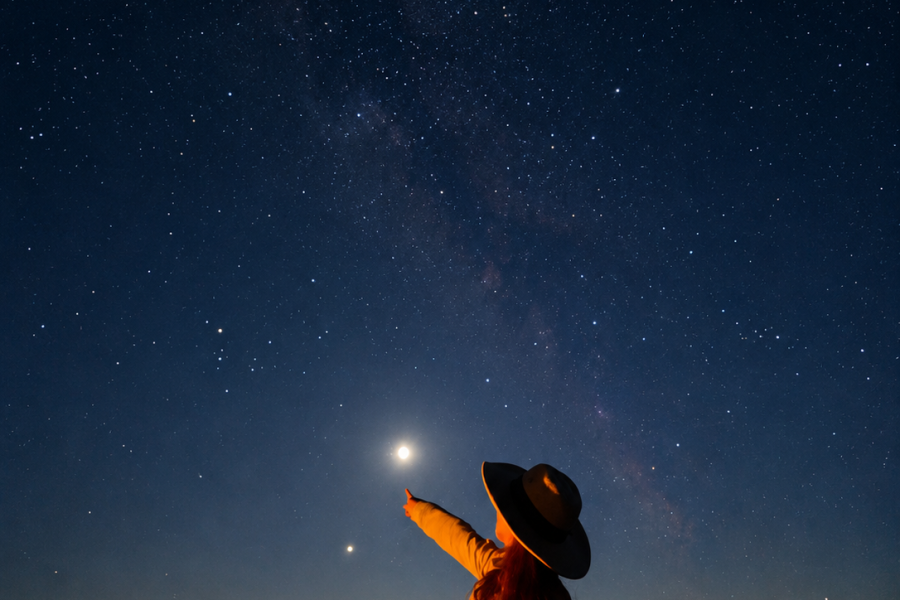
Night Photography

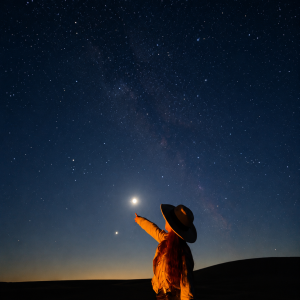
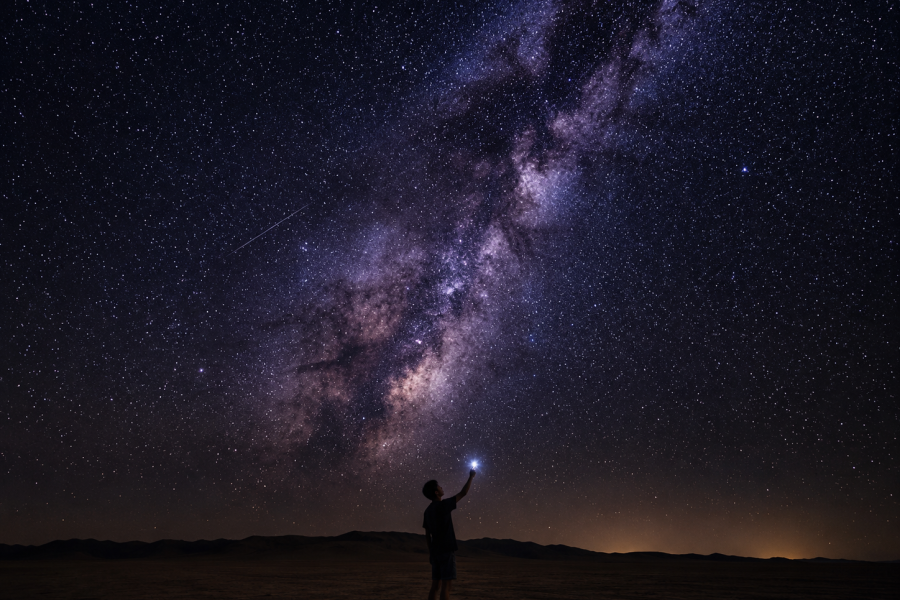
The absence of major urban development in the immediate desert environment creates opportunities for night-sky photography.

Actual visibility depends on factors including:

  • cloud cover,
  • atmosphärische Klarheit,
  • Mondlicht,
  • camera equipment,
  • artificial lights around camp.

If faint stars are your priority, consider planning around a darker moon phase.

If you want illuminated desert formations and an easier foreground exposure, some moonlight can actually help.

Sonnenaufgang

Overnight campers gain another major advantage:

you are already at the photography location before sunrise.

You do not need to leave Cairo at an impossible hour or rush across the desert.

You wake up, prepare your equipment and wait for the light.

This is one of the biggest reasons photographers should choose overnight camping.
What Is the Best Month for White Desert Photography?

If we had to simplify it:

October: Excellent
November: Excellent
December: Excellent, colder nights
January: Excellent, coldest camping feel
February: Excellent
March: Excellent
April: Very good, warmer
May–September: More challenging because of daytime heat

But remember that weather varies.

A perfect November trip can experience wind.

A February trip can have different atmospheric conditions from the week before.

Photography depends on the actual day as much as the average month.

Best Time for Stargazing in the White Desert

The season is only one part of planning a night-sky experience.

You should also consider the moon.

A bright moon can illuminate the desert beautifully, creating extraordinary nighttime landscape views.

However, strong moonlight can make faint stars less visible.

A darker moon phase generally works better if your goal is to see or photograph a deeper star field.

So there are actually two different photographic goals:

Goal 1: Maximum Stars

Prefer a darker night with limited moonlight.

Goal 2: Moonlit Desert Landscapes

Some moonlight can help illuminate foreground formations naturally.

This is why photographers should think about what they want to photograph, not simply search for “best moon phase.”

Is the White Desert Good for Milky Way Photography?

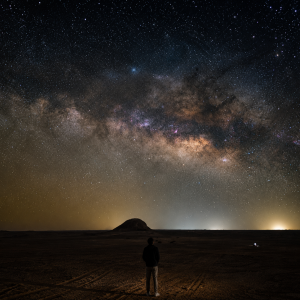
Remote desert environments can offer attractive opportunities for night-sky photography, but the appearance and orientation of the Milky Way changes through the year and through the night.

Clouds, moonlight and local camp lighting also matter.

If astrophotography is your primary purpose, research the astronomical conditions for your exact dates and tell your guide in advance.

That allows the itinerary to prioritize:

  • suitable foreground formations,
  • darker camp positioning where possible,
  • extra time after sunset,
  • and less unnecessary artificial light around your shooting location.

A normal sightseeing tour and a photography-focused tour should not necessarily operate at exactly the same pace.

Best Season for a One-Day White Desert Tour

If you are not camping, temperature still matters.

A one-day journey involves significant travel plus multiple outdoor stops.

October–April remains the easiest general window for most travelers.

The main difference is that nighttime cold matters less because you are not sleeping in the desert.

However, if the itinerary extends through sunset, you should still have an additional layer available.

Travelers with very limited time can consider the Eintägige Tour in die Weiße Wüste ab Kairo.

Best Season for a 1 Night / 2 Days White Desert Tour

This is the itinerary we recommend for most first-time visitors.

October, November, March and April offer a particularly attractive balance.

December, January and February are also excellent if you are comfortable preparing for colder nights.

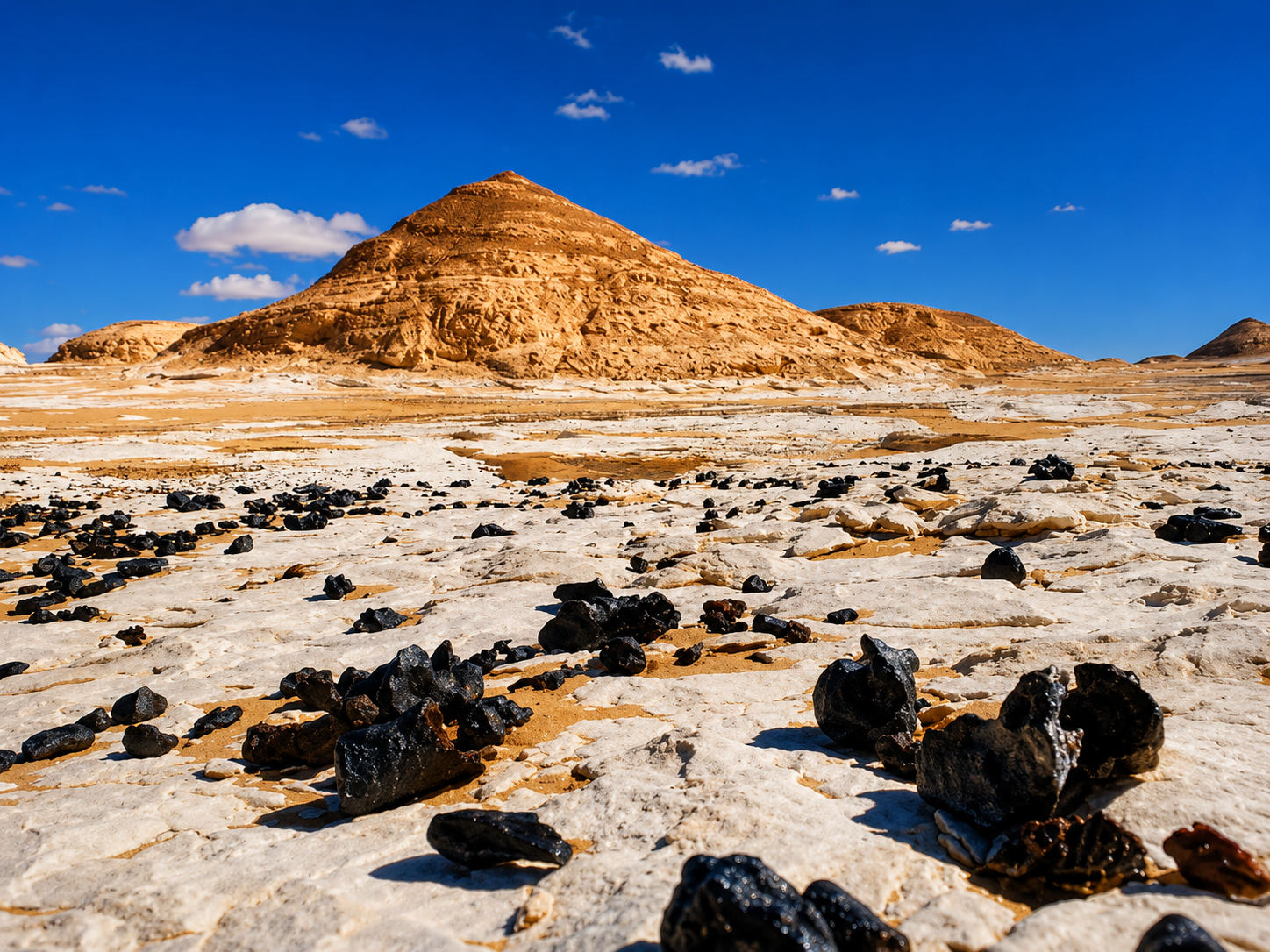
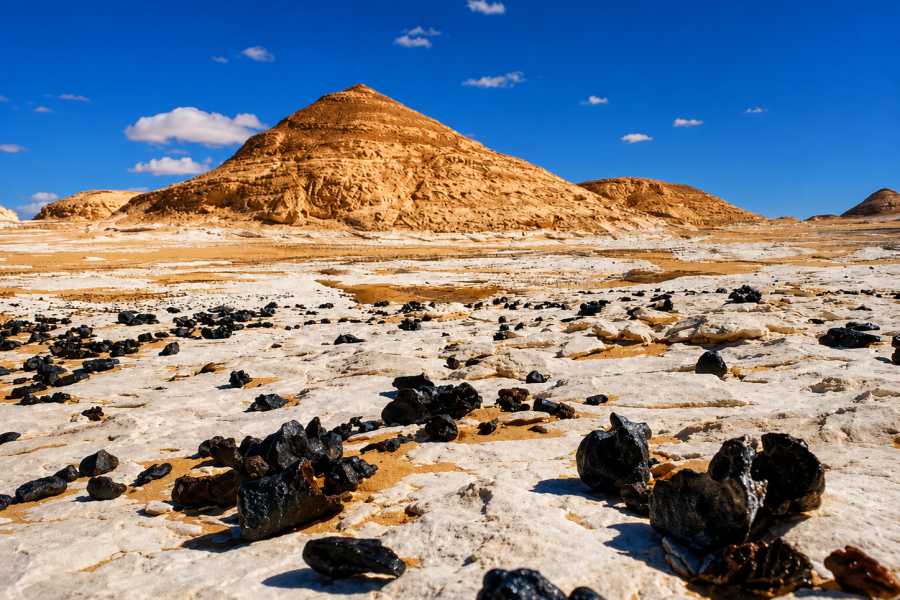
The current 2-day tour combines the Black Desert, Crystal Mountain, Agabat and White Desert with sunset, camping, dinner and sunrise.

That combination makes seasonal preparation more important than on a day trip.

Best Season for a 2 Nights / 3 Days Camping Tour

For a longer camping trip, comfort matters even more.

One cold night can be an adventure.

Two poorly prepared cold nights can become tiring.

Likewise, spending several days under intense summer conditions can be more demanding than a short visit.

For multi-night camping, our strongest all-round periods are:

October–November
und
March–April

Winter remains an excellent option for travelers properly equipped for the nighttime cold.

See the 2 Nights 3 Days White Desert Camping Tour if you want a deeper safari.

White Desert Weather vs Cairo Weather

Do not make one of the most common packing mistakes:

Checking Cairo’s weather and assuming the desert will feel exactly the same.

Cairo is an enormous urban environment.

The White Desert is a remote open landscape.

Wind, sun exposure and nighttime conditions can feel very different.

If you are camping, check the forecast relevant to the desert region shortly before departure and follow the advice of your local guide.

This is especially important in winter.

A pleasant afternoon in Cairo does not mean you will want to sit outside in the desert at midnight wearing only a light shirt.

What to Wear in the White Desert by Season

October–November

Day:

  • lightweight breathable clothing,
  • Hut,
  • Sonnenbrillen,
  • geschlossene Wanderschuhe,
  • Sonnenschutz.

Night:

  • lange Hosen,
  • fleece or light jacket,
  • extra layer.

December–February

Day:

  • comfortable layers,
  • Sonnenschutz,
  • walking shoes.

Night:

  • thermal layer,
  • fleece,
  • warm jacket,
  • warme Socken,
  • additional head covering if needed.

March–April

Day:

  • lightweight clothing,
  • Sonnenschutz,
  • Hut,
  • sunglasses.

Night:

  • light-to-medium warm layer depending on conditions.

Hotter Months

Prioritize:

  • atmungsaktive Kleidung,
  • serious sun protection,
  • head covering,
  • hydration,
  • appropriate activity timing.

Does Wind Affect White Desert Tours?

Ja.

Wind can affect:

  • Komfort,
  • sand exposure,
  • Camping,
  • drone use where legally permitted,
  • long-exposure photography,
  • changing lenses,
  • and perceived temperature.

Photographers should be particularly careful when changing lenses in sandy or dusty conditions.

A basic camera cleaning kit and protective bag can be extremely useful.

Weather conditions can always vary from normal seasonal patterns, so check near the departure date rather than relying entirely on a general annual guide.

Best Time to Combine White Desert and Black Desert

You do not normally need different seasons for the two.

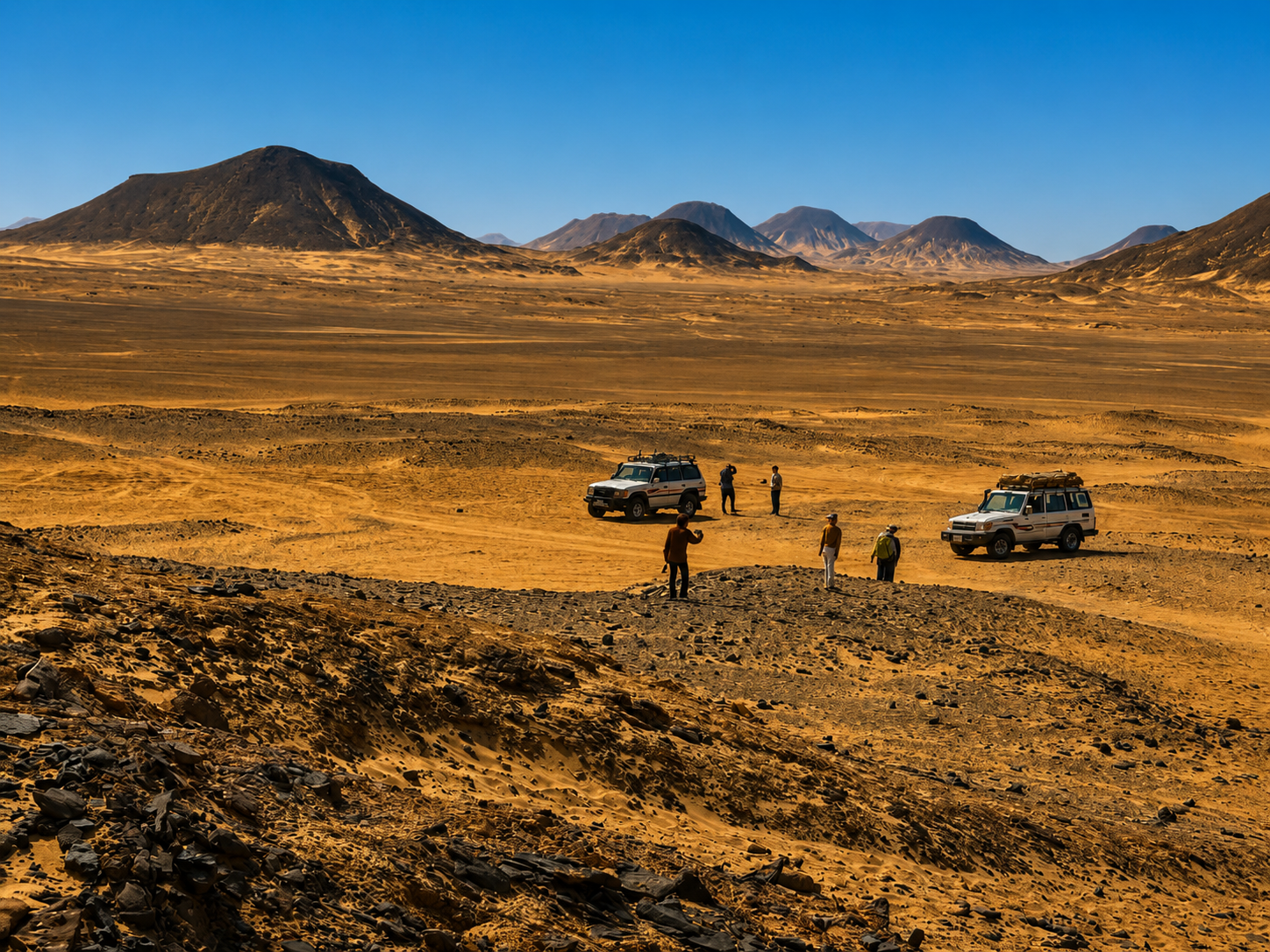
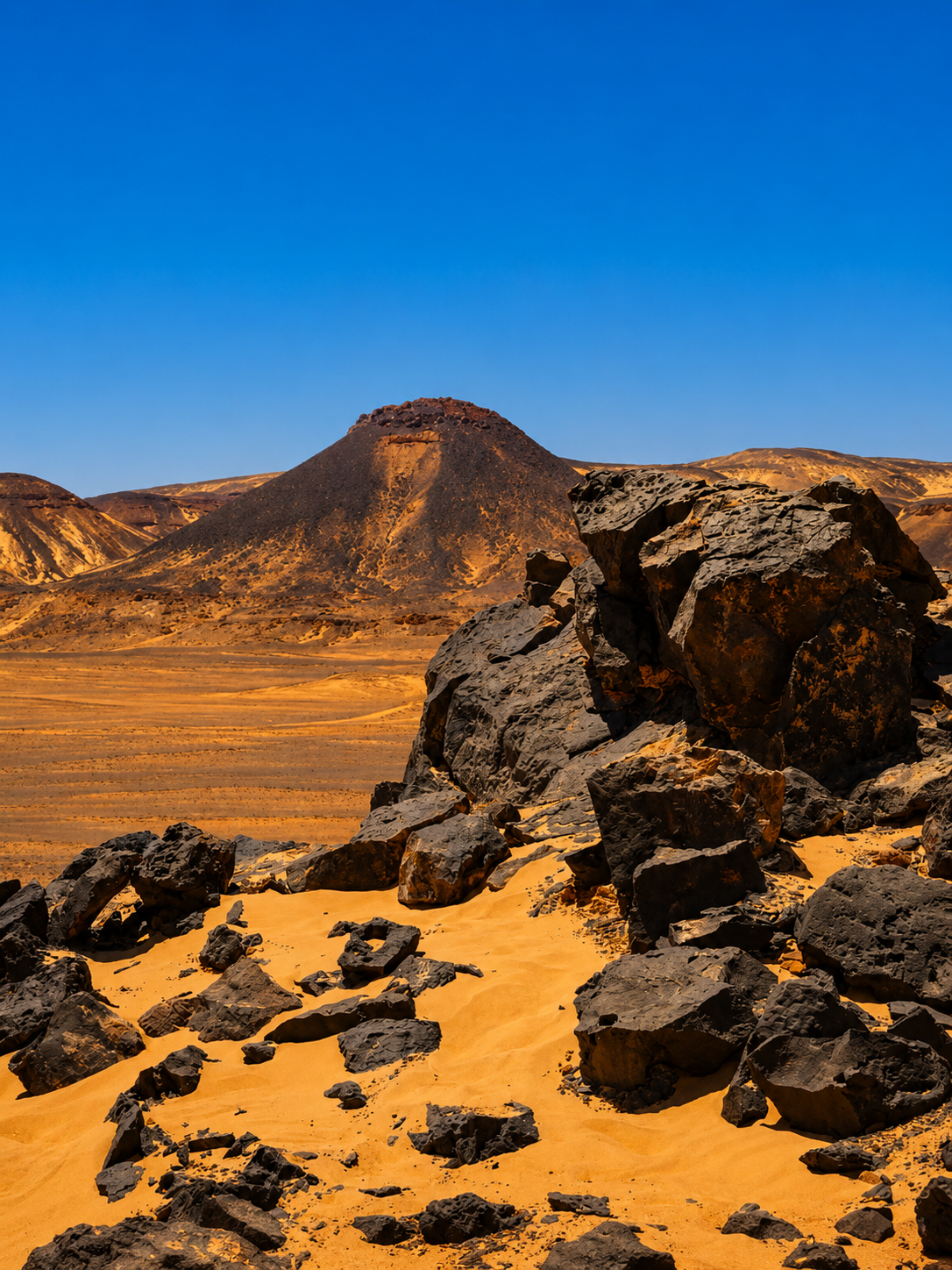
The Black Desert is commonly explored as part of the route toward the White Desert from Bahariya Oasis.

Egypt’s official tourism portal identifies Bahariya as a gateway to the area’s natural attractions, including the Black and White Deserts.

So the same October–April period works very well for a combined safari.

For more detail, read our Black Desert and White Desert Tour from Cairo guide.

Best Time to Combine Bahariya Oasis and the White Desert

Again, October–April works very well for most travelers.

Bahariya Oasis is approximately 370 km southwest of Cairo according to Egypt’s official tourism platform and serves as the practical gateway for many White Desert expeditions.

This allows one itinerary to combine:

  • oasis landscapes,
  • Federn,
  • Black Desert,
  • Crystal Mountain,
  • Agabat,
  • sand dunes,
  • White Desert,
  • Camping.

See our Bahariya Oasis Egypt guide if you want to spend additional time around the oasis.

Is Winter or Autumn Better?

For most travelers, both are excellent.

Choose Autumn — October or November — if:

  • you prefer slightly warmer nights,
  • this is your first desert camping trip,
  • you want comfortable photography conditions,
  • you want a balance between warmth and cool evenings.

Choose Winter — December to February — if:

  • you dislike hot weather,
  • you enjoy cooler daytime exploration,
  • you are prepared for cold nights,
  • photography is a major priority.

There is no universal winner.

Your tolerance for cold matters.

Is Spring Better Than Winter?

March and early April can be excellent alternatives for travelers who want to avoid the coldest winter nights.

Spring also fits conveniently into many Egypt itineraries.

Choose March or April if:

  • you want warmer camping conditions,
  • you still want generally comfortable daytime touring,
  • you are visiting Egypt around spring,
  • you want to combine the desert with Cairo, Luxor or Aswan.

Again, exact conditions can vary.

What If Your Egypt Trip Is in Summer?

Do not automatically cancel your entire Egypt itinerary.

Instead, ask whether the White Desert should be part of that particular trip.

Egypt has many destinations with different seasonal characteristics.

If you have complete flexibility and the White Desert is a major priority, arranging your desert journey during the cooler season is usually more comfortable.

If your dates are fixed, speak with an experienced operator about current conditions before deciding.

Photography Tips for the White Desert

Whatever month you choose, a few decisions can dramatically improve your photography.

Stay Overnight

This gives you sunset, blue hour, night and sunrise.

Avoid Photographing Only at Midday

Use midday for scouting locations and documenting formations.

Save your most important compositions for changing light.

Bring Extra Batteries

Cold can reduce battery performance, and long camping itineraries may have limited charging opportunities.

Bring a Power Bank

Especially for smartphones and smaller devices.

Protect Equipment From Sand

Keep bags closed whenever possible.

Avoid changing lenses unnecessarily when wind is carrying sand.

Bring a Tripod

Useful for:

  • blue-hour photography,
  • camp scenes,
  • Sterne,
  • long exposures,
  • Sterne,

Tell Your Guide You Are a Photographer

This is one of the most important tips.

A photography itinerary needs time.

If your guide knows that a specific sunset or formation matters to you, the route can often be paced more appropriately than a standard sightseeing schedule.

Which White Desert Tour Should You Choose by Season?

October–November

Recommended: 1 Night / 2 Days or 2 Nights / 3 Days

Excellent all-round period for camping and photography.

December–February

Recommended: Any duration if you are properly prepared for cold nights.

Especially strong for active daytime exploration.

March–April

Recommended: 1 Night / 2 Days or longer.

Excellent combination of camping and photography.

Hotter Months

Recommended: Discuss current conditions and itinerary suitability directly before booking.

Long multi-night trips require more careful consideration.

Our Recommendation: What Is the Best Time to Visit?

If you want one simple recommendation:

First White Desert trip

October, November, March or early April

These months provide an excellent balance for many international visitors.

Hate hot weather?

Dezember bis Februar

But prepare properly for cold nights.

Photography-focused trip?

October to April

Then choose your exact dates based partly on sunrise, sunset and moon conditions.

Camping-focused trip?

October to April, with autumn and spring providing particularly convenient all-round conditions.

Only available in summer?

Speak to your tour operator before booking so your itinerary can be evaluated according to actual conditions.

Planen Sie Ihre Reise in die Weiße Wüste nach dem Erlebnis und nicht nur nach dem Wetter

There is one final point travelers often overlook.

Der „beste Monat“ rettet keine falsche Reiseroute.

Du könntest bei perfektem Novemberwetter dorthin fahren, würdest dann aber eine gehetzte Tagestour machen, obwohl du eigentlich davon geträumt hast, unter dem Sternenhimmel zu zelten.

Oder Sie könnten im Januar mit geeigneter Kleidung hierherkommen und zwei unvergessliche Nächte damit verbringen, die Wüste zu fotografieren.

Denken Sie über beides nach:

Wann sollte ich vorbeikommen?

und

Wie lange soll ich bleiben?

Wenn Sie sich nicht sicher sind, ob Sie einen, zwei, drei oder vier Tage benötigen, lesen Sie unseren Reiseroute für die Weiße Wüste in Ägypten: Ideen für 1-, 2-, 3- und 4-tägige Touren.

Wählen Sie dann Ihre Reisedaten aus.

Buchen Sie Ihre Camping-Tour durch die Weiße Wüste

Sind Sie bereit, die Weiße Wüste Ägyptens zu erleben?

Für die meisten Reisenden, die einen Aufenthalt zwischen Oktober und April planen, ist eine Übernachtungssafari die beste Möglichkeit, mehr als nur die Landschaft bei Tageslicht zu erleben.

Sie können den Sonnenuntergang über den Felsformationen beobachten, in der Wüste zu Abend essen, die Nacht unter freiem Himmel verbringen und zum Sonnenaufgang aufwachen, bevor Sie Ihre Safari fortsetzen.

Ideal für Erstbesucher

2-tägige Weiße-Wüste-Tour ab Kairo (1 Übernachtung)

Ideal für Fotografen und Abenteuerreisende

2 Nächte, 3 Tage Camping-Tour durch die Weiße Wüste

Alle Optionen vergleichen

Entdecken Sie die Weiße Wüste – Ägypten-Reisen

Teilen Sie White and Black Desert Tours Ihre Reisedaten, die Anzahl der Reiseteilnehmer, die gewünschte Reisedauer sowie mit, ob Camping oder Fotografie für Sie im Vordergrund stehen.

Wir helfen Ihnen gerne dabei, die für die Jahreszeit und die von Ihnen gewünschten Erlebnisse passende Reiseroute durch die Weiße Wüste auszuwählen.

WhatsApp: +20 10 05014595

E-Mail: contact@whiteandblackdeserttours.com

Anfrage zur Tour: Contact White and Black Desert Tours

4-tägige Siwa-Oasen-Tour ab Kairo

Eintägige Fayyum-Tour ab Kairo

Giza Pyramids & Grand Egyptian Museum Tour

Eintägige Tour zur Weißen Wüste ab Kairo

1 Übernachtung beim Camping in der Fayyum-Wüste ab Kairo

3-tägige Kairo–Siwa-Tour (2 Übernachtungen)

Siwa-Programm mit komfortablem Bus ab Kairo

2-tägige Weiße-Wüste-Tour ab Kairo (1 Übernachtung)

2 Nights 3 Days White Desert & Dejara Cave Tour from Cairo

3-tägige Camping-Tour in der Weißen Wüste (2 Übernachtungen)

3 Nights 4 Days Cairo White Desert Tour

3-tägige Tour zur Weißen Wüste und Bahariya-Oase (2 Übernachtungen)

3-tägige Kairo–Siwa-Tour (2 Übernachtungen)

3 Nights 4 Days Tour from Cairo to White Desert, Bahariya Oasis & Luxor

6 Nights 7 Days Cairo, Siwa, Marsa Matrouh & White Desert Tour

3-tägige Fayyum- und Weiße-Wüste-Tour ab Kairo (2 Übernachtungen)

5 Nights 6 Days Cairo, Siwa, White Desert & Bahariya Oasis Tour

6-tägige Ägypten-Oasen-Tour ab Kairo (5 Übernachtungen)

Tour zum Nationalmuseum der Ägyptischen Zivilisation

2-tägige Tour durch Kairo und Gizeh

4-tägiges Luxor-Paket ab Kairo mit Schlafwagenzug (3 Übernachtungen)

3-tägige Tour von Kairo nach Dakhla und Luxor (2 Übernachtungen)

Ganztägige Tour nach Alexandria ab Kairo

Ganztägige Tour am Westufer von Luxor

Ganztägige Tour am Ostufer von Luxor

Ganztägige Tour in Assuan

Häufig gestellte Fragen

October, November, March and early April are excellent all-round choices for many travelers because they offer a good balance between daytime exploration and overnight camping. December through February are also excellent, but nights can be significantly colder.
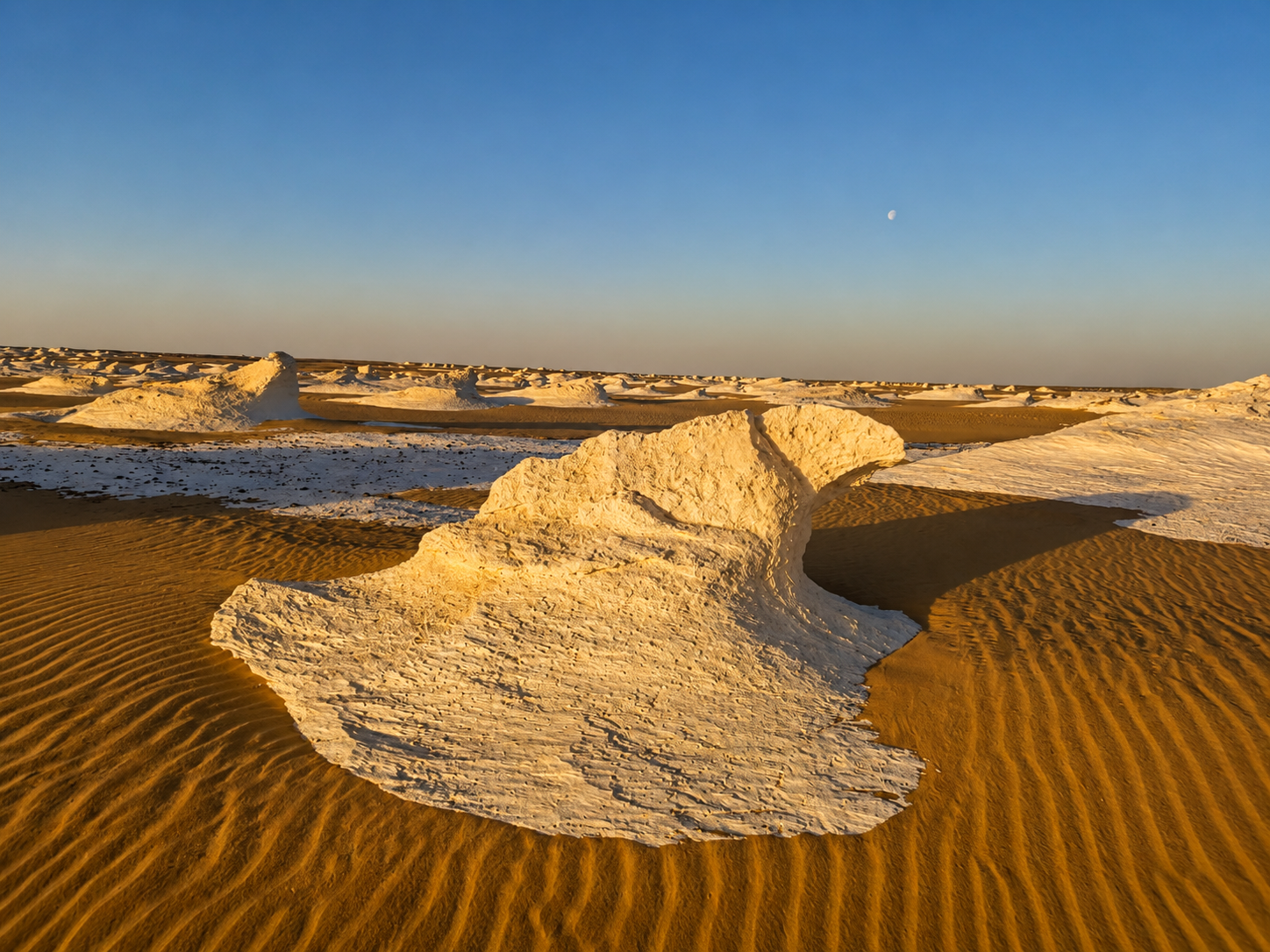
October through April is generally the most comfortable camping season for most visitors. Autumn and spring offer an especially useful balance, while winter is ideal for travelers who are prepared for cold desert nights.

Yes. January is excellent for daytime safari activities, walking and photography because conditions are cooler. However, overnight campers should bring warm layers because desert nights can feel very cold.

Yes. December is part of the main White Desert camping season. Days can be comfortable for exploration, but nights require proper warm clothing and suitable sleeping equipment.

Yes. November is one of the strongest all-round months for White Desert tours because it generally combines manageable daytime conditions with good camping and photography opportunities.

Desert travel may be possible depending on current conditions and arrangements, but the hotter summer period is significantly more demanding for extended daytime activities. Travelers should discuss suitability, timing and safety with an experienced operator before booking.
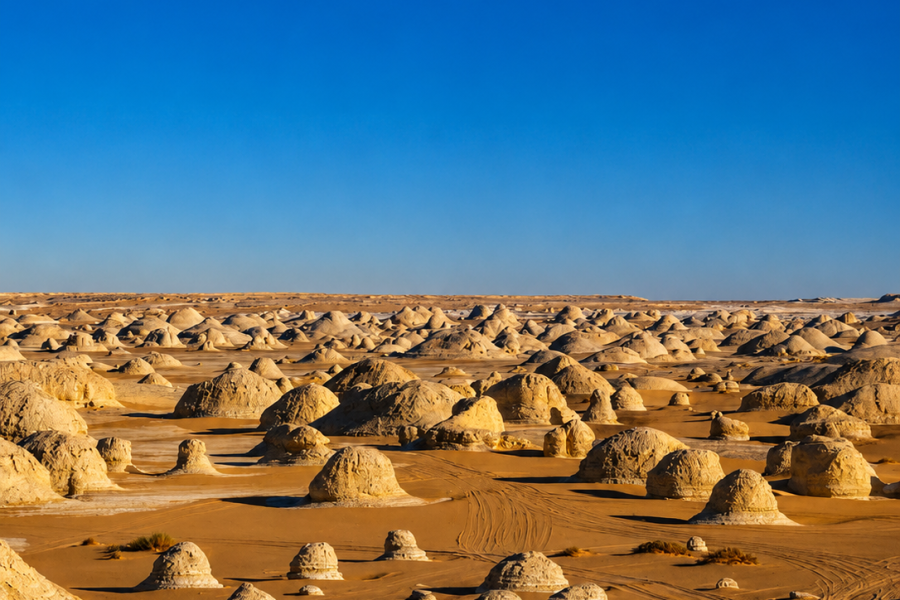
October through April offers generally comfortable conditions for extended photography. Within each day, sunrise, late afternoon, sunset and blue hour provide particularly attractive lighting for the desert's white formations.

Clear nights during the main camping season can provide excellent opportunities. If faint stars are your priority, consider dates with less moonlight. Some moonlight can instead be useful for naturally illuminating desert formations.

It can be, particularly during winter. Travelers camping from December through February should bring warm layers rather than relying on Cairo's daytime weather when packing.

Both are excellent. October may feel somewhat warmer, while November is further into the cooler desert season. Either can work very well for camping, photography and safari activities.
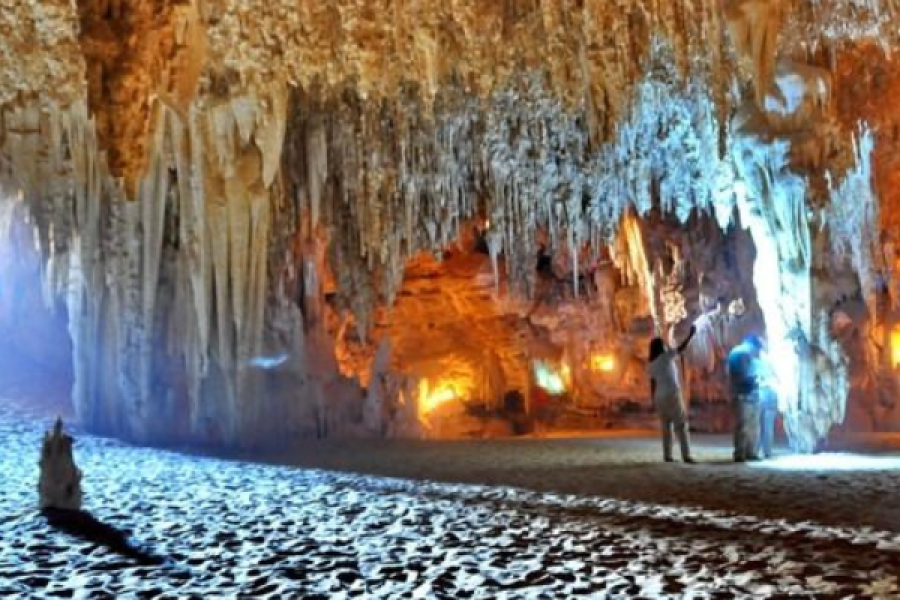
Yes. March is one of the best all-round options because winter is transitioning toward spring while daytime conditions are generally still comfortable for outdoor exploration.

Two days and one night provide the classic first-time experience. Three days and two nights are better for photography, deeper off-road exploration and travelers who want more time camping in the Western Desert.