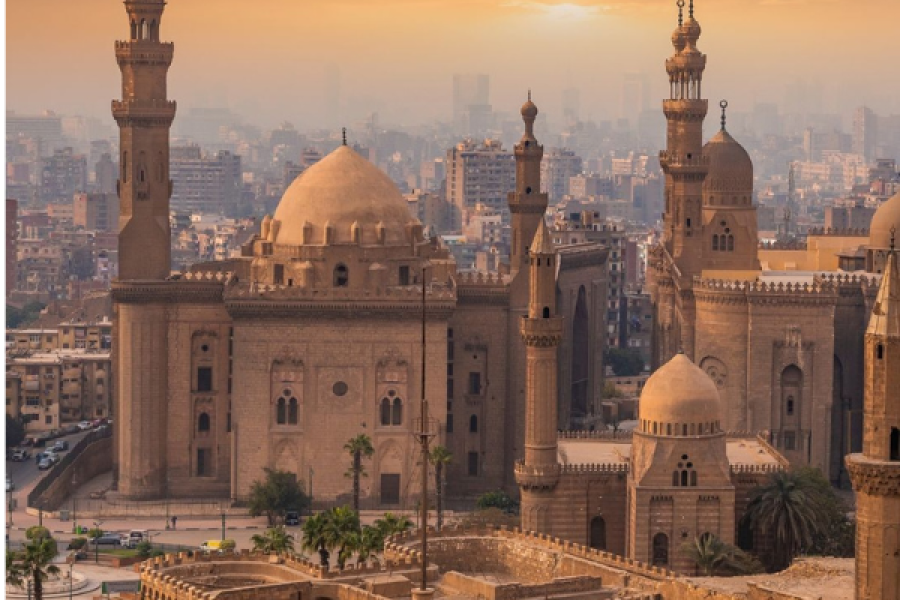
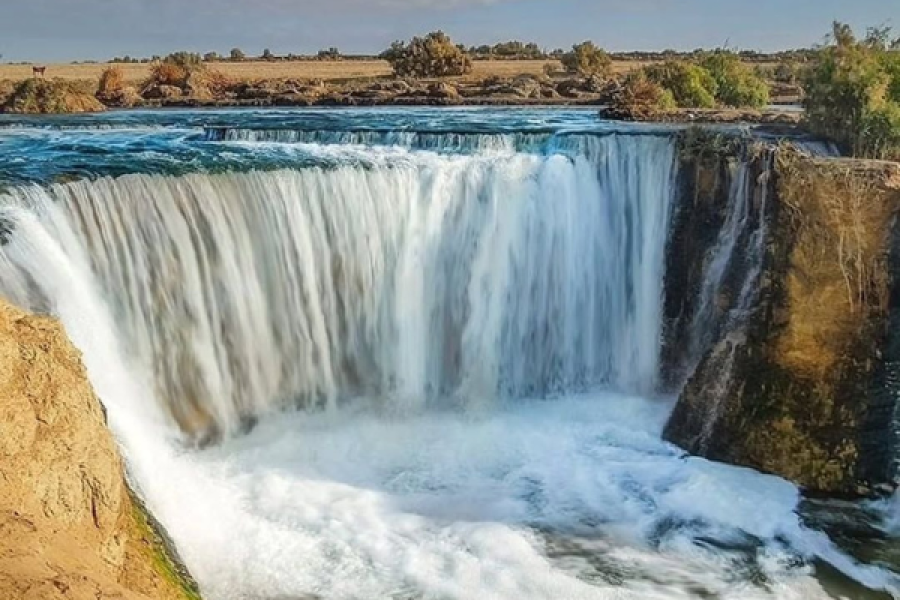
Bahariya Oasis from Cairo is one of the most practical ways to experience Egypt’s Western Desert without adding a week-long expedition to your itinerary. Located about 370 km southwest of Cairo, Bahariya is the closest major Western Desert oasis to the Egyptian capital and the traditional gateway to the Black Desert, Crystal Mountain, Agabat Valley and the White Desert.
For most travelers, the journey from Cairo to Bahariya takes around four to five hours by road, depending on the pickup point, traffic, checkpoints and rest stops. A same-day trip is possible, but it creates a very long travel day. If your goal is to explore the desert properly, watch the sunset, camp under the stars or continue into the White Desert, a 2-day/1-night itinerary usually gives a much better experience.
If you are planning your first desert trip from Cairo, this guide explains exactly how to reach Bahariya Oasis, what you can see, how many days you need, what a typical safari includes and which tour format makes the most sense for your schedule.
Bahariya Oasis is approximately 370 km southwest of Cairo, and the road journey normally takes around four to five hours. Most visitors travel from Cairo or Giza by private vehicle and continue from Bahariya in a local 4×4 for the desert safari.
A one-day trip is possible if your time is very limited, but it means spending much of the day on the road. For first-time visitors, 2 days and 1 night is usually the best balance, especially if you want to combine Bahariya Oasis with the Black Desert, Crystal Mountain, Agabat Valley and overnight camping near the White Desert.
Frage | Kurze Antwort |
Entfernung von Kairo | About 370 km |
Driving time | Around 4–5 hours |
Best trip length | 2 days / 1 night for most visitors |
Is a day trip possible? | Yes, but it is a very long day |
Main gateway town | Bawiti |
Main desert route | Bahariya → Black Desert → Crystal Mountain → Agabat → White Desert |
Die beste Saison | Generally October to April |
Best for | Desert safari, camping, photography, couples, families and adventure travelers |
Transport in the desert | Local 4×4 vehicle |
Can it be private? | Yes, private itineraries are ideal for flexibility |
For a broader introduction to the destination itself, read our Bahariya Oasis Egypt travel guide.
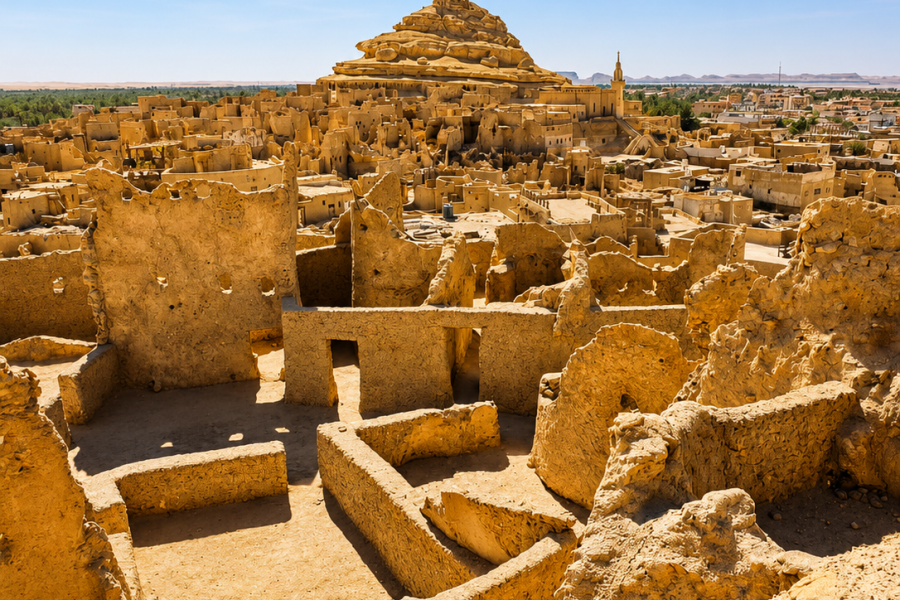
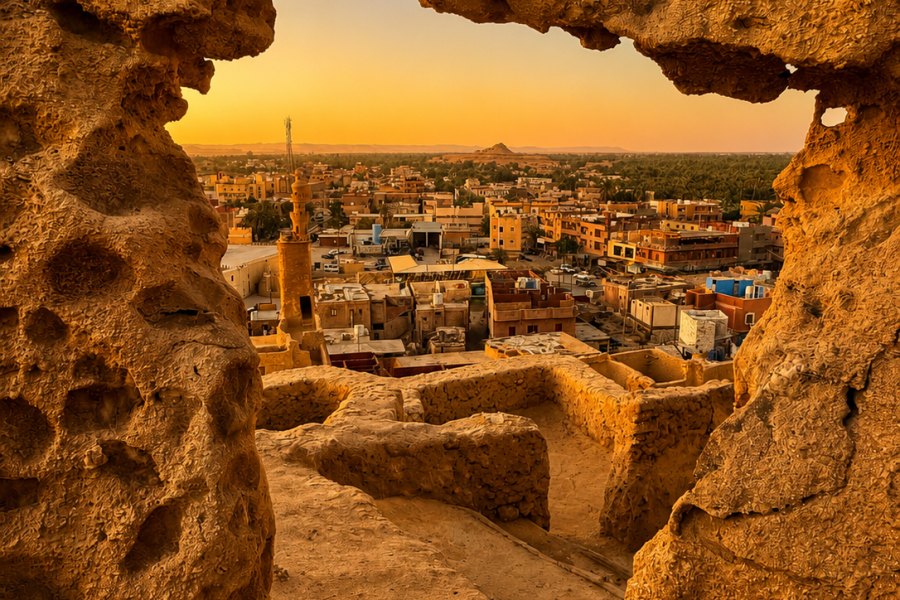
Bahariya Oasis lies in Egypt’s Western Desert, southwest of Cairo. Its main settlement is Bawiti, a desert town surrounded by palm groves, agricultural land, natural springs and rocky hills.
What makes Bahariya especially useful for travelers is its location. It is much closer to Cairo than Egypt’s deeper Western Desert oases, making it practical for a short extension after visiting Cairo and the Giza Pyramids.
But Bahariya is more than a place to sleep before a safari.
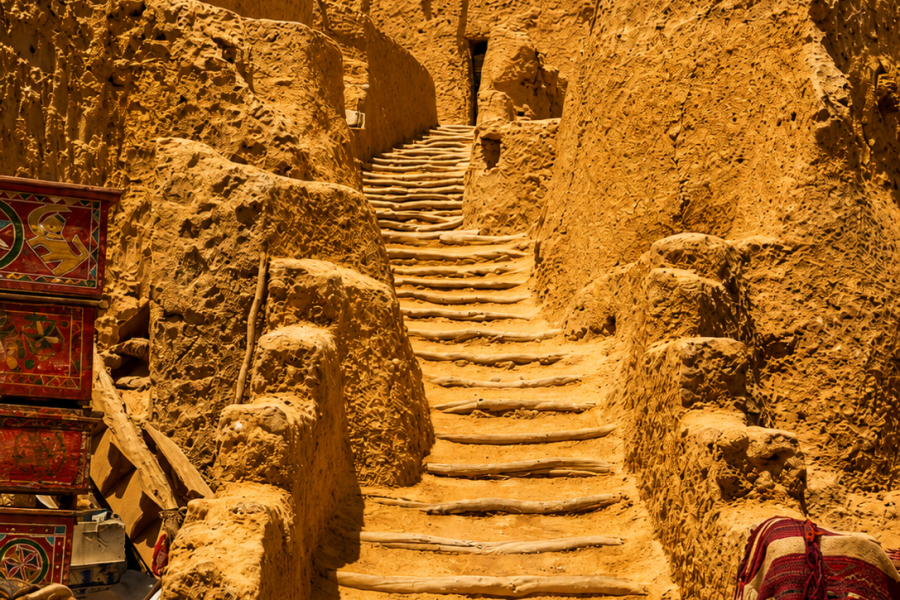
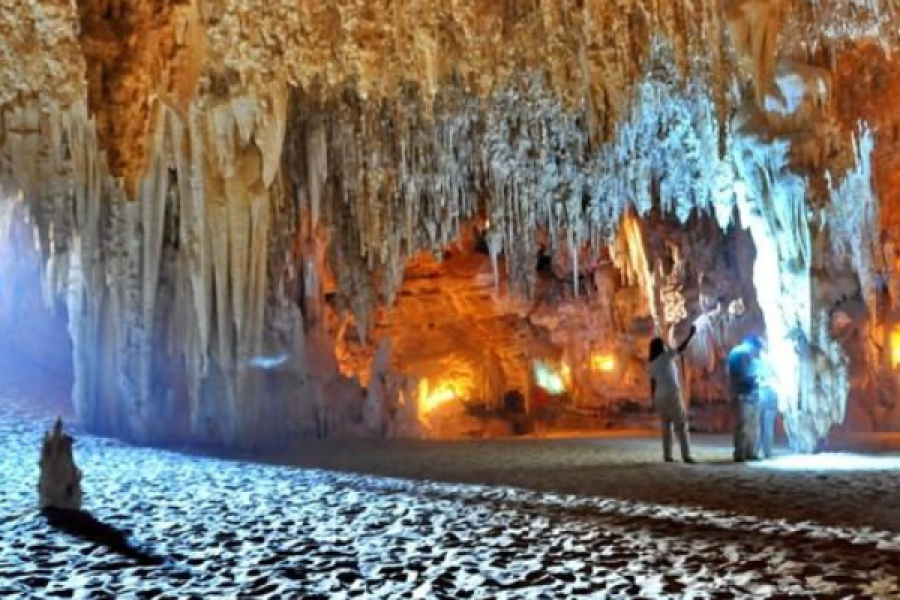
The oasis has its own character: palm and olive groves, springs, desert viewpoints, archaeological remains, villages and the famous Valley of the Golden Mummies. At the same time, it functions as the starting point for one of Egypt’s most dramatic desert routes.
For many travelers, the journey progresses like this:
Cairo → Bahariya Oasis → Black Desert → Crystal Mountain → Agabat Valley → White Desert
That sequence is one reason Bahariya is such a useful addition to an Egypt itinerary. In two or three days, the landscape changes completely from Cairo’s urban energy and ancient monuments to green oasis vegetation, black hills, golden dunes and surreal white rock formations.
Bahariya Oasis is around 370 kilometers southwest of Cairo.
The drive usually takes approximately four to five hours, although the exact time depends on several factors:
If you are staying around Downtown Cairo or Giza, most private tours begin early in the morning.
The important thing to understand is that reaching Bahariya is only the first part of many desert itineraries.
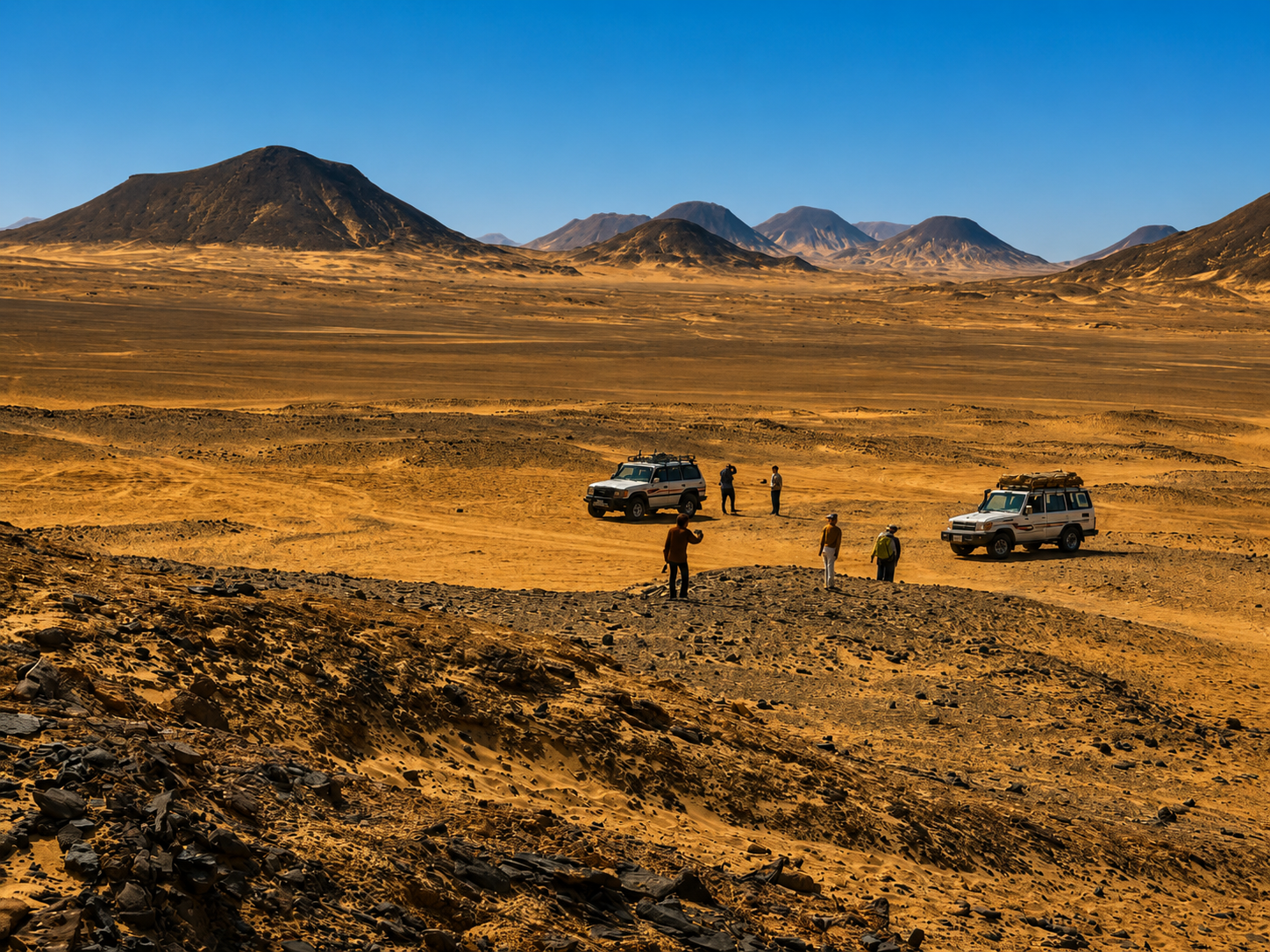
If you are taking a White Desert safari, you normally arrive in Bahariya, stop for lunch or refreshments, then transfer to a local 4×4 vehicle for the off-road section of the trip.
That is why a White Desert tour is not simply a direct Cairo-to-White-Desert transfer.
To understand that route in more detail, see our White Desert from Cairo guide.
Yes, especially if you want to experience a side of Egypt that feels completely different from Cairo, Giza, Luxor and the Nile Valley.
Bahariya works particularly well for travelers who want nature and adventure without committing to a very long Western Desert expedition.
Within a relatively short trip, you can experience:
The contrast is the biggest appeal.
You can spend one morning looking at the Pyramids of Giza and, the following day, be driving through the Black Desert before watching the sun set over the White Desert.
If the desert is a major reason you are visiting Egypt, Bahariya should be considered more than a simple stopover.
One of the biggest planning questions is whether you should visit Bahariya as a day trip or stay overnight.
The answer depends mainly on your available time and what you actually want to experience.


A day trip can work if you only have one free day.
You normally leave Cairo very early, drive to Bahariya, visit selected oasis and desert attractions, then return to Cairo in the evening or at night.
The advantage is obvious: you do not need to change your Cairo hotel or pack for camping.
The disadvantage is the amount of driving.
With roughly four to five hours each way, a one-day tour can become a very long experience. There is less flexibility for sunset, photography and slower stops.
A day trip is best for:
You can see the dedicated Eintägige Tour in die Weiße Wüste ab Kairo if you only have one available day.
For most first-time visitors, two days and one night is the sweet spot.
It gives you enough time to leave Cairo without beginning the desert section already rushed.
A typical itinerary includes Bahariya, the Black Desert, desert springs or El Heiz, Crystal Mountain, Agabat Valley, sunset, dinner, camping, stargazing, sunrise and the return journey to Cairo.
The biggest difference is what happens after sunset.
Instead of beginning a long drive back to Cairo, you stay in the desert.
That single overnight changes the experience completely.
You get darkness without city lights, dinner in the desert, a quieter pace and sunrise the next morning.
If this sounds like the experience you want, see our 2-tägige Weiße-Wüste-Tour ab Kairo (1 Übernachtung).
Three days works better for people who want less rushing.
It is especially suitable for:
With an extra day, it is easier to spend time around the oasis as well as the desert instead of treating Bahariya purely as a transfer point.
Consider our Tour zur Weißen Wüste und zur Oase Bahariya ab Kairo or the deeper 2 Nächte, 3 Tage Camping-Tour durch die Weiße Wüste.
There are different ways to reach Bahariya, but they are not equally practical if your main goal is a desert safari.
For most international visitors, this is the simplest option.
Your driver collects you from your Cairo or Giza hotel and drives directly toward Bahariya Oasis.
The benefits include:
This is particularly important if you are combining Bahariya with the Black or White Desert.
Once you leave the paved-road portion of the trip, a normal city vehicle is not the right vehicle for remote desert routes.
Public transport can reach Bahariya, but arriving independently does not automatically solve the desert-safari part of the journey.
You still need to arrange local transport, guiding and the 4×4 desert section.
For backpackers or slow travelers spending several days inside the oasis, independent transport can be an option.
For a visitor with only two or three days, a coordinated private trip is normally simpler and more time-efficient.
A common mistake is to think Bahariya is only a departure point for the White Desert.
The oasis has attractions of its own.
Bawiti is the main town and practical center of Bahariya Oasis.
Many trips stop here before transferring into a 4×4 vehicle.
Depending on your itinerary, Bawiti may be where you eat lunch, meet your desert team, stay in a hotel or organize supplies before heading farther into the desert.
The green areas of the oasis form one of the strongest visual contrasts of the journey.
Palm trees, olive trees and cultivated land sit against desert hills and open sand.
If you only photograph dramatic rock formations, you miss part of what makes an oasis an oasis.
Bahariya is known for natural hot and cold springs.
A spring stop can be included in some itineraries depending on timing and route.
After several hours on the road or in a 4×4, the quieter oasis environment provides a good contrast to the safari.
Bahariya is also associated with significant Greco-Roman archaeological discoveries, most famously the Valley of the Golden Mummies.
If archaeology is an important part of your trip, tell your operator before booking. Archaeological visits need to be planned around opening conditions, available time and the desert itinerary.
Gabal al-Ingleez, often called English Mountain, provides elevated views across the oasis landscape.
Longer Bahariya-focused programs may include viewpoints like this before or after the desert route.
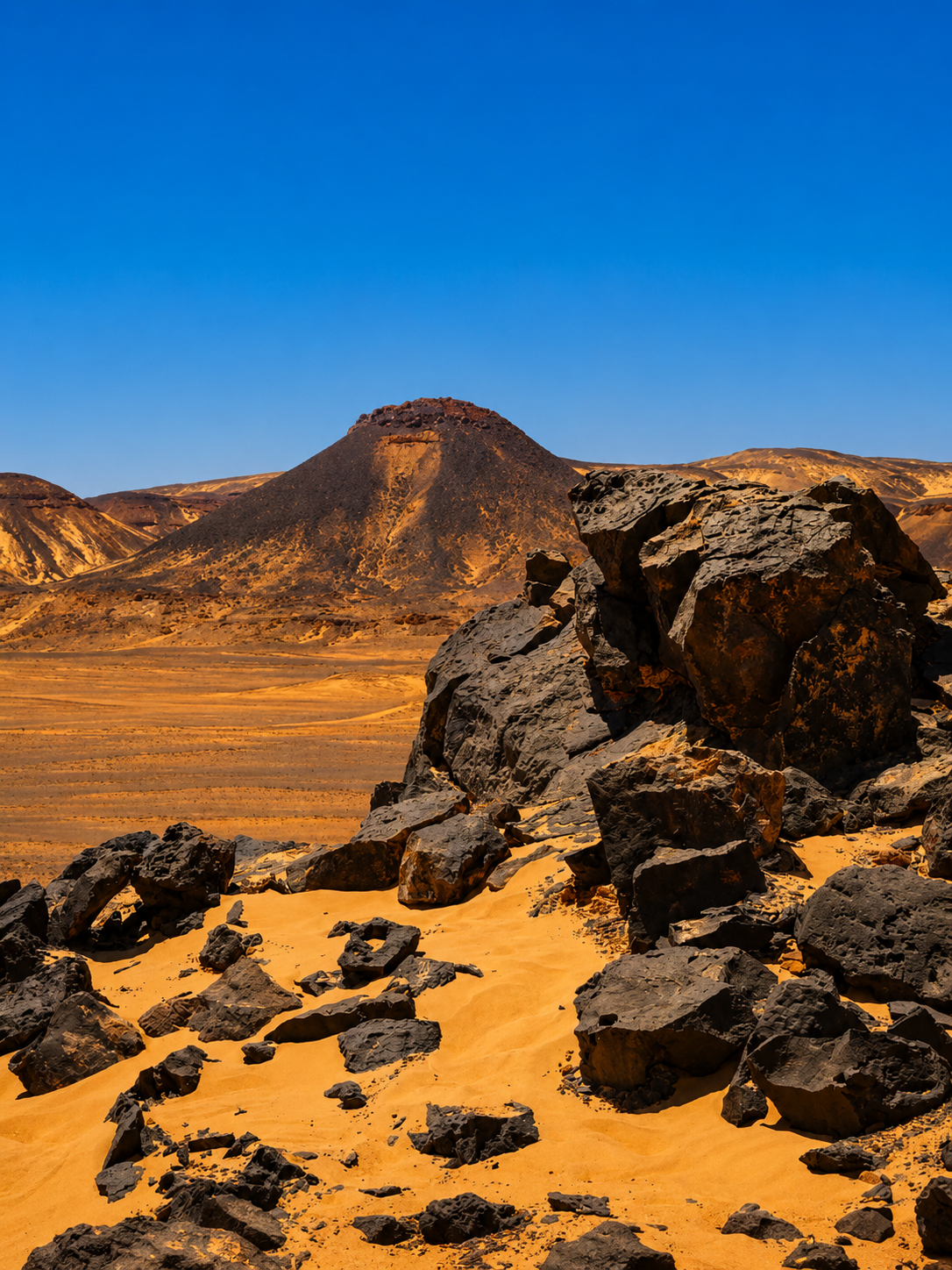
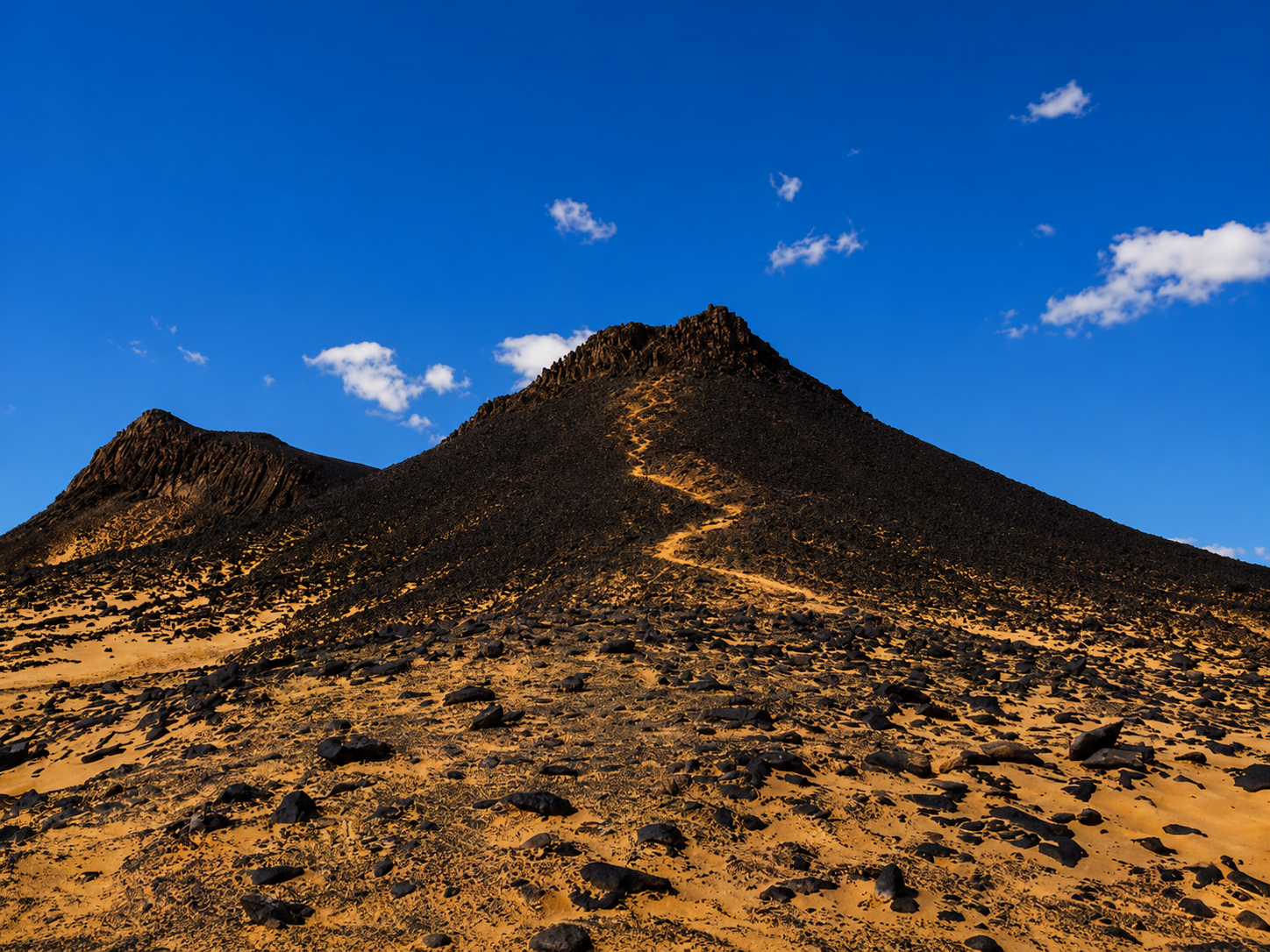
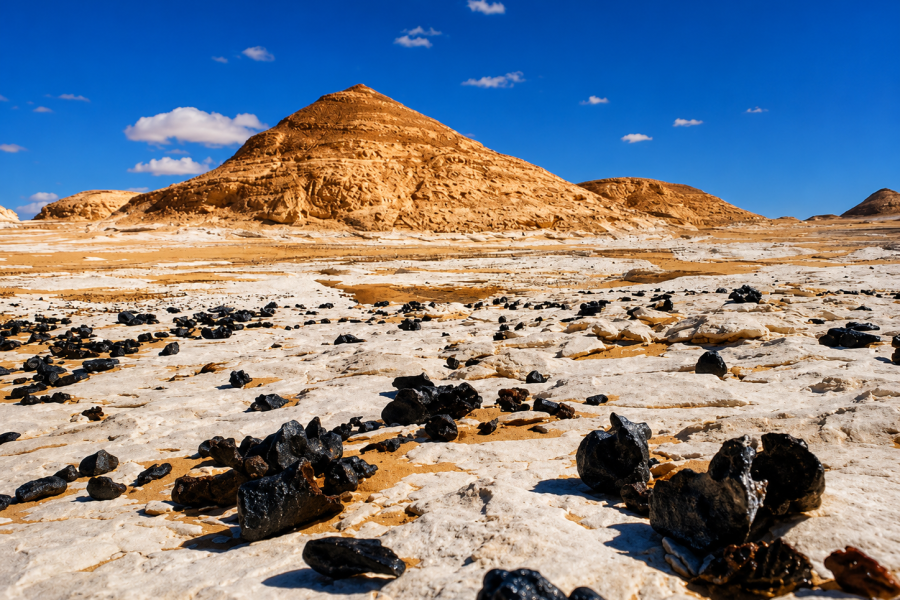
The Black Desert is normally one of the first dramatic landscapes you encounter after leaving Bahariya.
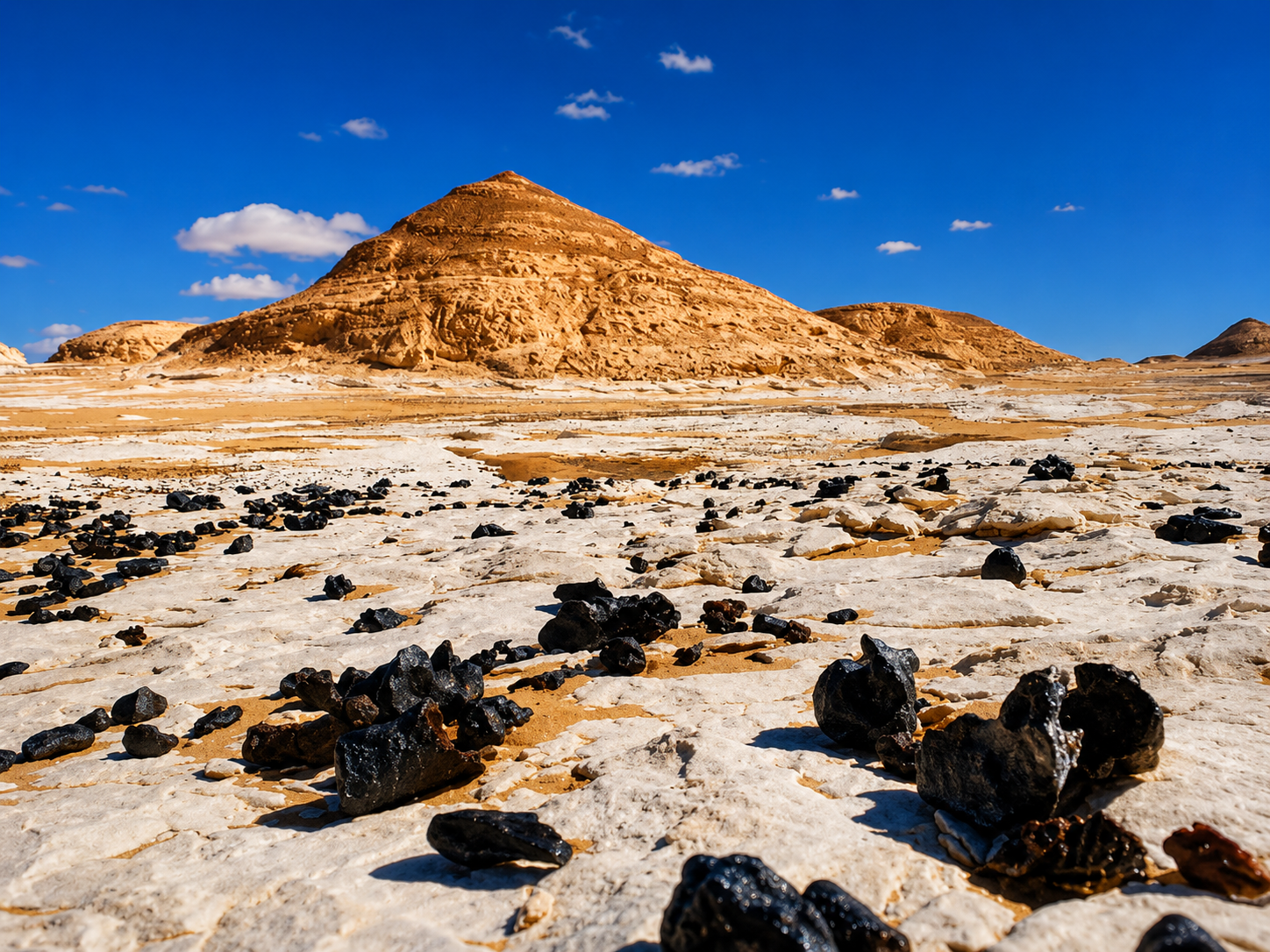
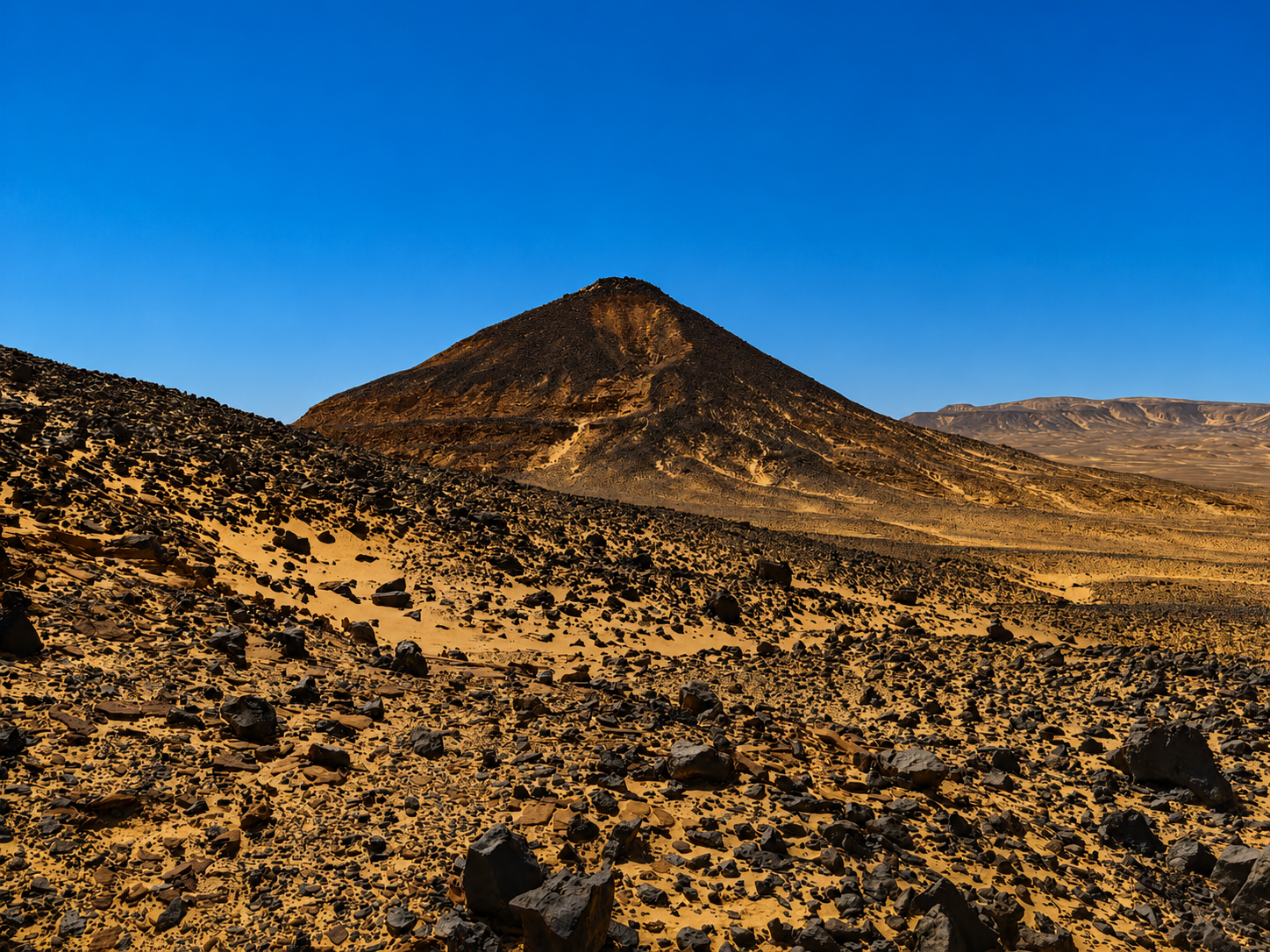
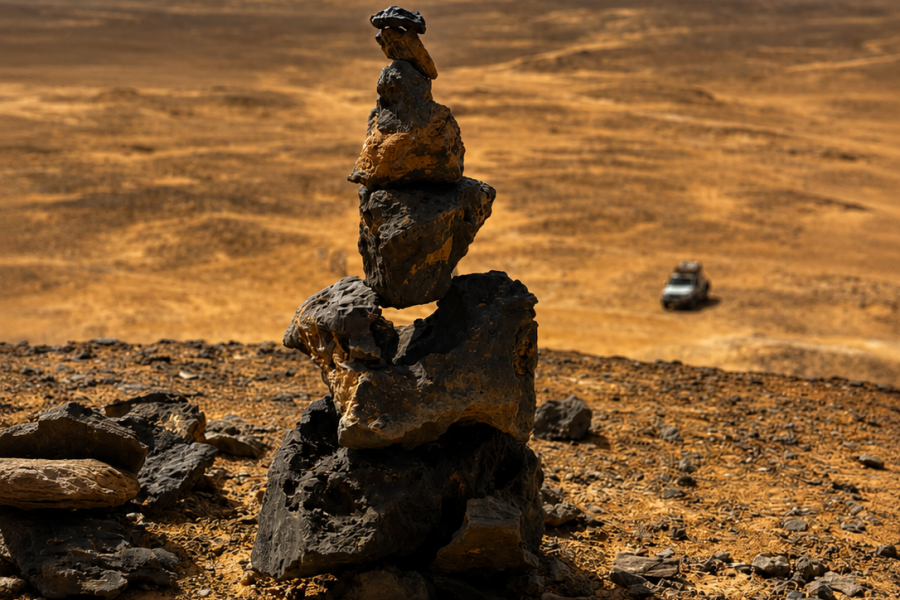
Dark stones and black-topped hills rise from the golden desert floor, creating a completely different visual atmosphere from the White Desert later in the route.
The Black Desert does not look like a single black sand field. Its character comes from dark rock and iron-rich material spread across hills and desert surfaces.
It is often the point where travelers begin to feel that the trip has moved beyond a normal road journey and into the Western Desert.
If you want a deeper guide to this section, read Black Desert Ägypten ab Kairo or our dedicated Bahariya Oasis & Black Desert Safari from Cairo.
Gabal El Marsos is another distinctive stop around the Black Desert region.
Its broken, layered appearance makes it interesting for geology lovers and photographers.
It also helps show why a proper desert safari is not only about reaching one final attraction.
The route itself is the experience.
Every section changes.
That progression — oasis vegetation, black hills, springs, golden formations, Crystal Mountain and finally the White Desert — is what makes the journey from Bahariya so memorable.
For more detail, see our guide to Gabal El Marsos in der Schwarzen Wüste.
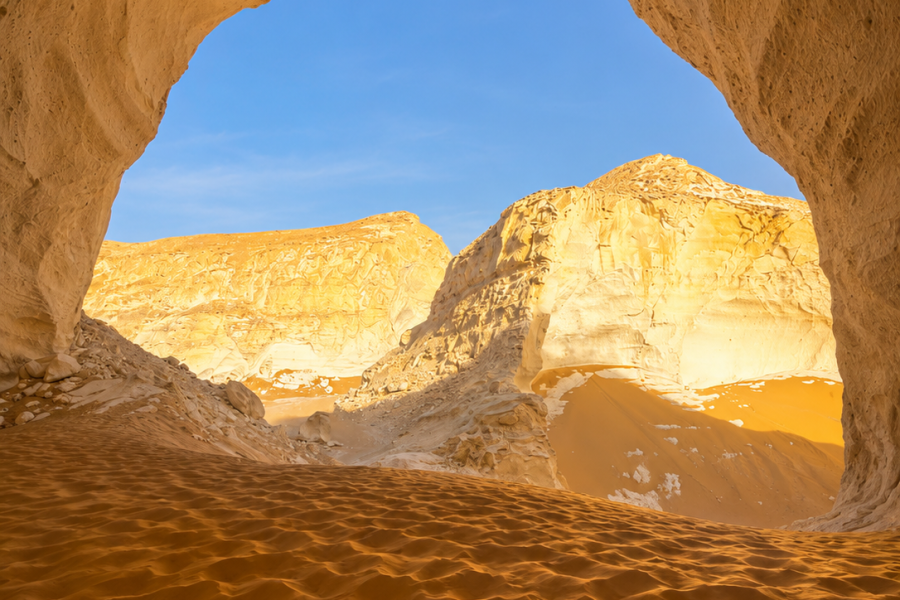
Despite the name, Crystal Mountain is not a huge mountain in the conventional sense.
It is a striking geological feature known for its crystal-rich rock and natural arch.
It is one of the classic stops between Bahariya and the deeper White Desert landscape.
The stop itself does not need hours, but visually it is one of the route’s best transition points.
You can read the full Crystal Mountain Egypt guide before your trip.
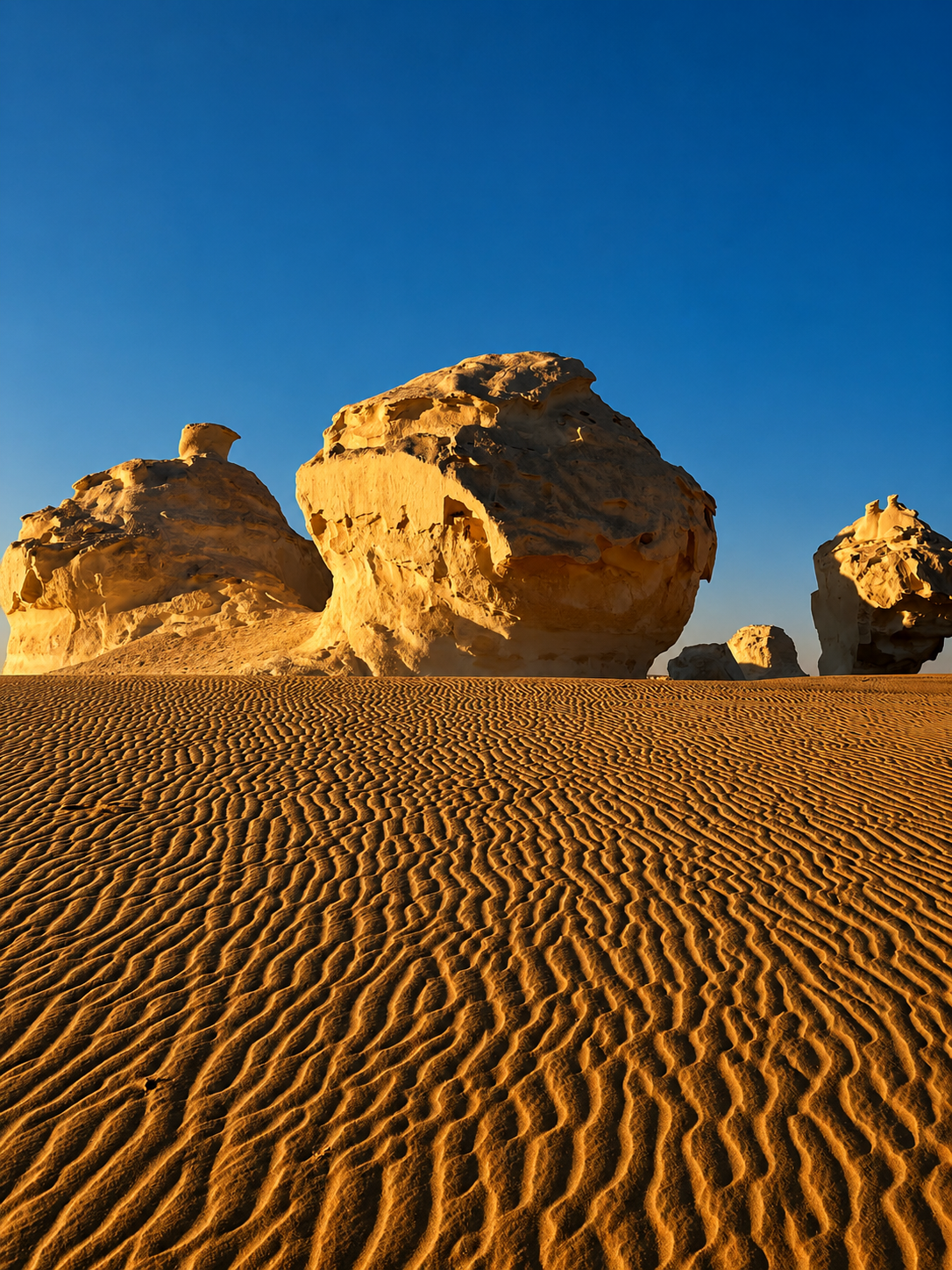
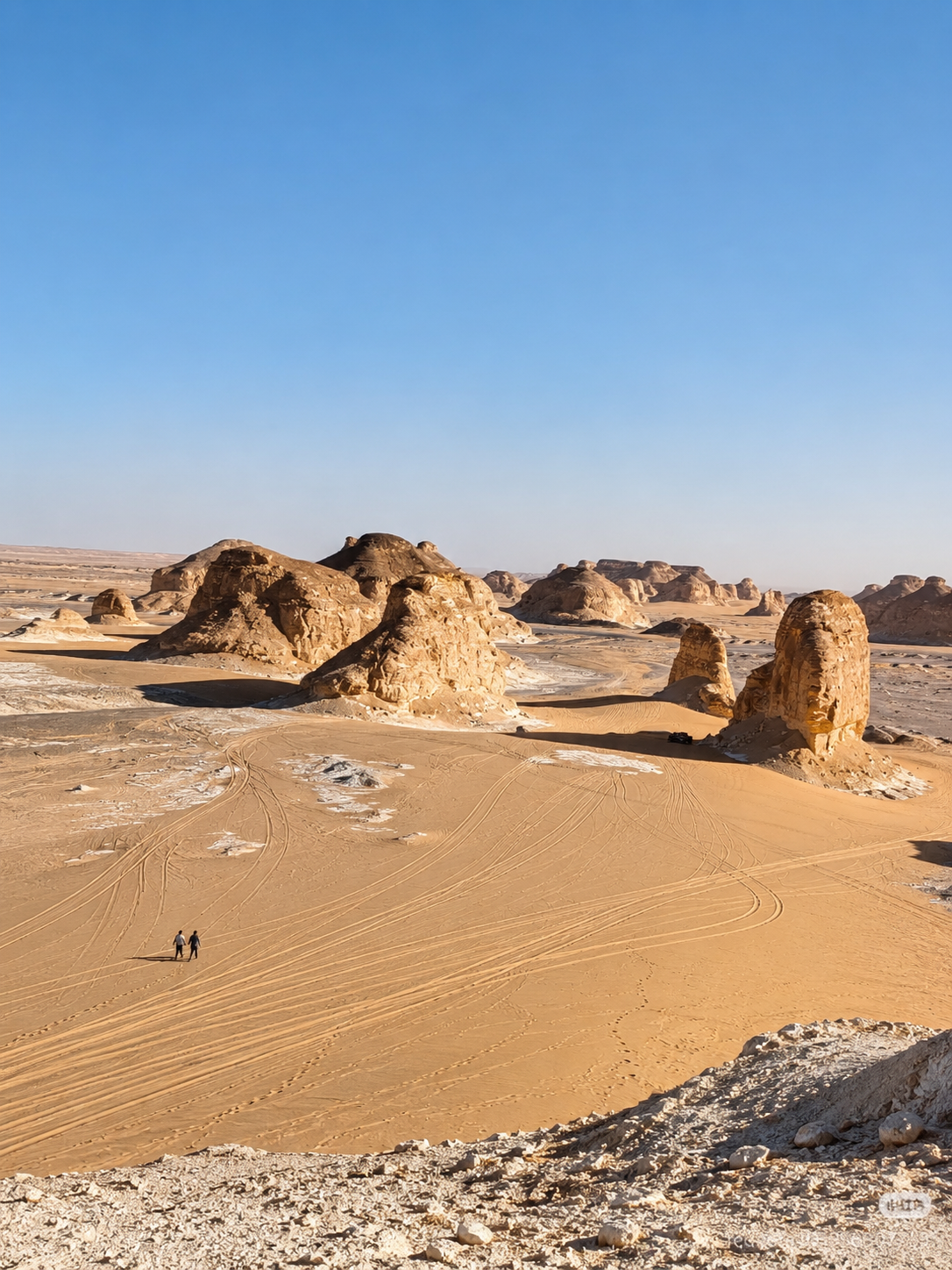
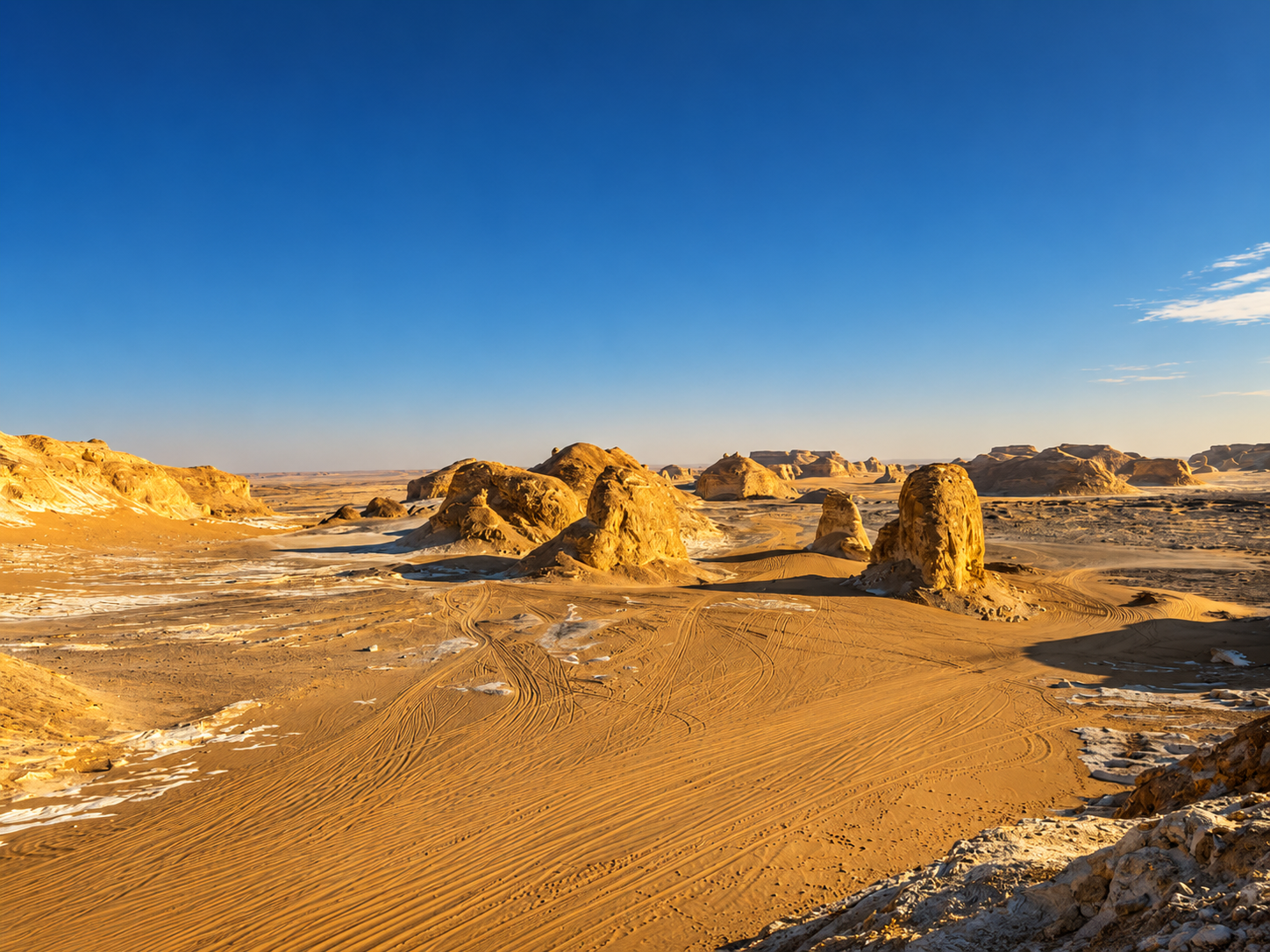
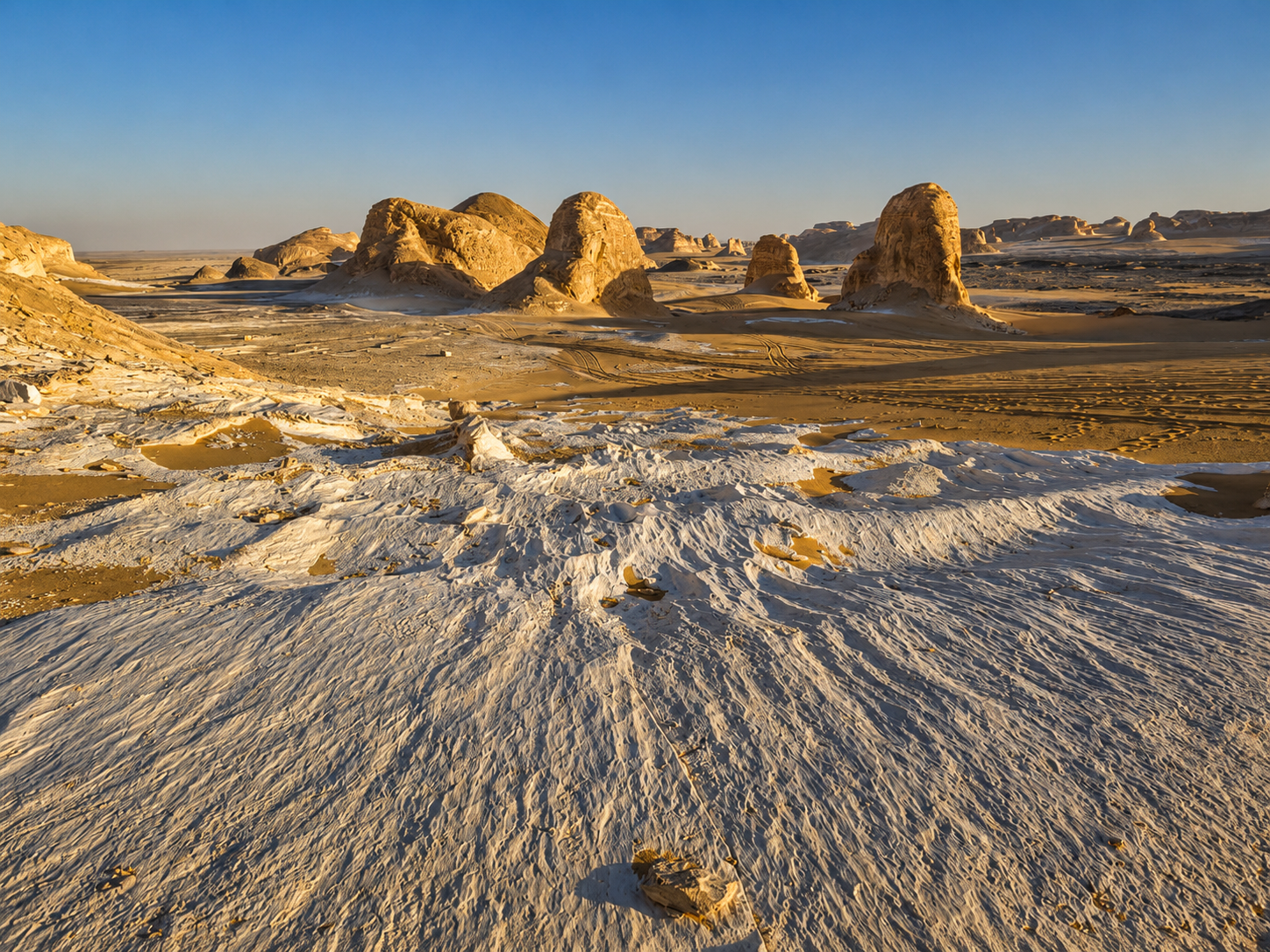
Agabat Valley is one of the most impressive landscapes on the route.
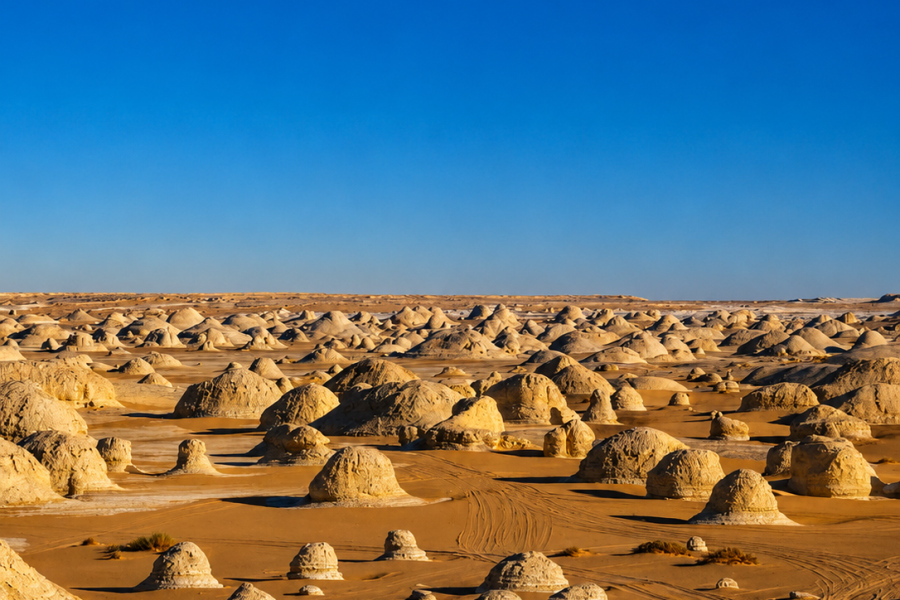
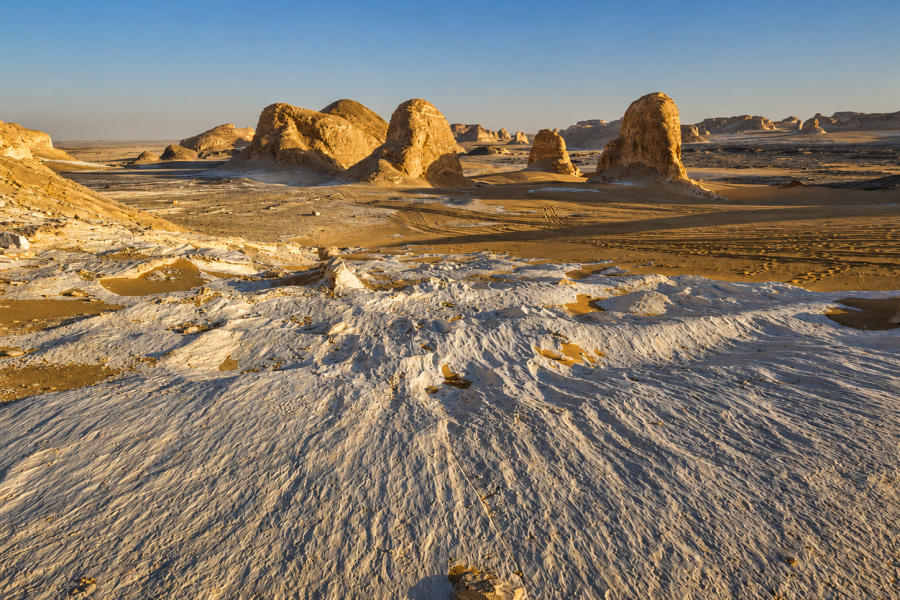
Golden sand surrounds large pale rock formations, producing a broad, dramatic view that feels more remote than many of the earlier stops.
The landscape works particularly well for photography because of the contrast between sand, cliffs, shadows and open sky.
Many travelers remember Agabat as strongly as the White Desert itself.
Read more in our Agabat Valley Egypt guide.
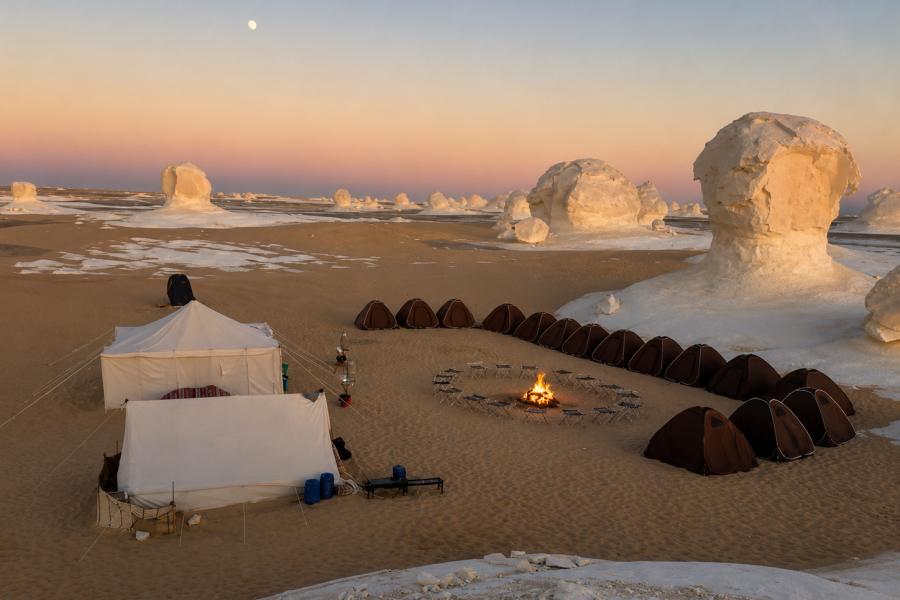
Bahariya Oasis is one of the main gateways to the White Desert.
Once the safari continues beyond the Black Desert, Crystal Mountain and Agabat, the landscape gradually becomes paler.
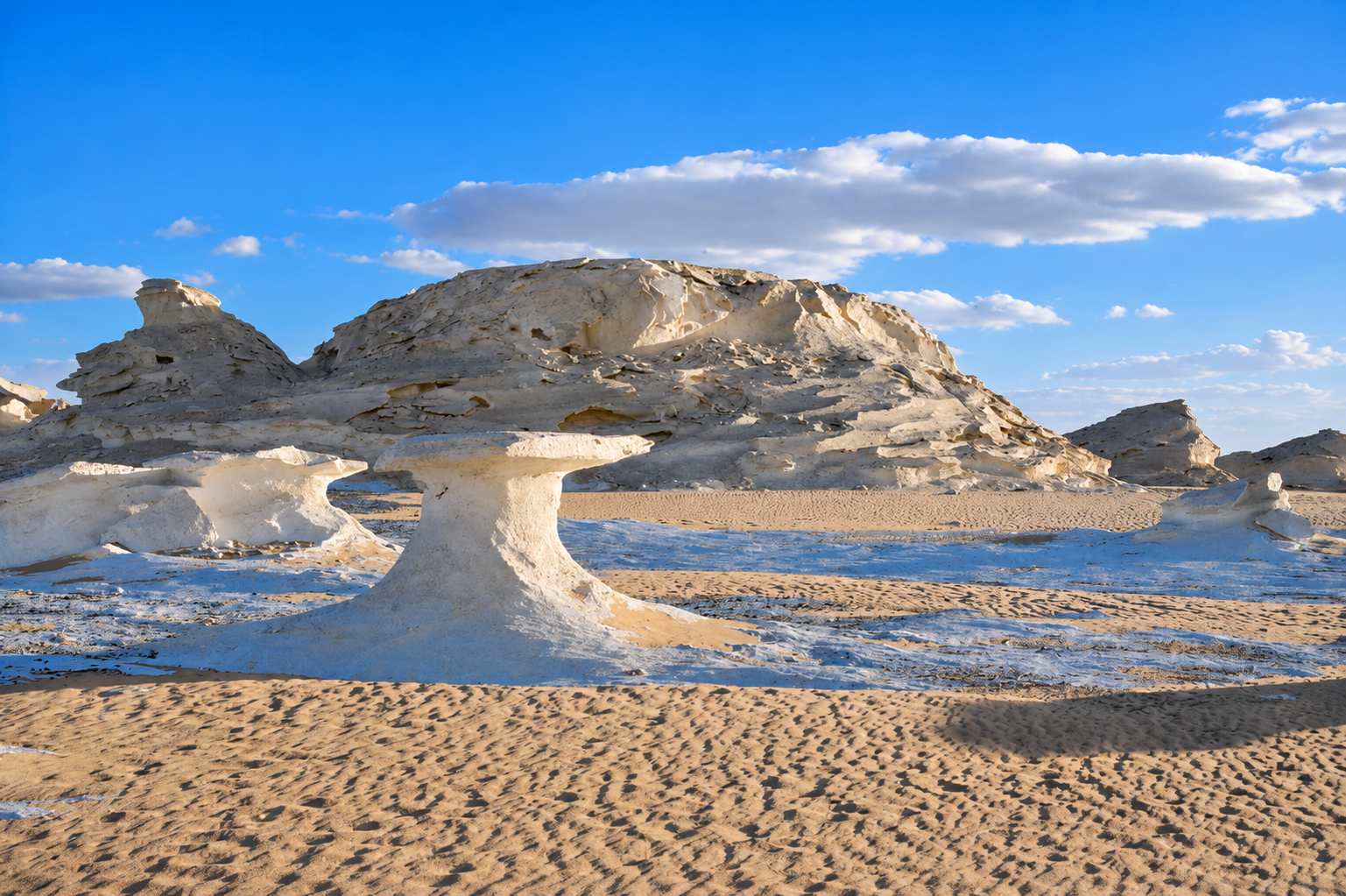
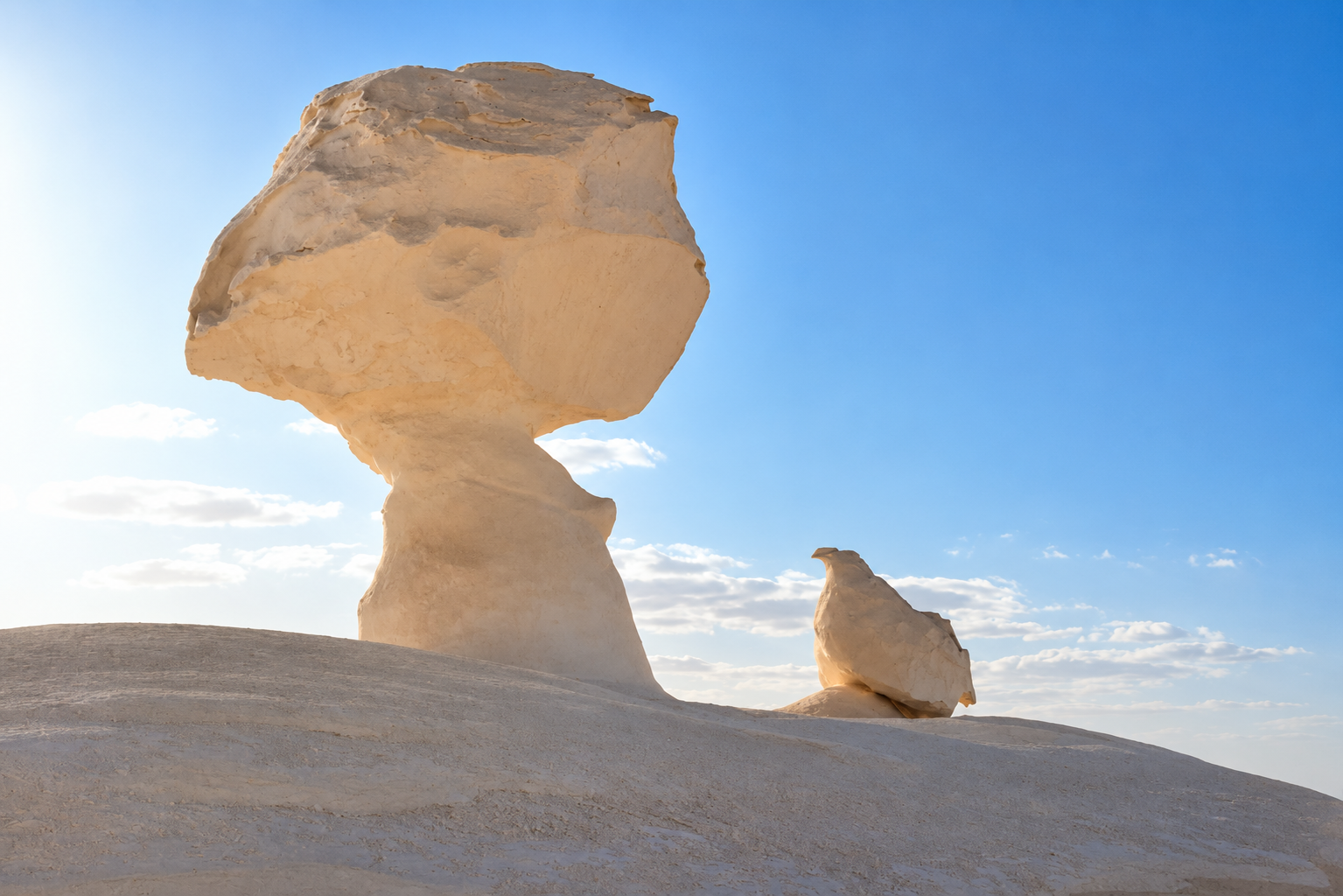
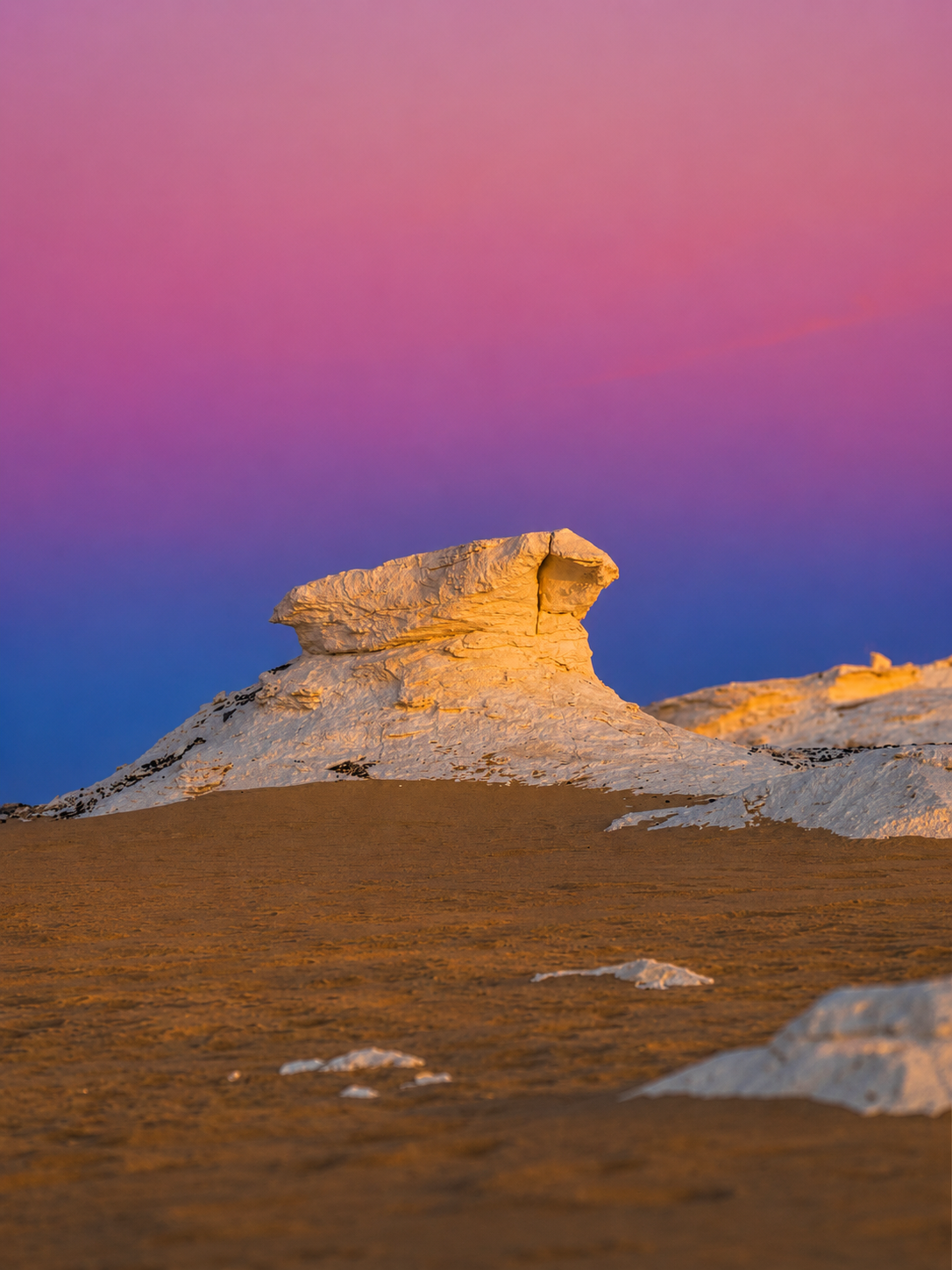
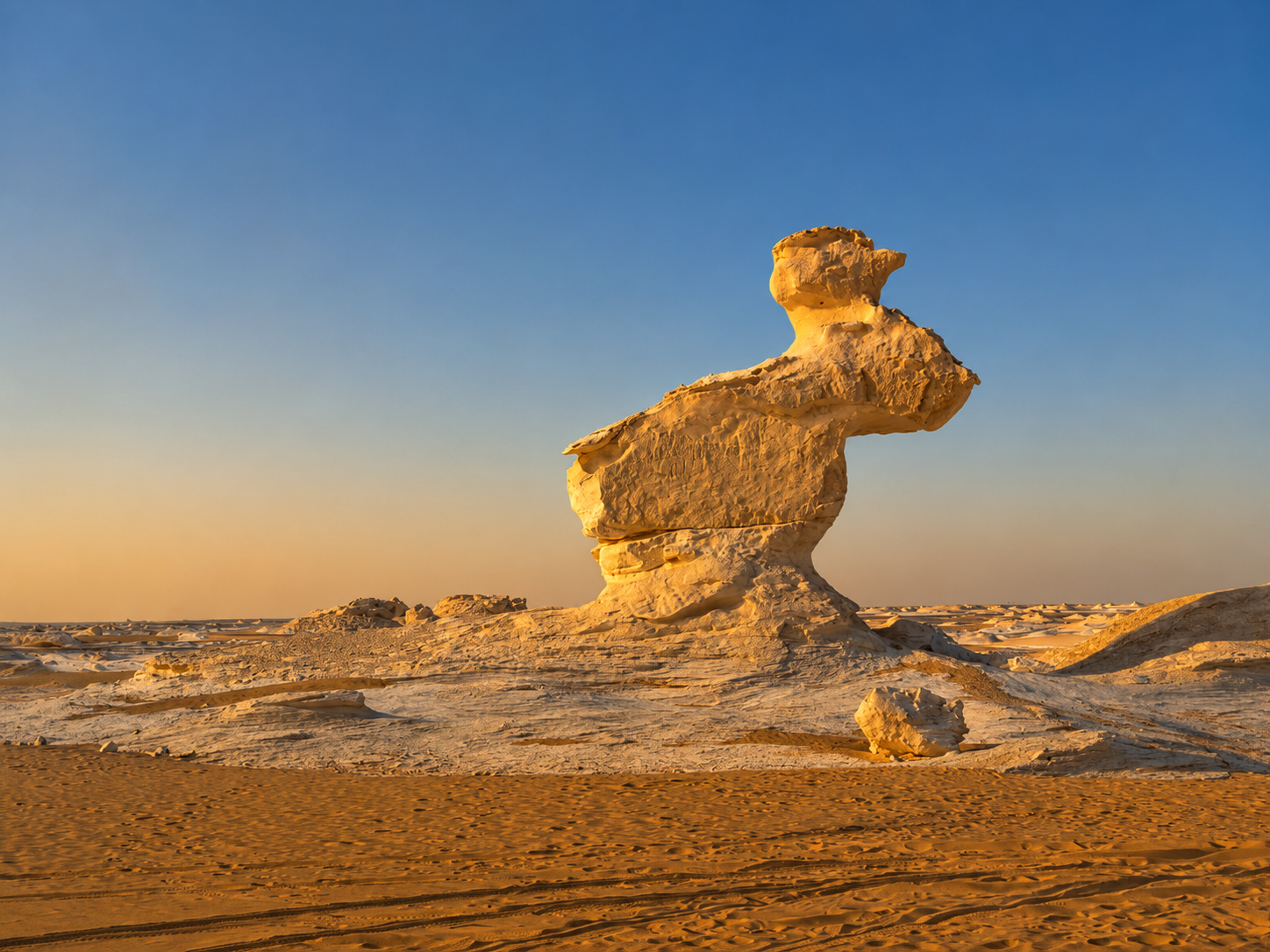
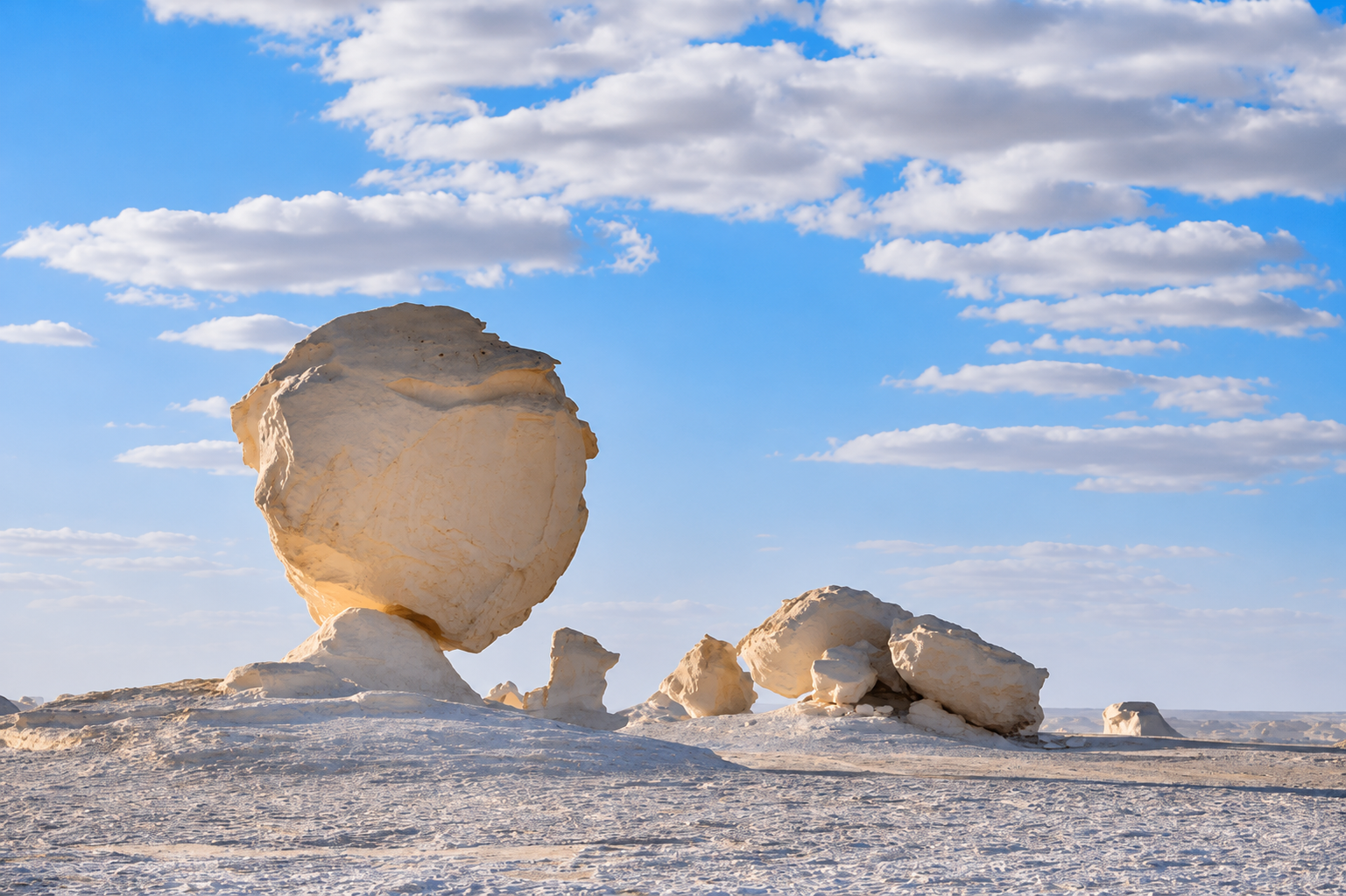
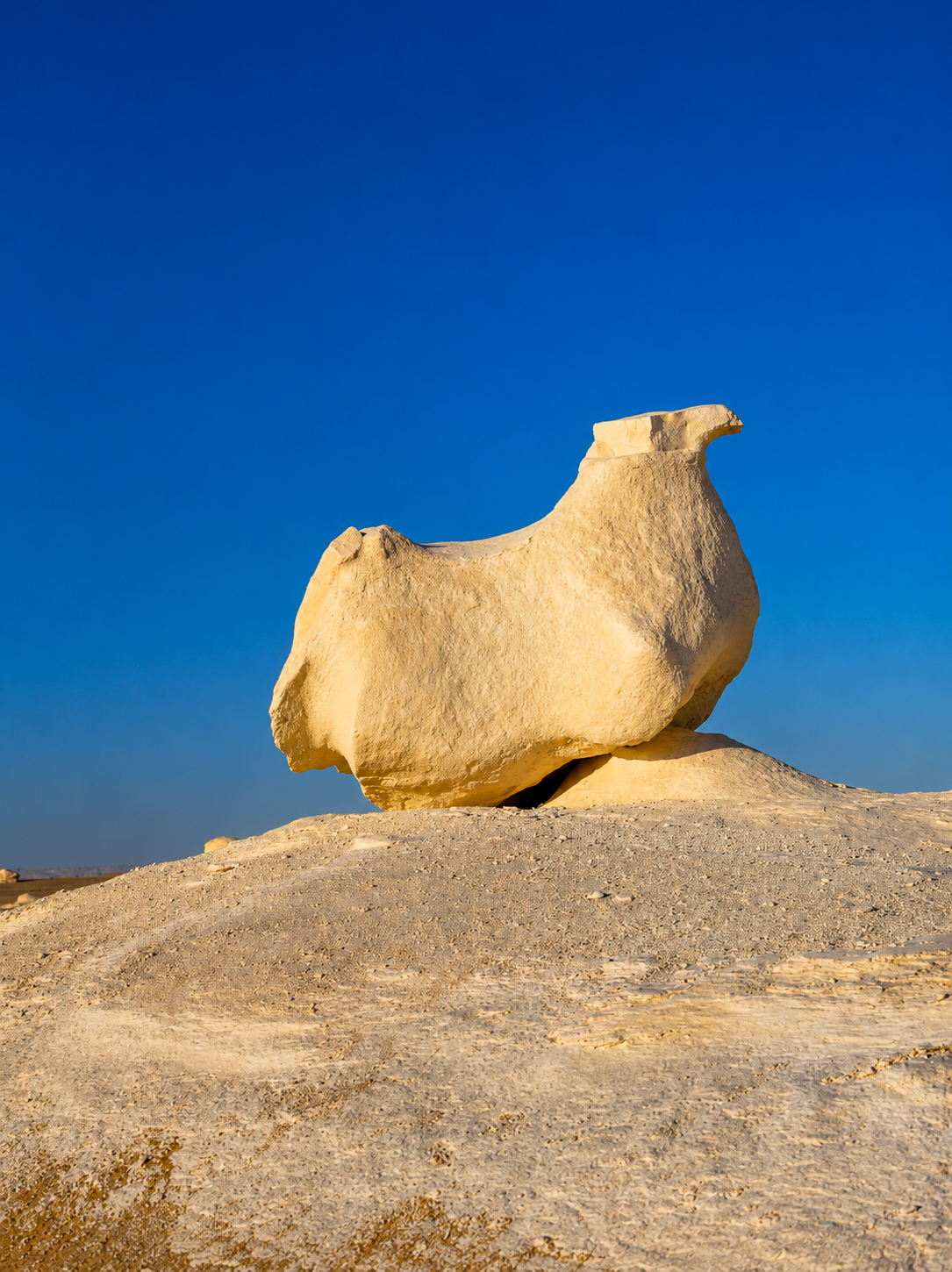
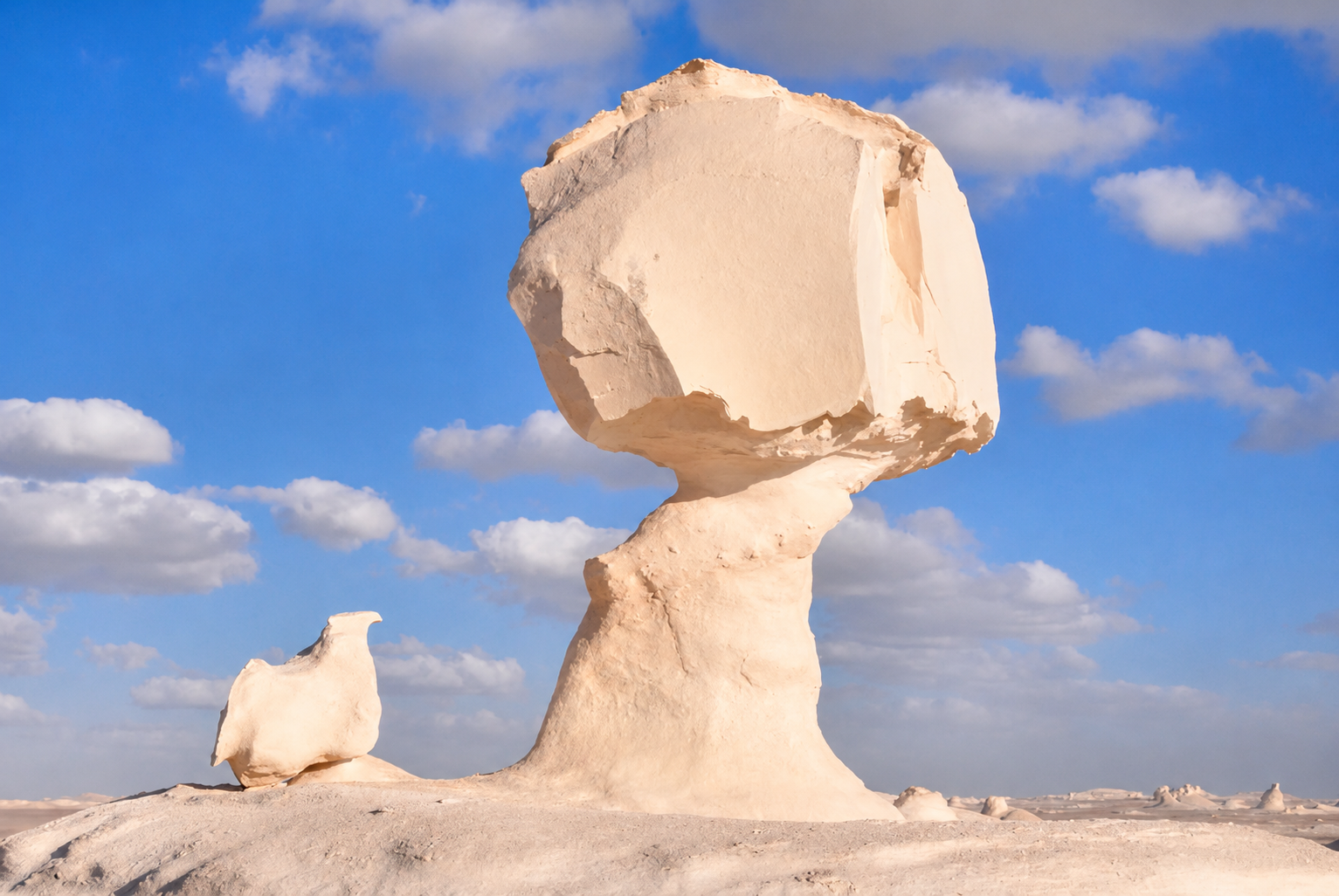
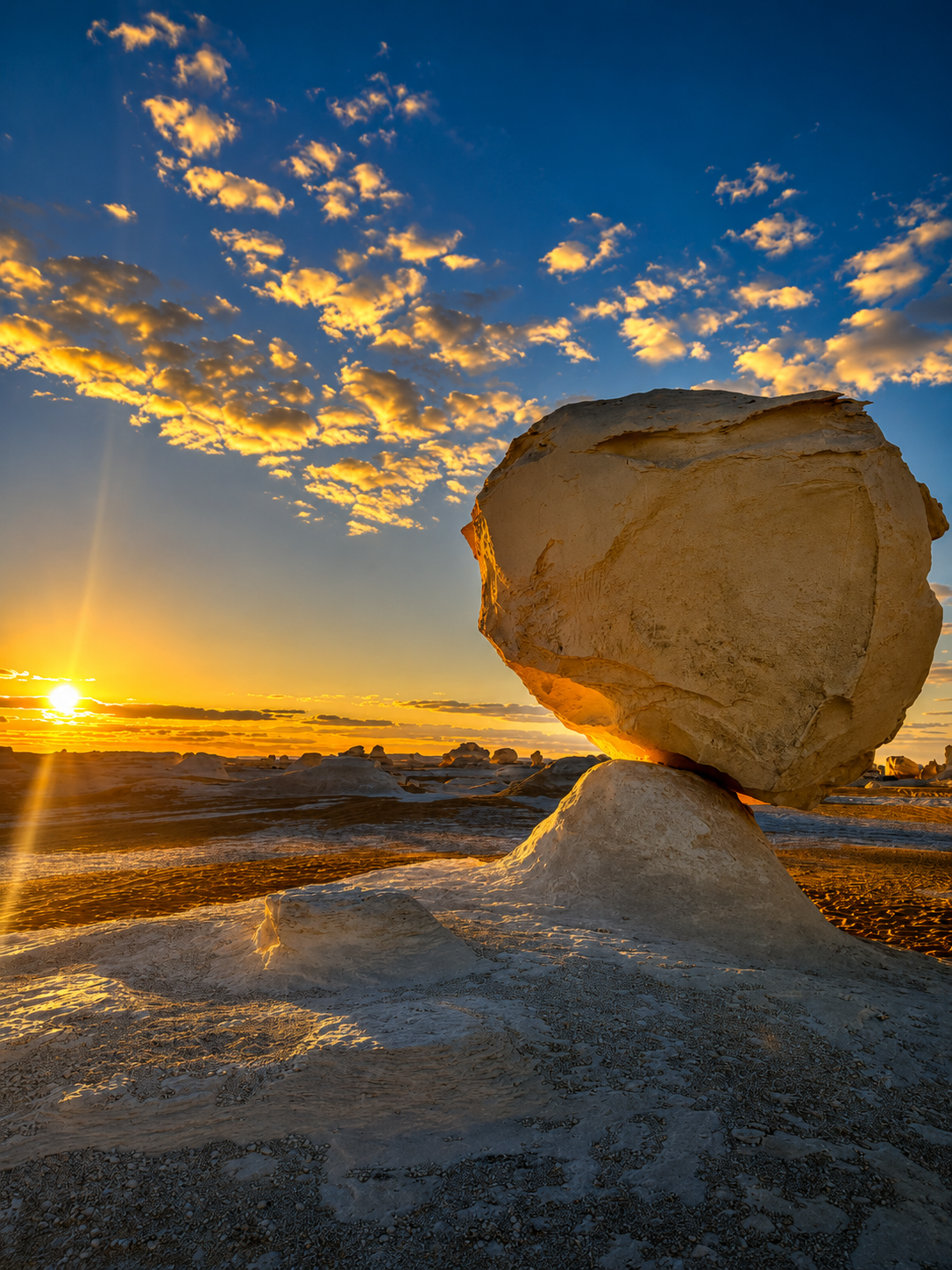
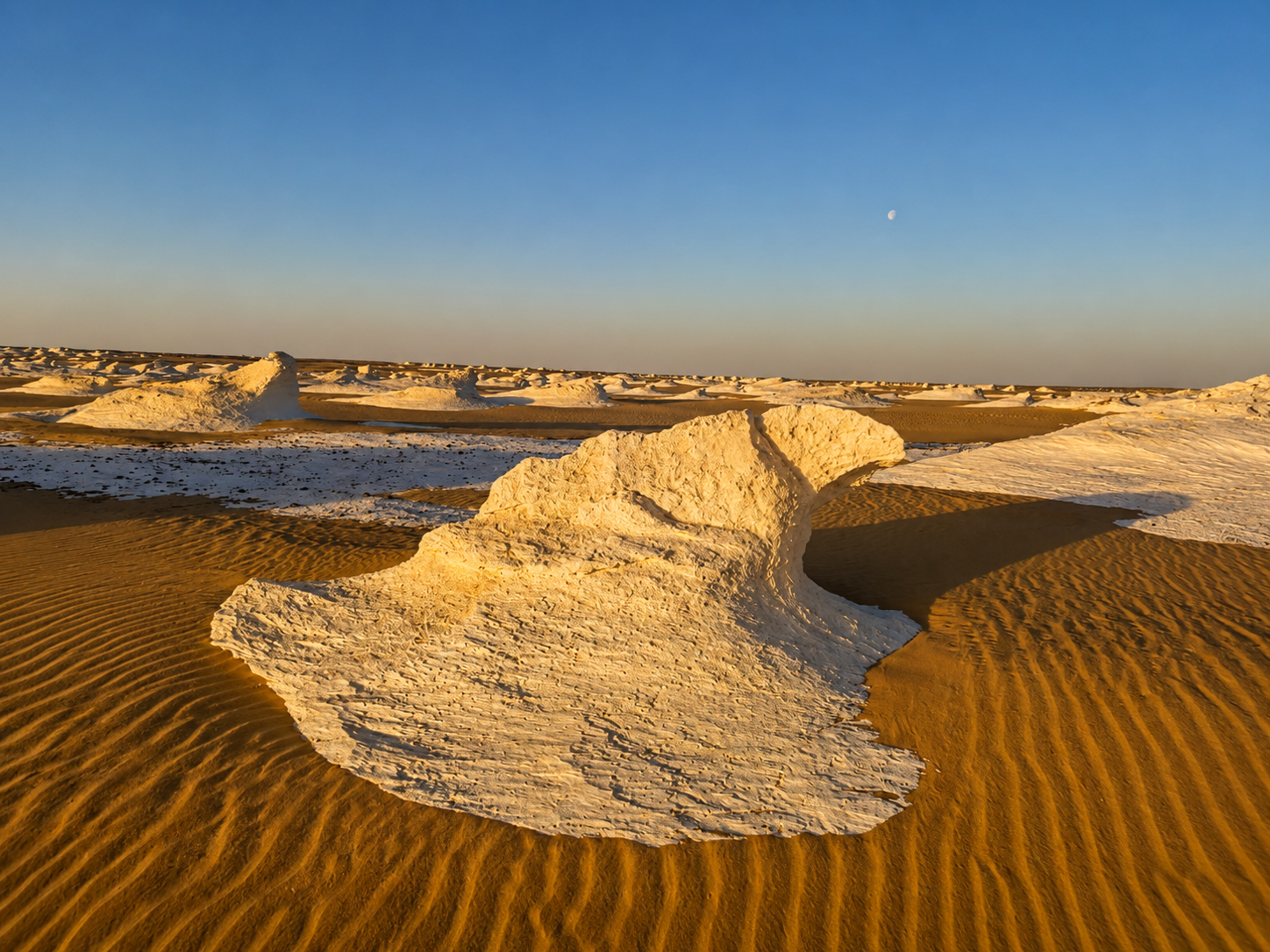
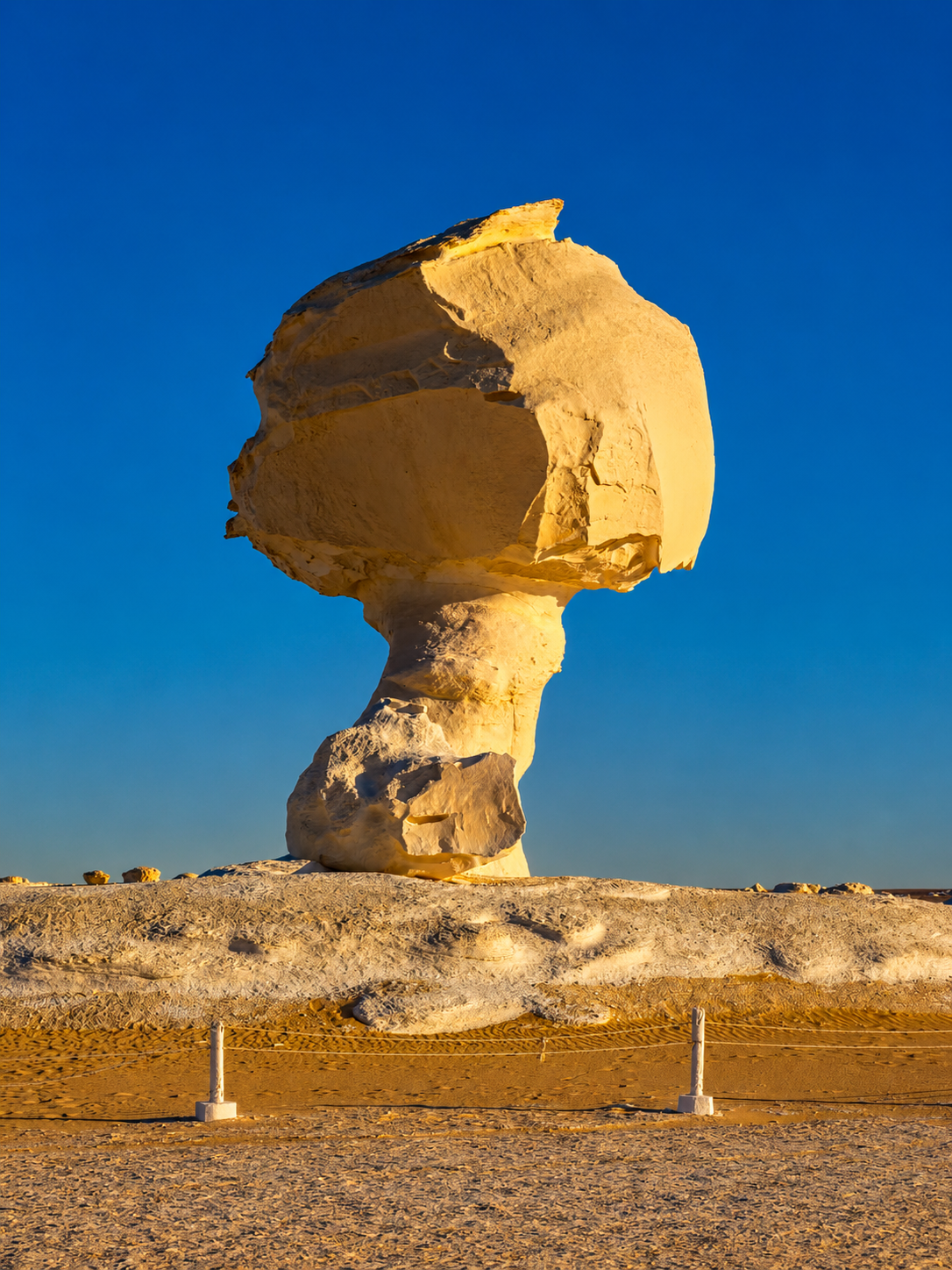
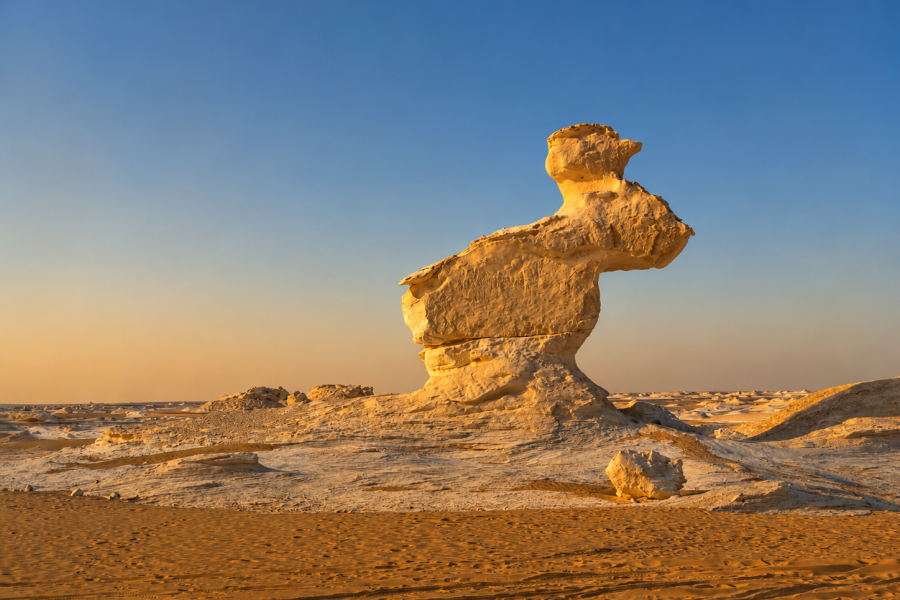
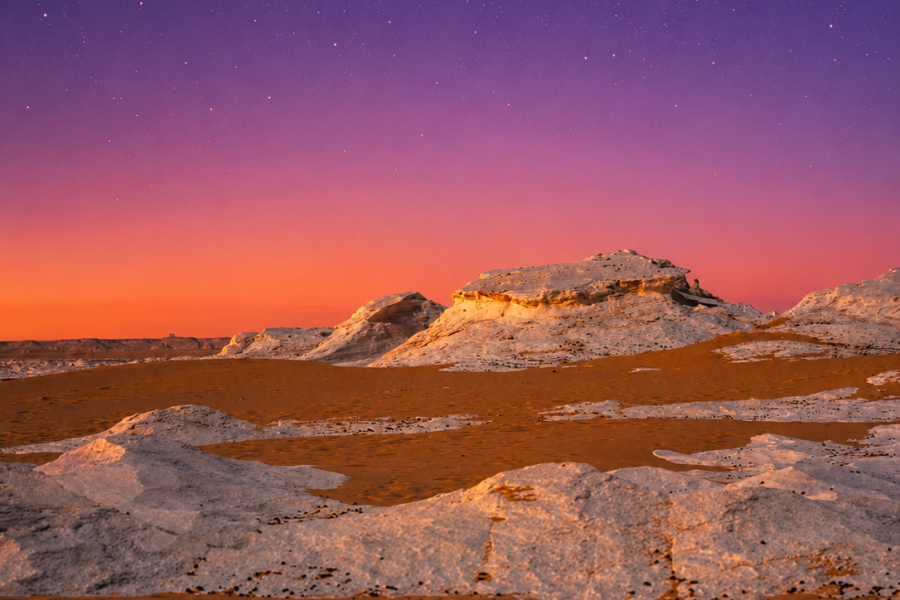
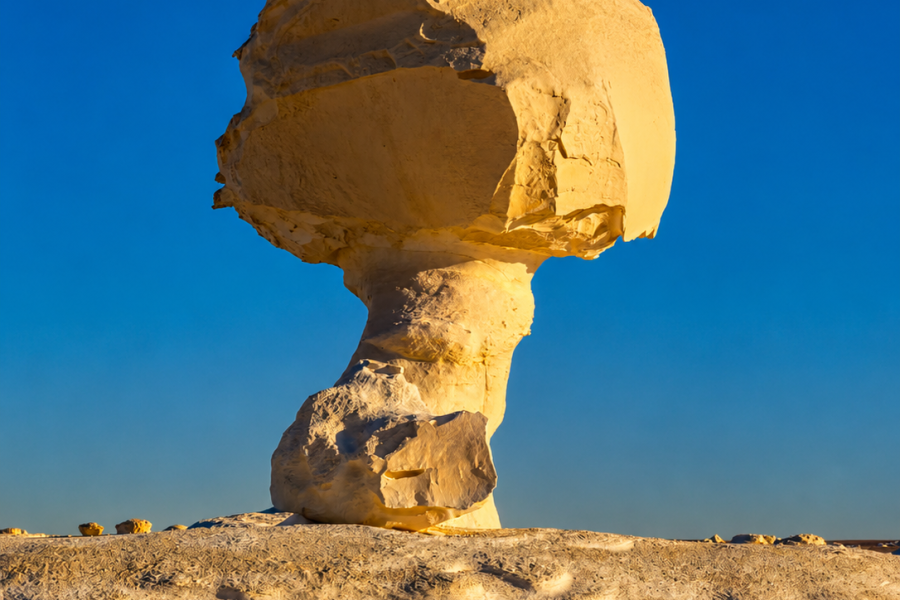
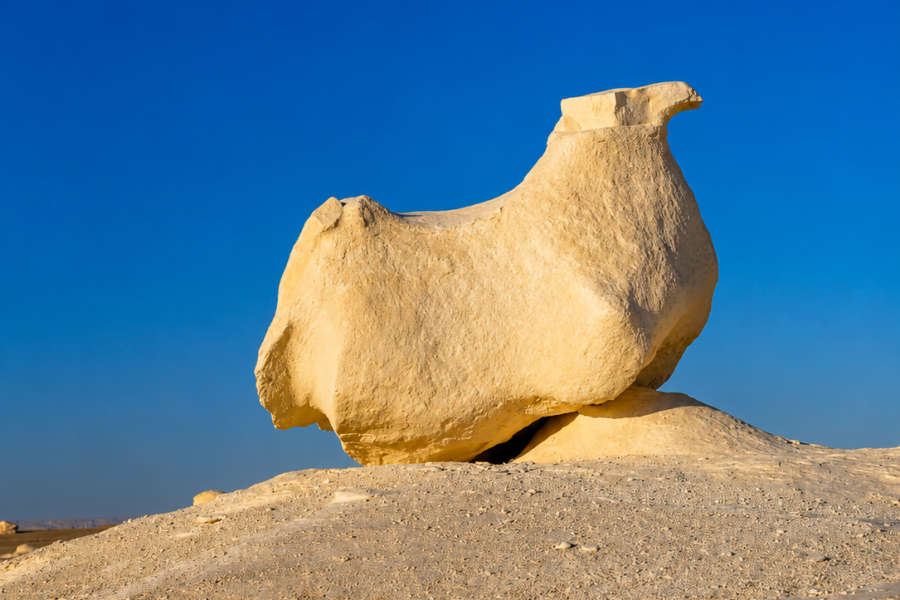
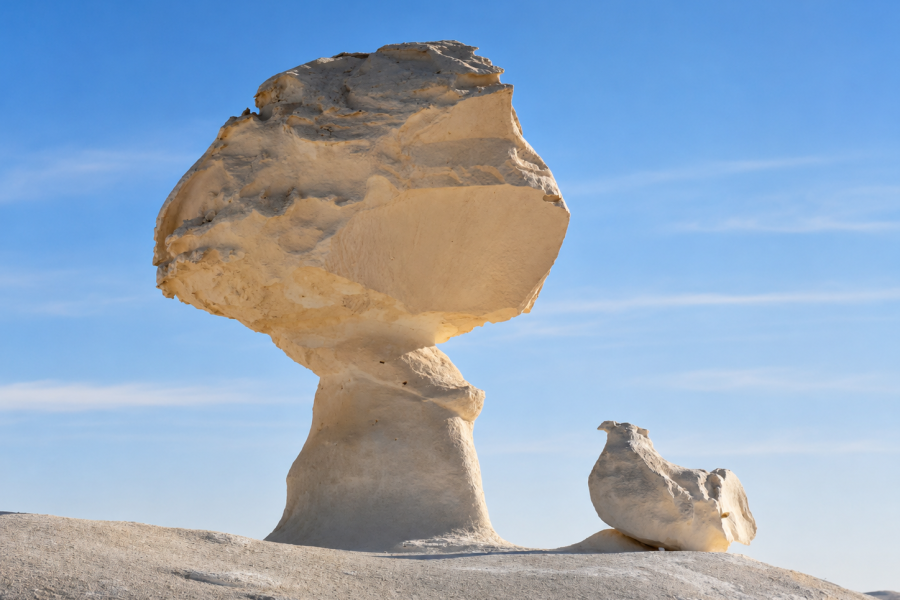
The White Desert is known for wind-eroded chalk formations shaped into towers, mushrooms and other unusual forms.
For many visitors, this is the climax of the route.
But the White Desert is much more atmospheric when you stay overnight.
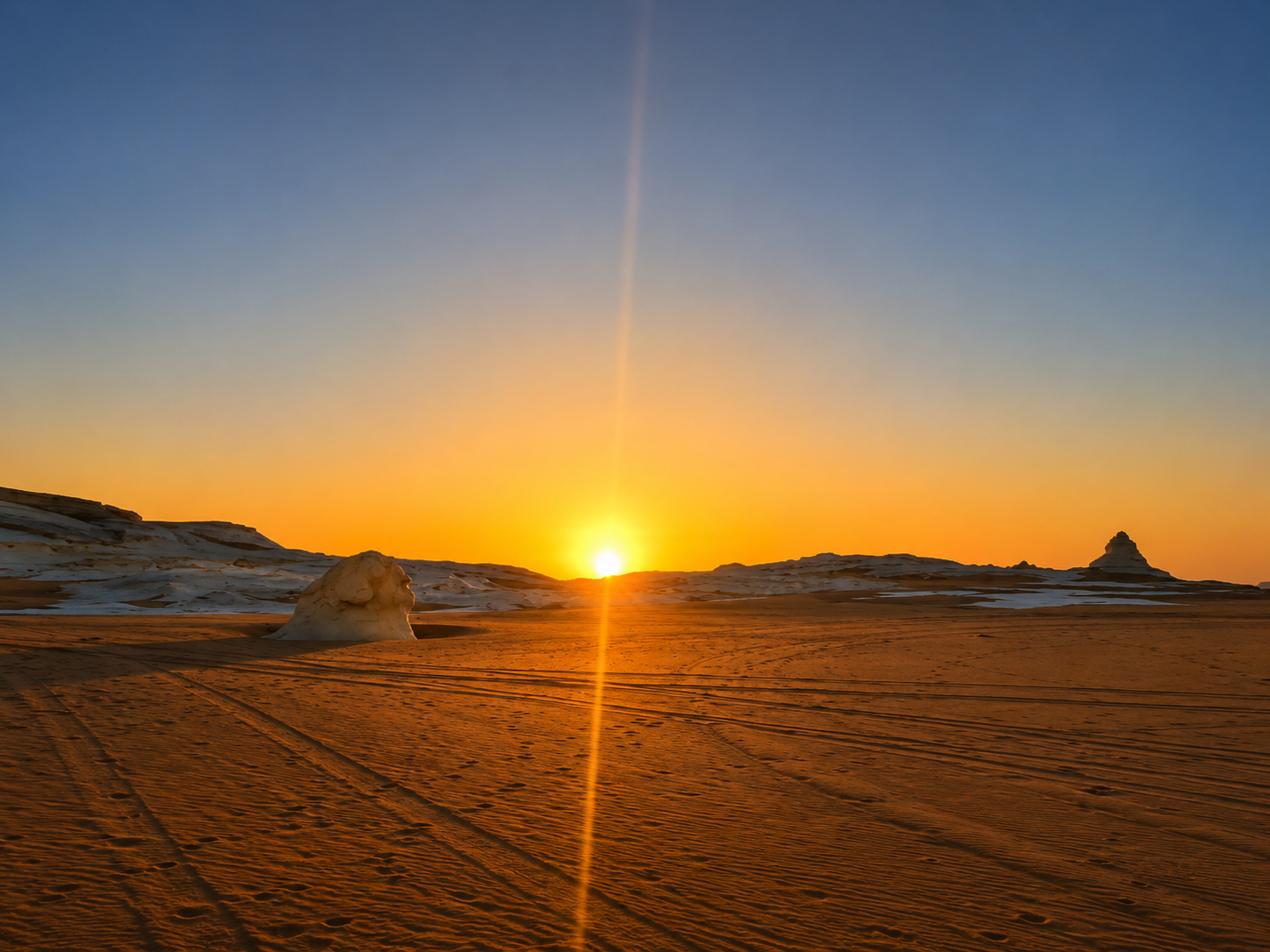
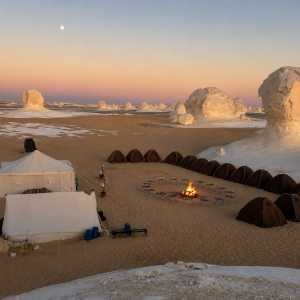
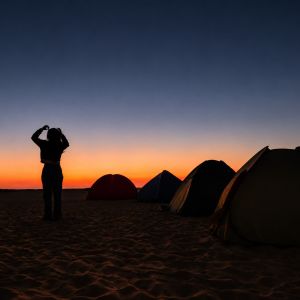
At sunset, the white formations change color.
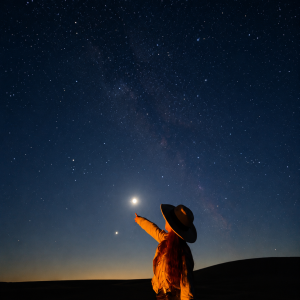
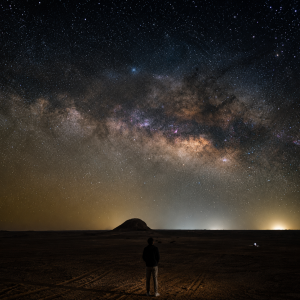
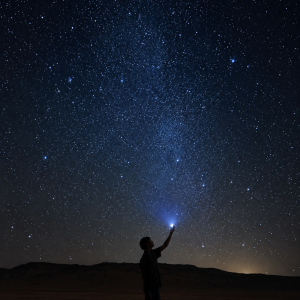
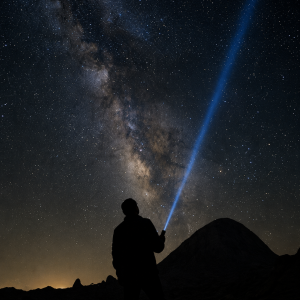
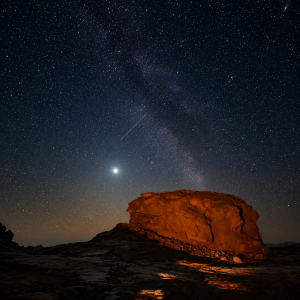
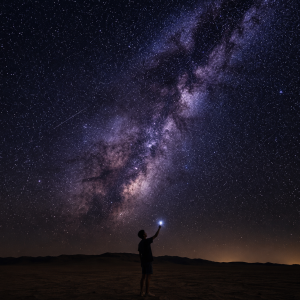
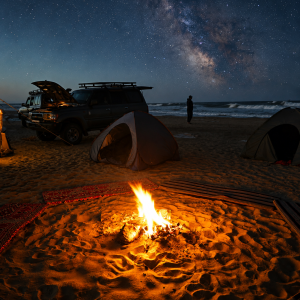
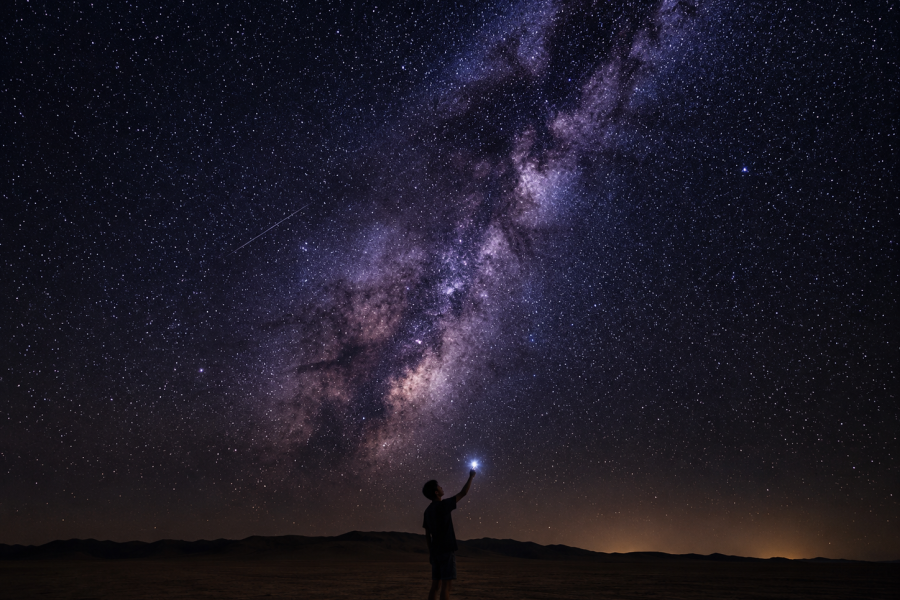
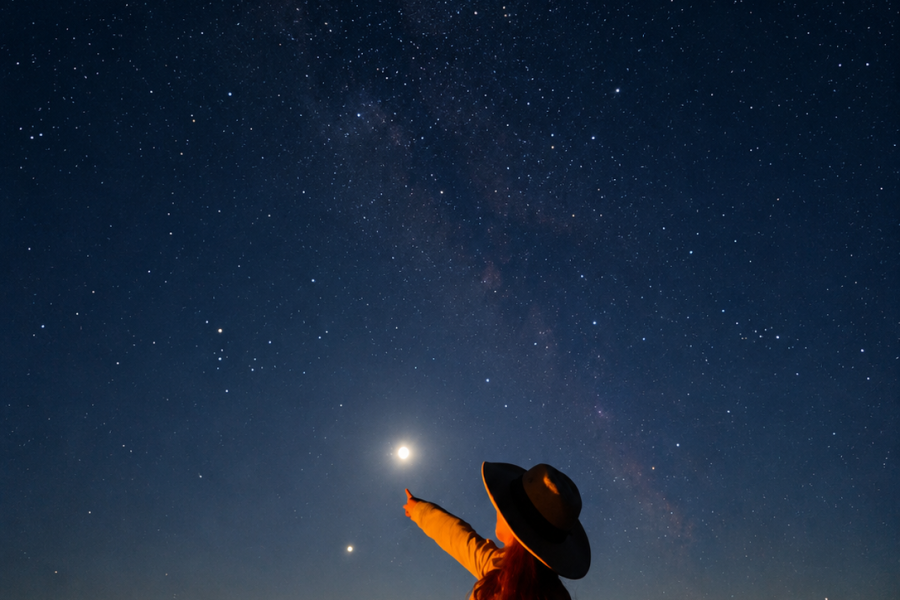
After dark, the lack of urban lighting makes stargazing one of the strongest parts of the experience.
In the morning, sunrise gives the same formations a completely different appearance.
If the White Desert is the main reason for your trip, read our complete White Desert Egypt guide und White Desert camping guide.
This itinerary is for travelers with very limited time.
Morning
Leave Cairo or Giza early and drive toward Bahariya Oasis.
After arriving, meet your local desert team and change to the appropriate safari vehicle.
Afternoon
Visit selected stops depending on timing, such as:
Schwarze Wüste
Desert spring or oasis stop
Kristallberg
Selected desert viewpoints
Evening
Begin the return journey toward Cairo.
This itinerary proves the trip is possible in one day, but it is not the most relaxed way to experience the Western Desert.
This is the itinerary we recommend for most first-time travelers.
Tag 1: Kairo → Bahariya → Schwarze Wüste → Weiße Wüste
Leave Cairo in the morning.
Arrive in Bahariya after the road journey and take a break or lunch.
Transfer to the local 4×4 safari vehicle.
Continue through the Black Desert and selected natural stops.
Visit Crystal Mountain and Agabat Valley.
Reach the White Desert area before sunset.
Enjoy sunset, dinner and an overnight desert camp.
Day 2: Sunrise → Desert Route → Bahariya → Cairo
Wake early for sunrise.
Have breakfast at the camp.
Continue through selected desert landscapes and return toward Bahariya.
Change back to the road vehicle.
Drive from Bahariya to Cairo or Giza.
This format provides the strongest balance between travel time, sightseeing and cost.
If you have three days, the trip becomes more relaxed.
One of the extra nights can be used to spend more time around Bahariya, add a second camping experience or explore more remote desert areas depending on the selected itinerary.
A three-day trip is particularly good if photography matters to you.
Instead of racing from one attraction to the next, you have more flexibility to work with morning and evening light.
It is also better for travelers who dislike very long back-to-back driving days.
They are two different types of trip.
Most first-time visitors choose the second option because it gives more visual variety.
Travelers with three days or more can combine both.
There is no single correct price for a Bahariya trip because the cost depends heavily on the itinerary.
Instead of comparing only the headline price, compare what is included.
Important factors include:
Number of travelers: Private transportation becomes more economical per person when several people share the vehicle.
Trip duration: A one-day trip costs less overall than three days, but the daily value can be different.
Private vs shared arrangement: A private vehicle and private safari team usually cost more but give greater flexibility.
Accommodation: An oasis hotel, eco-lodge and desert camp involve different costs.
Camping setup: Tent style, bedding, meals and equipment affect the package.
Route: A Bahariya-only itinerary is not the same as a route extending through the Black Desert, Agabat and White Desert.
Pickup point: Cairo, Giza, airport or another city can affect transfer costs.
Season: Availability and operating costs can change through the year.
For a detailed breakdown of what affects desert-trip prices, see our White Desert Egypt cost guide.
The safest approach is to request a quote for your exact travel date and number of guests instead of relying on an outdated online price.
For most travelers, the cooler period from approximately Oktober bis April is the most comfortable time for desert travel.
Autumn, winter and spring offer better conditions for outdoor sightseeing, walking, photography and camping than the hottest summer period.
Oktober und November
These months are excellent for returning to desert travel after summer.
Days are generally more comfortable, while evenings begin to cool.
Dezember bis Februar
Winter is one of the most popular periods for desert camping.
Daytime conditions can be pleasant, but nights may become surprisingly cold.
Warm layers are important.
März und April
Spring can also be excellent, especially for travelers who prefer slightly warmer conditions.
Weather and wind should always be considered when planning remote desert activities.
Summer
Western Desert temperatures can become intense during summer.
Trips may still be possible depending on conditions and itinerary, but summer requires more careful planning, hydration and professional local advice.
For a deeper seasonal breakdown, read Best Time to Visit the White Desert Egypt.
Packing does not need to be complicated, but desert temperature changes can surprise first-time visitors.
Useful items include comfortable walking shoes, sunscreen, sunglasses, a hat or scarf, personal medication, a reusable water bottle, a small backpack and a power bank.
If your trip includes overnight camping, bring warm layers during cooler months.
A lightweight daytime outfit may feel perfect under the sun, but the temperature can feel very different after dark.
Photographers should consider spare batteries and enough storage space. Charging access may be limited during camping sections.
If you want a complete checklist, use our White Desert Egypt packing list.
Remote desert travel should be planned differently from sightseeing inside central Cairo.
For Bahariya, the Black Desert and White Desert, travelers should use experienced, appropriately licensed local operators and follow current official requirements concerning permits, guides and approved routes.
Conditions and access rules can change, so do not assume that a route you saw in an old blog or map is automatically open today.
A professional local team helps coordinate:
Avoid attempting remote off-road Western Desert routes independently simply because a location appears accessible on an online map.
Before traveling, check the latest official travel advice relevant to your nationality as well as instructions from your licensed Egyptian tour operator.
You can also read our detailed guide: Is Egypt Desert Safari Safe?.
Yes, if the itinerary is chosen carefully.
A private trip works particularly well for families because stops, meals and timing can be adapted more easily.
For younger children, three considerations matter most:
Road time: Cairo to Bahariya is a long drive.
Camping: Parents should understand the sleeping and bathroom setup before booking.
Temperature: Desert nights can become cold in winter.
Some families prefer a hotel night in Bahariya rather than camping.
Others find the camp to be the highlight of the entire Egypt trip.
The correct choice depends on the children’s ages, previous travel experience and comfort level.
Bahariya and the White Desert are one of the strongest combinations in Egypt for couples who prefer nature and quiet landscapes to crowded sightseeing.
A private overnight safari can include sunset, a desert dinner, stargazing and sunrise.
If privacy matters, ask exactly what “private tour” means.
A private Cairo vehicle does not always mean the desert camp is private.
Ask whether you will have:
Clear expectations matter more than labels.
Very much so.
The route offers more visual variety than many travelers expect.
Sie können Folgendes fotografieren:
Palmenhaine
Local oasis landscapes
Hügel von Black Desert
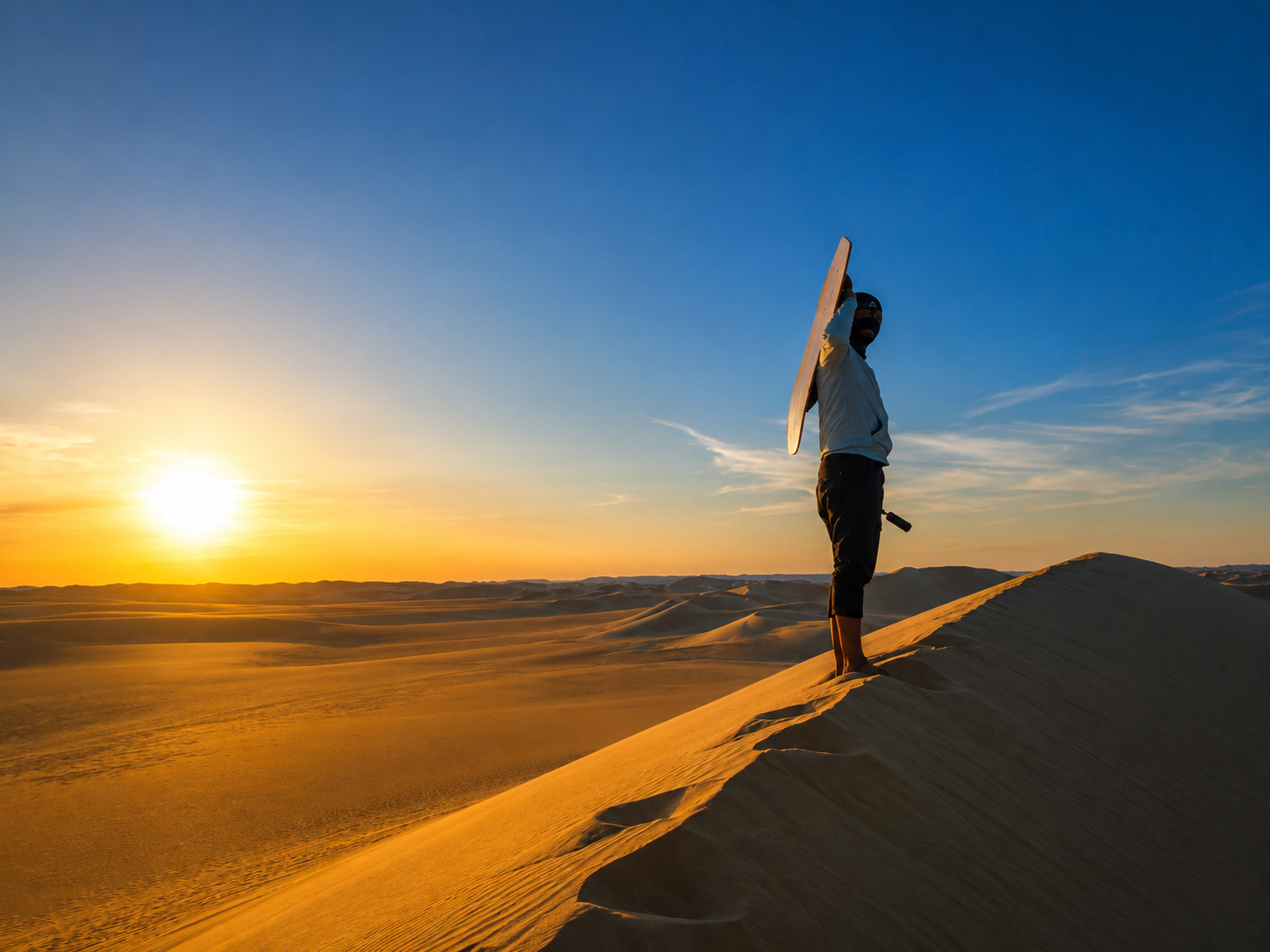
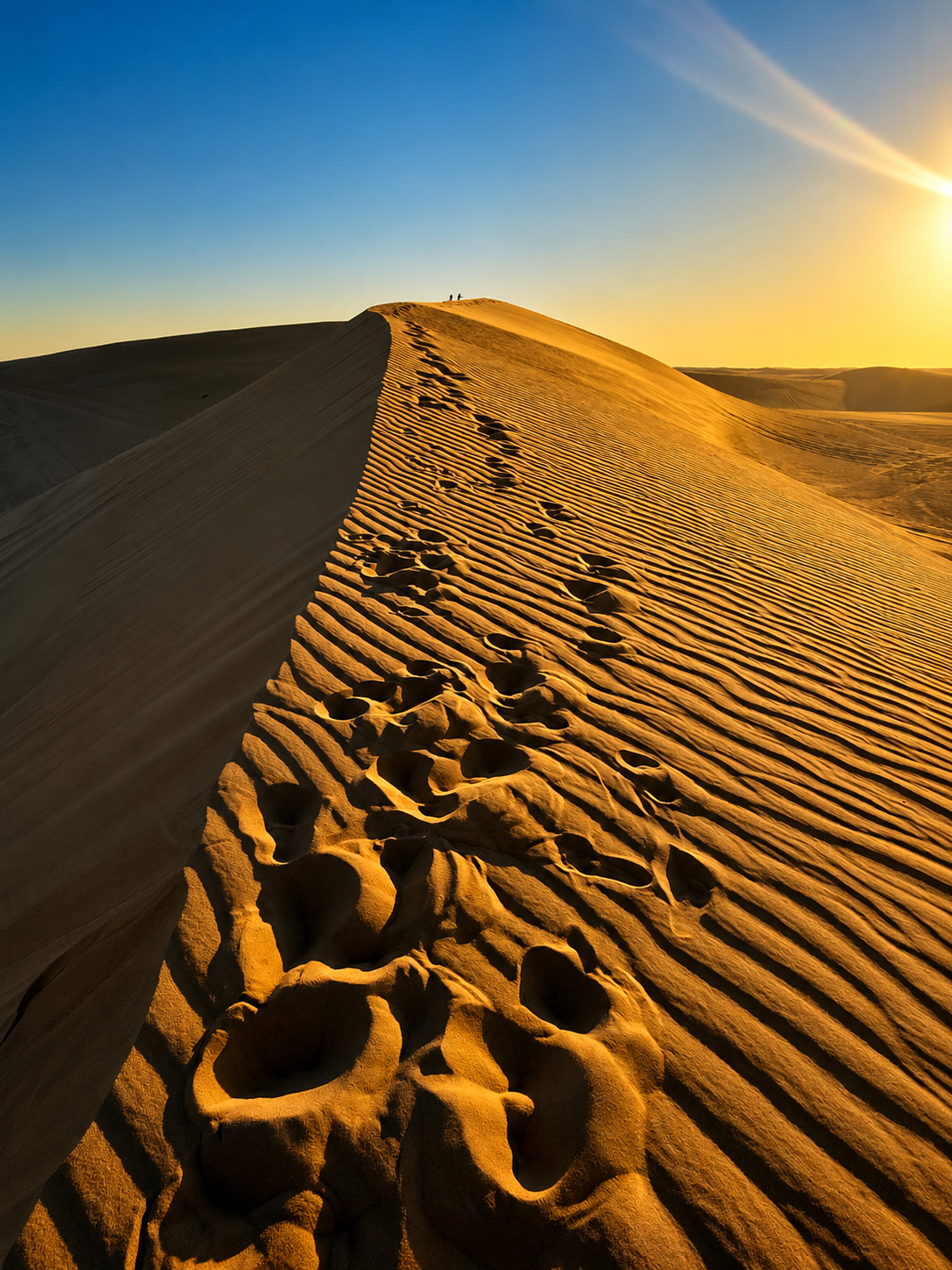
Sanddünen
Kristallberg
Agabat-Tal
White chalk formations
Sonnenuntergang
Nachthimmel
Camp life
Sonnenaufgang
A two-day itinerary is enough for good photographs, but a three-day trip gives more flexibility.
Photographers should also avoid planning every stop around midday.
Morning and late-afternoon light usually creates more depth and shadow in desert landscapes.
Trying to See Everything in One Day
A day trip is possible, but Cairo–Bahariya–desert–Cairo in one day involves a lot of road travel.
If camping and sunset are important, stay overnight.
Assuming Bahariya and the White Desert Are the Same Place
Bahariya is the oasis and transport base.
The Black Desert, Crystal Mountain, Agabat and White Desert are part of the wider desert route.
Booking Based Only on Price
Two tours with the same duration may include completely different routes, meals, vehicles and camping arrangements.
Compare inclusions carefully.
Not Asking About the 4×4
Your Cairo transfer vehicle and your desert vehicle may be different.
Ask what vehicle will be used for the off-road section.
Ignoring Winter Nights
Winter days can feel pleasant, but camping after sunset may be cold.
Pack layers.
Using Old Route Information
Western Desert access and permit procedures can change.
Confirm the current itinerary with your operator before departure.

Choose based on your available time rather than trying to force every attraction into one schedule.
Choose the Eintägige Tour in die Weiße Wüste ab Kairo.
Expect a long day.
Choose the 2-tägige Weiße-Wüste-Tour ab Kairo (1 Übernachtung).
This is the best first trip for most travelers.
Choose the Tour zur Weißen Wüste und zur Oase Bahariya ab Kairo if you want more focus on the oasis.
Choose the 2 Nächte, 3 Tage Camping-Tour durch die Weiße Wüste if camping and the deeper desert experience are your priorities.
A good inquiry does not need to be complicated.
Send your tour operator:
Reisedatum
Number of travelers
Pickup hotel or area
Number of available days
Whether you want camping
Any children in the group
Any dietary requirements
Whether your priority is Bahariya itself or the White Desert
Those details make it much easier to recommend the correct itinerary.
If you are still comparing destinations, explore our main Bahariya Oasis Egypt guide, Black Desert Egypt guide und White Desert Egypt guide.
One day is possible, but two days and one night is the best choice for most first-time visitors traveling from Cairo.
A day trip gives you a quick introduction but involves a long return journey.
With two days, you can travel from Cairo to Bahariya, explore the Black Desert, Crystal Mountain and Agabat, reach the White Desert for sunset, camp overnight, see sunrise and return to Cairo the following day.
If you want more time inside Bahariya Oasis itself, better photography conditions or a slower desert experience, choose three days.
Bahariya is close enough to Cairo to fit into a short Egypt itinerary, but far enough into the Western Desert to feel completely removed from the city.
That combination is exactly what makes it worth the journey.
Tell us your travel date, number of guests and how many days you have, and we can recommend the most practical private Bahariya and White Desert itinerary from Cairo.