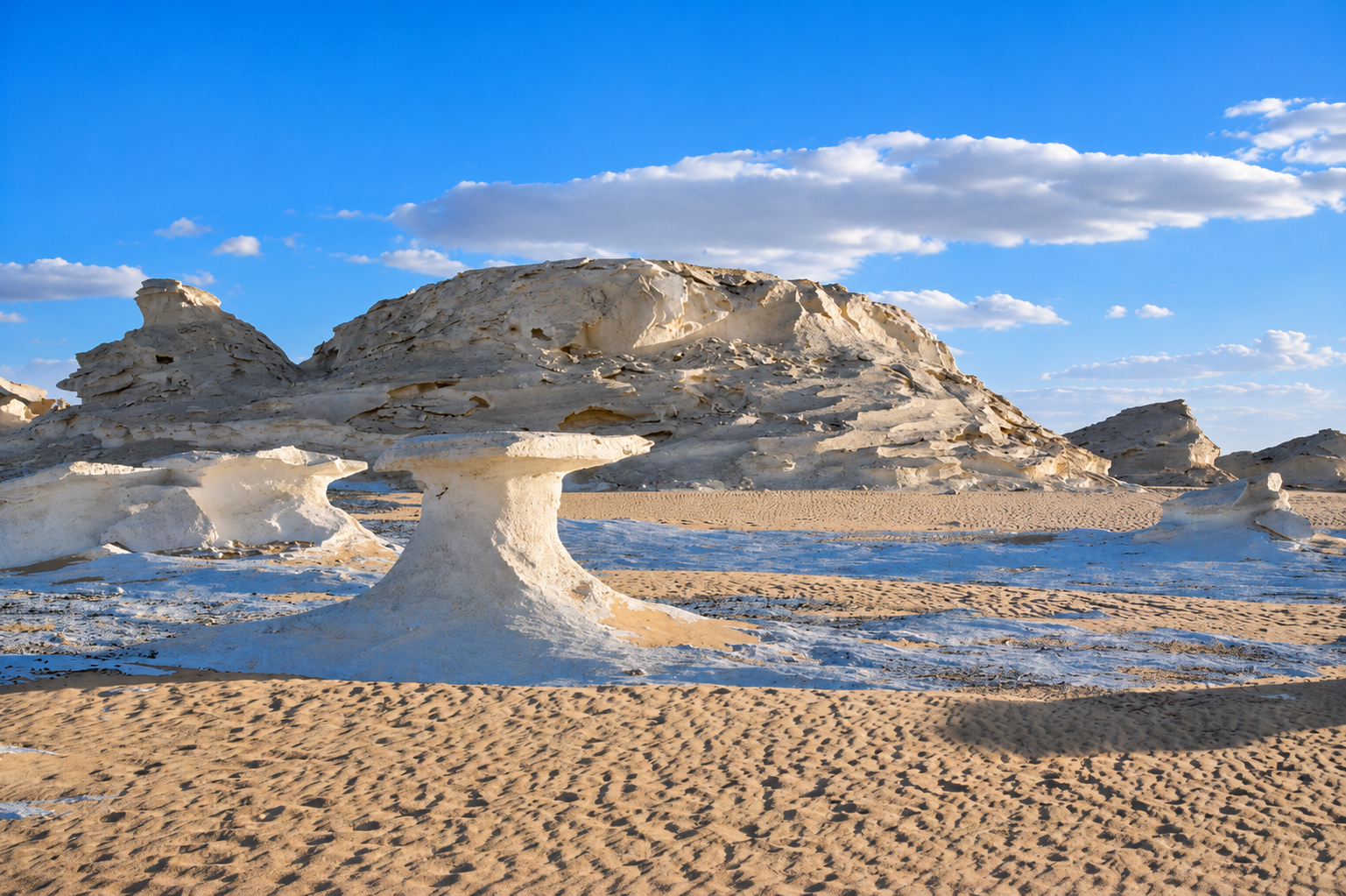
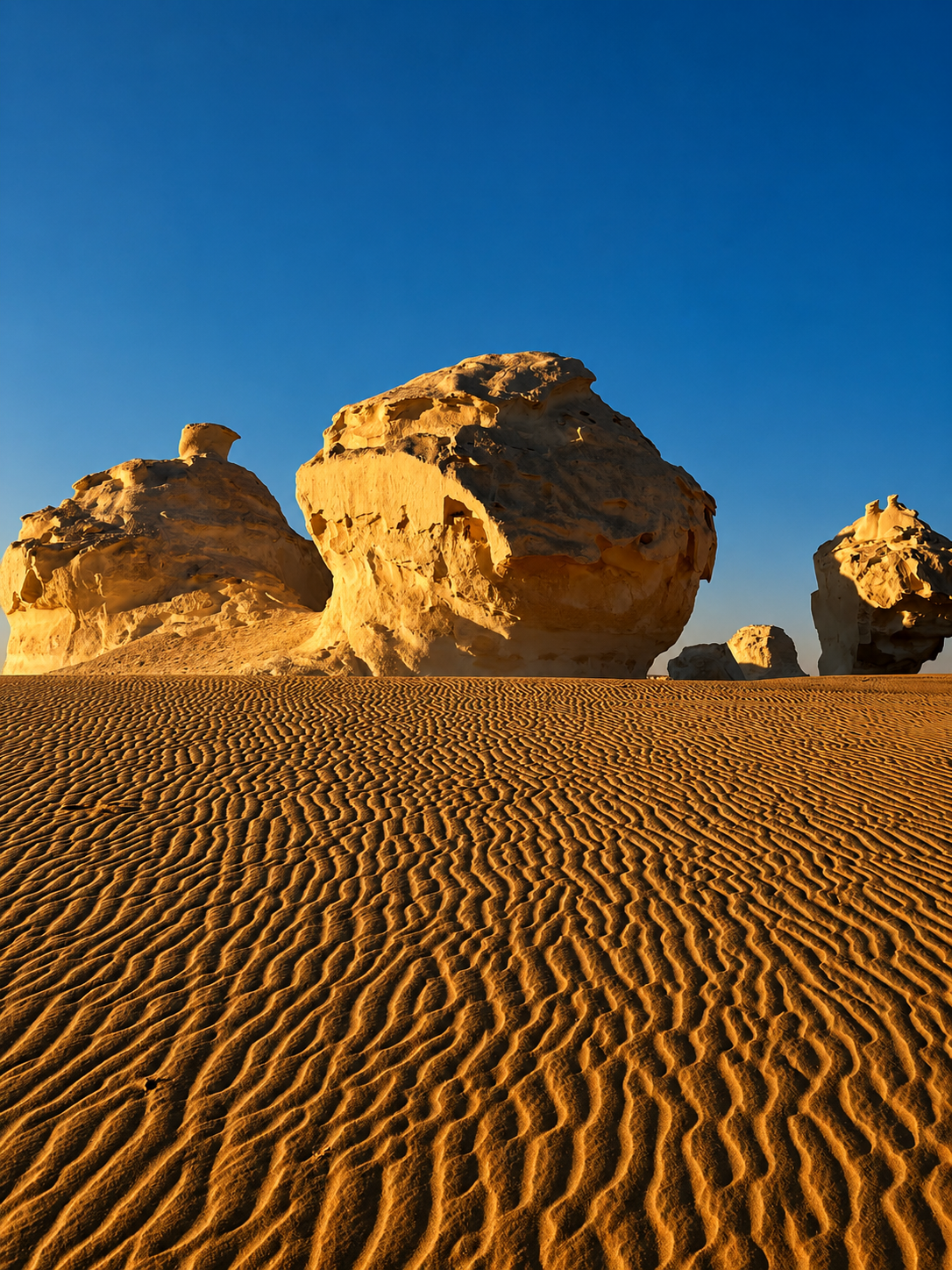
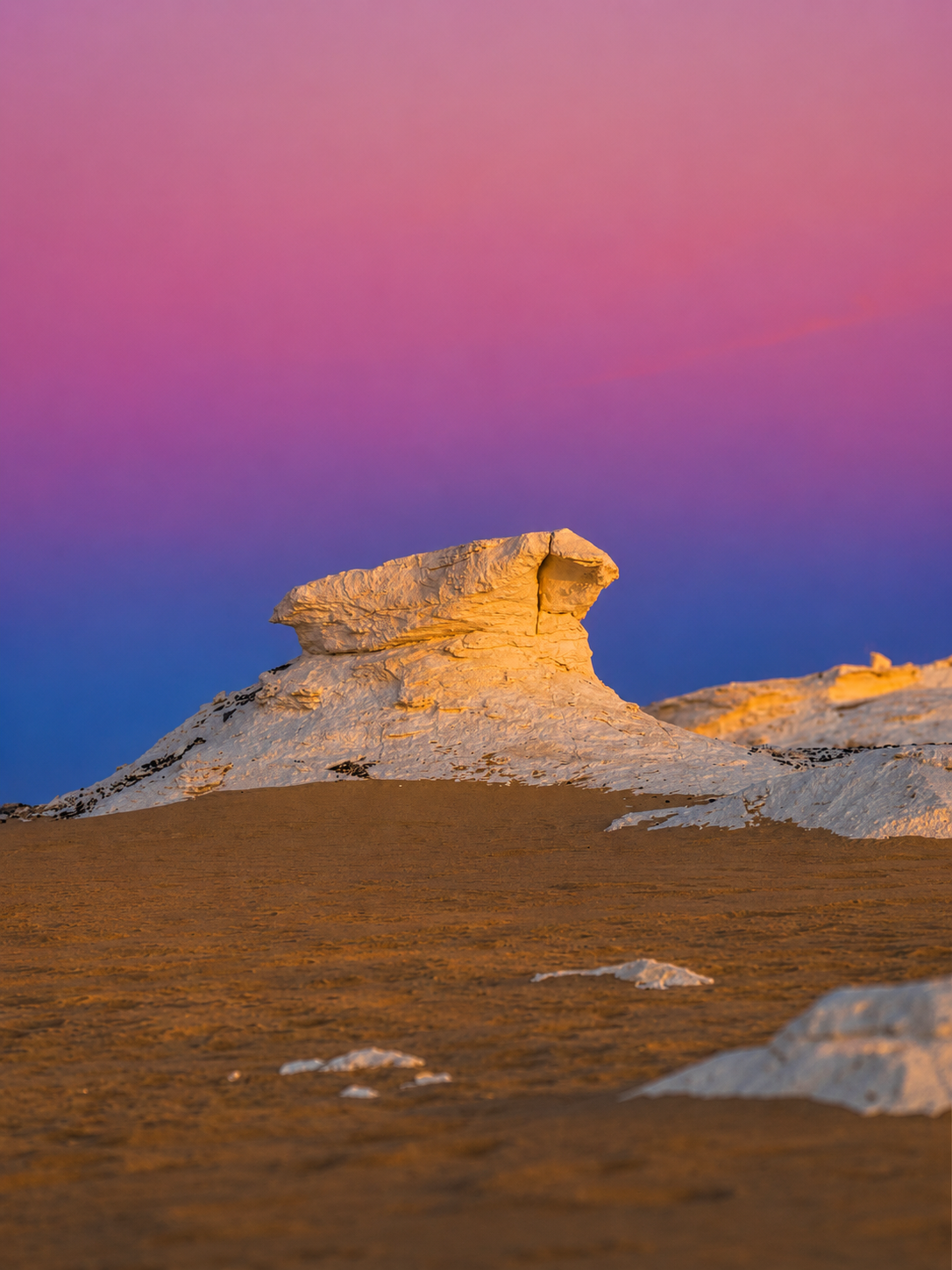
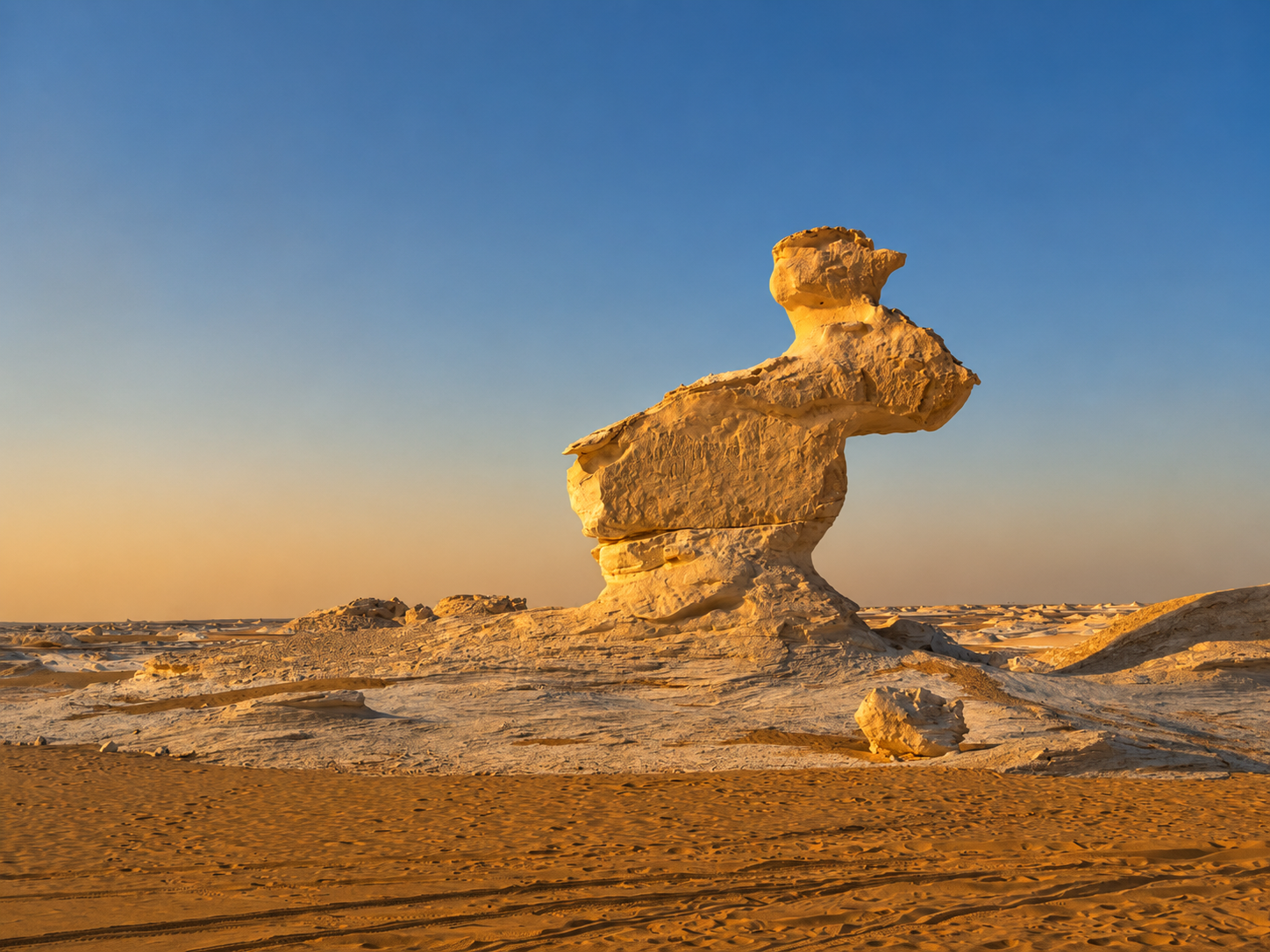
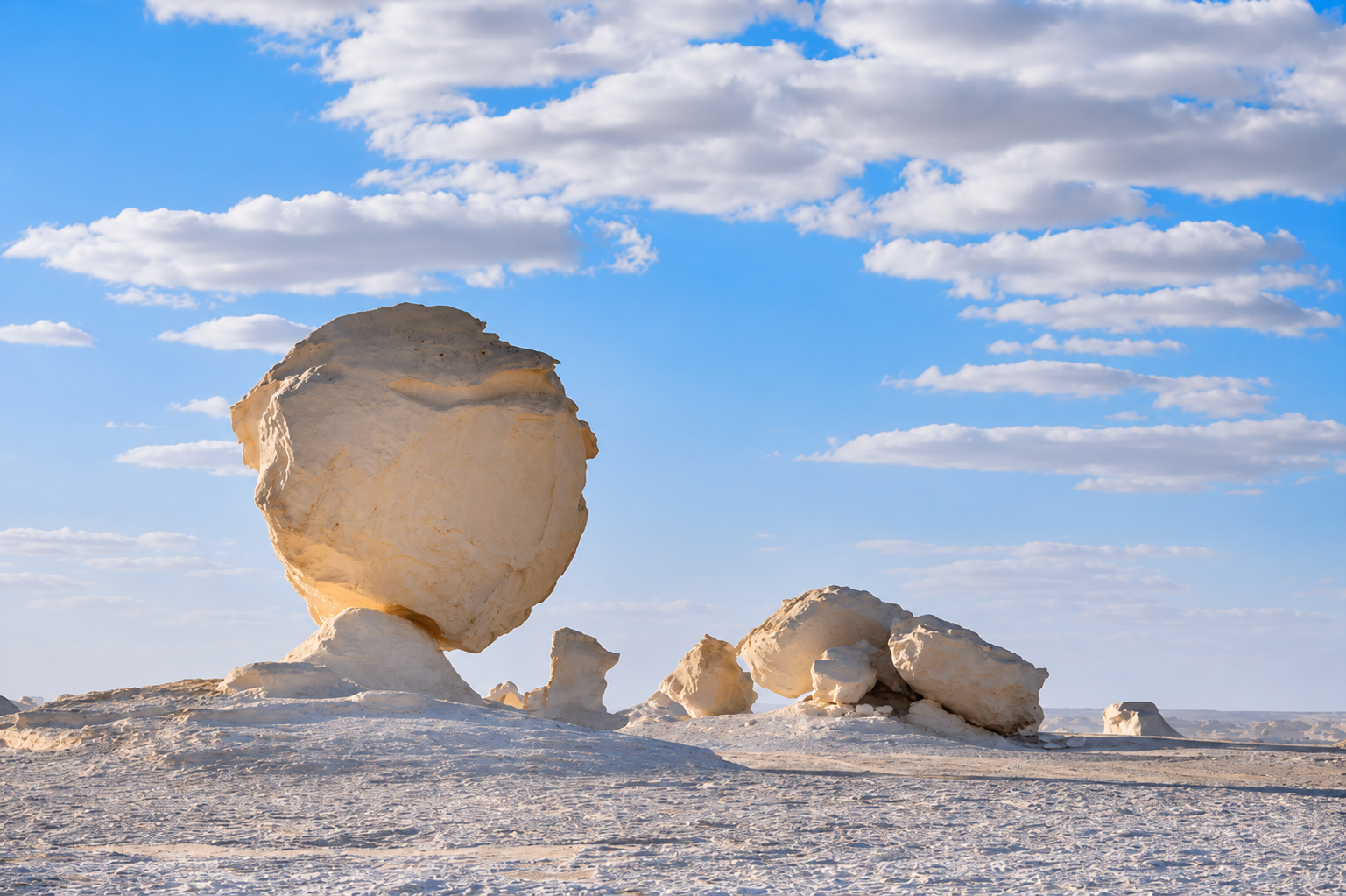
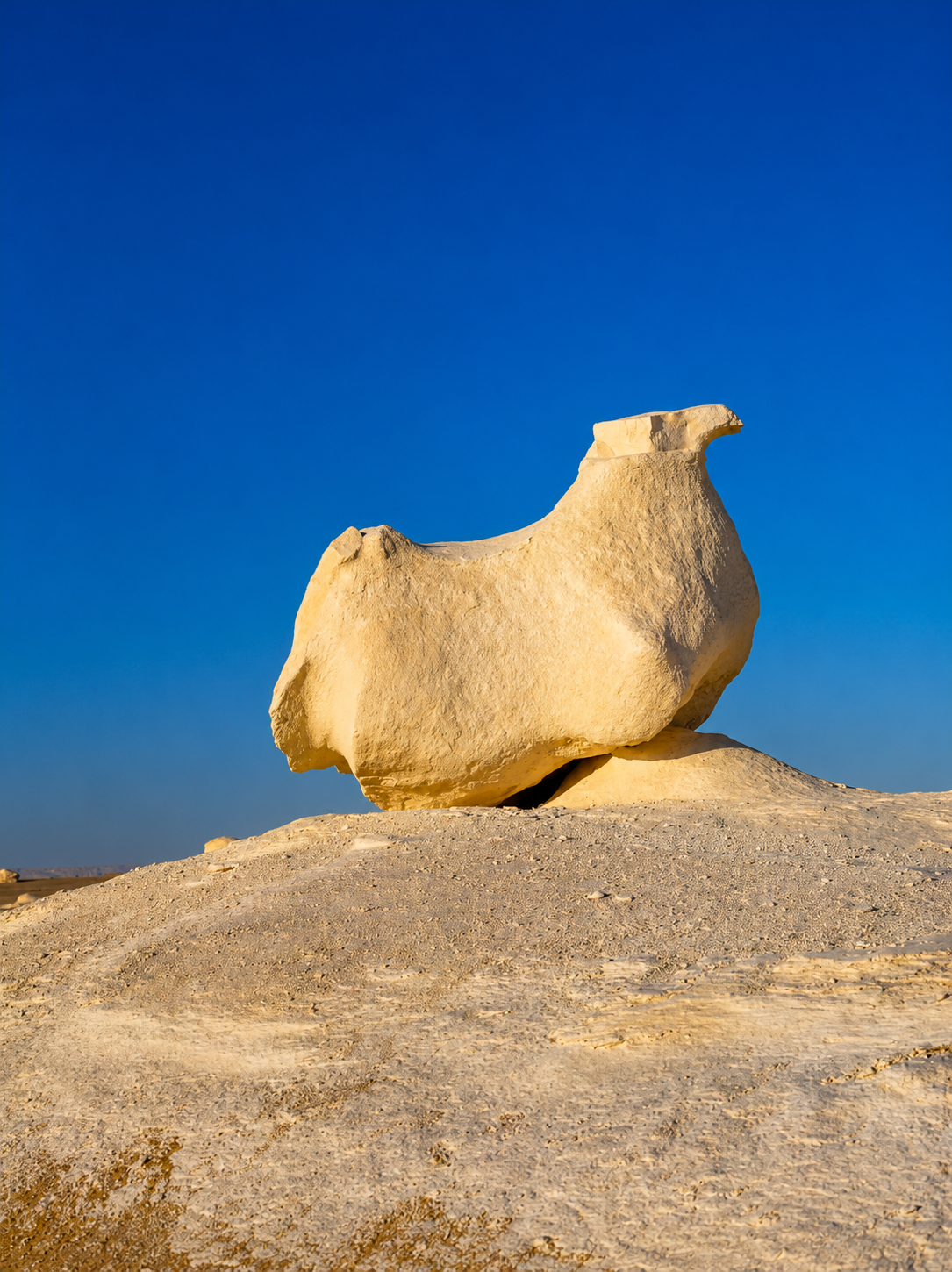
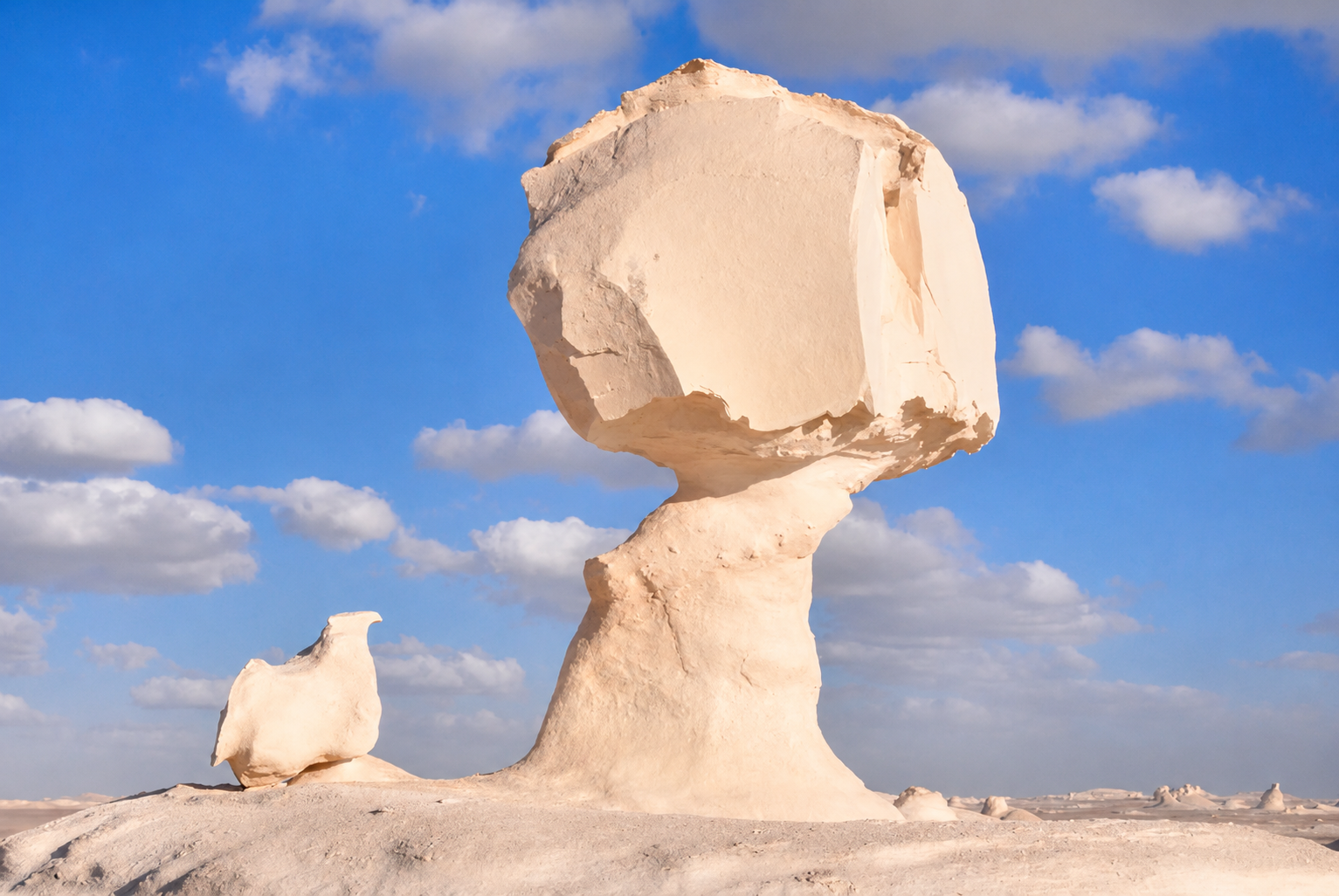
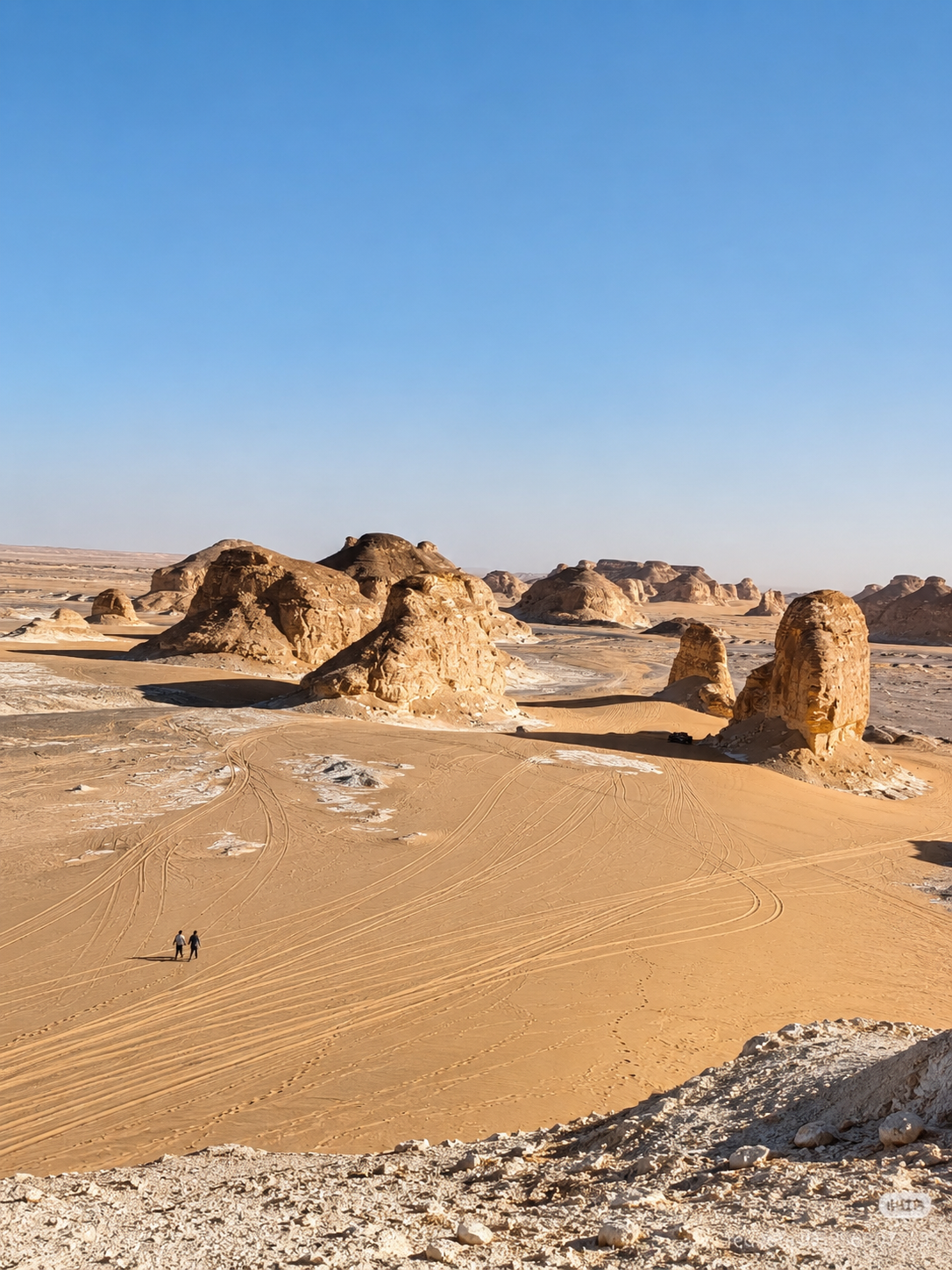
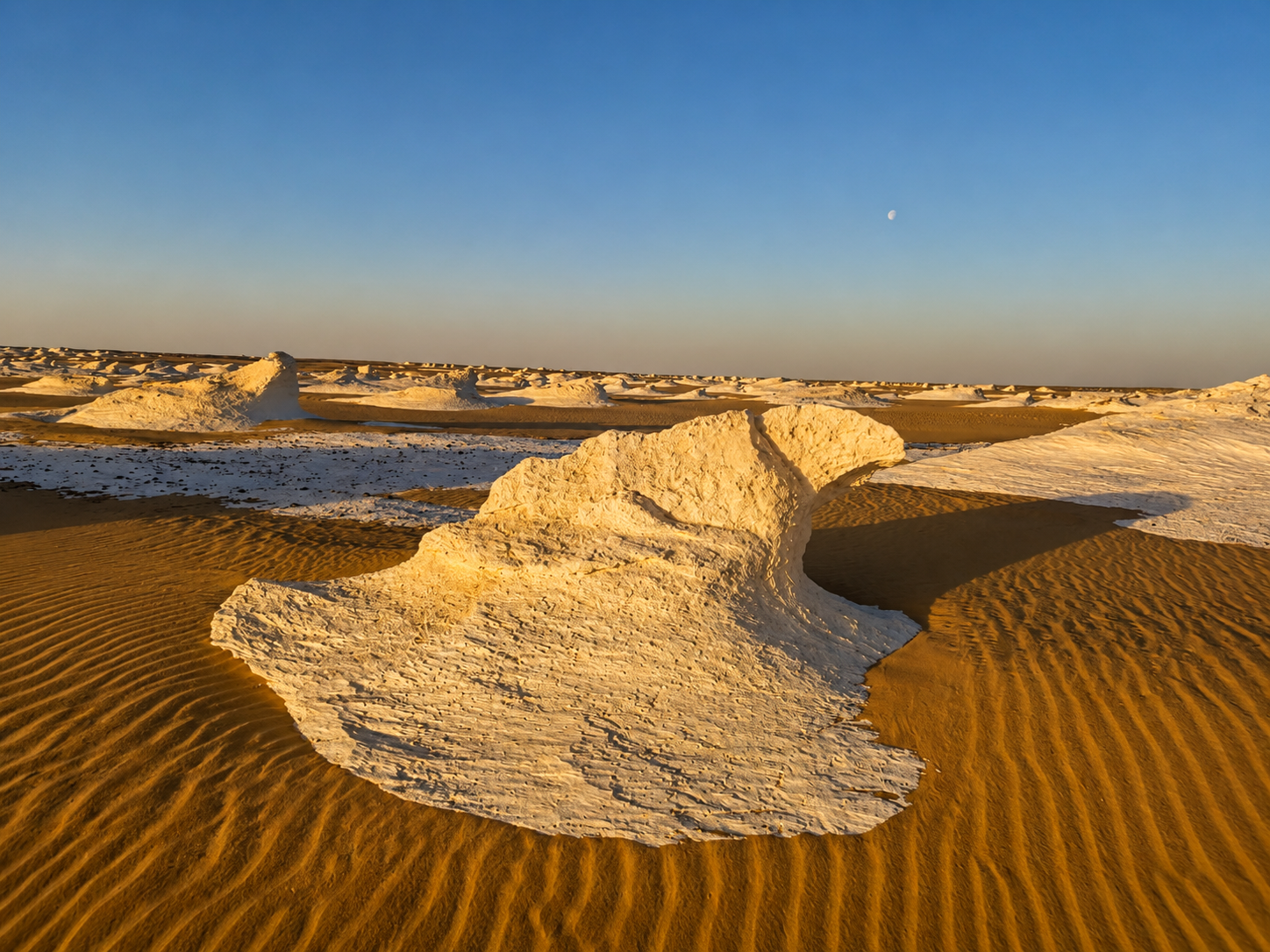
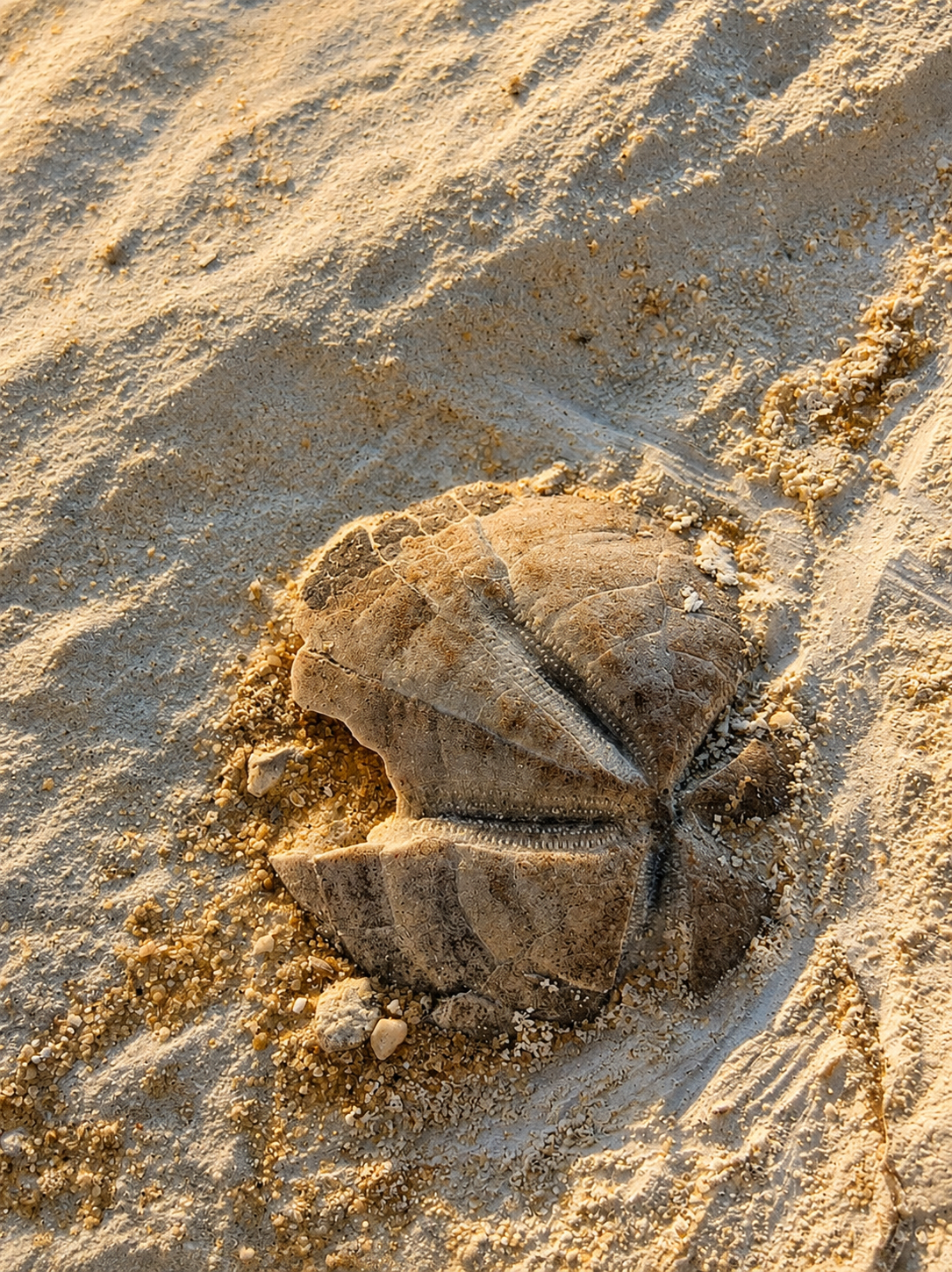
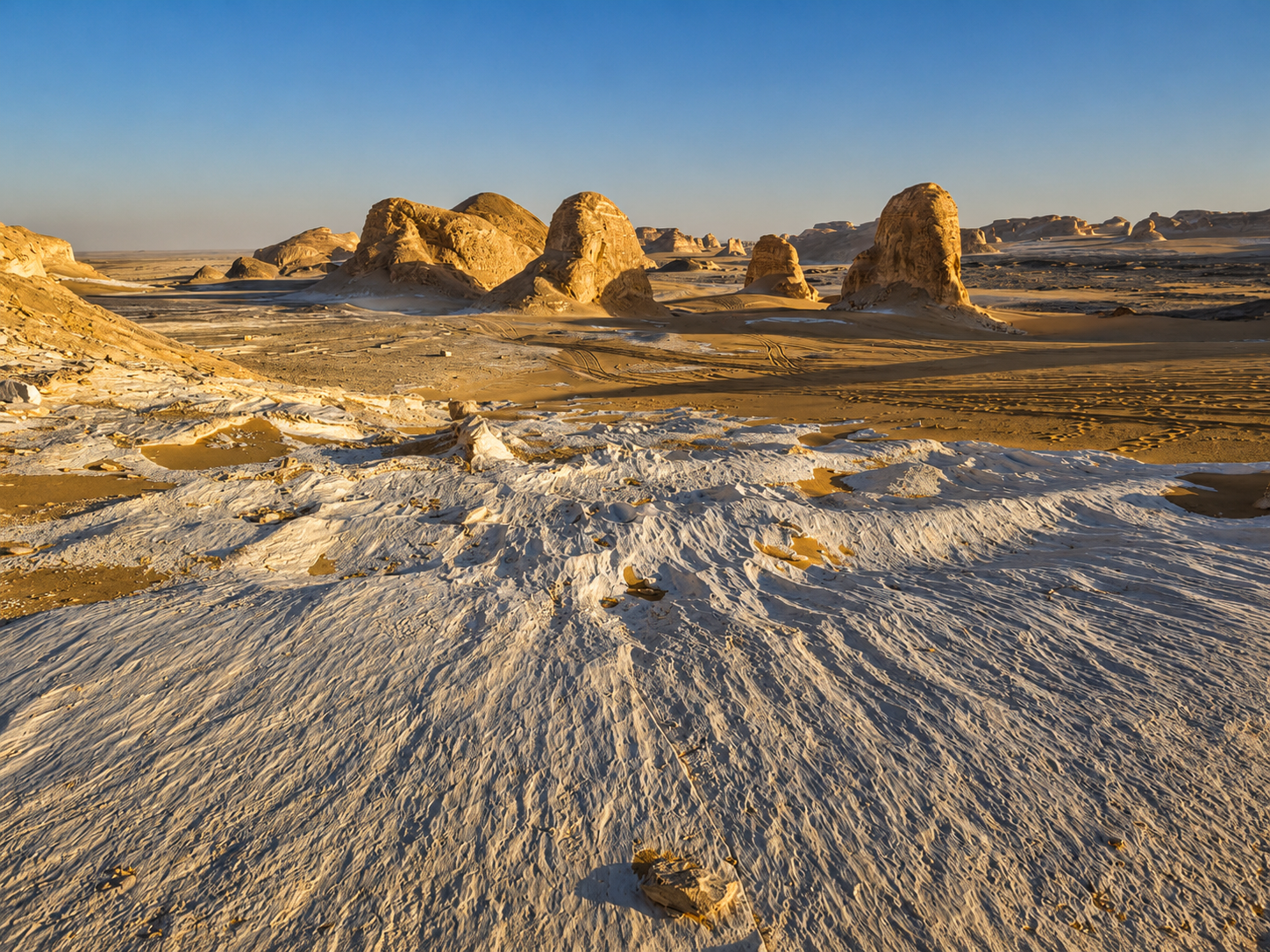
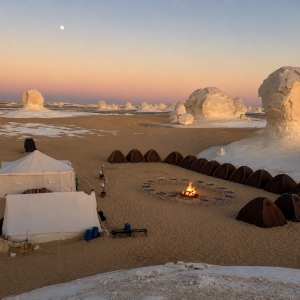
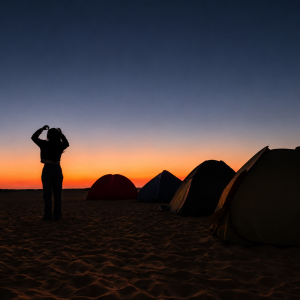
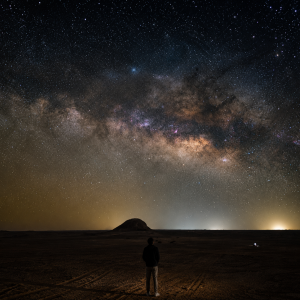
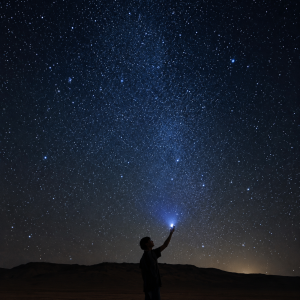
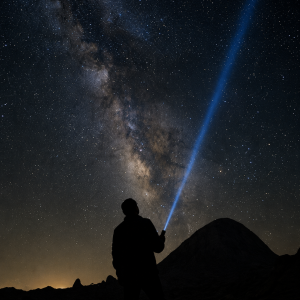
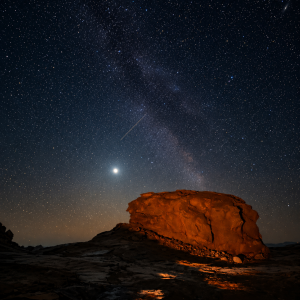
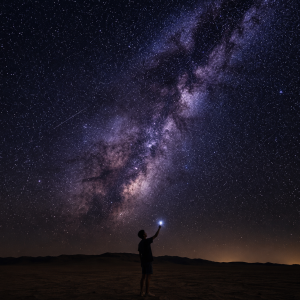
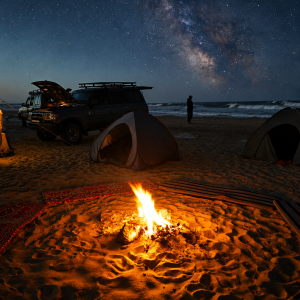
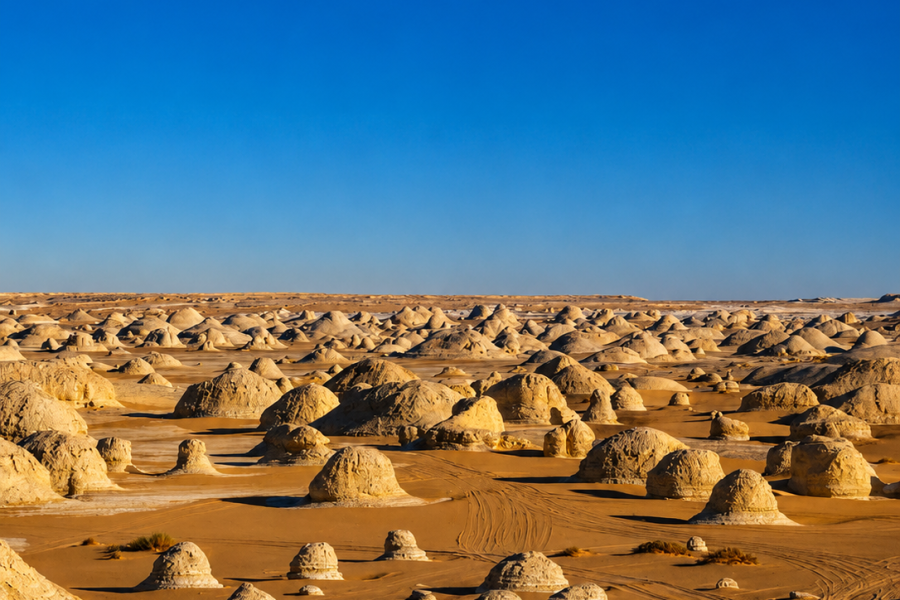
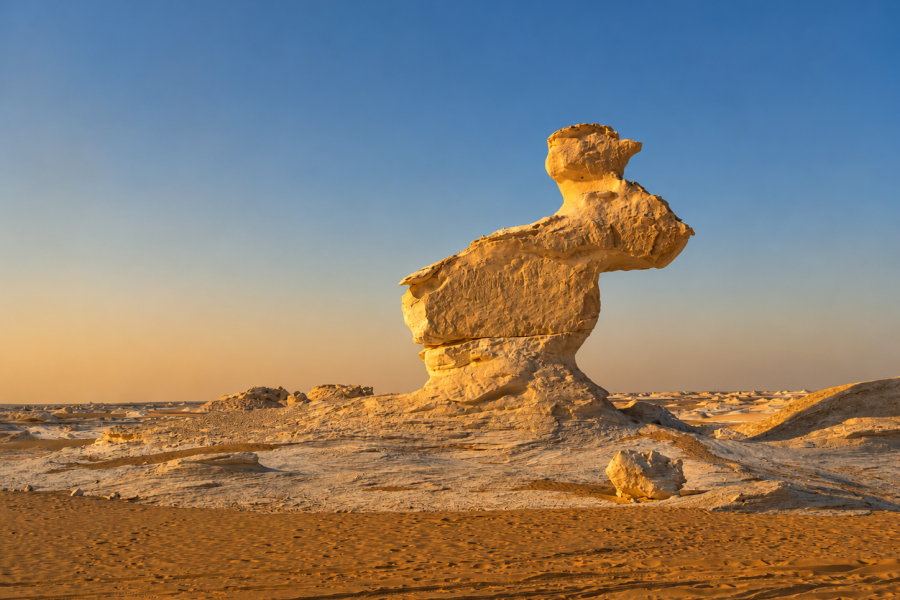
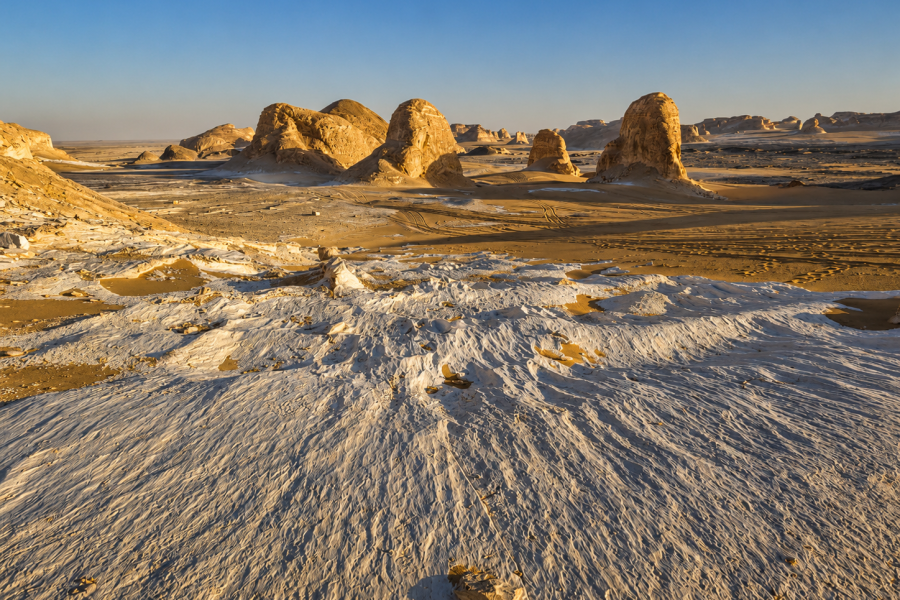
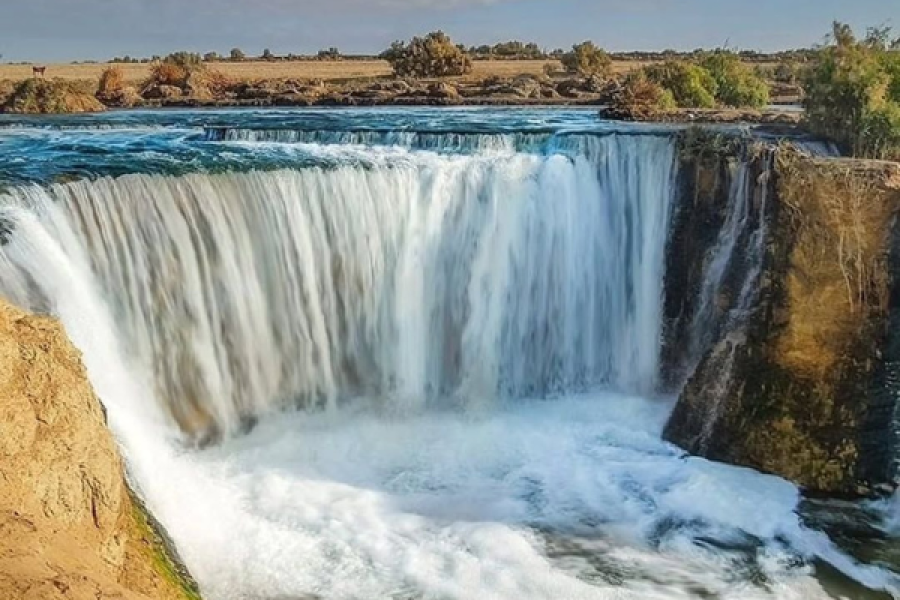
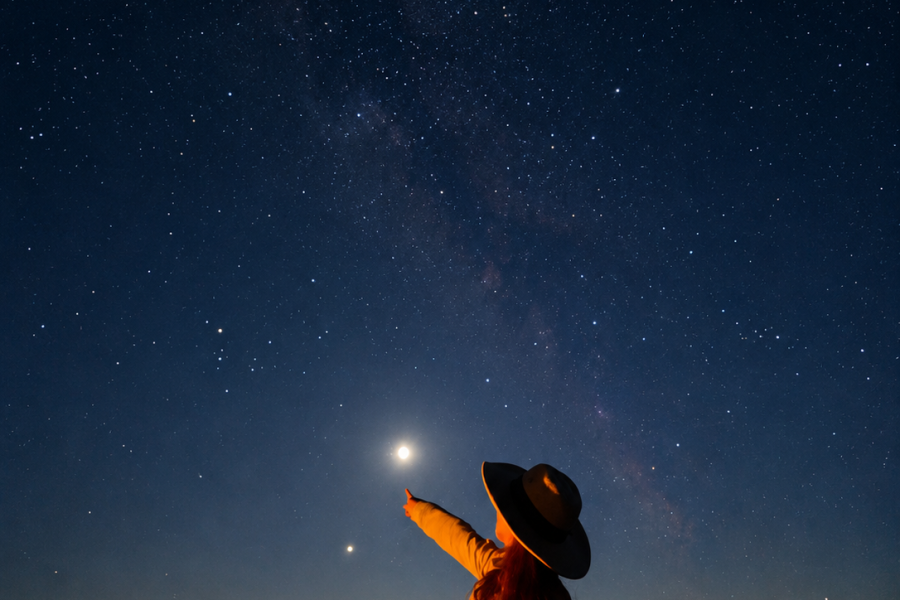
Few landscapes in Egypt change as dramatically with light as the White Desert.
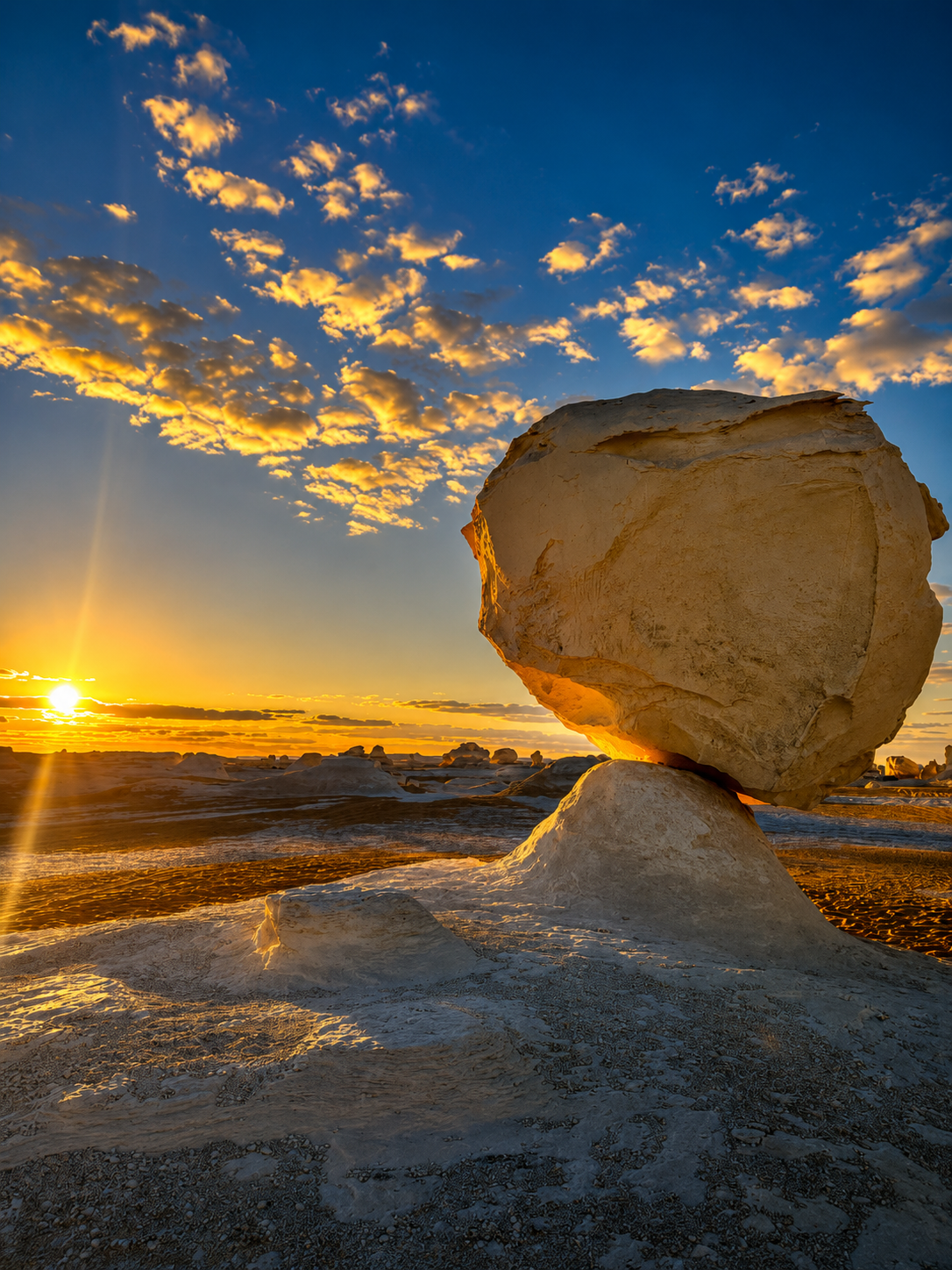
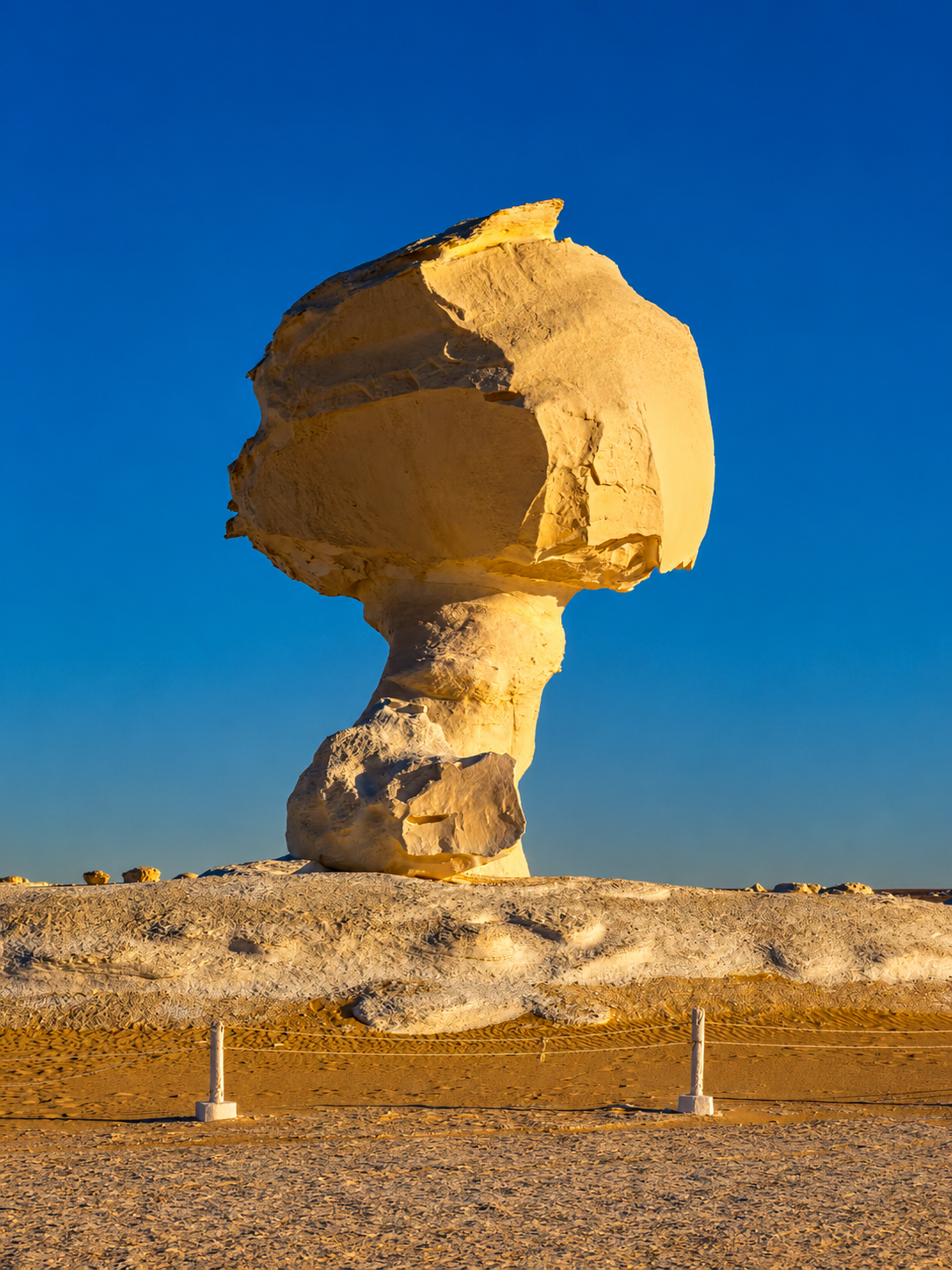
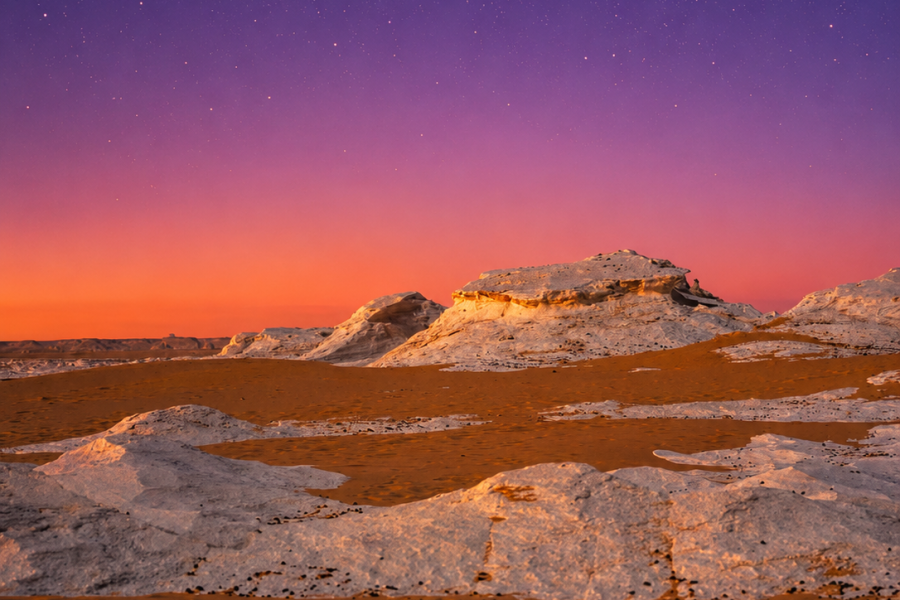
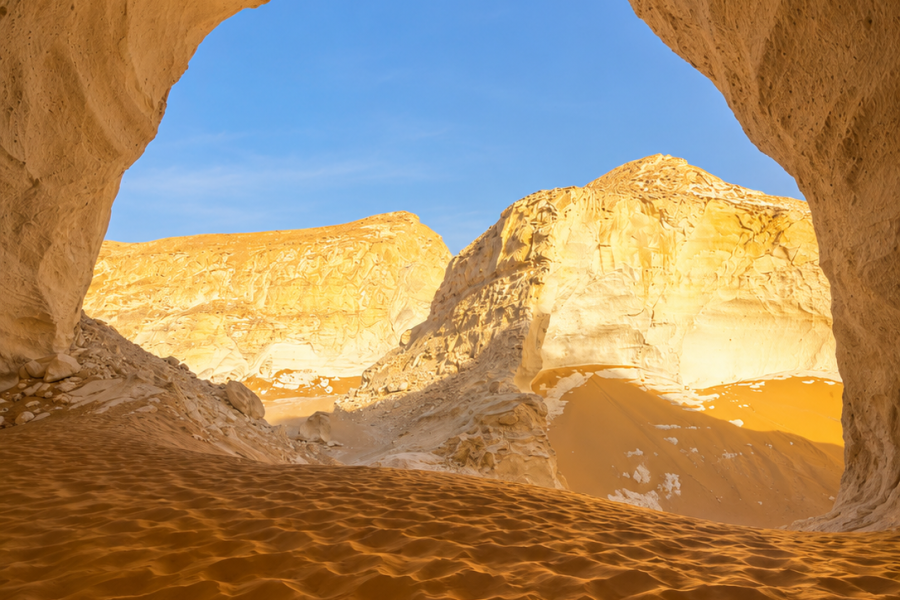
At midday, the chalk formations can appear almost pure white beneath a deep blue sky. As the sun drops, the same rocks begin taking on warmer cream, gold and orange tones. After sunset, they become silhouettes. At night, the formations can become foreground subjects beneath the stars. Then sunrise transforms the landscape again.
For photographers, this is exactly why the White Desert should not be treated as a quick photo stop.
The strongest photography trip combines location + light + enough time to wait.
A typical safari from Cairo travels through Bahariya Oasis and then connects several dramatically different landscapes:
Bahariya Oasis → Black Desert → Crystal Mountain → Agabat → White Desert National Park.
Longer routes can also include Gabal El Marsos, Great Karaween dunes, springs, Big and Small Valleys, Henes Valley, the Acacia Tree and Tents Valley. Your current 3-day White Desert route includes many of these stops and provides two camping nights, sunset, sunrise and extended off-road exploration.
That variety makes the Western Desert especially rewarding for landscape photographers.
You are not photographing one type of desert for several days.
You move from dark hills to golden dunes, reflective geological formations, broad valleys and finally the surreal white chalk landscapes for which the region is famous.
This White Desert Egypt photography guide explains the best photo locations, the strongest times of day, how many days photographers should spend in the desert, what camera equipment to bring and how to plan a safari around photography rather than trying to squeeze photographs into a standard sightseeing itinerary.
If you are still learning about the destination itself, start with our complete White Desert Egypt guide.

Yes. In fact, photography is one of the strongest reasons to spend more than one day in Egypt’s Western Desert.
The White Desert Protected Area contains distinctive limestone erosional features formed through the long action of wind and sand. Egypt’s Environmental Affairs Agency describes the area as one of Egypt’s most unique landscapes and notes its combination of erosional formations, cliffs, dunes and other desert features.
But photographers should think beyond the White Desert itself.
A well-planned safari can provide:
For a photographer, that makes the journey from Bahariya to the White Desert almost as important as the final destination.
If photography is your main priority, put these locations high on your list:
The Egyptian Tourism Authority also highlights the White Desert, Black Desert, Crystal Mountain and Aqabat Valley among the important landscapes of this region. Aqabat is particularly known for golden sand, dunes and white cliffs.
The key is not simply visiting all of them.
It is arranging the route so that your best locations coincide with the best light.
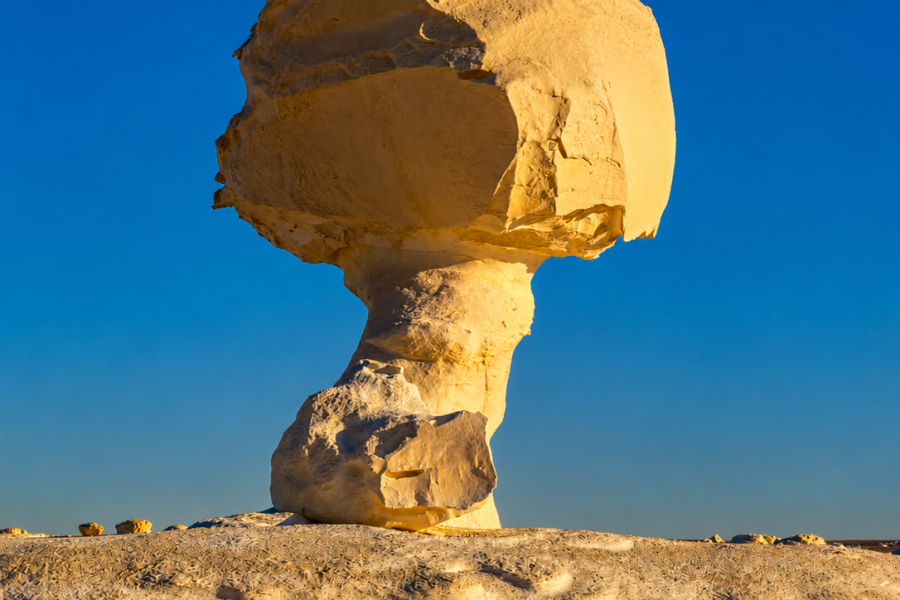
The famous chalk formations are the obvious starting point.
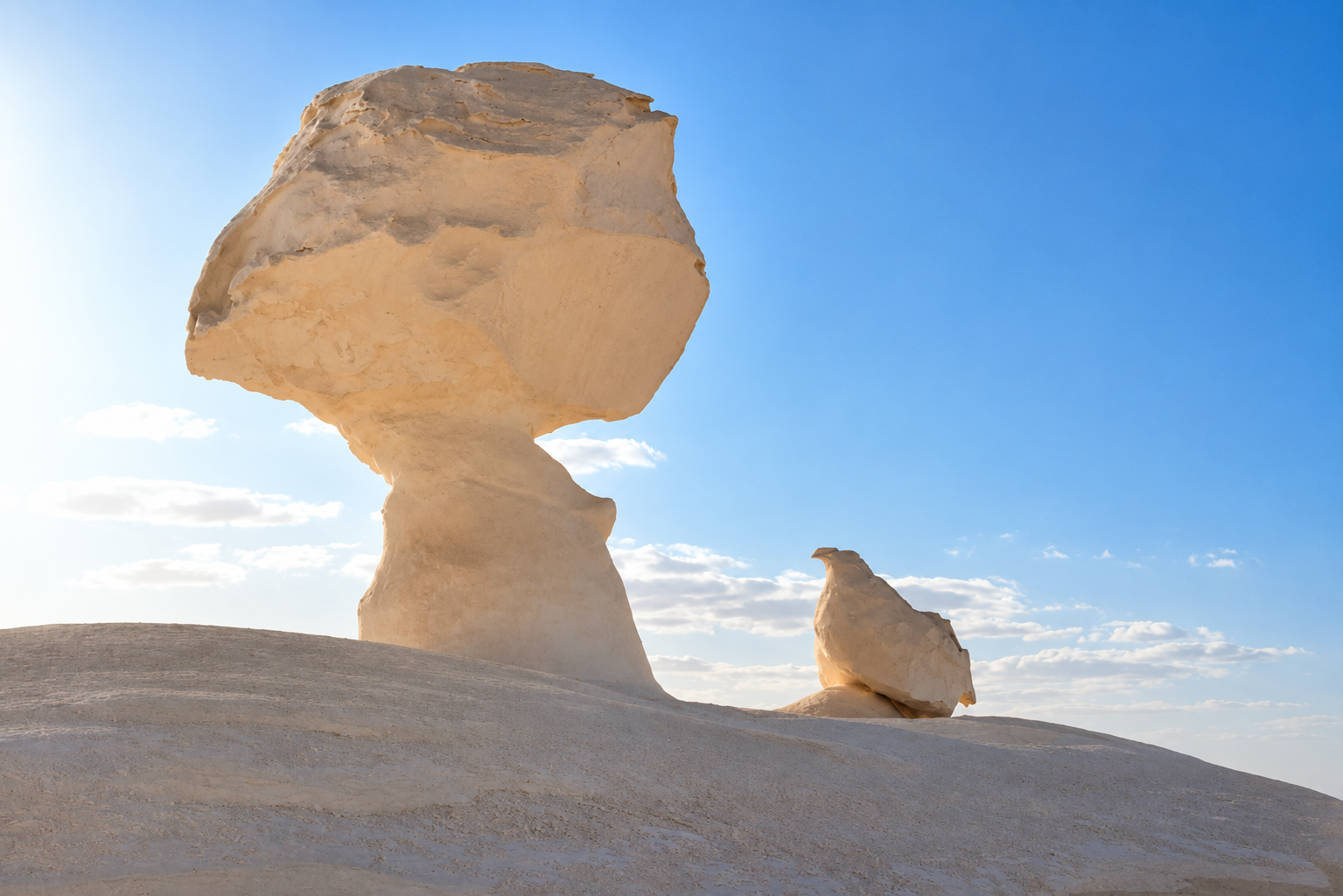
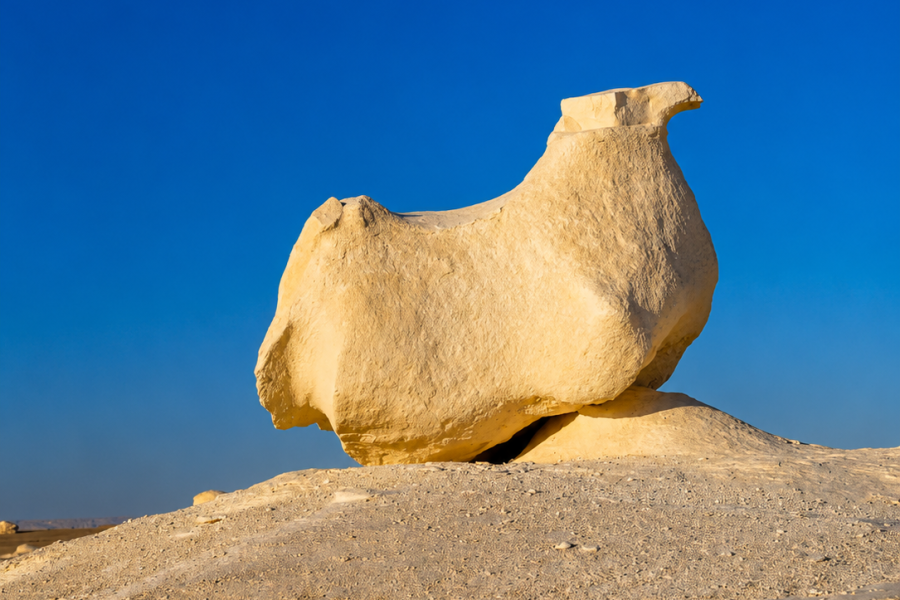
These natural sculptures vary enormously in shape and scale, making them ideal for both wide landscapes and more isolated compositions.
Some resemble mushrooms.
Others resemble towers, animals, faces or completely abstract forms.
The official White Desert management plan describes these features as limestone erosional formations shaped by wind and sand.
A wide-angle lens is useful for placing a formation within the surrounding landscape.
A normal focal length works well when you want a more natural perspective.
A telephoto lens can be extremely useful for isolating distant formations and compressing layers of rocks against one another.
Do not assume everything should be photographed at 16mm.
Sometimes the strongest White Desert image is created by simplifying the scene rather than showing the entire landscape.
Late afternoon and sunrise are particularly useful because side lighting creates shadows that reveal the shape and texture of the chalk.
At midday, direct light can flatten the formations.
That does not mean you should stop shooting.
Instead, use midday for:
Then return to your strongest compositions as the light becomes lower.
Tents Valley is one of the most obvious locations for photographers on longer White Desert itineraries.
The name comes from formations that resemble tent-like shapes.
Your current 3-day route specifically includes Tents Valley as a photography stop before entering the main White Desert National Park.
This is a good location for:
Instead of centering one tent-shaped formation, look for several formations at different distances.
Using a longer focal length can make them appear closer together and create a stronger sense of depth.
At sunrise or sunset, shadows can further separate the layers.
Agabat is one of the most photogenic parts of the entire route.
The landscape combines pale cliffs, golden sand, dunes and broad open spaces.
Experience Egypt describes Aqabat Valley as being known for soft golden sand, dunes and distinctive white cliffs.
For landscape photographers, this gives you something the main White Desert sometimes lacks:
You can build an image around several layers:
foreground sand → middle-distance formation → distant ridge → sky.
Agabat works especially well for:
If your guide allows enough time, do not simply jump out of the vehicle and take the same photograph as everyone else.
Walk a short distance with your guide.
Change elevation.
Look behind you.
Often the strongest composition is not facing the obvious landmark.
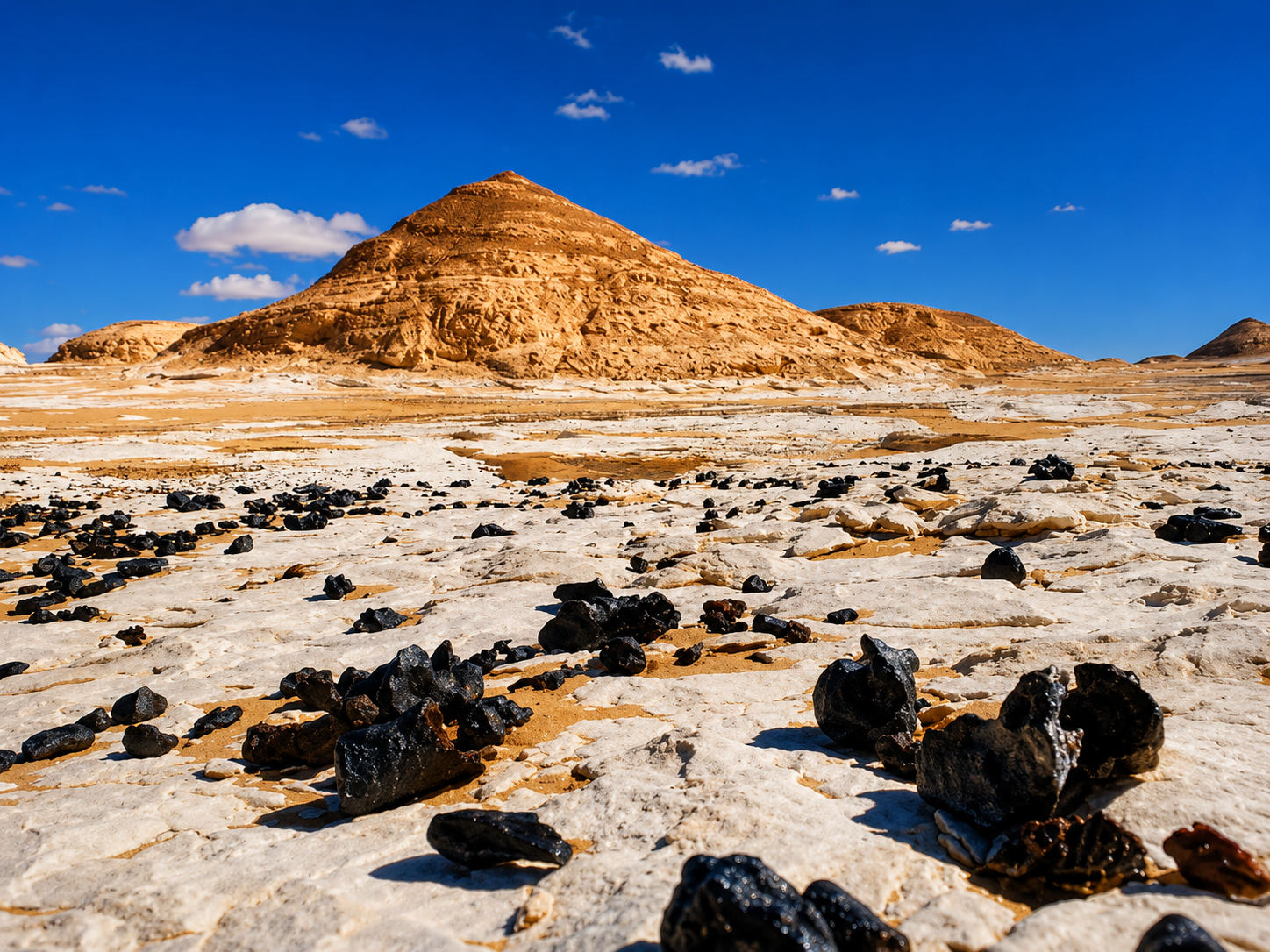
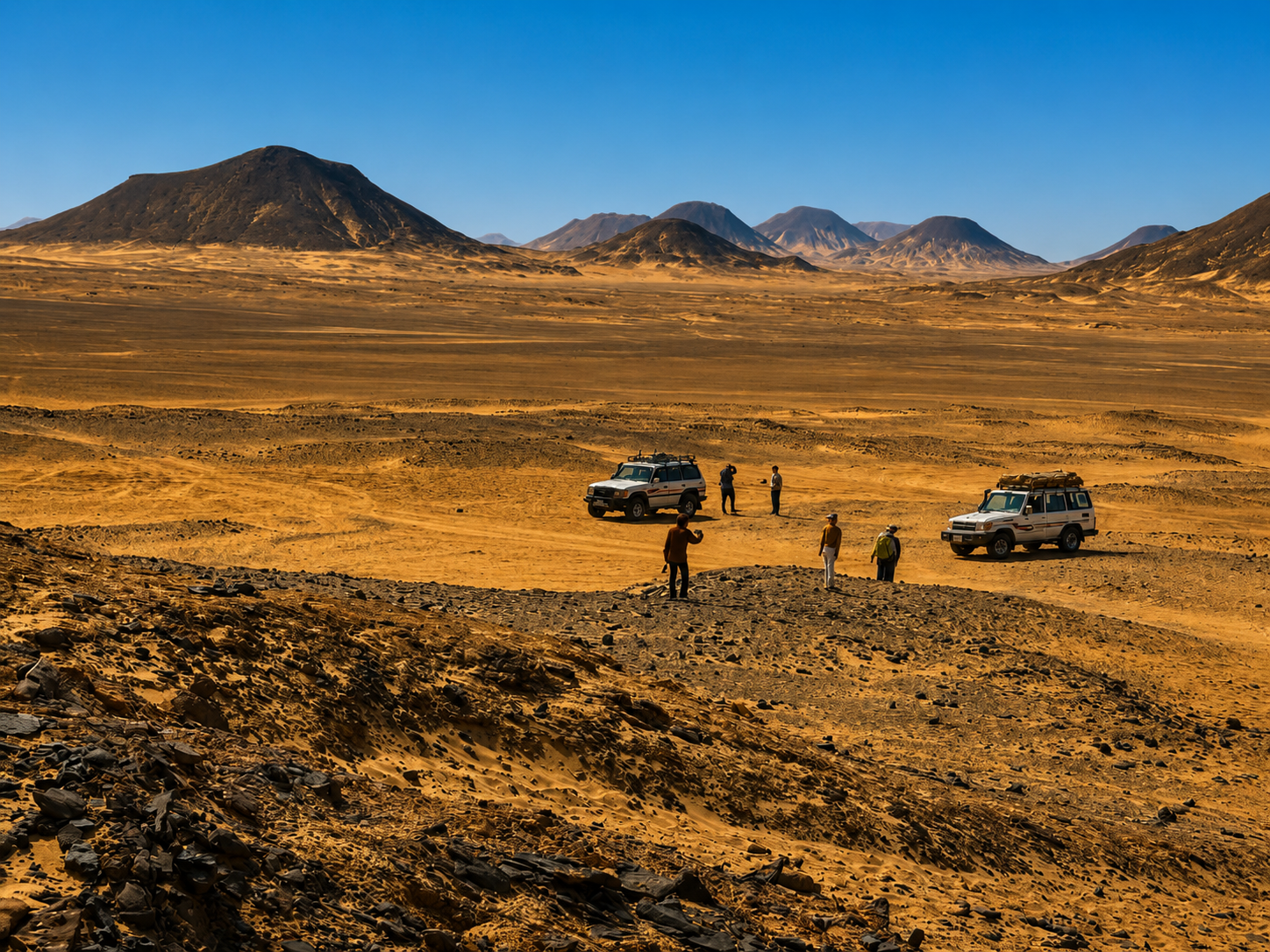
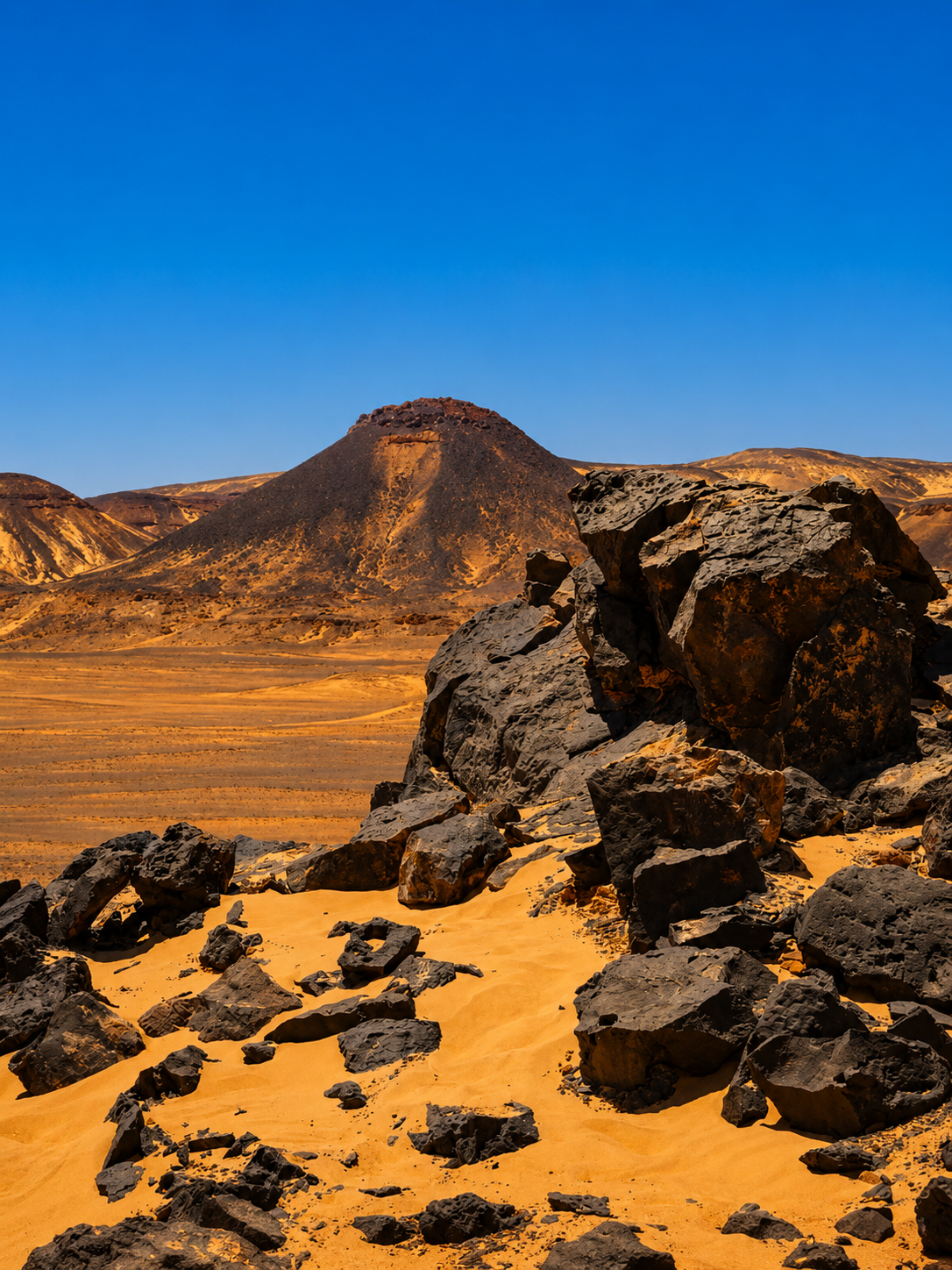
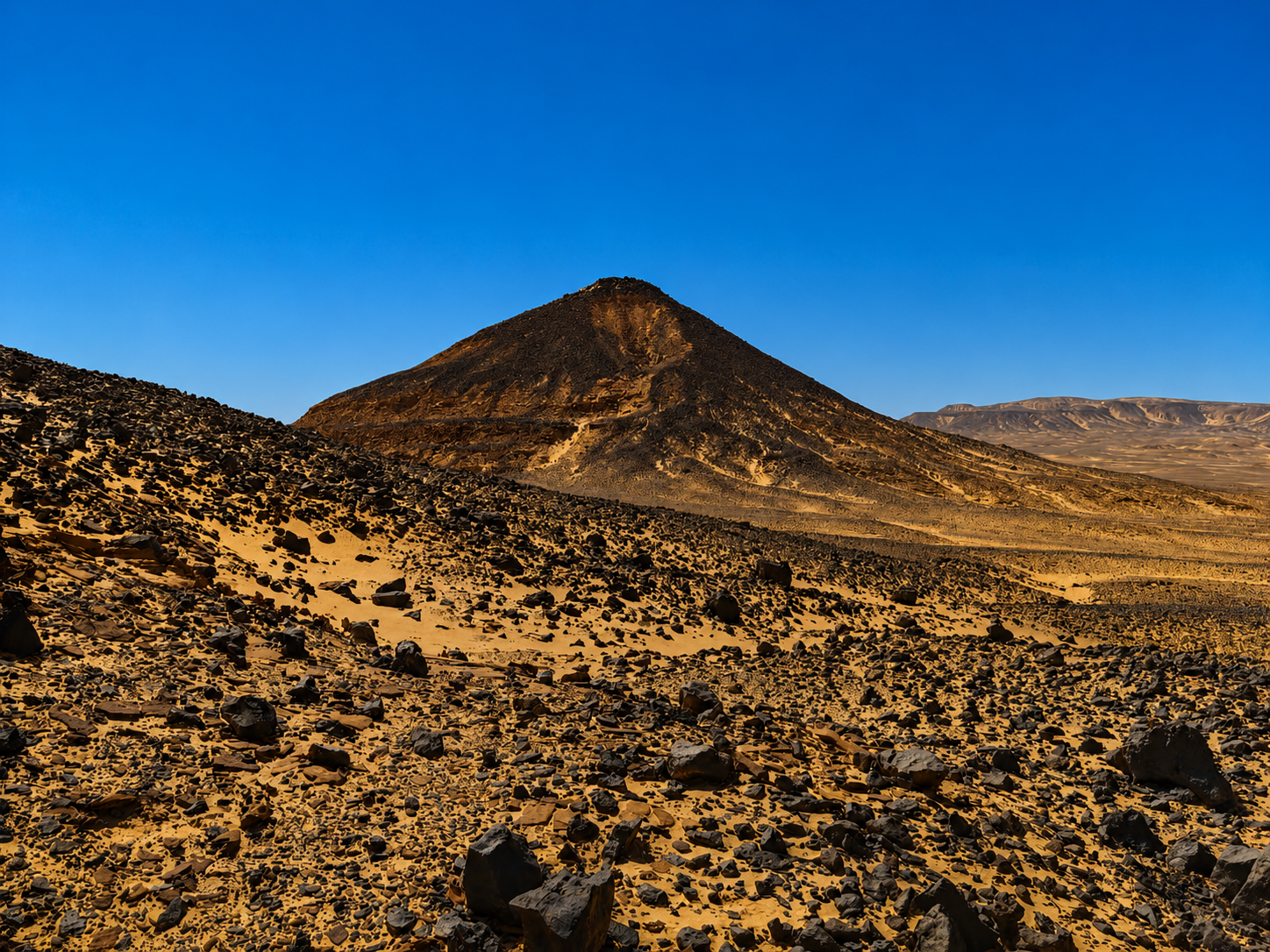
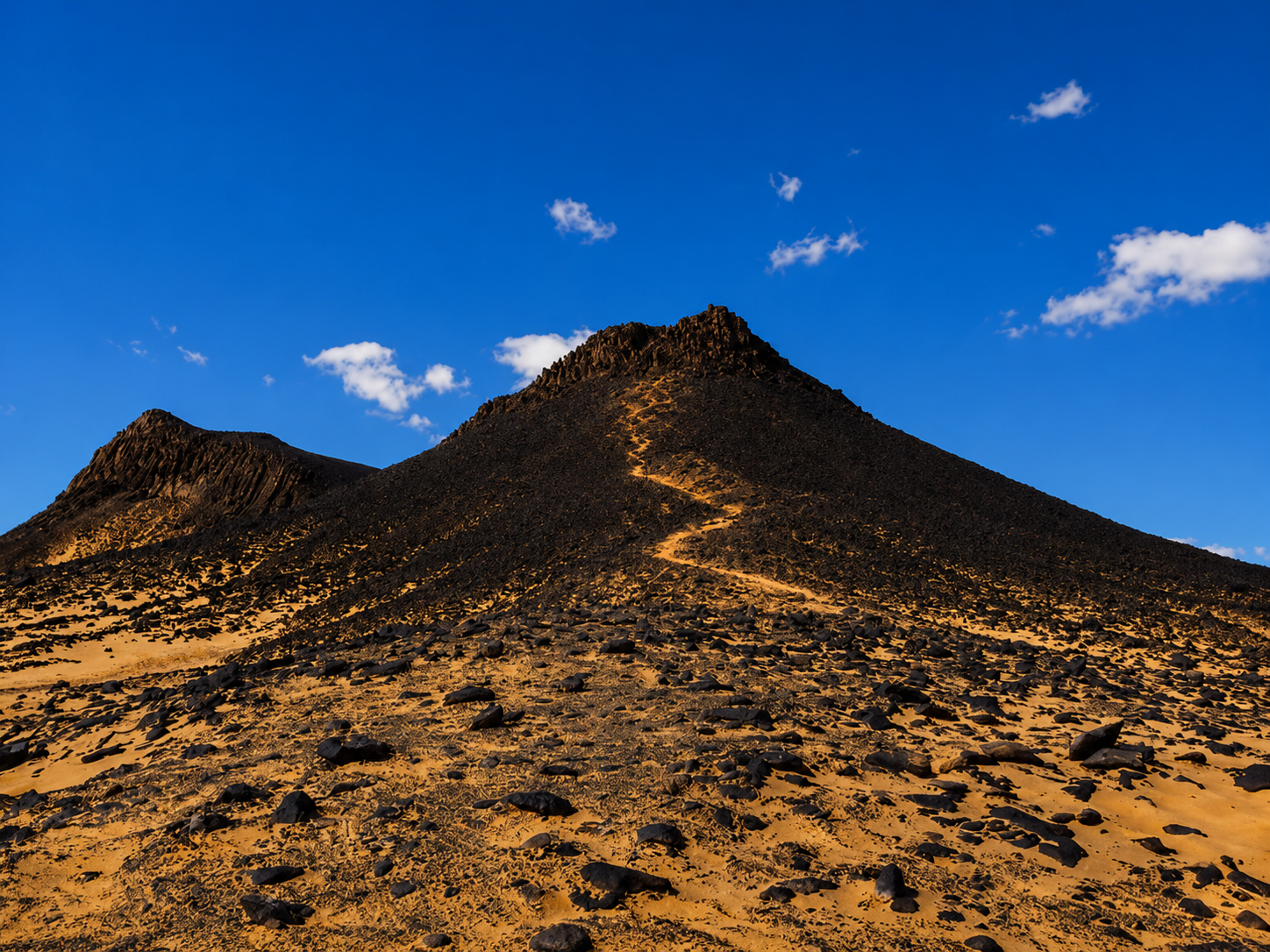
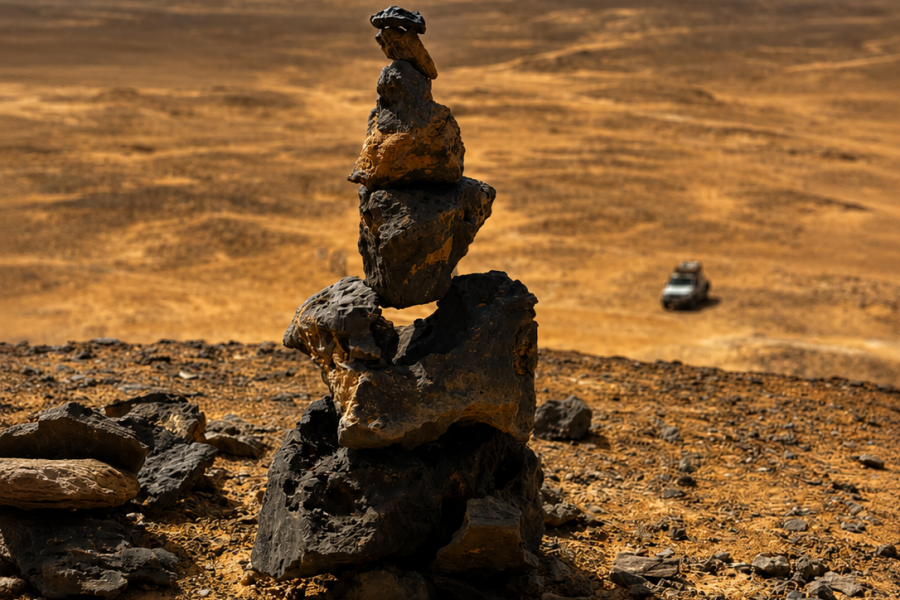
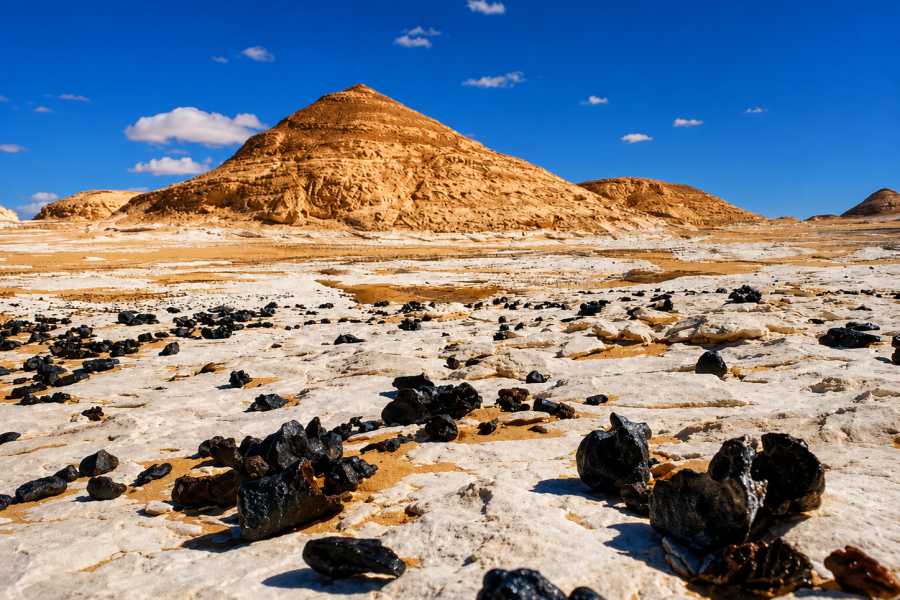
The Black Desert provides the visual opposite of the White Desert.
Dark hills and black stones rise from warmer sand, producing powerful tonal contrast.
Your site’s current Black Desert route starts around Bahariya Oasis and continues toward Gabal El Marsos, El Hez, Crystal Mountain, Agabat and the White Desert.
This makes the Black Desert particularly strong for:
Low sunlight is particularly useful because the hills become three-dimensional when shadows form along their slopes.
Midday can produce a more graphic style:
black landforms against a bright sky.
Neither is necessarily better.
They create different photographs.
For a detailed comparison of the two landscapes, see our White Desert vs Black Desert Egypt guide.
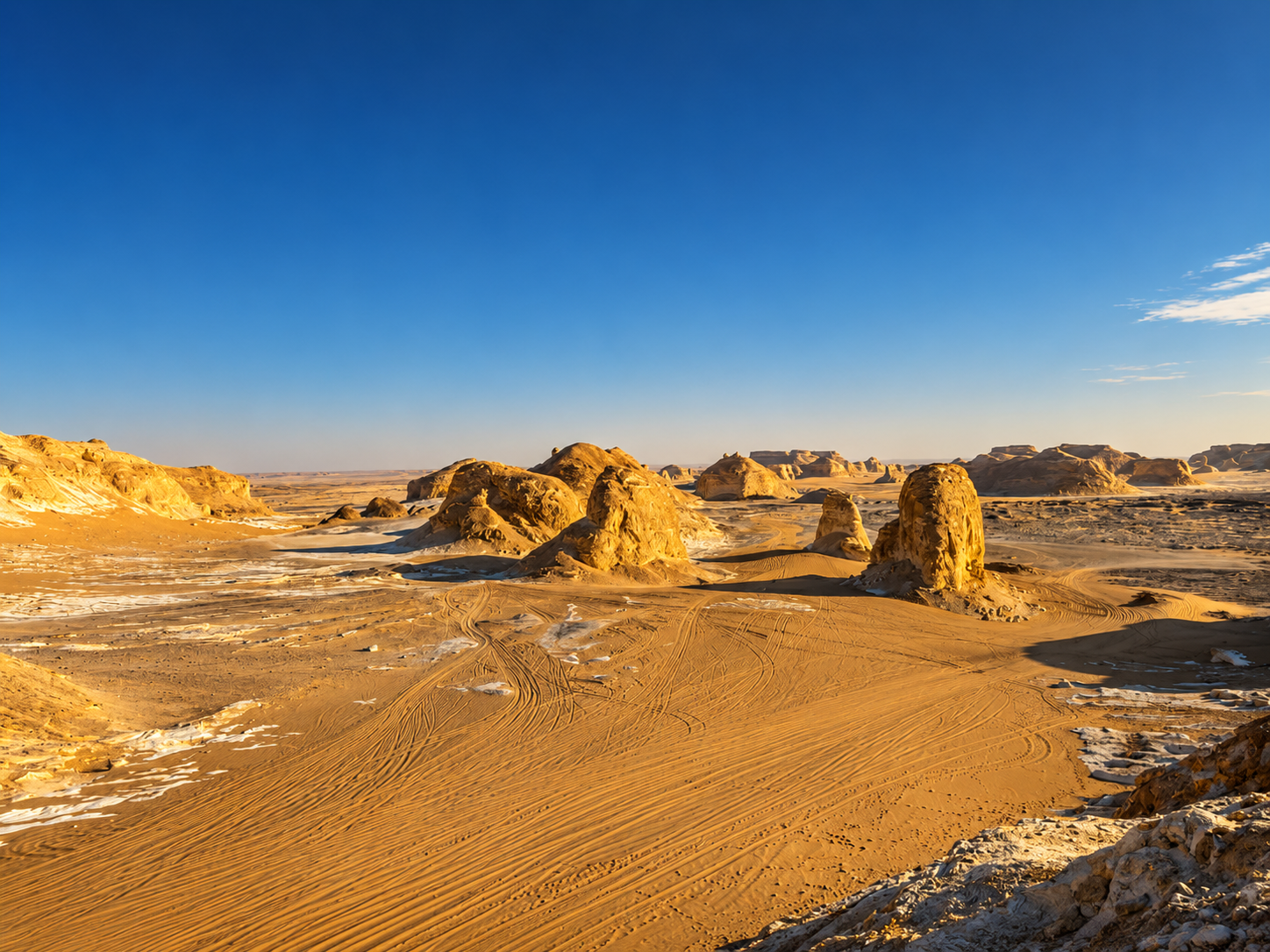
Gabal El Marsos, also known on local itineraries as Divided Mountain, is one of the useful photography stops around the Black Desert.
Your 3-day itinerary includes a walk around Gabal El Marsos before continuing deeper toward El Hez and Crystal Mountain.
The opportunity to leave the vehicle is valuable.
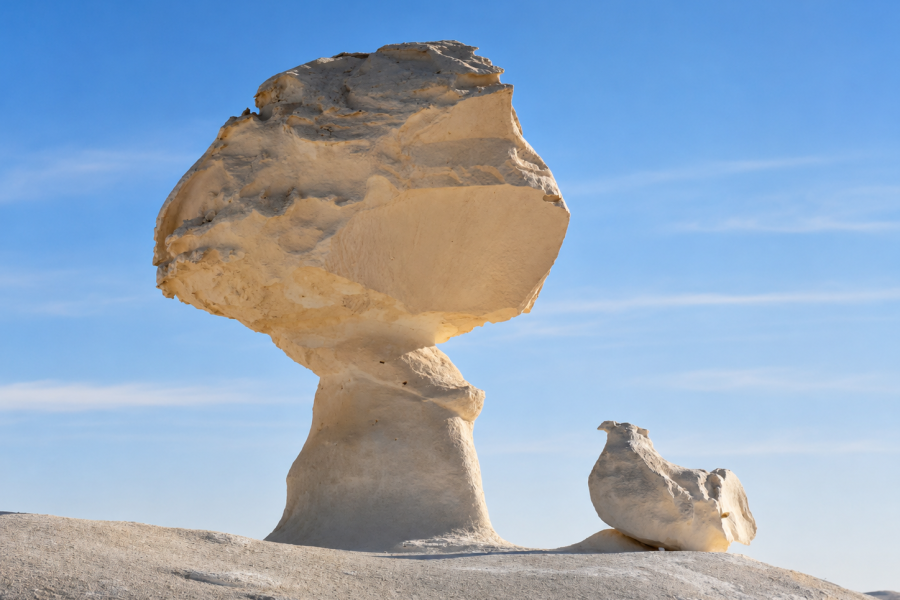
When photographing large desert hills, scale can be difficult to communicate.
Including:
can help viewers understand the size of the landscape.
This is where environmental travel photography becomes particularly useful.
Not every image needs to remove all evidence of human presence.
Sometimes a tiny person is exactly what gives a giant desert landscape impact.
Crystal Mountain requires a different photographic approach.
The Egyptian Tourism Authority describes it as a geological formation associated with a former underground cave and notes the reflective crystals visible around its recognizable arch.
This is not necessarily where you create your widest landscape of the trip.
Instead, think about:
Lens choice
A normal or short telephoto focal length can often be more useful than an ultra-wide lens.
Try to isolate the structure from distracting surroundings.
Then move closer and photograph the mineral details.
Be careful around fragile geological features and follow your guide’s instructions. The White Desert is a protected landscape and conservation is part of its formal management framework.
If you choose a longer itinerary, large dune areas can add another completely different portfolio of photographs.
Your current 3-day camping tour includes travel through the Great Karaween dunes as part of its full off-road day.
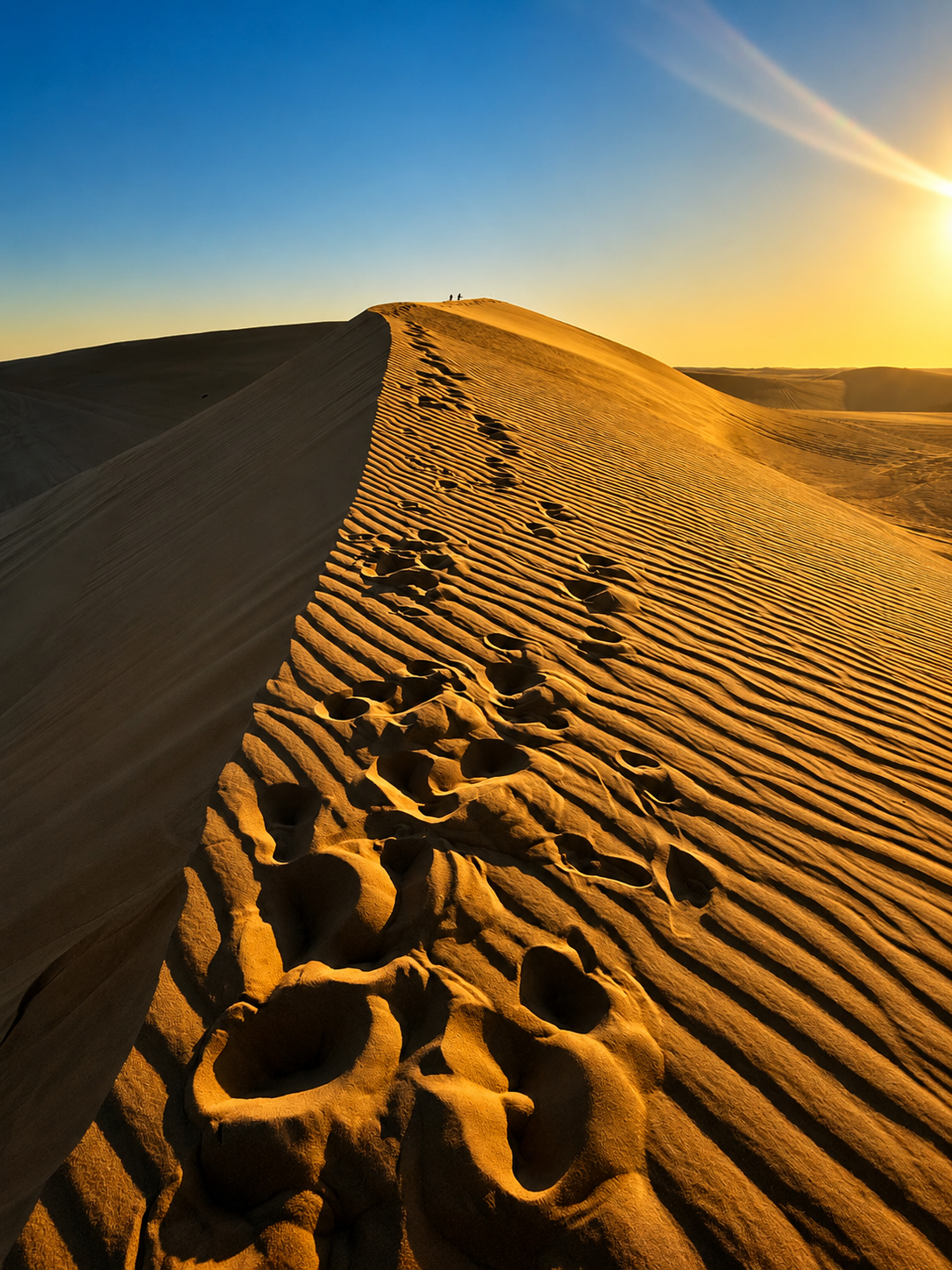
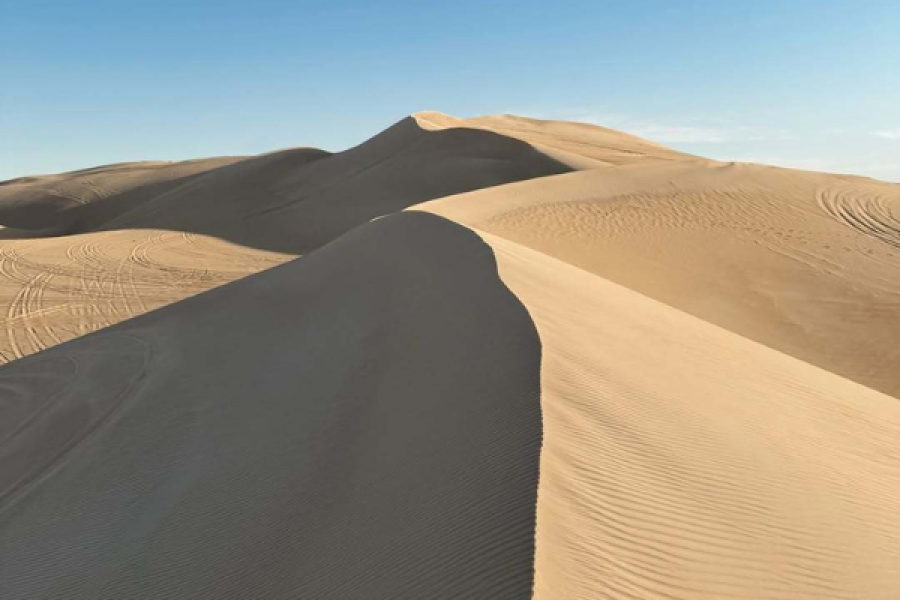
Dunes are perfect for minimalism.
Rather than photographing everything in the frame, simplify.
Achten Sie auf:
Low-angle sunlight produces stronger separation between light and shadow.
When the sun is higher, subtle dune shapes can disappear.
Late afternoon is therefore useful, but do not ignore early morning if your route places you around dunes after sunrise.
A longer photography trip allows you to photograph more than tourist landmarks.
The current 3-day itinerary uses the El Mattar area for the first camping night before continuing into the deeper White Desert route.
This gives photographers an opportunity to document:
These images help tell a story.
A White Desert photography collection becomes much stronger when it includes the experience of traveling through the desert rather than only twelve isolated rock photographs.


Experience Egypt identifies Al-Santa Acacia Tree as a lone tree on the White Desert horizon, while your longer safari itinerary includes an Acacia Tree stop before Tents Valley.
A lone tree creates something extremely useful in desert composition:
Use negative space.
Do not automatically zoom in until the tree fills the photograph.
One small tree surrounded by a huge empty landscape can communicate isolation far more effectively.
This can work especially well in monochrome or with strong backlight.
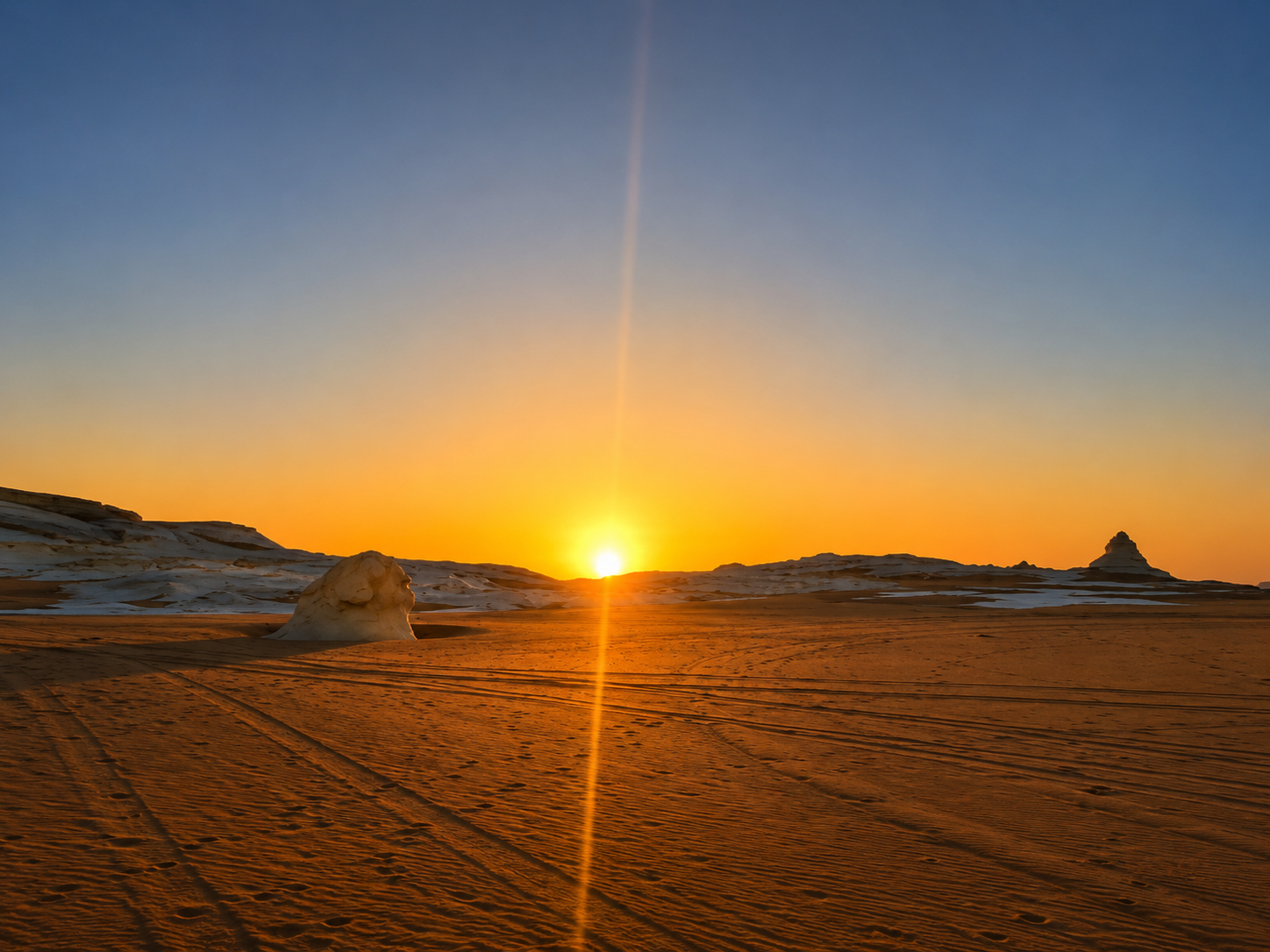
Sunset is one of the most important photography periods in the White Desert.
Your current overnight and multi-night itineraries deliberately include sunset as part of the desert experience.
But “photograph sunset” does not mean point your camera directly at the sun for fifteen minutes.
Think about how light interacts with the landscape.
This is often when texture begins becoming interesting.
Scout multiple compositions.
Do not wait until the sun touches the horizon before deciding what to photograph.
Use side lighting to emphasize formations and dunes.
Try both:
The second can create excellent shape and texture.
Stay.
Do not immediately pack the camera.
As direct sunlight disappears, the color relationship between the sky and white formations can become much softer.
This transition is particularly useful for minimalist images.
Blue hour is frequently overlooked on desert tours because visitors think sunset is finished once the sun drops below the horizon.
For photographers, the opposite can be true.
The White Desert’s pale surfaces can retain enough ambient light to create soft, almost monochromatic scenes.
A tripod becomes increasingly useful as exposures become longer.
Potential subjects include:
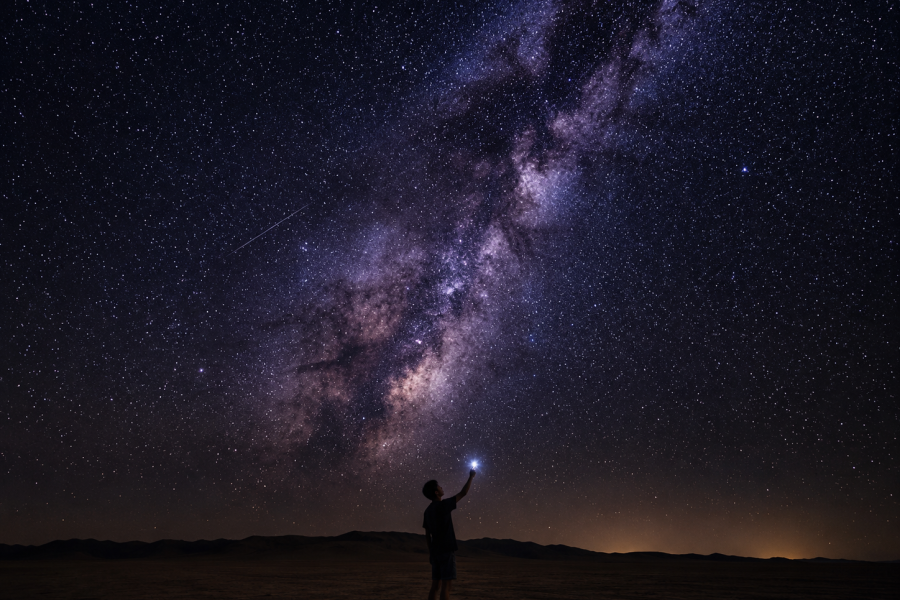
Blue hour is also a natural transition between landscape photography and night photography.
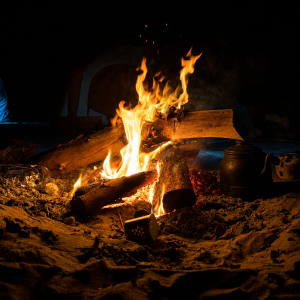
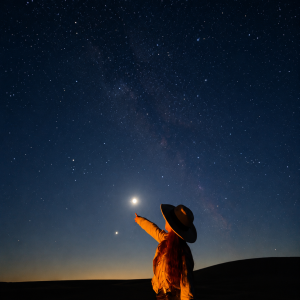
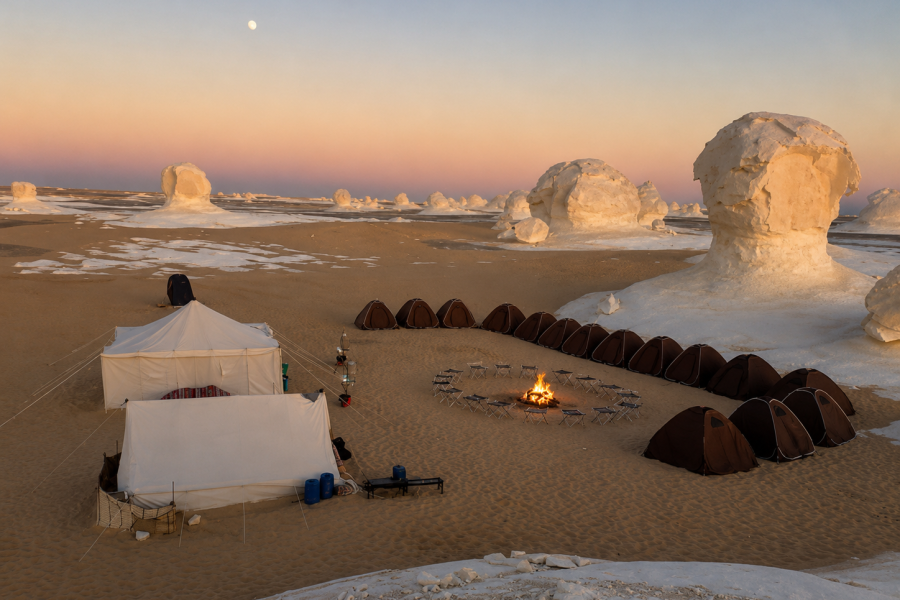
Camping gives photographers access to a completely different White Desert.
Instead of warm colors, you are working with:
Your 2-night/3-day itinerary includes two nights in the desert and emphasizes clear-sky camping, sunset and sunrise opportunities.
Bitte mitbringen:
You do not need the most expensive astrophotography equipment to create strong photographs.
A dramatic formation with a few visible stars can be more effective than trying to produce the most technically complex Milky Way image possible.
There is no universal best moon phase.
It depends on your photograph.
Better if your main goal is faint stars and a darker sky.
Potentially useful if you want natural light falling across the chalk formations.
This is one of the unusual advantages of the White Desert.
The foreground subjects are extremely distinctive.
A completely dark foreground may waste that visual opportunity.
Photographers should therefore decide whether the trip is primarily about:
or
If astrophotography is important, check the moon phase for your exact dates before booking.
Sunrise is one of the strongest arguments for camping.
Instead of waking in Cairo and trying to reach a landscape before good light, you wake already inside the desert.
Your current 3-day route includes sunrise followed by hiking among the tent-shaped rocks on the final morning.
Prepare the night before.
Keep:
easy to reach.
Do not wait until the sky starts changing before searching through your luggage.
Begin before direct sunlight hits the formations.
Photograph the soft pre-sunrise tones.
Then continue as the first directional light begins producing shadows.
Many photographers stop too soon.
The twenty or thirty minutes after sunrise can be just as useful as the moment the sun appears.
Your portfolio should not contain only landscapes.
The journey is part of the story.
Photograph:
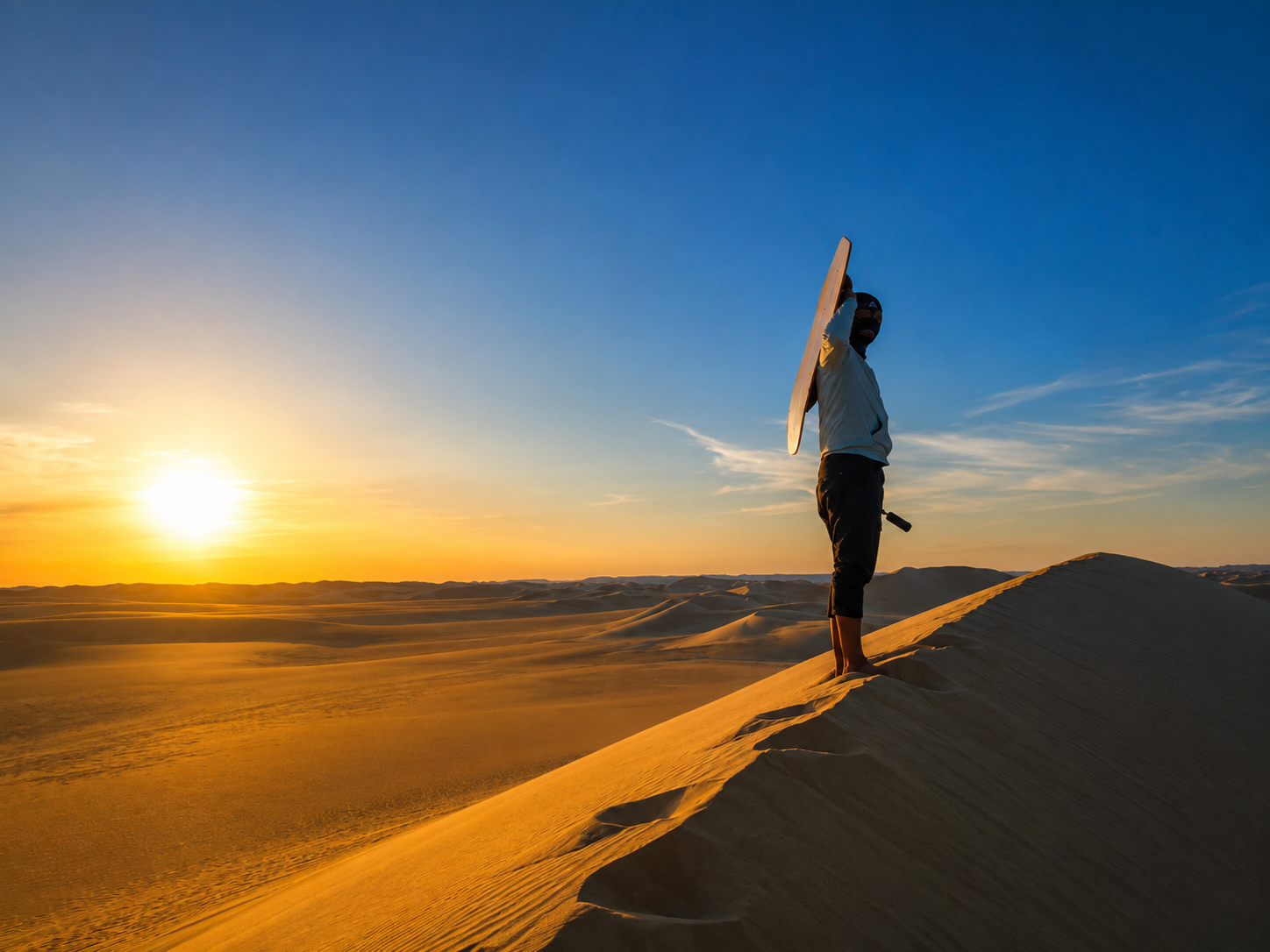
Your current 3-day itinerary uses 4×4 vehicles throughout the desert and includes spring stops, sandboarding, picnic lunch, camping and multiple off-road landscapes.
These photographs create a much richer visual narrative than a collection of postcard views.
Human subjects provide scale.
A person can make an otherwise abstract desert scene immediately understandable.
Useful setups include:
If photographing local residents or identifiable individuals, ask permission rather than treating people as scenery.
For stronger compositions, have the person move naturally through the environment instead of simply standing centered and looking at the camera.
The quality of light matters more than trying to photograph every location.
Am besten geeignet für:
Good for:
Useful for:
Excellent for:
Excellent for:
Excellent for:
Am besten geeignet für:
This is why photographers should choose an itinerary containing at least one overnight stay.
For most travelers, the more comfortable season is generally around October through April, when extended outdoor exploration and camping are easier than during the hottest part of the year.
However, the “best photography month” depends on more than temperature.
Consider:
Winter can be excellent for long daytime photography sessions, but nights may feel cold.
Autumn and spring can offer an easier balance for many campers.
We already covered this in detail in our Best Time to Visit the White Desert Egypt for Camping & Photography.
This is one of the most important decisions.
Possible, but not ideal for serious photographers.
You may visit many strong landscapes, including the Black Desert, Crystal Mountain, Agabat and White Desert, but you are working around a tight schedule.
Your Eintägige Tour in die Weiße Wüste ab Kairo includes the main safari route and White Desert sunset.
Am besten geeignet für: casual travel photography when time is extremely limited.
This is the minimum we recommend if photography is an important part of the trip.
You gain:
The 2-tägige Weiße-Wüste-Tour ab Kairo (1 Übernachtung) follows the Bahariya–Black Desert–Crystal Mountain–Agabat–White Desert route and includes overnight camping.
Am besten geeignet für: first-time visitors who want strong photography opportunities without committing three days.
If photography is a major reason for visiting the White Desert, this is our preferred option.
The 2 Nächte, 3 Tage Camping-Tour durch die Weiße Wüste currently expands beyond the standard route to include the Black Desert, Gabal El Marsos, Crystal Mountain, El Mattar, Aqabat, Great Karaween dunes, Ain El Serw, multiple valleys, Acacia Tree, Tents Valley and White Desert National Park, with two nights of camping.
The value for photographers is not just more attractions.
It is more light cycles.
You gain:
Am besten geeignet für: landscape photographers, astrophotographers and serious travel photographers.
A private safari can be particularly useful for photographers.
Warum?
A normal sightseeing traveler may want to spend fifteen minutes at a viewpoint.
A photographer may need forty minutes.
Or may want to wait until a cloud moves.
Or return ten minutes later when light hits the landscape differently.
Tell your operator before departure that photography is a major priority.
Ask whether the route can reasonably allow additional time at:
You cannot control nature.
But you can build an itinerary that gives nature more opportunities to cooperate.
You do not need to carry every lens you own.
A practical kit might include:
Useful for:
Probably the most versatile choice for general travel photography.
Extremely useful for:
Important for:
Bring more than you normally expect to use.
Camping means charging can be limited.
Small and light. There is little reason not to carry backups.
Important for phones and USB-chargeable devices.
For a broader checklist, use our White Desert Egypt Packing List.
Sand is one of the main practical challenges.
Bitte mitbringen:
Avoid changing lenses in strong wind unless necessary.
If you must change lenses:
turn your back to the wind,
keep the camera opening pointed downward,
make the change quickly.
Do not place cameras directly on sand.
And check tripod joints after the trip.
Fine desert sand can enter places you did not expect.
Do not plan your entire trip around having a normal wall socket each evening.
Bring fully charged batteries and a good power bank.
For a 3-day photography trip, carrying several camera batteries may be easier and more reliable than depending on charging in the desert.
Cold winter nights can also affect battery performance.
Keep at least one spare battery protected and reasonably warm.
Do not assume you can simply arrive in the desert and fly a drone.
The White Desert is a protected area, and permit/access requirements can apply to desert activities. Egypt’s official tourism portal specifically advises visitors to check current permits and regulations with their travel agency or authorized guide before desert excursions.
Drone rules can also change independently of normal safari access.
If aerial photography is essential to your project, verify the current Egyptian aviation, security and protected-area requirements before traveling.
Do not build a commercial shoot around an assumption.
The White Desert was officially declared a protected area, and its management framework is designed around conserving its natural resources while allowing appropriate tourism.
For photographers, that means:
A good photograph should leave the place exactly as you found it.
External authority: Egyptian Environmental Affairs Agency – White Desert Protected Area Management Plan
Official tourism information: Experience Egypt – Desert Excursions
The two landscapes require different visual thinking.
Denk mal darüber nach:
You should not choose one.
Photographing both gives your final gallery a much stronger narrative.
Read our White Desert vs Black Desert Egypt comparison for the full travel differences.
If you have only two days, this would be our photography priority.
Cairo → Bahariya Oasis
Use the drive for documentary travel shots rather than serious landscapes.
Schwarze Wüste
Photograph panoramic scenes and dark hills.
Gabal El Marsos
Use a person or vehicle to communicate scale.
Kristallberg
Focus on details and geology.
Agabat
Prioritize wide landscapes and layered compositions.
Weiße Wüste
Arrive with enough time to scout before sunset.
Photograph sunset, blue hour and camp.
Night
Attempt stars or moonlit landscapes depending on conditions.
Wake before sunrise.
Photograph pre-sunrise blue light, sunrise and side-lit formations.
After breakfast, continue with shorter landscape and travel shots on the return route.
For serious photographers, this is better.
Cairo → Bahariya → Black Desert → Gabal El Marsos → Crystal Mountain → El Mattar.
Photograph first camp and night sky.
Sunrise at camp.
Continue through Aqabat and the Great Karaween dunes.
Photograph valleys, Ain El Serw, Acacia Tree and Tents Valley.
Reach White Desert before sunset.
Photograph sunset → blue hour → camp → stars.
Sunrise among White Desert formations.
Continue with Tents Valley walking and documentary images before returning toward Bahariya and Cairo.
This broadly follows the extended locations covered in your site’s current 3-day camping itinerary.
More locations do not automatically mean better photographs.
Choose your priority locations.
Use long focal lengths too.
Desert compression can be beautiful.
Blue hour can be excellent.
If you traveled all the way into the desert with camera equipment, wake up.
Sand is everywhere.
Simplify your kit.
A tiny person can make a huge landscape much more powerful.
Create your own compositions rather than recreating every image you saw online.
Your guide cannot plan around photography priorities they do not know about.
For landscape photographers, yes.
The value comes from the concentration of different environments accessible within one safari.
You can photograph dark hills, dunes, pale cliffs, unusual rock formations, night skies and oasis travel within a relatively compact Western Desert itinerary.
If you want to understand whether the trip fits the rest of your Egypt schedule, read Is the White Desert Egypt Worth Visiting?.
You can also see our complete list of Things to Do in the White Desert Egypt.
If photography is only a bonus to your Egypt trip:
You get sunset, night and sunrise in addition to the major landscapes.
If photography is one of the main reasons you are visiting:
The extra day gives you more landscapes, more time and another full cycle of changing light.
Most importantly, it reduces the pressure to rush.
Photography improves when you have time to:
look,
wait,
move,
recompose,
and wait again.
The White Desert rewards patience.
Tell White and Black Desert Tours before booking that photography is one of your main priorities.
Let us know:
We can help you choose an itinerary that gives you enough time in the desert rather than simply trying to collect as many stops as possible.
Best Choice for Photographers
2 Nächte, 3 Tage Camping-Tour durch die Weiße Wüste
Two nights give you additional sunset, sunrise and night-photography opportunities, plus deeper Western Desert locations.
Best Short Photography Trip
2-tägige Weiße-Wüste-Tour ab Kairo (1 Übernachtung)
Explore the Destination
Plan Your Trip Length
White Desert Egypt Itinerary: 1, 2, 3 and 4 Day Tour Ideas
Send us your dates and photography goals, and we can help you choose the White Desert safari that gives you the right locations at the right pace.
WhatsApp: +20 10 05014595
E-Mail: contact@whiteandblackdeserttours.com
Anfrage zur Tour: Contact White and Black Desert Tours