Djara Cave Egypt is one of the most unusual natural and archaeological sites in the Western Desert, combining large limestone chambers, stalactites, stalagmites, prehistoric rock engravings and evidence of much wetter ancient climates. The cave lies on the Egyptian Limestone Plateau between the Nile Valley and Farafra Oasis and is normally visited as part of a multi-day 4×4 expedition connected with Bahariya Oasis and the White Desert.
Unlike Crystal Mountain Egypt or Agabat Valley, Djara is not a normal short stop on the classic overnight White Desert route.
It requires a deeper journey.
For most travelers, the practical route is:
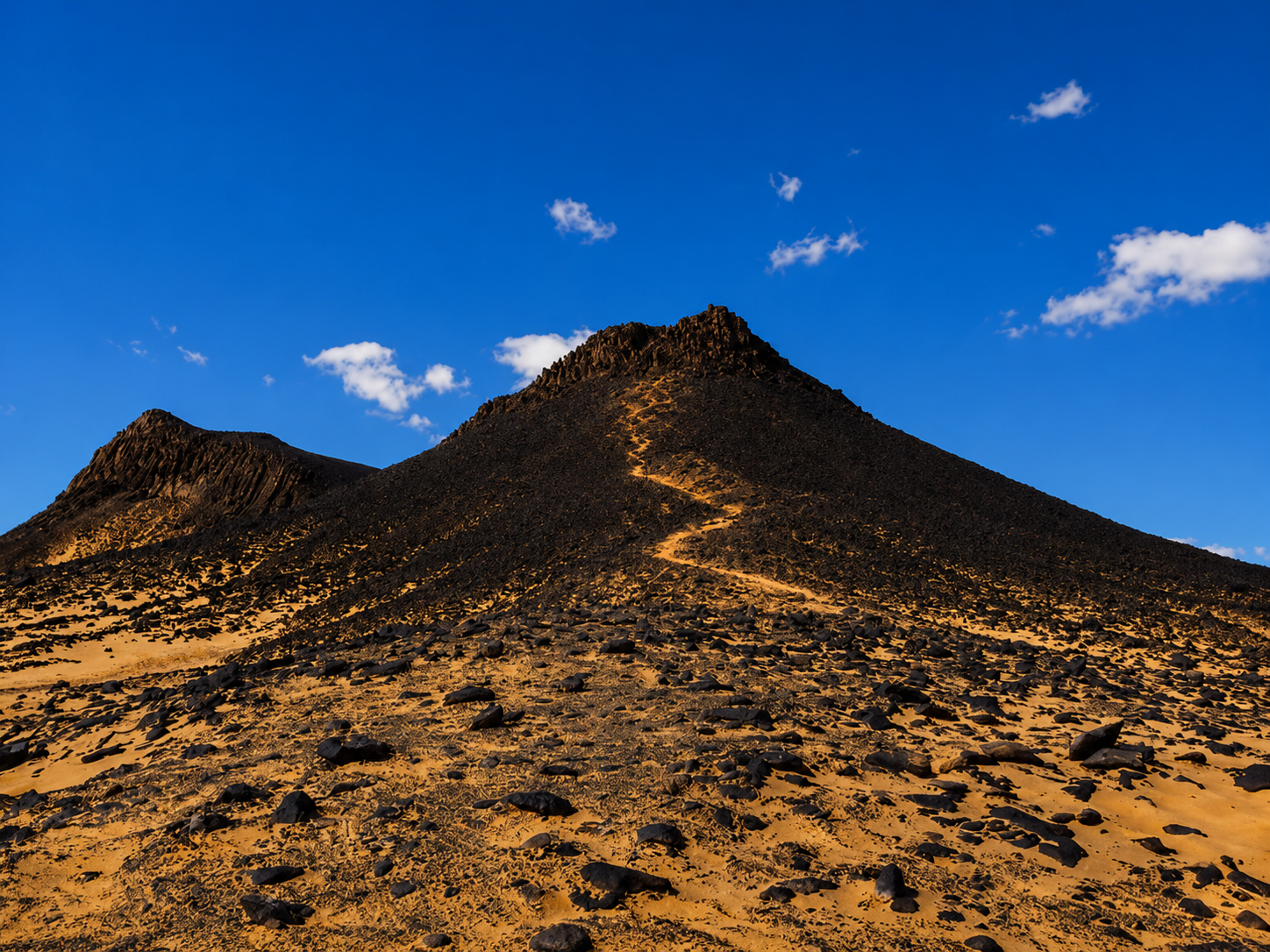
Cairo → Bahariya Oasis → Black Desert → Crystal Mountain → Aqabat → Great Karaween dunes → Ain El Serw → Djara Cave → White Desert → overnight camping → Bahariya → Cairo.
This is why Djara is best suited to travelers who have at least 3 days / 2 nights available and want more than the standard first-time White Desert Egypt experience.
Scientific research describes Djara Cave as one of the few richly decorated caves in Egypt, containing stalactites, stalagmites, columns and flowstone formations, with some speleothems reaching several meters in height. U-series dating shows that some of these formations developed during much wetter phases of the Pleistocene hundreds of thousands of years ago.
The site is also archaeologically important.
Research in and around the cave has documented prehistoric engravings, stone tools, fireplaces and evidence of human occupation during wetter phases of the Holocene.
That combination makes Djara very different from most attractions in Egypt.
It is simultaneously a cave, geological archive, archaeological site and remote desert expedition.
Djara Cave lies on the Egyptian Limestone Plateau in the Western Desert, roughly between the Nile Valley and Farafra Oasis.
Academic research places the Djara region approximately halfway between Asyut in the Nile Valley and Farafra Oasis. The wider plateau is a vast limestone landscape characterized by shallow depressions, limestone hills, ancient drainage systems and prehistoric sites.
For travelers coming from Cairo, the normal tourism route does not approach Djara directly from Asyut.
Instead, most organized Western Desert expeditions begin through Bahariya Oasis.
From there, the journey continues by 4×4 through deeper Western Desert terrain.
The current White Desert & Dejara Cave Tour from Cairo follows this expedition style, combining Bahariya, the Black Desert, Crystal Mountain, Aqabat, large dune areas, Ain El Serw, Djara Cave, valleys and the White Desert over 3 days and 2 nights.
You may see several English spellings online.
The most common are:
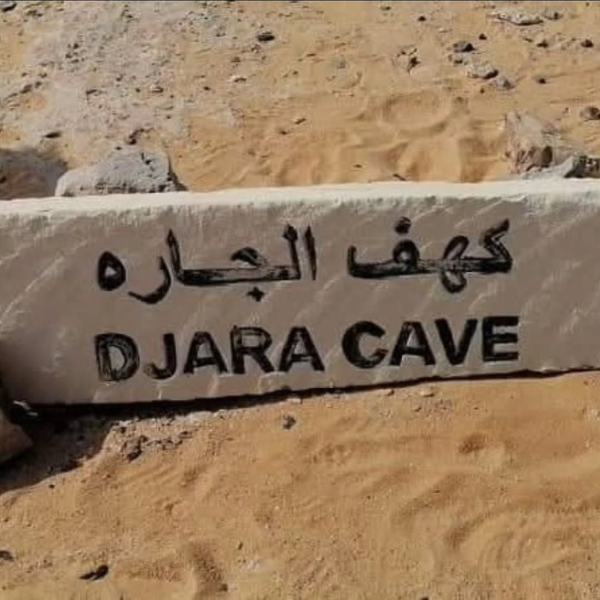
Djara Cave, Jara Cave, Gara Cave and sometimes Dejara Cave.
Academic research normally uses Djara Cave.
Older tourism material sometimes uses Jara Caves, while tour operators may use Dejara or Gara depending on transliteration.
They refer to the same major limestone cave system in Egypt’s Western Desert.
For clarity, this guide uses Djara Cave because it is the spelling most commonly found in scientific and archaeological publications.
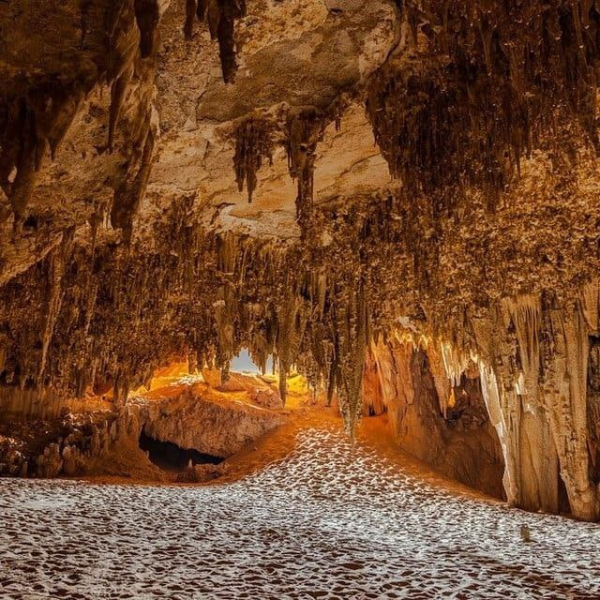
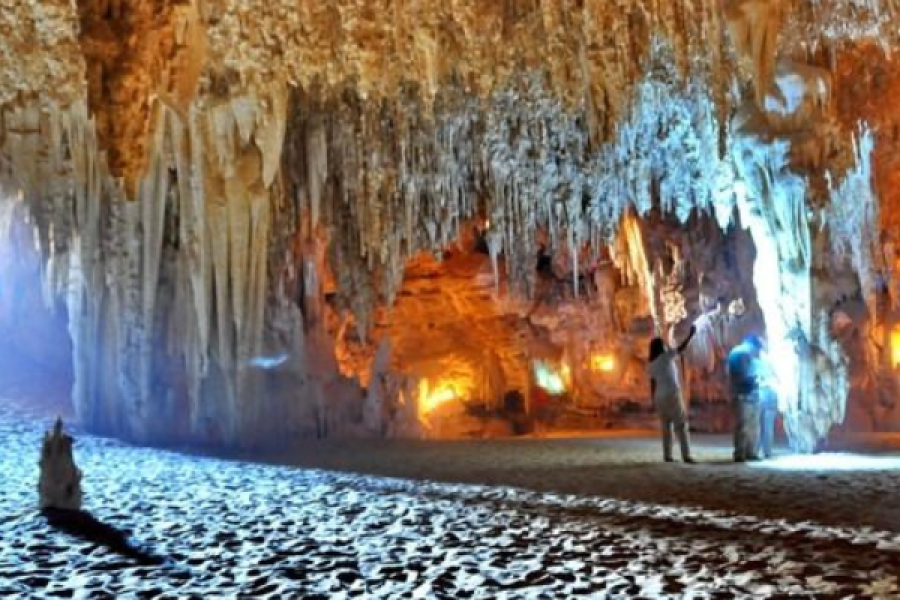
Djara Cave is remarkable because it looks completely different from the dry desert surrounding it.
Above ground, the landscape is extremely arid.
Inside the cave, however, you encounter features normally associated with environments where significant water once moved through limestone.
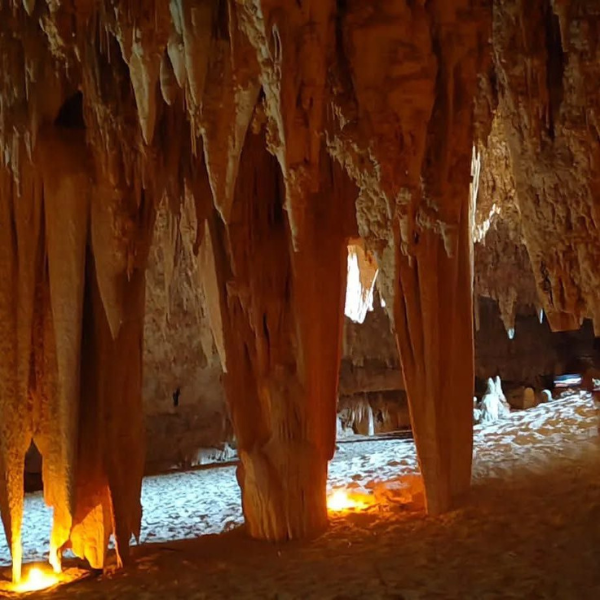
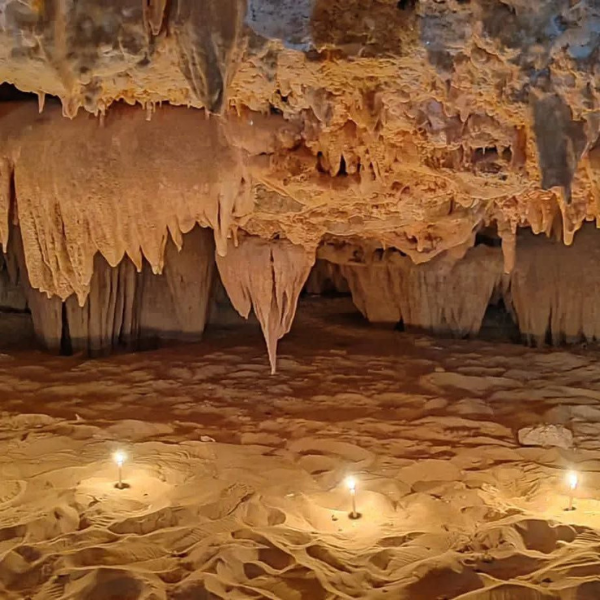
There are stalactites hanging from the ceiling.
Stalagmites rise from the ground.
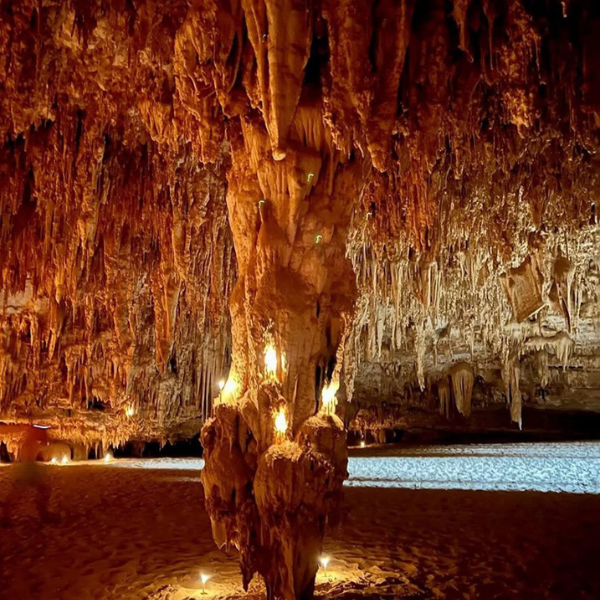
Columns formed where deposits from above and below eventually joined.
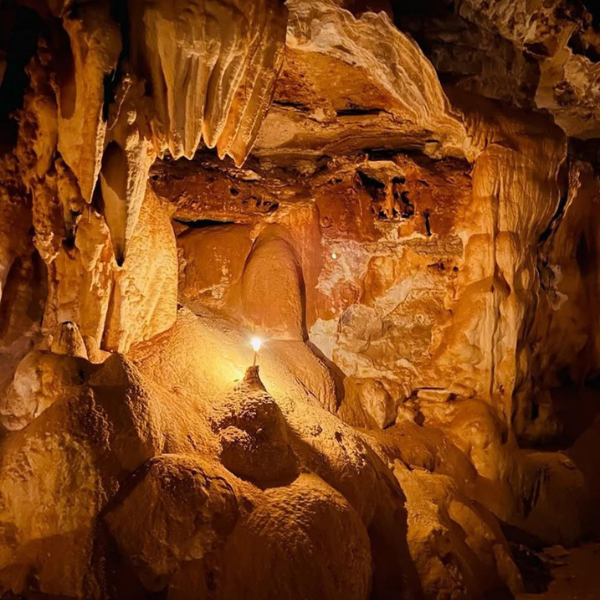
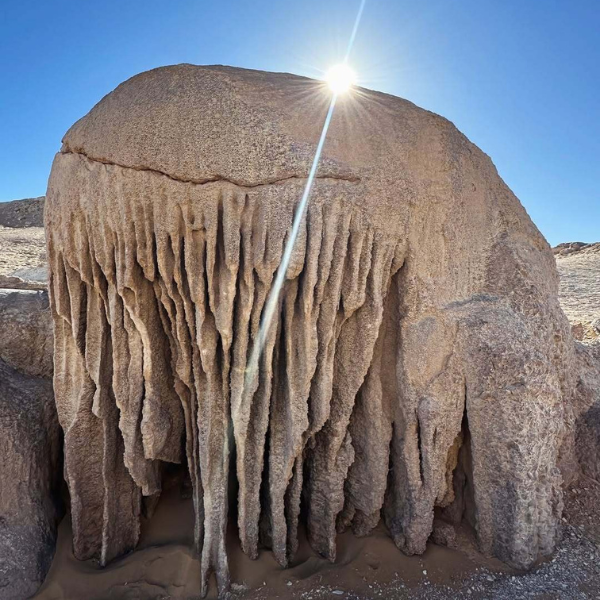
Flowstone covers parts of the rock.
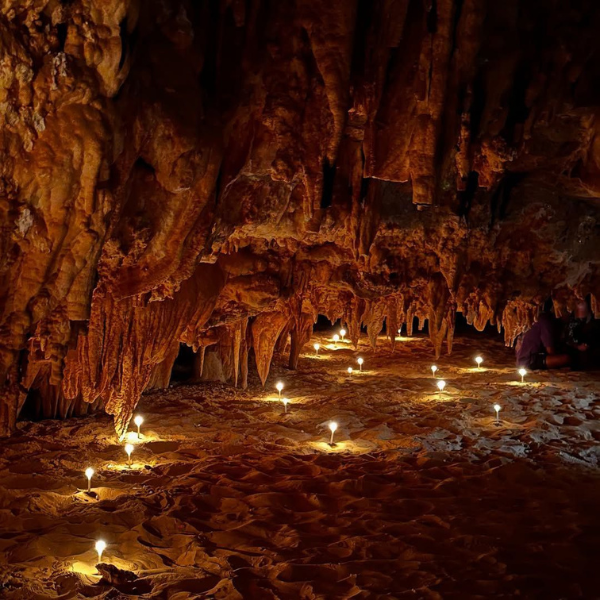
The cave floor is partly covered with sand.
This immediately raises an important question:
The answer lies in the region’s ancient climate.
Djara is a limestone cave created through karst processes.
Karst develops when water interacts with soluble rock such as limestone.
Rainwater absorbs carbon dioxide from the atmosphere and soil, becoming slightly acidic.
When this water moves through fractures in limestone, it can gradually dissolve the rock.
Over long periods, small cracks widen.
Cavities grow.
Underground chambers form.
Later, mineral-rich water dripping inside the cave deposits calcium carbonate.
This creates cave formations known collectively as speleothems.
Stalactites grow downward from the ceiling.
Stalagmites grow upward from the floor.
Other deposits form columns, flowstone and curtains.
Today, Djara lies in a hyper-arid desert.
But the cave’s formations preserve evidence that the climate was once very different.
Scientific dating has produced some extraordinary results.
Researchers used uranium-series dating on several speleothems from the cave.
The measured ages included approximately:
140,000 years, 201,000–233,000 years, 221,000 years and 283,000 years.
These ages suggest that major cave formations developed during wetter interglacial phases of the Pleistocene, when enough rainfall existed for water to infiltrate the limestone and feed the cave.
This is one of the most important things to understand about Djara.
The stalactites are not evidence that the desert is currently wet.
They are geological records of ancient climates.
Yes.
Djara provides strong evidence for that.
Today the region is hyper-arid.
But scientific research shows that the Egyptian Sahara experienced several wetter phases.
During parts of the early and middle Holocene, the Djara region had significantly more favorable environmental conditions than today.
Archaeological and environmental research has found evidence of vegetation, temporary surface water and human activity in the area during these wetter phases.
The important distinction is that the cave’s large speleothems are older than the Holocene occupation period.
Researchers found no Holocene-age secondary carbonate formations in the cave.
That suggests the Holocene wet phase, although much wetter than today’s climate, was still not wet enough to produce large new cave deposits comparable with those formed during earlier Pleistocene wet periods.


Djara is not simply a small opening in the limestone.
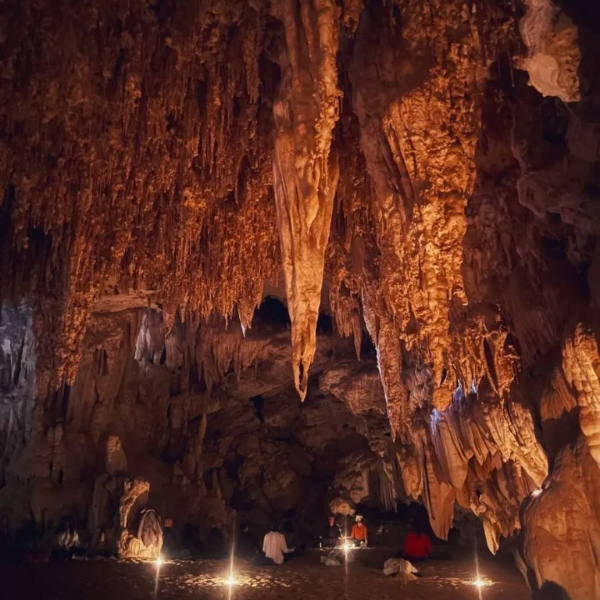
Geoheritage research describes the cave as roughly 50 meters long, with a depth of up to approximately 13 meters.
The entrance is relatively narrow, but once inside, visitors descend toward larger internal spaces.
The main chamber is often described as the Large Hall.
Its floor contains significant amounts of sand, while stalactites dominate the ceiling and other speleothems occur throughout the cave.
Academic cave research also records stalactites, columns, stalagmites and flowstones reaching heights of several meters.
That scale is one reason older Egyptian desert-tourism material described Djara as one of the country’s largest dry caves.
The cave experience begins differently from what many travelers expect.
From the surface, the entrance can appear relatively modest.
You do not approach a huge vertical cliff with an enormous doorway.
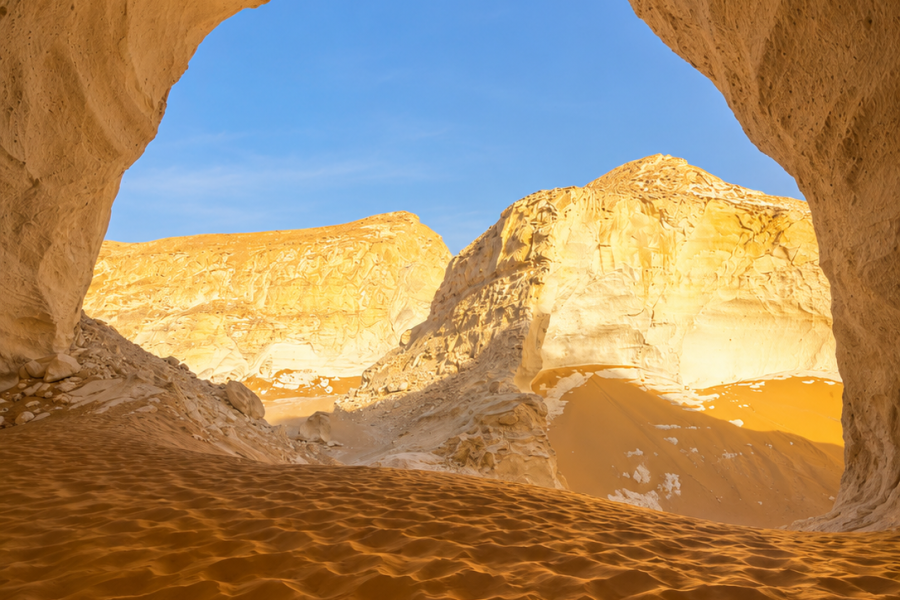
Instead, you enter through an opening in the limestone plateau.
Behind the entrance, a sandy slope leads downward.
The cave then opens into broader chambers.
Research on Djara’s rock art describes three main spatial areas within the cave, including a higher level close to the entrance and larger interior sections deeper inside.
Inside, the most striking features include the combination of:
dark cave walls,
sandy floor,
stalactites,
stalagmites,
large columns,
calcite deposits,
and prehistoric engravings.
Natural light entering from the opening creates strong contrasts near the entrance.
Deeper inside, artificial light becomes necessary.
Djara contains both.
A stalactite hangs downward from the cave ceiling.
A stalagmite grows upward from the cave floor.
When they eventually connect, they can form a column.
Flowstone forms when mineral-rich water spreads across a wall or floor and deposits calcium carbonate in sheets.
Djara is unusual in Egypt because it contains a significant concentration of well-developed cave decorations in an extremely dry modern desert.
The cave’s speleothems are therefore not only visually interesting.
They are scientifically valuable.
Their chemistry and ages help researchers reconstruct ancient rainfall and climate conditions in North Africa.
Djara is not important only because of geology.
It is also one of Egypt’s notable prehistoric rock-art sites.
Archaeological researchers documented a rich group of engravings inside the cave.
The imagery includes animal figures and other motifs cut or pecked into the rock.
Academic documentation of Djara’s cave art reports more than 100 engraved or pecked figures within the cave.
This is especially interesting because true cave art is relatively rare in Africa compared with art found in shallow rock shelters.
Djara therefore provides researchers with an unusual opportunity to study how prehistoric people used a deep enclosed cave environment.
Older Egyptian tourism material mentions prehistoric images of animals such as antelope and giraffe within the cave.
Academic rock-art research documents a broader repertoire of animal and symbolic motifs.
The presence of animal imagery makes sense within the context of the ancient environment.
The Western Desert was not always the almost vegetation-free landscape we see today.
During wetter prehistoric phases, more vegetation and surface water supported wildlife and human activity.
That makes the rock art part of a much larger story involving climate change, animal distribution and human movement across the Sahara.
The archaeological evidence suggests mobile prehistoric groups used the wider Djara region during the wetter early and middle Holocene.
Research recorded dozens of prehistoric sites across the surrounding plateau.
Stone tools, hearths and other archaeological remains show that people repeatedly used the region when water and vegetation were more available.
These groups were not necessarily living permanently inside the cave.
The broader evidence points toward highly mobile ways of life adapted to changing water availability.
Djara was attractive partly because its local depression collected runoff and offered more favorable conditions than surrounding sections of the limestone plateau.
Archaeological evidence from inside and around the cave goes back thousands of years.
Research on material excavated inside the cave includes radiocarbon dates corresponding roughly to 6200–7000 BC for some occupation evidence.
The wider Djara archaeological sequence represents human use of the region during the Holocene wet phase.
This makes the site valuable because it combines two different historical timelines:
the cave formations record very old Pleistocene climates,
while archaeology records much later Holocene human activity.
In other words:
the stalactites tell one story,
the rock art and fireplaces tell another.
Together they help reconstruct an extraordinary environmental history.
Djara was known to local desert travelers long before European explorers wrote about it.
In modern published records, German explorer Gerhard Rohlfs described the cave after being led to the location by the headman of his caravan on Christmas Eve 1873.
He described a spacious dripstone cave with impressive stalactites.
After that report, the cave received little scientific attention for more than a century.
In 1989, desert traveler Carlo Bergmann relocated the cave and reported engravings and stone tools around the site.
This renewed scientific interest.
Archaeological work followed in the 1990s, and intensive research continued through the ACACIA project from the late 1990s into the early 2000s.
Much of what we know about prehistoric Djara comes from interdisciplinary research connected with the University of Cologne’s ACACIA project.
Researchers studied:
archaeology,
climate,
vegetation,
animal remains,
geomorphology,
sediments,
and prehistoric land use.
Their work showed that Djara cannot be understood simply as an isolated cave.
It was part of a wider prehistoric landscape where water, climate and mobility shaped human settlement decisions.
The research also helped document the cave’s rock art in detail.
Crystal Mountain Egypt and Djara Cave are both connected with ancient karst processes, but they provide very different experiences.
Crystal Mountain is an unroofed cave-related karst feature exposed at the surface.
Djara remains a recognizable underground cave with internal chambers and speleothems.
Crystal Mountain is normally a short stop.
Djara requires a dedicated off-road expedition.
Crystal Mountain is famous for sparkling calcite.
Djara is famous for stalactites, stalagmites and prehistoric rock art.
For geology enthusiasts, visiting both during a longer Western Desert route creates an excellent comparison.
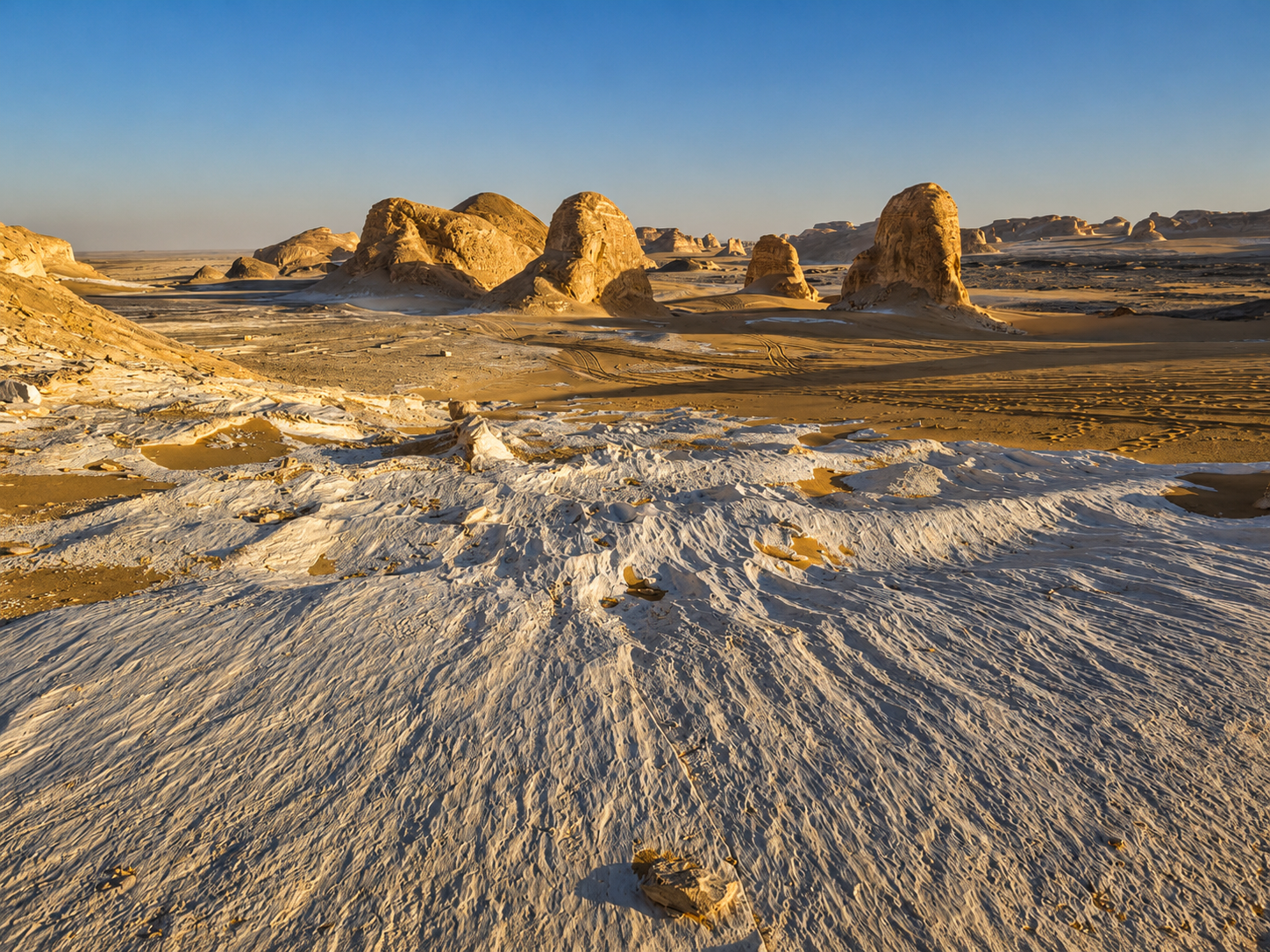
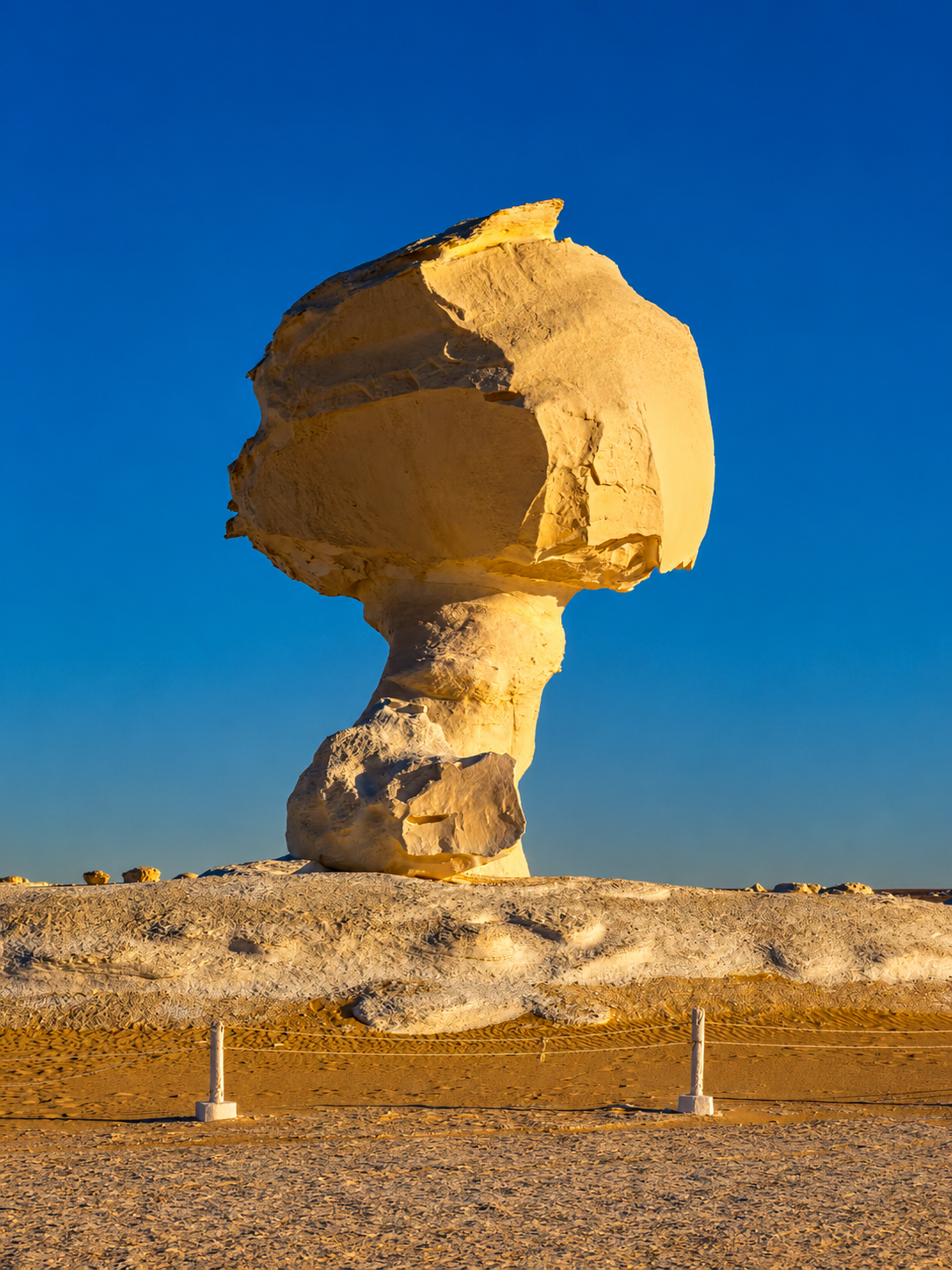
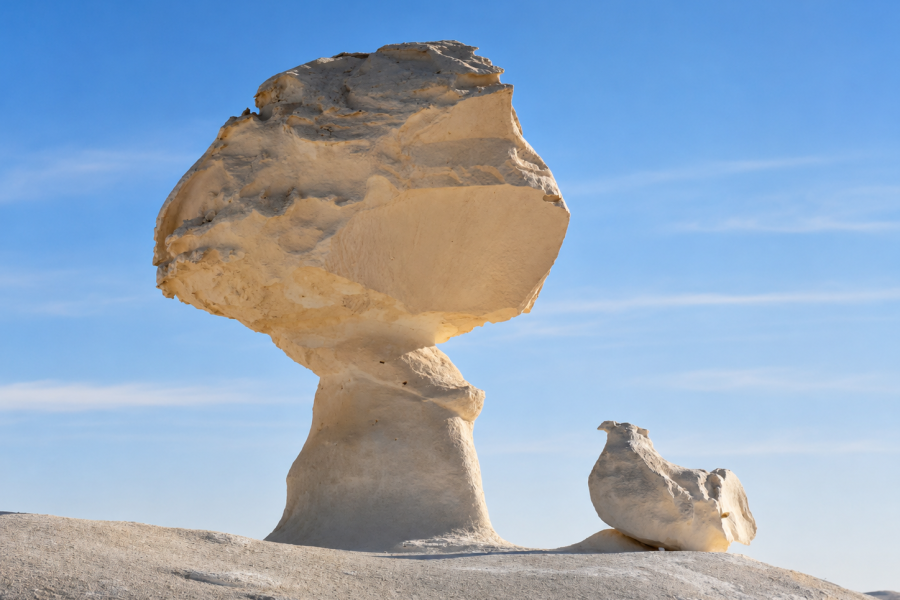
The White Desert Egypt and Djara Cave should not be treated as competing destinations.
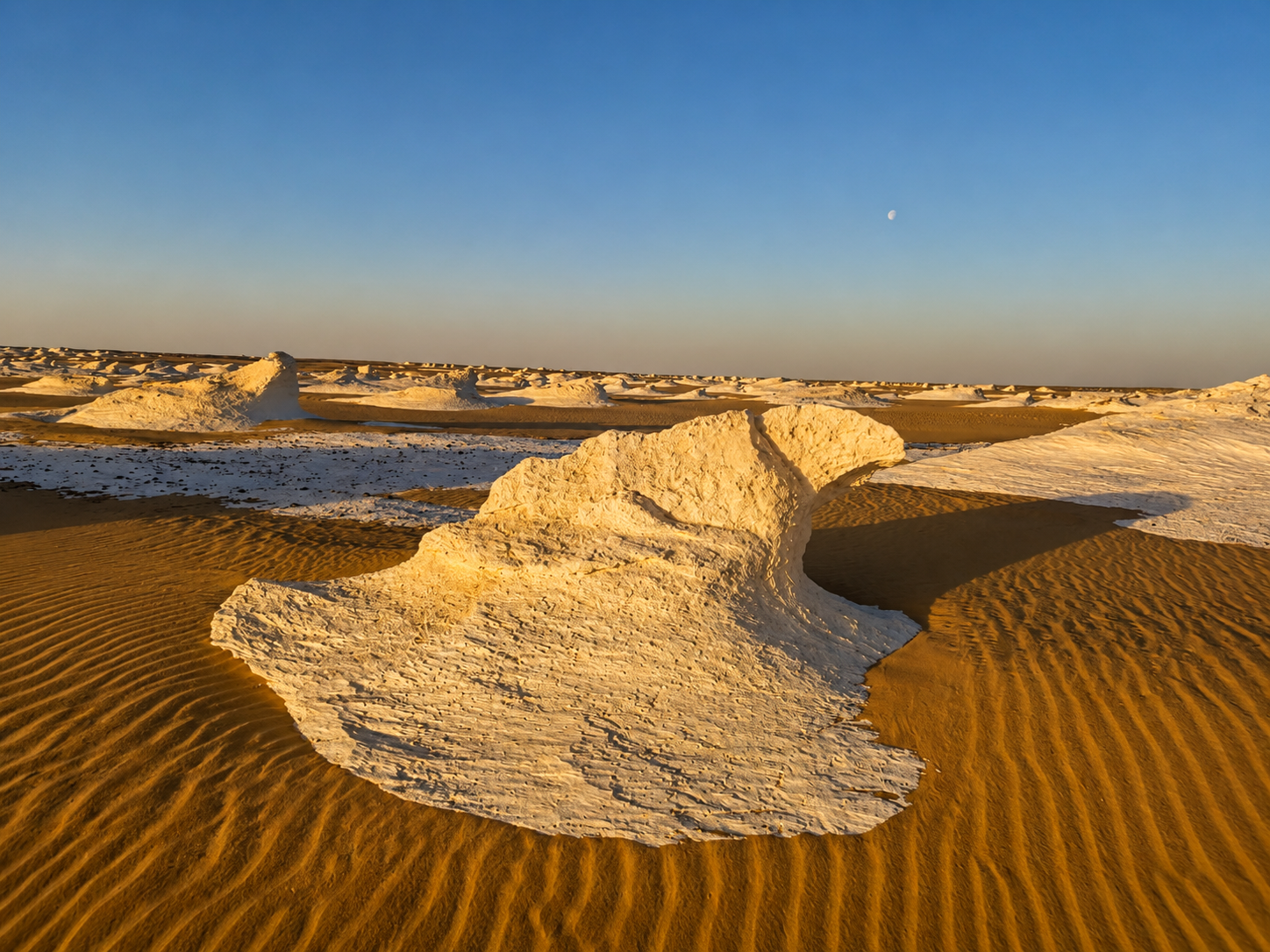
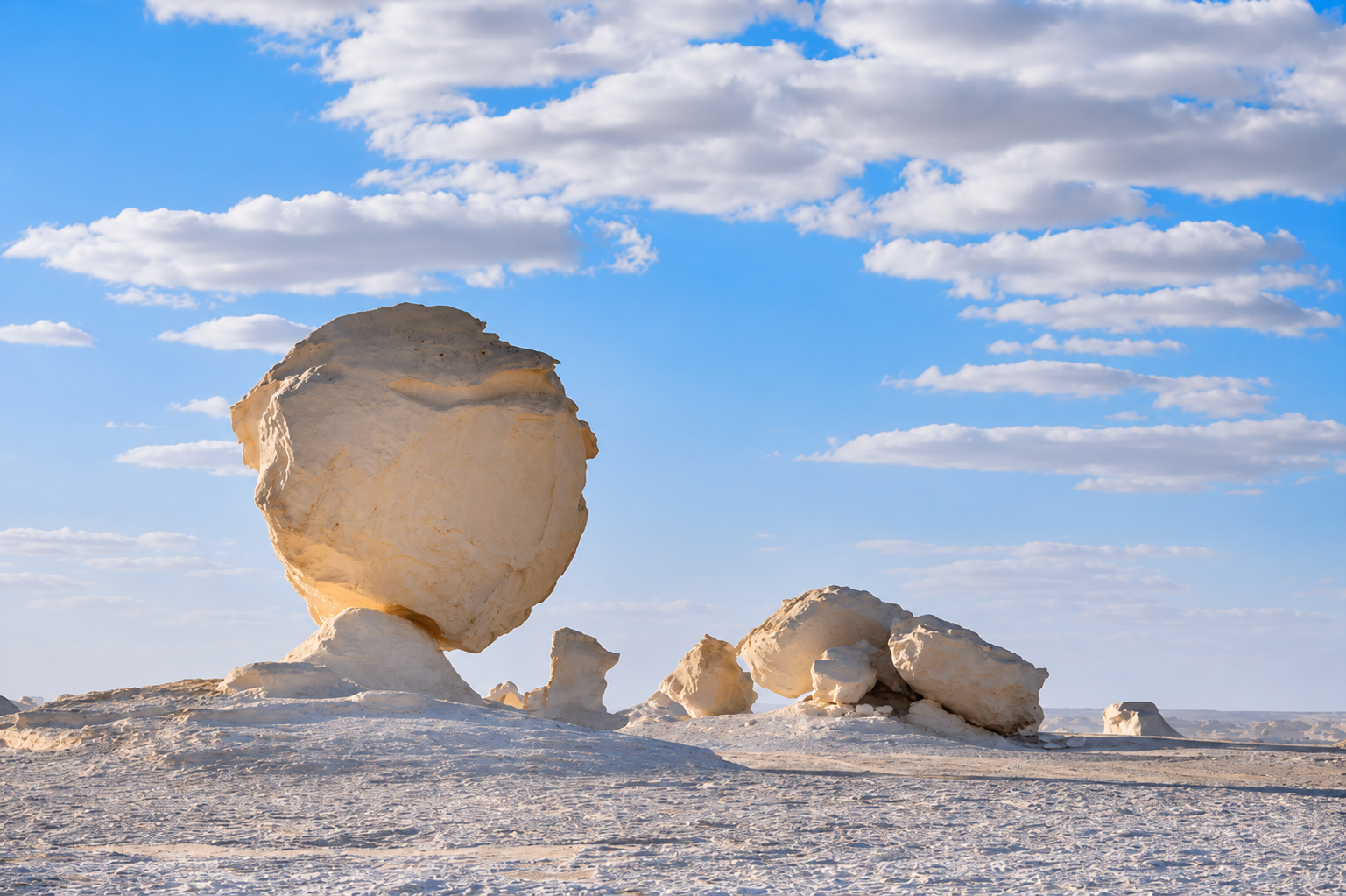
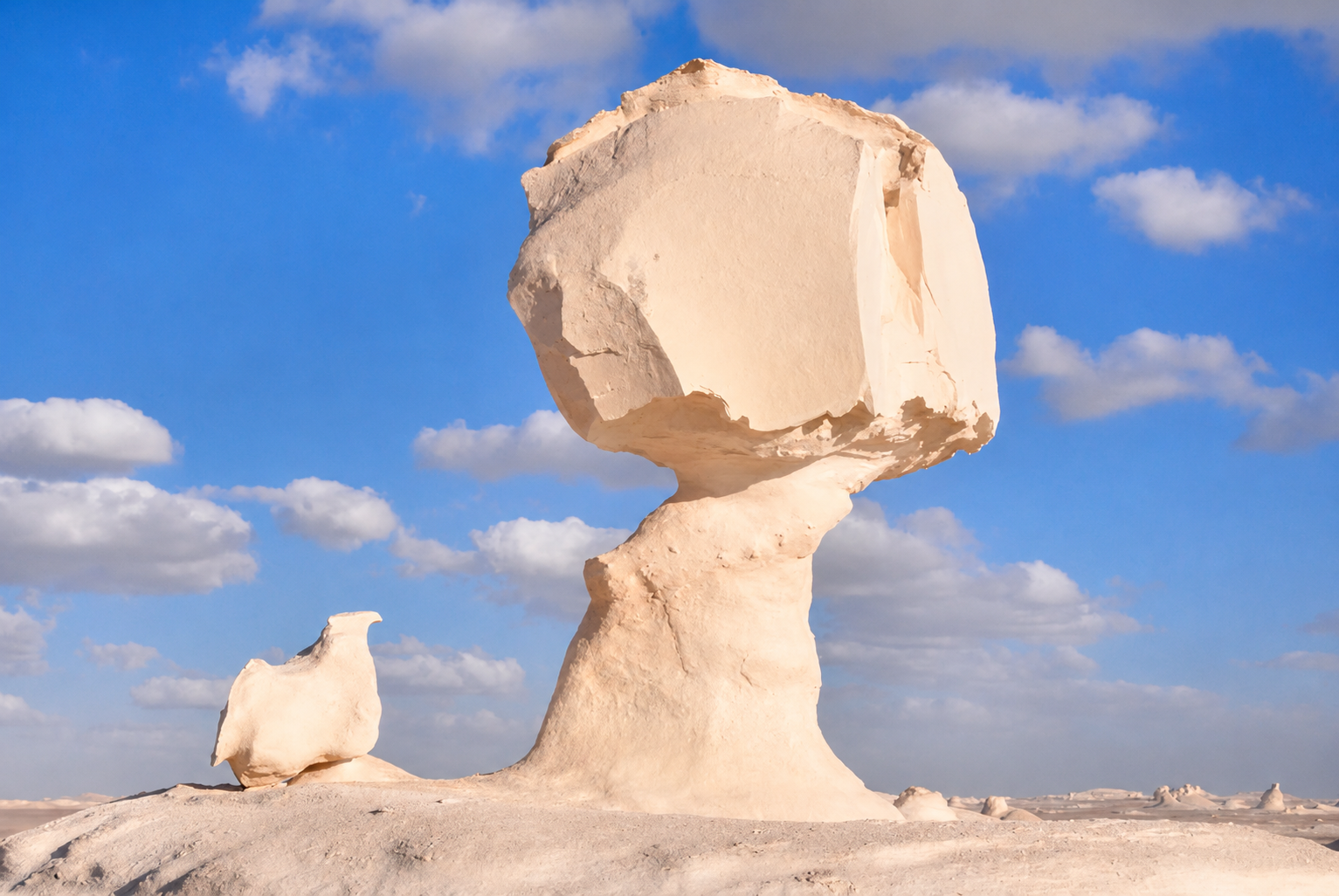
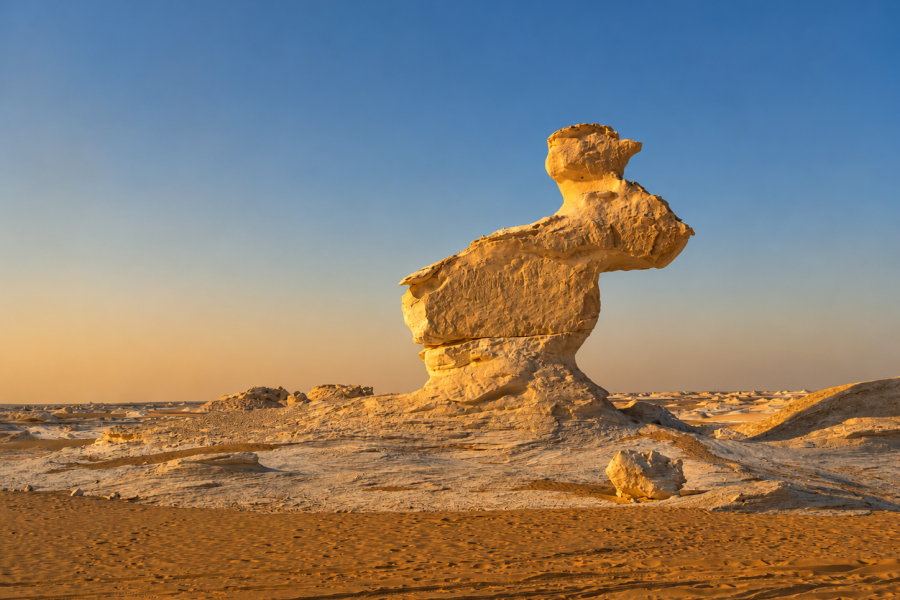
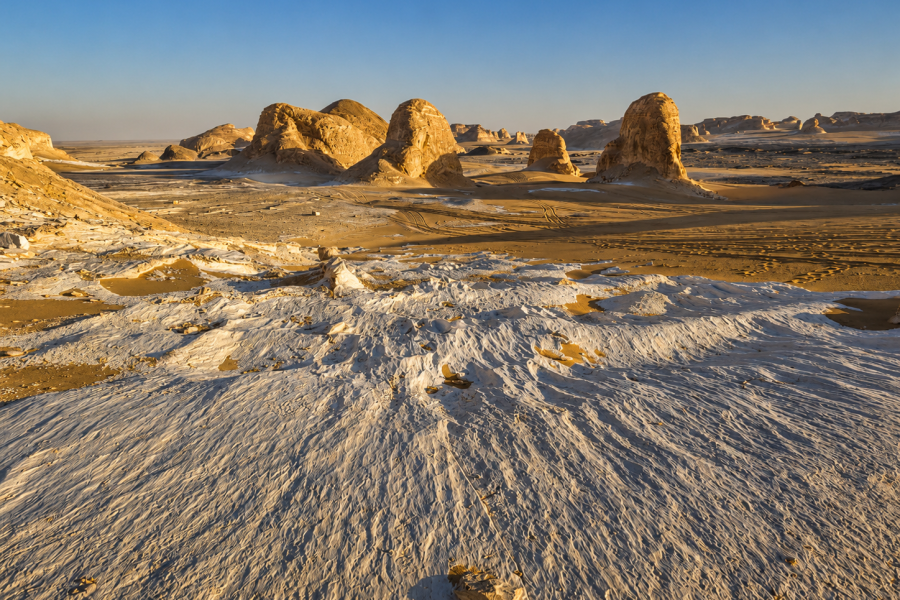
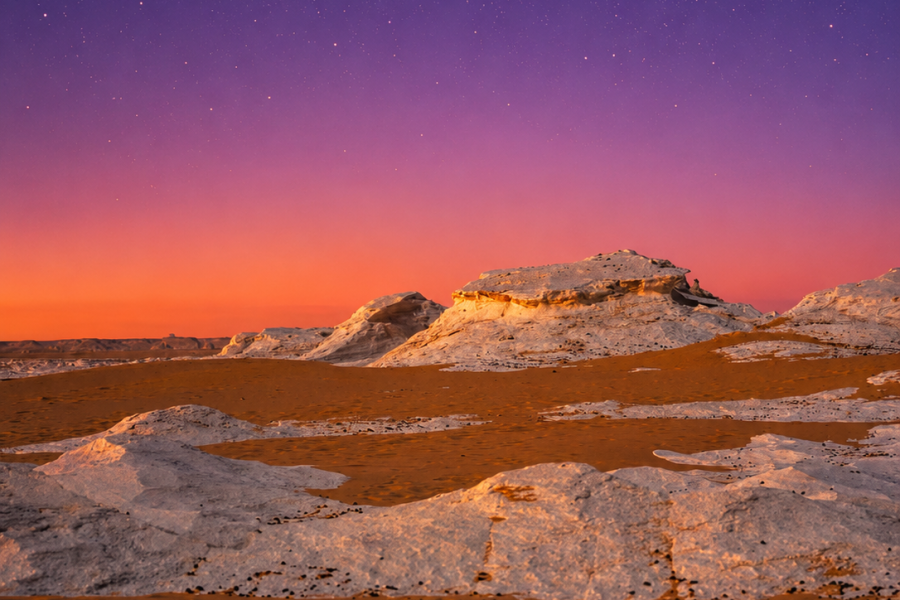
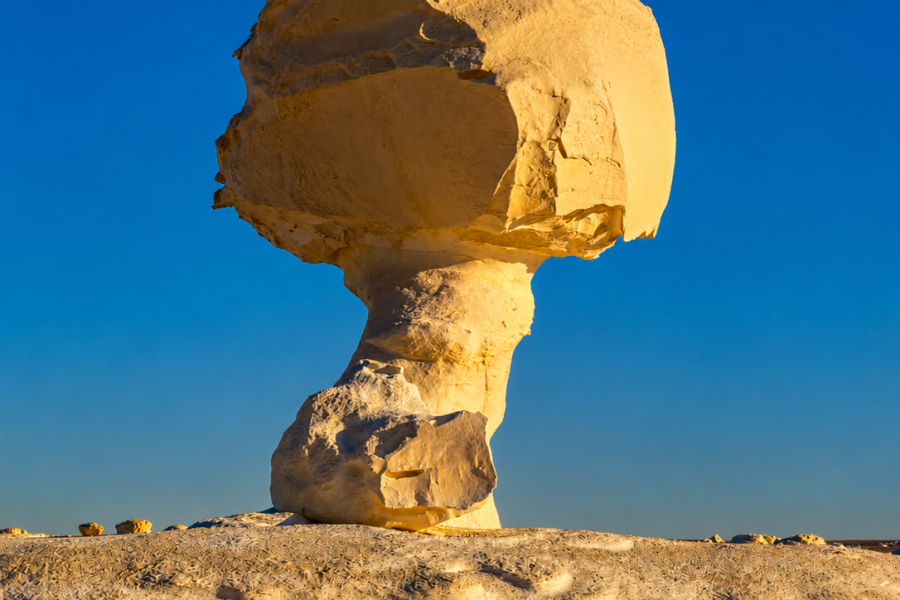
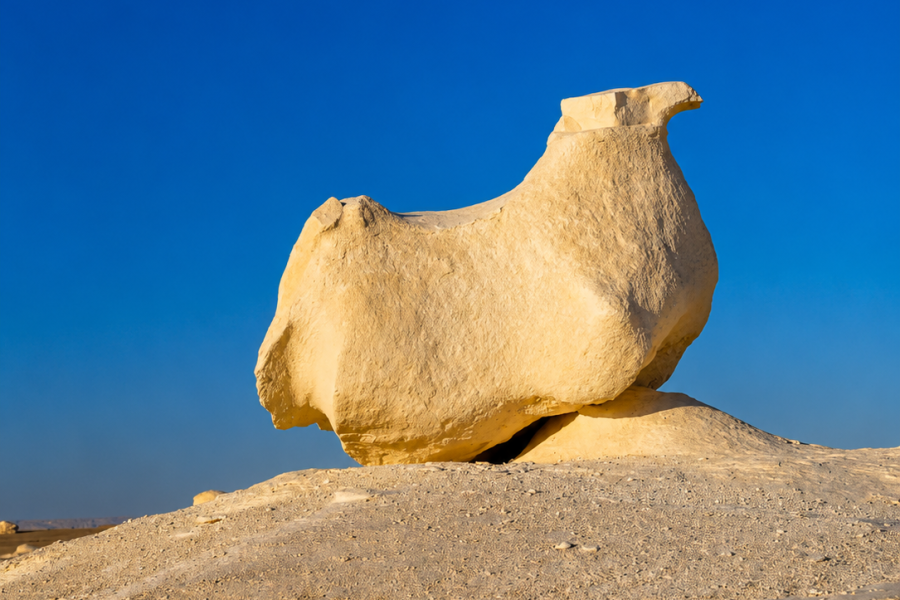
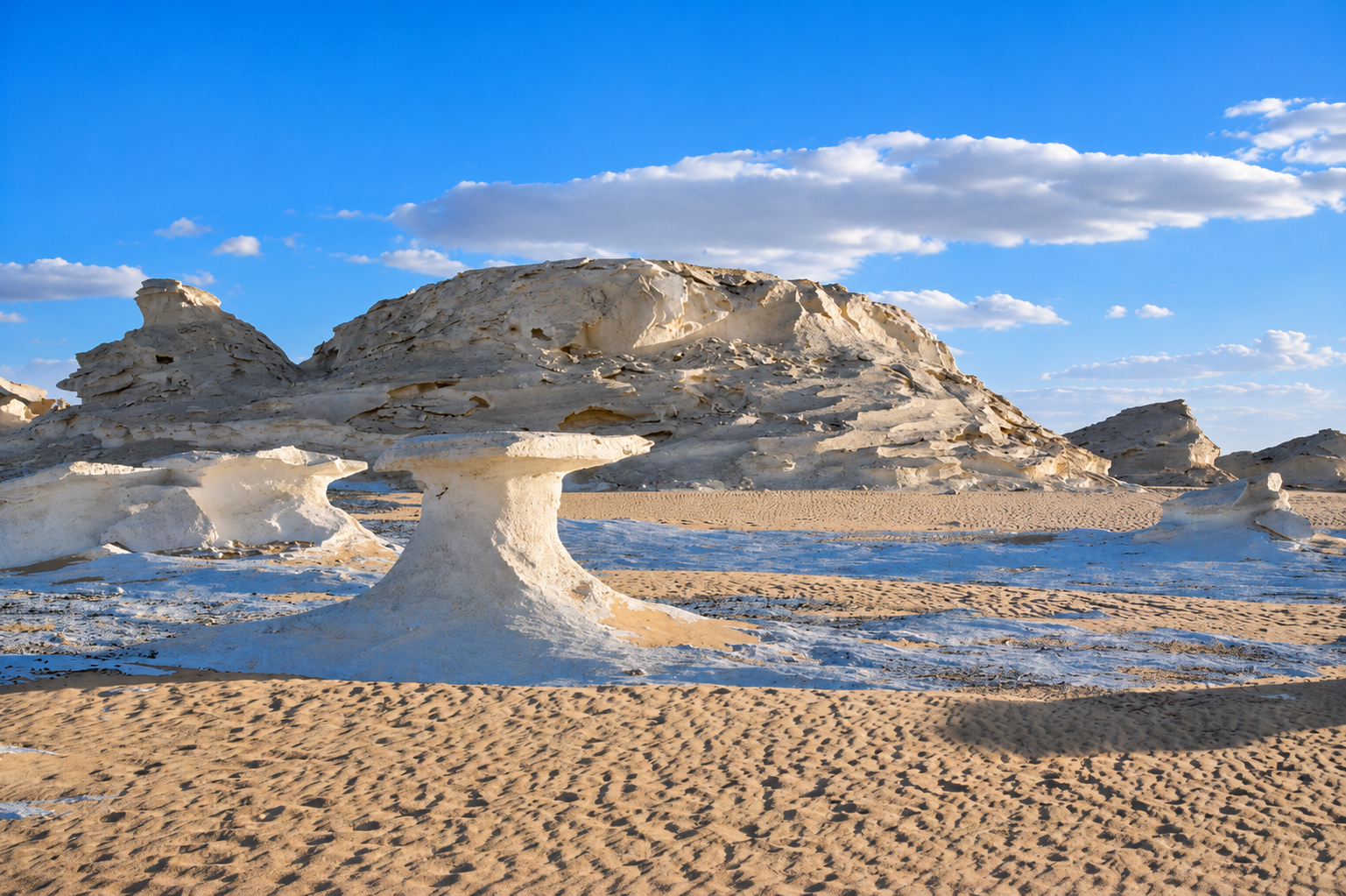
The White Desert is primarily a large landscape experience.
Its highlights include:
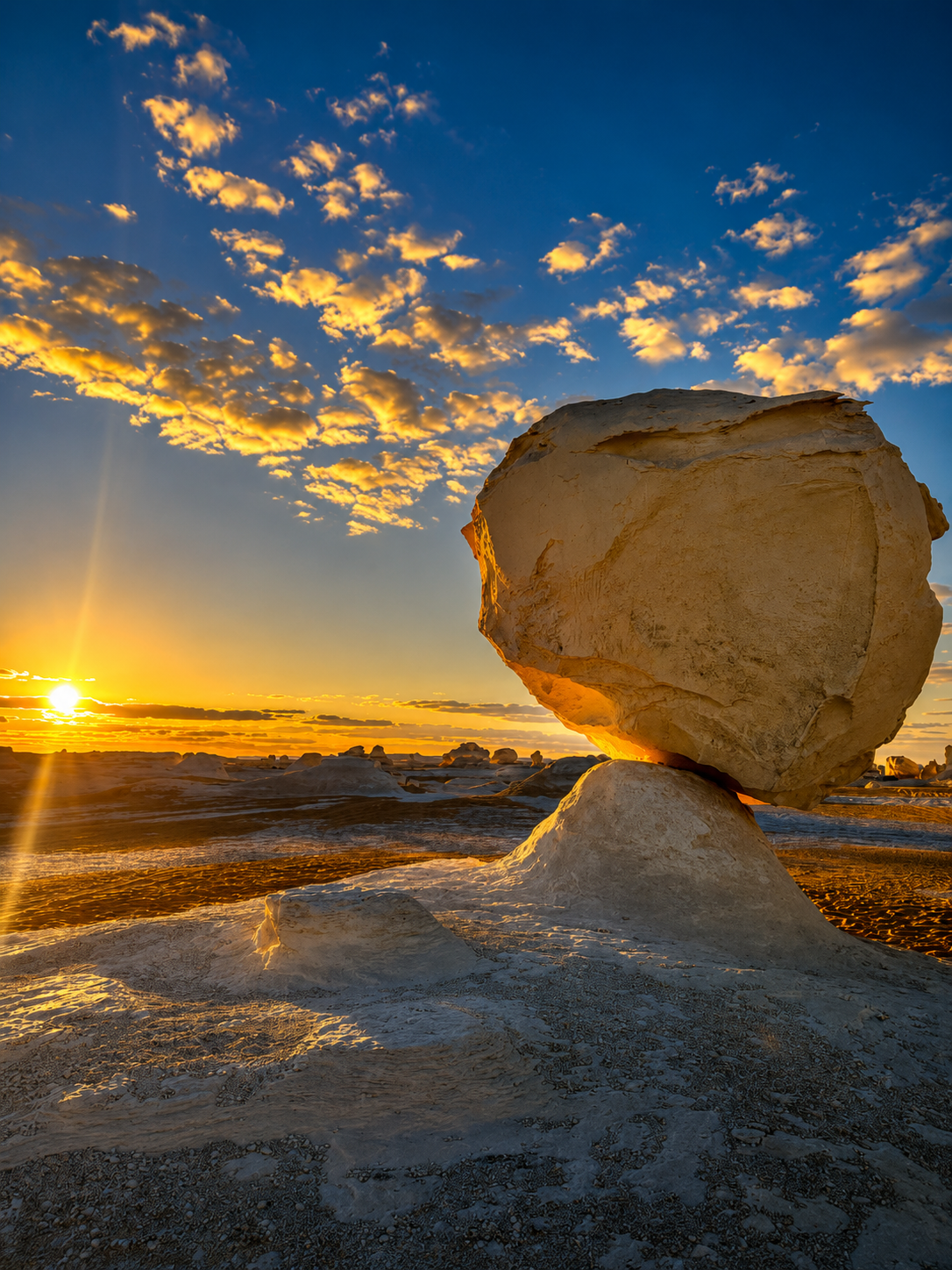
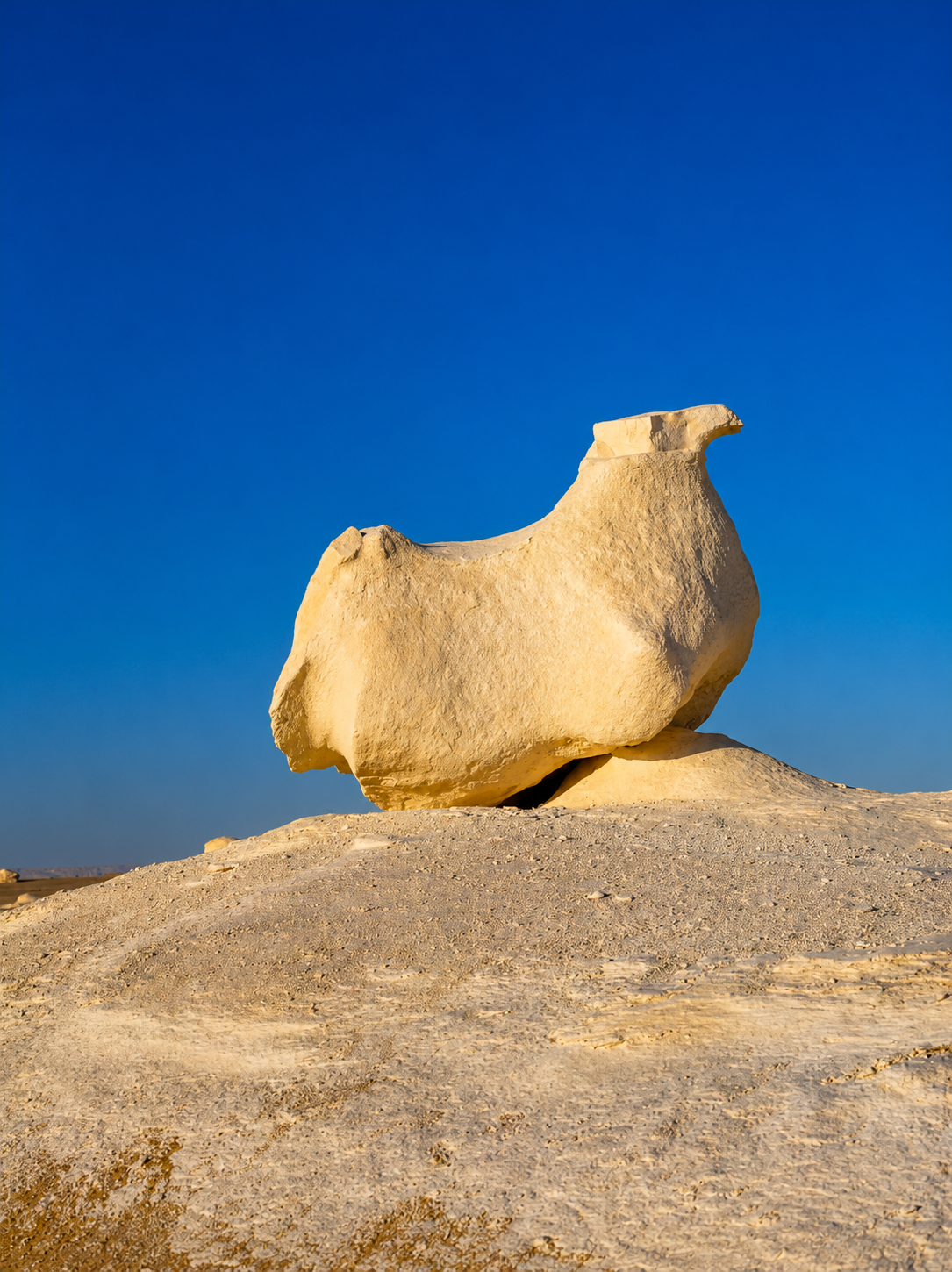
white chalk formations,
sunset,
camping,
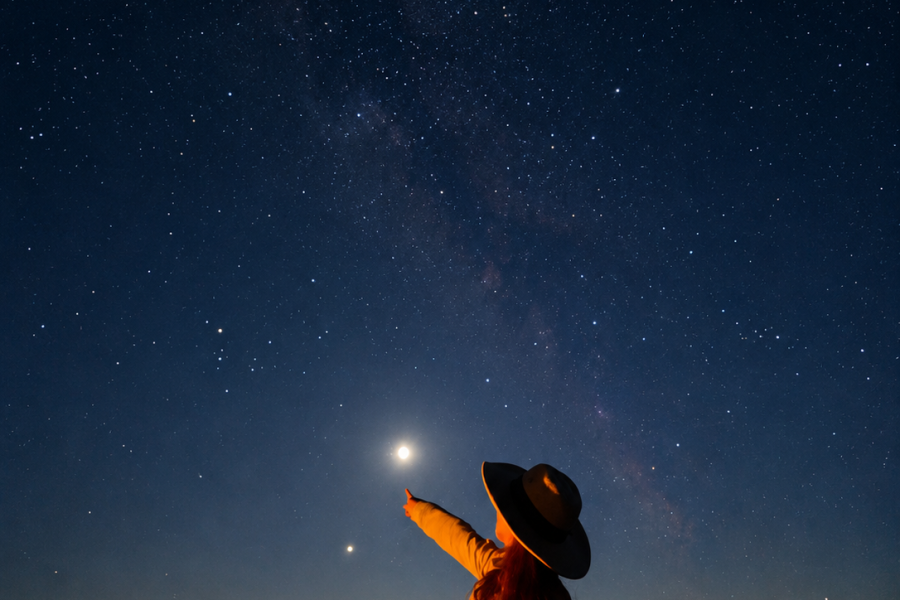
stargazing,
and 4×4 exploration.
Djara is more concentrated.
Its appeal comes from:
cave geology,
stalactites,
stalagmites,
prehistoric archaeology,
and extreme remoteness.
For first-time visitors with only two days, the White Desert is the better priority.
For travelers with three or more days who want deeper exploration, Djara becomes an excellent extension.
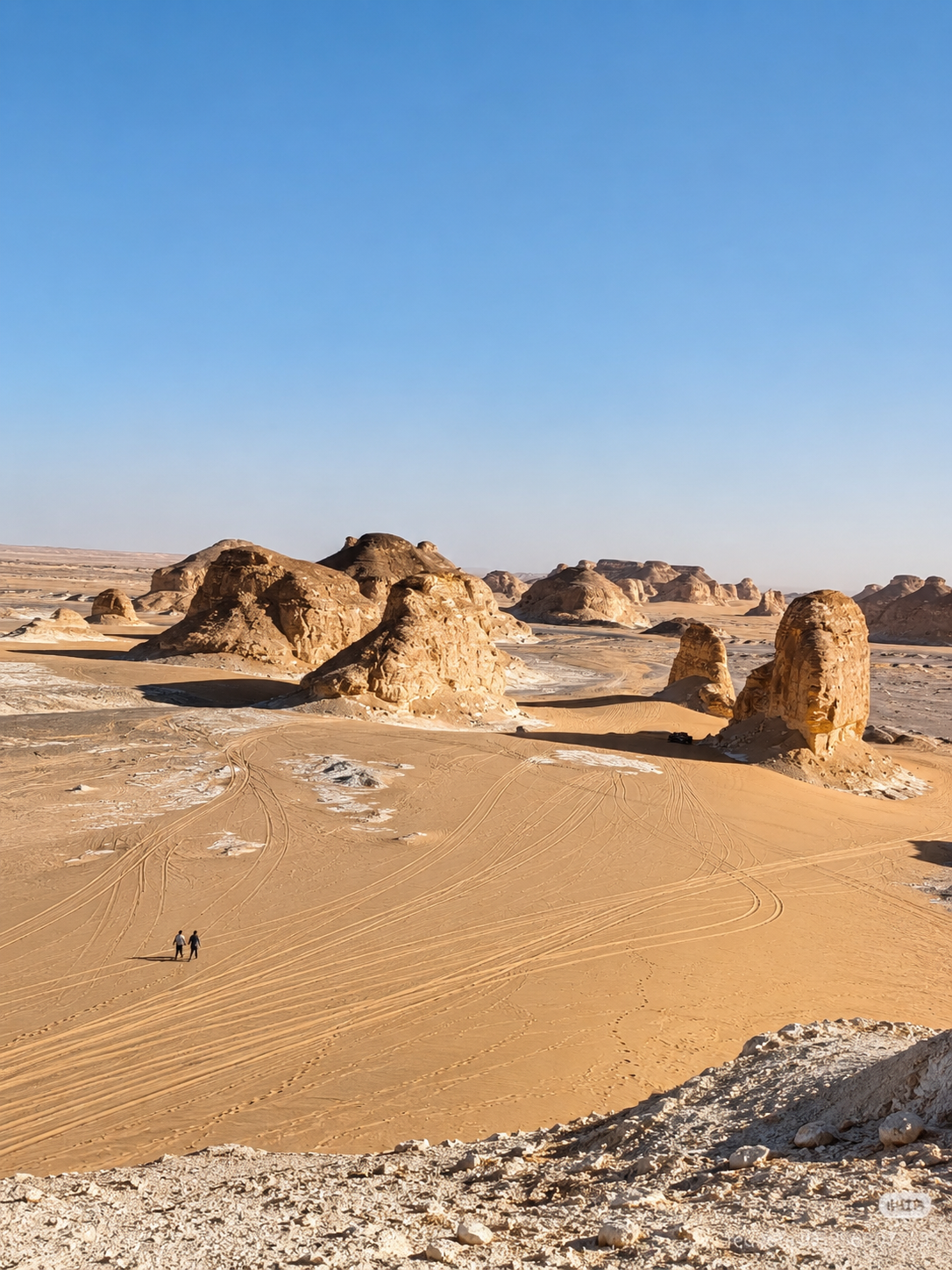
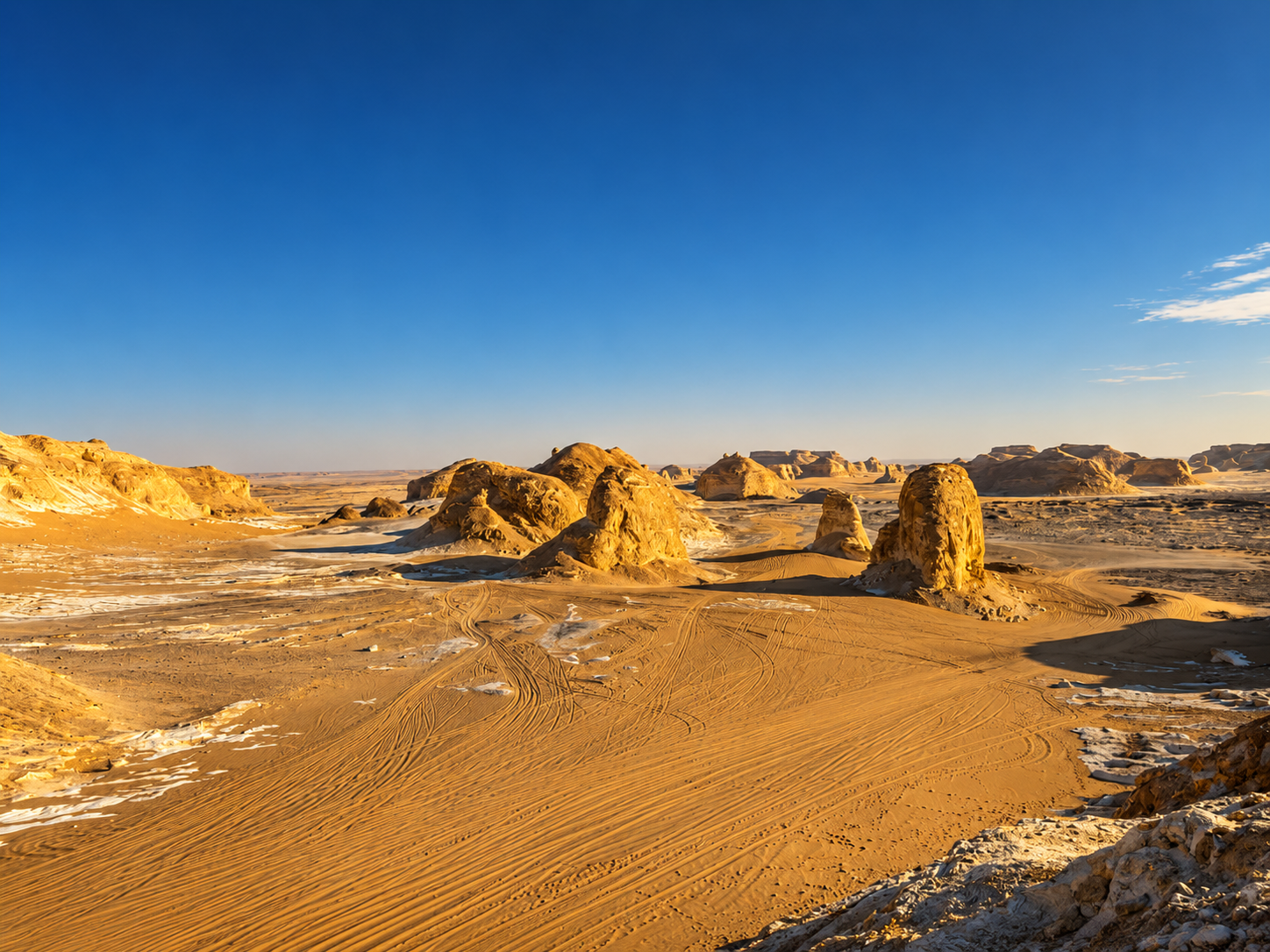
Agabat Valley Egypt is about scale.
Djara is about detail.
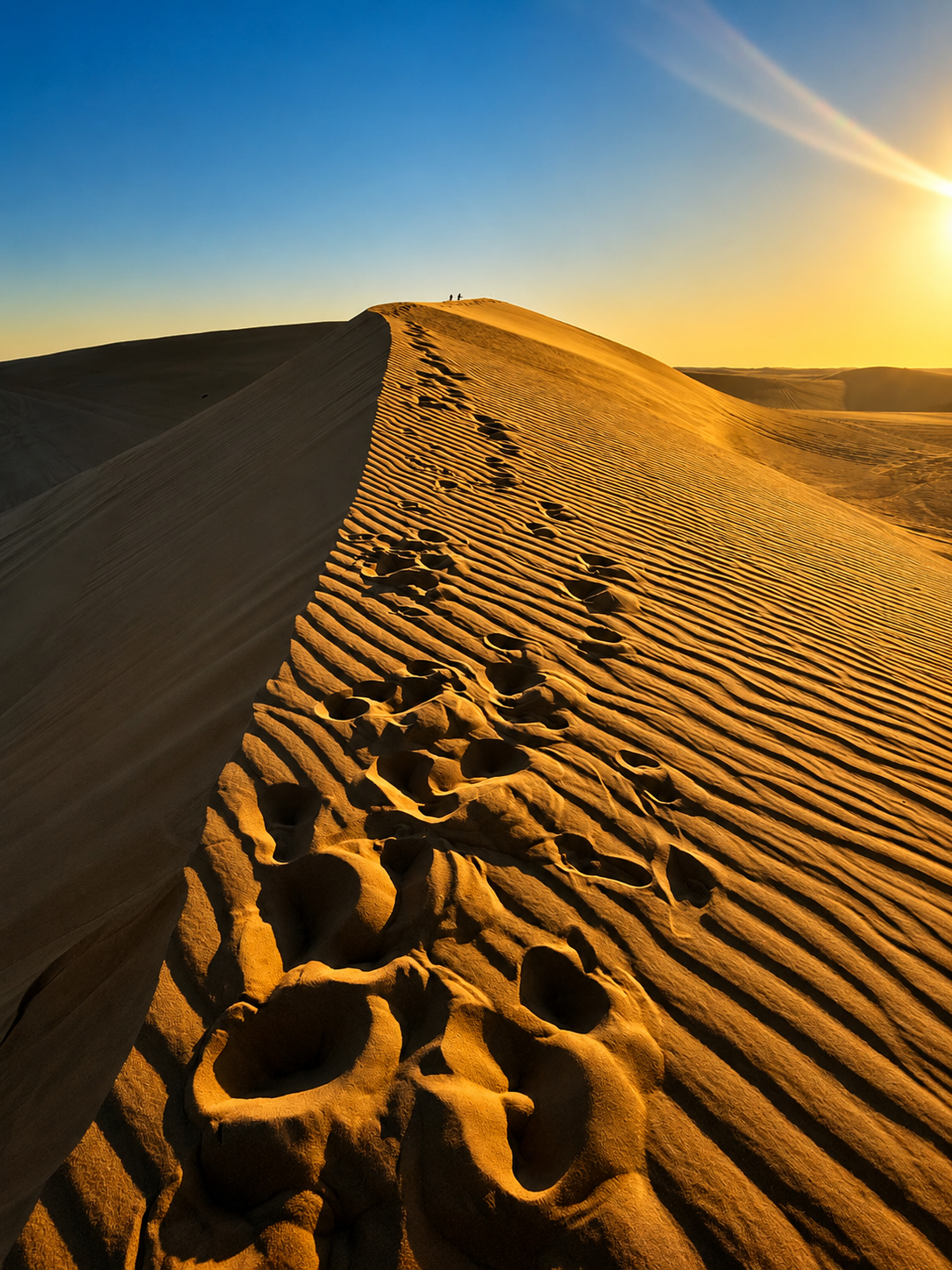
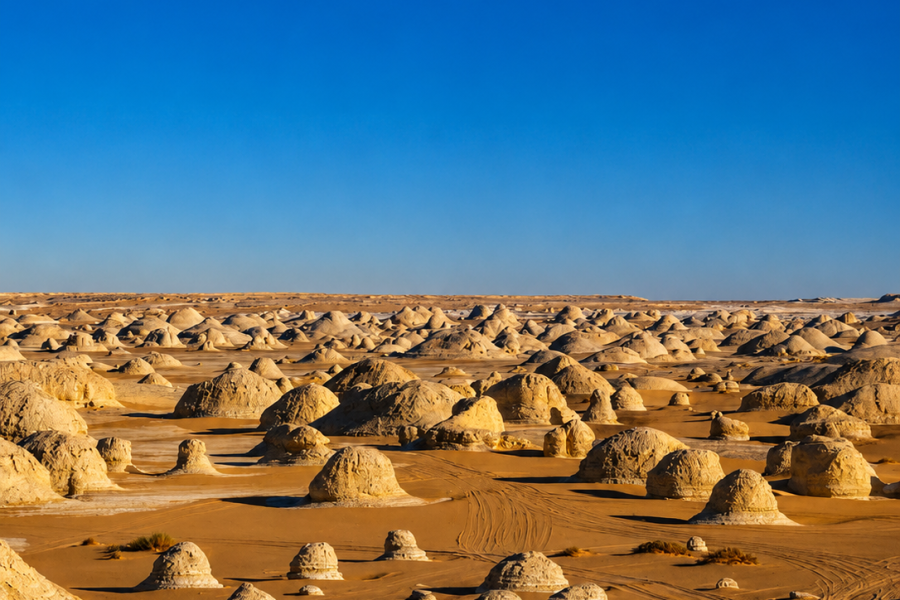
At Agabat you look outward across golden sand, white cliffs and huge open landscapes.
Inside Djara you focus on individual formations, cave walls and prehistoric engravings.
This difference is exactly why combining them works so well.
A long expedition moves from large exterior landscapes into one of the most unusual underground environments in the Western Desert.
Djara should not be planned like a normal day trip from Cairo.
The practical route begins with road transportation from Cairo to Bahariya Oasis.
Bahariya is the closest major Western Desert oasis to Cairo and acts as the main base for many desert expeditions.
From there, a suitable 4×4 and experienced desert team are required for the deeper route.
The current White and Black Desert Tours Djara program follows this structure.
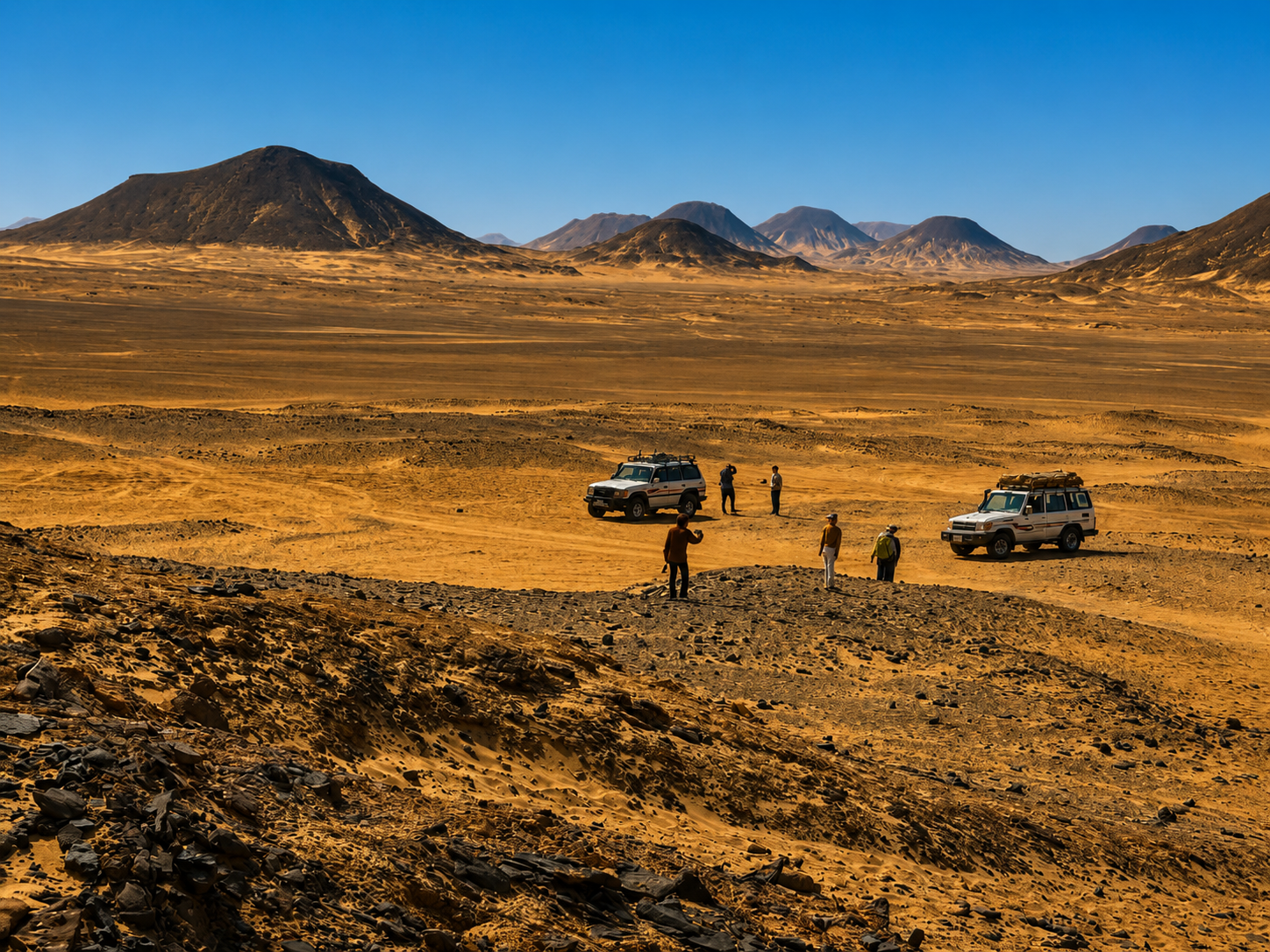
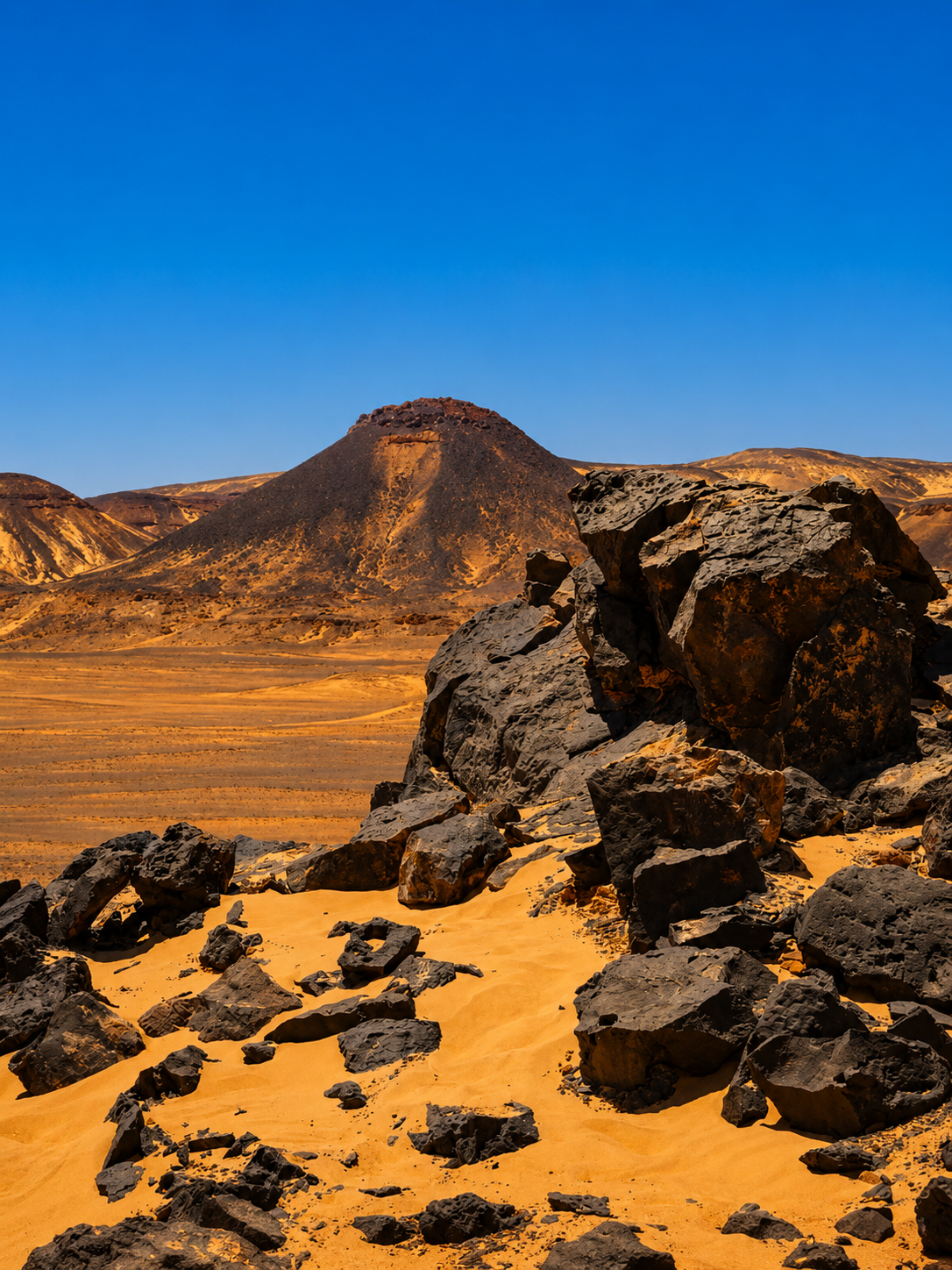
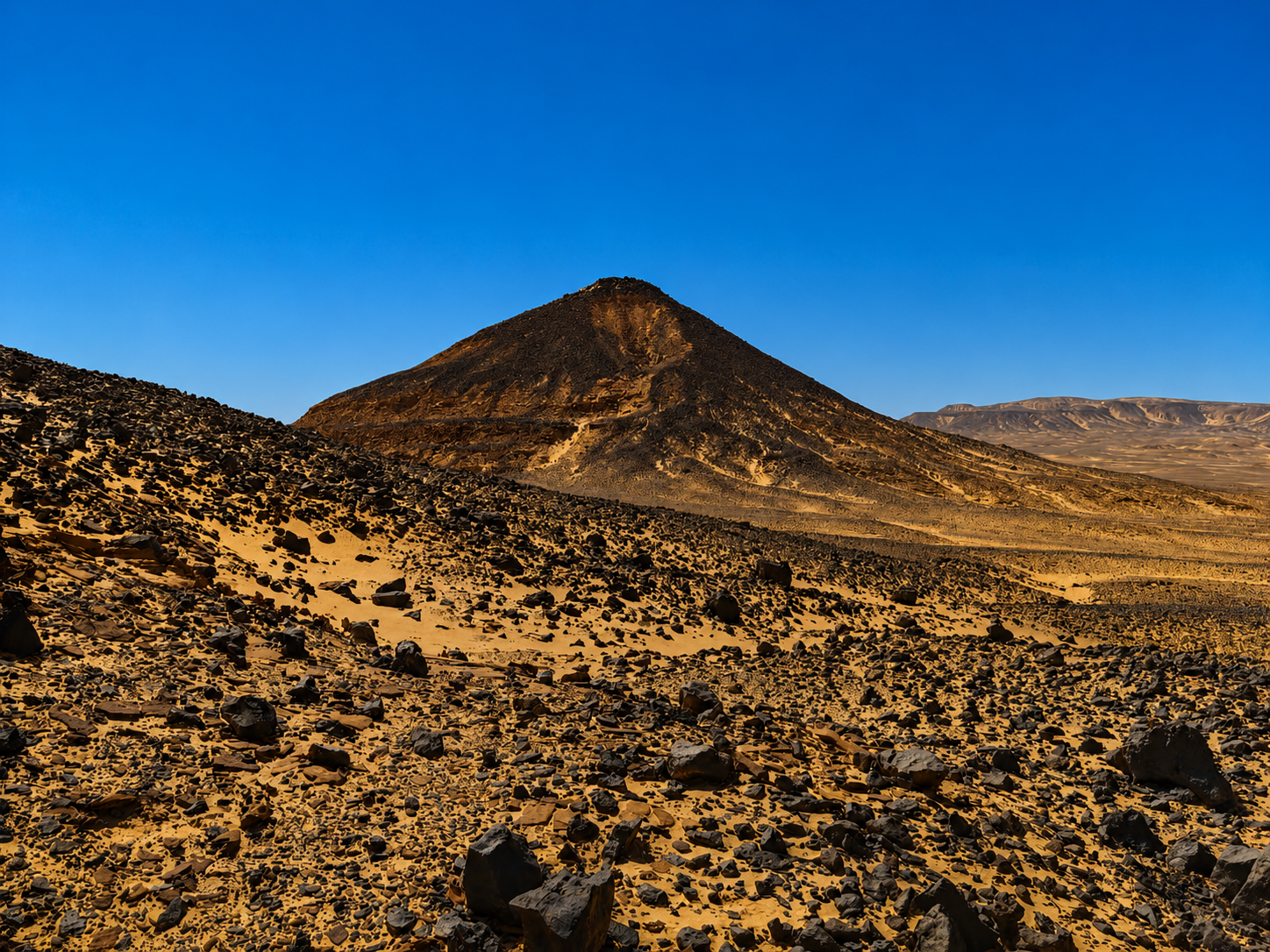
Day 1 begins with Cairo to Bahariya and continues through the Black Desert, Gabal El Marsos, El Hez, Crystal Mountain and a first camping area.
Day 2 is dedicated to deeper off-road travel through Aqabat, Hole Mountain, Great Karaween dunes, Ain El Serw and Djara Cave before returning through additional valleys toward the White Desert.
Day 3 completes the White Desert experience before returning through Bahariya to Cairo.
This is why 3 days / 2 nights makes much more sense than attempting Djara on a short trip.
Not realistically as a normal Cairo day trip.
Djara lies much deeper in the Western Desert than the standard first-day White Desert attractions.
The classic one-day route from Cairo is already demanding when it includes Bahariya, the Black Desert, Crystal Mountain, Agabat and the White Desert.
Adding Djara would create an unnecessarily rushed and logistically difficult itinerary.
If you only have one day, choose the One Day White Desert Tour From Cairo.
If you have two days, prioritize the classic 1 Night 2 Days White Desert Tour.
If Djara is important to you, plan at least three days.
For most travelers specifically interested in Djara, three days is the practical starting point.
A strong itinerary can follow this structure.
Travel from Cairo to Bahariya Oasis.
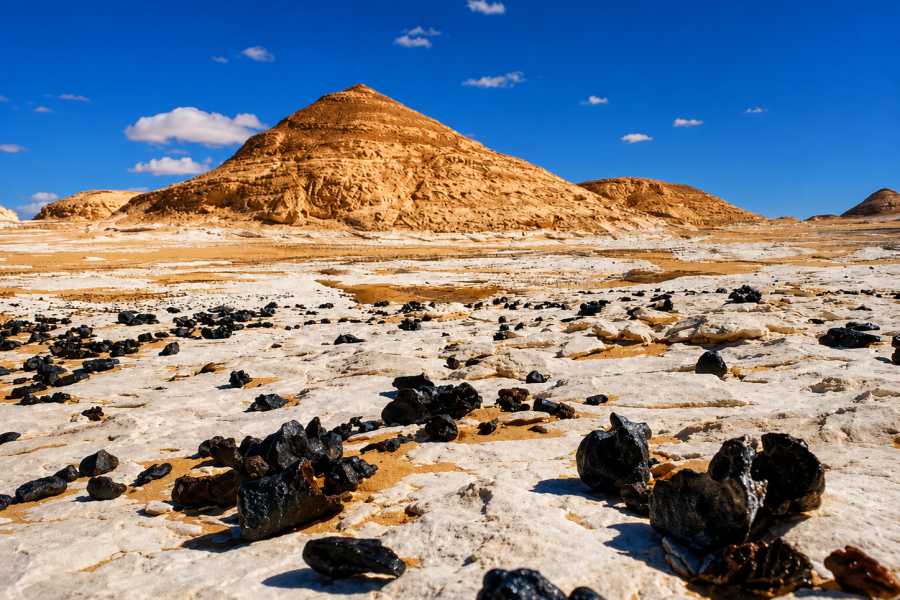
After lunch and preparation, continue by 4×4 into the Black Desert.
Explore Gabal El Marsos.
Continue toward El Hez.
Stop at Crystal Mountain Egypt.
Continue to the first desert camping area.
Enjoy dinner and the night under the stars.
After sunrise and breakfast, continue through the deeper Aqabat off-road region.
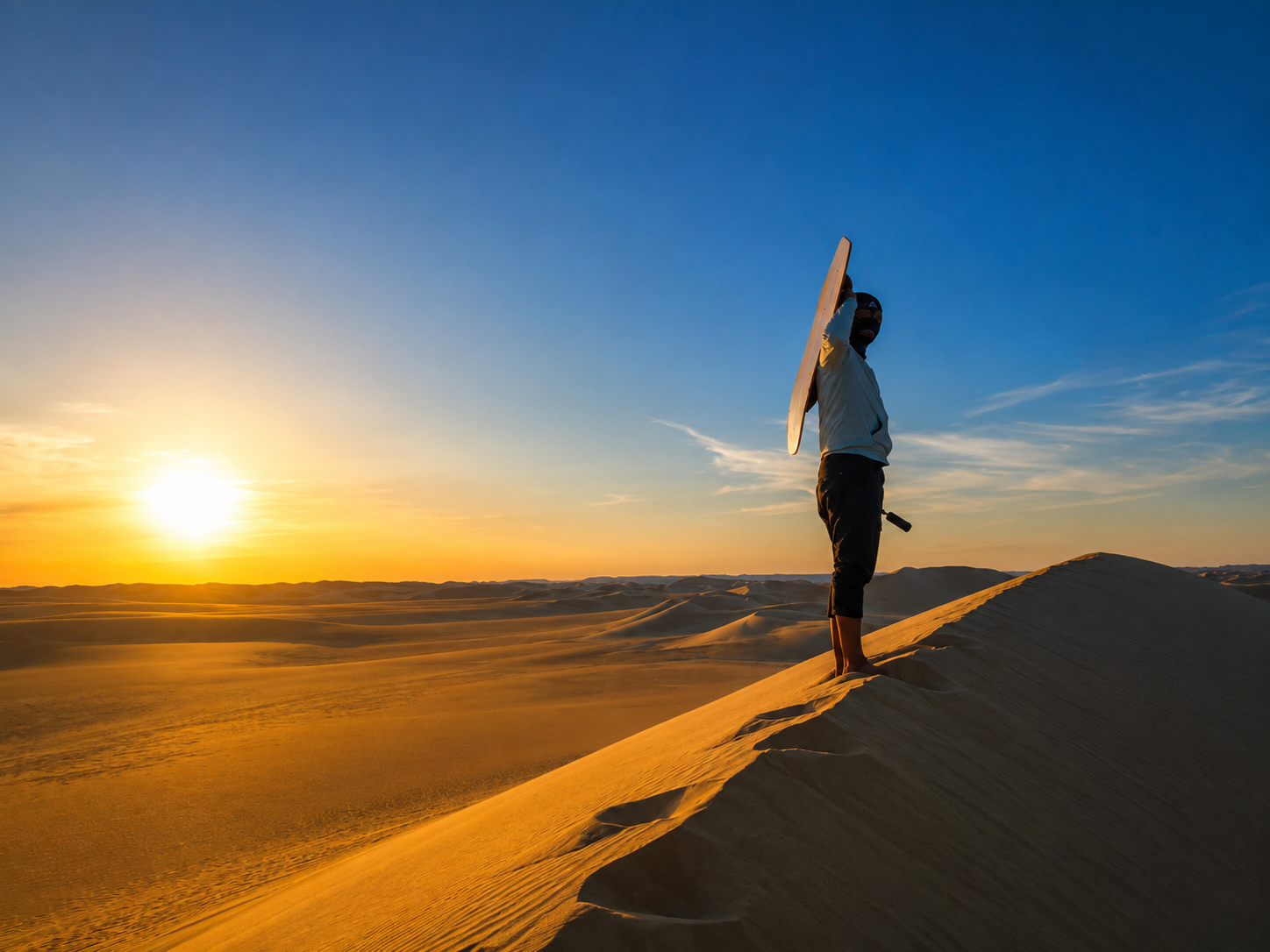
Explore large dune systems such as Great Karaween.
Stop at Ain El Serw.
Reach Djara Cave.
Explore the cave carefully with your guide.
After the cave, begin the journey back toward the White Desert.
Additional stops may include valleys, isolated trees and Tents Valley depending on the route and current conditions.
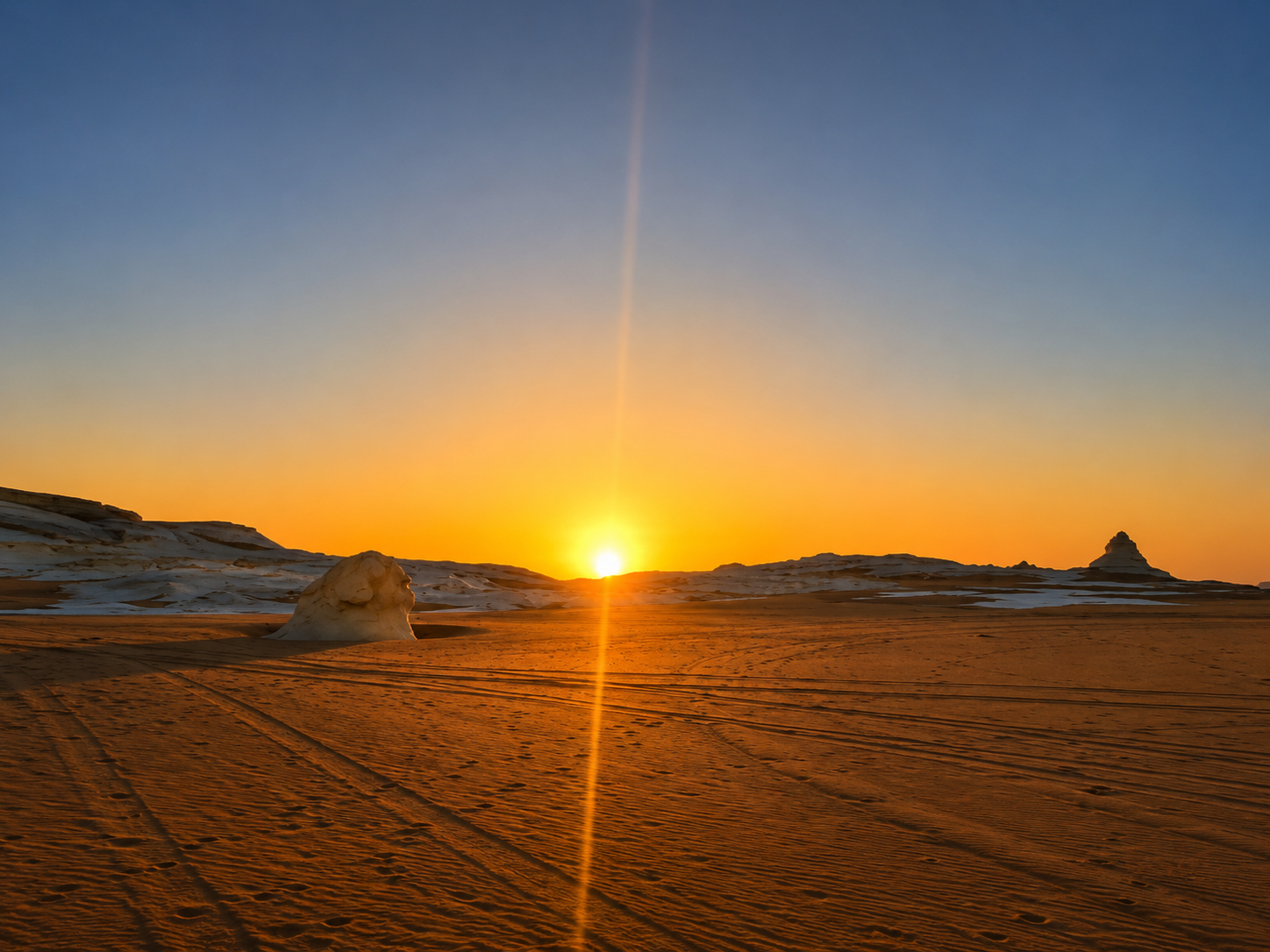
Finish inside or near the White Desert for sunset and a second camping night.
Wake for sunrise.
Explore additional formations in the White Desert National Park.
Return toward Bahariya.
Stop at springs when included.
Have lunch or rest in the oasis.
Then continue by road back to Cairo.
The current White Desert & Dejara Cave Tour From Cairo is designed around this type of deeper 3-day expedition.

The answer is geography.
The classic White Desert route already involves considerable travel from Cairo.
A two-day trip has enough time for:
Bahariya,
Black Desert,
Crystal Mountain,
Agabat,
White Desert,
sunset,
camping,
sunrise.
Djara extends the journey into significantly deeper off-road territory.
That adds:
more driving,
more fuel planning,
more camping logistics,
more food and water requirements,
and more time away from paved roads.
This is why Djara should be viewed as an expedition extension, not another twenty-minute sightseeing stop.
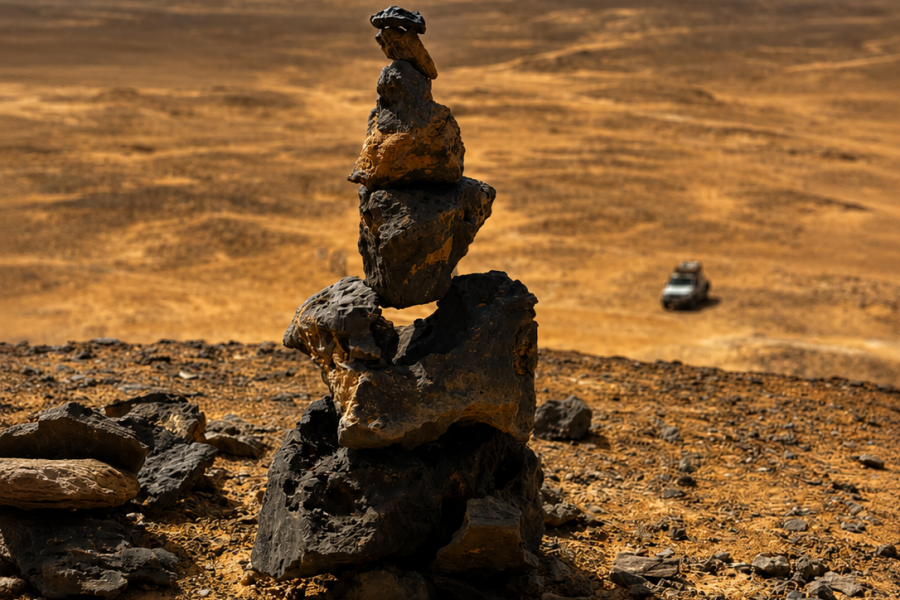
The journey involves remote desert tracks and significant off-road driving.
Conditions can change.
Sand, route access and current regulations all matter.
This is not appropriate for inexperienced self-drive travelers.
A capable 4×4 such as a Toyota Land Cruiser is normally used.
The current Djara tour on White and Black Desert Tours specifies 4×4 Toyota Land Cruisers for desert sections.
But the vehicle alone is not enough.
Experienced drivers and local route knowledge are essential.
Yes, for practical purposes Djara should be visited with an experienced Western Desert team.
The destination is remote.
Navigation is specialized.
Camping logistics matter.
There may be limited or no reliable phone signal across sections of the route.
Fuel and water planning become important.
And the cave contains fragile archaeological and geological features that should be treated responsibly.
This is exactly the type of destination where local desert experience matters more than simply having coordinates.
For most international travelers:
do not plan Djara as an independent self-drive trip.
A GPS coordinate does not provide:
route knowledge,
sand-driving experience,
fuel planning,
current access information,
vehicle recovery capability,
emergency procedures,
camping logistics.
The deeper Western Desert is not a normal paved road trip.
Travel with an experienced operator who knows the route.
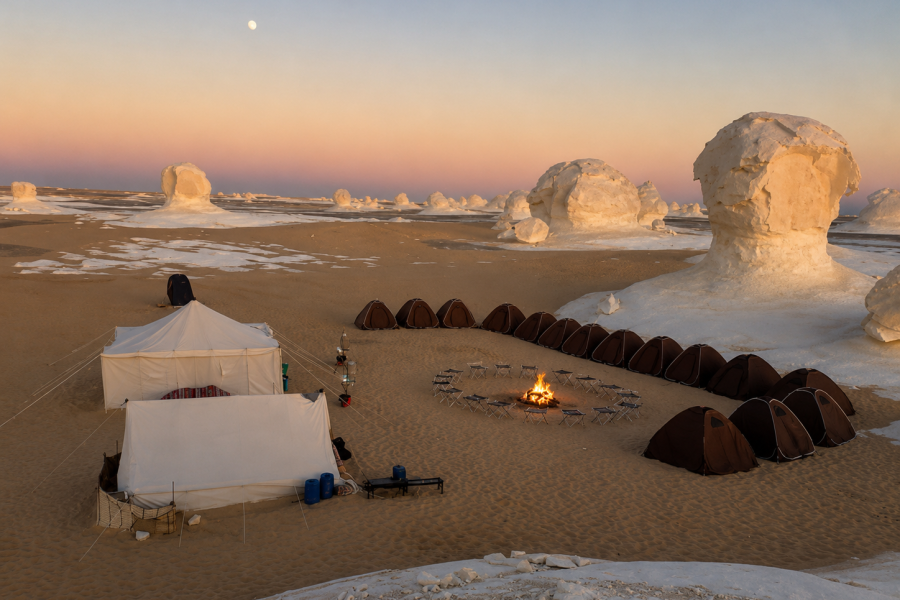
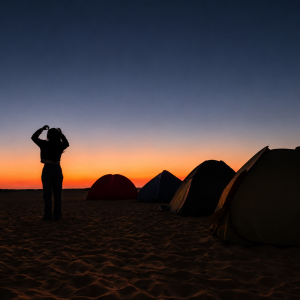
Camping is an integral part of most Djara itineraries.
Because of the distances involved, returning to Bahariya every evening would defeat the purpose of the expedition.
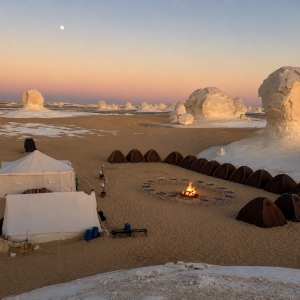
A typical multi-day desert camp can include:
tents,
mattresses,
blankets,
sleeping bags,
meals,
tea,
water,
and camp equipment.
The current 3-day Djara tour includes two desert camping nights, three meals per day, snacks and camping equipment.
For general expectations about sleeping in the Western Desert, read White Desert Camping Egypt.
The main chamber is much larger than the narrow tunnels people often imagine when they hear the word cave.
However, the entrance and darker interior can still feel uncomfortable for some people with significant claustrophobia.
If you are concerned, tell the guide before entering.
You should never feel pressured to go deeper than you are comfortable with.
Travelers can still enjoy the wider Djara expedition and surrounding desert even if they decide not to explore every part of the cave.
For a normal guided tourist visit, Djara is not generally approached as a technical rope-caving expedition.
However, practical equipment matters.
Closed shoes with good grip are preferable.
A headlamp or reliable flashlight is useful because deeper sections are dark.
Avoid carrying unnecessary loose objects.
Listen to your guide.
Do not climb delicate formations.
The cave floor contains sand and uneven limestone, so ordinary city footwear is not ideal.
Think about the complete Western Desert expedition rather than only the cave.
During the day, breathable desert clothing and sun protection are important.
Inside the cave, temperatures may feel different from the exposed desert.
For camping nights, warm layers can be important, particularly during winter.
Bring closed shoes.
A hat or scarf.
Sunglasses.
Personal medication.
A power bank.
And practical overnight clothing.
For the complete checklist, use the White Desert Egypt Packing List.
The best season for Djara broadly follows the best season for deeper Western Desert expeditions.
For most travelers:
October through April is the most comfortable period.
During these months, daytime conditions are generally more manageable for long 4×4 journeys and outdoor stops.
Winter nights can become cold.
Summer presents much more challenging daytime heat.
Because Djara involves longer travel through exposed desert than a simple short attraction visit, seasonal comfort matters even more.
For detailed month-by-month planning, read Best Time to Visit White Desert Egypt.
Djara offers photography opportunities completely different from the White Desert.
The challenge is light.
Inside the cave, you have strong contrast between bright entrance light and darker interior areas.
Photographers should consider:
wide lenses for large cave chambers,
a stable shooting technique,
careful exposure around the entrance,
and responsible use of artificial light.
Do not damage or touch prehistoric engravings in order to improve a photograph.
Do not add chalk, water or any substance to make carvings more visible.
The archaeological record is more important than the image.
Outside the cave, the surrounding limestone plateau also offers minimalist desert photography.
Photography may be possible depending on current rules and guide instructions.
Treat the rock art as archaeological heritage.
Avoid touching the engraved surfaces.
Do not trace them.
Do not rub them.
Do not use anything that physically alters the rock.
If flash or specific lighting restrictions are in place, follow them.
The cave engravings survived for thousands of years.
Modern visitors should not become the reason they deteriorate.
Djara is fragile in two different ways.
Geologically, stalactites and stalagmites can take extremely long periods to form.
Archaeologically, prehistoric engravings cannot be replaced once damaged.
Responsible behavior means leaving everything exactly where you found it.
Do not break speleothems.
Do not collect rocks.
Do not carve your name.
Do not touch ancient engravings unnecessarily.
Do not leave rubbish.
Do not light fires inside the cave.
Do not remove archaeological objects.
The correct souvenir is a photograph.
Djara adds another important chapter to the geological story of Egypt’s Western Desert.
The White Desert formations show large-scale surface erosion and karst landscapes.
Crystal Mountain reveals an old cave-related structure exposed by erosion.
Djara preserves a cave environment that still exists beneath the limestone plateau.
Together, these places show multiple stages in the relationship between limestone, groundwater, ancient rainfall, cave development and erosion.
For geology-focused travelers, seeing all three during one extended expedition is especially rewarding.
Djara lies within the broader limestone plateau region associated with Farafra.
Academic studies describe Djara as roughly halfway between the Nile Valley and Farafra Oasis.
Farafra is also geographically close to the White Desert.
This means a deeper Western Desert itinerary can connect several important environments:
Djara’s cave landscape,
Farafra’s oasis setting,
and the White Desert’s chalk formations.
However, many shorter Cairo-based expeditions still use Bahariya as their primary gateway because it is more practical from the capital.
For most travelers interested in Djara, I would not visit the cave without also seeing the White Desert.
The strongest combination is:
Bahariya → Black Desert → Crystal Mountain → Aqabat → Djara Cave → valleys → White Desert → camping.
This route gives you:
oasis landscapes,
dark desert hills,
calcite-rich geology,
large dune fields,
an underground limestone cave,
prehistoric archaeology,
white chalk formations,
sunset,
stargazing,
and sunrise.
Few short desert itineraries in Egypt offer that much variety.
It depends on the children.
The cave itself can be fascinating for older children interested in geology or archaeology.
But the main consideration is not the cave.
It is the journey.
A Djara expedition involves long road and off-road travel, two camping nights and remote desert conditions.
For adventurous families with school-age or teenage children, it can be unforgettable.
For very young children, a shorter White Desert tour from Cairo may be easier.
For broader family planning, read Egypt Desert Safari for Families & Kids.
Potentially, yes.
But it is more demanding than the classic 2-day White Desert route.
The issue is not necessarily difficult climbing inside the cave.
The larger challenge is the length of the expedition.
Travelers need to be comfortable with:
long vehicle journeys,
4×4 off-road driving,
basic desert camping,
uneven ground,
and limited facilities.
Anyone with mobility concerns should discuss the route with the operator before booking.
For the right traveler:
absolutely.
Djara is one of the most unusual extensions you can add to a Western Desert trip.
But it is not essential for everyone.
Choose Djara if you are especially interested in:
geology,
caves,
archaeology,
prehistoric rock art,
remote desert travel,
or deeper off-road expeditions.
Skip the Djara extension if you only have one or two days.
The classic White Desert route already gives first-time visitors an excellent experience.
Djara becomes valuable when you have enough time to go beyond the classic circuit.
Djara is generally priced as part of a multi-day expedition rather than as a standalone cave ticket.
At the time of this article, White and Black Desert Tours lists its 2 Nights / 3 Days White Desert & Dejara Cave Tour from Cairo from $250.
This is a starting price.
Final cost can vary according to travel date, number of guests, vehicle arrangements and other booking conditions.
The current program includes Cairo transfers, 4×4 safari transportation, two desert camping nights, meals and listed camping arrangements.
For wider White Desert pricing, read White Desert Egypt Cost.
For travelers specifically targeting Djara Cave, the most relevant option is the:
2 Nights 3 Days White Desert & Dejara Cave Tour from Cairo.
The tour combines Djara with a much broader Western Desert route rather than treating the cave as an isolated attraction.

The current itinerary includes Bahariya Oasis, Black Desert, Gabal El Marsos, El Hez, Crystal Mountain, Aqabat, Great Karaween dunes, Ain El Serw, Djara Cave, multiple valleys, Acacia Tree, Tents Valley and White Desert National Park.
That combination is exactly why three days makes sense.
this is your first desert trip,
you have limited time,
you mainly want the White Desert,
you want one camping night.
you have three days,
you want two camping nights,
you enjoy archaeology or geology,
you want deeper off-road exploration,
you prefer remote travel.
Neither is universally better.
They serve different travelers.
Djara Cave is one of those places that completely changes your image of Egypt’s Western Desert.
Above ground, you see dry limestone plateau and open desert.
Below the surface, you enter a cave filled with mineral formations that could only develop when the region received far more water than it does today.
The cave’s stalactites preserve evidence of ancient Pleistocene rainfall.
Its archaeological layers preserve evidence of people living and moving through a greener Sahara thousands of years later.
Its engravings preserve part of their cultural world.
And the modern journey to reach Djara shows just how remote this landscape remains.
For first-time travelers with only two days, the classic White Desert Egypt route remains the better introduction.
But for travelers who have three days and want to understand the Western Desert more deeply, Djara is one of the strongest extensions available.
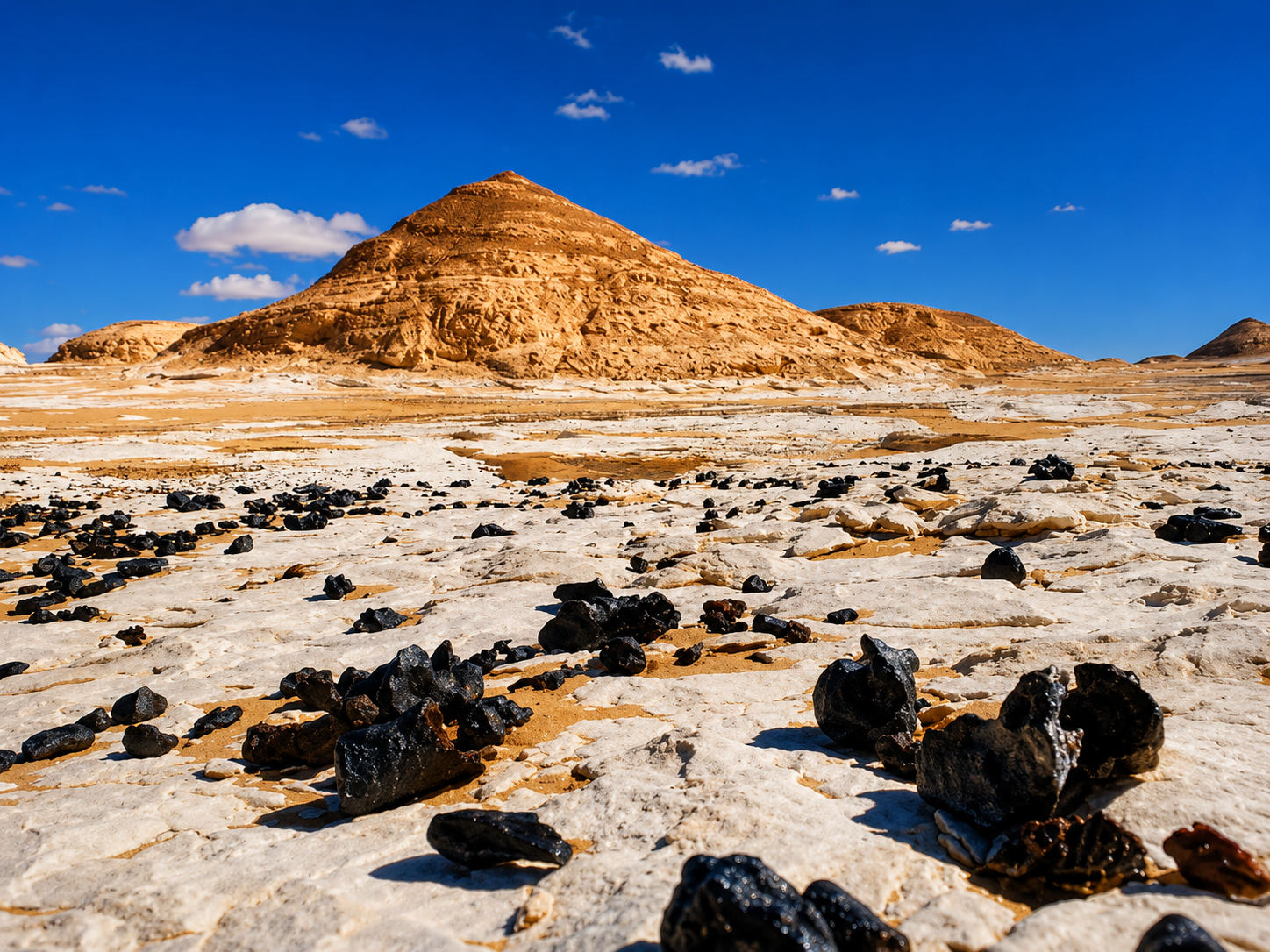
The ideal expedition connects:
Bahariya Oasis → Black Desert → Crystal Mountain → Aqabat → Djara Cave → White Desert.
That route gives you much more than a cave visit.
It gives you a journey through geology, prehistoric climate, archaeology and some of the most remote landscapes in Egypt.